• Skip to primary navigation
  • Skip to main content
  • Skip to primary sidebar

  • Basketball Plays
    • Ball Screen Sets
    • Horns Sets
    • Man to Man Post Up
    • Man to Man Isolations
    • Backdoor Plays
    • Man to Man 3 Point Shot Plays
    • 2-3 Zone Attack
    • Baseline Inbound Plays
    • Sideline Inbound Plays
    • Combination Defense Attack
  • Drills
    • Defensive Drills
    • Offensive Drills
    • Competitive Drills
    • Passing Drills
    • Rebounding Drills
    • Shooting and Scoring Drills
    • Toughness Drills
    • Transition & Conversion Drills
    • One on One Drills
  • Blueprint
  • Practice
  • Mental Toughness
  • Skill Development
  • Offense
  • Defense
  • Store

Blog

Empowering Your Players

By Brian Williams on March 30, 2012

I received this in Creighton Burns’ newsletter.  It was written by:  Allison McNeil

Here are 10 things a coach can do to empower his or her athletes:

1. Create a safe/inclusive environment where every athlete is valued for what they do on the court, but more importantly for who they are and what they bring to the group. Appreciate each of your athletes for their uniqueness and the special things they bring to your team. Value the differences in your athletes and see the good in every young person you coach.

2. Allow your athletes some decision making power – on the court and off the court. There are “team” decisions and your athletes should be part of that process. On the court, at practice, use questions to engage your athletes and make them part of the decision making in game situations.

“Tell me and I will forget, show me and I may not remember, involve me and I will understand.”
Native American Proverb

3. Do not do everything for them – give them access to information and resources that they can use to help themselves now and when you are not there for them. We need to support our athletes, but we do not need to hover over them and do everything for them.

4. Encourage and reward assertiveness. Don’t shoot down your athlete’s when the show some assertiveness, it is not about controlling them it is about empowering them.
Here is a great definition of assertiveness: Asking for what one wants or acting to get what one wants in a way that respects the rights and feelings of other people.

5. Teach and encourage your athletes to think critically – to ask questions, to see things differently.

6. Teach and encourage your athletes to have a voice – to make a difference in their own lives, their community, and the world. Encourage your athletes to stand up for the things they believe in. One great way to do this is to have your team adopt an elementary school; to help at a homeless shelter; to visit a children’s hospital. You can also have your team adopt an orphanage, run for Breast Cancer, or raise money for a cause they believe in.

7. Develop independent athletes. When you do this you are increasing their self-esteem and therefore helping them to be more resilient and increasing their chances of success in basketball and in the “real world”. Your goal as a coach should be that they DO NOT depend on you!

8. Allow your athletes to express frustration and anger in an appropriate way, not bottle it up and pretend that everything is “fine” if it is not “fine”. Communication is key. Your athletes need to feel that they can express their concerns without retribution.

9. Listen to your athletes. Encourage open and honest communication – this is a skill that will help them for a lifetime of healthy relationships. There is no chance for successful relationships in life if you cannot communicate.

10. Create a safe learning environment for your athletes to take risks and Learn new things. Compliment them when they try something new, they will have more fun and improve more quickly.

The Coaching Toolbox has hundreds of resources for coaching basketball including basketball practice, basketball plays, basketball drills, basketball quotes, basketball workouts, basketball poems, and more!
Out of Season Advice for Players

By Brian Williams on March 8, 2012

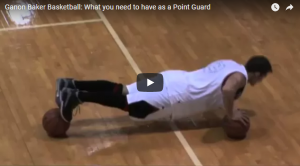
The video below contains advice for point guards from Ganon Baker applies to many positions on your team.

As you begin thinking about what to do to improve your team, showing this video to your players is a good way for them to hear another voice as to what they need to work on to be able to do by next year.

The video is only about 90 seconds long, but has some very concrete things that point guards and players in general need to be able to do for their teams to succeed.

Please make sure that your sound is on.

The video is a You Tube video, so you will need to be on a network that allows you access to You Tube

Click the play arrow to view the video.


Alan Stein on Getting Over the Hump In Basketball

By Brian Williams on February 17, 2012

This post was written by Alan Stein from Pure Sweat Basketball

With February upon us, this time of year can be grueling for basketball players and coaches. At DeMatha, every night is a dog fight in conference play as teams are fighting for their playoff seed.  Players are in a constant state of fatigue and exhaustion, since most have been going non-stop since late August.  Nagging injuries, minor sickness, and the daily grind begin to add up.  These factors get magnified through adversity – whether on or off court.

While the end of the tunnel is near, it becomes harder to stay motivated for every practice, every team meeting, every film session, and even for every game. This time of year is known as the hump.  Average players, teams, and coaches will crumble and fall back down the hill, while the exceptional ones will continue to climb over the hump and chase the lofty goals they set during the pre-season.

No team or program is impervious to this hump.

After winning our first 17 games of the season and being ranked in the top 5 in the country, we’ve hit a couple of speed bumps. We’ve lost 3 of our last 6 games, one of which was on national TV and the other two were each by 2 points in the final seconds of the game (both of which caused our opponents and their fans to rush the court and celebrate like they just won the Superbowl). In addition, we’ve had two members of our team recently transfer (although they left on amicable terms).

So what do we do to keep things fresh? What do we do to get over the hump?

We mix things up. We have fun.

This past Monday, instead of taking our team through our normal in-season strength workout, I decided to change things up and do a 20 minute Yoga session.  Yes, Yoga.

We followed the 20 minute routine on Kent Katich’s Yoga Hoops DVD (which I highly recommend): http://www.twitpic.com/8dq5mf

Our guys loved it!

This Yoga session was great for their bodies and great for their minds.  Per a team vote, we’ve decided do this Yoga workout every Monday for the rest of the season (and will continue with our normal strength workouts on Wednesdays).

Coach Jones took it a step further and made the brilliant move to cancel yesterday’s practice and take the team bowling instead!

His approach was awesome. He went into study hall and told the guys that there would be a change for practice. He then assigned four captains and told them to pick teams.  He didn’t tell them what they were picking teams for… but just to choose guys they would want on their team regardless of what the competition was.  This included having a student manager on each team.

Once the teams were selected, he told them we were going bowling! The players were excited to do something different… in all honesty… to not practice.

To ensure our afternoon of fun would remain competitive, Coach Jones offered a pair of the new Nike KD IV’s to the highest individual score as well as additional prizes for the highest team score.

The guys had a great time.  It was a way to bond as a team and to have a little fun.

I am confident this will help get our players (and coaches) over the hump and reignite the spark of achieving our post season goal of winning our conference tournament championship and winning the DC City Title.

I’m certainly not suggesting you turn the end of your season into a free for all, as practice and preparation still needs to be a focal point.  However, when looking at the big picture, I truly believe that team unity and having fun is just as important as X’s & O’s and running sprints.

As a coach, if you sense your players have lost motivation or aren’t having fun… you need to find ways to fix that. It will result in improved morale which always results in improved performance on the court.

Instead of a normal practice, why not have a spontaneous game of whiffle ball?

Instead of a film session, why not buy a few pizzas and watch Hoosiers?

What about ending practice an hour early and having a team H-O-R-S-E competition?

Use your imagination and find your inner child!

Human beings, at every age and in every walk of life, are always more successful doing things they enjoy. They are always more productive when they are having fun.  Your players are no different.

One of the reasons I’ve been able to attain a certain level of success in the strength & conditioning industry is because I put time, effort, and thought into making my workouts as fun as possible. I know that if the workouts are fun, the players will give a better effort.  If the players give a better effort, they will get better results.

The same is true for basketball and for getting over the hump and finishing the season strong!

The Coaching Toolbox has hundreds of resources for coaching basketball including basketball practice, basketball plays, basketball drills, basketball quotes, basketball workouts, basketball poems, and more!
35 Essential Skills to Being an Outstanding Basketball Coach

By Brian Williams on February 2, 2012

These 35 Essential Skills to Being An Outstanding Basketball Coach came from Coach Eric Musselman.  I received them in Creighton Burns’ latest newsletter.

1) Be a GREAT teacher

a) fundamentals

b) break down all of your drills

c) ball handling drills

d) teach them something “NEW”

2) Sell your system!

a) sell you coaching staff

b) sell your approach – system!

3) Motivation

a) challenge your players

4) Organization

a) organize your staff

b) give them an outline of duties for each coach

5) Create a system

a) find (create) an identity. “image?

i) what does a referee think, students, opposing coach/players think?

ii) your team will work to take its identity to another level

iii) “DOMINATE” at your identity!

6) Be POSITIVE!!!!

a) use negative comments during a winning streak

b) use positive comments during a losing streak

c) use positive reinforcement to bounce back from a loss

7) High Energy

a) if you coach with high energy, your team/players will have high energy

b) energy for players

8.) Be in good physical condition

a) being out of shape can limit your teaching ability

b) your physical condition is an example to the players

9) Intensity

a) your team will take on your personality

10) Your will to win!

a) how high is your will to win?

b) if a coach does not take losing lightly, players won’t take losing lightly!

c) if your coach takes losing lightly, so will the team

11) Communication/Relationships

a) treat referees with respect

b) officials respond to communication not embarrassment

12) Work Ethic

a) outwork the competition!

b) grade yourself!

i) where do you rate?

‐1‐ within your conference, within your league/district, within you entire sport

‐2‐ how do you rate with other sports?

13) Talent Evaluator/Evaluation

a) How do you mesh your team together?

b) Your won/loss record is a direct reflection of your talent evaluation

14) Ego management

a) player ego

b) Coach, staff ego – assistant coach ego

15) Respect factor

a) how do you show respect?

b) how do you gain respect?

16) Find a mentor!

a) a mentor is someone you can learn and seek advice from – does not necessarily have to be in your field

17) The Media

a) don’t lie to the media

b) treat the media with respect

c) remember the media has a job to do

18) Consistency

a) be consistent

19) Master the X’s and O’s

a) surround yourself with the best “X’s and O’s” people

b) hire experts whose strength are the areas you are weak in

20) Brainstorm

a) find ways to change your system and make it better

21) The Staff

a) the trainer – key hire and very important

b) Where do players complain?

i) the locker room

ii) the training room

iii) the weight room

c) make sure the staff is all on the same page

22) Preparation

a) be prepared for problems before they occur

23) Late game preparations

a) work on special situations

24) Handling a loss – talk to your team about how they should conduct themselves after a loss

a) no laughing, easy, laize faire attitude

b) a post game loss should include a time for reflection – a hurtful place

c) loss after game on team bus – should be subdued

25) Create a WINNING ENVIRONMENT

a) make people feel good about where they are playing

26) Be Creative!

a) always be on the cutting edge of creative coaching

b) the more creative you are, the more attention you grab from your players

27) Clearly define roles

a) Staff – clearly define roles for your staff

i) offensive, defensive coordinator

ii) in charge of the video room

iii) post game reporting of stats

iv) scouting

b) Players

i) discuss the roles in training camp

ii) don’t lead the player on

28) Creating TEAM Chemistry

a) use events off the floor to improve your team chemistry

b) you must have chemistry between the lines in order to win

29) Ability to communicate

a) are you improving your public speaking?

b) masters of public speaking can take control of their locker room

30) Goal Setting

a) set goals that are obtainable

b) do something everyday that is goal oriented

31) Dedication

a) all individuals who achieve greatness are dedicated

b) good coaches are dedicated

32) Idea Generator

a) who is your idea generator?

b) don’t become complacent in idea generation

c) change with the times

33) Problem solving

a) you have to turn a loss into a solution

b) always have a solution

34) Opportunity

a) they need you when there is a loss. Be a problem solver!

35) Leadership

a) above all, a successful coach must be a great leader

b) be honest to yourself about your situation

i) be the most improved team in your conference, etc.

The Coaching Toolbox has hundreds of resources for coaching basketball including basketball practice, basketball plays, basketball drills, basketball quotes, basketball workouts, basketball poems, and more!
Ballhandling and Finishing Basketball Drills

By Brian Williams on January 30, 2012

These three basketball skill drill ideas came from a pdf put together by Ganon Baker.  I hope that you can find ways to use them in both your games season practices and out of season workouts.

I. Stationary Dribbling with Tennis Ball (Do each for :30 secs) NO DIAGRAM

Execute the below moves while dribbling a basketball without a tennis ball, then execute each move while dribbling a basketball and tossing a tennis ball

a. Side Jab – Toss tennis ball, execute short side fake with foot, catch tennis ball

b. In/Out – Toss Tennis Ball, make inside out move w/ basketball hand, catch tennis ball with free hand

c. Between legs – Toss Tennis ball with right hand, go between legs with left hand, catch tennis ball with left hand palm down, then repeat

d. Behind the back – repeat the above but go behind the back

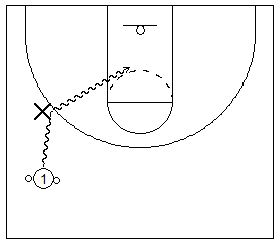
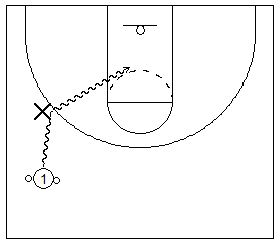
II. 2 Ball Drives (Make 10 in 1:10 seconds) (Diagrams below)

a. Drive to chair with 2 balls being dribbled, place 1 ball in the chair, take a floater

b. Now come back to chair, and take a jumper


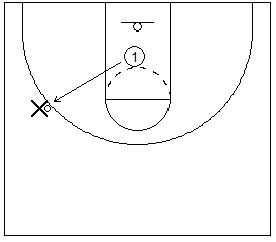
III. Sue Bird Drill (Make 10 in 1 minute) (Diagrams below)

a. Drive at chair execute a WNBA dribble move

i. b/w leg-cross

ii. b/w leg-behind back

iii. behind back-cross

iv. In out – cross

v. Pull up for a 1-2 step jumper

b. Come back to chair drive for a step through finish (Chair has 2nd ball on it)


The Coaching Toolbox has hundreds of resources for coaching basketball including basketball practice, basketball plays, basketball drills, basketball quotes, basketball workouts, basketball poems, and more!
12 Absolutes of Defensive and Offensive Basketball

By Brian Williams on January 23, 2012

These thoughts came from Steve Smiley.  Steve is  Head Coach at Sheridan Junior College, a former player and assistant coach for Don Meyer, and the author of the coaching site snsbasketball.com

Regardless of the style of basketball you play-full court, half court, motion offense, or a structured continuity type of offense, man defense, zone or match up, I believe there are 12 ABSOLUTES (6 defensive and 6 offensive) you need to accomplish at both ends of the floor if you wish to be successful in that phase of the game.  I believe these ABSOLUTES need to be clearly communicated to your players and they need to learn these ABSOLUTES and be able to tell you these without hesitation as they apply to your system or style of play.

DEFENSIVE ABSOLUTES

  • NO  EASY BASKETS whether in transition or the half court.  Make the opponent work and ear everything they get.
  • NO 2ND SHOTS of any kind.  Too may good defensive efforts are wasted because of failure to get the defensive rebound. This can be actually demoralizing in many situations.
  • NO UNCONTESTED SHOTS- this goes back to #1 somewhat in that we don’t want to allow easy and free looks at the basket.  Don’t allow mediocre shooters to become good ones because you don’t contest the shot.
  • NO PENETRATION into that paint/post area.  This means no penetration off the pass as well as the dribble. When the ball enters the middle of the floor and in particular the post area there are too many options available for offense. Try to limit the thins they can do by keeping it out of the middle.  If it does get in there then attack the ball and dig it out as quickly as possible.  Offensive rebounding is also a way a team can get the ball in this area and we have already said in #2 that can’t happen.
  • PRESSURE THE BASKETBALL as much as possible. #3 certainly implies pressure on the shot.  Pressure the dribble, the pass, and the catch as well in order to take the individual or team out of their comfort area.  Making the people dribble, pass or catch going away from the basket is a good rule of thumb.  How much you are able to pressure may vary from game to game or year to year depending on your personnel, but going back to #1 were the opponent must earn everything they get is critical.  Make them work!
  • COMMUNICATION kind of pulls it all together.  It lets you know that your players understand what it is you are trying to accomplish.  It creates a team cohesiveness and promotes unselfish play.  It says you are in this together and it takes everyone doing there part to be successful.

OFFENSIVE ABSOLUTES

  • BE FUNDAMENTALLY SOUND in the basic skills of the game of basketball.  This means the ability to dribble , pass, catch, shoot and rebound the ball without mistakes.  It also means to ability to cut and screen, and space yourself properly.  If you cannot execute the fundamentals of the game it makes no difference what you try to do offensively, you won’t be successful.  John Wooden has always said you need to “quickly and properly execute the fundamentals of the game.”
  • GET EASY BASKETS whenever possible.  This would apply to both transition basketball and half court basketball.  This can have a devasting effect on the opponent if you are able to get easy baskets time and time again and then they have to work to get any thing at the other end of the floor.
  • SHOT SELECTION is a critical importance.  Take the shots you want, when you want, where you want, and who you want to take them.  Players need to know their roles, accept their roles and fulfill there roles to the best of their ability.  Basketball is not an equal opportunity sport!
  • OFFENSIVE REBOUNDING can make up for a lot short comings.  Crash the boards with aggression and get at least 50% of all offensive rebounds available to you. It will have a demoralizing effect on the opponent.  Rebounding is how you win championships.
  • GET THE BALL INSIDE for the higher percentage shot.  The obvious way to get the ball inside is to feed the post.  However, driving the ball to the basket, getting into the lane area in transition, passing the ball to a cutter cutting through the lane, offensive  rebounding are other ways to get the ball inside.  All are excellent scoring opportunities that put constant pressure  on the defense.
  • MAKE YOUR FREETHROWS whenever you get to the free throw line. Many coaches make it a goal to make more free throws that the opponent gets.  There is nothing wrong with that, but regardless of whether you are able to do that or not, you have to make your free throws when you get to the line.  It’s been said that 20% to 25% of a teams scoring opportunities come at the free throw line.  This is especially true at “crunch time” of the game.

These ABSOLUTES are not met to be a system of play.  They are meant to guide your thinking as you put together your system or style of play at both offensive and defensive ends of the floor.  As I have studied and watched teams and programs play over the years, it has become apparent to me that the successful programs, regardless of “style” incorporate the above ABSOLUTES into their offensive and defensive thinking and the result has been good, sound, successful basketball.

The Coaching Toolbox has hundreds of resources for coaching basketball including basketball practice, basketball plays, basketball drills, basketball quotes, basketball workouts, basketball poems, and more!

  • « Go to Previous Page
  • Page 1
  • Page 2
  • Page 3
  • Page 4
  • Page 5
  • Page 6
  • Interim pages omitted …
  • Page 25
  • Go to Next Page »

Primary Sidebar

  • Twitter
  • Facebook
  • Linkedin
coachestoolbox
personaldevelopmenttoolbox
basketballplayerstoolbox
basketballtrainer
athleticperformancetoolbox
coachingbasketball

© Copyright 2026 Coaching Toolbox

Privacy Policy