• Skip to primary navigation
  • Skip to main content
  • Skip to primary sidebar

  • Basketball Plays
    • Ball Screen Sets
    • Horns Sets
    • Man to Man Post Up
    • Man to Man Isolations
    • Backdoor Plays
    • Man to Man 3 Point Shot Plays
    • 2-3 Zone Attack
    • Baseline Inbound Plays
    • Sideline Inbound Plays
    • Combination Defense Attack
  • Drills
    • Defensive Drills
    • Offensive Drills
    • Competitive Drills
    • Passing Drills
    • Rebounding Drills
    • Shooting and Scoring Drills
    • Toughness Drills
    • Transition & Conversion Drills
    • One on One Drills
  • Blueprint
  • Practice
  • Mental Toughness
  • Skill Development
  • Offense
  • Defense
  • Store

Basketball Drills

Basketball Drills Three Player Shooting with Conditions

By Brian Williams on May 28, 2014

This basketball shooting drill is from former Arizona and Iowa State assistant coach Randy Brown.

Coach Brown is the author of coachrb.com. You can join his newsletter at this link: Coach RB Newsletter

The drill in the video is a way to apply principles from the cutthroat drill to a shooting drill where the real emphasis is making a high volume of game-like shots.

The drill forces the players to concentrate rather than just simply go through the motions of the drill.

Some ways to make the drill fit your program:

Make your conditions fit your offensive system, add another player and require an extra pass or a ball screen, add a time condition for each group, or keep an overall score to make the drill competitive.

I hope the drill in the video gives you some ideas for conditions that will be considered turnovers in your shooting drills to improve your player’s execution.

Randy uses the first 90 seconds to set up the drill and then gives a demonstration for the remainder of the four-and-a-half-minute video.

Basketball Drills Get Open Drill

By Brian Williams on May 22, 2014

This drill came from Drew Hanlen. He is an NBA Strategic Skills Coach & Consultant that has helped over 25 NBA and NBA pre-draft players.

Drew is the Head Skills Coach for Pure Sweat Basketball.

He has run his internationally renowned Elite Skills Clinics in over 30 states and 4 countries over the past four years.

The drill was posted on Fast Model Sports Library. FastModel Sports Basketball Plays and Drills Library The site has thousands of drills and plays that have been submitted by basketball coaches from around the world.

You can also find out more about FastModel Play Diagramming software by clicking this link: FastDraw

Get open Drill

This is a great drill to work on screening, using screens, passing and catching!

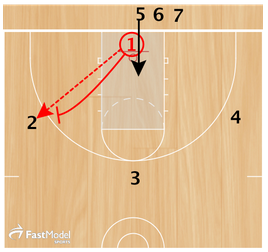
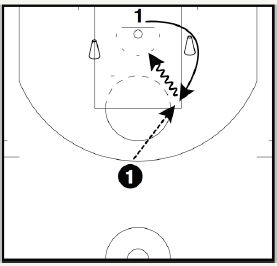
Ball handler will start with the ball at the top of the key and will be pressured by an on-ball defender, while another offensive player will start under the rim with a defender in full denial. Two all-time screeners will start just outside each second hash mark.

basketball-drills-get-open1


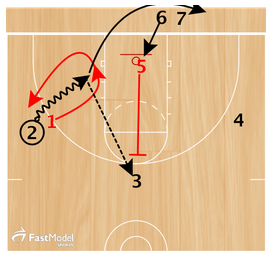
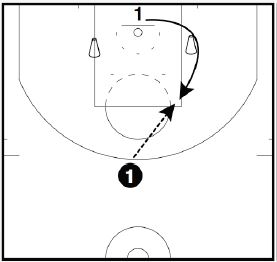
Offensive player under the rim will try to free themselves from their defender by using the screeners in any way that they want (curl, pop, fade, wiggle, etc), while their defender will try to deny them from receiving a pass from the ball handler.


basketball-drills-get-open2


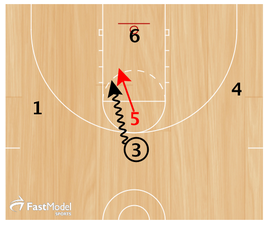
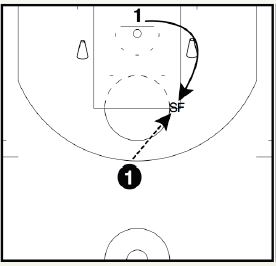
If the offensive player frees themselves from their defender, the ball handler will complete a pass to them.


basketball-drills-get-open3


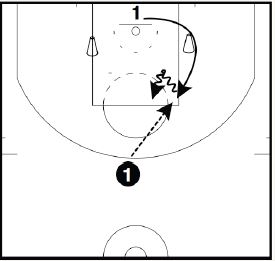
After passing the ball, the original ball handler will make a basket cut to the rim, while the offensive player that received the ball will dribble the ball to the top of the key.


The offensive team will try to complete eight catches in a row, while the defenders try to get a steal or force a turnover. Ball handler can be called for a five-second violation.

If the offensive players successfully complete eight catches in a row, they will become the next screeners, the defenders will stay on defense and the screeners will move to offense. If the defenders get a steal or force a turnover, they will become the next screeners, the offensive players will move to defense and the screeners will move to offense.

Basketball Drills UW Sue Bird Shooting

By Brian Williams on May 19, 2014

This shooting drill is from Arkansas women’s Coach Mike Neighbors when he was at Washington. He has a great newsletter that he sends it out each week. If you are interested in being added to his list, please email me and I will pass it along to him.

The following is his description and diagrams of the drill that he saw Sue Bird using.

This is a good 1-2 step, Game Spot, Game Shot drill… Doesn’t really fit Game Speed because we aren’t on the move between shots.

Shooter starts in corner. We will attempt 10 3-point shots. If she makes 7 or more she moves to the next spot on the wing. If she makes 6 she stays at the same spot.

If she makes 5 or fewer she moves backward a spot. We shot corner-wing-top-wing-corner-wing-top-wing-corner…

 
After the last spot, the move is to the FT line… must hit 3 Free Throws in a row to complete the drill.

This is a good warm-up or cool-down drill to work into your shooting workouts.

Diagram created with FastDraw

sue-bird-shooting

Shooter starts in corner. We will attempt 10 3-point shots. If she makes 7 or more she moves to the next spot on the wing. If she makes 6 she stays at the same spot.

If she makes 5 or fewer she moves backward a spot. We shot corner-wing-top-wingcorner-wing-top-win-corner…

After the last spot, the move is to the FT line… must hit 3 Free Throws in a row to complete the drill.

The 5 numbers in the diagrams are the five shooting spots, not other players.

This is a good warm-up or cool-down drill to work into your shooting workouts.

Variations:

Can change the numbers to accommodate skill level.

Shoot the seams rather than the spots.

We make it competitive if shooting head to head with first player to complete the spots. Can be total makes. Can be timed if you have good rebounders.

Basketball Drills Post Drills

By Brian Williams on May 15, 2014

The diagrams and explanations for improvement season post player drills was sent to me by Nate Hill.

Coach Hill is the Assistant Boys Coach at Colonel Crawford High School in North Robinson Ohio.

Nate has coached for 18 years from 7th grade through Varsity Head Coach.

He has contributed several articles for the site.

The drills can be used in season practices or during improvement season.

Add in moves and scoring opportunities that are a part of your offense.

You can make them competitive by requiring the drills to be completed in a certain amount of time and counting shots made.

You can also add a defender to make the drills more game-like.

basketball-drills-post-skill1


Coach throws passes to posts above the shoulders.

Posts hop with their hands in the air ready to catch ball.

Balls stay above head and don’t drop below shoulders.

basketball-drills-post-skill2

Coach drives middle and the post reads the middle drive.

The post crosses his leg over and drives leg thru taking 2 big steps
across the lane.

Player jumps up an down looking for catch and keeps the ball above his head. Go from both sides. 4 passes: lob, wrap, bounce, shot

basketball-drills-post-skill3

Coach drives down right side, and big man reads this.

Post defender goes to help and coach hits post man over the top.

4 passes: lob, wrap around, bounce, shot off backboard.


basketball-drills-post-skill4


A counter to the relocation drill.

The coach drives middle and the post reads the middle drive.

There is no one in the short corner, the post reads this, steps back and shoots the mid range jumper.

basketball-drills-post-skill5

Coach drives and jump stops at elbow.

Post player reads the jump stop and flashes to high post.

Post wants to bring defender out and beat defender off dribble.

He catches at high post, and drives to rim off the cut from the guard.

 
5 drives and 5 elbow jumpers each side.

Basketball Team Toughness Drill

By Brian Williams on May 14, 2014

This drill came from Drew Hanlen’s Pure Sweat Basketball Team Toughness Drill Book.

Drew is an NBA Strategic Skills Coach & Consultant that has helped over 50 NBA and NBA pre-draft players.

Drew is the founder and Head Skills Coach of Pure Sweat Basketball.

He has run his internationally renowned Elite Skills Clinics in over 30 states and 4 countries over the past four years.

Pure Sweat Combo Drill

Set Up: Two ball handlers will start with basketballs near the 28-foot marks in adjacent corners. Two passers will start in adjacent corners opposite of the ball handlers.

Two defenders will start inside of each lane on both ends of the floor. All the additional players will start in lines behind the passers.

basketball-drills-pure-sweat-combo-drill

Step 1: Ball handlers will pass their balls ahead to the passer in front of them on the opposite end of the court then sprint to the elbow or three-point line on the opposite end of the court, depending on their shooting range. Passers will pass the balls back to the original ball handlers once they get to their shooting range for a jump shot.

Step 2: On the flight of the shot, the passer will crash the glass. while the defender will sprint and box out the crashing passer. Both players will pursue the rebound until one player secures the ball.

Step 3: Whoever secures the rebound will dribble outside of the three-point line then pass the ball ahead to the passer in front of them on the opposite end of the court, and then sprint to their range for a jump shot. while the player that did not get the rebound will stay in the lane as the next defender. The shooter wilt rotate to the back of the passing tine that they received the ball from.

This drill came from Drew Hanlen’s Pure Sweat Basketball Team Toughness Drill Book.

Coaching Basketball Building Great Teams

By Brian Williams on May 13, 2014

This article was written and submitted by retired High School Coach Dave Millhollin. Coach Millhollin is known throughout the Sacramento area for his Boys Varsity teams’ fundamental soundness, discipline, unselfishness, team defense and overachievement. Dave Coached for 27 seasons and compiled 391 wins. I have included more information about his coaching career at the end of the article.

If you would like to contact Coach Millhollin, email me and I will put you in touch with him.

I am always looking for good information to share. If you have an article, drill, play, or anything else that you would like to have posted on the Coaching Toolbox, feel free to contact me.

Building Great Teams

By Dave Millhollin; Retired High School Basketball Coach

Editor’s note: This is part One of Two parts for this article. I will be posting Part Two on Tuesday May 19.


Over the last two decades, much attention has been given to the concept of “Team Building” by private, public, and volunteer organizations. In all situations where groups of people are necessary to produce a product, generate revenue, or provide services, the groups that work best together and possess a sense of shared common purpose tend to be the most effective and efficient.

Our program’s approach to “Team Building”

We have established four fundamental reasons for team building:

• First, we want the experience of participating on the team to be the most satisfying and enjoyable experience it can possibly be for every individual member of the team.

• Secondly, we want each individual member of our team to experience as
much personal growth as possible in the context of being a member of our team.

• Thirdly, participating on a team affords the members of that team to form meaningful and lasting relationships. The relationships we develop while participating on teams can be wonderful and life-long.

• The fourth reason for team building is to ensure that our team is as competitive as it can possibly be; that we play the absolute best basketball that we are capable of playing, win as many games as we can, compete for championships and advance as far as we are capable of in post season play.

We promote the concept of “cause over self” and profess that individual achievement will be accomplished through the giving of one’s self to the goals and welfare of the team. Therefore, unselfishness and self sacrifice are two of our program’s core values.

Building the “Team”

Leadership by the coaching staff

As adult leaders we determine what kind of program we want to run. While at Ponderosa, we decided to involve our players in as much of the decision making as possible. We want to achieve the highest degree of “ownership” and commitment as possible and we want our players to be accountable to one another and to their coaches with regard to the standards we set for our program. As coaches we see our primary responsibility as that of helping our players establish realistic goals and expectations, then doing everything in our power to help them achieve those goals and expectations.

Collaboration, “Ownership”, and Commitment

Prior to and at the beginning of the season, we conduct a series of meetings where our players and coaches engage in discussions and come to agreements on almost every aspect of our program. We clarify our values and our behavioral expectations and we discuss and agree on consequences. We agree on the role of the coach and the role of the players. We also discuss and agree on what we want to accomplish during the season. These desired accomplishments are written in two areas; season goals and progressive benchmarks. The progressive benchmarks provide us with a checklist of things we want to accomplish as the season goes along, this helps us progressively evaluate our performance and identify necessary adjustments as the season moves along.

As the season gets underway we also develop an identity statement that epitomizes the kind of team we want to have for that season. One season our team decided on the slogan; “Belief, Trust, Discipline and Unselfishness”.
We want all of our actions to reflect our identity statement.

The overall purpose for the collaboration process is to bring about a sense of ownership and develop a strong sense of responsibility and commitment by the members of our team. We will then be better able to hold one another accountable during the course of the season

Players are accountable to each other, not just to their coach. They live up to a set of standards and attempt to accomplish goals that they help develop, not ones imposed upon them by authority figures.

Individual Roles

Once we have established our goals for the season and discover our team’s identity, our coaches then work with each individual player to establish individual player roles. We base these roles on the specific attributes each player has in relation to the team’s goals. We have each player answer a set of questions designed to help them recognize what they can do to help the team achieve its goals. This part of the team building process is critical. If we can get every player on our team to align his personal goals with the goals of the team and establish his role on the team accordingly, then we will have a much better chance of having a great team. This is where unselfishness and personal self sacrifice for the goals and welfare of the team comes in to play.

For a player who would like to have a different role, we allow him to work on the areas he would like to improve on in practice so he will have a chance to change his role. This comes with the understanding that first and foremost he must be focused on and be committed to his initial role. If his role is to change, he and his coach must agree on that change in order for the change to take place.

Once we establish individual player roles, we have each player write down three to five things they can personally commit to that will help the team achieve its goals. This commitment list is a reflection of each player’s individual role. We require all of our players to become familiar with all their teammates’ commitment lists. We want all our players to “Know and understand your self and your teammates”.

Communication and Reminders

Communication is an area that is essential for the effectiveness of all groups. In the area of team sports, teams that communicate on the field or court are normally the most effective at what they do. We encourage our players to communicate on and off the court. We have them constantly give each other “Reminders”. These reminders can range from players reminding each other to be on time for a meeting to getting their hands up on defense. We demand each other to communicate about every expectation of our program. During practice sessions we run many drills which reinforce communication and during games we have our players on the bench constantly communicating to their teammates on the court, giving them reminders and encouragement. This communication is critical to our team chemistry, accountability, and overall effectiveness. During our goal setting meetings the coaches discuss the importance of communication and guide the members of the team to set communication as one of our team goals. Once our players understand how important communication is, they normally buy in to it and take ownership for being good communicators.

Click here to read part 2 of this post

About the author of this article, Coach Dave Millhollin In fourteen years at Ponderosa High School, Coach Dave’s teams won 260 games (.665). From 2000 through 2009 Ponderosa won 207 games over a ten year stretch which included four SVC Conference Championships and two CIF Section final four appearances. Over his 27 year Boys Varsity Coaching career, Coach Dave posted 391 wins, produced 20 college basketball players and was named SVC Coach of the Year four times. At Ponderosa, Coach Dave’s teams were #1 in California in team defense five times and in 2008 Ponderosa was the top defensive team in the Nation among shot clock states. Over Coach Millhollin’s last five seasons (2005-6 through 2009-2010; 136 games) Ponderosa averaged a composite 50% total field goal percentage, 58% two point field goal percentage and 32% three point field goal percentage. Since retiring from High School coaching in 2010, Coach Dave has been actively involved in coaching Jr High level School and AAU teams as well as and running instructional basketball clinics from the primary grades through the College level.

  • « Go to Previous Page
  • Page 1
  • Interim pages omitted …
  • Page 72
  • Page 73
  • Page 74
  • Page 75
  • Page 76
  • Interim pages omitted …
  • Page 96
  • Go to Next Page »

Primary Sidebar

  • Twitter
  • Facebook
  • Linkedin
coachestoolbox
personaldevelopmenttoolbox
basketballplayerstoolbox
basketballtrainer
athleticperformancetoolbox
coachingbasketball

© Copyright 2026 Coaching Toolbox

Privacy Policy