• Skip to primary navigation
  • Skip to main content
  • Skip to primary sidebar

  • Basketball Plays
    • Ball Screen Sets
    • Horns Sets
    • Man to Man Post Up
    • Man to Man Isolations
    • Backdoor Plays
    • Man to Man 3 Point Shot Plays
    • 2-3 Zone Attack
    • Baseline Inbound Plays
    • Sideline Inbound Plays
    • Combination Defense Attack
  • Drills
    • Defensive Drills
    • Offensive Drills
    • Competitive Drills
    • Passing Drills
    • Rebounding Drills
    • Shooting and Scoring Drills
    • Toughness Drills
    • Transition & Conversion Drills
    • One on One Drills
  • Blueprint
  • Practice
  • Mental Toughness
  • Skill Development
  • Offense
  • Defense
  • Store

Filing Cabinet

Summer Coaching Notes

By Brian Williams on June 15, 2015

Mike Neighbors University Washington Women’s Head Coach. These are just some random notes that I have taken at various clinics, coaching conversations, and other random talks with colleagues.

These are from Bob Wilson at the Vanguard University Coaches Summit:

Intentional teaching: everything you do should be intentional. Not reactionary. Teaching should have a purpose and a plan.

When you go to clinics:

1) Adopt it– hear something you like
2) Adapt it- make it your own and fit your program
3) Adept at it- get good at it

Sidewalks to Sideline to Significance: Teaching goes from their playing days, to their careers, to passing it on to others

Does your program reflect character? Does it perpetuate character?

“locked in” is the highest form of “buy-in” “credibility” is usually the missing ingredient when teams don’t have buy-in or locked-in with their coaches… What are you doing to insure credibility? If you don’t have it, why? If you can’t figure it out, just ask team, they won’t hold back!!!!

Recommended reading “Fall to Grace” … Dave Bliss story

4 Good Questions Every Coach Must have an answer for;
1) Why do I coach?
2) Why do I coach the way I do?
3) What does it feel like to be coached by me?
4) How do we define success?

“It’s only important when it’s important” best teams don’t focus on things ONLY when they are important (urgent) The important things are ALWAYS important.

W=What’s
I= Important
N= Now

“If a player shows up with a flaw that’s on them, if they leave with one, that’s on you!!”

Russ Davis-Vanguard University Head Coach

“I can teach you or train you… The methods are very different depending on your ability to motivate yourself.” Cori Close– UCLA Head Coach

“When playing a zone, you are responsible for guarding a player and a half. You have to constantly know who your one player is and who your half player is.”

Good general defensive rule… don’t let the passer become the next catcher… GOOD VISUAL THOUGHT

Force offense to make as many decisions as possible.

Jim Jabir-Dayton Head Coach

Using ball screens:
1) keep dribble

2) attack the big
When you have shooters on court, flat screens are the hardest to defend.

Russ Davis- Vanguard University Head Coach

Cinderella Season… 1998 Tennessee Lady Vol season has helped with his past teams

Bonnie Hendrickson- Santa Barbara Head Coach

Coached Rayna at Virginia Tech. Anytime you have a player feeling entitled or taking the game for granted. http://www.raynadubose.org/

Book recommendation… How Winning Works by Robyn Benincasa

Miles Simon on Coach Lute Olson: Although was in-your-face leader, he had the heart of every single player.
Did that by finding each players “heartbeat” Best at role identification and implementation he has ever seen

On skill:
Pound dribbles build momentum into moves
In dribble hand offs, present the ball “on a platter” to keep fake and go threat alive

*** The highest level players don’t want gimmicks. They don’t want raps. They don’t want you throwing tennis balls at them or using gloves, etc. Okay for some, but not the highest level of your ballers.

He worked out Travis and David Wear while speaking to group. He was relentless in their execution of what he wanted. Great players want to be pushed. Easiest way to tell if a player is coachable.

Paul Westhead- NBA Champion Coach, WNBA Champion Coach Missed FT’s are the same as turnovers. You get no points and the other team gets the ball back. Never thought about it in this way. Would practice FT’s with eyes closed one day a week with his teams… Magic Johnson thought he was crazy initially but it worked!!!

Mark Fox- University of Georgia Head Coach: Use players as passers in as many drills as possible. Eliminate coaches passing. Great and easy technique to improve passing. Also eliminates ‘practice time’ having to do passing drills. ALL drills are passing drills!!!

Doug Bruno- DePaul University Head Coach

Passing
1) On target, on time, every time
2) Precision and touch
3) Don’t make a teammate “rescue” your pass

Debbie Ryan- NCAA Hall of Famer

Now works in medical philanthropy. Says unequivocally that most of men’s health issues, especially coaches, can be prevented with routine check ups and early detections. Men only go to see a doctor when a woman they love makes them or when it hurts so bad they can’t function.

BLOB

Diagrams created with FastDraw

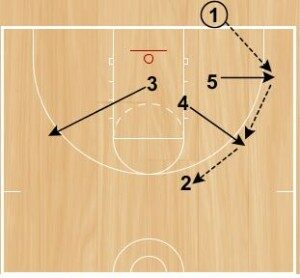
Good set for inbounder getting a 3 by screening the unsuspecting zone.
1 needs to be your best shooter.
2 best ball handler
3 helps if she can shoot it some too of is at least a threat to score if she catches it.
4 and 5 can be interchangeable.
basketball-plas1

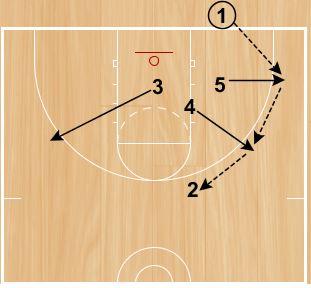
5 to corner hard

4 to the arc

3 to draw weak side attention

Ball is inbounded to 5

Then on to 4 and 2
 

basketball-plays2

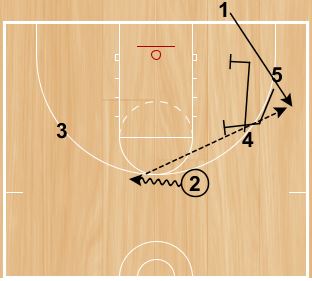
2 dribbles away from the action

4 screens the bottom of the zone

5 screens the top of the zone.

1 comes off the screens for a shot.
 

13 Ways to be More Coachable

By Brian Williams on May 30, 2015

This article was written by Lindsey Wilson. Lindsey is the Co-Founder of Positive Performance Mental Training Zone. Lindsey played basketball at Iowa State and then played professionally overseas. She has been teaching, writing and speaking about mental training for the last 6 years.

I hope you can find a few points that you can share with your players that will have a positive impact on your team.

lindseywilson

Presented by:

Lindsey Wilson from Positive Performance Mental Training. As a former collegiate and professional basketball player, Lindsey now takes her passion for mental training to thousands of young athletes and to universities in the Pac12, SEC, ACC, and beyond.

13 Ways to be More Coachable

By Lindsey Wilson

Sports are filled with mental challenges, many of which we athletes bring upon ourselves. The coach-player dynamic is only one of the multitude of difficulties we face, but at the same time it is often the most difficult to navigate. And it’s not surprising why: receiving criticism in any area of life is tough – from teachers in the classroom, from the boss on the job, or from family or friends in our personal lives – but being able to graciously receive advice and mentorship is a necessary part of growth.

Today, I want to talk about being coachable. But, first, let’s define it. Being coachable is:

  • Being grateful that someone cares enough about you to push you to improve beyond where you would get on your own.
  • Being vulnerable enough to know you’re not perfect.
  • Being open to honest feedback (even if it hurts).
  • Working to actively change bad habits.

Uncoachable athletes show certain key behaviors. It doesn’t take long for a coach to spot an uncoachable player, and very rarely can a coach make a player coachable.

How does one coach an athlete who fights back? It’s a daunting task.

No question: We athletes can be sensitive people. Though we may look tough on the outside, we can be delicate underneath. In talking with a number of coaches, trying to sort out those characteristics of coachable versus uncoachable players, this is what we discovered about athletes in general:

  • We tend to roll our eyes or take things personally that we shouldn’t.
  • We can seem ungrateful even to those who help us most.
  • We read into things more deeply than we should.
  • We often believe everything is about us, even someone else’s bad day.

As a former collegiate athlete, I’m guilty of all of the above. While I tried my best to be coachable and to not take things personally, my attitude was (and sometimes still is) something that needed constant attention and required constant mental work.

(Becoming more coachable isn’t something that can be achieved with more drills, more reps, or multiple coach-player conferences. Those are external methods of repair that a coach can implement, but a player’s coachability is a mentality that requires diligence and attention from the athlete. In other words: coachability is up to the athlete, not the coach. The worst of it is that, most of the time, athletes don’t even KNOW they’re uncoachable! It can be a shock to find out that it isn’t the coach, it isn’t the team, it isn’t the sport, isn’t the equipment… it’s actually themselves who are making life so hard.)

But, before an athlete can start on the road to becoming more coachable, they first need to understand the benefits of having a coachable mentality. Top 5 potential benefits of being more coachable:

  • More playing time (and less drill or bench time).
  • Greater cohesion with team and/or coaches.
  • Accelerated learning.
  • Deeper and more fulfilling relationships with your coaches.
  • Greater internal calm: accepting criticism for what it is (INFORMATION) instead of what it isn’t (AN ATTACK) requires a solid internal foundation.

13 ways to be more coachable

Now that we’ve established why being coachable is critical to your development as an athlete, let’s go through the steps: 13 Ways to Become MORE Coachable:

  1. Listen to what your coaches say, not how they say it. Easier said than done but, like any skill, the more you do it, the easier it becomes. Practice “mean no offense, take no offense” when both speaking AND listening to your teammates and coaches.
  1. Trust me: It’s NOT about you. If your coach is having an ‘off’ day, don’t take it personally. You don’t know what happened to them that day. Did they get reprimanded by the athletic director? Did they lose a big recruit? Did they have a fight with their spouse? Is their son failing math? Your coach’s bad day could be a result of any of the other 99% of what is happening in their life. So, odds are, it’s not you.
  1. Remember ‘coach’ is only one hat they wear. Many coaches have spouses, children, families, friends, and lives outside of making sure your catered dinner is ready on the road trip. While you are important to them, remember they have lives outside of you. Respect that.
  1. They really (REALLY) want you to be your best even if it sometimes comes out sideways. They are there to help you be successful. Trust them.
  1. Your coaches are more stressed than you can probably imagine. Give them a break if they aren’t perfect or if their tone isn’t right in line with what you’d prefer.
  1. Always say ‘thank you’. In fact, say it more often than you think you need to. Thank your coaches for taking you on a road trip. Thank them for making you watch film (and for editing the film so it’s not as long as it could be!). Thank them for scouting your opponent late into the night. Thank them for totally committing themselves to your improvement. Thank them for holding you to a high standard. And especially thank them during those moments when you don’t feel thankful… those are times when they’re helping you most.
  1. Always look your coaches in the eye. Don’t hold your head down. Don’t look away. You want to be treated like an adult, so BE an adult; have confidence and class and look your coach in the eye. Doing so isn’t even for them: it’s for YOU. (Yes – this time it IS about you.)
  1. Shocker: Your coach is human, too. They aren’t perfect (and – surprise! – neither are you). Their stresses and emotions get misplaced just like yours do. They get hurt by things you do, say, and they feel pain when you disregard them or don’t appreciate them. (See #6.)
  1. Don’t roll your eyes. It’s immature and says more about you than the person you’re offending. (See #7.)
  1. If you really have something to say, SAY IT. I’m big on communication. Huge on it, in fact. So, if all else fails and you just don’t get what you need from your coach, be an adult and communicate that in a mature way. Whining about something constantly, or tuning out and not committing yourself to your team, is NOT a solution. In fact, it’s the exact opposite: absolutely detrimental to you, your team, and your coach’s ability to effectively train you.
  1. Directly ask for feedback. Your coaches have a whole roster of players to look after and might not always get around to you as quickly as you’d like. Every coach would love to have one-on-one conversations or meetings every day with every player, but that’s simply not a realistic goal. Therefore, if they don’t get to you right away, go to them and ask for their thoughts and feedback.
  1. Be prepared. Take five minutes before every practice to release from your mind the rest of your day’s activities. Remember your goals and remember why you’re practicing. Remember that your coach has put in uncountable hours to prepare drills, runs, plays, and practices for you. So, have some respect: when you’re at practice, really, truly BE at practice. Click here for our pre-practice mental routine-the BRAVR technique.
  1. Set up a weekly check-in with your coach in a place where both of you can chat informally about your strengths and skills that need working on. This doesn’t have to take long. Just a few minutes after practice can be a huge help in keeping you on track to your goals.

So, that’s my list. And, because transforming yourself into a more coachable athlete is mental training, there are many, many more ways other than these simple 13 that you can use to improve.

Now, huddle.

Athletes, I encourage you to get together with one or more of your teammates and see what their thoughts are on this list. What would you add to it? What can you expand upon? What are some times you’ve found it REALLY hard to keep to this list? If you are a more senior athlete, have you felt frustration while mentoring a less experienced player? How did the uncoachability of that player make you feel?

And, if you’re willing, please tell me about your experiences with coachability by sharing in the comments section below.

Here’s to self-improvement through mental training!

P.S. Too many rules to remember offhand? Download and print this How to Be More Coachable out as a consistent reminder on keeping yourself coachable. Tape it in your locker, post it in the locker room, toss it in your gym bag, share it with others… whatever you need to do to grow and maintain your coachability and to steadily improve your mental skills as an athlete.

13 Ways to Build Culture

By Brian Williams on May 5, 2015

These two lists were written by Alan Stein of Pure Sweat Basketball

Alan is the Basketball Performance Coach at DeMatha High School.

I hope this gives you an idea or two that you can add to what you do or just a different way to present your program’s values to your fellow coaches and to the players.

13 Ways to Build Culture

Successful programs have created a palpable culture, sound habits and high standards:

  1. Program > Team > Player
  2. Players and coaches talk to each other, not at each other. Big difference.
  3. No one is perfect. Mistakes will happen on and off the court. Learn from them.
  4. Every player and every coach is important to the team and plays a role. Respect that.
  5. Focus on effort and attitude. Those are the only 2 things we have complete control over.
  6. You either accept it or you correct it. There is nothing in between.
  7. Repetition is not viewed as punishment. Repetition is necessary to development.
  8. Confront issues, not people.
  9. Goals match behaviors and habits.
  10. Be on time. It is a sign of respect.
  11. Discipline = Love
  12. If you aren’t prepared to put the team first… don’t play.
  13. Believe or leave…

Being a part of program is not a part time endeavor. It’s something you get to pick and choose. You belong to and represent your program 24-7-365. Act accordingly.

12 Keys to a Winning Program

Please note, when I say winning program – I not referring to W’s & L’s exclusively.

I am referring to a winning culture, developing winning habits and setting winning standards.

Winning is all about commitment.

Every player and every coach must be committed to…

  1. Academic work. Aim for success in everything you do, not just the stuff you want to do.
  2. Behavior. Carry yourself in a first class manner at all times. Be respectful.
  3. Character. Doing the right thing all of the time (not just when someone is watching you).
  4. The program. No player is bigger than the team and no team is bigger than the program.
  5. Working hard. There is never an excuse to let someone outwork you. Never.
  6. Working smart. Work out with efficiency & purpose. Learn how to play the right way.
  7. Working consistently. Anyone can be good for a day. Work hard/smart every
  8. Unselfishness. Be a servant leader. Put other’s needs first.
  9. A winning attitude. Earn confidence through effort and demonstrated performance.
  10. The team. Commit to your team’s philosophy and system of play.
  11. Your role. Know it. Embrace it. Take pride it. Fulfill it to the best of your ability.
  12. Your teammates and coaches. They are your brothers/sisters. You are a family.

Alan Stein
Hardwood Hustle Blog
http://www.About.me/AlanStein

Coaching Basketball: 37 Tips for Assistant Coaches

By Brian Williams on April 28, 2015

Coach Bob Starkey is an assistant Women’s Coach at Texas A & M. He has an outstanding coaching blog that you should definitely add to your regular reading list: Hoop Thoughts. This post was originally posted on that blog.

High School coaches won’t be able to apply all of the points, but will still have some takeaways.

Tips for Assistant Coaches

by Bob Starkey

Two of my favorite people in the world of coaching (and two of the people in my coaching circle of influence) are Felicia Hall Allen and Greg Brown. Felicia has been a game changer for our profession with the development of A Step Up Assistant Coaching Symposium for men and women’s basketball coaches. She also is an amazing motivational speaker and excellent team builder. We utilized her at LSU and she made such an impact in our program that we annually voted her a recipient of our Final Four rings. Greg Brown is someone I have know for years in large part because of my relationship with Don Meyer who Greg worked for. In fact, I often tell people that Greg worked for Coach Meyer and Pat Summitt when they were the winningest coaches in all of college basketball. Greg is an excellent teacher and continual learner.

The two of them combined for this post this morning. Greg had sent this list from an article he read to Felicia and she then emailed out to her contact list. It is an outstanding list and I wanted to share it on our blog:

TIPS FOR ASSISTANT COACHES

1. Ultimately, your job is to make your head coach look good. Being a head coach is much more about being a CEO than an Xs and Os strategist. Yes, the head coach will get most of the credit, but they will also get all of the blame. Their job is to win, have a detailed vision and to be the leader. Your job is to help them execute their vision. It’s not your show, it’s the head coach’s show.

2. Understand and teach the game inside and out. Know how to attack opponent weaknesses, win with the players you’ve got, teach fundamentals and research and teach the best drills to prepare your position group.

3. Traits head coaches are looking for in assistant coaches: loyal, hard-working, reliable and trust-worthy. Being a great recruiter can help you get and keep a job.

4. Not everyone on the staff will get along—there will always be jealousy, personal differences, age differences but in order to win you must be able to put that aside to work with each other!

5. Coaching is a family—build your network. Outside of your head-to-head competitions, consider other coaches as your co-workers, not enemies. Build a strong network. You will rely on them heavily throughout career.

6. Best way to move up from where you are today into a new position? Be the best at your current position! Treat your role and current school as your dream job, and work like it’s where you’ve always dreamed to be.

7. Assistant coaches on your staff (or your opponents) can be in the position to hire you one day—you are building a track record with not just your head coach, but assistant coaches and opponents. Keep it professional and courteous.

8. Always bring a great attitude to work, even if you are having down days. Keep your personal issues to yourself, the team would never accomplish anything if every coach and player brought their personal issues to the facility or complained about all of their problems. Manage your personal life, address problems, get counseling if you need to!

9. Your players will mirror you. You want them to do it right and pay attention to detail—you must take the lead and see that you take the little details serious, too. Do what you say you will do. Follow through!

10. It’s never “I,” “me” or “mine,” instead use “we,” “us,” and “our.”

11. No detail is too minor for the head coach. If they want to be kept up-to-date on an issue, keep them in constant communication with a quick text, call or email.

12. Your position group, recruiting efforts and off-field responsibilities need to be your top priority. Do not get distracted by the fluff that goes along with the job. Focus on what you are being paid to do: develop players, graduate players, win games, represent the university and sign new players. If you feel like you can handle it, ask to take on additional responsibilities or create a new job responsibility that falls into one of those categories that will ultimately help your team win.

13. Become a great evaluator of talent—you need to learn how to find the hidden gems who aren’t gracing every recruiting Top 100 list. You need to be able to “find” great players before every other coach. Find the players who fit your needs, who have raw talent, who can be developed reasonably quickly, and who have great attitudes and toughness.

14. Remember—you are ALWAYS representing your boss and university.

15. Understand and value that EVERYONE in program has a role. Everyone has different strengths, everyone can contribute something different and critical: coaches, players, trainers, doctors, academic counselors, marketing staff, interns, students, boosters, maintenance staff, housing.

16. Think ahead, anticipate what’s next. What will your head coach need today/this week?

17. Self-evaluate and scout your team and position group. What weaknesses are returning? Evaluate top teams at those skills—how and why are they successful? What do they do exceptionally better? What drills can you use to help your players improve?

18. When evaluating players it’s critical you rule out players who will be a waste of time in terms of leading you on a wild goose hunt. Don’t spend all of your time recruiting players who will never get enrolled into your university, who won’t finish, who won’t be happy too far away from home, etc. If you know problems will arise down the road, it’s best to find other players who have less off-field issues. The risk isn’t often worth the reward.

19. Nothing is beneath you—all hands on deck. Be wise with your time and put most urgent priorities first! Develop players, graduate players, win games, sign new players.

20. Appearance is important—never know who you will run into. Your days will be long, the stress will be high—being in shape will help you fight the mental and physical battles. Be well groomed, well dressed and energetic.

21. How can you separate yourself—what value can you add to a staff? What can you become indispensable at? Scouting, recruiting, relationships with prep coaches, developing players, leadership?

22. Scout opponents as if your job depends on it—at some point, it will! The smallest of details can make the biggest of difference when it comes to game planning and having your players prepared.

23. Keep a daily to-do list with the same key areas that need your daily attention: situations to monitor (class attendance/study hall/grades of your players), things to do, people to call. Repeat, repeat, repeat with the attention that you expect of your players with their fundamentals.

24. Be organized—organization brings direction to chaos! A prepared player never flinches, nor do prepared coaches!

25. If needed, help communicate for your head coach. You may have to return calls for them, take on delegated responsibilities. Remember—your job is to make their job easier and to make them look good.

26. With recruiting—it’s not about what YOU want in a player, it’s about what your boss wants in a player. Can the recruit play for and be successful under this head coach? Will they clash or flourish? Recruit players who will fit your head coach’s personality and style.

27. If you lack experience or talent, you can overcome your weaknesses by being hardest worker who brings relentless energy—in the same way that you teach your players that “Hard work beats talent when talent doesn’t work hard.”

28. Be who you are and believe in who you work for.

29. Never doubt the head coach in front of players or other members of the staff. When the negative talk begins internally everyone’s job is in trouble. If there is an issue with the head coach, approach them directly.

30. Most head coaches are excellent in three areas—on-field teaching, off-field preparations and recruiting. Most assistant coaches are only good at one or two of these areas, sometimes just masters of one. You must develop strong skills in all three areas to become a successful head coach.

31. Help your players do something that’s never been done before, even if it’s a small accomplishment. Bigger accomplishments will come after you begin achieving smaller, more manageable goals.

32. Develop a good relationship with your player’s parents—communicate! They need to be your allies, not your enemies! Deal with issues before they become unmanageable.

33. Have a ‘no gossip’ policy with your spouse—they shouldn’t be the town gossip about team issues. Like you tell your players, ‘What happens in the locker room stays in the locker room.’ If they can’t keep issues quiet, limit what you share with them.

34. No money talk amongst other coaches—your salary is what you have agreed to and signed for. It is a cancer to constantly discuss money with other coaches on staff.

35. What would a scouting report on your own team/unit look like? Be brutally honest with yourself on which weaknesses your players need to improve on. Build on what they are really good at, show them how to get better!

36. Get to know your Athletic Director and Associate/Assistant Athletic Directors, they could be in position to hire you one day or give you a key recommendation.

37. Get to know athletic department staff—at some point you will need their help, they are ambassadors for your program! Their jobs are important, get to know everyone and let them know you appreciate them.

Basketball Poems A Champion Believes & The Competitor

By Brian Williams on April 21, 2015

A Champion Believes

By Jeff Smith
Former University of Dayton Women’s Basketball Asst Coach
Poem was written in 1990 prior to Notre Dame MCC Conference
Tournament game. UD lost in final seconds to the national power.

Sometimes we stand in awe,
Of the foe of the critics tout,
Never realizing our full potential,
‘Cause our hearts are full of doubt.
The greatest preparation is meaningless,
If the heart is not part of the plan.
So don’t even step inside of the lines,
If you don’t believe we can!

Skill is an important commodity,
Essential to every endeavor.
But champions are not always the more skilled,
Or more agile, strong, or clever.
The champion is made of characteristics
Vital to all he achieves,
But he stands apart, because in his heart,
The Champion simply believes.

The Competitor

By: Jeff Smith

Former University of Dayton Women’s Assistant
Currently Head Boys Basketball Coach Madison High School
(Middletown, Ohio)

He is a fearsome sight
To each opponent who sees
The fire in his eyes,
The bloodstains on his knees.
He’s five foot seven, or six foot nine
Night in, Night out, – he’ll lay it on the line.
A half-step slow or Tim Hardaway quick,
The one who plays when physically sick.

Hustle is his talent,
His trademark in the sport,
He garners every loose ball,
That falls upon the court.
The headlines my elude him,
The writers misspell his name,
He doesn’t care, he loves to play,
With great passion for the game.

The tenacity of a pitbull,
The exuberance of a pup,
When you come to play this guy,
You’d better “lace ‘em up.”
The second and third effort,
Help secure the bound,
He preserves the one point victory,
As he hears the buzzer sound.
Sweat drenched hands extend skyward,
Winning is the way he lives,
He wipes his face and smiles,
Knowing he had nothing left to give.

Coaching Basketball Program Building Insights

By Brian Williams on April 17, 2015

I received a couple of emails this week with some thoughts on program building that I have included in today’s post.

ATTRIBUTES OF SUCCESSFUL HEAD COACHING

By Will Rey, Head Coach, Northridge Prep (Niles, IL)

Coach Rey just completed his 38th year in coaching and 11th season at Northridge Prep.  Other coaching stops have included Head Coach at Loyola (Chicago) University and D1 Assistant at Evansville and Wright State.  You can follow him on Twitter @coach4character

1. Have a “vision of greatness” for each individual you coach.

a. Work to bring out the best in each player as a person first – believe in each individual and his innate goodness.
b. Convince each individual that he is capable and worthy of doing great things in life.
c. Build relationships based on trust and honesty.
d. Talk often about things outside of basketball – family, personal interests, etc.
e. The team will reach its potential if the best players trust and believe in you.

2. Build “humble confidence.”

a. Begins with knowing the truth about yourself and your need for others.
b. Comes through work and preparation.
c. Collective confidence is greater than individual confidence – draw strength from each other.

3. “Team unity” can and must be developed over the course of a season.

a. Get individuals to buy in to one team vision that is greater than each individual.
b. Team unity is hard to define; but, we intuitively recognize it when we see or experience it.

4. Hold players “accountable.”

a. Be fair, firm, and consistent.
b. Be exacting and demanding in your attention to details.

5. “Know your system” and “teach it well.”

a. Have strong convictions about how to play and sell your system to your players.
b. Defense is the backbone of our program, but offensive skills will determine our ultimate success.

I received the rest of the notes in this post from Mayville State University Women’s Basketball Coach Dennis Hutter. www.coachhutter.com.

  • Wooden’s 3 Rules for Leadership from players
    1. Have to be the hardest worker
    2. Take care of stuff off the floor
    3. Leave all else to the coaches
  • Leadership starts at the top – no leadership at the top – program is in tough shape.
  • Expect Greatness,Inspect for Greatness,Accept only Greatness
  • You want to try and go from “Good to Great”, because good is the enemy of great.
  • On a good team 1-2 players do the “dirty jobs”. On a great team ALL the players do the “dirty jobs”
  • A good friend tells you what you what you need to hear, not what you want to hear.
  • Four Types of Coaches and players
    1. Unconscious/Incompetent – don’t know that they don’ know. Completely clueless!!
    2. Conscious/Incompetent – knows that they don’t know. Beginning of wisdom is not knowing –
    Proverbs – they hang around good coaches and players.
    3. Conscious/Competent – Anal coaches and players – coaches always have good team, but not great
    teams
    4. Unconscious/Competent – they know and it flows, spontaneous – they don’t know how good they
    are, so they keep getting better.
  • BE THANKFUL FOR TOUGH TIMES – “necessity is the mother of invention” – You come up with something, because you have to.
  • Plan, Prepare, Practice & Play like you just lost your last game.
  • Never sacrifice toughness and attitude for size and quickness – Jim Tressell
  •  Teach your leaders how to lead through -Individual Meetings &-Team Meetings
  • Think about what principles and ideas guide you as a leader.
  • Warren Buffet looks for three things when hiring somebody: 1. Work Ethic 2. Intelligence 3. Character The first two, without the third one, will kill you!!!
  • It takes time and experience to be good at your craft.
  • Eric Musselman’s 10 Points of Leadership

1. People follow the leader first, and the leader’s vision second.
2. Trust is the force that connects people to the leader and the vision.
3. Leadership is not just about what you do, but who you can inspire, encourage and empower others to do
4. A leader brings out the best within others by sharing the best within themselves.
5. Just because you are driving the bus, doesn’t mean you have the right to run people over – RESPECT
6. Rules without Relationships leads to Rebellion
7. Lead with optimism, enthusiasm and positive energy. Guard against pessimism and “weed out” negativity.
8. Great leaders know they do not have all the answers.
9. Leaders inspire and teach their people to focus on solutions, not complaints.
10. Great leaders know that success is a process, not a destination

  • Thoughts on the “Stretch Four” Concept

1. Duke Basketball’s most successful teams have had an outstanding stretch four on their team.
2. Use the stretch four a lot like the “queen” is used in chess, they are permitted to do anything, and are not assigned a specific role.
3. Extending forwards gives you a chance to hide your lack of size or speed while capitalizing on what they do well.
4. “Screen/Roll” your “4” in transition, to further stretch the defense.
5. Our best post defense, is constant hard pressure on the ball from the perimeter.
6. Coaches should not stand in the way of a player’s development.

  • There can be no happiness if the things we believe in are different from the things we do.
  • Comet Women’s Basketball Program Mission Statement: “Daily we must build the individual effort and collective pride and attitude of being a part of the Mayville State Women’s Basketball Program through love built around relationships.”
  • Four Characteristics of a good basketball player:
    1. Commitment
    2. Toughness (Physical & Mental)
    3. Communication (Verbal & Non-Verbal)
    4. Leadership
    5. Goal Oriented

  • Coach Hutter’s Personal Purpose Statement: “Positively impact people through my relationships and interactions with people through my faith in Jesus Christ.”
  • 6 C’s of a Great Player:
    1. Character – Who you are as a person
    2. Compete – ALL THE TIME
    3. Close – Practices/Games/Season
    4. Communicate – Effectively
    5. Connectivity – Connects with every teammate to get the very best out of them.
    6. Coachability – Effort/Attitude
  • C & C Concept – “Correct/Compliment
    -Correct – Immediate to help retain
    -Compliment – later – note/text message – allowing them to go back and read again.

Coaching/Leadership Thoughts

  • Success is usually the result of team cohesion and leadership. If the players can work together and develop into leaders, they will play better on the court.
  • While approaches to program turn arounds may vary, all coaches agree that building a “winner” from scratch is less about X’s and O’s and more about leadership.
  • If you are taking over a struggling program, you have to sell kids on your long-term vision and the ability to be a foundation of something big
  • If coaches do not believe that they can be the best, it will hinder their progress.
  • Coaches need to understand the types of players they have, so they will know how they will respond to things.
  • It is so important that the coaches model the same commitment level as what they are asking for out of their players.
  • When players have a routine, they perform better, because they know what to expect
  • « Go to Previous Page
  • Page 1
  • Interim pages omitted …
  • Page 3
  • Page 4
  • Page 5
  • Page 6
  • Page 7
  • Interim pages omitted …
  • Page 25
  • Go to Next Page »

Primary Sidebar

  • Twitter
  • Facebook
  • Linkedin
coachestoolbox
personaldevelopmenttoolbox
basketballplayerstoolbox
basketballtrainer
athleticperformancetoolbox
coachingbasketball

© Copyright 2026 Coaching Toolbox

Privacy Policy