• Skip to primary navigation
  • Skip to main content
  • Skip to primary sidebar

  • Basketball Plays
    • Ball Screen Sets
    • Horns Sets
    • Man to Man Post Up
    • Man to Man Isolations
    • Backdoor Plays
    • Man to Man 3 Point Shot Plays
    • 2-3 Zone Attack
    • Baseline Inbound Plays
    • Sideline Inbound Plays
    • Combination Defense Attack
  • Drills
    • Defensive Drills
    • Offensive Drills
    • Competitive Drills
    • Passing Drills
    • Rebounding Drills
    • Shooting and Scoring Drills
    • Toughness Drills
    • Transition & Conversion Drills
    • One on One Drills
  • Blueprint
  • Practice
  • Mental Toughness
  • Skill Development
  • Offense
  • Defense
  • Store

How the Houston Cougars Approach Practice

How the Houston Cougars Approach Practice

By Brian Williams on September 27, 2021

Kelvin Sampson led the Houston Cougars to the Final Four during the 2020-21 season.

Around basketball, the Cougars are known to have one of the best Cultures in college basketball. 

They were a top 5 NCAA  team defensive team and rebounding team last season.
 
Coach Sampson explains that if you want a team to be good at certain concepts then you need to simplify and hone in on those core concepts everyday in practice.

The Cougars call this their “Core Four”.

  • Pick and Roll Defense
  • Trapping the Post 
  • Transition Defense
  • Offensive Spacing

Coach Sampson said that another big emphasis for the Cougars is Rebounding.

Here is a snapshot of what the Cougars emphasis every day in practice:

(Click on Image to Play Free Video)
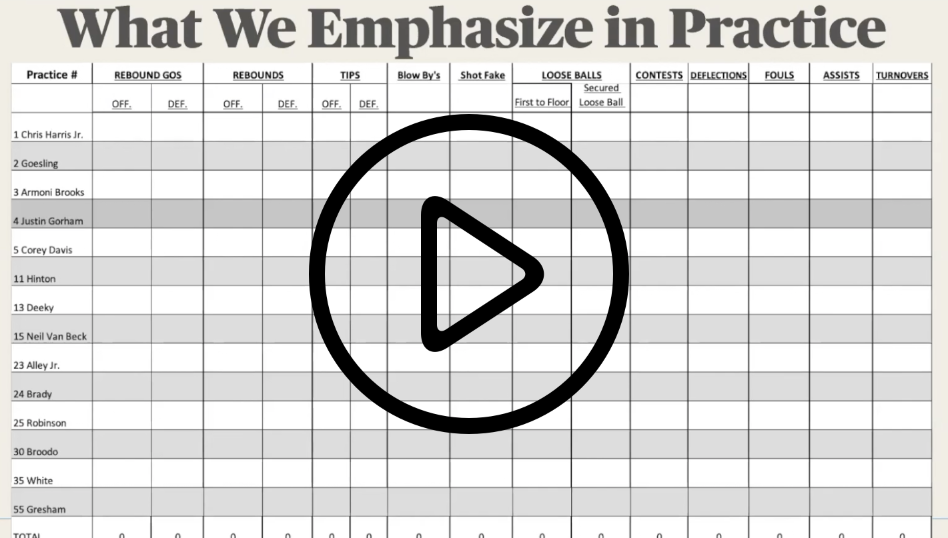

This is how the Cougars evaluate their “Toughness”. They focus on rebounding and defense. 

Pick and Roll Defense

One of the Cougars “Cour Four” is pick and roll defense.

This is something the Cougars work on every single day of practice.

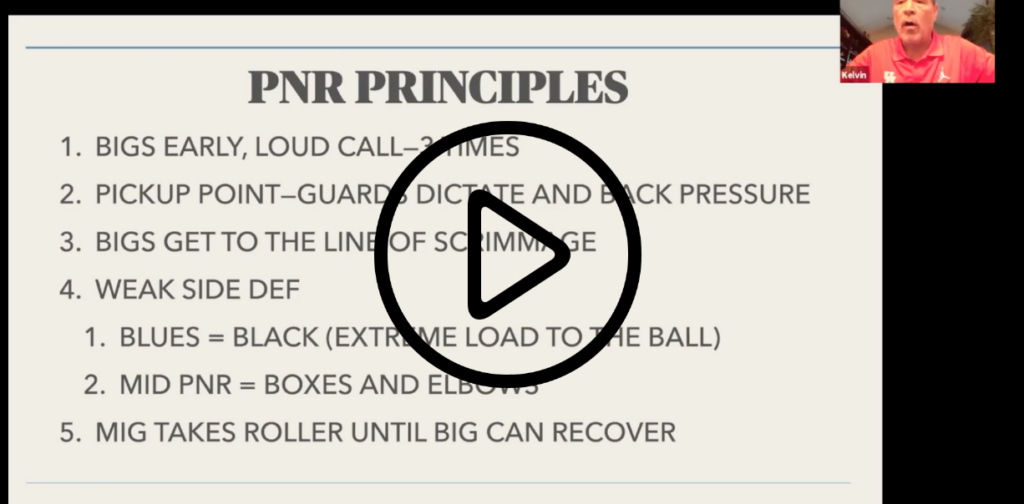
The Cougars pick and roll principles include 5 steps. 
#1 Pick and roll communication needs to be early and loud three times. 

#2 The guards must dictate and have back pressure.

#3 The bigs have to come up to the line of scrimmage to meet the guard coming off the pick and roll.

#4 The help defense has to be in position to give support for the pick and roll defense. 

#5 The MIG (most important guy) has to take roller until the big can recover.

Below, Coach Sampson shows an example of these 5 steps.

(Click on Image to Play Free Video)
Spacing in the Half-Court

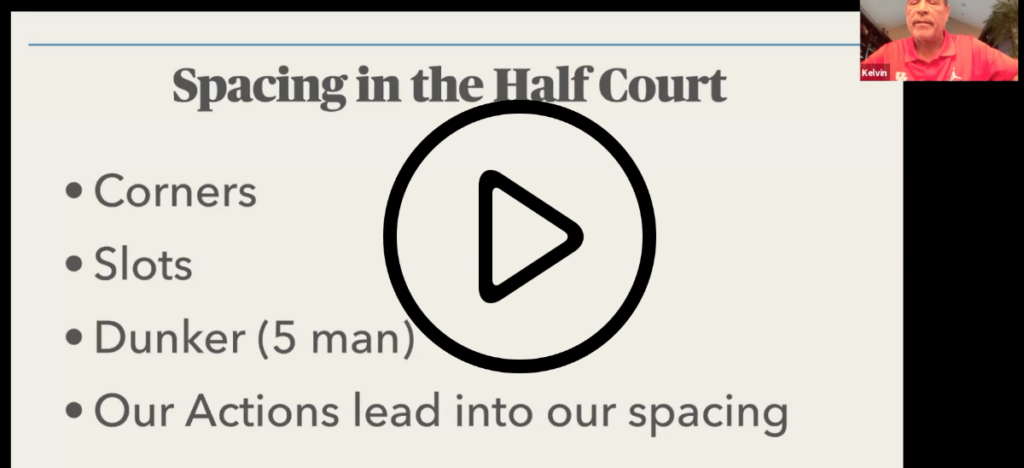
Offensive Spacing is another key concept in the Cougars “Core Four”.

Spacing in the half court starts with players in certain areas of the court.

-The corners and slots are to be filled.

-The dunker spot is to be filled with the big.

-And then all the actions that the Cougars run come out of proper spacing.

(Click on Image to Play Free Video)
The Cougars success has been built due to a championship level culture. 

Coach Sampson and staff have done a terrific job at Houston. 

These videos were taken from Coach Sampson’s complete 40-minute video course.

If you would like to learn more about that course click the link below.

Kelvin Sampson: PNR Defense and Offensive Spacing


Developing the Leadership Setting

By Brian Williams on September 22, 2021

How the Learning Context Inspires Confidence, Cohesiveness, and Commitment

It didn’t dawn on me that there might be anxieties and risk involved in team learning until I put a few work teams at a Fortune 100 company under a microscope.  To say the very least, what I observed was a wide-range of defensive and protective behaviors. Ultimately, these attitudes and actions closed off the team’s members from learning.  Instead, the dysfunctions that emerged anchored the team’s collective efforts in the harbor of mediocrity.

As a result of this work I decided to take a closer look at how student-athletes learn in a team setting, and in particular how the context influences the perceived risks involved in learning to lead one’s teammates.  Upon closer inspection it became obvious that many of the risks involved in team learning in the corporate world are mirrored in the athletic world.  Needless to say, learning to lead in any team environment is risky business.

So, how do you get student-athletes to learn together?  There are no simple answers.  However, knowing that the context greatly affects learning is a step (more likely a leap) in the right direction if you’re sincere about your players learning how to lead.

Leadership Development and Psychological Safety

When a student-athlete takes on a leadership role it’s important to understand that he or she will learn primarily through trial and error (which is why I firmly believe in deliberate practice—scrimmage—as a way to reduce perceived risks).  If a student is learning physics she will likely study and learn in private with no one aware of her mistakes.  However, learning to lead teammates requires learning in front of one’s peers, and this is intimidating.  The peer learning environment brings a perceived risk of appearing ignorant and incompetent in front of one’s peers.

Because most student-athletes have little experience at leading, which includes making mistakes in front of teammates, such fears as embarrassment and rejection are always present.  Many student-athletes are reluctant to take action or to speak up or speak out for fear that their actions will be held against them by teammates.  And this discourages young men and women from taking leadership actions.

To neutralize such fears, it’s in every ones best interest to create a psychologically safe environment.  Psychological safety is the shared understanding that the team is an environment where members will not embarrass, disrespect, disregard, or punish a teammate for taking action.  All members understand that a supportive learning environment is necessary to building a psychologically safe team context.

At the heart of the growth of a team leader is the leader as a learner, the learning process, and the context, which together form the cornerstone of leadership development.  Always keep in mind that the team leader is engaging in learning a new mindset as well as a new skill-set.   That is, the student-athlete as a team leader is undergoing a tremendous transformation and that a psychologically safe environment is fundamental to growth and development.

Let me issue a quick reminder, leadership is a social influence process of motivating team members to achieve individual and team goals and the team’s mission.  As such, the norms that emerge from team member interactions will create team dynamics that build a team’s culture.

Your first project as the chief architect of the team environment is to create a psychologically safe learning zone. Ultimately, you have more to do with a team leader’s learning to lead—or not learning—than you probably thought you did.  If you’re not growing team leaders, then it’s likely the problem is not the seed, it’s the soil.

[thrive_leads id=’36827′]

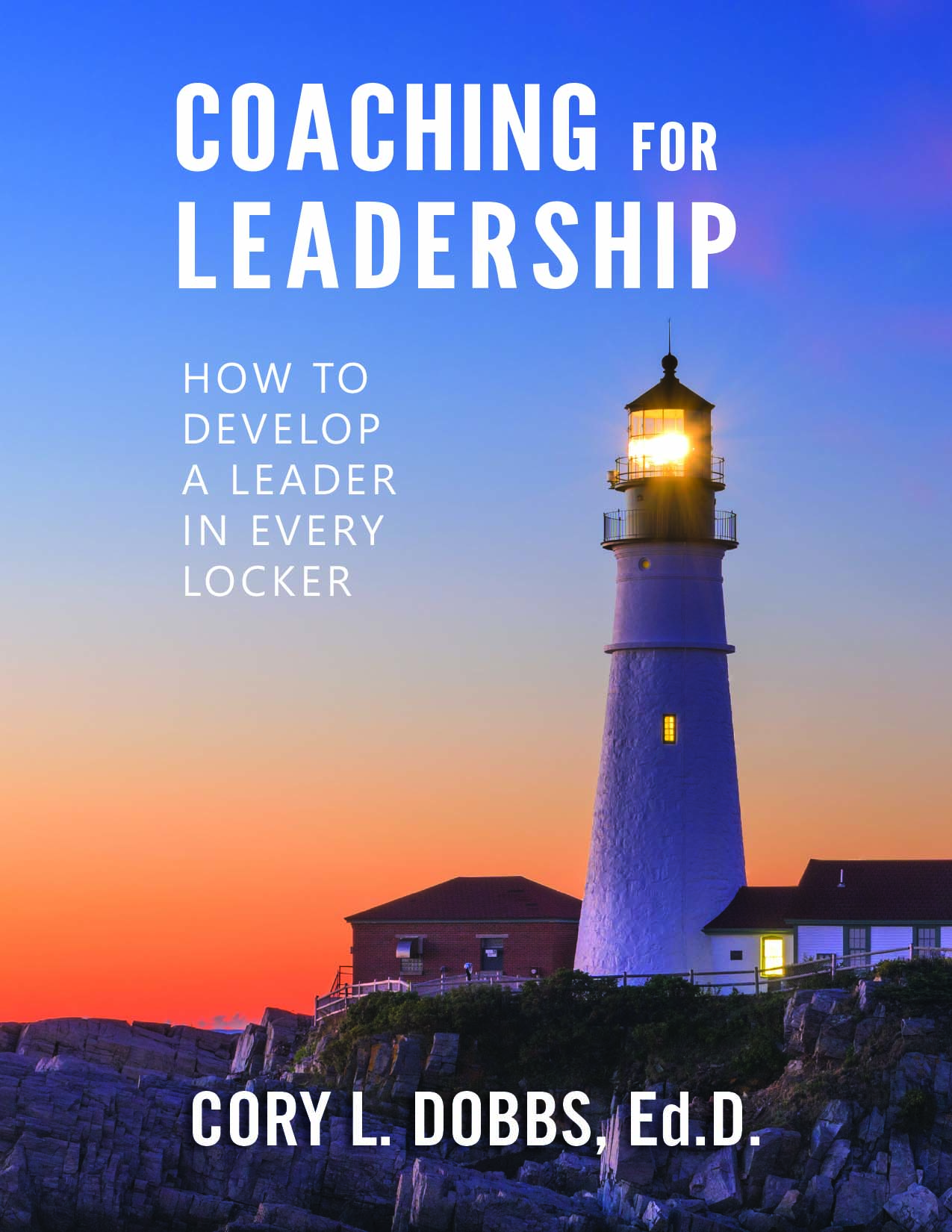
New to the Second Edition of Coaching for Leadership!

We are pleased to announce a new chapter to the second edition of the best-selling Coaching for Leadership. The chapter, The Big Shift: Unlock Your Team’s Potential by Creating Player-Led Teambuilding, connects the previous edition of this book to its origin, as well as to the future of team sports.

The new chapter sets forth a practical and applicable agenda for change and improvement. The reader is introduced to seven vital elements of change; seven shifts of traditional mental models that lead to the new core principles necessary for creating a player-led team culture. Click here for more information about Coaching for Leadership

About Cory Dobbs, Ed.D.

Cory Dobbs is the founder of The Academy for Sport Leadership and a nationally recognized thought leader in the areas of leadership and team building.  Cory is an accomplished researcher of human experience. Cory engages in naturalistic inquiry seeking in-depth understanding of social phenomena within their natural setting.

A college basketball coach, Cory’s coaching background includes experience at the NCAA DII, NJCAA, and high school levels of competition.  After a decade of research and development Cory unleashed the groundbreaking Teamwork Intelligence program for student-athletics. Teamwork Intelligence illuminates the process of designing an elite team by using the 20 principles and concepts along with the 8 roles of a team player he’s uncovered while performing research.

Cory has worked with professional athletes, collegiate athletic programs, and high schools teaching leadership and team building as a part of the sports experience and education process.  As a consultant and trainer Dr. Dobbs has worked with Fortune 500 organizations such as American Express, Honeywell, and Avnet, as well as medium and small businesses. Dr. Dobbs taught leadership and organizational change at Northern Arizona University, Ohio University, and Grand Canyon University.

Best International Basketball Set Plays of 2020-2021

By Brian Williams on September 22, 2021

Basketball is a global game. Coaches who follow international basketball were not that surprised that the USA Basketball team lost to Nigeria and Australia. The style of play of Euroleague teams is becoming more prevalent in USA basketball. 

Coach Kostas Kalogeropoulos is an Assistant Coach for Olympiacos BC development team (division 2), under-18 boys team assistant coach, under-15 boys team head coach. Coach Kalogeropoulos has 17 years of coaching experience, and has spent many years studying international offenses.  

Coach Kalferopoulos studied last season’s Euroleague teams and pulled out his favorite actions that he believes could help teams win and created this:

The euroleague best set plays of 2021-2021

His course consists of: transition offense, half-court sets, SLOB, BLOB, ATO & Special Sets. 

Transition offense is a great time to attack. The defense is sprinting back and may not be in position to defend the basket. Fenerbahce runs a couple wrinkles out of Double Drag. 

This wrinkle of Double Drag is designed to allow 2 open looks for shooters. 

Fenerbahce — Double Drag Turnout

(Click image to play Video)

In the half-court, Horns is one of the most predominant alignments in basketball in USA basketball at every level. Alba Berlin’s spacing and timing of their Horns actions is a beauty to watch. 

This wrinkle of Horns they are looking to put the help defender in a pickle. If the helpside defender, the bottom man, stays to take away the lob then his man will be open for the 3. If the helpside defender takes away the 3 then it will allow the lob man to be open. 

Alba Berlin — Horns Flip Slip 

In a coaches playbook you want to make sure you have designed sets in certain situations. Most coaches have designed sets for: need a 2, need a 3, after timeout, SLOB & BLOB. Practicing ATO’s before you draw them up in the huddle will help make it easier. 

The SLOB that Armani Milano runs is designed to get a quick 2 because they’re down by 1 with just over a second to go. Under one second, you want to make sure you have a play designed that will get you a quick open look or a tip in/lob at the basket. 

Armani Milano — Special ATO SLOB

This playbook is filled with more than 100 set plays run by Euroleague teams during the 2020-21 season. All clips from game film video.

 Purchase the Best Euroleague Set Plays of 2020-2021 here

If you enjoyed this playbook and want more Euroleague action click below:

Effective Euroleague Plays 2019-2020

International Basketball: Euroleague Best BLOB Plays

Euroleague Pick and Roll Plays


Basketball Drill: Wing to Wing with Joe Abunassar

By Brian Williams on September 17, 2021

This skill development drill is provided by Dr. Dish Basketball.

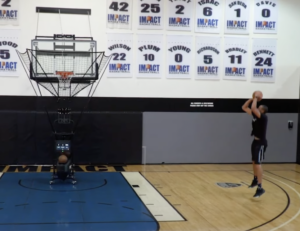
IMPACT Basketball founder Joe Abunassar shows a drill to work on both game shots and toughness.

To execute the drill:

1. Start with a three-point shot from the right wing.

2. Sprint to the left wing for another three-pointer.

3. Once you make two three-pointers, then switch to one-dribble pull ups.

4. Sprint wing to wing until you make two of those.

Coach Abunassar says, “As a young player working to get better, you got to make sure your drill work is at game-speed and is challenging you from a cardiovascular perspective.”

You can and should modify any of the drills to make them fit your needs or to add variety to your skill development work.

Please make sure your sound is on to see the video.
This drill is hosted on YouTube, so you will need to be on a server that allows you to access YouTube to see the drill.

Click the play arrow so see the drill.

A Flawed Reality: When it’s Time to Reflect

By Brian Williams on September 17, 2021

Two years after landing the head coaching position he so badly desired, Coach Jones (not his real name) was quietly fired. The administrative staff realized they’d made a mistake hiring Jones. They weren’t quite sure why he didn’t work out. They did their homework.

Well, enough to consider him a solution to their coaching needs. However, what they couldn’t see is what did him in. After spending a month analyzing Jones, here are the flaws I uncovered:

  • Is overly demanding
  • Doesn’t listen
  • Is intolerant of dissent
  • Takes the credit for success
  • Blames others for mistakes
  • Is untrustworthy—doesn’t do what he says he’ll do
  • Is aloof—seen as arrogant
  • Has a dictatorial style
  • Is abrasive

It’s fairly obvious, after the fact, that Coach Jones has some serious flaws related to interpersonal interactions (he is comfortable with a transactional style of conversation) and relationship building. Nowhere in his flaws will you find a glitch in his knowledge of the sport. He has a great command of the X’s and O’s. But he has some serious team building flaws.

The two primary blind spots that emerged are: 1) his need to be right in all situations, and 2) avoiding accountability to his players and staff. Coach Jones’ “I know” attitude produced such flaws as taking credit for success and his unwillingness to listen. The desire to avoid accountability (to the stakeholders) produced his blaming of others and his dictatorial leadership style and abrasive attitude toward relationship building created cool relationships between him and his staff and players.

The prognosis for Coach Jones is not good. If he fails to discover his fatal flaws his coaching career will never recover. As a prominent coach told me, “We’re pretty good at directing our players to change, but not so great at changing ourselves.”
[thrive_leads id=’36827′]

New to the Second Edition of Coaching for Leadership!

We are pleased to announce a new chapter to the second edition of the best-selling Coaching for Leadership. The chapter, The Big Shift: Unlock Your Team’s Potential by Creating Player-Led Teambuilding, connects the previous edition of this book to its origin, as well as to the future of team sports.

The new chapter sets forth a practical and applicable agenda for change and improvement. The reader is introduced to seven vital elements of change; seven shifts of traditional mental models that lead to the new core principles necessary for creating a player-led team culture. Click here for more information about Coaching for Leadership

About Cory Dobbs, Ed.D.

Cory Dobbs is the founder of The Academy for Sport Leadership and a nationally recognized thought leader in the areas of leadership and team building.  Cory is an accomplished researcher of human experience. Cory engages in naturalistic inquiry seeking in-depth understanding of social phenomena within their natural setting.

A college basketball coach, Cory’s coaching background includes experience at the NCAA DII, NJCAA, and high school levels of competition.  After a decade of research and development Cory unleashed the groundbreaking Teamwork Intelligence program for student-athletics. Teamwork Intelligence illuminates the process of designing an elite team by using the 20 principles and concepts along with the 8 roles of a team player he’s uncovered while performing research.

Cory has worked with professional athletes, collegiate athletic programs, and high schools teaching leadership and team building as a part of the sports experience and education process.  As a consultant and trainer Dr. Dobbs has worked with Fortune 500 organizations such as American Express, Honeywell, and Avnet, as well as medium and small businesses. Dr. Dobbs taught leadership and organizational change at Northern Arizona University, Ohio University, and Grand Canyon University.

NBA Playbook: 3 unique actions

By Brian Williams on September 14, 2021


The average number of points a game for all 16 teams in the 2021 playoffs was an average of 113 PPG. 

Here are three actions from those playoffs

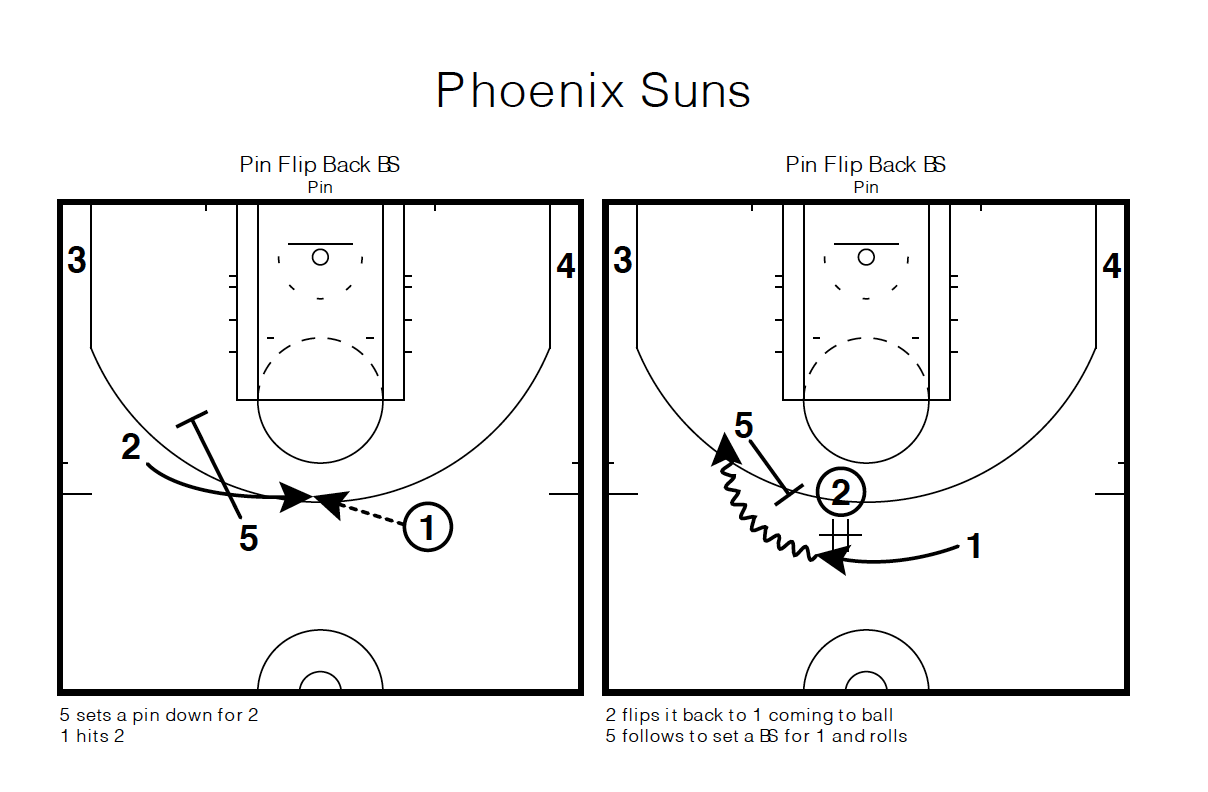
#1) Phoenix Suns “Pin Flip Back Ball Screen”

The Phoenix Suns averaged 114.7 PPG in the 2021 NBA Playoffs. 

In their half-court offense, the Suns looked to find ways to get shooters open. The Suns started using mis-direction sets to keep the defense on their heels. 

The Pin Flip Back Ball Screen is a mis-direction set that gets the defense leaning one way and then the ball gets flipped back headed downhill in another direction. 

This action puts a lot of pressure on the defense and is an easy way to get a guard downhill. 

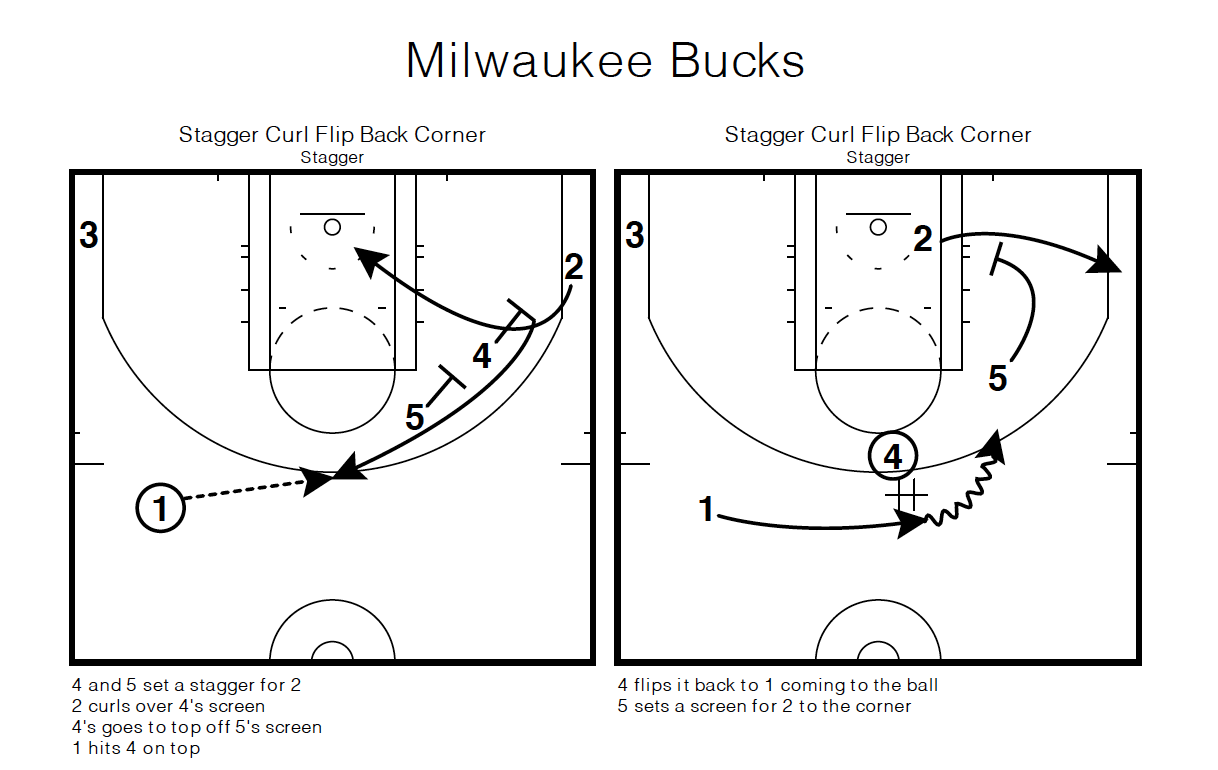
#2) Milwaukee Bucks Stagger Flip Back Corner

The Milwaukee Bucks Giannis Antetokounmpo took home the MVP honors for the NBA Finals. 

​The exceptional play of Khris Middleton was another reason the Bucks won the Championship. 

The Bucks found ways to get the ball in his hands anytime they needed a big shot. 

The Stagger Curl Flip Back Corner is a wrinkle to another gaggle action that the Bucks ran in the series to get Middleton the basketball.

The play is designed to be a mis-direction set because it looks like the 4 man is going to reverse the ball then instead DHO’s to bring it right back to the same side.

During the DHO, Middleton is coming right off a pin-down looking for an open shot. 

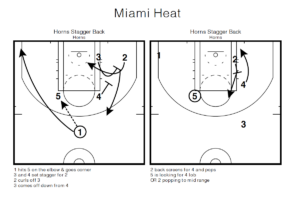
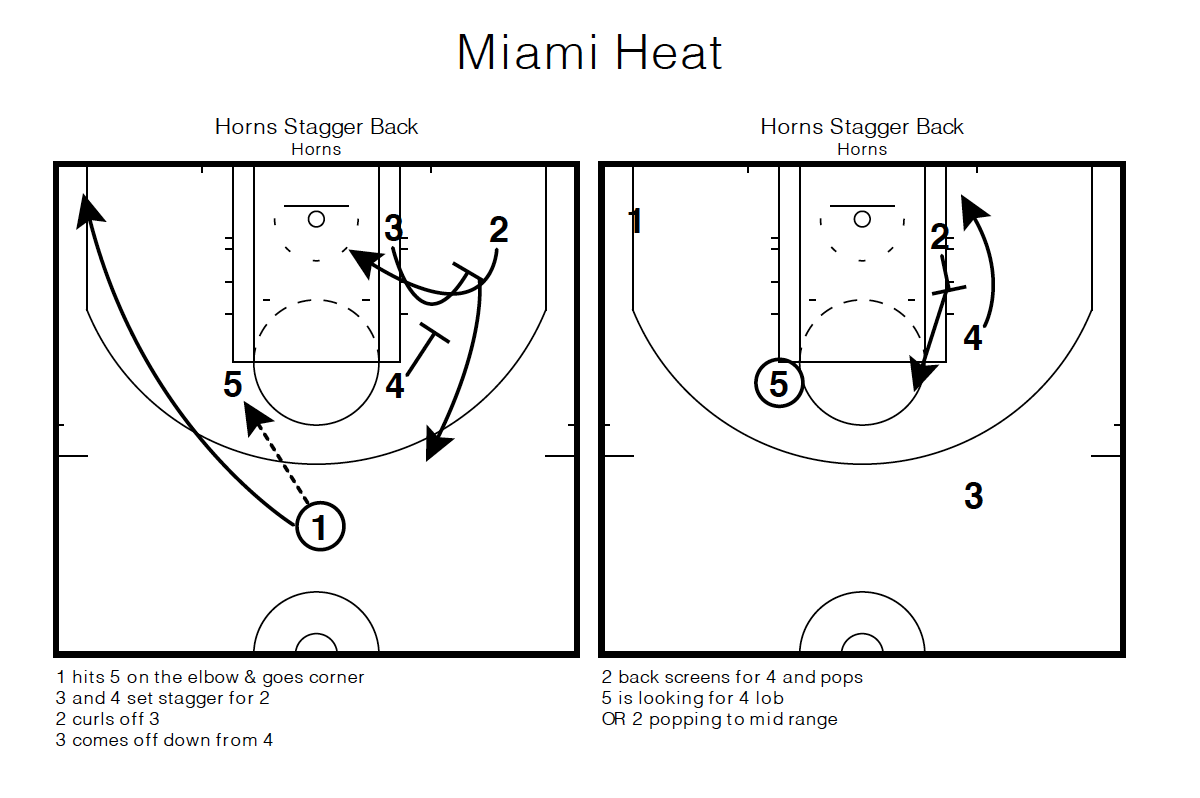
#3) Miami Heat Horns Stagger Back

Miami Heat is one of the best trend setters for 

offense in the NBA because of their unique approach of trying new actions.

Erik Spoelstra is known as one of the NBA’s brightest offensive minds.

The Miami Heat have one of the best Horn’s series packages in the NBA. 

The Horns Stagger Back action is a wrinkle to many actions you can do off a stagger screen. 

One of the toughest screens to guard is a back screen. Usually teams just switch back screens; however, they happen very fast so it puts a lot of pressure on the defense.

One of the best things about a back screen is that the player coming off the screen isn’t the most open player in most circumstances. 

The screener usually pops up for a wide open look because the defenders are communicating what they are doing on the screen. This allows the screener to be freed enough time for an open look. 

All of these plays are taken from Coach Tim Bergstraser’s 2021 NBA Playbook 

The playbook is filled with 750 actions in many different alignments & series that translate to every level of basketball. 

To purchase the playbook click the link — 2021 NBA Playoffs Playbook

If you’re interested in learning more NBA Offense then you can find more playbooks below:

Brooklyn Nets Playbook

Milwaukee Bucks Playbook

Golden State Warriors Quick Hitters Playbook


  • « Go to Previous Page
  • Page 1
  • Interim pages omitted …
  • Page 13
  • Page 14
  • Page 15
  • Page 16
  • Page 17
  • Interim pages omitted …
  • Page 288
  • Go to Next Page »

Primary Sidebar

  • Twitter
  • Facebook
  • Linkedin
coachestoolbox
personaldevelopmenttoolbox
basketballplayerstoolbox
basketballtrainer
athleticperformancetoolbox
coachingbasketball

© Copyright 2026 Coaching Toolbox

Privacy Policy