• Skip to primary navigation
  • Skip to main content
  • Skip to primary sidebar

  • Basketball Plays
    • Ball Screen Sets
    • Horns Sets
    • Man to Man Post Up
    • Man to Man Isolations
    • Backdoor Plays
    • Man to Man 3 Point Shot Plays
    • 2-3 Zone Attack
    • Baseline Inbound Plays
    • Sideline Inbound Plays
    • Combination Defense Attack
  • Drills
    • Defensive Drills
    • Offensive Drills
    • Competitive Drills
    • Passing Drills
    • Rebounding Drills
    • Shooting and Scoring Drills
    • Toughness Drills
    • Transition & Conversion Drills
    • One on One Drills
  • Blueprint
  • Practice
  • Mental Toughness
  • Skill Development
  • Offense
  • Defense
  • Store

Defense

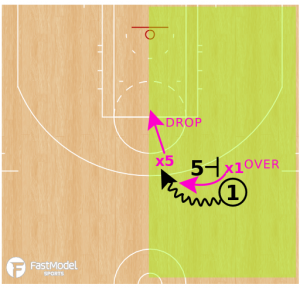
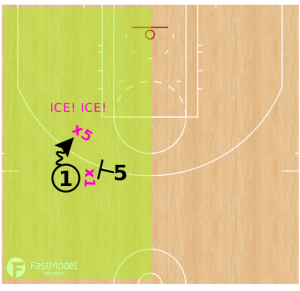
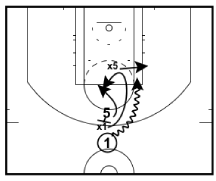
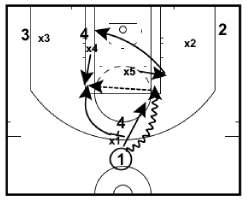
Icing a Side Pick and Roll

By Brian Williams on December 26, 2016

This post contains videos of two defensive drills from Matt Woodley, Asst Men’s Coach at Wake Forest.

At the time when the video was made, Matt was the Head Coach of the Iowa Energy of the G League.

He is a former assistant for Tony Bennett at Washington State.

For the 2017-18 season, he is on the Men’s Staff at Pitt.

Make sure your sound is on as you watch.

All videos are You Tube videos.

Make sure that you are on a server that allows You Tube access.

If you are interested in finding out more about the DVD that these video samples came from, click here:

Pack Line Modifications to Stop the Pick and Roll

Icing a Side Pick and Roll

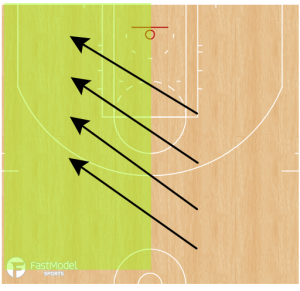
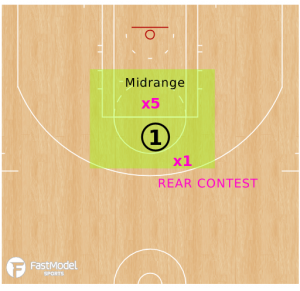
Ice Breakdown Drill

If you are interested in finding out more about the DVD that these video samples came from, click here:

Pack Line Modifications to Stop the Pick and Roll

Coaching Basketball Defensive Concepts

By Brian Williams on October 24, 2016

These defensive concepts from 3 highly successful college basketball coaches were posted on Bob Starkey’s Basketball Coaching Blog, hoopthoughts.blogspot.com.

Even if you don’t play a pack style defense, I hope this might get you thinking about terminology and philosophy that can be applied to improving your system.

Jim Boone, Head Coach Delta State Men

Here’s a few concepts and teaching points from Jim Boone in regard to the way he plays Pack Line defense.

Keys in Teaching:
1. Position players in such a way to already be in help.
2. Build a wall to stop the ball.
3. Five players working together.
4. Communication

Coach Boone: “We are zoning the ball.”

Five Things to Work on Daily:
1. Conversion defense
2. Low post defense
3. Pressure on the ball
4. Help/recover
5. Blockout

Coach Boone: “You can’t play transition defense while you’re in transition.”

Coach Boone: “Low post defense dictates how you set your entire defense up.”

Five Defensive Goals:
1. Pressure the ball
2. Contest all shots
3. Keep the ball out of the lane
4. No second shots
5. Do not foul

Coach Boone: “We want to determine what shots you get.”

Conversion Defense:
1. No fast break lay-ups
2. Out number the offense
3. Build from the lane out

Chris Mack, Head Coach Xavier Men

Pack Line defense helps give you a “system” to play defense.

1) Gives players answers and accountability

Certain things players can/can’t do do

They are given specific rules ex. “You can’t play behind the post” vs “Play hard”

2) Simplifies Scouting

Their coaches watch a ton of film but do not give it all to the

players. Instead they play certain actions in very specific ways and practice these

every day.

Example:  Practice defending staggered screens so when they play a team they already know how they will defend this and get better at it through out the year.

3) Creates a culture your players can believe in.

Varsity players “pass” down the defense by teaching your younger players without a lot of involvement from coaches.

GOLDEN RULE: When your man does not have the ball YOU MUST HAVE 2 FEET IN

THE PACK LINE.

Exceptions: If your man is cutting you must chase the cutter.

1) On the Ball: Have extreme ball pressure — do not get beat to the outside NEVER GIVE UP BASELINE

Keep your butt to the basket

Don’t get beat baseline

If your man goes towards the middle do not get beat through the elbow, they can’t attack you on a straight line.

2) You must have two feet inside the pack line when your man does not have the ball and you are trying to form triangles

Defining Your Team

  1. How do you close out?
  2. Close out with two high hands to discourage rhythm shots
  3. Play in then out

KEY: Your positioning is your help

Discourage shots, play the drive, call shot when the shot goes up.

Mike Neighbors, Head Coach Washington Women

When your man has the ball on the perimeter:
1. You were there on the catch.

2. You were the to take away the quick shot or quick pass

3. You were close enough to pressure without getting beat off the bounce.
 a. Don’t get beat to the outside
 b. Don’t get beat in a straight line

When your player does not have the ball on the perimeter:
1. You are about half way between the ball and your player

2. You are a step off the line that would connect the ball to your man

3. You are actively able to see both ball and man

Ball being passed to their player:
1. Move on the air time of the pass

2. Start with sprint and end with chops

3. High hands to active hands

Ball being passed but NOT their player:
1. Move on air time of the pass

2. Sprint to gap.

Teaching Points
1. Players must begin in proper position

2. Players must be vocal in communication of their responsibilities

“Ball” = this means I have the ball

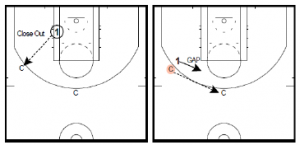
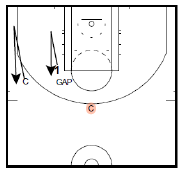
“Gap” = this call means my player does not have the ball but I am in your dribble gap

“Help” = this call means my player does not have the ball but is on the opposite half of the court than the ball is.

Thad Matta Defensive Notes

By Brian Williams on August 8, 2016

These notes are from Bob Starkey’s Basketball Coaching Blog, hoopthoughts.blogspot.com. He has been posting for several years and there are hundreds of posts with ideas to make your program better.

Transition Defense:

Post Rule: “Get your butt ahead of your opponent’s butt.”

Goal: Force at least 2 passes when offense has numbers

Don’t allow a skip for a 3

Rule: Deep man never leaves paint until post comes to release.

Dribble Penetration:

Toughest thing to defend in basketball

Rule on Closeouts: “We don’t force the ball anywhere- we tell them don’t get beat.”

Coach Matta: “if you give up catch and shoot too much, you’ll lose your scholarship.”

TP: Don’t allow ball to get to the shot pocket when defending a shooter.

On non-driver, we will defend the passing hand (scouting)

Post Play:

OSU fronts the post

TP: Want quick feet like a boxer

Ball up top: up the line, on the line

Will front LP always, even if the low post takes a step off the lane

Show hands… sit down.. push him under basket

TP: if you are late fronting, don’t front.

Off Ball Screens:

TP: Jump to the ball- OSU wants jumper to extend far enough to swipe at the ball

Objective: get S guarding the ball

Down Screen: Trail all cutters- no sliding them

1st Rule: don’t get screened

“If you are constantly getting screened you are not going to be able to play for us.”

TP: Must start when the ball is in the air.

TP: “If my man is screening, play to help.”

On Ball Screens:

TP: On ball screen you don’t have a man.

Ball Defender Rule: Must make him use the screen (no rejection)

Ball defender must go once the screen (not behind)

Want defender on screener to recover (through to ally) between the ball defender and screener.

Basket Cuts:

Jump hard to the ball- stay in stance

No face cuts

Offensive Rebounding:

You can’t spend too much time blocking out

OSU likes bubble to work on rebounding

Screen the Screener:

Flex Cut

Jump low and take away low cut

Screen defender will bump high cut

On 6-to-6 pass, jump to the ball and swipe

Thru on down screen (swipe creates lane to cut thru)

Shooters with Great Range:

Vs. Shooter, OSU exaggerates denial- force back out.

In transition defense, OSU teaches to run the lane- vs. shooter, run to the shooter.

3 Pointers in Late Game Situations:

Contact switch on dribble hand. Offs vs. Shooter on late game shot

TP: player switching on shooter should have high hands

5th Defender Principle: Defender whose man is out of the play-your goal is to mess up the play.

During walk thru, Matta makes sure player knows- “you are the 5th defender on this play.”

Four Basic Guidelines to Switching

And a few more defensive notes from Coach Starkey’s Blog. These are from retired NBA Head Coach Del Harris:

Switch with teammates of equal or near-equal size on screens and crosses.

Switch to keep big players inside and small players outside on screens. Do this on changes and crosses away from the ball when possible, and on matching up in transition defense, as well as in recovering on rotations. Any communication that can allow a switch to accommodate the big in-little out concept is usually worthwhile.

Switch within fifteen feet of the goal.

Use the “emergency switch rule.” That is, switch whenever a situation arises in which a switch will challenge an open shot, regardless of the mismatch as X2 does for X5 in D-60.

Coaching Basketball Defensive Notes

By Brian Williams on July 1, 2016

These notes are from Bob Starkey’s Basketball Coaching Blog, hoopthoughts.blogspot.com. He has been posting for several years and there are hundreds of posts with ideas to make your program better.

The following are notes from Jim Boone’s lecture on Pack Line Pressure Defense at the TABC Coaching Clinic in San Antonio.

Don Meyer: Write it all down
Get all the good ideas but know you can’t use them all
Fortune 500 Companies — note takers

Pete Newell: “Basketball is the most over-coached, under-taught game.”

3 anchors of your program
◄Sureness – take care of the ball
◄Shot Selection
◄Team Defense

Why Pack Line
1. Can you beat the best with your defense?
2. Does your defense allow you to win on the road?
Rick Majerus: “Winning on the road is about the paint.”
3. Does your defense improve as the season progresses
4. Does your defense progress in post season

Knight: “You get what your tolerate.”

“Know Your No’s” — non-negotiables
1) No Fast-break Lay-ups
2) No Baseline, Nothing to the Outside
3) No Paint (911)
4) No Direct Drives
5) No Rhythm Threes
6) No Second Shots
7) No Fouls

There must be Consequences if the Ball gets to Paint:
1) Take the Charge Foul – Take the Hit and protect the Basket
2) Block the Shot – Best shot block opportunities come from Help
3) Get a Deflection – Help the Helper – Force the Next Pass
4) Hard Foul, we do not want to foul but we are not giving up lay-ups

Rick Majerus: “Those to whom defense is not important will have the best seat in the game.”

The following are Part II of my notes from Jim Boone’s lecture on Pack Line Pressure Defense at last week’s TABC Coaching Clinic in San Antonio. Jim has been a life-long friend and a special member of my coaching circle. He is absolutely one of the best teachers around and an excellent clinician.

3 PACK LINE KEYS:

1. Pressure on the Basketball (based on ability/athleticism)

CLOSEOUTS
“Kobe” – (Driver/Shooter) — elbows bent…finger touch closeness
“Rondo” – (Driver) — “Sometimes not to guard is to guard.”
“Curry” – (Dead 3)

Closeouts are about seeking leverage

Doesn’t like to switch — wants to maintain the integrity of the match-up

JB: “We are an eye-to-eye” program.”

Utilize echo yells

2. Already in Help

Chuck Daly: “Defense can’t guard two things in a row.”

Guarding non-ball defender
◄2 feet in Pack
◄Closer to the ball than your man
◄See ‘em both
TP: Defend with near arm, near leg (no open stance)

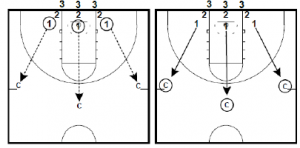
2/2 Full Court — Seal the gap
TP: Get off and get ahead

Tates Locke “Rule of Two”
◄2 minutes to Teach a Drill
◄2 days to Learn the Skill
◄2 months to make it a Habit.

JB doesn’t use a whistle in practice…wants player to be able to lock into his voice.

3. Can’t keep them from getting shots but can influence where those shots come from.

Things we can control:
◄Conversion Defense
◄Defensive Rebounding
◄Low Post Defense

JB likes to “Red” the post — double big to big

All players are denied pass inside of 16’
JB: “We don’t get to the mid-line on help because we don’t deny.”

Don’t concede post feed.

Side Ball Screen (Outer Third)
“Body Up” – make ball use screen
“Body In”
Screen Defender: Hand on hip
2 Steps Thru

High Ball Screen—Level/Show

JB: “If I was a high school coach I’d have an alternate defense for playing from behind.”

Al McGuire: Greatest emotion is winning
2nd Greatest emotion is losing
Winning goes to the head
Losing goes to the heart
Must learn to move forward

Buzz Williams on Defending Pick and Roll

By Brian Williams on May 23, 2016

This video is an interview with Coach Nick from bballbreakdown.com Texas A&M (Formerly at Virginia Tech when this segment was filmed) Coach Buzz Williams on his thoughts on defending pick and roll.

The video is a You Tube video so make sure that you are on a server that allows You Tube access.

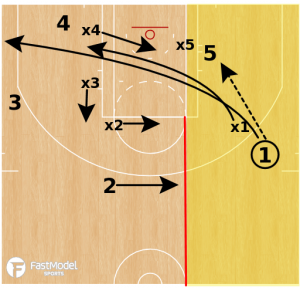
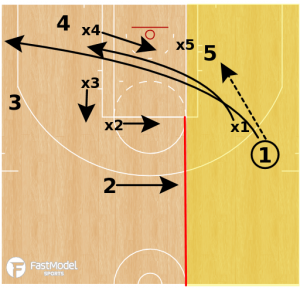
He believes in icing side pick and rolls so that they do not need to rotate a 3rd defender to the pick and roll.

Coach Williams believes in keeping his coverage simple as opposed to adjusting for personnel.

You do need to know and practice several type of coverage to go against in practice so that you are working against what other teams will throw at you.

Make sure your sound is on.

Defending NBA Pick and Roll

By Brian Williams on January 28, 2016

These are some of the notes on defending the pick and roll that Zak Boisvert posted on his Pick and Pop Basketball Coaches Site.

They are notes he took from Steve Clifford, Head Coach of the Charlotte Hornets.

Editor’s note from Brian. You won’t be able to use everything in these notes, but I hope you can pick up some terminology and a few teaching points that will help you defend the pick and roll

With shot clock change, things he would recommend to college coaches
1. ¾ court pressure
2. Down side pick & roll

To beat the best, we are going to have to be able to defend multiple pick & rolls in one possession. Our 4-men need to be able to do more than one coverage. We need to have that flexibility.

Regardless of the level you’re at, switch everything that you can. We start every shoot around with switching groups (“Who can switch versus these guys? 1-3? 1-4?”) We will switch every pick and roll that will not result in a significant matchup problem. “Anything you can switch, I would switch.”

We will start most games going under ball screens. We go under more ball screens than anyone in the NBA. With veteran players, you can manipulate ball screen coverages between different offensive players. Take advantage of
guys that aren’t range shooters. Going under will limit rotations and roll baskets.

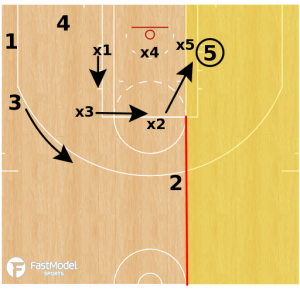
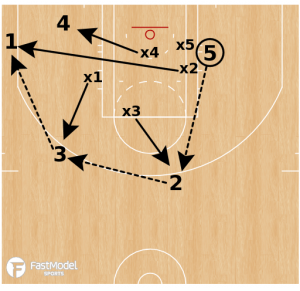
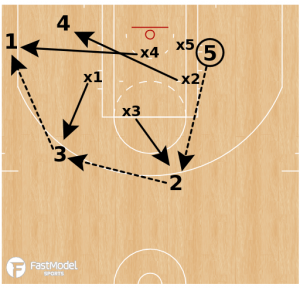
Advantages of Downing Side Pick and Rolls

1. Keeps ball out of middle
2. Slows ball movement
3. Forces offense to execute at a higher level

-Pick & Roll defense starts with controlling the ball (can’t give up initial separation).

3 elements of Pick and Roll Defense

1. Coverage (2 guys on the ball)
2. Protection (3 guys off the ball)
3. Recovery (Rotations Back)

In our “Down” we are personnel driven and will adjust the distance how much the big guy comes out on the coverage. Al Jefferson drops, Marvin Williams will come all the way out to a step and a half off the ball. Let players play to their instincts and their strengths.

This big can’t give up dribble arounds. Can’t let the ball get to the baseline or to the middle of the floor.

CaptureYour goal is to stay out of rotations as much as you can so you don’t spread out your defense more than you have to (remains compact) and limit how much you need to stunt. Exceptional on ball defenders will do this.

Diagrams created with FastDraw

Talk to your “Low Man” about reading the roll. If there is no roll (like on a non-aggressive throwback to the screener), he can kick the weak side corner defender out (off the weak side big’s top leg/body) so the defense can stay organized and not be more spread than it has to.

On-ball defender: no middle stance already, I move into the ball with tight elbow, lower than the offensive player. Pursuit to get back in the play (as handler dribbles away). Activity level on the ball (disrupt/contest every pass—
over us or around us).

Screener’s man: varies depending on personnel how deep you are. On pass back to screener, we go inside/out to keep the ball out of the middle of the floor.

Nail defender: slightly inside the nail. The closer the screener pulls to the elbow, the more I am going to inch over (is also dependent on who he is). If the screener rolls, we’ll stand him up with a bump and force him down to
the “Low Man.”

Limit your stunts early in the game. Make him make a couple and then we’ll get more aggressive. Since becoming a head coach, Clifford is much more conservative with his stunts from the nail defender. He will live with the screener hitting jumpers. If you over-stunt, you get burnt on the second side of the floor because you’re overextended.

When there’s a roll, we blitz.
• Why? Because the roll will suck in our defense.
• If we don’t have ball pressure in our blitz, the ball-handler will zip it
to the weak side of the court on us as we’re sucked in on the roll.
• Coverage hears “roll” by the nail defender, they blitz.

There can’t be a “Down” call without a “Low Man” call. There should never be a pick & roll run where there’s not
two calls (“Down”/”Low Man”). If not, you’ll give up baskets to the roll man. Even if it’s not the correct rotation/protection scheme, by having a low man you disallow the #1 basket that kills ball screen D: roll-man
layups. Even if it’s not perfect, if you get a low man, you give yourself a chance to rotate out of it (rather than giving up a roll man layup). No matter the defensive coverage, there needs to be a “Low Man.”

With our pick & roll D, our talk comes from our bigs. With our DHO defense, the talk comes from the guy guarding the cutter.

When your man cuts through to the weak side, you go through slowly and with vision of the ball.

Here is a link to the entire article and to download it as a pdf if you are interested.

  • « Go to Previous Page
  • Page 1
  • Interim pages omitted …
  • Page 7
  • Page 8
  • Page 9
  • Page 10
  • Page 11
  • Interim pages omitted …
  • Page 15
  • Go to Next Page »

Primary Sidebar

  • Twitter
  • Facebook
  • Linkedin
coachestoolbox
personaldevelopmenttoolbox
basketballplayerstoolbox
basketballtrainer
athleticperformancetoolbox
coachingbasketball

© Copyright 2026 Coaching Toolbox

Privacy Policy