• Skip to primary navigation
  • Skip to main content
  • Skip to primary sidebar

  • Basketball Plays
    • Ball Screen Sets
    • Horns Sets
    • Man to Man Post Up
    • Man to Man Isolations
    • Backdoor Plays
    • Man to Man 3 Point Shot Plays
    • 2-3 Zone Attack
    • Baseline Inbound Plays
    • Sideline Inbound Plays
    • Combination Defense Attack
  • Drills
    • Defensive Drills
    • Offensive Drills
    • Competitive Drills
    • Passing Drills
    • Rebounding Drills
    • Shooting and Scoring Drills
    • Toughness Drills
    • Transition & Conversion Drills
    • One on One Drills
  • Blueprint
  • Practice
  • Mental Toughness
  • Skill Development
  • Offense
  • Defense
  • Store

Basketball Drills

Basketball Drills Shooting with Conditioning

By Brian Williams on March 20, 2014

I always like to complete our improvement season skill development workouts with a “Toughness Drill” that challenges players both mentally and physically.

If you didn’t see the post with my competitive workout structure, here is the link: Competitive Basketball Workout

This is a very good drill to do just that.

It is from Coach Mike Neighbors, Assistant Coach Dallas Wings.

He calls it “3-6-9-12-15 Shooting”

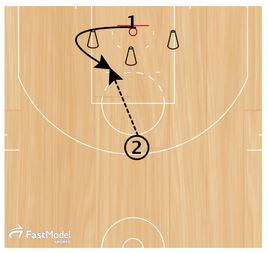
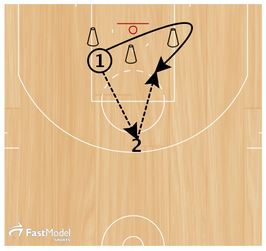
Put balls on the court at the half court line, the opposite three point arc, and the opposite free throw line. These are targets that shooters have to run around based on their shooting performance.

This is a five cycle drill with a FT in between each cycle. Total drill will give shooter 50 attempts.

First cycle is a 3. Shooter starts by first ball at half court line. She comes on the move to top of key to attempt shot #1. Make or miss she sprints to shot #2. Make or miss to shot #3. This completes the 3. She shoots a FT.

basketball-drills-3-6-9-12-15

Second cycle is a 6. Shooter starts at same spot and completes the cycle just as above. If she makes all 3 shots, she goes directly back to spot 1 for shot 4 and finishes the pattern. If she misses all three of her first shots she must sprint around the far ball before attempting shot #4. If she misses two shots, she sprints around the ball at opposite arc. If she misses only 1, she sprints around the closest ball at half court before attempting shot 4, 5 , and 6. Free Throw then back to start the 9.

This is a GAME SHOT/GAME SPOT/GAME SPEED drill that will also challenge your best conditioned shooters.

You can chart scores for individual cycles. 2 out of 3, 5 out of 6, 8 for 9, etc…

Your best shooters will in time have perfect rounds up through 12… never seen a perfect round in 15.

Your best shooters will have a 50 shot score in the 40’s. After a 3-6-9-12-15 with a free throw between rounds.

Basketball Drills 5 Ganon Baker Drills

By Brian Williams on February 27, 2014

The two YouTube videos on this page have 5 basketball skill development drills from Ganon Baker.

My hope for this post is that you will find a drill or two that you can use in the upcoming spring improvement season to offer some variety to what you are already doing.

I think it is very important to give your players a variety of drills that improve the skill they are working on to maintain their interest and their motivation to work at getting better.

The first video has a very unique two-ball shooting drill that he saw 2 NBA players use.

The second drill in that video is a dribbling drill that includes making a finishing move at the basket.

The videos are YouTube. Make sure that your sound is on and that you click the play arrow to see the drill.

Basketball Drills Video #1

Basketball Drills Video #2

The second video shows a 1) series of cone drills that you could modify to fit your players and your schemes, 2) A drill to work on coming off an onball screen and 3) A way to combine 2 ball dribble and game pace shots.

Keys to Player Development

By Brian Williams on February 19, 2014

By Fred Castro, Associate Head Women’s Coach at Mississippi State.

One of the things that we really emphasize at the University of Washington and that I pride myself on is player development. At any level of basketball the ability to improve an individual’s skill set should always be a priority. The truth is the elite programs whether its men, women, high school, college, or pros are consistently improving their player’s skill set from year to year. Elite programs do not just recruit great players and leave them as is.

The first thing as a coach that is imperative to player development is being available. I know that sounds obvious but you would be amazed how often other things can get pushed ahead of getting in the gym with a player. Player development is done Monday through Sunday 365 days a year. The willingness to be available when a player wants to work out and not just when it’s convenient for you is the first step.

Not only is it important that you be available to help a player but it helps build the relationship between player and coach. The fact that you make yourself available for a player shows them that you are truly invested in them. This pays huge dividends down the line as you demand players to push themselves and do things they have never done. Obviously you have to prioritize all your duties as a coach and every program is different.

My first week at UW, Coach Neighbors instructed the staff anytime a player requests to workout drop what you are doing and get in the gym even if you are working on something for him. How important is player development to you…?

Identifying the strengths and weaknesses of players, and developing good fundamentals is the next step. I know there are two different schools of thought on this subject. One, focus on the weaknesses and really bring those up to par, a player’s strengths will always be there. Two, don’t worry about the weaknesses, focus on the player’s strengths and make them elite. I believe you work on all of it!

Your strengths are why you are on the team and in the game. Unfortunately I have seen too many players exposed by good coaches and scouts because a player’s weakness was so evident. Either way all players need to learn good fundamentals. I don’t care how highly they are rated or how many points they score. Ask your players to throw a left-handed post feed and let me know if your post player ever receives that pass, good luck!

They need to know how to forward pivot, reverse pivot, throw a good skip pass, and DRIBBLE WITH THEIR HEAD UP!! I know none of that sounds very exciting but what wins games is the ability to do the” mundane” at a high level. Once you have ingrained the fundamentals (it never really stops) you can really begin to advance your workouts.

The next debate is quantity vs quality. My stance on this is it all depends on where you are in your development. If you are a young player in middle school or high school quantity, quantity, quantity is the key. Young players can never do too much ball handling or get enough shots up. Repetition at this age is what is most important even at the cost of technique. They say it takes ten thousand hours to master a skill so you might as well put in the time while you are young.

Once you have progressed past a certain point I am a big believer in quality. I would much rather be in the gym for 30 minutes and work with a high level or urgency versus be in the gym for 1 hour at a lower intensity and possibly get more shots. To me being in the gym is preparing for games; games are fast, intense, and demanding. So individuals should be the same.

If you are taking water breaks all the time you are no longer maximizing your time in the gym and no longer training the mind of a basketball player. That being said there are times when you need to go half speed in order to teach proper foot work, mechanics, etc. but that does not mean you are no longer intense or with a lower state of focus.

This brings me to practice planning, if you want your players to be focused and you want to be able to push their limits you must have a detailed plan for your individual. You should be going from drill to drill with any accessories you may need such as cones, pads, etc. and never skip a beat. You never want a player to think you are making stuff up or just winging it because then it’s no longer an individual.

Individuals are great opportunities to not just develop a skill set but to build self-confidence and mental toughness. Give players drills that you know they will struggle with and allow them to fail initially. Creating opportunities for players to compete with themselves is great especially when season is months away. When they reach a goal that they first felt was unreachable it can be a very powerful thing psychologically. Make sure you plan it out well and that any challenges you do provide are reachable but not without a great deal of work.

One of the things you must do as a coach is always be looking for new ways to teach the same things. Find new ways to do a ball handling drill, passing drills, or shooting drills. The learning plateau is very real when it comes to skill development, especially when dealing with over achievers or kids with high skill sets. Do not let your individuals become boring, your players should always look forward to learning new drills or receiving a new challenge from a coach. Do not hesitate to make up drills; some of the best drills I use have been made up minutes after finishing an individual. That’s when my mind seems to want to create, the rest of the time it stays dormant.

Finally, watch film with players especially the really good ones. In my experience the really good ones need it because they don’t ever think it was their fault or that they have a deficiency until they see it on film. During the off season I like to show film of other players like Steph Curry, Chris Paul, and Tony Parker for point guards. Tim Duncan, Kevin Love, LaMarcus Aldridge, and Roy Hibbert for post players. Showing them a move or technique before going in the gym can really help some players.

It’s difficult for some players to visualize certain moves, especially in the post so this helps the learning process. During the season, I really focus on film of the actual player. Some of the best film and teaching can be done breaking down film of the 30 practices before games start. There is so much to learn from a player’s perspective that you can almost never watch enough. I am also a former video coordinator so please keep that in mind, I am a big believer in film and learning from it.

Film is a great tool to reinforce certain things without ever saying a word. If you want your player to sprint back in transition just show them film of them jogging back with their man over and over and over again. No need for commentary just let them watch, when the film is over let them assess what they saw. The other side of that is even more powerful, show a player diving for loose balls and reinforce that and I promise that habit will continue. Once season is over make highlight videos of your players showing them all the great things they did. Who doesn’t like to see themselves doing great things on the court! If serves two purposes, one player’s genuinely appreciate the fact you took the time to make this for them.

I promise they will go home and watch a million times and if they are guys they will show it to anyone that ever enters their room or apartment! Secondly, it’s a carrot to keep working during the off season and improve for the following year which is really what it’s all about. Get better every day so you can do things you have never done.

As an assistant at the University of Tulsa Britney Brown and I created this video http://www.youtube.com/watch?v=3ZpVIeybJDg&feature=youtu.be for our guards to use during the summer while they were at home in order to keep their skills sharp. There are numerous drills in this video for every stage of player development.

Basketball Drills 5 Lane Passing

By Brian Williams on February 18, 2014

I have not used this drill, but it is one that I think is worth experimenting with for 10 or 15 minutes to see if it is worth continuing to use in your program.

I think it is worth experimenting with new ideas each week in practice to see if they will improve your program.

I have posted a similar drill using 3 lanes previously.

Here is the link to the video if you missed it: 3 lane sureness drill

With 5 lanes in the drill, one of the main teaching points is spacing on the passes.

You can vary the drill by making teams compete against each other for the least amount of passes required for completion or by timing each team.

basketball-drills-5-lane-passing1

This drill emphasizes man-to-man defensive coverage, develops the ability to pass and catch under pressure, and develops team communication and court spacing.

It is a great way for players to develop the ability to get open.

The drill is very effective in teaching intensity and internal motivation, resetting without dwelling on the mistake, and working together.


basketball-drills-5-lane-passing2

Assign each pair to play in one of the 5 lanes as designated on the diagram. Neither member of this pair is allowed to go outside of their lane.

You can use floor tape or markers such as cones or spots from PE classes to mark the lanes.

Offense moves the ball up the court; with every offensive player having to receive a minimum of 2 passes. (You can try the drill with and without this rule to see which way works best for your team.)

The offense has completed the drill successfully when one of the offensive players receives a pass while standing on the opposite baseline.

basketball-drills-5-lane-passing3

Once an offensive player receives a pass, they must yell out the number of passes they have received. This will help the offense know when all 5 players have caught 2 passes if you are using that rule.


basketball-drills-5-lane-passing4

RULES FOR THE DRILL;

1. No dribbling. Get your players used to pivoting under pressure.

2. If the defense steals the ball or causes it to go out of bounds, the offense must reset at the baseline. Insist that your players reset without instruction.

3. A loose ball can only be retrieved by the person in the lane it is in.

This drill was submitted by Denita Dyck

Basketball Drills Rebounding Drills

By Brian Williams on February 14, 2014

These basketball rebounding drills are from an old University of Washington women’s Newsletter.

Coach Mike Neighbors has moved on to Arkansas.

8 Minute Rebounding

5-on-5 competitive drill where points are totalled at the end of 8 minutes.

Offense is around the perimeter behind the 3 point line. Defense must start in the key.

Offense will get 1 point for the rebound.

They can also play the rebound and score for more points.

After offense gets the ball, the play is over when offense scores or defense recovers.

basketball-drills-rebounding1

Defense must rebound and transition down the court. Whatever they score at the other end is their points. If the offense recovers the ball, they do not get to transition back.

Point guard always gets back on defense in this drill. The defender of the point should go to double team whoever is the biggest threat.


Circle the Wagons Rebounding Drill

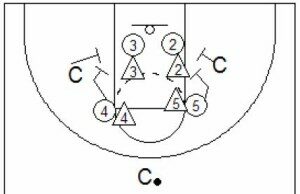
I think this is a good way to work on looking for someone to block out either out of a zone or from a man to man defense that traps and rotates.

basketball-drills-rebounding-drills basketball-drills-rebounding-drills2

Basketball Drills Triangle Ball Toughness

By Brian Williams on February 12, 2014

This post was created by Kyle Gilreath. He is NBA Client Services Manager for FastModel Sports.

He is the Head Basketball Coach at Astronaut High School in Florida. He served as an undergraduate manager as well as graduate assistant for the Florida Men’s program under Billy Donovan.

I found the drill on FastModel’s plays and drills library.

It contains over 2000 drills and plays in the library. Here is the link. FastModel Drills and Plays Library

You can also find out more about FastModel Play Diagramming software by clicking this link: FastDraw

Kyle also has a very good blog you should check out. Here is the link to it: Words on the Bounce

Here is what Kyle wrote about the drill:

This is a great offensive and defensive peer pressure drill that can help your players improve their toughness.

basketball-drills-triangle-toughness-2


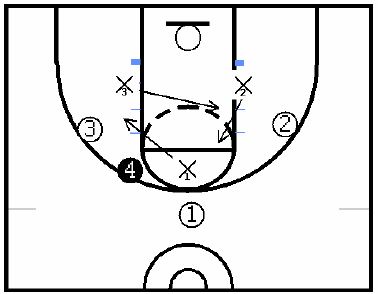
x1 and x2 trap 1.

1 must be strong with the ball trying to pass to 2 or 3.

1 must utilize pass fakes to lead x3 and pass to the open man.


basketball-drills-triangle-toughness


If 1 passes to 2, x2 and x3 become the new trappers.

Drill continues until the defense gets a deflection or causes a turnover.


  • « Go to Previous Page
  • Page 1
  • Interim pages omitted …
  • Page 75
  • Page 76
  • Page 77
  • Page 78
  • Page 79
  • Interim pages omitted …
  • Page 96
  • Go to Next Page »

Primary Sidebar

  • Twitter
  • Facebook
  • Linkedin
coachestoolbox
personaldevelopmenttoolbox
basketballplayerstoolbox
basketballtrainer
athleticperformancetoolbox
coachingbasketball

© Copyright 2026 Coaching Toolbox

Privacy Policy