• Skip to primary navigation
  • Skip to main content
  • Skip to primary sidebar

  • Basketball Plays
    • Ball Screen Sets
    • Horns Sets
    • Man to Man Post Up
    • Man to Man Isolations
    • Backdoor Plays
    • Man to Man 3 Point Shot Plays
    • 2-3 Zone Attack
    • Baseline Inbound Plays
    • Sideline Inbound Plays
    • Combination Defense Attack
  • Drills
    • Defensive Drills
    • Offensive Drills
    • Competitive Drills
    • Passing Drills
    • Rebounding Drills
    • Shooting and Scoring Drills
    • Toughness Drills
    • Transition & Conversion Drills
    • One on One Drills
  • Blueprint
  • Practice
  • Mental Toughness
  • Skill Development
  • Offense
  • Defense
  • Store

Basketball Drills

Box Screen Defensive Drill

By Brian Williams on February 6, 2015

This video shows a defensive drill run by former Akron and current Duquesne Men’s Basketball Coach Keith Dambrot.

You probably don’t use the same defensive rules, but my hope is that it gives you an idea of a way to set up drills to get high energy and a high number of reps for the actions that you defend frequently.

The video is a YouTube video so make sure that you are on a server that allows YouTube access.

Make sure your sound is on and click the play arrow to see the videos of the drills below.

Box Screen Defensive Drill

If you are interested in seeing 2 more drills from Coach Dambrot or more information about the DVD that this sample is from, you can click here: All Access Basketball Practice with Keith Dambrot

Basketball Drills Team Shooting

By Brian Williams on February 3, 2015

Some team shooting drills that were sent to me by Coaches Travis Golden and Nate Hill.

The first drill from Coach Golden is a modification of the Around the World Shooting Game to make it a competitive team shooting game. He is the girls 1st assistant at Clear Creek High School in League City Texas.

Travis said “Our kids have really gotten a kick out of the drill and we love the pressure throughout the game.”

Around the World Team Shooting Competition

This is a modification of the original Around the World game and has similar rules. You can have as many or as few spots as you would like from any distance.


1. Split your teams up to 5-7 players per basket and if you have enough basketballs for everyone have them get one per person otherwise 3-4 basketballs per group.

2. Choose your spots. We usually go with 5 to 7 3 point spots around the arc.

3. Team lines up at designated spot 1.

4. Must make a basket to move on to the next spot. If a person misses the next person can “chance it” and if they make it they move on. If they miss they go back to the original starting spot. If the team wants to stay at that spot then all of them must make a layup in order. If a person misses a layup they go back to the original spot. If they all make their layups then they stay at that spot and continue playing as if it is their turn again. You can modify the layups to block shots, reverse layups, or whatever you feel is acceptable for your teams skill set.

5. All baskets start shooting on signal from the coach. First basket to complete all of the spots you have chosen is the winning team.

The remaining drills were supplied Nate Hill is the Assistant Boys Coach at Colonel Crawford High School in North Robinson, Ohio.

Hopefully you can get some ideas from these drills to tweak your shooting drills to add some variety to your practices for the final portion of the season.

In case you have any questions or comments for Coach Hill, here is his email address: [email protected]

Coach Hill has a Coaching Newsletter. You can see his latest as well as sign up for it at this link:

Next Level 419 Coaching Newsletter.

Fastbreak Shooting

Diagrams created with FastDraw

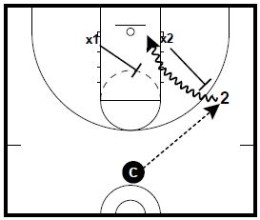
basketball-drills-fast-break-shooting1

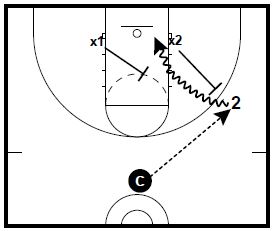
basketball-drills-fast-break-shooting2

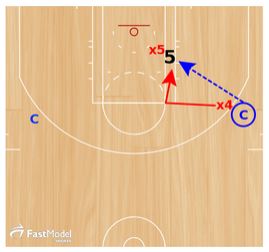
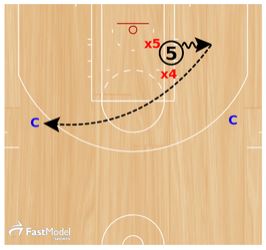
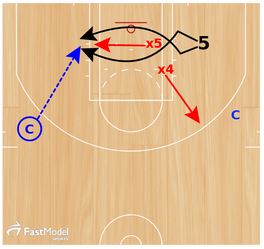
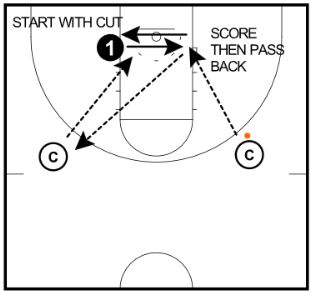
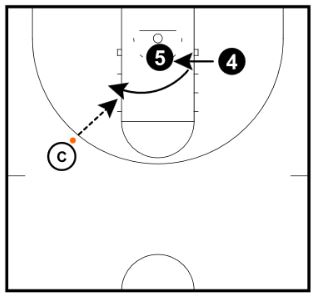
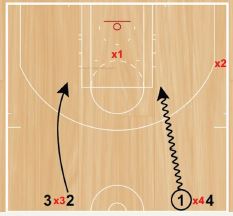
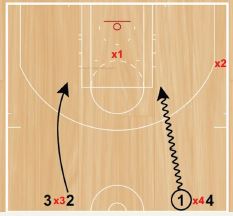
Fastbreak shooting Frame 1 (Left): 1 throws ball off backboard, “chins” ball and outlets to 1x “looping”. 1 then sprints and touches sideline, running wide. 1x shoots layup in 3 dribbles.

Fastbreak shooting Frame 2 (Left):x1 inbounds the ball to 1 looping. 1 should be able to make a layup in 3 – 4 dribbles. x1 runs wide touching sideline and gets rebound.

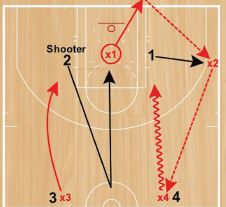
Same actions
2. Pass for layup
3. Pass for jumper
4. pass ahead, then return pass for flare screen
5. pull up jumper at elbow or for 3

Marquette Shooting

To work on emphasizing the concept of one more pass.

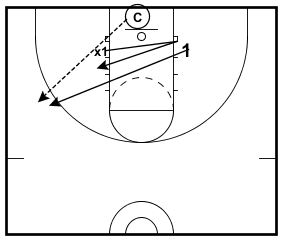
basketball-drills-marquette-shooting1

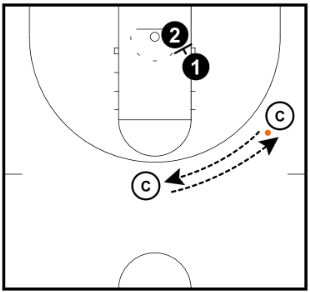
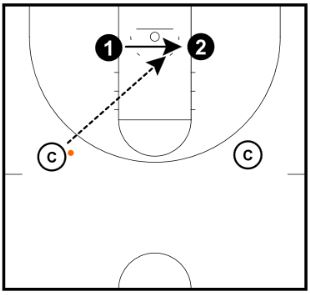
1 minute per spot, 1st time midrange, 2nd time 3’s. 8 spots total, 3 balls.

Coach starts with 3 basketballs.

Coach passes to 1 who passes to 6 for a shot.

+layers rotate and follow pass and their own shot.

1st shot is midrange shot for 1 minute

basketball-drills-marquette-shooting2

spot #2: coach moves up, and lines rotate.

Spot #2 is on the wing mid range jump shot for 1 minute.

Shoot on the opposite side of the floor as well.


Basketball Drills Free Throw Situations

By Brian Williams on January 30, 2015

submitted by Coach John Kimble
CoachJohnKimble.com

Retired high school and college coach

Published in Basketball Sense Magazine & Athletic Journal

Every basketball coach must design a set of drills to meet his or her particular team’s need for every phase of the game. To have time efficiency for practice, the best drills incorporate several facets of the game at the same time. As the name indicates, this particular drill is not solely a free throw shooting drill—but very much more than that. This drill has been used for over 20 years at various levels of play from 7th Grade AAU teams to varsity high school to Junior College teams. This drill is teach and practice executing the proper offensive and defensive techniques in specific free throw situations with as much game realism as possible.

For the last 20 plus years, we have tried to incorporate the many repetitions of the art of free throw shooting in the most ‘game like conditions’ possible. We incorporate as much as 10-12 % of each and every practice with this drill. We can afford to do this because we incorporate many other offensive and defensive facets of the game during this free throw shooting time.

Obviously, this drill is very much a free throw shooting drill. But the drill offers much more than that, such as a maximum in game-realistic conditions and factors as well as efficiently using valuable practice time. Some of the most important factors incorporated are that there is pressure on individual players in the groups or the team as a whole to perform important offensive and defensive techniques in high level competitive and pressure-packed situations. This drill demands specific important techniques and skills to be emphasized and practiced for all three players involved in each group. The drill provides the setting and opportunity for the coaching staff to be able to carefully observe, critique, correct, teach and praise all three players in each group at their own basket.

The activity we use before we actually begin this drill is some form of full court or live activity that incorporates a great deal of physical activity and running. This is to make the ‘FT Situation’ drill even more game realistic—and that is to make sure all players are fatigued (like they will be in an actual game) as the free throws are actually shot. We work on this drill three times a day at determined times in practice to break up the actual practice. During those designated times in the practice, every team breaks down into the pre-set three man work-groups that are changed daily. Each three man work group has a “FT Shooter” position, an “Offensive Rebounder,” position and a “Defensive Rebounder” position.

The drill gives each ‘Free Throw Shooter,’ while being fatigues, an opportunity to shoot five pairs of free throws, an opportunity for each shooter to take between five and ten jump shots after the free throw attempts. For each ‘Defensive Rebounder,’ the drill provides a maximum number of ten opportunities to align himself in the proper defensive rebounding position and stance, to box out the nearest ‘Offensive Rebounder,’ to then get the defensive rebound and then make an outlet pass to a teammate. For each ‘Offensive Rebounder,’ the drill provides a maximum of ten opportunities to align himself in the proper offensive rebounding position, to overcome and defeat the defensive box-out, to get the offensive rebound and then quickly “power” the inside shot back up (against defensive pressure) until he scores.

The ‘FT SHOOTER’ works on the techniques the coaching staff wants to emphasize as he shoots the pairs of free throws. We want each player to develop his/her own routine that is consistently followed in practice and ultimately during each game that includes fundamentally sound techniques.

Some of the shooter’s most important techniques to be emphasized are: A) develop a method of countering fatigue and calming the breathing down before shooting the free throws, B) to approach the free throw line and perform his own routine in preparing to align himself for his shots and to have full concentration on his shooting techniques (such as the follow-through of the shot, getting the legs involved in the shot, focus on the target, C) a quick and immediate reaction to the ‘made’ or ‘missed’ free throw to then receive a pass and take a mid-range jump shot (with the proper jump-shooting techniques) and D) practice handling the individual and team pressures of making shots.

The ‘DEFENSIVE REBOUNDER’ aligns on the inside position on the predetermined side of the lane. His responsibilities and techniques emphasized are to: A) keep both hands up and stack the feet together as close to the nearest opponent as possible, B) have quick feet and step in the lane directly towards the shooter with the ‘contact’ foot first, C) use the proper box-out techniques that have been already taught in half court defenses, D) jump for the rebound and ‘chin the ball,’ E) pivot away from the ‘Offensive Rebounder’ that is applying pressure on the ball, F) make a two-hand overhead pass to the FT Shooter that is rotating to the nearest elbow area.

The ‘OFFENSIVE REBOUNDER’ aligns on the same side of the lane immediately next to the ‘Defensive Rebounder.’ His responsibilities and techniques that should be emphasized are: A) Keep both hands up, B) stack both feet together on the high side of the rebounding spot (to stay as far away from the defenses as possible,) C) step into the middles of the lane as quickly as possible with his own ‘contact’ foot first, D) offensive rebound the ball and ‘power up’ strong with the ‘stick-back,’ E) apply hard pressure on the ball if the ‘Defensive Rebounder’ gets the rebounds and looks to outlet the ball.

After the planned full court or highly strenuous drill is completed, the FT Situation is announced and all of the 3-man groups quickly sprint to an open basket. The players quickly fill the three positions and the drill begins. Each ‘FT Shooter’ performs his routine and shoots a pair of free throws with one player being an ‘Offensive Rebounder’ and the other player being the ‘Defensive Rebounder’. The ‘Defensive Rebounder’ establishes his position on the typical (defensive) position and the ‘Offensive Rebounder’ ‘stacks his feet’ next to the ‘Defensive Rebounder’ on a pre-determined side of the lane. The next time this drill is used (later in the same practice), the two rebounders can ‘stack up’ on the opposite side of the lane.

If the first free throw is made, the ball is passed back to the free throw shooter for the second shot. When the first free throw is missed, the ‘Free Throw Shooter’ should always rotate immediately to the elbow area nearest the stack side. If the designated ‘Offensive Rebounder’ beats the defensive box-out and gets the offensive rebound; he then should practice what he would do in an actual game. That is—he quickly looks to take an offensive rebound “stick-back.” The designated ‘Defensive Rebounder’ that gets the defensive rebound pivots away from the opposition and makes a two-hand over-head outlet pass to the current (rotating) ‘Free Throw Shooter’.

The ‘Free Throw Shooter’ rotates quickly and ‘gets his feet and hands ready’ to receive the outlet pass and quickly take the jump shot. Once the jump shot is taken, all three players quickly reposition themselves for the second free throw shot attempt. If the first free throw shot is made, there is no missed shot, no rebound and therefore, no jump shot. All three players quickly return to their initial locations.

Regardless of whether the second free throw is made or missed, the FT shot is treated as a missed shot. Therefore, the ‘Offensive Rebounder’ that gets the ball immediately works on his stick-back shot. If the ‘Defensive Rebounder’ gets possession of the ball, he then makes the same type of outlet pass to the ‘Free Throw Shooter’ (who has rotated to the stack side’s elbow area. The ‘FT shooter’ takes the jump shot, regardless of whether the second free throw shot was made or missed.

After the one pair of free throws are shot, all three individuals rotate the three positions. The ‘FT Shooter’ becomes the next ‘Offensive Rebounder’ and the initial “Offensive Rebounder’ becomes the next ‘Defensive Rebounder.’ The initial ‘Defensive Rebounder’ becomes the next ‘FT Shooter.’ All three players shoot five pairs of free throws, with the individual statistics recorded on a daily free throw practice chart. Penalty sprints (for not making individual or team predetermined numbers of made free throws) cold be run at this time; followed by a quick drink of water.

The entire drill (with each player in the three man group shooting five pairs of free throws, anywhere from 5 to 10 jump shots, each player getting 10 opportunities to box out defensively, 10 possible defensive rebounds and a possible 10 potential offensive rebound opportunities), along with reporting the scores and running the penalty sprints as well as getting a quick drink of water can and should take no more than 7 to 8 minutes. We would use this drill three times a practice on the half-hour. Also, at the end of the practice, we would then have one or two players randomly picked to shoot ‘one and ones’ to determine if the entire team would run sprints, as an additional way to shoot free throws.

Another strong point of the drill is that each player is given the pressure to achieve his/her own specific goals that pertain to only his own skill levels in the various skills that must be performed in this drill. In addition, these goals can be modified to fit each player as they progress. There can be goals set for each individual group and they also can be modified from practice to practice (especially when the group members are changed.) To add additional game realism to the drill, there can be penalties not only for failing to meet individual goals but also for each group’s goals.

Group goals could be a set number of free throws that must be made by the group in addition to competing each team against the other groups. A ‘grading system’ could also be developed for the two types of rebounders where individual players could receive a plus grade for offensive rebounds and a negative grade for their opponent getting an offensive rebound (against them and their defensive box-out effort.) Positive and negative grades could also possibly be implemented for the jump shot portion of the drill. Light penalties could be attached for failures to meet individual, team goals and for groups losing in the various forms of the shooting competition against other groups.

As previously mentioned, a good portion of time is committed to this drill. But with techniques such as defensive boxing out, practicing techniques of beating box-outs, working on outlet passing, offensive rebounding and ‘inside shot’ practice, perimeter jump shooting; the time is well spent. The penalties and competition make this drill as game realistic as it possibly be, making it invaluable and worthwhile.

About the Author

Coach Kimble was the Head Basketball Coaching position at Deland-Weldon (IL) High School for five years (91-43) that included 2 Regional Championships, 2 Regional Runner-Ups and 1 Sectional Tournament Runner-up. He then moved to Dunlap (IL) High School (90-45) with 2 Regional Runners-up, 1 Regional, 1 Sectional and 1 Super-Sectional Championship and a final 2nd Place Finish in the Illinois Class A State Tournament. He was an Assistant Basketball Coach at Central Florida Community College in Ocala, FL for 4 years, followed with 10 years as the Head Basketball Coach at Crestview (FL) High School, averaging over 16 wins per season.

He also has had articles published in the following publications such as: The Basketball Bulletin of the National Association of Basketball Coaches, the Scholastic Coach and Athletic Journal, Winning Hoops, Basketball Sense, and Coaching Basketball. He has also written and has had five books published along with over 25 different DVDs by Coaches Choice and Fever River Sports Production.

See him on Twitter @CoachJohnKimble and his Web Page “www.CoachJohnKimble.com”

Basketball Drills Pride Defensive Drill

By Brian Williams on January 19, 2015

by Coach John Kimble
CoachJohnKimble.com

Retired high school and college coach

Published in Basketball Sense Magazine  & in Winning Hoops

The “Pride Drill” can predominantly be an individual defensive drill that works on defensive techniques and skills. In addition to that, this drill is important in developing a tough hard-nosed attitude for every defensive player, as well as establishing a high intensity level for each player. With the physical and mental effort that this drill requires, the drill also becomes a great conditioning drill.

We also wish to incorporate offensive fundamental work into the drill (to add offensive work and additional intensity for both the offense and the defense). This drill, when properly performed by both the coaching staff and the players, will produce what the drill’s name is—that is pride in how well the players play defense.

Some of the offensive fundamentals and techniques that we can work on are the different kinds of screens, cuts, passes, and other offensive fundamentals that are used in every game. The various types of dribbling that we expect our players to be able to use in games are heavily worked on. The dribbles that we believe our players should use in games and should practice daily are: ‘behind-the-back’ dribbling, ‘between-the-leg’ dribbling, and ‘front-crossover’ dribbling. We constantly are emphasizing the proper techniques of all of these offensive fundamentals that are utilized in this drill. Each player is required to always go at “game speed”.

The Pride Drill can be expanded in different manners. One form of expansion is described below.

The drill is started with offensive restrictions for two important reasons. One reason is to allow the defense an opportunity to succeed before making the drill more difficult and more “game-realistic” as the defenders progress in developing skills and building confidence. The second reason for giving offensive restrictions is to force the offensive players into working on specific ball-handling techniques on which the coaching staff feels that either the team or individuals need to improve.

One way of making the drill more difficult (and therefore more “game-realistic”) is to lengthen and widen the dribbling area. At the beginning, it can be shortened and narrowed to promote success for the defenders. As the defenders master the defensive skills and techniques, the drill can be made more challenging and “game realistic” by expanding the offensive dribbling area.

We try to use the ‘overload theory’ in all of our drills to make the drills as tough as possible physically and mentally. The intensity level, the pressure, the competition, the demands, the ‘game-speed’ is to simulate game realism. If players can handle these demanding drills, they will be better prepared to handle the pressures and challenges that in an actual game. We want the games to be easier than the drills.

As the players develop their confidence, their ability level, and the proper techniques; we can expand the area used in The Pride Drill. When the drill area can be widened and lengthened to using the full length of the court, the drill can also then be expanded into improving on the many different defensive techniques being applied during the course of the Pride Drill.

Some of the defensive techniques that can be worked on and emphasized in the Pride Drill are: 1] taking the charge, 2] defending a “killed dribbler”, 3] defending a cutter [on a give-n-go situation], 4] boxing out a shooter [off of the dribble], 5] recover after the dribbler has actually beaten the defender, 6] diving for loose balls, 7] closing out on a potential driver/jump-shooter,  8] defending against an ‘on-the-ball’ screen, 9] defending against an ‘off-the-ball screen’, 10] helping out on a teammate’s man and then recovering onto his own man, 11] sprinting out of a ‘trap’ situation and picking up his own man, 12] “wolf” deflecting from behind and getting ahead of the dribbler, 13] jump-switching onto the new dribbler.

These and other defensive scenarios can be practiced at the very beginning and at the very end of the ‘dribbling area’. Different situations can be used every time at the beginning and at the end of each ‘offensive trip’ down the lane both offensively, as well as defensively. This keeps all players involved mentally alert and focused.

Some of the offensive scenarios that or offensive players can work on at the beginning of the ‘offensive trips’ are: a] simply receiving a normal pass,   b] receiving ‘off the ball’ screens before catching the pass, c] shot-faking after receiving the pass, but before starting the dribble-drive, and d] after catching a pass and then receiving ball screens.

During the ‘offensive trip’, the dribbler may be asked to work on and/or use a specific type of dribble, or a to make a specific type of pass to a coach and the running a ‘give-n-go cut’.

At the end of the ‘offensive trip’, the dribbler may be required to shoot the ball, or charge into the defender, or kill the dribble, or roll the ball across the floor (to simulate a loose ball fumble).

It must be clearly stated that the defensive techniques that can be emphasized in the Pride Drill must be taught to the players first before they are stressed and emphasized in any drill.   Once they are taught, they can be practiced and worked on, in this and other particular defensive drills.

Here is an example of the different ‘defensive trips’ that your team can work on. Different combinations should be changed daily. This will help all players learn how to listen and follow instructions, both offensively and defensively.

On the first trip down the court, the dribbler and the defender can create a situation where the defense must defend the new dribbler after he has received skip pass.

basketball-drills-pride1The defender starts in a ‘pistol’ stance, as if he were playing help side defense and his man is more than two perimeter passes away from the ball. A coach could then skip-pass the ball to the defender’s man. This would then force the defender to start the first trip by ‘closing out’ on the new receiver-dribbler. The dribbler now zig-zags down the dribbling area (with the defender applying the proper ‘on-the-ball defensive techniques’. When the dribbler gets to the end of the lane, the defender then draws an offensive charge on the dribbler.

The dribbler can simply put the ball into the chest of the defender to establish the physical contact required to initiate the offensive foul. There does not have to be any other physical contact between the two players, thus decreasing the risks of injuries to either participating player. When the ball has made the contact with the defender, the defender pushes off on his heels, falling to the floor. In drawing the charge, the following points of emphasis should be stressed to the players: 1] protect the groin and chest area by locking your arms in front of those two areas, 2] push off backward with the heels at the exact moment of contact, 3] tuck the chin, 4] try to slide on the tail on the floor, 5] raise the legs up into the chest area to protect from the offensive player landing on the defender, 6] grunt out an “ugh!” to help the official make the ‘charging’ call. The drill then continues with a new pair of players. We have the offensive player help the defender up after taking the charge.

The first pair of players go to the end of the line and switch defensive-offensive roles. SEE DIAGRAM A.

The second trip could begin with the main defender starting as a “one-pass-away” off-the-ball defender.

The ‘dummy dribbler’ should dribble into the gap of the two defenders. The main defender then “helps” (to stop penetration) and “recovers” to his original man as his offensive opponent receives the pass. From there, the defender uses the proper “push-push-push” and “drop step” techniques as he zig-zags down the dribbling alley. When the dribbler reaches the far baseline, he kills his dribble. This causes the defender to defend a “killed dribbler”. The major points that are highlighted in defending a “killed dribbler” are: 1] stepping up hard into the ‘killed’ dribbler and forcing the potential passer to put the ball over his head or to turn away from the hard defensive pressure that is being applied. This takes away the majority of the potential pass receivers that the passer has, [And remember that the passer has only 5 seconds to find that open receiver and make the pass to him] 2] cross face with the hands and prevent the passer from bringing the ball back down to waist or chest level, 3] we want the defender to yell “”work!, work!, work” and pressure the passer as much as possible. SEE DIAGRAM A.

The third trip can be initiated with one or two ‘dummy-screeners’ “ball-screening” the defender.

basketball-drills-pride2On the third trip down the defensive lane, the defender is still working on the proper ball defender’s techniques with his feet and his hands. The proper stance is stressed with the proper “push” technique of the feet legs. The “dig hand” and the “extended hand and arm” techniques are constantly reinforced. The defender must feel for the screen and ‘go over the top (ball side of the screen) and hustle to stay or get ahead of the dribbler.

After turning the dribbler several times down the dribbling alley, the dribbler passes the ball to a coach or manager who is standing near the mid court line. As soon as that pass is made, the dribbler-passer becomes a cutter-receiver. He makes a very hard “give-n-go” cut toward the end of the alley. The defender has to become a defender against a receiver (instead of a dribbler) and defend the ‘give-n-go’ cut. The defender should “jump to the ball” and “match hands and belly-buttons”. He should yell “Help!” and snap his head and look down his new ‘long-arm’, attempting to see the ball and his man. The dummy passer should force a pass to the give-n-go cutter, resulting in either a completion, a pass deflection, or an interception. SEE DIAGRAM B.

The fourth trip could start with an ‘off-the-ball’ screen on the original defender.

He should go ‘ball side’ of the screen, “skinny and slide through with a ‘long-arm’”. The defender should go full speed but allow the pass to be made. Once the pass is completed, the dribbling and the defensive zig-zagging starts again down the dribbling alley, with both players working on their respective techniques. At the end of the fourth trip, the dribbler jumps and shoots the ball at an imaginary basket several feet in front of him (to simulate a jump shot off of the dribble). At the end of this trip, the defender works on defending a shooter and also boxing out a shooter.

The defender defends against the shot by: 1] not leaving the ground until the shooter leaves the ground, 2] extending the hand [nearest the ball] and arm as high as possible, 3] front-pivots into the shooter and boxes out the shooter. The defender should maintain contact on the shooter for 3 seconds before quitting. Cardinal rules that we stress to our defenders on the shooter are: a] don’t foul a jump-shooter’, b] don’t leave the ground until the shooter leaves the ground, c] don’t give the shooter a second scoring opportunity. SEE DIAGRAM B.

On the fifth trip down the floor, the dribbler is allowed a two-step advantage on the defender.

basketball-drills-pride3The ball defender works on the premise that the offensive dribbler has beaten him and he is to recover and continue guarding the offensive player. The defender must realize that he is beaten, pivot and open up, get the correct pursuit angle and sprint to a spot ahead of the advancing dribbler. He then must get in front of the dribbler and be “squared up” on him, knowing that the dribbler will then most likely try to change directions.

He should anticipate another defensive change of direction. The “point of emphasis” teaching phrase we use at this point is to tell the defense “they are there physically, but mentally they are already drop-stepping toward the new direction by the dribbler. The dribbler then continues “zig-zagging” down toward the far baseline. At the end of the trip, the dribbler simulates a fumbled loose ball.   After the dribbler kills his dribble, he simply rolls out a ball for the defender to dive after—simulating a fumble. SEE DIAGRAM C.

Obviously, this is definitely a defensive-minded drill that requires effort from both all players as well as coaches. But the drill can be enhanced by having the dribbler working with both hands on the various types of dribbles the coaching staff allows. The head should stay up, with the body in a semi-crouch, dribbling quickly but not in a hurry. The various dribbles used could be any or all of the following: 1] the front crossover, 2] the between-the-legs dribble, 3] the behind-the-back dribble. The coaching staff could instruct the dribblers to use specific dribbles to improve upon, or a combination of them to work on offensive improvement.

Coaches should constantly be moving up and down the coaching alley, (SEE DIAGRAM C), as they constantly are teaching, correcting, cheering, motivating, and leading (by example). The more ‘points of emphasis’ and excitement the coach staff can generate and demonstrate (by example) the more motivated the players will be.   Players will feed off of other players’ and coaches’ intensity level and desire. Enthusiasm, desire, and effort all are contagious and will spread throughout the team.

Coaches should be demanding, detailed, and offer constructive criticism whenever it is needed, but positive in their teaching the techniques. It is very important that coaches work hard at being a good example to the players in the proper levels of intensity, excitement, energy, and their own effort during the drill.

DEFENSIVE ‘PRIDE DRILL’ STATIONS

(STARTING   SITUATIONS)

A. “Closeout” from a Skip-pass
B. Help-N-Recover
C. Ball Screen
D. Off-the-ball screen
E. From a Beaten Position
F. ’55 Soft’ Defensive Action
G. ‘Jump Switch’ Action
H. Sprint out of trap to the dribbler
I.  ‘Wolf! Wolf! to become a ‘Container’
J. From a ‘Stalker’ to become a ‘Container’

(FINISHING   SITUATIONS)

K. Draw the Charge
L. “Work! Work!” on a ‘killed dribbler’
M. ‘Give-n-Go Cutter’
N. Defend and box-out a ‘shooter’
O. Dive for a loose ball
P. Trap a new receiver
Q. Live “1 on 1′ Action

The dribbler must zig-zag and finally force the defense into the ‘paint’ and then shoot the ball. He must then get an offensive rebound for a ‘stickback’. When the defender gets the defensive rebound, he then must ‘dribble outlet’ the ball until the ‘new’ defender “turns” him at least one time.

R. Live “1 on 1” Action

The offensive dribbler must try and beat the defender, using both boundary lines, regardless of how wide or narrow they are. The dribbler should use both hands with his head constantly up looking at the rim. He should be using the various types of dribbles he can use.

There are countless combinations of ‘starting and ending’ situations that can be utilized. Mixing these combinations up helps eliminate boredom and complacency of the players. They are forced to listen and concentrate on remembering the many different defensive scenarios that the coaching staff lays out for them in this drill.   This variety of scenarios will not only improve players’ concentration , but will also help defensive players improve on the many different defensive skills and techniques to be a better overall defender. Offensive players can also improve many different offensive ball-handling skills and techniques in this defensive-minded breakdown drill.

About the Author

Coach Kimble was the Head Basketball Coaching position at Deland-Weldon (IL) High School for five years (91-43) that included 2 Regional Championships, 2 Regional Runner-Ups and 1 Sectional Tournament Runner-up. He then moved to Dunlap (IL) High School (90-45) with 2 Regional Runners-up, 1 Regional, 1 Sectional and 1 Super-Sectional Championship and a final 2nd Place Finish in the Illinois Class A State Tournament. He was an Assistant Basketball Coach at Central Florida Community College in Ocala, FL for 4 years, followed with 10 years as the Head Basketball Coach at Crestview (FL) High School, averaging over 16 wins per season.

He also has had articles published in the following publications such as: The Basketball Bulletin of the National Association of Basketball Coaches, the Scholastic Coach and Athletic Journal, Winning Hoops, Basketball Sense, and Coaching Basketball. He has also written and has had five books published along with over 25 different DVDs by Coaches Choice and Fever River Sports Production.

See him on Twitter @CoachJohnKimble and his Web Page “www.CoachJohnKimble.com”

Basketball Drills: Transition and Conditioning

By Brian Williams on January 13, 2015

Here are 3 ideas for drills to work on conditioning at the same time that you are working on skill development at a quick game-like pace. All three drills are scored and timed.

The best way for you to implement them with your team is to determine how long your team can go and what type of score you want to set as your standard.

You can always run the drills a few times and tweak them so that they are meaningful to your team.

The videos are You Tube video so make sure that you are on a server that allows You Tube access.

Make sure your sound is on and click the play arrow to see the videos of the drills below.

Yes, Fred Hoiberg is at Nebraska now. The purpose of the post is to offer ideas for drills that might benefit your team’s conditioning while using a basketball to get your running in.

Iowa State 4:15 Drill

The Goal for the drill is 120 in 4 minutes and 15 seconds. You can experiment with the amount of time that you run the drill for and whether you count each basket as 1 or if you want to count 1 for a layup and 2 or 3 for jump shots. Three shots are taken at each end.

If you are interested in seeing more information about the DVD that this sample is from, you can click here: Fred Hoiberg Open Practice: Skill Development and Practice Drills

Iowa State Speed Drill Drill

The goal for this drill is to make 28 layups with one basketball in two minutes.

If you are interested in seeing more information about the DVD that this sample is from, you can click here: Fred Hoiberg Open Practice: Skill Development and Practice Drills

Richard Pitino 85 In Two

Drill requires players to make 85 layups in two minutes.

If you are interested in seeing more information about the DVD that this sample is from, you can click here: Richard Pitino Establishing a Full Court Pressure Defense

Basketball Drills Inferno Toughness

By Brian Williams on January 12, 2015

Diagrams created with FastDraw

Editor’s note from Brian: You might want to start out with one or two minutes rather than 4 minutes and have your players build up to 4 minutes. Especially for younger teams.

The drill was contributed by Coach Greg White. He had these comments about the drill:

One of my favorite drills is The Inferno. It immediately raises the intensity level or shows the lack of it.

What you’ll need: 3 Passers, 4 Offensive players, 4 Defensive players, 1 Basketball

Inferno Toughness Drill

Players begin on the elbows and blocks. This drill is for 8 minutes. The team’s roles will switch at the 4 minute mark. There are no substitutions for the 8 involved. When the ball is at the top, the offense down screens. When the ball is on the wing, players screen across.

To keep the drill competitive, and it won’t take much, use one of the following scoring systems:

Each catch = 5 defensive pushups (5 keeps the speed going plus a good screening group will average 20 catches in 4 minutes)

Each catch = 1 pt for elbow catch, 2pts for catch on the block. Keep track and at the end of 8 minutes losing team has a reminder drill.

Each catch = live four on four. Offense gets whatever shot they score, Defense gets 2 for a stop, 3 for a charge, etc..

basketball-drills-inferno-toughness1

Offensive Players Start on on Elbows and Blocks.

This is an 8 minute drill: Switch Offense and Defense at 4 minute mark. No Substitutions!

OFFENSE RULES: MUST CATCH ON ELBOW OR BLOCK

DEFENSE: Don’t Let The Offense Catch on the Block or Elbow

You decide how to make it competitive. You can go live on the catch. Stop on the catch-keep score for catches or defense 5 pushups for every catch.

basketball-drills-inferno-toughness2

When the Ball is up top, Offensive Players down screen.

If passer can’t get a pass to either elbow, he passes the ball to the next passer to continue the drill.


basketball-drills-inferno-toughness3


When the Ball is on the wing, players screen away from the ball


basketball-drills-inferno-toughness4

At the 4 minute mark, switch sides.

DO NOT SUB IN FOR THE 8 PLAYERS IN THE “INFERNO”


  • « Go to Previous Page
  • Page 1
  • Interim pages omitted …
  • Page 61
  • Page 62
  • Page 63
  • Page 64
  • Page 65
  • Interim pages omitted …
  • Page 96
  • Go to Next Page »

Primary Sidebar

  • Twitter
  • Facebook
  • Linkedin
coachestoolbox
personaldevelopmenttoolbox
basketballplayerstoolbox
basketballtrainer
athleticperformancetoolbox
coachingbasketball

© Copyright 2026 Coaching Toolbox

Privacy Policy