• Skip to primary navigation
  • Skip to main content
  • Skip to primary sidebar

  • Basketball Plays
    • Ball Screen Sets
    • Horns Sets
    • Man to Man Post Up
    • Man to Man Isolations
    • Backdoor Plays
    • Man to Man 3 Point Shot Plays
    • 2-3 Zone Attack
    • Baseline Inbound Plays
    • Sideline Inbound Plays
    • Combination Defense Attack
  • Drills
    • Defensive Drills
    • Offensive Drills
    • Competitive Drills
    • Passing Drills
    • Rebounding Drills
    • Shooting and Scoring Drills
    • Toughness Drills
    • Transition & Conversion Drills
    • One on One Drills
  • Blueprint
  • Practice
  • Mental Toughness
  • Skill Development
  • Offense
  • Defense
  • Store

Blog

Larry Shyatt on Defense

By Brian Williams on December 30, 2010

These are some notes from a clinic presentation given by Larry Shyatt, assistant men’s basketball coach at Florida.

General Topics

– “You have to take care of people you admire”

– Question asked to Coach Daily; “Any regrets in coaching?”  Response: “I wish I would have talked with my players more”

– Need to talk to your players outside of the office —- get to know them

– Jeff Van Gundy: “Stop using the word great to describe a player —- he needs to be the best offensive and defensive player everyday in order to be good.”

– “The people who love you the most, tell you what you don’t want to hear”

– Talk to your players about rules (not just team rules, but defensive rules……)

– Buzz Williams:

* “Old people talk about the past”

* “Young people talk about the future”

* “Successful people worry about the now”

– Each year, every coach talks about how he is going to play up tempo

– Off-season workouts always seem to designed for just offense, yet as coaches, we always say that defense wins championships

–  Players need to talk — #1 priority

– Need to have a defensive vocabulary

– Use drills where the coach does not talk

– Talk needs to be ELC (Early, Loud, Continuous)

* Example: Blitz – Ball screen

– To have a successful defensive culture, you cannot expect the assistant coaches to do it….the head coach needs to lead it

– Need to show game footage of how drills work —– so players can make the connection of how a drill pays off in a game

– Do you have a coaching syllabus? (should start from back to front)

1. Offensive syllabus

2. Defensive syllabus

3. Special situations syllabus

– Your syllabus is going to change—–should be detailed

– Keep hustle stats —- “On your worse shooting nights, are you still going to be able to win the game?”  Hustle plays is what will give you that chance

– “Timing can change everything”

– What impacts winning?  — Whatever you believe it is, the players need to believe it

– “Don’t ever have an excuse not to play the ball”

– “Don’t ever stop the drills when the ball goes through the hoop” (add the next element after a score)

– “The thought that someone can out work us, frightens us”

– “Start every talk with a defensive thought”   —- it builds a defensive culture

– Defensively, you need to keep the ball out of the paint

– Your defensive rules need to be clear to your players, but you cannot be a slave to them

* Each player is different

– Example: A fast player can be farther up the line when one pass away when compared to a big slow kid.

– If a blind person were at your practice, he/she should be able to know what you emphasize and what your weaknesses are

– Today’s players have no fear — they don’t fear their parents, coaches, or other players

– FT’s, open 3’s are going to beat us

– Don’t let the ball get to the paint (pass or dribble)

Make Basketball Practice Time Your Winning Time

By Brian Williams on December 8, 2010

These notes were taken by Jim Ponchak, and sent to me by Steve Smiley

Clinic To End All Clinics III Manhattan College

Jim Calhoun with Kevin Ollie

Make Practice Time Your Winning Time
Jim Calhoun

• “Most teams take a break in practice for shooting.” – Bob Knight
• Winning questions – know the answer beforehand
◦ ex. “Why are you shooting a low percentage in games?” “You’re a terrific shooter taking bad shots.”
• The hardest Coach Knight went in practice was shooting drills.
• You can’t just shoot, you must take game shots at game speed.
• Ben Gordon took 500 game speed 3 point shots every night and charted them.
• Coaches should have packages of drills
◦ ex. UConn’s Defensive Package includes shell drill (they do it everyday), zig-zag, 1-on-1, etc.
• Practice with a purpose
◦ If someone from outside your program comes to your practice, they should be able to learn
how you want to play by watching that practice.
◦ If they cannot tell that, you are wasting your time in practice.

4 Things the Coach Can Control

1. Every team can rebound if you put enough emphasis on it

• Drills
• Emphasized throughout practice
• Can’t give a lot of 2nd shots
• Real judge of your defense is FG% defense
• % of offensive rebounds you get – 40% + is good
• % of defensive rebounds you get – 65% + is good

2. Defense

• Contest all shots
• Pressure the ball with help behind you
• Pressure everything from the NBA 3 point line in
• Make them shoot, pass, or dribble; don’t let them stand with the ball
• Force offense where you want them and then contain them there
• Need to make stops when the game is on the line
• Defend through all of practice, make the defense challenge the offense
• Have a thought of the day (ex. Nothing great has ever been accomplished without great enthusiasm.)
• Have an emphasis of the day (ex. Rebounding)

3. Run

• more possessions
• allows for more mistakes
• allows you to play more kids
• run for conditioning and in drills
• get #s to create good shots and create rebounding advantages

4. Play Hard

• steals
• charges
• make everything competitive in practice
• everything is a slice of the game
• 60% of practice is full-court (helps teach)
• 20 minutes of practice is assistant coaches doing warm-ups
• 4 minutes of shooting each day
◦ Players take in-between shots
◦ 1 minute at each spot
◦ They should make 110 swishes or 140 bank shots

• Technique work
◦ how to feed the post

• 15 – 20 minutes fast break
◦ 3-on-2
◦ 2-on-1

• Practice must be
1. Who you are
2. What you are
3. What you want to be

Kevin Ollie

• Play hard
• No substitute for hard work
• Be prepared to play
• Coaches must have enthusiasm
• Coaches must have love of game, not passion for it
• Passion is temporary, love is unconditional
• One of the greatest gifts a coach can give a player is believing in him
• All drills are done at full speed
• Can’t go half speed in a game
• “The game starts the day before.” – Larry Brown
• If you’re prepared, all things fall into place.

UConn Men’s Shooting Drill

Do not accept incorrect technique, correct it in the drill so you do not create a bad habit.

Shooting Drill #1

• Shooter sets up defender by taking him away and then curls to elbow for shot.
• After shot, back pedal to 45 degree angle
• Rebounder gets the rebound and passes the ball back to the coach
• Shooter sets up defender by taking himaway and then curls to elbow for shot• After shot, back pedal to 45 degree angle• Rebounder gets the rebound and passes theball back to the coach

Coach passes the ball to the shooter and then closes out on the shooter

Shooter rips through low and drives for the layup

Shooter should cut the shoulder off of the defender as he drives by him

Shooting Drill #2

Coach dribbles up the floor

Shooter sprints to the wing

Coach passes to the shooter

Shooter catches the pass as an airborne receiver and shoots

Shooter runs under the basket and out to the hash mark

Coach gets the rebound and passes to the shooter at the hash mark

Shooter drives to the elbow and makes a right to left crossover move

Shooter gets the defense to lean on the crossover and drives by him for the layup

The Coaching Toolbox has hundreds of resources for coaching basketball including basketball practice, basketball plays, basketball drills, basketball quotes, basketball workouts, basketball poems, and more!

Kevin Eastman Basketball Coaching Concepts

By Brian Williams on November 19, 2010

I received these notes from Steve Smiley.  They were taken at a Kevin Eastman presentation at the 2010  Pump Clinic.  Coach Eastman is an assistant with the Boston Celtics.

4 most important words – “snap” it ain’t working – coaching is about adjusting

First 2/3 of life – acquiring knowledge / experiences

Last 1/3 – giving back

Six S’s of leadership and coaching

1)      Survival – next day
2)      Stuff hitting fan – react, solid quick decisions
3)      Success
4)      Significance – speak
5)      Satisfaction – sofa is an acronym, stands for sitting on fat ass – wrong thing to do
6)      Sharing – with young coaches just breaking in

George Raveling said if you want to grow, you must develop relationships with books, magazines, newspaper – KE said he would add technology to the list – YouTube

Wants to ask Bobby Cox how he stayed in Atlanta for 25 of his 29 years

Habits – keys to success – we all have access to habits

1)      Command, control (completely)
2)      Do it automatically, after shown how to
3)      Precision of a machine, intelligence of a human being
4)      Successful…train it properly and be firm

Talent vs. talented

Talented people use their talent to better others – KG

People with talent use it to better themselves – bottom NBA teams have talent, but not using it

Lots of players have talent, but aren’t talented

KG

1)      Makes teammates better
2)      Makes team better
3)      As a result, he’s better

  1. If so simple, why don’t players do it all the time

Don’t measure yourself by what you have accomplished, but what you should have accomplished by this point in your career

Jerry West – don’t let talent get in way of team performance, it happens in NBA

Great players do what is outstanding for the team, not what makes them stand out

Success checks – power of investment (in future)

1)      Investment vs. entitlement (attitude of choice)

  1. Goal – read 2 hours a day

i.      How can I find time?
ii.     How can I not!

  1. KG – we’re entitled to nothing, I’ve got to earn my way everyday, every year

2)      Pain of discipline, pain of regret

  1. 200-400 situps – 5am (health will regret it)
  2. Don’t look back in 20 years
  3. Don’t “F” yourself
  4. CHAMPIONSHIP TEAMS GET PAST HARD!
  5. Don’t regret not reaching your dreams

i.      Still have dreams on what I want to become
ii.     Too many people go to their grave with dreams still inside of them – not KG, Paul, Kobe
iii.    The person who most often kills our dreams is ourself – self sabotaging

  1. Emotional hijacking – the M-F walk (to bench)

3)      Big eyes, big ears, small mouth

  1. Learn with eyes, ears
  2. Not being sneaky, it’s called being productive – listening while pretending to be reading
  3. I know what I know, but for me to grow I need to know what you know
  4. Knowledge talks.  Wisdom listens, experiences, or thinks

Not taking 500 shots…1 perfect form shot, 500 times

Success magazine – arrive ready to achieve!

$100 each – 28 guys in room – Doc “I believe in you guys – make no mistake, we will be back!” KG hid the money in the visitors locker-room in L.A.

Paycheck is your responsibility, not your employers – become more, money will follow and find you, keep working

Most valuable guy on staff not getting fired – 4 what’s

1)      What is needed
2)      What am I good at that I can become great at
3)      What little things I can do nobody else wants to do
4)      What should I stay away from

Money cannot buy the following: 1) happiness 2) image 3) respect 4) success

Personal investment in your development is what will buy all of those

Success checks – follow footprints – KG met Bill Russell, Sam Jones – perimeter play, Armand Hill – offensive mind

More importantly, experience of failure – if we are smart, bring best failures to staff meetings

Doc – learn, grow, stretch, invest

What successful people do?

1)      All things unsuccessful people will not do – KG everyday
2)      Jim Rohn – success is a few simple disciplines practiced every day, failure is a few errors in judgment repeated everyday
3)      Success has a price, but also has a choice – price is what it takes to earn it, choice is willing to pay it?
4)      Success people – life long learners
5)      Want something you’ve never had, do something you’ve never done

Simple, doable, usable

Leadership

Occupy a seat or execute their position

Larry Shyatt – a leader is a position of power, how you utilize is important

–          Build or destroy (Hitler, Bin Laden, Sudam Husain, Jonestown Massacre)
–          Bad leadership can destroy your team
–          Leadership is plural – Coach K
–          Anytime, any day, any person
–          What’s needed to be done with situation at hand…?

Leadership can’t be personal – embarrassed because of you? Or for your team?

1)      How do you lead?

  1. Command and control
  2. Manage and manipulate
  3. Build up, not tear down
  4. Inspires and influences

2)      Can you lead talent? Boston Celtics!

  1. Talent questions and challenges a lot more, and is unforgiving

i.      Lead talent with confidence (know what you do – better than anyone)
ii.     Never let a talented player mess or destroy with team’s culture

Our eyes and ears will tell us if we follow you – players will watch what you say, do, and promise

Premiums in Boston Celtics

1)      Talent
2)      Character, not characters, Rasheed Wallace wasn’t allowed to get a technical foul in 4th quarter or when the game was on the line
3)      Work ethic
4)      Discipline ourselves to be discipline
5)      Competitive drive (motor)
6)      Focus

Culture – 7 day a week, 24 hour a day (thing)

3 core covenants

1)      Winning (success)
2)      Personal sacrifice
3)      Accountability to yourself and your team

  1. Once these are defined, communicated, and understood, then move on to standards

Standards – Boston Celtics

  1. Professionalism
  2. No personal agendas
  3. Professional / respectful communication
  4. Think of “now only” – this team, this year
    1. We will commit to making sure everything we do is for the betterment of this team
    2. Personal situations will take a backseat to team commitment
    3. One way – commit to the teaching and the system that we have, trusting the coaching and holding ourselves accountable to doing it the Celtic way
    4. Efficient team
    5. Team of execution
    6. Never have a bad practice
    7. Responsibility
    8. Trust
    9. No excuses

Duke

  1. Compete
  2. Be ready 24/7
  3. Trust one another
  4. Be dependable
  5. Communicate
  6. Listen to your teammates
  7. Have togetherness
  8. Be enthusiastic
  9. Go for loose balls – take charges
  10. Have final mentality (sense of urgency)

The road to building a team…8 steps to creating a program

  1. Create a winning culture
  2. Create a set of standards
  3. Build meaningful relationships
  4. Develop trust
  5. Foster teamwork
  6. Find hidden leaders – players
  7. Inspire (mission) return respect (USA) – not a goal
  8. Anticipate, strategize, embrace change – shit happens
    1. Only 6 players next year will be on the team from 2008 championship team
    2. Goals – it may not be what you like, but it’s best for our team (role)

When your time is up and you have to call it quits, do you just leave a job or a legacy?

KE goal is to be the most devoted sharer of basketball info

If someone you have led or coached is asked the following question…who are the three most influential, impactful people in your life – 2 parents, coach?

The Coaching Toolbox has hundreds of resources for coaching basketball including basketball practice, basketball plays, basketball drills, basketball quotes, basketball workouts, basketball poems, and more!

Dick Bennett Basketball Coaching Concepts

By Brian Williams on November 12, 2010

If you are interested, you can click the link to read excerpts of the book on Amazon:  A Season With Coach Dick Bennettamazon by Eric Ferris.

We Must OUTLAST the offense on every possession! Great defense takes consistent effort and commitment to excellence, every second of every practice and every game. It is not good enough to just go through the motions, to give the impression that you are trying, that you care. You must take PRIDE in your defense, in your effort, and be committed to OUTLASTING your opponent. You have to believe that! Anything less gives our opponents the edge. Gentlemen, we must OUTLAST the offense on every possession. That must be our foundation.

Synergy—the whole must be greater than the sum of its parts.

Coach Bennett lets his assistants do the hands on running of drills and scrimmages so he can take a big picture approach. He often does not say much during practice, but observes.

He believes in going 5/0 and 5/5 to practice offense and breaks the defense down into drills for about 45 minutes per night. As he got going in the 96-97 season, he said that teams which don’t understand how to play need more 5/5. They need to learn to make decisions. The ones who understand how to play, benefit from drills more.

“I concluded some time ago that a major part of success of a team, or of an individual, has a great deal to do with the intangible qualities possessed. The real key is how a person sees himself [humility], how he feels about what he does [passion], how he works with others [unity], how he makes others betters [servanthood], and how he deals with frustration and success, truly learning from each situation [thankfulness], I believe those concepts are the essence of a good player, team, coach, or individual in any capacity in life.”

Coach Bennett believes that these concepts lead to quality. As the Author puts it: There was the goal, the driving force; pure quality basketball. Winning was an indication of, but it did not equate to, quality. Attaining the intangible goal would make the tangible goal not only possible, but even probable.

We must be optimistic. No matter how devastating the previous day, we must be tremendously resilient and comes back the next day with a plan to improve.

We genuinely got to the point where the players were more concerned about what they had to do for the team than what they had to do for themselves. That is what defense will do for you.

Defending the deep corner is the vulnerability of a 1-2-2 zone.

All coaches work with players before practice.

Generate energy and enthusiasm in practice.

Play tough, play smart, and compete for 32 minutes.

The game is a very intense atmosphere for two hours and you have to prepare your players for that. It is much like a drill sergeant in boot camp. He is preparing those people for a time when there is no other way to perform than a hard, focused way.

Some players are victims of what happens to them. If things are going well, they play well. If things are going bad, they play bad. You must play through it and make your own opportunities. If they are not there, you must create your own opportunities.

Coach Bennett journals about his team each day.  It allows him to clarify his thoughts and to sort out what he needs to share with his coaching staff.

He has “halftimes” during practice.  The players shoot free throws until they have cooled down.  He then gives a short talk (like a haltime talk) and they then warmup and prepare for the second half of practice.

These are some notes that I took from the book A Season With Coach Dick Bennettamazon by Eric Ferris. If you are interested, you can click the link to read segments of the book on Amazon.

The Coaching Toolbox has hundreds of resources for coaching basketball including basketball practice, basketball plays, basketball drills,basketball quotes, basketball workouts, basketball poems, and more!

Coaching Basketball: Coach K Defensive Notes

By Brian Williams on November 4, 2010

Here are some notes and drills from a defensive clinic given by Duke’s Mike Krzyzewski.

1.  A winning basketball team makes the opponent react to them, whether they are on offense or defense.

2. Our philosophy is to attack on defense.

3.  Don’t be afraid of making a mental or physical mistake on defense.  The only mistake you can make is not playing hard.

4. We do so much defensive breakdown work that they develop good defensive habits.

5. Our defensive involves getting all five players to play together:  talking on defense, seeing the ball, and moving as the ball moves.

6. Play for the charge.

7. Defense continues until we get possession of the ball.

Ball Pressure Drills:

1.  Zig Zag Drill stresses:  Stance, Being within one step of the ballhandler, Keeping your head on the ball

2. Zig Zag and pick up the dribble-Defense now traces the ball in a dead situation.

3.  Zig Zag to mid-court then keep the ballhandler to the outside like you would in half-court defense.

4. Zig Zag influence drill–drop back to midcourt, then make fake traps and influence the ballhandler to the side.

5. Zig Zag and then defend the return pass

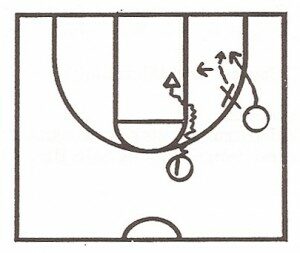
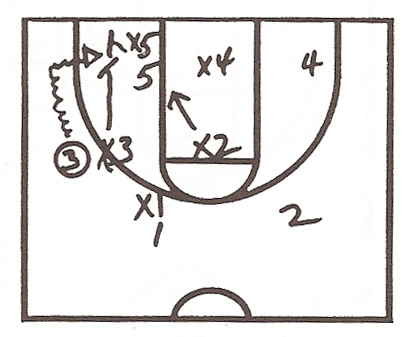
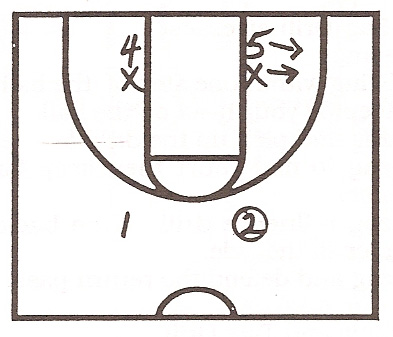
Adjustments on Baseline Drive

X1 Drops and helps on the post

X2 Helps in the lane/post

X3 Stays with his man

X4 Helps in the post area

X5 Comes and double teams 3.  X5 makes
himself big by getting his arms up

Basketball Drills
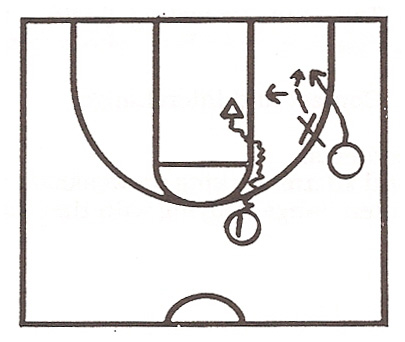
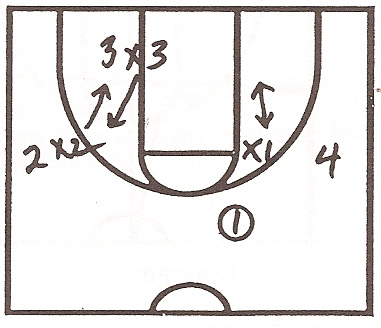
Help and Recover Drill

The defense guards his man and is ready to

fake a trap of the ballhandler if he drives.

Two Man Contesting (Outside-In)
Two Man Contesting (Inside Out)

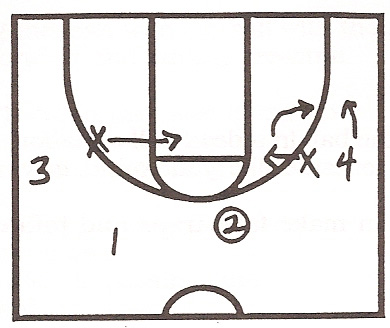
Contest and Interchange

X1 Contests

X2 and X3 are working on helpside
interchange (staying with their man)


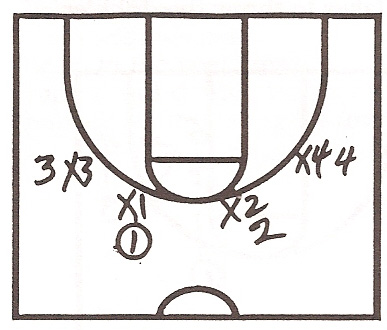
4 on 4 Contesting

The offense moves the ball and the defense works on denials, slides, and positioning.

Click here for a video of Coach Ks:  6 Point Contesting Defensive Drill

Click here for a Duke defensive and conditioning drill: Help and Recover Drill

The Coaching Toolbox has hundreds of resources for coaching basketballincluding basketball practice, basketball plays, basketball drills,basketball quotes, basketball workouts, basketball poems, and more!

Don Meyer on Basketball Coaching Leadership Part 2

By Brian Williams on November 2, 2010

Here is the second part of the notes from Coach Meyer’s leadership academy.

Here is the link to the first part:  Don Meyer Leadership Concepts

3 Traits of an Addict

1) perfectionist
2) have high control needs
3) people pleaser (get self-esteem by pleasing people)

Low Expectations = No Disappointments

-Adapt a few new ideas, don’t adopt everything.
-“It don’t cost a thing to do things right or be nice.”  Bear Bryant

Needs Assessment:  What is  –  What should be  =  The Need

Promise less, deliver more

Warren Buffet on hiring:

1) Work Ethic
2) Intelligence
3) Character

*the first 2 without the last will undermine the operation

Leaders and their company

“You can’t tell an eagle from a buzzard when they are flying together.”

3 People to Hire

Paul: older, experienced, always positive
Barnabus: your accountability partner, your moral compass
Timothy: the bear, the young guy that you are going to teach and learn a lot by doing it

Don’t Hire:

1) gossip guy-will always be talking behind your back
2) flatterer-(perfume-OK to smell, terrible to drink)

-Good enough is the enemy of Great
-Whisper criticize and Yell praise
-Check, Check and Recheck

Lieutenant in the Army helicopter checked his maps 6 times in Vietnam, “their lives are in my hands”

Rules of Basketball Camp

1) everyone takes notes / always have your notebook
2) be polite yes sir/no sir, yes maam/no maam,  please and thank you sir/maam
3) everyone picks up trash, we are all on the grounds crew

-retrieve, review, and reinforce info.

McDonald’s Story

-Des Plaines, IL, ran out of pepsi on Saturday and called the store, employee said, “we don’t deliver no pepsi on Saturday”, Monday a.m. McDonald’s signed an exclusive deal with Coca-Cola

4 Types of Players:

Unconscious and incompetent -they don’t know they don’t know
Conscious and incompetent-they know they don’t know
Conscious and competent-they know, but there is no flow
Unconscious and competent-they know and it flows (Jordan)

MJ:”If people knew how hard I have worked, they wouldn’t think what I do is so easy.”

-No task too small, no sacrifice too big.
-Great leader, will not give them a reason to leave the team
-Bad leader, will give them several everyday

1 min. assessment (praise, prompt, and leave)

-1 thing you are doing well and why, 1 thing we can do better and how

Bobby Knight  “It is not enough to know we are going to win, but how we are going to win.”

Jerry Krause, Gonzaga Bulldogs

1) find your unique gift or talent
2) develop it
3) give it away

How to build a TEAM

-shared ownership, own vs rent, you succeed, we succeed, you succeed
-invest vs rent
-You learn a lot more at a funeral than at a wedding

Collective Pride, We Did It

-You only shine when you reflect credit to others.

“I have decided to make my life my argument.”  Albert Schweiter

Fire yourself every year and come back with the energy of a first year coach

-For every 100 who can handle failure, but 1 can handle success.

Winston Churchill graduation speech: “Never, never, never, never, never quit.”

Larry Bird Story:

Playing HORSE against 10-day contract guys for paychecks, Bird wins and rookie walks by locker to hand check over, Bird doesn’t want his check, rookie glances into Bird’s locker, on top shelf is 5-6 uncashed paychecks

-it wasn’t about the $ for Bird

-Want a team of left tackles, who has your blind side

MJ and Nike contract:

Nike offered MJ mere pennies on the dollar for the new “Jordan” line of apparel, MJ said no, you will pay me 17% or I am gone after my contract is up, I am going to play a round of golf and when I come back in 4 hours I want the contract changed.

5 vitamin C’s

Concentration + courtesy + communications + compete = consistency

-Only give orders that can not be misunderstood
-Quiet team is a sacred team
-Necessity is the Mother of Invention
-Instruction vs Criticism

5 Stages of Coaches

1) survival / blind enthusiasm
2) striving for success, being recognized by your peers
3) satisfied, very dangerous stage
4) significant, UCLA = Wooden, Penn State = Paterno
5) spent, exhausted, no juice left

Lou Holtz 3 questions to players

1) Are you committed to excellence?
2) Can I trust you?
3) Do you care about me?

W.I.N. Approach

What’s Important Now

-Measure yourself by the response to disaster

-Most empires have been destroyed from within

The Coaching Toolbox has hundreds of resources for coaching basketballincluding basketball practice, basketball plays, basketball drills, basketball quotes, basketball workouts, basketball poems, and more!

  • « Go to Previous Page
  • Page 1
  • Interim pages omitted …
  • Page 8
  • Page 9
  • Page 10
  • Page 11
  • Page 12
  • Interim pages omitted …
  • Page 25
  • Go to Next Page »

Primary Sidebar

  • Twitter
  • Facebook
  • Linkedin
coachestoolbox
personaldevelopmenttoolbox
basketballplayerstoolbox
basketballtrainer
athleticperformancetoolbox
coachingbasketball

© Copyright 2026 Coaching Toolbox

Privacy Policy