• Skip to primary navigation
  • Skip to main content
  • Skip to primary sidebar

  • Basketball Plays
    • Ball Screen Sets
    • Horns Sets
    • Man to Man Post Up
    • Man to Man Isolations
    • Backdoor Plays
    • Man to Man 3 Point Shot Plays
    • 2-3 Zone Attack
    • Baseline Inbound Plays
    • Sideline Inbound Plays
    • Combination Defense Attack
  • Drills
    • Defensive Drills
    • Offensive Drills
    • Competitive Drills
    • Passing Drills
    • Rebounding Drills
    • Shooting and Scoring Drills
    • Toughness Drills
    • Transition & Conversion Drills
    • One on One Drills
  • Blueprint
  • Practice
  • Mental Toughness
  • Skill Development
  • Offense
  • Defense
  • Store

32 Shooting Drill

32 Shooting Drill

By Brian Williams on May 31, 2018

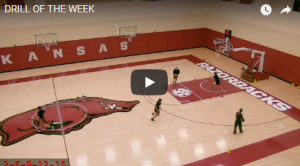
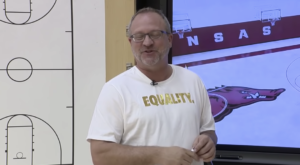
This drill is from Mike Neighbors, Arkansas Women’s Basketball Coach. The drill is available on the Arkansas Women’s Basketball YouTube Channel

This shooting drill is from his green light shooting drill series.

Like all drills that you see other programs use, you can either modify it or take parts of the drill for your use and your needs.

He has a standard for many of his drills to give players the following criterion for their shots;

Green light
Yellow light
Red light

Please make sure your sound is on to see the video.

Click the play arrow to see the drill.

The drill is a YouTube video, so you will need to be on a server that allows you to access YouTube to see the drill.
Culture of Passing

By Brian Williams on May 21, 2018

This post was written by Bob Starkey and shared on his Basketball Coaching Blog, HoopThoughts

Editor’s Note #1 from Brian. When this article was originally posted, the Warriors were one of the top teams in the league. In 2019-2020, they have the worst winning percentage. I don’t believe we should or shouldn’t adopt ideas for our programs just because of where we get them. If counting passes is something you feel will help your ball movement, teamwork, and lessen dribbling, then you should consider if or how you can adapt it to your team.

Editor’s Note #2 from Brian.  I am not saying that every college and high school team should set 300 passes per game as your standard for passing like one of the premier NBA teams does. I am offering this as a resource to think about ways to improve the ball movement for your team.  Maybe in a 50 possession high school game, you can set 200 passes as a goal.  If you do like this idea, you will need to determine the number of passes that is right for your program.

There was an outstanding article in the USA Today this week written by Sam Amick on the value of passing the ball for Golden State and it’s incredible value to the culture of the Warriors.  You can (and should) read the entire article here.

I’ve long spoke about how you play being a big part of your culture.  Your system of play and it’s level of execution says a lot about who you are as a coach and in turn your team as a unit.

The first part of that piece is practice.  The make up and execution of practice impacts players and how they feel about playing and their level of belief in how prepared they are going into a game.  On the collegiate level, recruiting often comes down in part of how a team plays.  On the professional level, free-agents will at times gravitate to a style of play.

In an era that becomes increasingly difficult to promote team play, to have one of the best teams in the NBA base their success on number of passes gives all of us coaches hope.

A few excerpts include the following:

“Ball movement will forever be superior.”

-Shaun Livingston

Ever since Kerr made the move from TNT analyst to the Warriors bench, when he saw the glaring lack of ball movement in that final season under former coach Mark Jackson and told the team’s ownership how he would fix it, this has been their ethos. So much so, in fact, that it all started with a magic number: 300.

Pass the ball at least that many times during the course of a game, he told them, and the offense will hum. For Kerr, who won five titles while playing for San Antonio’s Gregg Popovich and then-Chicago coach Phil Jackson, these were the lessons learned that he had to pass on.

“If you have shooting — if you have great shooting — then the more ball movement the better, because you have guys coming off screens and … you want to make the defense have to defend for long stretches rather than just one pass and a shot,” Kerr explained to USA TODAY Sports recently. “So we looked at the passing totals, and … (300) was a really key number for us.

“I just said I want the ball to move. That’s always how I’ve seen the game, and if you have Steph (Curry) and Klay (Thompson) on your team and the ball is moving, it’s fairly obvious that it’s going to be hard to defend. So we just kind of came up with that number.”

Amick backed his story up with the following facts:

◄After ranking last in passes per game (243.8) during the regular season before Kerr’s hiring and finishing 12th in offensive rating despite already having three of their four current All-Stars in Curry, Thompson and Draymond Green, they have had the league’s best offense in three of the past four seasons while finishing second in offensive rating once. During that span, the Warriors’ passes-per-game mark has ranged from 306.6 to 323.5.

◄The Warriors’ only two losses this postseason have come in the only games in which they passed the ball fewer than 300 times (256 against San Antonio in Game 4 of the first round; 295 against New Orleans in Game 3 of the second round). In all, they lead all playoff teams in passing (323.2; Rockets 15th at 227.5).

◄Green and Curry have been first and second among the Warriors, respectively, in passes made for the past three regular seasons.

As Green is quick to point out, passing alone is not enough. The Warriors at their best are like a basketball version of the Blue Angels, with players darting to and fro while stopping only briefly to set a few screens along the way. But when you combine the movement with the passing and some of the best scorers the game has ever seen, then push the tempo, it’s the kind of thing even Kerr couldn’t have dreamt of when he put this program into place.

Performance is a Behavior, NOT an Outcome!

By Brian Williams on May 17, 2018

Great coaches and elite athletes understand that performance is a behavior, not an outcome. It is doing the little things correctly, moment to moment, day after day. But how do we do this in our teams?

By John O’Sullivan, founder of Change the Game Project.

Last week I received the following email (edited for anonymity). We get calls and emails like this quite often from amazing, passionate coaches who are trying to make a difference. Take a read:

Dear John,

I’m currently a head football coach…I took over the program last January after being on staff for the previous 10 years. We had a great offseason and a solid summer. We started the season off with a come from behind victory. Everything was going well. However, these past 10 days have made me question everything. We had a below average week of practice last week and got crushed by our arch rival. Our best player got ejected for fighting and…his brother also received a personal foul and cursed me on the sideline when I tried to reason with him. We have had an equally poor week of practice this week.

Since I took over, my main concern has been trying to change the culture here. I am at a low socioeconomic urban school. Many of my players have no father figure in their life. Many of them are poor. Many of them don’t eat lunch. Many of them aren’t disciplined at home because their single mothers are just trying to survive. I knew all this coming in, so my main goal has been trying to get them to be better humans.

I have seen several of our kids grow on and off the field but I feel like we’re starting to slip back into the abyss. Our practices have been flat. The kids are starting to seem uninterested. They are so used to being the ugly duckling of our district and the perennial loser that I don’t think they know any better. It’s like they are okay with it because that’s the way it’s always been. What can I do to turn this around?”

Sincerely, Coach B

Wouldn’t you want a coach this dedicated to your kids to be their coach? I know I would. Coach B cares about the person, not the athlete. He sees sport as a vehicle that will give them the life skills to better their life situation. For him, it is not about the wins and losses, but the willingness to compete the right way. This is a great coach. So how can we help?

Recently I was listening to one of my favorite podcasts, “The Talent Equation” with Stuart Armstrong. Stuart’s guest was his coaching mentor, Mark Bennett, M.B.E. Mark is the founder of Performance Development Systems Coaching, and a mentor to high-performance and professional coaches across the globe. Mark is a former British Commandos trainer and originally developed his PDS system as a way to shape the behavior of elite soldiers. Since then he has worked with professional coaching staffs from the NBA, professional rugby, golf, and elite NCAA teams, shaping coaches so they can shape their athletes.

His wise words during the podcast were the exact advice I needed to pass onto Coach B:

Performance is a behavior, NOT an outcome.

We get so focused on scoreboards and standings that we lose sight of the foundational element of coaching: shaping behavior. When we get the behavior right, when we get our athletes to take ownership of the standards for each and every little thing they do, the magic happens.

Athletes rise to the standard.

They hold each other accountable.

They define what are acceptable levels of focus, effort, and execution.

They train more effectively.

Great results follow.

When you get the behavior right, the scoreboard starts to take care of itself. Athletes control the controllables, make more effective plays, and those small plays add up to big wins.

Coaches, first and foremost, we are shapers of behavior. When we get the behavior to the required and agreed upon standard, results start taking care of themselves. This is my advice to Coach B: focus on behavior first.

This seems simple, but in reality, most coaches do it backward. They focus first on the outcome and hope that the behavior will follow. They install new defenses and trick offensive plays, they teach tactics and technique, they up the fitness expectations, and then come game time, they roam the sidelines yelling “But we went over this in practice!”

They have no idea if learning took place. Just because we taught it, doesn’t mean they learned it. The coaches have no idea if the athletes were listening. And often, when the game gets tight and the pressure ramps up, their teams crumble under the stress of focusing on the scoreboard. They revert to the old norm. Players fight the opponent. They yell at officials. They argue with each other. They stop controlling the controllables, and eventually they lose regardless of talent.

Great coaches and elite athletes understand that performance is a behavior, not an outcome. It is doing the little things correctly, moment to moment, day after day. But how do we do this in our teams?

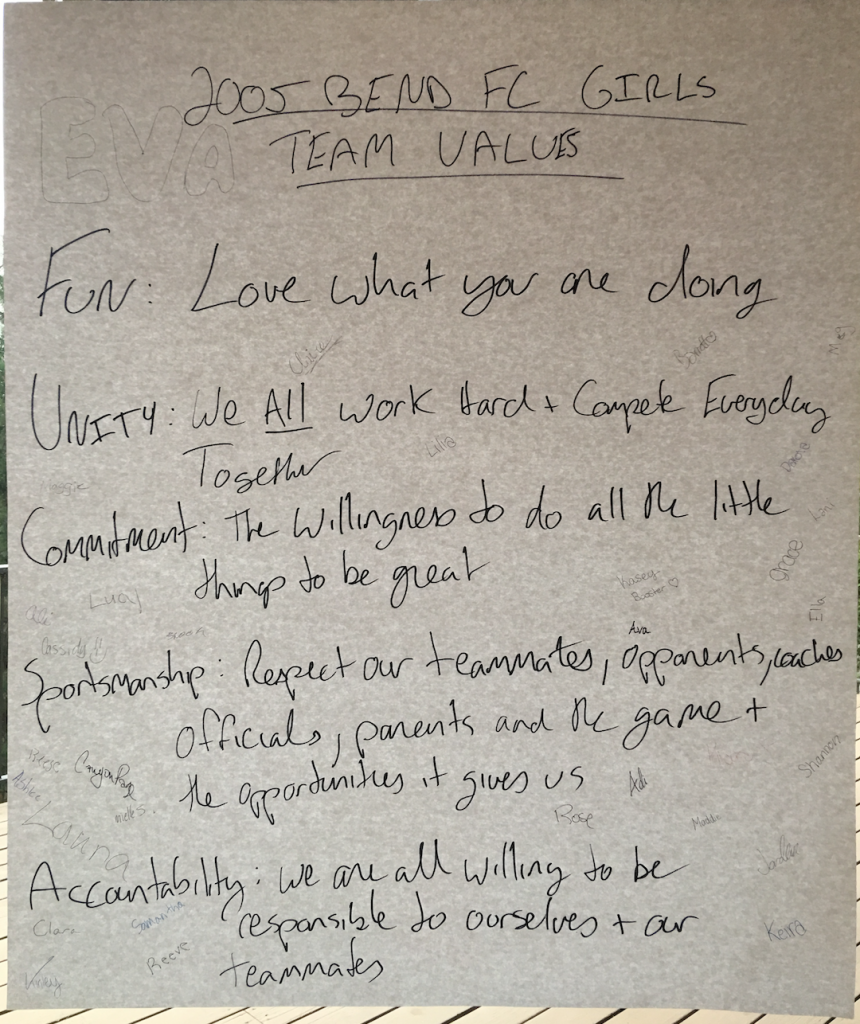
First, you must clearly define your core values, your standards, the list of “this is how we do things here.” In conjunction with your athletes (as we have written about here), you take the time and define the standards of effort, focus, execution, respect, humility, selflessness, and more. You allow your athletes to define who they want to be and how they want to do it. You get them to sign their names and commit to being the type of teammate described by those values. I recently did this work with a team I am coaching, here are our values:

Next, before every practice, you must get your athletes to own the level of performance – the behaviors – for the day. Mark Bennett recommends that his coaches have the athletes define what acceptable, unacceptable, and exceptional looks like for the chosen activity. This includes not only values based things such as effort and communication, but tactical and technical elements such as spacing, movement, speed of play, and whatever else you are trying to teach. The athletes define and own what is good enough, what is great, and most importantly, what is not good enough and warrants a stoppage of play and a reset.

Bennett challenges them by asking “how long can we sustain acceptable and exceptional,” thus giving the athletes a goal to shoot for. The activity starts and continues as long as the behavior level is acceptable or exceptional, and stops when the level becomes unacceptable. Usually, your players will overestimate how long is sustainable, but over time, with consistent reinforcement, their behavior – and thus their performance – starts to change. Most importantly,  the athletes own this process. They define the standards, they define acceptable behaviors, and when it all clicks, they identify unacceptable, call each other out on it, and hit the reset button and do it right.

Within your culture, you may have individuals that still do not buy into the behavior, even as the team as a whole progresses. This is the situation with the coach I wrote about above. In this case individual intervention is warranted. Sit the athlete down and follow these three steps:

  1. Have the athlete define the team values, and identify which one he or she is not adhering to. Many coaches do this in front of the team for the benefit of 1 or 2 kids. Do it individually so that the specific kids know you are speaking to them, and their teammates don’t think they are being called out for the actions of a few.
  2. Help the athlete see their behavior through other people’s’ eyes. “How do you think it makes your teammates feel when they are giving maximum effort and you are going through the motions?” “How do you think it makes your coaches feel when we rely on you as a leader and you disrespect your teammates?” Most kids never think of this.
  3. Help your athlete change by asking “Is that who you want to be?” If the answer is no (which it is 99% of the time) ask them “how can I help you change?” When you see their new behaviors, catch them being good. If you want the good behavior to continue, you have to acknowledge and reward it.

Sadly, you will from time to time have individuals that will not get on the bus, and you have to make a decision whether it is time to let them off and move on without them, regardless of talent. You must understand culture trumps talent in any environment, and even the most talented players will slowly destroy an entire culture if they are not a good fit and they are behaving counterintuitively to the cultural standards.

Finally, shaping behavior is not a sometime thing; it is an all time thing. As Bennett says “Changing behavior takes time, and the quickest way to change behavior and make progress is to do it every time you step on the field, not just once in awhile.” It is confusing for kids when failure to meet the standards is ignored by coaches time after time and then when coach is having a bad day, he loses it and yells at everyone for the same behavior that was OK the previous week. If it is not OK, we must say so. If we let it go today, we are saying that it is not really a standard. You condone what you do not confront. You must intentionally cultivate the right behaviors and you must intentionally confront the wrong ones.

Coaches, our team’s performance is a behavior, not an outcome. This is my advice to the coach who wrote us last week. How we play is shaped by our standards and our accountability. Identify your standards, agree upon them and define them with your team, and agree upon what happens when we fall below the standard. Hold everyone accountable, and get them to hold each other accountable. Identify the individuals that still don’t get it, and either get them to change their behavior or get them off the bus.

When do you do this?

Every. Single. Day.

When you realize that performance is a behavior, the result takes care of itself.

Good luck Coach B, and to all of you as well.

Changing the Game Project was founded John O’Sullivan. Coach O’Sullivan is a former college and professional player as well as a high school, club team and college coach. He is offering a FREE video series that is part of his Coaching Mastery program. For more information about gaining access to that program click the link above or in the image below. The video series includes a wealth of coaching education including some motivational and team building ideas used by some of the most successful coaches.

3-6-9-12-15 Shooting Drill

By Brian Williams on May 15, 2018

This drill is from Mike Neighbors.

This shooting drill is designed to challenge your best shooters.

Like all drills that you see other programs use, you can either modify it or take parts of the drill for your use and your needs.

For example, you might shoot more corner 3s, so you can find a way to incorporate those shots into the drill.

Coach Neighbors also uses the drill to determine which of his players have earned the green light to shoot 3 point shots in practice scrimmages and in games.

Please make sure your sound is on to see the video.

Click the play arrow to see the drill.

The drill is a YouTube video, so you will need to be on a server that allows you to access YouTube to see the drill.
Controlling Your In-Game Coaching Emotions

By Brian Williams on May 14, 2018

This video is with PGC Basketball Directors TJ Rosene, Micah Hayes, and Graham Maxwell.

Tj (Head Men’s Basketball Coach) Micah, and Graham (Assistant Men’s Basketball Coaches) coach at Emmanuel College in Franklin Springs, Georgia.

In addition to the All In portion of the video, the second part describes a concept of “GO GO–Get open or get out.”

This video is a part of the 20 Week PGC Coaches Circle. You can sign up for free at this link: PGC Coaches Circle

The last few minutes of the video shows a segment of their practice. The video shows players moving to rebound the shots taken in the drill. You might be able to apply that concept to your shooting drills in a way that fits what you want to do regarding rebounding a shot from the corner.

You can see more drills and posts from PGC Basketball by visiting their Basketball Blog

Please make sure that your sound is on and click on the video to play.

Click the play arrow to view the video.

The video is a YouTube video, so you need to be on a network that does not block YouTube access.

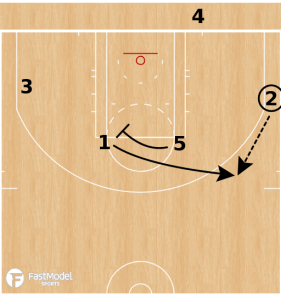
Line Stagger BLOB

By Brian Williams on May 13, 2018

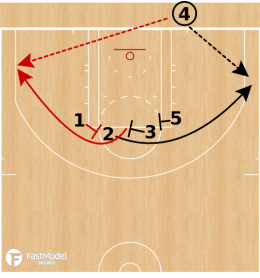
The plays were contributed by Tony Miller to the FastModel Sports Basketball Plays and Drills Library.

Tony is the Head Men’s Basketball Coach at Bob Jones University.


Here are the comments that Coach Miller made about the play.


Typically, it will result in a 3 Point Attempt.


3 and 5 screen for 2

1 back screens for 3

4 can inbound to 2 or 3


5 screens for 1

2 passes to 1


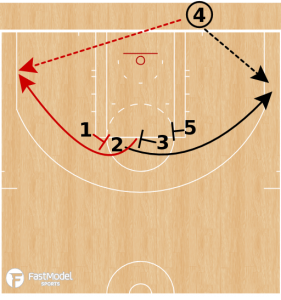
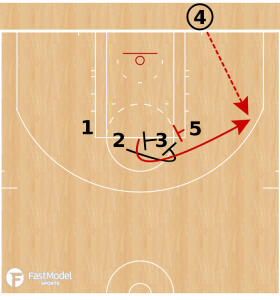
Play #2 Line STS


3 screens for 2

2 and 5 screen for 3

4 passes to 3

Editor’s note from Brian: You can also include some screening action between 5, 2, and 1 to finish the play.

  • « Go to Previous Page
  • Page 1
  • Interim pages omitted …
  • Page 65
  • Page 66
  • Page 67
  • Page 68
  • Page 69
  • Interim pages omitted …
  • Page 288
  • Go to Next Page »

Primary Sidebar

  • Twitter
  • Facebook
  • Linkedin
coachestoolbox
personaldevelopmenttoolbox
basketballplayerstoolbox
basketballtrainer
athleticperformancetoolbox
coachingbasketball

© Copyright 2026 Coaching Toolbox

Privacy Policy