• Skip to primary navigation
  • Skip to main content
  • Skip to primary sidebar

  • Basketball Plays
    • Ball Screen Sets
    • Horns Sets
    • Man to Man Post Up
    • Man to Man Isolations
    • Backdoor Plays
    • Man to Man 3 Point Shot Plays
    • 2-3 Zone Attack
    • Baseline Inbound Plays
    • Sideline Inbound Plays
    • Combination Defense Attack
  • Drills
    • Defensive Drills
    • Offensive Drills
    • Competitive Drills
    • Passing Drills
    • Rebounding Drills
    • Shooting and Scoring Drills
    • Toughness Drills
    • Transition & Conversion Drills
    • One on One Drills
  • Blueprint
  • Practice
  • Mental Toughness
  • Skill Development
  • Offense
  • Defense
  • Store

Coaching Basketball Toughness for Coaches

Coaching Basketball Toughness for Coaches

By Brian Williams on June 9, 2014

This article was written by University of Arkansas Women’s Head Coach Mike Neighbors.

This is the first of two parts. I have a link to part 2 a the bottom of this page.

Are you as TOUGH as you Want your Players to be?

When Jay Bilas published his article “Defining Toughness in College Hoops” in January of 2009 (yes, it’s been that long ago…time does fly), the word toughness had been used by every coach on every team in every sport for a very long time. It had as many different meanings as set plays coaches run to be successful. It was Jay Bilas that put all those meanings into pictures. That article was the most shared item in the 17 year history of our Newsletter and then spawned the great book. I feel comfortable in saying most everyone of our 67,281 members have read at least a portion of the piece.

If not, read it now before going on with our piece.
Jay Bilas Toughness Article

About once every six months I have a Jerry Maguire moment and decide to stay up late writing a “manifesto” on a topic that had been running through my mind for years. Not coincidentally, I think those times mirror showings of on TNT or TBS of Cuba Gooding, Jr. yelling “show me the money!”. Anyway we all know how that worked out in the movie, so once again, I preface the remainder of this piece with this statement:

“ I am personally guilty of almost every example that I am about to point out. At one point and time, I had
to learn the hard way. I don’t claim that this is an exhaustive list and am absolutely sure there will be typos, misplaced modifiers, improper use of “to” “too” and “two”, and other syntax errors that would make my English teaching grandmother cringe. I am a basketball coach that couldn’t sleep one night and decided to put into writing some random thoughts and share it with others that I trust. If you can live with that, read on. If not, I would just move on to the rest of your day.”

I thought Jay Bilas nailed the article and the book. Players and coaches alike have benefited from his work. The word “toughness” had new meaning and can be heard more and more in the gyms that I evaluate players. What I began to notice though was that most coaches threw the word around to players as a cliché’. It became a buzz word. And in many instances that those coaches were urging their players to be more tough, the coach themselves was NOT being very tough.

There is a “toughness” factor in coaching too. We can’t set screens for teammates. We can’t set up our cuts. We can’t talk on defense. We can’t jump to the ball. We can’t get our hands up. We can’t get on the floor. We can’t close out with hands up. We can’t post on a man not on a spot. Etc.

But we can be TOUGH. We must be TOUGH if we demand it of our players.

So with the help of some coaching buddies, we began a list of what makes a coach TOUGH. Not tough to play for. Not tough to deal with. But things that would be consistent with those things we demand of our players. This is a work in progress and hope with the help of the group, we can come up with a list and examples to help each other improve
ourselves as much as we ask our players to improve. If you have thoughts and/or examples, please email them to me. We will then add them to our list. Hopefully by the end of the summer we will have complete list to share.

TOUGH coaches CONFRONT
It takes energy and effort to confront… a great deal of both in fact. The tough coaches never exhaust themselves of the energy needed to consistently confront and hold people accountable. When someone or something challenges the culture of their program, a tough coach stands up for what they hold true. They do it consistently and they do it tirelessly.

Coaches who have toughness confront any player who falls below the standards they have set in their program.

When confronted with parental concerns, a tough coach listens and explains their view point. They simply don’t make a rule like “I won’t talk about playing time.” That rule is a cop out. I think we certainly all agree there is a time and place to have the discussion.

It’s okay to have guidelines on when and how you will discuss it. It’s okay to have a plan. But it’s not okay to NOT have the talk.

It’s the #1 thing players and their loved ones want to talk about. It’s a conversation you must have if you want them to buy into your process. It’s a conversation you must have if you want them to strive to improve. It’s a conversation you need to have. And have with everyone on your roster from the player who plays the most to the player who plays the least.

If you exhaust yourself of the energy to confront, then you are “allowing things in your program” rather than “coaching them”.

You must have (or find) the energy every single time something challenges the fabric of your culture. If you don’t, no one else will. If you do, everyone else will.

TOUGH coaches are DECISION SAVVY

Tough coaches know that making the hard decision is what separates the good from the great. Head Coaches make 100’s a week concerning every aspect of their program. They don’t delegate the difficult ones down the chain of command. They make them and then they stand behind them.

Experience has taught them how to make them with the best interest of the team AND the best interest of the player all at the same time.

More often than not, it’s the coach who struggles the most with these decisions. They feel the weight of deciding something that impacts so many people in so many ways. It can be paralyzing. It can be overwhelming.

Many coaches confide that this responsibility has led to burnout and can ultimately drive you from the profession all together if you don’t develop toughness.

Avoidance of decision making is even worse than making the wrong decision in many instances.

The toughest of the tough actually embrace. It’s these coaches who make the proper decision more often than not.

TOUGH coaches expect mistakes, but don’t accept Excuses

TOUGH coaches know their players are going to make mistakes. They know they are going to fail from time to time. They know this because they know they are going to put them in situations to fail. They are going to create scenarios designed to push them beyond their comfort zones.

TOUGH coaches know mistakes lead to improvement. They teach through lessons. You will NEVER convince me that Mister Miyagi is not one of the top coaches of all time… (I have a poster of wax on, wax off scene in my office to remind me).

Wayne Gretzky routinely tripped over his own skates because he pushed himself to go harder in drills than his coaches demanded.

While the TOUGH coaches expect these mistakes, they do NOT except excuses for them. The deal with excuses swiftly and severely.
Tough coaches know the difference between a reason and an excuse.
Tough coaches use mistakes to help a person grow.
Tough coaches teach without the person even knowing they are being taught.

WAX ON…WAX OFF… SAND THE FLOOR… PAINT THE FENCE
If you haven’t seen the scene…here is the link…
“https://www.youtube.com/watch?v=Bg21M2zwG9Q”

It’s PG-13 for language, but worth a view…

TOUGH coaches understand NEXT PLAY

Most of us have stolen the “NEXT PLAY” concept from one of the many books from/about Coach K. We yell it at our players when they turn it over. We yell it when they miss a Free Throw. We yell it at them when they commit a silly foul.

Do we move on though? Or, do we replay those very mistakes in the next timeout, then at half time, then in post game, then the next day in film room, then the next 10 times it happens?

Do we hold grudges when dealing with discipline issues? If you do, then take NEXT PLAY out of your coaching vocabulary.

Obviously there are aspects of our job and this profession that accumulation of actions must warrant consequences, but if you want players to move on to the Next Play, you had better coach this way.

TOUGH coaches actions are aligned with standards

“Do as I say, not as I do” mentality is dead to the iY Generation of players in the game today. When presented with a situation that conflicts between what they see you do and what they hear you say, 99.999999% of the time they will believe what they see.

The alignment you have in your program between TALK/ACTIONS will be directly proportional to how your players balance their TALK/ACTIONS.

When a coach demands something of a program or someone in it that is out of alignment with a coach’s actions, frustration sets in quickly. That will turn to disengagement and total withdrawal the moment adversity hits.
A TOUGH coach has alignment in this area.

We are not talking about running wind sprints with your team, lifting weights with them, or running bleachers. We aren’t talking about having their same curfew or going to study hall.

Players, fans, and administrators believe what they see more than what they hear. If you want a TOUGHNESS in your program your actions better be worth watching.

TOUGH coaches take no credit for wins and deflect blame in loss

TOUGH coaches don’t need pats on the back after a win. My PaPa Neighbors always said,” If you want someone to clap for you, be a musician or a magician… don’t be a coach.”

Coaches with toughness recognizes efforts of their players and their team in victory. In defeat, they deflect the blame from those same people.

You don’t have to be that coach that takes total blame every game. That grows old fast too and simply isn’t believable. It may also be out of alignment with your program’s culture on truth and honesty. You can be honest and truthful in private…not in public.

TOUGH coaches never allow anyone outside their program to attack someone within it.

The best way to do this at times is actually another sign of TOUGHNESS…give the other team the credit for the victory.

When you do this, please use the players by name rather than referring to them by jersey number!!

The TOUGHEST coaches learn to balance these situations. They learn to use these situations to their advantage.

When coaches do this, their players will do the same.

If you have this ingrained in your team culture, it will be obvious that in public each member has each others back. It will allow them to deal with adversity in private and keep team issues within the locker room. We have all seen great teams derailed by team issues that become public.

To continue reading part 2 of this article, please click here: Toughness for basketball coaches part 2
Basketball Drills Multiple Effort

By Brian Williams on June 6, 2014

I like drills that develop the habit of having to make multiple efforts.

Most teams give second efforts, but I believe that the best teams give third, fourth, and fifth efforts.

This multiple effort basketball drill comes from veteran high school head coach and Pittsburgh Assistant Coach, Kevin Sutton.

Coach Sutton also spent time on the George Washington and Georgetown staff.

It is a part of the Ultimate Skill Package collaboration between Coach Sutton and Coach Scott Peterman.

This week’s eBook bundle special is our select any two Coaching Toolbox & HoopScoop eBooks for $25.

If there are other eBooks you are interested in, email or call text me at (317) 721-1527. Click the link to order:

2 for $25 eBook Sale

basketball-drills-multiple-effort1

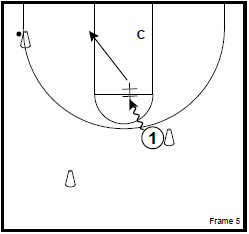
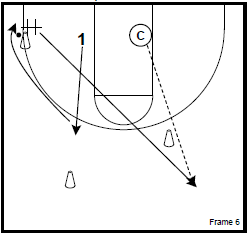
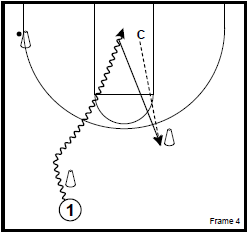
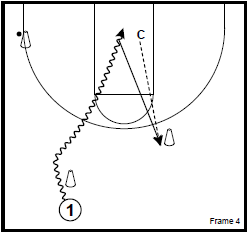
Player makes a dribble move and attacks the rim.

Then must immediately sprint to intercept the pass from the coach

Use various finishing moves.


basketball-drills-multiple-effort2


Player then attacks the elbow for a pull up jump shot


basketball-drills-multiple-effort3

Player then closes out to the cone/chair at the elbow.

Then does a defensive slide to the corner with his back to the basket.

Then takes a shot off of the cone/chair with a ball placed on it.

Finally, the player races back towards half court to receive the pass back from the coach.

This multiple effort basketball drill comes from veteran high school head coach and Pittsburgh Assistant Coach, Kevin Sutton.

Coach Sutton also spent time on the George Washington and Georgetown staff.

It is a part of the Ultimate Skill Package collaboration between Coach Sutton and Coach Scott Peterman.

If you are interested in adding to your Coaching Toolbox take look at what I believe is our best offer.

CLICK HERE to select from a list of more than 70 eBooks.


If there are other eBooks you are interested in, email or call text me at (317) 721-1527. Click the link to order:

2 for $25 eBook Sale

Basketball Drills 2 on 2 Deny and Grind Drill

By Brian Williams on June 5, 2014

This drill came from Drew Hanlen.

Drew is an NBA Strategic Skills Coach & Consultant that has helped over 25 NBA and NBA pre-draft players.

He is the Head Skills Coach for Pure Sweat Basketball.

He has run his internationally renowned Elite Skills Clinics in over 30 states and 4 countries over the past four years.

The drills was posted on Fast Model Sports Library. It is a reference of thousands of plays and drills that have been submitted by coaches all around the world. You can take a look at it’s content at this link

basketball-drills-2-v-deny-drill1


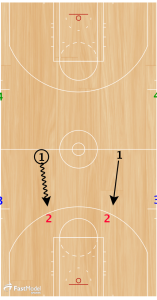
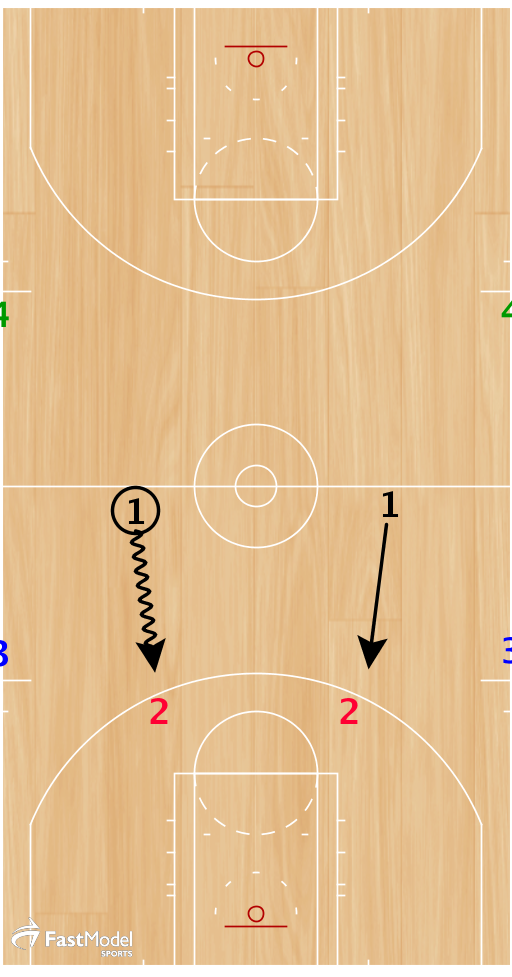
Team 1 plays live 2v2 against Team 2.

Team 1 gets three passes to score.

Players get three dribbles max each time they have possession of the ball.


basketball-drills-2-v-deny-drill2

Team 2 takes the ball out, regardless if they get a stop or get scored on and inbounds the ball to Team 3, who will be face-guarded by Team 1. Team 3 must catch the ball in front of Team 1. No over-top passes. If Team 1 gets a steal on an inbounds pass or a 5 second call, they are awarded 5 points. If they get a 5 second call, they get the ball and get to transition against Team 3, who loses their offensive possession. If they get a steal, they can try to covert against Team 3. If they score, Team 2 takes out the ball and again tries to inbound the ball to Team 3. If they get stopped, Team 3 just takes off and plays full-court 2v2 against Team 1.
 

basketball-drills-2-v-deny-drill3

As soon as Team 3 successfully receives the inbounds pass (or stops Team 1 if they stole the inbounds pass and played live), they play full-court 2v2 against Team 1. No over-top passes until the handler gets passed half-court. After Team 2 scores or gets stopped, Team 1 will inbounds the ball to Team 4, while Team 2 denies. Drill continues. Continuous 2v2 full-court with inbounds denial.

2pts for a made 2pt FG, 3pts for a made 3pt FG, 5pts for a 5sec call or steal on an inbounds pass.


Basketball Plays Direct to 4 Zone Set

By Brian Williams on June 4, 2014

These set play to run against a 2-3 zone was posted on Xavier Men’s Basketball Coaching Newsletter Archive.

Click here for their entire archives

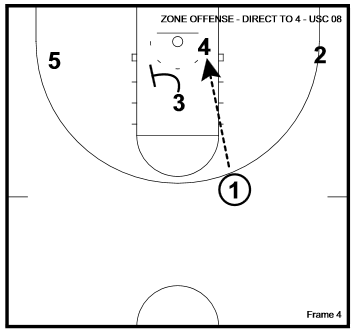
The play is a way to get the ball inside to the block against a zone defense.


There are more zone attack plays listed at the end of the post.


basketball-plays-direct-4-1


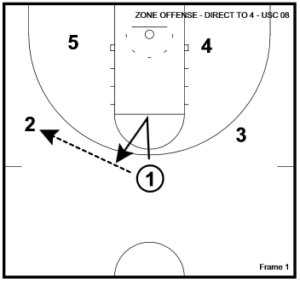
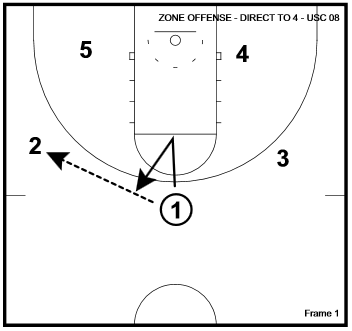
3 out 2 in alignment

1 passes to 2 then replaces himself


basketball-plays-direct-4-2


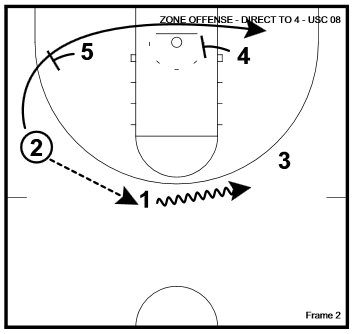
2 passes back to 1.

5 and 4 screen along the baseline for 2 as he cuts through the lane.


basketball-plays-direct-4-3


As 1 dribbles the ball to the right deep elbow.

3 screens the center of the zone.

1 looks at 2.


basketball-plays-direct-4-4


1 passes to 4 behind the bottom zone defender.


Coaching Basketball A Methodical Approach to Winning

By Brian Williams on June 3, 2014

This article was written and submitted by retired High School Basketball Coach Dave Millhollin.

Coach Millhollin is known throughout the Sacramento area for his Boys Varsity teams’ fundamental soundness, discipline, unselfishness, team defense and overachievement. Dave Coached for 27 seasons and compiled 391 wins. I have included more information about his coaching career at the end of the article.

If you would like to contact Coach Millhollin, email me and I will put you in touch with him.


WINNING PRIORITIES:

  • HANDLE DEFENSIVE PRESSURE AND PRESSES
    • COMMIT NO TURN OVERS
    • QUALITY OFFENSIVE EXECUTION AGAINST PRESSURE
  • DEFENSIVE CONVERSION:
    • GET OPPONENTS TO TAKE AND MISS LOW % SHOTS
    • DEFENSIVE REBOUNDING
    • APPLY NECESSARY PRESSURE
    • PLAY GOOD “TEAM” AND “INDIVIDUAL” DEFENSE
    • NO FOULING
  • OFFENSIVE CONVERSION
    • HIGH % SHOT SELECTION
    • HIGH % FREE THROW CONVERSION
    • THE GOAL IS TO SCORE EVERY OFFENSIVE POSSESSION

The key is to get extremely good at the above priorities.

Players need understand what each priority actually is; they need to understand how each priority will help to bring about winning and how important it is to become proficient in the execution of each priority. Players need to understand what their individual responsibilities are in relation to each priority.

Coaches need to learn what things they can do and say in order to train their teams to become good at each priority; this includes both physical and mental training with repetition and reinforcement.

Most coaches don’t realize that they may frequently say things and do things that actually reinforce poor execution of one or more of the above priorities, for example; allowing players to take bad shots or miss shots during a fast break drill without correction. 

Remember;

In a player’s mind anything that is not corrected is perceived as acceptable.  As far at the priorities go, you must correct every thing that is not acceptable and reinforce every thing that is acceptable in order for your players and your team to become proficient at executing the priorities, therefore winning more games!

WINNING PRIORITIES

Handling pressure and presses is essential in order to be successful.  So the first priority is for all players to have the individual and team skills necessary to deal with presses and pressure in order to get their team into its offensive sets.  Players must also have the skills to handle half court defensive pressure.

The next priority is defensive rebounding.  Because most teams do not take good shots, it is essential that teams take advantage of rebounding their opponents missed shots, therefore giving their team a potential advantage by taking better shots when it is their turn on offense.  All players must understand why defensive rebounds are so important.  Each player must possess the proper techniques for defensive rebounding.

Good defensive rebounding teams play team defense in a manner that produces low % field goal attempts by their opponents; they do not allow opposing teams to get good shots.  They keep their opponents off the offensive glass and off free throw line!

The next priority is SHOT SELECTION.  This can be the single most important area of the game.  The shots selected during the course of a game dictates;

  • THE # OF POSSESSIONS
  • THE # OF OFFENSIVE AND DEFENSIVE REBOUNDS
  • EACH TEAM’S FIELD GOAL %
  • THE # OF SHOOTING FOUL SHOTS TAKEN IN A GAME

All players need to possess the ability to score and each player must understand his individual shooting role; understand when and from where shots should be taken and who the coach wants taking those shots. This is essential for each player to understand.

  Here is the typical game scenario for teams that do the above things well:

  • While on defense; they don’t give their opponent good shots and they rebound their opponent’s missed shots
  • On offense; they handle their opponent’s defensive pressure and get into their offenses without turning the ball over.  They get the shots they want and they shoot a significantly higher field goal % than their opponent
  • They win (again)

©  Dave Millhollin

About the author of this article, Coach Dave Millhollin In fourteen years at Ponderosa High School, Coach Dave’s teams won 260 games (.665). From 2000 through 2009 Ponderosa won 207 games over a ten year stretch which included four SVC Conference Championships and two CIF Section final four appearances. Over his 27 year Boys Varsity Coaching career, Coach Dave posted 391 wins, produced 20 college basketball players and was named SVC Coach of the Year four times. At Ponderosa, Coach Dave’s teams were #1 in California in team defense five times and in 2008 Ponderosa was the top defensive team in the Nation among shot clock states. Over Coach Millhollin’s last five seasons (2005-6 through 2009-2010; 136 games) Ponderosa averaged a composite 50% total field goal percentage, 58% two point field goal percentage and 32% three point field goal percentage. Since retiring from High School coaching in 2010, Coach Dave has been actively involved in coaching Jr High level School and AAU teams as well as and running instructional basketball clinics from the primary grades through the College level.

Post Player Skill Drills

By Brian Williams on May 30, 2014

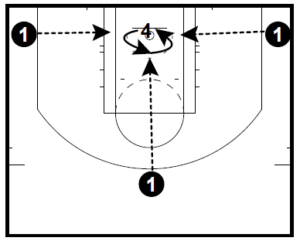
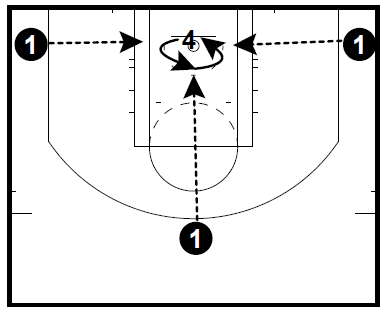
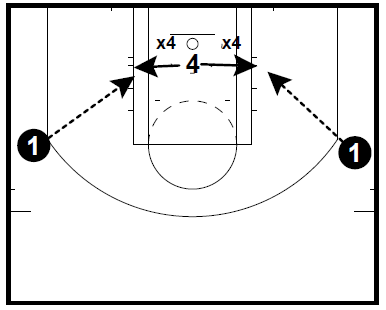
These two post play drills are from Coach Scott Peterman.

Both drills are overload drills.

In the second drill, the post player is working to score against two defenders.

Anytime you have an offensive player going against two defenders in practice, it is important to emphasize the purpose of the drill is making it tougher than a game.

If you can score against two defenders in practice, you can score against one in a game. However, if you are double teamed in a game, find the open player rather than attacking two.

This drill is from the NBA Skill Development Playbook which is a part of this week’s eBook bundle.
Click here for more information

The idea of this drill is to get as many shots as possible and practice scoring, never shooting the same shot twice in a row.

No dunks.

Quick Score Drill

basketball-drills-post1

How it starts: Three passers (1), each have a ball.

The wing passers are low in the corner and one passer at the top of the key.

The post player will rebound makes and pass the ball out. It isn’t a post-up drill. We are just looking to score.


One coach will stands behind the post player and points to the passer where he wants to have the ball come from. The coach will point and the other two will fake the pass. It will require the post player to be on his “toes”.

1 on 2 Post Play / Build Toughness

basketball-drills-post2

1 on 2 post play is where you have one offensive player and two defensive players.

The offensive post player (4) can’t leave the lane or go higher than the mid-line post area.

You play to 7. If you score then you go to the end of the line. You must stay in until you score or get fouled.

The game is about finishing, building toughness, and quickness. It makes them play quickly.

These two drills are from the NBA Skill Development Playbook that is a a part of an eBook bundle along with the NBA scoring drills Playbook. Click here for more information

  • « Go to Previous Page
  • Page 1
  • Interim pages omitted …
  • Page 188
  • Page 189
  • Page 190
  • Page 191
  • Page 192
  • Interim pages omitted …
  • Page 288
  • Go to Next Page »

Primary Sidebar

  • Twitter
  • Facebook
  • Linkedin
coachestoolbox
personaldevelopmenttoolbox
basketballplayerstoolbox
basketballtrainer
athleticperformancetoolbox
coachingbasketball

© Copyright 2026 Coaching Toolbox

Privacy Policy