• Skip to primary navigation
  • Skip to main content
  • Skip to primary sidebar

  • Basketball Plays
    • Ball Screen Sets
    • Horns Sets
    • Man to Man Post Up
    • Man to Man Isolations
    • Backdoor Plays
    • Man to Man 3 Point Shot Plays
    • 2-3 Zone Attack
    • Baseline Inbound Plays
    • Sideline Inbound Plays
    • Combination Defense Attack
  • Drills
    • Defensive Drills
    • Offensive Drills
    • Competitive Drills
    • Passing Drills
    • Rebounding Drills
    • Shooting and Scoring Drills
    • Toughness Drills
    • Transition & Conversion Drills
    • One on One Drills
  • Blueprint
  • Practice
  • Mental Toughness
  • Skill Development
  • Offense
  • Defense
  • Store

Basketball Plays: Chin Flash Elbow

Basketball Plays: Chin Flash Elbow

By Brian Williams on June 29, 2015

A quick hitter to run to against a 2-3 zone defense.

Houston Women’s Assistant Coach Vonn Read has submitted several plays from his playbook series The Basketball Encyclopedia of Plays to the Coaching Toolbox.

You can also see more of his plays in the Related Posts links at the bottom of this post.

Vonn has also served as an assistant coach in the WNBA with the Phoenix Mercury, Orlando Miracle, and San Antonio Silver Stars.

He was an advanced scout for the Orlando Magic as well as The Charlotte Sting.

Diagrams created with FastDraw


Chin Flash Elbow Zone

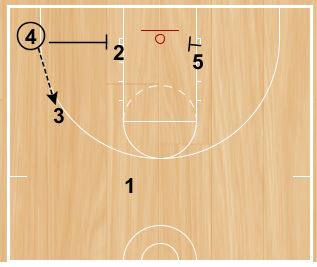
basketball-plays-chin1

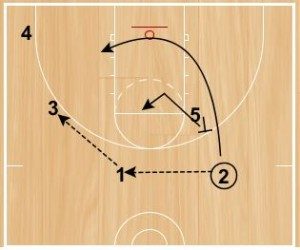
This is a good Zone Set out of a Chin Alignment.

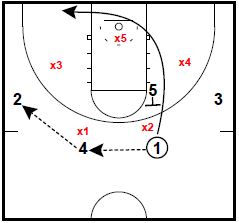
The 1 player will pass the ball to the 4 player and then use the Chin cut by the 5 player.

The 4 player will reverse the ball to the 2 player on the wing.
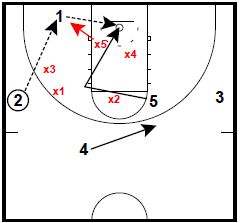
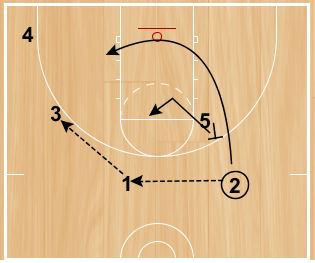
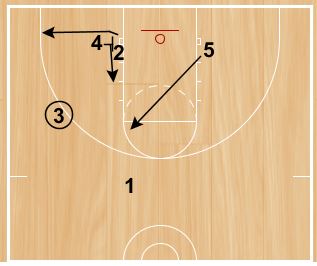
basketball-plays-chin2

If the 1 player is open in the short corner, the 2 player will pass the ball to the 1 player for the quick shot.

If the 1 player does not have the quick shot, he will look to hit the 5 player diving to the rim or the 4 player at the top of the key area.


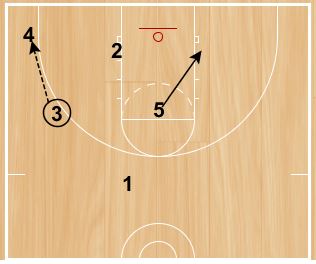
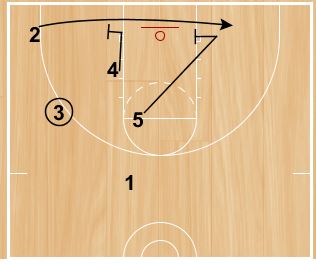
basketball-plays-chin3

The 5 player will flash to the elbow area after setting the chin cut for the 1 player.

This pass is open a lot in this set.

The 5 player will hit the 1 player at the rim on the high low pass.

The 1 player can score or pass the ball across the baseline to the 3 player for the 3-point shot.

basketball-plays-chin4

If the 5 player cannot hit the 1 player on the high low, he can hit the 4 player diving down the lane line for a layup.

If X4 takes away the dive by the 4 player, the 3 player will be open for the 3-pointer on the skip pass.

 

Coach Read has also put together The Basketball Encyclopedia of plays. You can check them out here: The Basketball Encyclopedia of Plays or read more about the books:

Any coach looking for the latest and innovative plays from the Professional, College, or High School levels can stop looking. With a compilation of over 7,700 different plays, you will never need to purchase another basketball playbook again. These playbooks can be used as a great reference tool for years to come. This 2 Volume Book includes plays from 19 different play categories, and they are the most extensive playbooks on the market.

The Basketball Encyclopedia of Plays (Platinum Series) contains over 7,700 Plays (Both Volumes combined) from the NBA, WNBA, USBL, and College levels from someone who has worked as an Advanced Scout or Coach on each level!!! This book has been intensely compiled over the last 21 years, with plays taken from a lot of NBA Coaches (past and present), WNBA coaches, and College coaches (Men’s and Women’s) from around the country.

Any coach that is serious about improving their knowledge of the game from an X and O standpoint will benefit tremendously from these books. These Books can be used to discover New Quick hitters, add a New Package to your playbook, or develop an entire Offensive System. There are a lot of new ideas and concepts in these books to study, and the Basketball Encyclopedia of Plays can be a great resource for coaches on all levels!!! This book is definitely for those X and O junkies who are always looking to improve as a Coach.

“THE GAME IS ALWAYS CHANGING? ARE YOU?” Vonn Read

Here is the link: The Basketball Encyclopedia of Plays
Whole Part Whole Teaching Method in Basketball

By Brian Williams on June 26, 2015

Some thoughts to consider as you work to update your drills book over the summer in preparing for next year.

Submitted  by Coach John Kimble
CoachJohnKimble.com

Retired high school and college coach

Follow him on Twitter @CoachJohnKimble

This article was originally written for Winning Hoops

There are countless fundamentals, skills, techniques, and concepts that must be taught to each and every individual basketball player as well as to the overall team. There are offensive alignments/sets, offensive plays/entries, offensive continuities, as well as the countless fundamentals and techniques that strictly apply to the offensive phase of the game. Conversely is the defensive portion of the game, which includes numerous individual and team-concept skills and techniques that need to be taught to the team.

A team is only as strong as its weakest link. An individual player is only as strong as his/her basic fundamentals of the basketball skills necessary for success. Therefore, there are hundreds of techniques that must be taught to each and every player. Unfortunately, there is a time constraint that can be utilized for those required skills. A seemingly unlimited amount of material must be taught to players in a limited period of time. This can be a difficult task for a coaching staff to perform.

For a coach to be successful, he/she must be an excellent teacher. In order for a coach to convey this excellence as a teacher, he/she must have a fundamentally sound concept of how to convey what needs to be taught to his/her players and motivate those players in limited periods of time. Our coaching-teaching philosophy (of any basketball skill, of an entire offense, or the complete defense) is to teach the proper techniques to our players by showing them the why and how that techniques are to be performed. Today’s players expect to know why they are to perform tasks, not just that they are to do them. Coaches must then show players how to perform those skills that are necessary to be successful.

Our coaching-teaching philosophy is a belief that in order for a basketball program to be successful, coaches must demand that every player be fundamentally sound in how to perform all techniques in each of the many phases of the game. Then the coaching staff must be able to motivate every player in performing those fundamentals at their highest level of intensity. Attention to detail by the coaching staff is crucial, as well as the positive and constructive criticism that must come with the teaching and the drill work. “Game-realistic” scenarios must be implemented to simulate “game-like” conditions and many drills must be created to practice the many skills and techniques.

The old cliché, “practice makes perfect” does not apply in our program. What philosophy that is used in our practices is this: “Perfect practice makes perfect!” That must come through “game-realistic” drills and conditions under a very watchful and scrutinizing coaching staff. Success must come in small consistent increments so that players’ confidence in themselves, in their teammates, and in the “system” will slowly and gradually develop.

We use the “whole-part-whole” method of teaching basketball skills with a great emphasis on the how and the why on every technique, every skill, whether they are on offense, defense, transition, or whatever concept is being taught to the team. Players must have confidence that the methods and the techniques that they are being taught are the most fundamentally sound. Players must be convinced that the methods and techniques are the best possible ways for them to be successful. Players must believe that the manner in which the skills are being taught can be successfully performed, regardless of how difficult those skills appear to be.

In basketball, “there are many ways to win the game”. There are countless styles of play, and many different methods can be utilized by coaches. For the team to have confidence and trust in the coaching staff, the coaching staff must be “students of the game”. After carefully choosing the specific techniques, methods and styles of “how to play the game” the coaching staff must then convey that strong belief and confidence to each and every team member. Then and only then will players be sold on the philosophy of the staff.

Then the players will “give their heart and soul” to the program and play with the needed intensity in order to be successful. Players must believe in what they are doing ( whether it is a type of technique, an offense, a defense, or whatever they are performing), if they are to perform at a high degree of intensity.

When we introduce something new to the team , (whether it is a new technique, a new offense, a new defense, or whatever we are bringing to the players) we introduce the skill as a “whole entity”. Then we start breaking the offense down to the basics that are needed for the offense to be successful. We show the specific techniques that are required for the offense to be able to operate efficiently and successfully.

We then work on those particular skills in “game-realistic drills” only after the players have graduated to that level of performance. The first drills that we utilize to teach and to practice those skills are more of a “teaching drill” than an intense and competitive drill. We actually break down the drills and have levels of skill and learning competencies that all players must accomplish before they get to the “high-level skill performance drills”.

In defining the “whole” and the “part” in the phrase “whole-part-whole”, both can easily vary from skill or technique to skill/technique being taught. For example, the “whole” is the entire play that we are introducing-all five players’ responsibilities for the play to be completed. The “parts” are the specific techniques performed by each of the five players, with every player having different skills and techniques that must be performed in order for the play to be successful.

A “part” could be just one player working on learning, understanding, and performing one simple task that takes place in just one specific situation. The “part” could be one player performing several tasks in a wider range scenario, or the “part” could be five players performing several tasks simultaneously.

For instance, if we are initiating a new zone offense continuity to the team we first show the team the entire offensive continuity. We would have five players demonstrate the offense by literally “walking them through” the offense, while the remaining players observe. Then we would rotate players into the offense until all have gone through the offense. We then would have two groups of players go through the offense at higher and higher degrees of speed, until “game-speed” is reached. No defense is used and no shots would be taken, so that the continuity offense could be run for longer periods of time. We do not want any distractions during this learning phase.

Once the basic movement patterns and rules are learned by all team members, we would work on all players practicing their shots from the spots where they would get their shots within the framework of the new zone offense. We would demonstrate where and how the shooters would receive passes to get their shots. We would have the players practice those shots and have other players practice the passes they would make from the same locations on the court that they would in a game. Once the players learn their specific passing and shot locations and they start feeling comfortable, we step up the level of intensity of the breakdown drills. Goals and performance-standards are established, with these goals and standards increasing in difficulty as the players progress in their skill development and knowledge of the concept being introduced.

As a coach, it is best to not assume every player has mastered all of the fundamental skills of basketball. The more elementary he/she is in the initial breakdown drills before advancing to more sophisticated breakdown drills, the more solid that his/her players will most likely be in their overall understanding, their performance level, and their overall success of the particular skill being taught and performed.

The more experience the players obtain, the more demanding the coaching staff is able to be with them. No drill should be “too easy” or “too difficult”. Coaching staffs should remember to start at the very basic fundamentals and lay a strong foundation. The “whole” could and should gradually and ultimately be the performance of all five players in a game. But that will take time, planning, teaching, practicing, drilling, effort, and patience (by both the coaches and the players).

Here are some “points of emphasis that a coaching staff should keep in mind while using the “whole-part-whole” teaching method in their basketball practices.

  1. Remember that the gymnasium is your “classroom” and that for learning to take place in any classroom, there must be organization and an atmosphere conducive for learning. Encourage questions from your players at the appropriate times.
  2. Don’t assume your players possess the fundamental skills that are necessary for them to be successful.
  3. Don’t assume your players possess a knowledge of the game that they may think they have.
  4. Have an organized practice plan—it is a coach’s “lesson plan”. “Plan your work and work your Plan”. Don’t vary too much from your plan, but don’t be bound by it completely.
  5. Make sure the time limits of all drills are short enough that players do not get bored. A coach can plan to run a drill for four or five minutes three times in a practice versus a fifteen minute drill at one setting, with players losing interest.
  6. Make sure that players are not standing at the end of lines during drills. Create your drills where everyone is involved, not just three or four players.
  7. Make sure that all breakdown drills have gradual levels of difficulty as the players are improving.
  8. Set realistic performance goals for your players in various practice drills.
  9. Keep statistics on the performances of your players. Reward the winners in small ways.
  10. Demand from your players and assistant coaches a quick transition from one drill to the next.
  11. Involve your assistant coaches in the practice planning and the actual teaching on the court.
  12. Make sure that the more sophisticated drills are “game realistic”. That means that these higher level drills always must be performed at “game speed” and have some forms of pressure and competition. This means that they have “winners and losers”-with awards and (minimal) penalties.
  13. If a coach wants his players to be enthusiastic and energetic, he/she must not only be enthusiastic and energetic, but he/she must be the MOST enthusiastic and energetic person in the gym.
  14. Don’t accept anything but excellence from yourself, your staff, or your players.
  15. Have a keen eye for detail. Look for it and expect it from your players on every technique that is being taught and worked on. Include “points of emphasis” and “coaching points” in your Practice plan and with your players in practice.
  16. Be positive when correcting, but demanding when it comes to your players’ attention and physical effort. Don’t accept anything below that high level that you constantly stress. Praise the team and the strong efforts of individual players.
  17. Teach the rules of the game to your players. You cannot succeed unless you follow the rules and you cannot follow the rules unless you know the rules.

Ultimately, remember that a great coach must be a great teacher. A great teacher must be a great student. He/she must know the material that he/she is teaching. He/she must “stay up with the game”. Coaches must stay informed of the changes of styles, techniques, rules in the game. Basketball is not a static game. There are constantly changes that occur in the game. Coaches must have high levels of expectations from the assistant coaches, the players, the managers, and above all, him/herself. Often times, people only reach the levels that are expected of them. Coaches cannot expect anyone in the program to perform at a higher level than he/she performs. Coaches are a model to everyone in the program every minute of every day—be a strong example and model.

About the Author

Coach Kimble was the Head Basketball Coaching position at Deland-Weldon (IL) High School for five years (91-43) that included 2 Regional Championships, 2 Regional Runner-Ups and 1 Sectional Tournament Runner-up. He then moved to Dunlap (IL) High School (90-45) with 2 Regional Runners-up, 1 Regional, 1 Sectional and 1 Super-Sectional Championship and a final 2nd Place Finish in the Illinois Class A State Tournament. He was an Assistant Basketball Coach at Central Florida Community College in Ocala, FL for 1 year before becoming Offensive Coordinator and then Associate Head Coach for 3 additional years He then was the Head Basketball Coach at Crestview (FL) High School for 10 years, averaging over 16 wins per season.

He has had articles published in the following publications such as: The Basketball Bulletin of the National Association of Basketball Coaches, the Scholastic Coach and Athletic Journal, Winning Hoops, Basketball Sense, and American Basketball Quarterly. He has also written and has had five books published along with over 25 different DVDs by Coaches Choice and Fever River Sports Production.

See him on Twitter @CoachJohnKimble and his Web Page “www.CoachJohnKimble.com”

Coaching Basketball Defense Research Project

By Brian Williams on June 24, 2015

This post was written by Steve Smiley, Men’s Assistant at Weber State. His blog is coachsmiley.blogspot.com where he has posted several really good coaching articles. You can contact him at [email protected] or @coach_smiley on Twitter.

One of the projects that I’ve been working on over the past several weeks is to study some of the top defenses in America, ask several of the same basic philosophical system questions, and see if there are trends that several of the elite defenses are using in college right now. I was blessed to speak with assistant coaches at 4 D1 universities that finished the 2014-15 season in the Top 50 of KenPom.com‘s Adjusted Defense Rating. Here is the link, and the rankings are under the AdjD section (Viriginia is #1, Kentucky #2, etc). http://kenpom.com/index.php?s=RankAdjDE. Advanced stats like those at KenPom are giving all of us more in-depth information than we’ve ever had before. It’s our job as a coach to study and learn the material!

It was interesting to find that no matter the question I asked, usually 3 of every 4, if not 4 of 4 teams, answered the same way. Our goal is to see if we can pull one or two ideas out of the data to help our defense out in the future as well. Here’s a sampling of the question grid with some of the answers:

Questions

Force Middle / Base?

Team 1 Not forcing either way. Guard a yard. 3 ft to left, 3ft to right. Don’t get beat baseline = rule.

Team 3 Square up, shoulder to shoulder.

Team 4 Neither… Evolved into guarding the ball, don’t force either way. Scouting-report based.

How deep gap coverage?

Team 2 Don’t pack line, but sit in the gaps. More based on scouting (how much in the gap).

Team 4 Elbow if ball is on wing, FT-line extended (reference point). Closer to ball than man.

Bluff or rally?
(Rally refers to all out help and rotate to cover helper’s man)

Team 1 Stunt & recover unless it’s a straight line drive, must stop ball.

Team 3 Rally

Guard post, ball on wing?

Team 1 3/4 High side when ball is on wing.

Team 2 Front the Post (keep it out). If can’t front, get 3/4 on high side. Get them off the block as far as possible.

Team 3 3/4 High side if possible. Biggest thing however = “No angles to score” – will slide behind a lot.

Monster Post?
(Double Team the Low Post)

Team 2 Don’t double much…

Team 3 Started doing it late in the year… Attacked off of passer.

Team 4 Yes, do it a lot! Do it vs. great player, or a post that likes to dribble on face-up, also vs. bad posts that will turn it over

Guard POBs?
(Picks on the Ball)

Team 1 Majority time = hard hedge and then X out. Never want to Low-Show, sometimes will Level-Show

Team 3 Switch 1-4… Hard hedge & recover vs. the 5.

What D hurts you on O?

Team 1 Switching everything (including off-ball). Downing the POB wasn’t an issue.

Team 3 Pack line bothered us, dared them to shoot.

Team 4 Good, aggressive hedge on POB’s. Also, teams that switched everything.

What makes your Defense great?

Team 3 Challenge every shot (every where!) – A lot of deflections, active hands on the ball…

Team 4 Keep ball out of middle of floor was a big thing!

The biggest point of emphasis that I can stress right now is that you need to give an honest look at your team and its strengths & weaknesses from the previous season. Regardless of the level that you coach at, from youth to the Pro’s, don’t be afraid to go out on a limb, call some of your peers that you respect and are having success, and pick their brain. While there are still some coaches that don’t want to reveal any part of their program, the majority of coaches are happy to share what makes them great. Continue to study, learn, and prepare for the next season!

Coaching Basketball Hubie Brown on Practice Intensity

By Brian Williams on June 23, 2015

Some thoughts from Hall of Fame Coach Hubie Brown:

1) Developing practice intensity
2) 5 Things to do in a timeout
3) Handling traps

These three videos were taken from Coach Lee DeForest’s Hubie Brown 9 hour video clinic. You can find out more about it by clicking here: Hubie Brown Video Clinic

Please make sure your sound is on to see the videos.


Click the play arrow so see the drill. T

he drill is a You Tube video, so you will need to be able to access You Tube to see the drill.

Hubie Brown on Practice Intensity

Hubie Brown 5 Things to Cover During a Timeout

Hubie Brown on What to Do with a Trap

These three videos were taken from Coach Lee DeForest’s Hubie Brown 9 hour video clinic. You can find out more about it by clicking here: Hubie Brown Video Clinic

Basketball Plays Box and 1 Attack

By Brian Williams on June 22, 2015

This set is for attacking a box and one defense.

It is from a series of plays diagrammed by Northridge Prep (Chicago) Boys Head Coach Will Rey.

Coach Rey is one of the nation’s premier zone and combination defense coaches.

He was inducted into the Illinois Basketball Hall of Fame in 2015.

I have a link to download the entire 11 page pdf with ideas for attacking a box and one at the bottom of this post.

He is 206-108 in 11 seasons at Northridge.

Before taking over at Northridge he was the head coach at Loyola University (Chicago) and was an Assistant at Evansville and Wright State.

He also puts out a lot of great coaching thoughts on his Twitter account: @coach4character

Box and 1 Attack

Diagrams created with FastDraw

box-and-one1

2 is the player being played man to man. Remaining defensive players are in a 2-2 box.

2 hits 1 and cuts off 5 into the low post.

After 1 cuts by, 5 flashes into the lane. 1 has the option to hit him if he is open.

1 can also hit 3 for a shot, or 3 can feed 2 in the low post

box-and-one2

3 hits 4 in the corner.

4 can shoot if open, or feed 2.

5 moves to the opposite side low block.


box-and-one3

4 returns the pass to 3 and then screens in for 2.

5 also screens in on the opposite side.

2 can cut off either screen.


box-and-one4

Option

If 2 comes off 4s screen, 4 also looks for the ball after screening.

3 can pass to 2 or 4.

2 can also cut off of 5s screen on the back side. If he does, then 5 flashes to the ball after screening.

box-and-one5


If 3 can’t get the ball to 2, 3 reverses the ball to 1 and 2 runs the baseline.

1 can hit 4 or 5 on the step ups, 2 coming off the screens, or 3 sliding to the corner after the pass.


Click this Link to download the 11 page pdf of several ways to attack a box and one defense.

5 Spots, 3 in a Row & Blitz Series Shooting Drills

By Brian Williams on June 19, 2015

These two drills came from Drew Hanlen’s Pure Sweat Basketball Competitive Shooting Challenges Drill Book.

Drew is an NBA Strategic Skills Coach & Consultant that has helped over 25 NBA and NBA pre-draft players.

Drew is the Head Skills Coach for Pure Sweat Basketball.

He has run his internationally renowned Elite Skills Clinics in over 30 states and 4 countries over the past four years. He is also the Head Skills Coach for the Reebok Breakout Challenge and has worked various events for Nike Basketball.

5 Spots in a Row Shooting Drill

Diagrams created with FastDraw

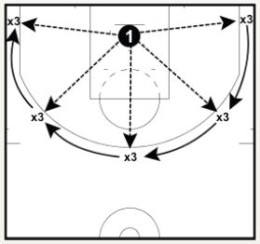
basketball-drills-5-spots-shooting

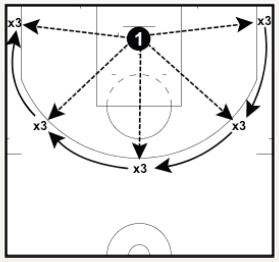
Step 1: You will shoot spot-up jump shots from five spots on the court. You have to make three shots in a row to move on to the next spot.

Step 2: After making three shots in a row from all five spots, you have to make five shots in a row (one from each of the five spots) to finish the drill in as little time as possible. A good goal is to finish the drill in less than three minutes.

Record: Bradley Beal (Washington Wizards) finished this drill in 1:20.

Wing Ball Screen Blitz Series

basketball-drills-blitz1

Step 1: Start on the wing with a live dribble. Set up your defender with a quick fake away from the screen, then come shoulder-to-hip with your screen. Simulate that the screener’s defender is showing, so you will perform a quick evade, by quickly jabbing your inside foot between their stance, to freeze them, then uphill lunge, and then separate down hill with an explosion dribble for an uncontested jump shot.

basketball-drills-blitz2

Step 2: Run back to your starting spot, set up your defender, and then come shoulder-to-hip with your screener. This time, simulate that the screener’s defender is blitzing, so you will perform a top pop, by quickly jabbing your inside foot between their stance, to freeze them, then pop to the top of the screener’s defender’s hedge, while squaring your shoulders to the rim, and then separate down hill with an explosion dribble for an uncontested jump shot.

basketball-drills-blitz3

Step 3: Run back to your starting spot, set up your defender, and then come shoulder-to-hip with your screener. This time, simulate that the screener’s defender blitzed, but left space between him and the screener, so you will jab and throw your shoulders towards the screener’s defender’s outside hip, as if you were trying to evade the defender. This will get the screener’s defender to slide uphill and create more separation from the screener. When they begin to slide to cut off your evasion step, split between him and your screener, by throwing the ball through space, with a long, low dribble, and then finish with a floater.

basketball-drills-blitz4

Step 4: Run back to your starting spot, set up your defender, and then come shoulder-to-hip with your screener. This time, simulate that your defender leaves space between you and the screener and the screener’s defender is hedging or preparing to hedge, so you will split through the space before the screen, by throwing the ball through space, with a long, low dribble, and then finish with a floater. Continue repeating these four reads and try to see how many shots you can make in two minutes. A good goal is to finish the drill with at least 10 made shots.

Record: Bradley Beal (Washington Wizards) made 16 shots.

  • « Go to Previous Page
  • Page 1
  • Interim pages omitted …
  • Page 150
  • Page 151
  • Page 152
  • Page 153
  • Page 154
  • Interim pages omitted …
  • Page 288
  • Go to Next Page »

Primary Sidebar

  • Twitter
  • Facebook
  • Linkedin
coachestoolbox
personaldevelopmenttoolbox
basketballplayerstoolbox
basketballtrainer
athleticperformancetoolbox
coachingbasketball

© Copyright 2026 Coaching Toolbox

Privacy Policy