• Skip to primary navigation
  • Skip to main content
  • Skip to primary sidebar

  • Basketball Plays
    • Ball Screen Sets
    • Horns Sets
    • Man to Man Post Up
    • Man to Man Isolations
    • Backdoor Plays
    • Man to Man 3 Point Shot Plays
    • 2-3 Zone Attack
    • Baseline Inbound Plays
    • Sideline Inbound Plays
    • Combination Defense Attack
  • Drills
    • Defensive Drills
    • Offensive Drills
    • Competitive Drills
    • Passing Drills
    • Rebounding Drills
    • Shooting and Scoring Drills
    • Toughness Drills
    • Transition & Conversion Drills
    • One on One Drills
  • Blueprint
  • Practice
  • Mental Toughness
  • Skill Development
  • Offense
  • Defense
  • Store

John Beilein 4 Man Cover Drill

John Beilein 4 Man Cover Drill

By Brian Williams on November 15, 2015

These diagrams represent principles presented by John Beilein at the Basketball Caoches Association of Michigan coaches Clinic.

The drill is a featured post in the FastModel Sports Basketball Plays and Drills Library.

You can also find out more about FastModel Play Diagramming software by clicking this link: FastDraw

My goal for all posts is not that you necessarily use the drill exactly as presented, but that it gives you some ideas on ways to make what you are doing more efficient and effective.


cover41

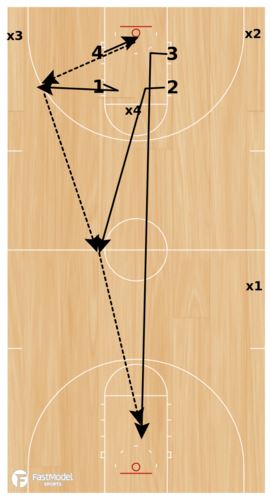
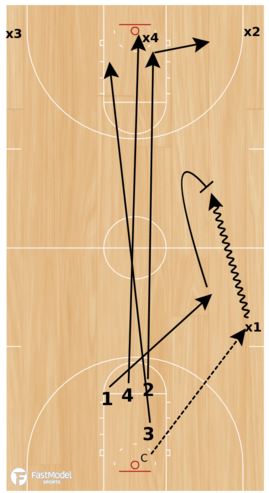
Drill starts with a Free Throw. In the diagram X4 is the free throw shooter. See the positioning of the other “X”players.

If the free throw is missed, the player “4” rebounds the ball and it is passed down the floor for a layup as quickly as possible.


cover42


Once 3 shoots the layup, every other player from the rebounding team has to touch the lane, then sprint back to stop the ball in conversion from the “X” team and protect the lane. Coach outlets the ball to x1 to begin the conversion portion of the drill.


My Name is Coach

By Brian Williams on November 11, 2015

Scott Rosberg

My son, Morgan, calls me, “Dad.” It is my favorite name that I am called. I love hearing him call me “Dad.” I also realize that it is the most important name that I am called. While to just about everyone else in the world my name is “Scott,” I am “Dad” to Morgan, and I take the responsibility that comes with that name very seriously.

Other than “Scott,” “Dad,” and probably a few choice names people have called me through the years, the other name that I am most often called is “Coach.”  Many years ago John Wooden wrote a great book called They Call Me Coach. The book is filled with many lessons that he learned throughout his life that made their way into his teaching and coaching of young people. The title, They Call Me Coach, is a good title, for it makes the reader zero in on the concept of who he is and how the title that people called him shaped his life. While this post is titled “My Name is Coach,” I am not claiming to be able to make John Wooden’s title or his ideas better or even add to them. Rather, this is my response to a thought that hit me numerous times over my career, and it has hit me hard recently. A few months ago, I was told by our school’s athletic director that I would not be re-hired as the varsity boys’ basketball coach. This post is about one of the thoughts I had as I realized that, for the time being, I am an “ex-coach”

As this new reality hit me, I realized that there is no such thing as an “ex-coach.” Once you are a coach, you are always a coach. This has been made clear to me at other points in my life when I stepped away from coaching for short periods of time. I started coaching at age 20, and for over thirty years, there have only been a few years where I have not coached in some fashion. Each time I stepped away from coaching for a while, I never felt like I was out of coaching. I was constantly watching sports with a coach’s eye, reading books by coaches, watching videos, and even attending coaching clinics. So the fact that I wasn’t coaching at those particular times didn’t make me feel that I wasn’t a coach.

But there is something even more powerful that hammers home the concept of “once a coach, always a coach.” People call me “Coach” whenever they greet me. Other coaches, teachers, administrators, parents, community members, and of course players who I have coached through the years all address me as “Coach.” When I talk to former players, the greeting is always, “Hey, Coach.” This happens often with players who have graduated. To them, I am not “Scott,” I am “Coach.” I have only had a few ex-players in my life ever address me by my first name, even those who are in their 30’s and 40’s now. I would have no problem with them calling me “Scott” – it is my name that everybody else calls me. However, just about every one of my players still calls me “Coach.” There are a few reasons why this happens. One is that they are uncomfortable calling me anything but “Coach” due to the respect that they have for me. Another is that they also have a level of respect for the title of “Coach.” Finally, one of the main reasons players still call me “Coach,” is that is my name to them. That is all they have known me as, and that is all they would ever consider calling me.

I still remember the first time I was ever called “Coach.” I imagine the young man who called me “Coach” for the first time doesn’t even remember me, but I have never forgotten the moment it happened, and I even remember the young man’s name – Matt Schuning – because of how powerful the moment was for me. I was student-teaching, and I was helping coach the freshmen boys’ basketball team. Matt was on the freshman team, and he was in my freshman English class. It was the day after our first practice, and Matt walked into the room and said, “Hey, Coach.” I was stunned. Here was a kid calling me, “Coach,” after one day of me being his coach. I thought, “That’s cool! I’m a Coach!” And then it hit me – “Whoa! I’m a Coach. These kids are looking up to me. They are taking their cues from me. They are listening to what I have to say and watching how I act. Holy Cow! I better do things the right way. I better behave properly. I better be a good role model. I better not screw this up!” I was 20-years-old, and the concept of “responsibility” had just hit me in the face with one 15-year-old boy calling me “Coach.”

That was 1981. For 34 years, I have never taken the title, the responsibility, or the importance of what I do for kids as a teacher and coach lightly. I have never taken the name that I am known by to so many people – “Coach” – for granted. Whether or not I ever coach again, I know that my name is “Coach” to thousands of people out there, and I have a huge responsibility to live up to being called “Coach.” Other than “Dad,” there is no greater name that I will be called. I have always loved and will always love being called “Coach,” and I will always keep in mind the great responsibility that I owe to that name. I hope any of you who are called “Coach” love being called “Coach” as much as I do. I also hope that you, too, will treat the name “Coach” with the dignity and responsibility that it deserves.

Do you remember the first time you were called “Coach”? Do you remember how that made you feel? I would love to hear from you in the comments section here or below this post on my website – www.coachwithcharacter.com.

About the Author of this Article

Scott Rosberg has been a coach (basketball, soccer, & football) at the high school level for 30 years, an English teacher for 18 years, and an athletic director for 12 years. He has published seven booklets on coaching and youth/school athletics, two books of inspirational messages and quotes for graduates, and a newsletter for athletic directors and coaches. He also speaks to schools, teams, and businesses on a variety of team-building, leadership, and coaching topics. Scott has a blog and a variety of other materials about coaching and athletic topics on his website – www.coachwithcharacter.com. He can be reached by email at [email protected].

Scott is also a member of the Proactive Coaching speaking team. Proactive Coaching is dedicated to helping organizations create character and education-based team cultures, while providing a blueprint for team leadership. They help develop confident, tough-minded, fearless competitors and train coaches and leaders for excellence and significance. Proactive Coaching can be found on the web at www.proactivecoaching.info. Also, you can join the 200,000+ people who have “Liked” Proactive Coaching’s Facebook page at www.facebook.com/proactivecoach. Scott can also be reached through Proactive Coaching at [email protected].

Wildcat 23 Chest Sideline

By Brian Williams on November 9, 2015

Coach Vonn Read has submitted several plays from his playbook series The Basketball Encyclopedia of Plays to the Coaching Toolbox.

Vonn is currently serving as an assistant coach in the Women’s at Houston

He has also served as an assistant coach in the WNBA with the Phoenix Mercury, Orlando Miracle, and San Antonio Silver Stars.

He was an advanced scout for the Orlando Magic as well as The Charlotte Sting.

Diagrams created with FastDraw


basketball-plays-wildcat1

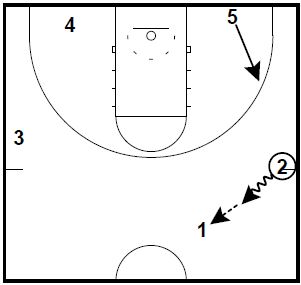
This is a simple sideline rear flare set for your best shooter.

The 1 player will pass the ball to the 2 player stepping up the floor to get the pass.


basketball-plays-wildcat2

The 2 player will take 1 hard dribble towards the 1 player to make the pass.

This gets their defender moving away from the flare screen.

The 5 player steps up and gets into position to set the flare screen.


basketball-plays-wildcat3

After making the pass, the 2 player will flare off the screen for the 3-pointer.

This is a blind rear flare screen.

The 5 player will roll to the basket for a layup if X5 helps on the flare.

The 4 player flashes high to take away any help on 5 rolling to the basket.

Coach Read has also put together The Basketball Encyclopedia of plays. You can check them out here: The Basketball Encyclopedia of Plays or read more about the books:

Any coach looking for the latest and innovative plays from the Professional, College, or High School levels can stop looking. With a compilation of over 7,700 different plays, you will never need to purchase another basketball playbook again. These playbooks can be used as a great reference tool for years to come. This 2 Volume Book includes plays from 19 different play categories, and they are the most extensive playbooks on the market.

The Basketball Encyclopedia of Plays (Platinum Series) contains over 7,700 Plays (Both Volumes combined) from the NBA, WNBA, USBL, and College levels from someone who has worked as an Advanced Scout or Coach on each level!!! This book has been intensely compiled over the last 21 years, with plays taken from a lot of NBA Coaches (past and present), WNBA coaches, and College coaches (Men’s and Women’s) from around the country.

Any coach that is serious about improving their knowledge of the game from an X and O standpoint will benefit tremendously from these books. These Books can be used to discover New Quick hitters, add a New Package to your playbook, or develop an entire Offensive System. There are a lot of new ideas and concepts in these books to study, and the Basketball Encyclopedia of Plays can be a great resource for coaches on all levels!!! This book is definitely for those X and O junkies who are always looking to improve as a Coach.

“THE GAME IS ALWAYS CHANGING? ARE YOU?” Vonn Read

Here is the link: The Basketball Encyclopedia of Plays

Basketball Shooting Drills Magic Shooting

By Brian Williams on November 6, 2015

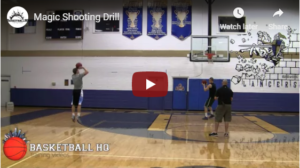
This drill called Magic Shooting and is among the thousands of resources for both coaches and player available from basketballhq. They have several more videos as well as basketball coaching resource articles.

Please make sure your sound is on to see the video.

Click the play arrow to see the drill.

The drill is a YouTube video, so you will need to be able to access YouTube to see the drill.

Players must make 5 shots from 5 spots in 2 minutes.

You can adjust the spots, the number of makes required at each spot, and how long you give your players to make the specified amount of shots.

Another idea for this drill is to have teams of 3 at each of your available practice baskets.

Have each of the three players shoot for 2 minutes and see which group of 3 gets the highest score.

Magic Shooting Drill

Advanced Shooting Drill

This shooting drill is one that you can use if you need something to challenge your top shooters, or you can also use it to modify so that you can use it with all of your players.

Basketball Plays Chicago Bulls

By Brian Williams on November 1, 2015

These plays were run by the Chicago Bulls in Fred Hoiberg’s first regular season game as Head Coach. The plays are featured posts in the FastModel Sports Basketball Plays and Drills Library.

You can also find out more about FastModel Play Diagramming software by clicking this link: FastDraw

Note: The numbers are to distinguish between the 5 different players on the floor, not to say that you have to put a traditional “5” player (i.e. center or post player), or a traditional “4” player (i.e. power forward) in those spots if you run the play. If you need a 3 point shot, at the end the game, IMO it is better to put 5 players who are dressed for the game that give you the best chance of accomplishing that.

Note #2: The purpose of this post is not to say that you should run this exact play. But, I hope it does motivate some discussion and thinking among your coaching staff as to how you can possibly incorporate some of the actions in this play to your team’s end of game situations, or as to what you can do to counter teams that switch everything at the end of the game in this situation.

The plays were submitted by Jon Giesbrecht. Jon is currently an assistant coach with the University of Winnipeg Men’s program. Jon is also an assistant coach with the 17U Male Provincial team for Team Manitoba (Includes National Championship 2013-14).

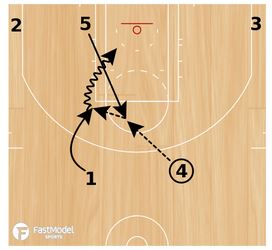
Chicago Bulls: Hawk Slip ISO

basketball-plays-chicago-bulls5-300x282

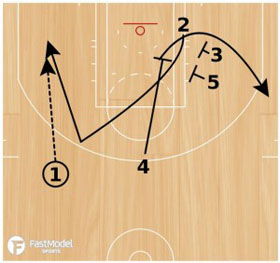
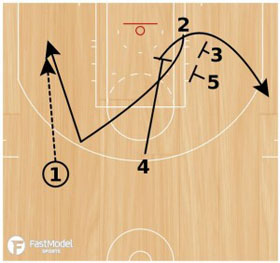
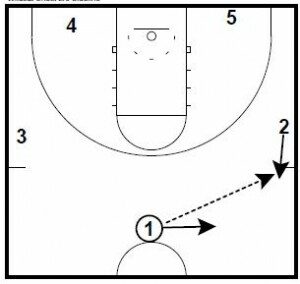
With a guard to guard switch, the Chicago Bulls attack this coverage with slipping their 2 man (Jimmy Butler) for a jumper or isolation. The Chicago Bulls ran this play against the Cleveland Cavaliers.

4 sets pin-down screen for 2, 2 sprints into wing ball screen for 1. 2 slips the screen, after 4 sets screen for 2, 4 runs off double screen from 5 and 3.
 

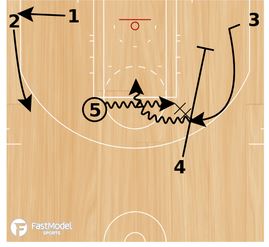
Chicago Bulls: Dribble Weave Step Up

Bulls ran this quick hitting action against the Cleveland Cavaliers… The Bulls were able to get Butler a drive to the basket off of the step-up screen.

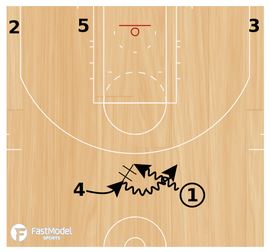
baskeball-plays-bulls-1

1 (Rose) dribble handoff with 3 (Butler), 3 dribble handoff with 4 (Mirotic).


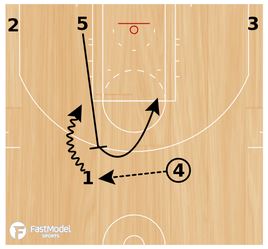
baskeball-plays-bulls-2

3 continues to cut after handing ball off to 4, 4 reverses to 3 on the move… 5 (Noah) sets step-up screen for 3.


Basketball Plays: Chicago Bulls

By Brian Williams on November 1, 2015

This play was run by the Chicago Bulls in Fred Hoiberg’s first regular season game as Head Coach. It is one of the featured posts in the FastModel Sports Basketball Plays and Drills Library.

You can also find out more about FastModel Play Diagramming software by clicking this link: FastDraw

Note: The numbers are to distinguish between the 5 different players on the floor, not to say that you have to put a traditional “5” player (i.e. center or post player), or a traditional “4” player (i.e. power forward) in those spots if you run the play. If you need a 3 point shot, at the end the game, IMO it is better to put 5 players who are dressed for the game that give you the best chance of accomplishing that.

Note #2: The purpose of this post is not to say that you should run this exact play. But, I hope it does motivate some discussion and thinking among your coaching staff as to how you can possibly incorporate some of the actions in this play to your team’s end of game situations, or as to what you can do to counter teams that switch everything at the end of the game in this situation.

The play was submitted by Jon Giesbrecht. Jon is currently an assistant coach with the University of Winnipeg Men’s program. Jon is also an assistant coach with the 17U Male Provincial team for Team Manitoba (Includes National Championship 2013-14).

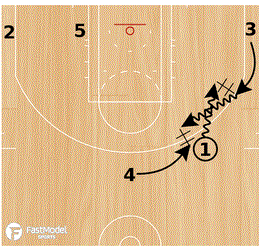
basketball-plays-chicago-bulls1

1 dribble hands off with 4.


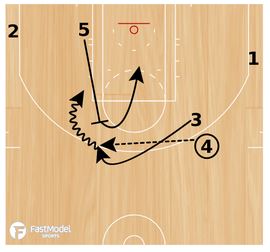
basketball-plays-chicago-bulls2

Boomerang Step-Up… Immediately on the pass from 4, 1 receives step-up screen from 5.


basketball-plays-chicago-bulls3

Blind Pig… If 1 is denied, 5 flashes to the pinch area, 1 cuts hard back door.


basketball-plays-chicago-bulls4

Pin-down DHO… If 5 cannot pass to 1 on blind pig action, 5 goes into DHO with 3 (4 setting pin-down).


  • « Go to Previous Page
  • Page 1
  • Interim pages omitted …
  • Page 138
  • Page 139
  • Page 140
  • Page 141
  • Page 142
  • Interim pages omitted …
  • Page 288
  • Go to Next Page »

Primary Sidebar

  • Twitter
  • Facebook
  • Linkedin
coachestoolbox
personaldevelopmenttoolbox
basketballplayerstoolbox
basketballtrainer
athleticperformancetoolbox
coachingbasketball

© Copyright 2026 Coaching Toolbox

Privacy Policy