• Skip to primary navigation
  • Skip to main content
  • Skip to primary sidebar

  • Basketball Plays
    • Ball Screen Sets
    • Horns Sets
    • Man to Man Post Up
    • Man to Man Isolations
    • Backdoor Plays
    • Man to Man 3 Point Shot Plays
    • 2-3 Zone Attack
    • Baseline Inbound Plays
    • Sideline Inbound Plays
    • Combination Defense Attack
  • Drills
    • Defensive Drills
    • Offensive Drills
    • Competitive Drills
    • Passing Drills
    • Rebounding Drills
    • Shooting and Scoring Drills
    • Toughness Drills
    • Transition & Conversion Drills
    • One on One Drills
  • Blueprint
  • Practice
  • Mental Toughness
  • Skill Development
  • Offense
  • Defense
  • Store

Filing Cabinet

Basketball Coaching Player Development

By Brian Williams on February 5, 2013

By Alan Stein, Stronger Team Blog (re-posted with permission)

Have you ever heard this quote, “Individuals get better in the off-season, teams get better during the season.”

While I appreciate the mindset behind this, that team development must be the #1 priority during the season, I feel this statement implies that individual player development isn’t important from November to March.

If that’s the case, I highly disagree. Individuals need to get better during the season as well. In fact, the most effective way to improve your team is to improve yourself!

Individual player development (which should include both athleticism & movement training as well as basketball skills & fundamentals) should be addressed and given priority at every practice. To what extent you should focus on these elements depends on the age & level of the player, the length of practice and the time during season (early pre-season vs. playoff time).

I know you can’t win if you don’t rebound. I realize that ‘defense wins championships.’ However, the name of the game is to put the ball in the bucket. So working on offensive moves and getting up quality reps of game shots from game spots at game speed is paramount to a team’s success.

Before he coached his first practice as the head coach of Butler, a colleague recommended Brad Stevens have a manager chart how many shots his best player took during the 2+ hour practice. Coach Stevens ran what he thought was an excellent practice – in depth teaching, sound team concepts, etc. After practice he found out his best player took less than 25 shots the entire practice, which Coach Stevens immediately recognized was unacceptable. From that day forward he has implemented quality shooting drills in every practice.

Former NFL coach Jon Gruden laughs when coaches say, “We need to get back to working on the fundamentals” after a tough loss. Get back to them? Why did you abandon them in the first place? That’s probably why you lost!

While the amount of time you spend will vary, I firmly believe every practice should have an individual player development component.

Here are 7 keys to effective player development:

  1. Build your game brick by brick. Every rep of every set of every practice is important. How you do anything is how you do everything. You build a house one brick at time. You build your game one drill at a time.
  2. Leave your comfort zone. Once a player has the movement, skill or footwork down, they need to push harder than game speed. The harder you practice, the easier things become during games.
  3. Be innovative. Casual spot shooting and stationary ball handling are more boring than yesterday’s newspaper. Plus one can argue how transferable those drills really are. Drills need to be innovative, yet purposeful. They need to be designed to improve game performance… not look cool for a YouTube video. Be innovative to improve effectiveness, not to look cool.
  4. Know the ‘why’. Every drill must have perceived relevance. That means the player clearly understands how this particular skill or drill will improve their game performance. Will dribbling 3 basketballs reduce turnovers when the lights come on and the cheerleaders start dancing on Friday nights? Doubtful. Therefore it has minimal perceived relevance.
  5. Use visualization. Great players like Kevin Durant and Chris Paul don’t just do a drill; they compete in that drill with the same focus and effort as if they were in the waning seconds of Game 7 of the NBA Finals. They imagine they are being guarded by an elite defender; not just ‘going around a cone.’
  6. Avoid fatigue and boredom. These are two of the biggest killers of player development. You can combat this by being in excellent basketball shape and using innovative, purposeful drills (#2 above). When your body gets tired, your mind quickly follows. No one can get better at a skill when his or her mind and body are exhausted.
  7. Do everything with precision. Details matter! Perfect form and footwork are imperative. If you want to build a beautiful brick house (#1), you have to lay every single brick with care and precision. Once you start sloppily laying bricks… the house suffers (both in appearance and structural integrity).

Also make sure you understand and remember that skill improvement is a process of 2’s:

It takes 2 minutes to learn a new move or new skill.

It takes 2 weeks to work on it daily until you develop confidence in it.

It takes 2 months of constant work to be competent enough to use it in a game.

I hope you find these suggestions helpful and I wish you the best the rest of this season.

Alan Stein
http://www.About.me/AlanStein

Coaching Basketball Kevin Eastman

By Brian Williams on January 30, 2013

These are some random thoughts from retired NBA Executive, NBA Assistant, and D1 Head Coach Kevin Eastman. Many of the notes deal with post play.

I hope some of these ideas will spark a few thoughts that will improve your program

I also have a sample five minute video of Coach Eastman discussing his views on skill development. Click this link to see it.

    • Coaches, play the way you play and dedicate to it.”
    • We always ask ourselves and players, who can be mentally tougher.
    • Take Time to: Learn, Grow, Stretch Ourselves, invest in our success, and become more
    • Teaching emphasis: “Back to the area of attack on screens”, “Ten toes to the rim” (shooting), “Eyes make layups, feet make jump shots”
    • Quality of feet = quality of shot
    • Not 1 or 2 things, but a lot of things.
    • Give your team 1 timeout per. practice.  -Helps you learn who your leaders are.
    • 3 Keys to Defense: Position, Awareness – Know what may happen next , Alertness – When you’re needed you go.
    • Big men must own mid-line.
    • The closer you are to the rim the less skill you need.
    • We don’t want to post up. -Post across which gets you into mini lane or gets you to mid line.
    • Create Mini Goals
      3 Lay-ups a quarter.
      1 pass ahead lay-up a half.

Mistakes Post Players Make:

Not Running
Not Posting
Not Getting the Basketball
He Thinks He’s Open

Get basketball into paint 60 x’s a game, 48 for college. (2/3 of possessions)

Things to tell your post players:

“Stay clear between the ears.”
“You dont have to score to play.”
“If you want to find a niche, offensive rebound.”
“Need niche guys on your team, find a niche ENERGY guy.”
When you work, make sure you and the players work with their heads.
Filling the lane and running rim to rim requires no skill but commitment and will.
“If you rebound too much you won‟t come out!”
ROLE: “May not be the one you want, but what we need to win a championship.”
“The more you go after the basketball, the more you get!”

To be a great rebounder you much take away middle and weak side triangle.
“Fist fight to get open, foot fight to score.”
“Play the leverage game to get position.”
Shoulders game defines leverage, the lower shoulders usually wins.
3 C‟s to tell Post Players:

Catch
Chin
Check

Catch – Perpendicular catch has no chin, to post use high leg to create space.
Must watch cutters, traps, and digs.
Feet give the post player the advantage.
See 90% of the floor after you catch it.
Give up position for possession.
Butt into thigh for no deny on post up.

Spacing – Must sprint to spacing. – If you jog help will stay.
Play low to high.

Sealing:

Feet
Butt
Hands
Triceps

“Pause for poise.”
When posting work to get the deny arm out of the way.

Learn and know your teammates.
Run rim to rim.
Post Move
Feet 1st to get advantage.
Basketball second to get separation.
On the catch read, don‟t rush.
Let post feeders cut – shoulders to hips
Don’t limit options by where you post up to get power.
If you need it, use shoulders and hips Timing, don’t waste a post up.

Post late instead of early. If you can’t score we don’t want you to post up.
When you catch utilize everything you have on your bodies. Use FAKES!
Half court – Dunk off two feet.
Drop step to be right at rim. Get ankle to middle of the rim.
“Inside outside post deeper.”
“Inside outside follow.”
Change speeds on your moves.
If you see the back of their head, cut! Watch you man on defense, not the basketball.
Screen 1st guys, post second guy in 2-3 zones.

Tell Players –
Get ahead of man.
See basketball.
Get to front of rim.
Post.

Ask Post Players – Can you score?
Low block
Baseline
Elbow
Trailer

I also have a sample five minute video of Coach Eastman discussing his views on skill development. Click this link to see it.

Del Harris Five Levels of Communication

By Brian Williams on January 10, 2013

This post was written by NBA Coaching Legend Del Harris and posted with his permission.

This was written for Coach Harris’ book, On Point–Four Steps to Better Life Teams.

Thoughts on communicating in mentorship

Five levels of communication. When speaking to groups about relating to others more effectively from a leadership position such as coaching, I often specify five levels in communicating with team members. Each succeeding level requires a bit more volume and urgency in order to be effective.

a. Conversational. In the conversational level you are getting to know your people or are conducting normal verbal exchanges with acquaintances, good friends or loved ones. This is necessary learning what makes each individual tick, as well as in forming and maintaining relationships. Some of the conversation will be about the work involved, but much will be of other items that affect daily life—family things, current events and the like. It is important to set a good environment for learning (getting better at whatever the endeavor happens to be on a life team), but it is equally important to get to know each individual’s “personal context.” Each of us is different and part of being able to show real concern for another is to learn what things are unique to the person you are mentoring. Once you understand a little better one’s personality and background, it is easier to help that person on both the good and bad days that he will go through as you work together. Good listening technique is required, whereas many coaches/teachers tend to dominate the conversational levels with the second level that is noted next. Never underestimate the power of listening, and it takes a measure of humility to do that.

b. Informational. At the informational level, you are speaking more authoritatively and more firmly because you are teaching or expressing an opinion you think is of value. Teachers, preachers, coaches, and similar type leaders will raise their tone and expand their body language when instructing in order to emphasize the subject matter. This results from the passion that one should have for his subject material and the desire to help the listener to become a better performer. Or, it may simply be the way a person speaks when he “has the floor” in a group. His voice will be elevated above the conversational level, but controlled, compared to the level of a sales pitch or election rally. It is amazing that some overlook this difference when in a restaurant, seemingly wanting to get the attention of everyone in the restaurant.

c. Encouragement. Expressions of encouragement must be real, appropriate and given with feeling. It is important to express genuine excitement for improvements and successful achievements. The level of emotion should be commensurate to the value of the act. Overplaying a simple achievement, or underplaying a real accomplishment, can undermine the speaker’s credibility. In the NBA for example, some feats deserve a nod, some a fist bump, while others merit a chest bump, perhaps. Extreme jubilation should probably be reserved for winning a championship. In the NBA, when an individual player or an entire team celebrates with over-the–top animation too soon, most experienced onlookers will say, “Hey, act like you have made a shot before, or act like you actually won a game in the past!” However, while chest bumps may be out of place in the office, good performances do demand a commensurate level of acknowledgement. Faked or forced encouragement cheapens real achievements and does little to uplift the person, who probably assumes he is about to hear the next sentence with “But,” and then be followed with a suggestion or criticism.

d. Correctional. Mistakes should not be overlooked; they must be identified and corrected. Again, there should be an increase in the emotion or urgency in the voice, similar to the encouragement mode. The third and fourth levels, encouragement and correction, must be balanced against one another, but carry more emotion and urgency than the previous levels to be effective. It is great to be positive in one’s approach to problems, but everything isn’t “OK”, particularly repeated, similar violations. While a good argument can be made that the process of any endeavor is more important than the result, real life dictates that we are judged primarily on results. It is obvious that eliminating errors is important to achieving good results. This is especially true when done in an orderly, disciplined manner. To emphasize, people may shortcut or cheat to get a good result in the short run. But that is not a legitimate method on which to base a program or system. Correction that facilitates proper execution will provide better long-term results than will ill-advised shortcuts. In sports the best teams do not beat themselves by ignoring errors or committing the same mistakes repeatedly.

e. The fifth degree, or “going crazy” level.” As for the fifth degree, there are simply times when the person who leads or takes the point in a situation has to assert a strong authoritative approach. Occasionally, the followers must learn that the leader has a limit, an edge, that they really don’t want to challenge often. Does overturning the tables in the temple ring a bell, or how about calling the Pharisees a generation of vipers face to face in front of a large audience? However, this is an area that can be overdone to the leader’s and the entire operation’s detriment. I have embraced the following plan for over 30 years: Think of it like having one of the six-shooters in the old Western movies—or maybe a nine-shot clip for the younger folks. When the season or campaign or yearly audit is over, it is good to have a bullet or two left in the chambers. Use them up too soon, and you will be like a villain in those Westerns—you will pull the trigger and all that will be heard is a click—you are out of bullets! You may as well throw in your black hat—you are done! If you think you can use an automatic weapon approach when criticizing, you will wear down your people quickly and they will shut you out. That method of teaching/coaching just doesn’t wear well in the post 1970’s society. Whether that is a good or bad thing is dependent on one’s opinion, but it is the reality in team building in the post-Vietnam era.

Think of it this way: better putting will improve all golf scores. Don’t be so quick to pull out the driver (sorry, no mulligans); use your power wisely. Scale back to the correctional level and then move on down to the instructional level, as soon as it seems appropriate to do so. Once you have made your point, move away from an emotional response to a more controlled one. A lot of times we forget that we can only make our main point once. After that, it is making the same point over and over; that tends to become argumentative and/or destructive.

As a coach, focusing on the important aspects of leadership, improvement, and teaching the game can be overshadowed at times by urgent matters such as getting time-sensitive information out to your team. There are basketball team management apps that allow you to have immediate access to player and parent contact information on your desktop workstation, tablet, or phone. However, there are other ways to make the job of managing the team easier as well. Team management tools, like TeamSnap, automate a lot of these processes for you. In addition to letting you create, update and store a team roster, tools like TeamSnap let you see players’ availability for games and practices, assign responsibilities such as post game food or snacks, and keep track of who has paid their equipment fees, and completed their paperwork.

Mental Toughness and Excuses

By Brian Williams on December 20, 2012

I have always felt that the four areas that a coach can affect with players in their basketball and that players should concentrate on improving are:

1) Toughness (both mental and physical)
2) Basketball Skills
3) Executing the team’s offensive and defensive schemes
4) The program culture (intangibles such as teamwork, unselfishness, trust, daily improvement, and bonding)

IMO, one of the skills involved in mental toughness is not making excuses. I have assembled some quotes in this article that I hope will help as you work with your players to develop and improve their mental toughness.

Excuses are the nails used to build a house of failure. ~Don Wilder and Bill Rechin

Don’t make excuses – make good. ~Elbert Hubbard

He who excuses himself accuses himself. ~Gabriel Meurier


Several excuses are always less convincing than one. ~Aldous Huxley

Maybe you don’t like your job, maybe you didn’t get enough sleep, well nobody likes their job, nobody got enough sleep. Maybe you just had the worst day of your life, but you know, there’s no escape, there’s no excuse, so just suck up and be nice. ~Ani Difranco

How strange to use “You only live once” as an excuse to throw it away. ~Bill Copeland

Don’t do what you’ll have to find an excuse for. ~Proverb

No one ever excused his way to success. ~Dave Del Dotto

Excuses are the tools with which persons with no purpose in view build for themselves great monuments of nothing. ~Steven Grayhm

And oftentimes excusing of a fault. Doth make the fault the worse by the excuse. ~William Shakespeare

A lie is an excuse guarded. ~Jonathan Swift

Hold yourself responsible for a higher standard than anyone else expects of you. Never excuse yourself. ~Henry Ward Beecher

Whoever wants to be a judge of human nature should study people’s excuses. ~Hebbel

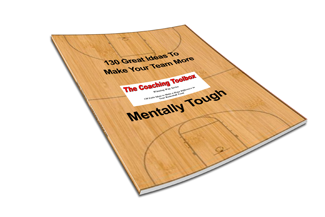
130 Great Ideas to Make Your
Basketball Team More Mentally Tough”
basketball practice

Click here for 12 ideas from the e-book

“This is great information that will help any coach to make their team more mentally tough and focused. I found sections 6 and 7 to be helpful to me as well as to our team. “

Brandon Sorrell
Assistant Girls Basketball Coach
Lawrence North (Indianapolis) High School

There is no such thing as a list of reasons. There is either one sufficient reason or a list of excuses. ~Robert Brault,

We have more ability than will power, and it is often an excuse to ourselves that we imagine that things are impossible. ~François de la Rochefoucauld

Difficulty is the excuse history never accepts. ~Edward R. Murrow

Pessimism is an excuse for not trying and a guarantee to a personal failure. ~Bill Clinton

I attribute my success to this: I never gave or took an excuse. ~Florence Nightingale

We are all manufacturers – some make good, others make trouble, and still others make excuses. ~Author Unknown

One of the most important tasks of a manager is to eliminate his people’s excuses for failure. ~Robert Townsend

Success is a tale of obstacles overcome, and for every obstacle overcome, an excuse not used. ~Robert Brault

An excuse is a skin of a reason stuffed with a lie. ~Billy Sunday

Bad men excuse their faults; good men abandon them. ~Author Unknown

He that is good for making excuses is seldom good for anything else. ~Benjamin Franklin

It is wise to direct your anger towards problems – not people, to focus your energies on answers – not excuses. ~William Arthur Ward

It is better to offer no excuse than a bad one. ~George Washington

We have forty million reasons for failure, but not a single excuse. ~Rudyard Kipling

The person who really wants to do something finds a way; the other person finds an excuse. ~Author Unknown

If you always make excuses to not follow through you deserve the weight of anxiety on your chest. ~Author Unknown

Justifying a fault doubles it. ~French Proverb

A man can fail many times, but he isn’t a failure until he begins to blame somebody else. ~John Burroughs

The best day of your life is the one on which you decide your life is your own. No apologies or excuses. No one to lean on, rely on, or blame. The gift is yours – it is an amazing journey – and you alone are responsible for the quality of it. This is the day your life really begins. ~Bob Moawa

Never ruin an apology with an excuse. ~Kimberly Johnson

Basketball Coaching Reducing Turnovers

By Brian Williams on December 13, 2012

Today’s items are ideas to help your coaching staff and players identify why turnovers happen. In my opinion, identifying things that cause turnovers is the first step to avoiding them and correcting them when they do happen. If you have anything to add as I go, please send it to me!

I hope that there are a couple of ideas in here that get you thinking about improving how your team takes care of the basketball.

The first step to cutting down on turnovers is for the players to understand the cause of their turnovers. The second step is then to develop a plan of action to eliminate the problem areas. It is also essential that the players understand the significance of each turnover. An average team scores around a point per possession, so every turnover is essentially giving away one point.

I have listed (in no particular order) some of my thoughts about recognizing why turnovers are made and then some things I look to do to improve upon taking care of the basketball. This list is not all inclusive, so if you have any thoughts to add, please email them to me!


I have categorized them. The categories are in bold. The parenthesis are my thoughts on some ideas to avoid and correct the type of turnover listed.

Poor recognition or lack of concentration

  1. Player doesn’t recognize the type of defense, what the objective of the defense is, and what is the best way to beat that particular defense. For example doesn’t recognize and distinguish a half court trap as opposed to a man to man defense. (Coach helps recognize defenses from bench in games and works against changing defenses in practice)
  2. Three second violation due to a player being unaware that he is in the lane. (Call all violations in practice scrimmage and in drills.).
  3. Just because there is no defender around a teammate, does not mean she is open. Other helping defenders deflect and steal passes–not just the defender guarding the receiver. Players must be aware and have vision of all defenders.
  4. Throwing the ball to where you think a teammate should be rather than seeing that he is there before throwing the pass

Poor Execution

  1. Picks up dribble without a pass. (Every time a player picks up the dribble in practice, other than to avoid a 5 second count, without a pass–it is an automatic turnover or an automatic 2 points for the other team in a practice scrimmage,. I believe in keeping score every time we scrimmage with special rules that work to even the talent level between the first and second units or that discourage plays that will be turnovers in games against equal or superior talent, but not always in practice against the second unit.
  2. Make the easy pass The best pass is one that is caught—every pass cannot be an assist pass.
  3. Player catches in or dribbles to a coffin corner. (Intersection of timeline and sideline, or sideline and baseline)
  4. Lack of pass fakes to move the defense to an area that is advantageous for the offense. (Pass fakes put the defense on their heels!–I like the term fake a pass to make a pass)
  5. Putting the ball above your head and losing leverage (keep the ball in triple threat)
  6. Feet too close together when holding or pivoting with the ball leading to poor balance
  7. Not making a jump or 2 foot stop and losing balance
  8. Not catching a pass with two hands
  9. Not meeting a pass
  10. Going to fast and being out of control on the dribble
  11. Not passing the ball away from the defense.
  12. Not getting set or leaning into the defense when setting a screen.
  13. Being too far away from the defensive man who is guarding you when passing. You have to get the ball by the defense before releasing it to make a pass. If the man guarding a passer is a couple of feet off, he has time to react and deflect the pass. Ed Schilling says “break the glass on the pass” That is think of the plane of the defender as a sheet of glass and put the ball through the glass (your hand and the ball by the defender).

Lack of Toughness (Both Physical Toughness and Mental Toughness)

  1. Contact by the defense is NEVER an excuse to lose the basketball We do not ever blame the official for a player losing the ball. Rather have an offensive foul protecting the ball rather than getting stripped for a layup. Rather have the player get knocked down and called for traveling than to lose the ball. Getting stripped for a layup by the other team is one of the worst plays a player can make.
  2. Being flustered mentally and loss of poise leads to bad decisions and turnovers.
  3. Being afraid to make a play leads to indecision and turnovers

Poor Skills (Skills can be improved during the season, but it takes a lot of work daily. If these are weak areas, players must be willing to work in skills The best time to improve skills is out of the games season)

  1. Player can’t hold, pivot, the ball with your head up
  2. Player can’t dribble the ball going full speed
  3. Player can’t dribble or pass with weak hand
  4. Can’t catch a game speed pass

Team turnovers

  1. Teammates not getting open causing a five second count.
  2. Poor spacing
  3. Poor timing on cuts

Physical superiority by defense.

  1. Strength
  2. Quickness
  3. Height
  4. Weight

Bad decision making

  1. A bad shot that has very little chance of going in and that no one on our team is prepared to rebound is the same as a turnover because it leads to a fast break by our opponent
  2. Forcing a pass into a crowded area
  3. Dribbling into a crowd
  4. Jumping in the air to pass
  5. Attempting a pass that has to be thrown too far giving the defense time to adjust
  6. Missing a player who is open and then trying to pass him the ball to make up for it after the defense has recovered.

What we can do to improve

  1. Don’t Put a player in a position that she is not able to handle.
  2. Set reasonable, but demanding goals for turnovers in games. In a 32 minute game, our goal is single digit turnovers.
  3. Keep stats on turnovers in practice just like you do in a game.
  4. Blow the whistle to teach in practice when a play happens that usually results in a turnover in a game–even if it doesn’t result in a turnover in practice. Examples–not making a jump stop, catching a pass with one hand, not meeting passes.
  5. Call traveling tight in practice. Don’t allow players to get away with anything that would draw a whistle in practice.
  6. Emphasize turnovers in practice by more than talk. Have penalties for turnovers—points for the other team in scrimmages when the first team makes a turnover, making plays that would be a turnover in a game against comparable talent (ex: dribbling to the corner and picking the ball up) a turnover against the second unit in practice–even if a turnover doesn’t occur, blow the whistle and give the basketball to the other team.
  7. Make practices tougher than games so that players can carry over skills from practice to games. Examples: Allow the second unit to handcheck the dribler, put 2 defenders on dribblers in zig zag dribbling, 2 on 1 split the trap drills–allowing clean but physical fouling.
  8. Teach players the rules and also to play the game the way it is called. For example don’t mess around with the ball on the 10 second lines. I have seen many over and back calls that were wrong, but the player should not be making a move with the ball at the line, get it across)
  9. Discusss what can be learned for the future for every turnover made in a game. I don’t believe in having the players watch and entire game video, but you can cut out the turnovers and teach how to avoid them in the future.

Dead ball turnovers (travel, 10 seconds, holding for a five count) are better than a bad pass because we can set our defense on a dead ball, but it is hard to defend when chasing the ball from behind. We’ll take a shot that we have a 50% chance to make. We don’t throw a pass that has a 50% chance of being caught.

Some of my least favorite turnovers

  1. Lobbing the ball to the post from the baseline
  2. Putting the ball above our head on the catch and being stripped
  3. Throwing the ball in front of the defense in a 2 on 1 situation
  4. Not making a two foot stop and traveling
  5. Trying to dribble a loose ball and not grabbing it with two hands
  6. Not chinning a defensive rebound and getting stripped
  7. Not meeting a pass and having it stolen

As I stated earlier, I will be adding to this post over the course of the next couple of weeks.

Comments from Readers

(to add a comment, send me an email)

Great article on turnovers. I do have a question about your statement about not liking the pass in front of the defense on a 2 on 1. Unless I am interpreting your statement incorrectly, we teach, in fact, to pass the ball in front of the defense in a 2 on 1 situation.

We follow this rule on a 2 on 1. It is a rule that picked from Rick Pitino back in the 80’s at a clinic in Sidney, NY believe it or not. We do not pass the ball back & forth while in transition. We tell the player with the ball that he is a scorer and will not give up the ball UNLESS the middle of the defender’s chest is in his driving line. At that moment that the chest is in the driving line, we make a bounce pass to a teammate who scores. That bounce pass is always in front of the defense. In addition, we use this rule with all our players in mini 2 on 1 situations to “read” the defense when we are driving to the basket within our set offense whether to continue to drive & score OR to pass/kick to open teammates on the arc for 3’s. It has been a hallmark rule for 30+years for us and has led us to numerous open scoring chances.

One other addition that we have added over the years is we have drilled our players to use the inside hand to dribble in transition enabling the driver to make a pass with that hand rather than dribbling with the outside hand then transferring the ball across the body to pass to the teammate. I got this concept from John Beilein from Michigan who is also a friend of mine.

Bill

Bill Hopkins
Elmira Notre Dame Boys Basketball Coach
Director, Shoot the Lights Out Basketball Academy

Basketball Coaching Teamwork and Motivation

By Brian Williams on November 27, 2012

These two articles were writtin by Frank Lenti, Head Football Coach at Mt. Carmel High School, but I believebvg that they are applicable to coaching basketball as well.

I found these articles on Steve Smiley’s website: SNSBasketball.com

Article 1 Motivating Young Athletes

One of the hardest parts of high school football coaching is motivating young athletes to practice. To do this effectively, the coach has to foster an understanding of the relationship between training, practice and peak performance.

He must encourage the athletes, provide structured training, and help them gain the self-discipline necessary for success and excellence on the field.

BUILDING THE COACH-ATHLETE RELATIONSHIPS

Effective motivation flows from the partnership between coaches and athletes. As coaches, we must understand our athletes as individuals and as a team ­ gain their trust and respect.

We must remember that we’re coaching people, not machines. We must teach youngsters the mechanics of a sport, but we must also assist in building their character. Showing support and interest in all facets of their lives helps build an effective coach-athlete relationship.

A good way to demonstrate such personal interest is by working out with the athletes. It will show them that you’ve been where they are, that you know it’s hard work, and that you’re willing to sweat, too.

DEVELOPING A WINNING ATTITUDE: SETTING GOALS

At Mount Carmel High School, we think in terms of attitude, motivation, performance, and success. Success is a journey, not a destination. Success is realized the moment an athlete gains a winning attitude, is motivated to set a worthwhile goal, and begins to move toward that goal.

A winning attitude is the best motivator. If athletes believe they can achieve their goals, they’ll try harder and increase their likelihood of success.

A positive coach-athlete relationship lays the groundwork for this attitude, and the setting of clear-cut goals helps establish it. Coaches should help the athletes set long-term goals and encourage them to achieve these goals through a series of short-term goals.

The incremental goals will keep motivation high, while giving the athletes an ongoing sense of achievement. Once the athlete begins developing a sense of accomplishment, he will be motivated to try even harder.

At Mount Carmel, we have our athletes write down a goal and the obstacles they anticipate in reaching it. We then identify the steps to take and the short-term achievements leading to the goal.

For example, if a football player wants to play wide receiver but isn’t fast enough, we set short-term goals to increase his speed. Each tenth of a second improvement in speed will motivate him to try even harder. If he increases his speed enough, we will give him a chance at wide receiver. If he doesn’t, we will examine why and set up a new workout schedule.

INCENTIVES AS MOTIVATORS

Incentives (material rewards for good performance) are commonly used for motivation, but may only be effective on a short-term basis. Athletes may become satisfied once they achieve rewards, such as helmet stickers or plaques, and the rewards will lose their power to motivate. We often have to increase the value or quantity of incentives to motivate players on an ongoing basis.

FEAR MOTIVATION

We do not believe that fear motivates. Fear motivation, or punishing players to “motivate” them, is only a temporary expedient. After repeated exposure to fear tactics, athletes become immune to threats, and continued punishment may destroy their desire to participate. It’s difficult to justify using fear to motivate young players.

T-E-A-M

It’s important to remember that athletes can motivate one another. We usually split the players into drill groups and score them as a team rather than as individuals. These training sessions help build team morale and make the players feel they have invested in one another. Each player has a responsibility to the team. We share the short-term goals of improving attitudes and basic skills with the long-term benefit of overall improved performance.

SUMMARY

Motivation is simply a means to an end. If we provide exposure to positive ideas over a long period of time, we will produce a successfully motivated athlete.

To summarize, this is our Mount Carmel Credo: Attitude controls motivation; motivation controls performance; performance controls success. And there’s no I in T-E-A-M.

Article 2–Building Teamwork

John Wooden, the legendary UCLA basketball coach, often said that “there are three things vital to success in athletics: conditioning, fundamentals, and working together as a team.” Of these three elements, “working together as a team” often proves to be the most elusive goal.

Teamwork is essentially an interaction of five key elements, as follows:

EFFECTIVE COMMUNICATIONS

Clear, positive communications from coach to coach, coach to athlete and athlete to athlete are essential in establishing the concept of “teamwork” and in fostering all the other basic elements of teamwork. Effective communication enables all the team members and the staff to clearly understand the team goals and work toward the achievement of the stated objectives.

As a coaching staff, we focus on two communication principles: 1) clearly and repeatedly communicating both our expectations of players as individual athletes, students, and team members, and the reasons for our expectations, and 2) remembering that effective communications is a two-way street: that is, the coaching staff must listen to the athletes, too.

WINNING ATTITUDES

All coaches know that the players with good attitudes are usually the ones who will contribute the most to the team. However, it’s not enough to inspire good attitudes in individual players: a “team attitude” is necessary in building the kind of teamwork upon which winning is predicated.

At Mount Carmel, we define a good team attitude by how well the athletes accept their roles and their responsibilities to the team. The star role is relatively easy to accept, but it is equally important for the team specialists and back-ups to understand and accept their roles and responsibilities.

Coaches should encourage this kind of attitude by setting an example: accepting all the responsibilities of their coaching position, not just the ones that they like.

TEAM EGO

Once players understand and accept their roles on the team, it is possible to take the concept of “team attitude” one step farther to “team ego.” This simply means that players must overcome their own egos for the good of the entire team.

MOTIVATION

The subordination of individual attitudes and egos cannot happen in a vacuum. The players must be given a reason to be motivated to achieve a favorable outcome for the team.

Coaches can set up a continuing system of motivation by setting long-term goals and by encouraging players to achieve them by meeting a series of short-term goals. At Mount Carmel, we also include personal and academic goals. By measuring progress in small steps, we can give each athlete an ongoing sense of achievement and keep his or her motivation high.

Athletes can also motivate one another. We usually split players into drill groups and score them as a team rather than as individuals, making the players feel they have a vested interest in each other.

DISCIPLINE

The establishment and maintenance of positive communications, team attitudes and egos, and motivation depends heavily on the final element of teamwork ­ discipline. Discipline is the glue that holds everything else together. Coaches should remember that discipline, if used fairly and consistently, is a positive force in building teamwork.

Rules are a part of discipline, although we have found that too many rules have a negative impact on teamwork. It is also important to make sure that the rules you do have are consistent with team goals, are realistic and are enforceable.

A key focus in our discipline program at Mount Carmel is developing self-discipline, which we define as “what one does when no one is watching.” We help athletes develop self-discipline through: 1) setting goals as described above, 2) clearly communicating the coach’s expectations for the players and maintaining those standards, and 3) demanding the best effort from each athlete, whether in practice, in the classroom, or in a game.

  • « Go to Previous Page
  • Page 1
  • Interim pages omitted …
  • Page 16
  • Page 17
  • Page 18
  • Page 19
  • Page 20
  • Interim pages omitted …
  • Page 25
  • Go to Next Page »

Primary Sidebar

  • Twitter
  • Facebook
  • Linkedin
coachestoolbox
personaldevelopmenttoolbox
basketballplayerstoolbox
basketballtrainer
athleticperformancetoolbox
coachingbasketball

© Copyright 2026 Coaching Toolbox

Privacy Policy