• Skip to primary navigation
  • Skip to main content
  • Skip to primary sidebar

  • Basketball Plays
    • Ball Screen Sets
    • Horns Sets
    • Man to Man Post Up
    • Man to Man Isolations
    • Backdoor Plays
    • Man to Man 3 Point Shot Plays
    • 2-3 Zone Attack
    • Baseline Inbound Plays
    • Sideline Inbound Plays
    • Combination Defense Attack
  • Drills
    • Defensive Drills
    • Offensive Drills
    • Competitive Drills
    • Passing Drills
    • Rebounding Drills
    • Shooting and Scoring Drills
    • Toughness Drills
    • Transition & Conversion Drills
    • One on One Drills
  • Blueprint
  • Practice
  • Mental Toughness
  • Skill Development
  • Offense
  • Defense
  • Store

Basketball Practice

Coaching Basketball Teaching Shooting

By Brian Williams on September 3, 2013

This video has some thoughts from professional shooting coaches as well as a breakdown of some of the NBA’s best shooters.

I have posted some links to some basketball skill development drills below the video. Some of the drills are team drills and others are individual workout drills.

This is a youtube video, so please make sure that you are on a server that allows youtube access.

This video is from Coach Nick Hauselman of bballbreakdown.com who has worked under Stan Van Gundy, Sean Miller, and Stu Jackson.

Press the play arrow to see the video. Some things to think about as you work with your shooters. The video is 6 minutes long.
Basketball Practice Statistics

By Brian Williams on April 10, 2013

This article was written by Coach Bob Starkey.Bob Starkey is an assistant coach for the LSU Tigers women’s basketball team. He served as an assistant under head coach Gary Blair at Texas A&M from 2012 to 2021.

This article is from his blog HoopThougts which has a lot of great basketball coaching resources.

I am a big believer in that which is important must somehow be measured. We keep score during a game to measure who wins the game and who loses the game. Because we are so processed involved, it is important to measure things that are important to the process of developing what we do as a team.

We have blogged before about the need to create stats that support the parts of your game that are important for you to be successful. Good, bad or indifferent, kids are very stat conscience. They see them constantly on ESPN and in the newspapers. Your goal must be to create stats that tell a story of your success or lackthereof in what you are attempting to execute.

Now to go one step forward, if practice is the place that you lay the foundation of your system of play — and we certainly believe it is — than you need to stat your practices.

Beyond keeping stats that matter, it is important that you post those stats for your players to read and that you actually discuss them so that they understand what you are trying to get across to them. You can incorporate it in other ways. If you have an emphasis of the day, you may want to stat it so that you can talk to your team about how successful they were in that area. You can also back up your stats with video — another strong, visual support system.

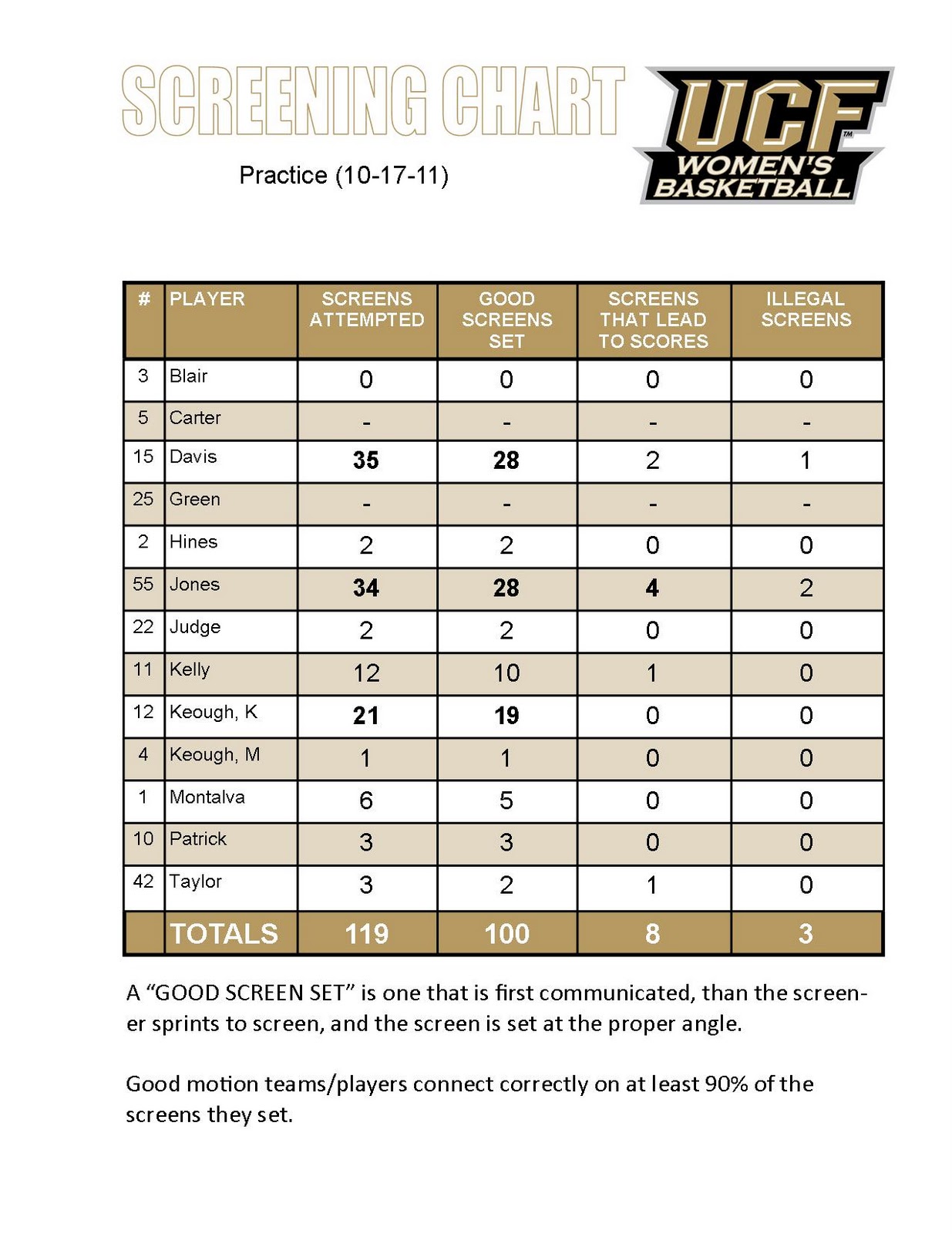
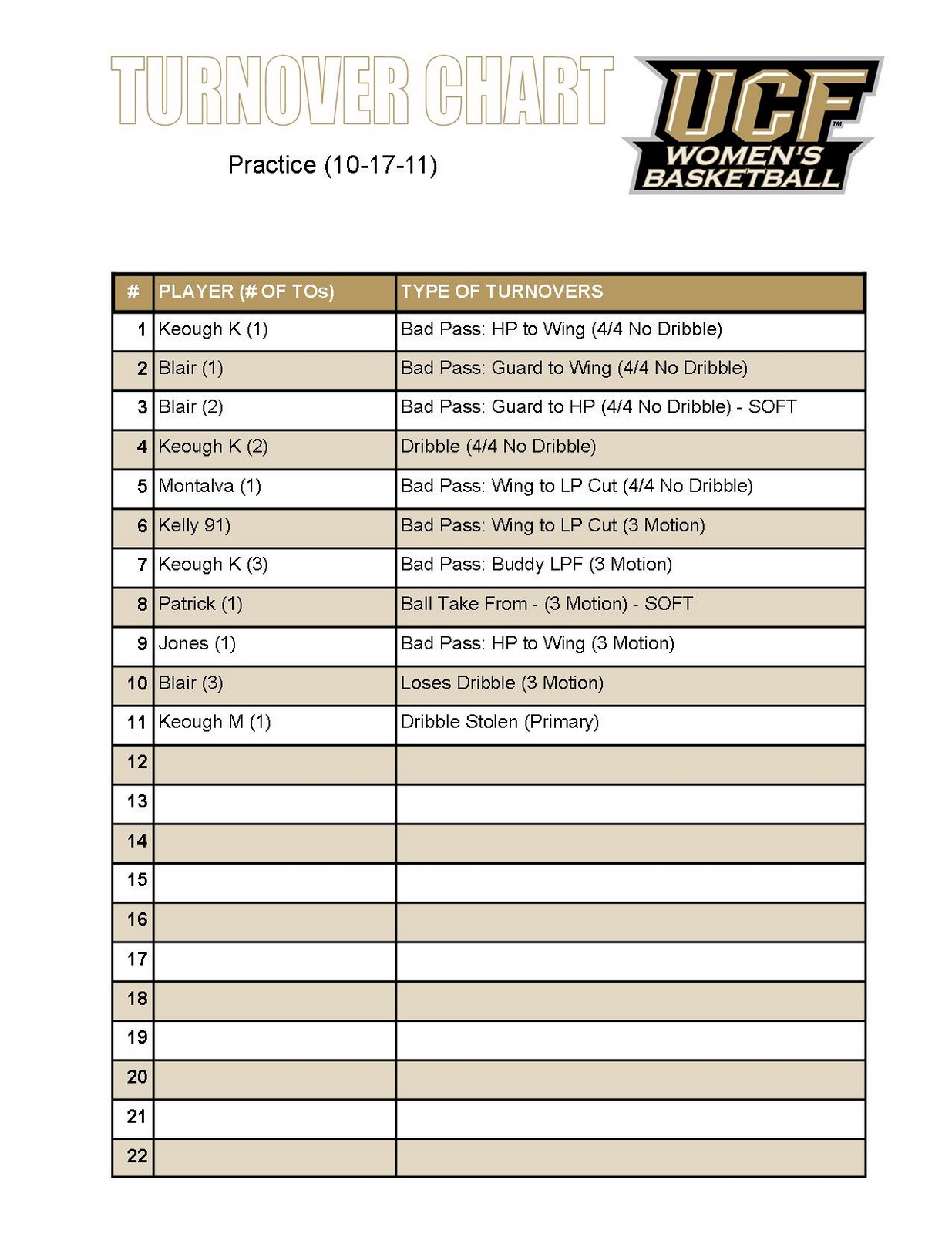
For us at UCF, as we develop our motion offense, a couple of stat sheets that are important would be our “Turnover Chart” and our “Screening Chart.”

The Turnover Chart doesn’t just tell us the number of turnovers we have committed.
1. It goes in order of the turnovers
2. Tells us the player and what number of turnovers she has committed
3. Tells us what type (bad pass, bad catch, travel, etc.)
4. Tells us how (Ex: Guard to Guard Pass)
5. Tells us what phase (Motion, Primary Break, Press Offense, etc.)

What this does is show us if there is a pattern for a player or our team. If a player has four turnvers and three are LPF (low post feeds) we know that we must work on that area with that player and maybe tell her to stay away from LPF until she improves in that area. Maybe as a team we created 5 of our 12 turnovers in Transition. Then we know this is an area that we can address in video and practice.

Click the image below to enlarge it

de

Another chart for us that is important is the Screening Chart. On this stat sheet, we are going to chart the number of screens you set, how many of them were set properly, how many lead to scores and how many of them were illegal screens.

This is a great stat sheet to help develop roles. If you run motion, setting continual, correct screens is critical. Players that can set screens and get key people in your offense open on a consistent basis are very important — but also under appreciated by many. This stat sheet allows them to shine. It also of course, tells you who is setting screens and setting them properly.

One note: we chart illegal screens. They don’t have to be whistled by the official. If it is illegal, we will mark it so that we can correct before an official has a chance to call it.


Click the image below to enlarge it

de

These are just a couple of stat sheets that are relevant to the way we play. I encourage you to use your imagination. If I was a press coach, I’d have a stat sheet to chart deflections, steals and lay-ups that we give up. If I was a “pound-it-inside” coach, I’d chart paint touches — who got ’em and who threw ’em. It’s a great way to make your players think about what’s important.

Sheridan Perimeter Individual Skills

By Brian Williams on March 7, 2013

I received this basketball workout from Coach Steve Smiley formerly Head Coach at Sheridan College and currently an Assistant at Northern Colorado.

PERIMETER WARM-UP (Approximately one minute on each of these, SIT INTO YOUR GAME)

Two ball dribbling sequence + Shelton drills, Sendek drill, Hardaway between legs crossover
Dribbling and juggling
Back dribble technique, pullback crossover progression, and pullback crossover on circle
Imaginary Defense (Talk your defense, yell it out)
Moving without the ball (Work independently, work in pairs, work in goups of 3, 4, 5)
Break Package Sprints (To rim for crunch)
Shooting Progression

REMEMBER

*Keep it straight, aim for the BACK HALF OF THE BASKET.
*Get it up. Top of the shot; top of the board (WE WANT A CONSISTENT ARC ON EACH SHOT)
*Hold a one second high follow through
*Land six inches closer for body balance

Spin yourself a pass moving out from behind the arc to practice ball in air, feet in air.
You may dribble dribble bust out to the arc, quick stop, rear turn and execute the move.
Catch facing in triple threat. CALL OUT RIM, POST, ACTION.
Respect the three-point arc.
Put 60% of your weight on your permanent pivot foot.
Visualize going against your opponent’s momentum. DRIVE THE FRONT HAND.
All drives are preceded by a one inch shot fake.
Explode with the circle tight movement of the ball. MEDIUM CENTER OF GRAVITY TO A LOW CENTER OF GRAVITY
Direct drive; put him in jail on the second step.
Cross over drive; put him in jail on the first step.

GUIDELINES
If you have trouble with a move, break it down and spend extra time on just that move.
BE A SKILL COACH/PLAYER NOT A DRILL COACH/PLAYER.
The technique and the quick and proper execution at game speeds is what we care about.
Periodically check players heart rates with a ten second count and multiply by 6.
220-Age=Maximum Heart Rate Get to 90% of maximum heart rate. E.g. 180+

All lay-ups must be clean to be a make, worth 2 points
Mix up power and one foot lay-ups
Swished jump shots you add a point (2=3, 3=4)
Call out your score on every shot attempt, made or missed.
Put back all misses. Long rebounds are usually jump shots. These putbacks do not count.
Use free throw swish rules in counting your free throws

Swish=+1 Make Hitting Rim=0 Miss=-1

MOVES FROM EACH WING (Middle drive is our drive of preference)
Three
Middle drive to rim (Cross rim)
Baseline to rim (Ten toes to baseline power shot)
Middle drive, quick stop and quick shot
Middle drive, quick stop, step across and power shot
Middle drive pull-up
Baseline drive pull-up
Middle drive hop back separation
Baseline drive hop back separation
Middle drive hesitation or rocker off hop back move to rim
Baseline drive hesitation or rocker off hop back move to rim
Jab step to a three
Free throw (4) Swish=+1 Make With Rim=0 Miss=-1 (Swish Everything=64 Points)

MOVES FROM THE TOP

Three
Direct drive to rim
Crossover drive to rim
Direct drive to a quick stop and quick shot
Crossover drive to a quick stop and quick shot
Direct drive to a quick stop, step across, power
Crossover drive to a quick stop, step across, power
Direct drive pull-up
Crossover drive pull-up
Direct drive hop back separation

Crossover drive hop back separation
Direct drive hesitate or rocker off hop back to rim or quick shot
Crossover drive hesitate or rocker off hop back to rim or quick shot
Jab step to a three
Free throws (4) Swish=+1 Make With Rim=0 Miss=-1 Swish everything=52 Points

FREE THROW SWISH +2/-2
If you lose (-2), do push-ups or a down and back sprint
If you win (-2), shoot a string of made free throws. If you miss, a swish lets you continue on.

PARTNER PASSING AND SHOOTING with one, two, and three passes is excellent. Six makes on one pass, six makes by each player on two passes, and six makes on three passes.

50 POINTS FOR TIME
Shoot from inside the arc and count a two as three if it is swished PLAY FREE THROW
Shoot from the arc and count a three as four if swished SWISH BETWEEN
Two games of twos and two games of threes gives a chance to improve scores GAMES

THREE OR MORE PLAYERS WORKING OUT TOGETHER

THREE PERSON ONE ON ONE
The extra guy plays help side defense. Play from various spots on the floor.
Be explosive, read your defender’s front hand, beat him and then play the helper .

FULL COURT ONE ON TWO DEFENDERS (Full-court pick-up and one man at half line)

HALF COURT ONE VERSUS TWO TRAPPERS (If four or more, use a high post release man)

TWO BALLS AND THREE CLOSERS OUT

*****MAKE 25 THREES WITHOUT MISSING TWO IN A ROW (Our key drill this year)
If you miss two in a row, you can keep the streak by swishing the next shot.
Record when you went out in each sequence. E.G. 7, 16, 4, 25…….Keep going if you hit 25!!!!!
This is very tough and will greatly improve your three point shooting ability.

ENDING WORK-OUT

X-Lay-ups and reverse X-Lay-ups versus time………20 seconds
You can choose to end with two five pound weight plates and do one minute segments of

    • Imaginary defense


    • Moving without the ball


    Break package sprints

YOU CAN’T DO ALL THE DRILLS EACH DAY BUT YOU CAN DO ALL THE SKILLS

BE A PRACTICE PLAYER FIRST.
PROPERLY AND QUICKLY EXECUTE THE FUNDAMENTALS OF THE GAME FOR THE WELFARE OF THE TEAM
PRACTICE AND PLAY WITH THE INTENSITY AND POISE OF A NATIONAL CHAMPIONSHIP TEAM

Basketball Drills Defensive Closeouts

By Brian Williams on February 4, 2013

This post shows a way to add some variety to practicing closeouts.

I received it as a part of the most recent University of Washington Women’s Basketball Coaching Newsletter written by Coach Mike Neighbors.

If you would like to receive Coach Neighbors’ newsletter, let me know and I will pass on your email address to him.


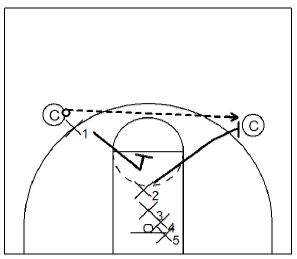
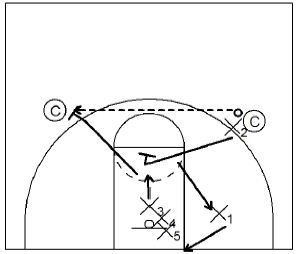
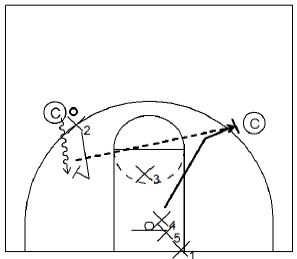
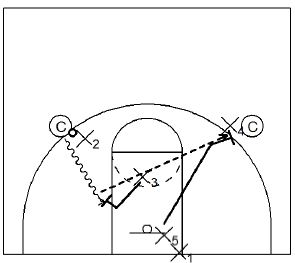
On the skip pass, the first defender in line will close out.


On the skip pass back to the original side, the next defender in line, X2, will close out.

On the skip, X1 will jump to help.


On the skip, the next defender in line, X3, will close out.

X1 steps off and to the end of the line.

X2 jumps to help.

The rotation continues from there.

After each player has gone a few times, add:
– drive and pull up for a dead call
– drive into the lane, helpside defender takes the charge


Coach drives the basketball with a defensive “dead” Call.


Drive to the lane, helpside defender takes the charge.

 
Coach skips the ball after the charge, next defender closes out.


Basketball Perimeter Individual Skill Drills

By Brian Williams on January 17, 2013

From an old Creighton Burns’ newsletter…

The skills of passing and catching on the move remain a significant area of deficiency and are areas that can be difficult to teach and drill.

The ability of guards and perimeter players to penetrate with their head up and make intelligent scoring or passing decisions is such an integral part of the game, yet often under-taught and rarely drilled.

This series of simple drills, involving 2 players and coach, provides some ideas for improving this area and expanding the skill package of perimeter players.

My hope is that you can take something away from this post to break down your offensive system into drills that will help your players.

Diagrams created with FastDraw

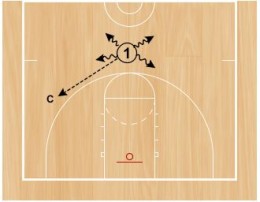
Parker Speed Pass Drill

basketball-drills1

Player has the ball in the middle of the floor, coach on the wing

The player begins the drill by doing stationary crossovers dribbles. Player can move one step forward, back, or sideways but should stay in the area of the top of the key.

On the command of the coach, the athlete must make a firm, flat pass as quickly as possible to the coach.

Build up to making a one hand pass straight from the dribble to the pass, drill right and left hand. You can also vary the dribble move and use between the leg, behind the back, and other moves in place of a crossover.

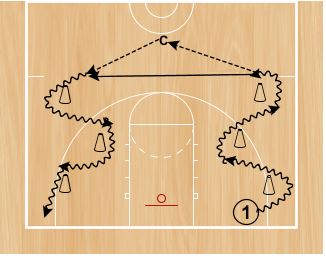
Circuit to Pass Drill

basketball-drills2

Player starts at the base-line and dribbles full speed through the circuit, executing crossovers at each cone

As the player gets to the last cone, make a firm, flat pace to the coach and sprint past to get the ball back

Dribble through the second circuit (full speed again) Emphasis on being quick from the dribble to the pass.

Time the drill to push the player to dribble full speed and also to measure improvement.

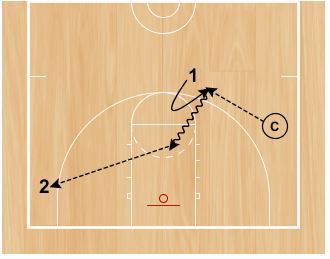
Middle Penetration Drive and Kick Drill

basketball-drills3

Guard receives the ball from the coach and rips the dribble through to the middle

As the handler reaches the middle of the lane, make the pass quickly from the dribble to a stationary player in the corner

Drill with handler making firm, flat chest pass. Depending on your philosophy, you can build to one hand pass straight from the dribble

Once the handler can consistently find the stationary target with a flat pass, have the receiver now making a cut

Emphasis on having eyes on the rim on penetration, staying low and being quick from the dribble to the pass

Put the shooter on both sides.

Again, timing the drill to get 10 reps with no turnovers provides motivation and is helps to measure improvement.

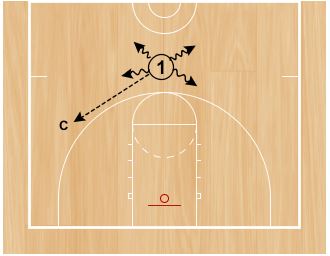
Turn the Corner Command Drill

basketball-drills3

basketball-drills5

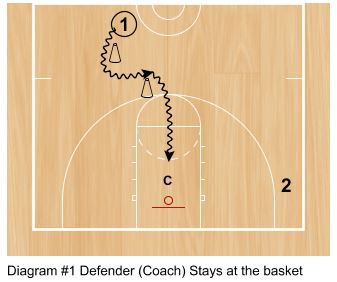
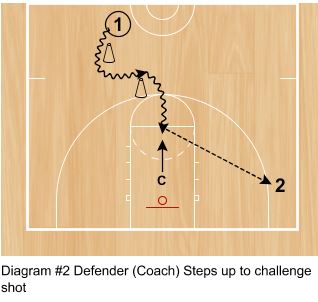
Guard beats the first cone, then turns the corner around the second cone

If the coach stays under the basket (Diagram #1), the guard pulls up for a shot or shoots a floater.

If the coach moves forward (Diagram #2), the guard kicks out for the shooter

With younger players, the coach can simply yell a “command” for the guard to react to

Works on penetrating with the eyes up and assists with decision making

Middle Flow Command Drill

basketball-drills6

basketball-drills7

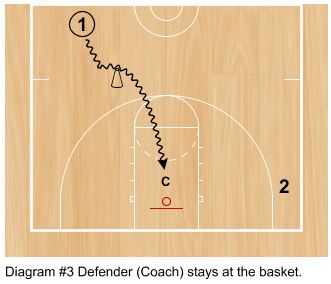
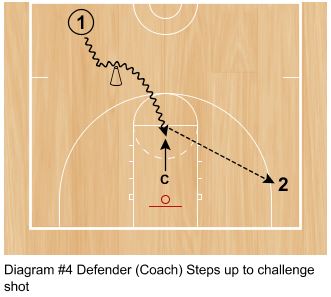
Similar to above, with the guard now beating the cone to the middle after a hesitation move off the “live” dribble

Again, the coach makes a movement to force the guard into a shot or pass decision OR the coach can yell a command

Drive, Kick, and Cut Drill

basketball-drills9

Guard penetrates middle and passes to shooter filling behind

After the pass, guard cuts to an open area to receive 2nd ball from coach for the catch and shoot

Drills moving after penetration

Emphasis on “what’s next?” – second efforts and continual movement

Post Play Basics

By Brian Williams on January 16, 2013

These notes about post play are from the Xavier Basketball Coaching Newsletter. To subscribe to their newsletter and to see the archives of their past newsletters, click here:

Xavier Newsletter

Get Position

Before you can make a move on the low post, you have to be able to get the ball first. You want to post-up, or receive the ball, along the free throw lane, at the mid-post. You do not want to post up in the lane, or you may get the three second call. You may have to fight hard to get into position to receive a safe pass. Get strong, feet wide apart, butt out, and back straight.

Seal the defender off. If he is over-playing you from one side, keep that arm and elbow firm to ward him off, while extending the opposite arm and hand to make a good target for the passer. When the pass comes, move toward it, to meet it. After receiving the ball, keep it up at chin level with elbows out, to protect it. Do not actually throw an elbow; just keep them out to ward off the defender. When receiving the pass, it is advantageous to meet the ball with a jump stop. When you jump stop, you have the option of either foot becoming your pivot foot, so you can make a move either way, to the lane or to the baseline.

Two things to try if you can’t get open

    1. Move away off the low post a few steps, then quickly come right back.
    2. If the defender stays in front of you, move him up to the high post at the elbow. Then give the passer a hand signal, and quickly cut back-door for the lob pass to the hoop. These are some basic moves the inside player should learn.

A. Low post moves

1. Drop step to baseline.

a. After receiving the ball, feel where the defender is.
b. If he is on the lane, or high side, give a fake toward the lane.
c. Then extend your inside (baseline) foot backward, pivot quickly to the baseline and toward the hoop, and make a one-bounce power-dribble to the hoop.
d. Keep your body between the defender and the ball, and extend your arms forward toward the hoop.

2. Drop step to lane (jump hook).

a. After receiving the ball, feel where the defender is.
b. If he is on your baseline side, fake to the baseline, and drop your lane-side foot backward.
c. Pivot quickly on that foot, and jump hook and shoot with the hand opposite the defender.

3. Turn and face defender and jab step.

a. After receiving the ball, feel where the defender is.
b. If he is directly behind you, that is, not toward either the lane or the baseline, but right behind you, do this.
c. Pivot and face the defender, while protecting the ball.
d. Give a quick jab step fak, and see what his reaction is.
e. If he drops back, just shoot up the baby jumper, often off the glass.
f. If he does not back off the jab step, quickly drive around him.
g. This is a good high-percentage shot.

4. Up and under move

a. After pivoting and facing the defender, fake a shot to get him to leave his feet.
b. Once he has straightened up, or jumped, you can beat him.
c. Quickly duck under him on a straight line to the hoop.

B. Playing the High Post

When the high-post player has the ball, they are in excellent position to make a pass down to the low post or to the backside wing (reverse the ball) or to a back-door cutter. Also, they can find a teammate spotted up for a three-pointer on the wing or in the corner. So being a good passer and finding the open teammate is important here.

The high post player should look to score also. At the foul line and elbows, have them pivot and face the hoop, looking to take the open shot, or looking for the pass to a baseline cutter. If their defender is up close in their face, have them fake the shot and use their quickness to explode around them and take it to the hoop. So you see that even a big man must have the ability to shoot the shot from the free-throw line, or fake and drive, just like a perimeter player. A post player is so much more effective and versatile if they can shoot the shot from the free-throw line area consistently.

  • « Go to Previous Page
  • Page 1
  • Page 2
  • Page 3
  • Go to Next Page »

Primary Sidebar

  • Twitter
  • Facebook
  • Linkedin
coachestoolbox
personaldevelopmenttoolbox
basketballplayerstoolbox
basketballtrainer
athleticperformancetoolbox
coachingbasketball

© Copyright 2026 Coaching Toolbox

Privacy Policy