• Skip to primary navigation
  • Skip to main content
  • Skip to primary sidebar

  • Basketball Plays
    • Ball Screen Sets
    • Horns Sets
    • Man to Man Post Up
    • Man to Man Isolations
    • Backdoor Plays
    • Man to Man 3 Point Shot Plays
    • 2-3 Zone Attack
    • Baseline Inbound Plays
    • Sideline Inbound Plays
    • Combination Defense Attack
  • Drills
    • Defensive Drills
    • Offensive Drills
    • Competitive Drills
    • Passing Drills
    • Rebounding Drills
    • Shooting and Scoring Drills
    • Toughness Drills
    • Transition & Conversion Drills
    • One on One Drills
  • Blueprint
  • Practice
  • Mental Toughness
  • Skill Development
  • Offense
  • Defense
  • Store

Basketball Drills

Basketball Drills Three Man Weave

By Brian Williams on October 16, 2014

Three Man Weave

By Alan Peel, CoachPeelBasketball.com

At the start of practices, you want to have a good warm-up drill that gets your players engaged and works on building your team’s running game. I have used a three-man weave drill in my time as a coach that have worked on passing, footwork, running the floor, and shooting lay-ups effectively.

These are untimed drills for the players. Instead, we want the players to make a predetermined number of lay-ups or consecutive lay-ups without making a mistake. If a ball hits the floor for any reason, a player uses the incorrect hand in shooting a lay-up, a player travels, or a player runs the drill incorrectly, the lay-up does not count even on a made lay-up.

On all of these drills, players should pass and go behind the player who received their pass. The keys to the drill are to stay wide when running the floor, run the floor hard, and to lead the receiver with the basketball. Coaches should emphasize that if the ball is in the air coming toward them, use a jump stop to get under control with the mantra of “ball in the air, feet in the air”.

The first segment of the drill is with five passes before a lay-up is attempted (Diagram 1). Once the players have made the specified number of lay-ups, the number of passes will be reduced to four (Diagram 2) and then to three once the specified number of lay-ups has been made (Diagram 3). After the specified number of lay-ups has been made for the three-pass three-man weave, the drill is completed.

Diagrams created with FastDraw

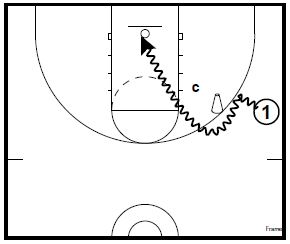
basketball-drills-three-man-weave1

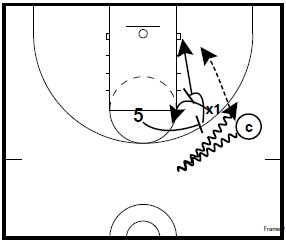
basketball-drills-three-man-weave2

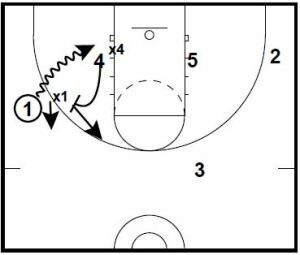
basketball-drills-three-man-weave3


During the drill, the players will count out how many passes they make before shooting the lay-up. The job of the coaches are to count the number of lay-ups made and to make sure the drill is being run correctly. The coach will not stop the drill once it begins for any reason other than if a player is injured.

It should also be noted that this drill will not look good early on, but your team will get better at running it as you give it more time. The best way for them to get better at it is to do the drill daily. If you have a younger team, you will want to start with having them make a specified number of lay-ups early in the season. Later in the year, if your team is experienced and good enough, have the players make a specified number of consecutive lay-ups.

Basketball Drills Argentine Passing

By Brian Williams on October 14, 2014

Here is an idea if you for a conditioning drill that also involves handling the basketball.

The drill can be done half court or full court depending on what you want to accomplish with the drill and

The drill continues in similar fashion for one minute on the clock.

If the ball hits the ground, passes are not caught cleanly, traveling, or any other error, the one minute is put back on the clock and the drill starts over. Or, you can add time each time there is a turnover.

You can change the time or the requirements to complete the drill without starting over to fit your needs.

In addition to the diagrams, there is a video below of the Maryland Women’s team running the drill.

Diagrams created with FastDraw

Argentine-Passing-Drill-Half-Court

8 players are in the drill.

Players of same numbers are partners. 1 is matched with x1, 2 is matched with x2, 3 with x3, 4 with x4.

1 and x1 each start with a basketball.

The drill starts out with the players who have the basketballs passing to their right. 1 passes to 3 and x1 passes to x3.

After making the passes, the 1s sprint and change spots.

Players need to be aware of the other players in the middle to avoid collisions.

Argentine-Passing-Drill-Half-Court2

The drill continues with 3 passing to 2 and x3 passing to x2

The 3s, then change positions.

The drill continues in similar fashion for one minute on the clock.

If the ball hits the ground, passes are not caught cleanly, traveling, or any other error, the one minute starts over.

You can change the time or the requirements to complete the drill without starting over to fit your needs.

The drill can also be done full court.

Argentine-Passing-Drill-Half-Court3

Argentine-Passing-Drill-Half-Court4

In the full court version, obviously the players at half court have a shorter distance to run and the players in the corner have longer to run.

If you have more than 8 on your squad, you can put players behind in the corners and under the basket (so that you have 2 in each of those spots) to make the running more equal.

Below is a video of the Maryland Women’s team running the drill full court.

I like the idea of keeping the players inbounds, but if you want them to run a little more, you can station them behind the sideline.

To see more information about the DVD that this sample video came from, click here: All-Access Maryland Women’s Basketball Practice with Brenda Frese

Basketball Drills Prairie Fire Shooting

By Brian Williams on October 9, 2014

This basketball shooting drill is from Coach Randi (Peterson) Henderson, Head Women’s Basketball Coach at Coe College.

It is included in The Basketball HoopScoop’s A System of Success: 2011 Conference Champion and National Tournament Playbook–edited by Dan Ninham.

This eBook is bundled with the 2014 NIT Finals Playbook as this week’s feature. Click this link for more information: NIT Finals and System of Success Bundle

This drill encourages communication, responsibility, and attention to detail.

The team is required to keep the ball off the ground for the duration of the drill as well as make consistent two handed passes and catches on the run. Other variations of the drill are 1) to make a certain amount in 1:00 2) have a perfect 1:00 3) Add Coaches for defense in transition or to trap the out1et.

The most demanding way to run the drill is to put 5:00 on the clock with the team goal being to score 150 points (1 point for layups, 2 points for 2 point jump shot, 3 points for 3 point shots).

The rules are NO TRAVELS, NO MISSED LAYUPS, AND THE BALL CANNOT TOUCH THE GROUND. Exception: 1 bounce is allowed on the rebound for two and three point jump shots.

You will need to adjust the standards to fit the level you coach and the changing abilities of your players from year to year and also adjust the types of shots and passes to fit your system of play.

Diagrams created with FastDraw

basketball-drills-prairie-fire-shooting-drill1

Coach starts the time on the clock with a layup and a pass to 1 who is yelling “Outlet.”

1 cuts to top of the key for the pass.

Right and Left wing take off sprinting.

One is naming and yelling “Long” the other is yelling “Out1et”.

1 distributes the ball without dribbling or traveling to the Outlet wing and follows the pass.

The outlet wing delivers a scoring pass without dribbling or traveling, then follows the pass for a shot.

basketball-drills-prairie-fire-shooting-drill2


After the layup is made, the player who just shot the layup gets the ball out of the rim keeping it off the ground and outlets to 1 cutting to the top of the key.

The two wings who are on the baseline, deliver 2 handed passes to the shooters and then proceed to take off for the “outlet” or “long” layup.


basketball-drills-prairie-fire-shooting-drill3


Drill is done for 5 minutes:

NO TRAVELS, NO DROPPED PASSES, and NO MISSED LAYUPS

On the Wing Catches, be outside the 3 pt line on the catch:

(You can adjust the types of finishes or shots to fit your needs)
1 minute the finish is 1 Dribble Layup off 1 foot
I minute 1 Dribble Layups off 2 feet w/a Peek
1 minute 1 Dribble Jumpers
1 minute Catch & Shoot in Range
1 minute Choose your shot

This drill is included in The Basketball HoopScoop’s “A System of Success: 2011 Conference Champion and National Tournament Playbook–edited by Dan Ninham. The book has a lot of drills and sets from very successful small college women’s programs.

This eBook is bundled with the 2014 NIT Finals Playbook as this week’s feature. Click this link for more information: NIT Finals and System of Success Bundle

If you are interested in adding to your Coaching Toolbox take look at what I believe is our best offer.

CLICK HERE to select from a list of more than 70 eBooks.


Basketball Drills “Baseball”

By Brian Williams on October 6, 2014

This drill was from an old Xavier Men’s Newsletter.

You can see their archives and subscribe at this link.

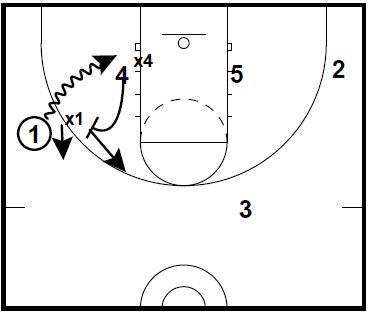
I thought with the World Series in progress, this would be a good time to post this basketball drill that works on 1 on 1, 2 on 2, and 3 on 3 situations in a competitive way.

If you have to wait on some athletes to start practice and need something to add variety to your practice, or late in the season when you are looking for ways to change things up, here is one idea.


Basketball Drills “Baseball”

Diagrams created with FastDraw

basketball-drills-baseball1


Divide teams into two colors.

Blue team establishes a “batting order” and white matches up accordingly to how they want to defend.


basketball-drills-baseball2

INNING 1: ONE-ON-ONE:

Blue team is on offense, scoring as many RUNS (points) as possible until they get 3 OUTS (defensive stops by white)…

Switch to White team on offense. White plays until they get 3 outs…

End of first inning. (To make a long game you can run through this again and count as an additional inning)

basketball-drills-baseball3

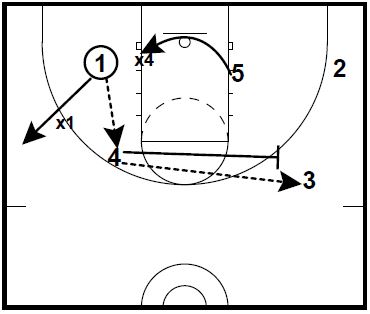
INNING TWO: TWO-ON-TWO:

For each inning, we vary the initial actions (ball screen, down screen, flare screen, etc.)

Use whatever actions are part of your offense or maybe your upcoming opponent’s offensive attack to work on defending them.


basketball-drills-baseball4

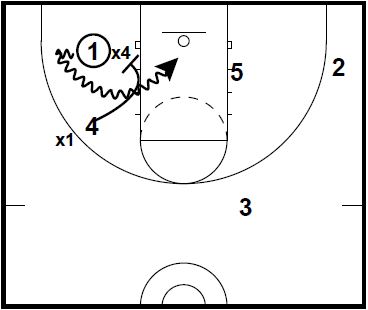
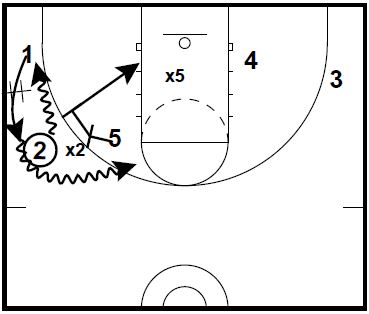
INNING THREE: THREE-ON-THREE:

Again changing the initial actions to actions that you either use or have to defend.

For each of the innings and individual matchups, you will need to decide what to do with fouls. You can make them an automatic run (point) for the offense, or you can have players shoot them to work on free throws with a little pressure. If you shoot them, the offense gets their point if they make the free throw. They get the ball back if they miss. Like any drill that you see from other programs, you need to make the adaptations that fit the objectives that you have for running the drill.

Basketball Drills Reggie Miller and Larry Bird Shooting

By Brian Williams on September 26, 2014

Here are two ideas for basketball shooting drills. The first one is more of a team drill with an emphasis on rebounding and passing as well as shooting. The second is more of a toughness drill requiring the shooter to make shots when tired while having the pressure of making consecutive shots.

I hope you find ways to tweak these shooting drills to fit your philosophy and that you can use them in your pre-season skill workouts or in your regular season shooting drills.

The rebounder should be ready to rebound all shots without the ball hitting the ground. The passer can be located at any spot where passes come from in your offensive system. Reggie Miller frequently came off screens from the basket out, but that might not fit your scheme. This shooter will start under the basket in the drill but can be moved anywhere that makes cuts from in your offense.

Emphasize to the shooter to make game-like cuts, including changing speeds and directions while making the cuts. The shooter will receive the ball for a catch-and-shoot shot, or some kind of one-dribble pull-up shot. After one minute is up, the players will rotate passer, rebounder, and shooter.

I know that the passer does move his feet in the first video, but that is something you can fix in your version of the drill.

For the first drill, the shooter is going to work on the cuts that you use within your offensive system. The Passer concentrates on time on target passes–and not traveling when delivering the ball. The rebounder’s job is to get the rebound before it hits the floor. I like the idea of adding a point to the score each time the rebounder accomplishes that task and subtracting points for bad passes.

These videos are among the basketball training videos for all levels of coaches, players, and parents that are offered by BasketballHQ. You can access their entire library with a pro membership. They offer a free 7 day trial for the membership. If you are interested, you can see more at this link: Basketball HQ

Please make sure your sound is on to see the video. They are YouTube Videos

The thought behind the post isn’t to worry about the shooting form or mistakes being made, but to give you ideas on something to add to or improve the shooting drills that you currently use.

Reggie Miller Shooting Drill

Larry Bird 2 Minute Shooting Drill

Basketball Drills Memphis 3 on 3 Closeout

By Brian Williams on September 23, 2014

I found this 3 on 3 closeout drill on FastModel Sports Plays and Drills Library The site has thousands of drills and plays.

You can also find out more about their Play Diagramming software by clicking this link: FastDraw

The drill was diagrammed by Rich Czeslawski and attributed to Memphis’s Josh Pastner.

If you are looking for more variety in your defensive drills, there are links to several other drills at the bottom of the page.

Also, as with every page on the site, I want to remind you that you can print the drill as a pdf by using the icon at the bottom of the post.


basketball-drills-memphis-closeout1


Defender x1 starts with the ball and passes to x2.

x2 passes to x3, x3 to offensive player 1 as x1 sprints to close out on 1.


basketball-drills-memphis-closeout2

x2 and x3 close out on 2 and 3, respectively, as the ball is swung around the perimeter.

On the first pass, from 1 to 2, x1 jumps to the ball.

On the second pass, from 2 to 3, x1 sprints to mid line.


basketball-drills-memphis-closeout3

The offense reverses the ball again, with defenders allowing the passes and working on positioning.

x3 jumps to ball then sprints to midline, x2 jumps to ball, x1 closes out.


basketball-drills-memphis-closeout4

Play live 3-on-3 from here with an emphasis on forcing the dribbler whichever direction your defense dictates.

Use this drill to work on the specific footwork and fundamentals taught in your defensive philosophy.


  • « Go to Previous Page
  • Page 1
  • Interim pages omitted …
  • Page 66
  • Page 67
  • Page 68
  • Page 69
  • Page 70
  • Interim pages omitted …
  • Page 96
  • Go to Next Page »

Primary Sidebar

  • Twitter
  • Facebook
  • Linkedin
coachestoolbox
personaldevelopmenttoolbox
basketballplayerstoolbox
basketballtrainer
athleticperformancetoolbox
coachingbasketball

© Copyright 2026 Coaching Toolbox

Privacy Policy