• Skip to primary navigation
  • Skip to main content
  • Skip to primary sidebar

  • Basketball Plays
    • Ball Screen Sets
    • Horns Sets
    • Man to Man Post Up
    • Man to Man Isolations
    • Backdoor Plays
    • Man to Man 3 Point Shot Plays
    • 2-3 Zone Attack
    • Baseline Inbound Plays
    • Sideline Inbound Plays
    • Combination Defense Attack
  • Drills
    • Defensive Drills
    • Offensive Drills
    • Competitive Drills
    • Passing Drills
    • Rebounding Drills
    • Shooting and Scoring Drills
    • Toughness Drills
    • Transition & Conversion Drills
    • One on One Drills
  • Blueprint
  • Practice
  • Mental Toughness
  • Skill Development
  • Offense
  • Defense
  • Store

Steve Prohm Skill Development Drills

Steve Prohm Skill Development Drills

By Brian Williams on July 13, 2017

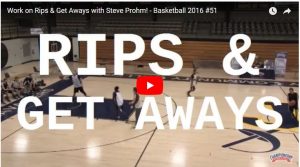
These two skill development videos are with Iowa State Men’s Coach Steve Prohm.

The purpose of the post is not to evaluate the footwork of these players in the video.

It is probably the first time they have done the drill.

They are there to demonstrate the drill.

As a coach, it is up to you to teach your players the proper footwork to be quick without traveling in the drills and then carry that over to games.

The video is a YouTube video so make sure that you are on a server that allows YouTube access.

If you are interested in learning more about the DVD that this sample was taken from, click here: Steve Prohm: Offensive Skill Development and Attacking Man & Zone Defenses

Make sure your sound is on.

Click the play arrow to see the drills.

Rips and Get Aways

Click the play arrow to see the drills.
Transition 3s

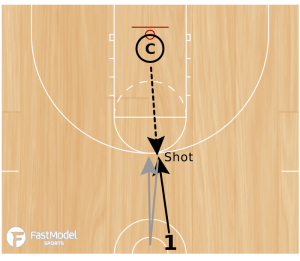
10 in 1 Shooting Drill

By Brian Williams on July 11, 2017

This shoting drill came from the FastModel Sports Basketball Plays and Drills Library.

You can also find out more about FastModel Play Diagramming software by clicking this link: FastDraw

The drill was contributed by Kyle Gilreath, Head Boy’s Basketball Coach at Astronaut High School, Titusville, FL. Kyle is also the author of the basketball coaching website, Words on the Bounce.

Coach Gilreath was a graduate manager for Billy Donovan at Florida and learned the drill from Coach Donovan.

This is what Kyle had to say about the drill:

This is one of my favorite shooting drills of all time. It combines shooting, conditioning, and mental toughness to fight through fatigue. I got this drill from Embry-Riddle Head Coach Steve Ridder many years ago when I was a youngster attending team camp with my dad. This drill will test any player who thinks they are a great shooter and make them prove it!

Goal:
Good Players: 10
Great Players: 11
Elite Players: 12+

1 Minute on the Clock

Player starts at half-court with a coach or teammate under the rim with a ball (passer).

When the clock starts the player runs in and shoots a 3-pointer.

Make or miss the player sprints back and touches half-court and sprints back in for another 3-pointer.

This is repeated for 1 minute.

Making the Invisible Visible

By Brian Williams on July 9, 2017

The Effects of Reference Points

A Teamwork Intelligence Initiative

by Dr. Cory Dobbs

I’m a basketball fan. I’ve coached at the high school and collegiate levels. And I’ve created a nationally recognized leadership development firm for collegiate and high school coaches and athletes. The fuel that fires me up is my intense dislike for losing. Oh, I know it’s a part of the game—the game of life too—but I don’t enjoy losing. Part of anything worthwhile involves losing. You’re going to lose.  If you look deep enough you find ways to get better, win more, and enjoy life.

I enjoy watching great teams win. I recall the 1992 NCAA tournament as one of my favorite basketball tournaments of all time. It’s by default that I think we have to look back to see the very best tournaments, with today’s best players leaving college after one year. Okay, anyway, In the East regional final, Duke defeated a very talented Kentucky team. Duke had the triumvirate of Bobby Hurley, Grant Hill, and Christian Laettner, yet with little time left they found themselves on the brink of elimination.

Duke had possession of the ball One last gasp. Inbounding the ball 94 feet from their basket, it would take perfect execution to end victorious. Grant Hill was the inbounder. He executed a perfect three‐quarter length of the court pass to a surprisingly open Laettner. Laettner catches the ball at the free‐throw line, his back to the basket, one dribble with his left hand, dips his right shoulder into the defender, then pivots back to his left and releases a perfect shot. Duke wins and advances to the National Championship game.

Duke and Michigan meet in the final game. Duke trailed 31‐30 at half‐time. Michigan with its star-studded freshman line‐up, The Fab Five, looked like a good bet to take down Duke and win the championship. But that didn’t happen. Duke went into the locker room at the half and emerged like an uncaged lion. The final score was Duke 71, Michigan 51. Do the math. A 20 point win. What happened? Duke by all measures was not a 20 point better team. In fact, if they played the next night Michigan might win.

It turns out that Duke’s performance that night fits nicely with the research findings of Wharton professor Jonah Berger and University of Chicago professor Devin Pope. Berger and Pope, huge basketball fans, analyzed 18,060 professional basketball games between 1993 and 2009 and over 45,000 college contests seeking to understand the relationship between half‐time scores and the final outcome of the game. What they found is somewhat surprising. They found that when a team is trailing by one point at halftime, they actually are more likely to win. On the face of it, this makes little sense.

However, there is another face to this situation. The situational variables, down by one and fresh off a confidence-boosting win, actually favor Duke.

As Berger and Pope explain it, the players on the team trailing by one point enter the locker room stewing with frustration and anger. The coach provides corrective feedback, channels the emotion, and the team emerges from the locker full of motivation. The feeling of being down, even if it’s only a point, tends to open minds to corrective feedback and reignites the heart to commitment and effort.

So why the 20 point differential? Well, when a team falls behind by a high reference point, let’s say 15 points, they are more likely to become discouraged and reduce their effort. On the other hand, how many times have you used the reference point of “under 10 points.” Let’s say, you’re team is down by 11 points and has the ball to end the quarter (another reference point). In a time-out huddle, you compose the players and say “let’s get this thing under 10 points.” You inbound the ball and score getting the game into what is now a more manageable frame of mind. The reference point of “under 10” has you and your players energized and re‐focused. The reference point has effectively reduced cognitive and emotional uncertainty.

The psychological effect of reference points is real. When a player nears a goal she set for herself she feels strengthened and emboldened. The gap between current and a desired reality has been narrowed. On the other hand, when it looks like she’s not going to achieve a goal diminishing sensitivity sets in; the goal becomes marginalized. Down by one, Duke goes into the locker room with the knowledge that they’ll need to kick it up a notch, and confidence— they’d just beaten a tough Kentucky team — that they can win the game.

The Duke players know that no matter what’s happened up to this point, they can win. Michigan, on the other hand, gets down by a sizeable margin, a discouraging reference point, loses focus and suddenly they’re behind by twenty points.

Reference points are essentially stimuli that generate emotion. They have a temporary, short-term effect, which is to focus attention on the positives of a prior experience that is applicable to the current situation. If the reference point functions as intended, the result is that the players recall or reproduce a memory that shapes their state of mind at that moment in time.

For example, when you go to the store to buy a pair of shoes, the likely price point you choose will be relative to the price of the shoes you’re replacing. The shoes you are replacing serve, tacitly, as a reference point for your current purchase. The implication is that your thought process during the transaction is greatly influenced—emotionally and cognitively—by your previous transaction.
[thrive_leads id=’36827′]
Though this is an example from the world of consumer behavior, the use of reference points as a coach are nearly endless. Think of the many physical, intellectual, emotional, and social reference points you can use to evoke the desired emotion at the preferred time. The goal should be to intentionally build cognitive, affective, and situational reference points with your team. These then become strategic triggers, available when you need them to generate positive emotions.

How you deploy reference points matters. Individuals and teams are always engaging with reference points; some explicit like, “We’re down by one point, we can with this thing,” and implicit “let’s get it under 10 points,” and the mood of the team swings in a positive manner. You just need to use the reference points aptly, skillfully, and accurately.

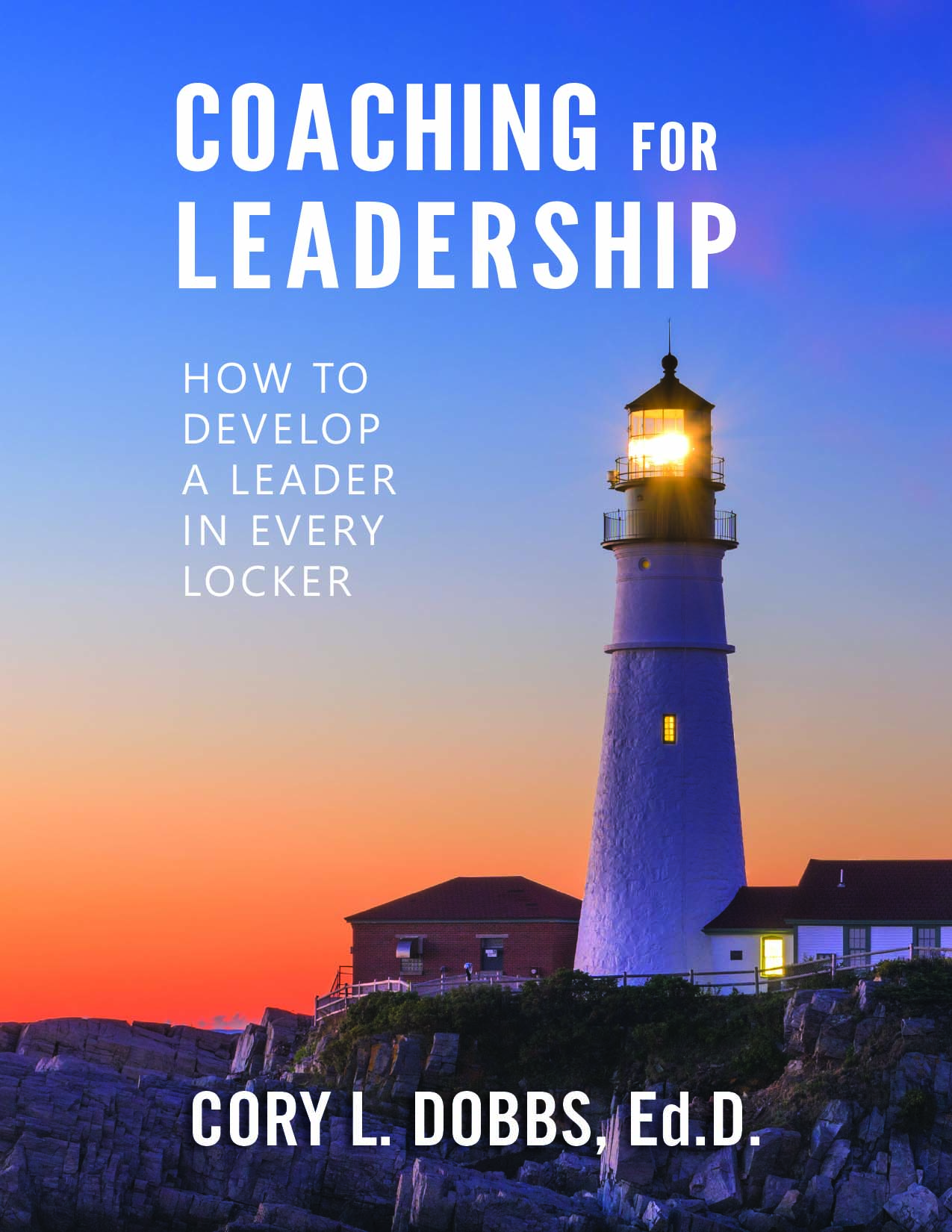
“Tell me and I’ll forget. Show me and I may remember. Involve me and I will care.” -Your Student-Athlete The world of coaching is changing. In Coaching for Leadership you’ll discover the foundations for designing, building, and sustaining a leadership focused culture for building a high-performance team. To find out more about and order Sport Leadership Books authored by Dr. Dobbs including Coaching for Leadership, click this link: The Academy for Sport Leadership Books

About the Author

Cory Dobbs is the founder and president of The Academy for Sport Leadership, a national leader in research‐based curriculum for coaches and student‐athletes. Dr. Dobbs is a college educator, a coach to successful coaches (helping coaches attain a higher level of success), and an accomplished human performance specialist whose expertise is in the field of leadership, team building, and creating a high‐performance culture in the arena of team sports. Cory blends social‐personality, psychology, and applied social psychology, which means he studies how people’s thoughts, behaviors, and preferences are influenced by both who they are and the situations they’re in. He uses Teamwork IntelligenceTM to help teams explore how the mix of perspectives brought by their individual members influences their work together.

3 Live Ball Dribble Moves

By Brian Williams on July 9, 2017

3 live ball dribble moves from Drew Hanlen, Founder of Pure Sweat Basketball.

The drill is posted in the Pure Sweat YouTube channel. You can access their channel of instructional videos at this link:

Pure Sweat You Tube Channel

This is a YouTube video, so please make sure that you are able to access that network.

Also, please make sure your sound is on for the instruction with the video.


Click the play arrow to view the video.

3 Live Ball Dribble Moves

6 Point Checklist for Offensive Structure

By Brian Williams on July 6, 2017

This pst was written by Peter Lonergan, Manager Basketball Development and Communications, Northern Suburbs Basketball Association–Australia.

When deciding on which offensive structure or system to implement with a team, it is important to understand what components make for a successful offense. The “six point checklist for offensive structure” can assist in simplifying the choice of structure and ensures that the coach does not waste time implementing and teaching an offensive system that does not provide consistent scoring opportunities.

Perhaps the most important aspect before even selecting your offensive structure or putting it to the “six point test” is that it suits your playing personnel and is something your players have the ability and skills to operate.

Any offensive system will only be as good as the fundamental base of the players and the bulk of practice and preparation time should be devoted to individual skill development.

The next step is to put your offensive structure or system to the “six point checklist”.

DOES YOUR OFFENSIVE SET OR STRUCTURE HAVE:

· Opportunities in transition (early offense)
· Spacing
· In-built ball reversal
· Opportunity for dribble penetration
· Opportunity for post play
· Opportunity for shooters

To effectively challenge the defense and provide high quality scoring opportunities, it is important an offensive structure or system has most, if not all, of the above qualities.

1. OPPORTUNITIES IN TRANSITION (Early Offense)

Any offensive system needs to be able to provide scoring opportunities early in the possession, either after a defensive stop or a made basket. Basic full court organization, perhaps with an inbuilt counter for extended pressure and clear roles for all players in transition, are valuable in creating quality shots early in the possession and possibly “easy” baskets. The transition or early offensive system needs to flow quickly and smoothly into the half court set to ensure shot clock pressure is not created as the offense “burns” clock in getting organized.

2. SPACING

This is perhaps the most important aspect of any offense. Without it, the ability of individuals to execute one on one skills and key elements such as post play and penetration are limited. Whatever the system being used, all players need to have an understanding of spacing and just as importantly, how to identify and react accordingly when spacing is poor.

3. IN-BUILT BALL REVERSAL

As with spacing, the ability to shift the defense through ball reversal is essential to effective team offense. Most effective offensive systems have “in-built” ball reversal, that is, they explore one side of the floor, then create action away from the ball and a conduit to take the ball to that action on the opposite side of the floor. This can be achieved through stepping interior players to the perimeter to reverse the ball, or reversing through the post.

4. OPPORTUNITY FOR DRIBBLE PENETRATION

Ask coaches what is the toughest thing to defend in the half court. Many will reply containing the ball and handling dribble penetration. Penetration of the ball into the key is a vital element of team offense and places pressure on the defense in terms of stopping the ball and then reacting to players in receiver spots. The “drive and kick game” has become more and more prevalent with the change to the FIBA shot clock and most players have the ability to break down an opponent off the dribble. It is essential for an offensive system to provide “penetration lanes” and create action that leads to close-outs and opportunities to “put pressure on the rim” through dribble penetration.

5. OPPORTUNITY FOR POST PLAY

The focus of any offensive system is to create quality, high percentage scoring opportunities and this is often done through the post or creating shots in the lane. The lane and post area can be described as the “80 per cent land of opportunity” so common sense would suggest it a sound idea to create action that provides scoring opportunities in this area of the floor.

6. OPPORTUNITY FOR SHOOTERS

When all is said and done, the name of the game is scoring and putting the ball in the hoop. This can be done in a variety of ways, but good teams combine a combination of early offense, with post play, shots in the lane and perimeter shooting. To ensure a team is both hard to guard and scout, creating opportunities for shooters is important in providing offensive balance and making for a balanced attack.

If an offensive set or system has all the above ingredients and players have a fundamental base, there is a strong chance it will provide plenty of quality scoring opportunities.

This checklist can also be used as a reference point during games. Often the offense may struggle because one of the above six points is not in place.

There are rarely magic solutions to team offense or coaching in general, but the application of this checklist and reference to it during the course of practice and games is one way to ensure your team is a tough proposition for any defense.

Celtics Zipper 5 Elbow

By Brian Williams on July 5, 2017

This play was contributed by Evan Orzolik to the FastModel Sports Basketball Plays and Drills Library.

You can also find out more about FastModel Play Diagramming software by clicking this link: FastDraw

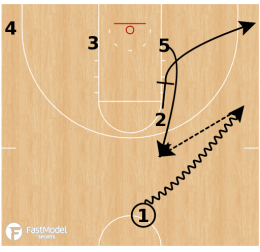
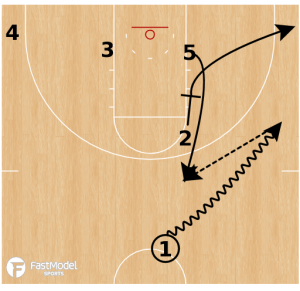
Creative ball screen set run by the Boston Celtics.

Boston used this action to flow into an elbow ball screen for a guard who had a stretch 4 replacing behind the ball screen.

Having the center come off a zipper down screen is a creative design on an already tough action to guard.


1 dribbles to wing

2 sets zipper down screen for 5 and then spaces to corner after setting screen

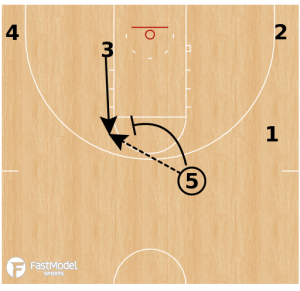
1 passes to 5 in slot


3 flashes to elbow on 5s catch in the slot

5 passes to 3 on elbow

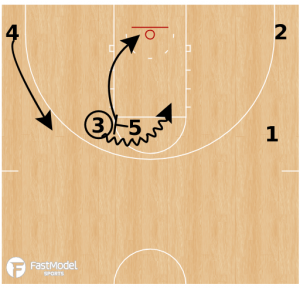
5 follows bass into ball screen for 3 on the elbow.


3 dribbles off 5s ball screen attacking

5 rolls hard to the rim

4 replaces (or lifts) behind this ball screen


  • « Go to Previous Page
  • Page 1
  • Interim pages omitted …
  • Page 89
  • Page 90
  • Page 91
  • Page 92
  • Page 93
  • Interim pages omitted …
  • Page 288
  • Go to Next Page »

Primary Sidebar

  • Twitter
  • Facebook
  • Linkedin
coachestoolbox
personaldevelopmenttoolbox
basketballplayerstoolbox
basketballtrainer
athleticperformancetoolbox
coachingbasketball

© Copyright 2026 Coaching Toolbox

Privacy Policy