• Skip to primary navigation
  • Skip to main content
  • Skip to primary sidebar

  • Basketball Plays
    • Ball Screen Sets
    • Horns Sets
    • Man to Man Post Up
    • Man to Man Isolations
    • Backdoor Plays
    • Man to Man 3 Point Shot Plays
    • 2-3 Zone Attack
    • Baseline Inbound Plays
    • Sideline Inbound Plays
    • Combination Defense Attack
  • Drills
    • Defensive Drills
    • Offensive Drills
    • Competitive Drills
    • Passing Drills
    • Rebounding Drills
    • Shooting and Scoring Drills
    • Toughness Drills
    • Transition & Conversion Drills
    • One on One Drills
  • Blueprint
  • Practice
  • Mental Toughness
  • Skill Development
  • Offense
  • Defense
  • Store

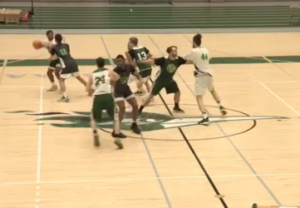
3 on 2 Drive Kick Clear Concepts

3 on 2 Drive Kick Clear Concepts

By Brian Williams on June 22, 2019

This drill and concepts are provided by our partners at Dr. Dish Basketball.

Like all drills that you see, you can either modify it or take parts of the drill for your use and your needs.

Please make sure your sound is on to see the video.

Click the play arrow so see the drill.

These drills are YouTube videos, so you will need to be on a server that allows you to access You Tube to see the drill.

This is a great team drill progression that simulates a game-like situation and makes players make decisions.

Pass Tempo: 4-5
Pass Distance 4
Goal: Can be made, taken, time, etc. A good start is 20 makes and then reversing to the other side of the floor.
Dish Pass Locations: Slot and corner OR Slot and Wing (depending on the drill)

Click on the video to start it.
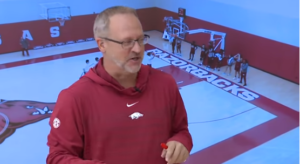
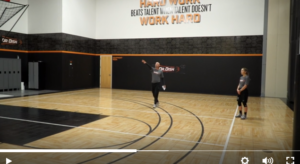
Toughness Togetherness & Transition Defense Drill

By Brian Williams on June 16, 2019

This post is with Mike Neighbors, Arkansas Women’s Basketball Coach.

This video and other basketball coaching videos are available on the Arkansas Women’s Basketball You Tube Channel

Mike also has one of the top newsletters for Basketball Coaches and is back sending again as of June 2019. If you are interested in joining his list, email me and I will forward your request on to him.

Like all drills that you see other programs use, you can either modify it or take parts of these ideas for your use and your needs. I hope to provide food for thought for you to use as a place to start for ideas to improve your program.

Please make sure your sound is on to see the video.

Click the play arrow to see the drill.

The drill is a YouTube video, so you will need to be on a server that allows you to access YouTube to see the drill.

Small Area Passing Drill

By Brian Williams on June 15, 2019

This drill can be used as a toughener and close quarters passing drill.

You could modify the rules to allow less physicality and or reduce it from 4 on 4 to 3 on 3. You could also change the number of passes required to win the drill.

I realize that this is not realistic spacing and probably not a good way to rehearse your offense, but there certainly is value in toughness with the basketball and getting open.

Another option would be to make the space bigger.

These videos of are hosted on YouTube, so you will not be able to access it unless you are on a server that allows YouTube access.

Click the play arrow to view the videos.

There is narration with the video, so please make sure that your sound is on.

Small Area Passing Drill

You can find out more about the Championship Productions video that this clip is from at this link: Toughness Drills to Improve Your Team Physically and Mentally

Are You a Leader of Character?

By Brian Williams on June 10, 2019

Cory Dobbs, Ed.D.
The Academy for Sport Leadership

Time and again, through my own eyes and those of student-athletes, I have seen the impact of poor leadership. Leadership from the ranks of the players and leadership from the coaching staff, when not actions of character, almost always turn out badly. Teams underperform, players drift from the team, coaches ratchet up bad behavior and the result of poor leadership—characterless leadership—destroys opportunities for members of the team to grow, develop, and enjoy their sport.

Today’s most effective coaches do more than win games; they imbue their program with character. Indeed, they lead with character.

Simply put, leaders of character take serious four universal practices: tell the truth, keep your promises, give forgiveness, and treat others as you want to be treated. When coaches and student-athletes commit to these four behaviors, they are viewed as people of character. These traits are respected and admired. Together, they illuminate “leadership character.”

Sports are supposed to infuse participants with character. Indeed, the first requirement to be a coach is to be a person of character. If this sounds like a tough stance on who should coach, it is. Coaches have traditionally been valued for their teaching skills, decision making, and the best always strive to understand and empathize with their players. Great coaches believe that student-athletes have an intrinsic value beyond their contributions on the playing field. But the distance between a great coach and a good coach is quite wide.

No matter what the final record for the season happens to be, if poor leadership, from the coaches or the players, is a part of the process, the experience for each and every participant is sure to be one of disappointment. It’s likely to have included many frustrations for the participants and at times created disillusionment, anguish, and sadness. Characterless leadership is simply that impactful.
[thrive_leads id=’36827′]
Peter Block, author of Stewardship, has defined stewardship as “holding something in trust for another.” In sports, that something the coach holds in trust is the student-athlete’s experience. The coach committed to the growth and development of players recognizes the tremendous responsibility to do everything within his or her power to nurture integrity, hold players accountable to one another, guide them to own their mistakes, and teach the young student-athlete to let go of the past.

Based on all my years coaching, and observing (research from the outside looking in) coaches and student-athletes, I find the coach capable of humility and deep self-awareness to be the one most likely to have leadership character. The capacity to bring out the best in people demands character. The mark of a great coach—teacher—is that he or she lives and models the four universals of telling the truth, keeping one’s promises, letting go of others’ mistakes, and empathizing with others.

And, a second article from Dr. Dobbs:

Pumping Iron: Not-Invented-Here

Today every student-athlete lifts weights.   But this hasn’t always been the norm.  If you look at the black-and-white photographs of athletes from the 1960’s you’ll see mostly underdeveloped physiques.  Weightlifting began on the fringes in the 60s, and mostly in the form of machines for training.  At that time, most coaches assumed that weightlifting would harm an athlete’s fine motor skills.  So weight training remained on the periphery.

But then, a movie released in 1977 exploded on the scene and overnight created the strength industry.  A little-known Austrian bodybuilder, Arnold Schwarzenegger, breathed life into competitive bodybuilding.  Hollywood saw an opportunity and acted quickly.  Pumping Iron, a docudrama, focused on Schwarzenegger and his dedication to lifting weights to build a Mr. Universe body, triggered a movement that spilled over into almost every sport on the planet.

A fatal flaw of sports has been to shy away from training and operating methods that don’t originate within the field of the sport.  This bias is revealed in the aversion to things not-invented-here.  Not-Invented-Here is the automatic negative perception of something (such as an idea or belief) that does not originate in one’s field.  Have you read Moneyball?  Data analytics and those that wanted to explore their value were rejected, until the Oakland A’s on-the-field success proved this new way of building a team.  Today, if you look closely, you’ll see that data analytics have found a comfortable place in the world of sports.

Here’s a short list of ideas about Not-Invented-Here.   Google each and learn a little more.

-CTE (see Dr. Bennet Omalu and Concussion the movie)
-Free Agency (see Curt Flood)
-Sport Psychology (see Thomas Tutko)

-Great Performers are Made, not Born (See Anders Ericsson)

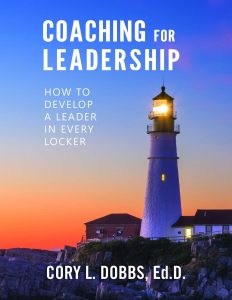
-A Leader in Every Locker (see Cory Dobbs, Coaching for Leadership)

-Karl Dunker, (see Functional Fixedness)

Let me encourage searching for ways to improve your players, programs, and organizations by any means necessary.  Don’t approach improvement and innovation with a fixed-mindset and get caught in the trap of rejecting something because it was Not-Invented-Here.

Cory is the Founder & President of The Academy for Sport Leadership. A former basketball coach, Cory’s coaching background includes experience at the NCAA DII, NJCAA, and high school levels of competition. Cory has worked with collegiate athletic programs and high schools teaching leadership and team building as a part of the sports experience and education process.

“Tell me and I’ll forget. Show me and I may remember. Involve me and I will care.” -Your Student-Athlete The world of coaching is changing. In Coaching for Leadership you’ll discover the foundations for designing, building, and sustaining a leadership focused culture for building a high-performance team. To find out more about and order Sport Leadership Books authored by Dr. Dobbs including Coaching for Leadership, click this link: The Academy for Sport Leadership Books

How to Win the Locker Room

By Brian Williams on June 8, 2019

By Dr. Rob Bell

Dr. Bell is a Mental Toughness Coach and Certified Consultant of the Association for Applied Sport Psychology.  He consults with hundreds of athletes, coaches, and teams and has served as the mental coach for PGA tour winners, USTA Champion, and Olympic Medalists.  He is also the author of several mental toughness books. For more information about Dr. Bell and his services visit https://drrobbell.com/

A team locker room is a sacred place.

Basically, what is said there, when you leave there, leave it there.

Sorry, but here’s the wrong way to win the locker room.

New Buffalo Bills Head Coach Sean McDermott felt that setting the tone of the locker room was important.

Agreed

Coach Sean McDermott is all about “culture” and leading by example. He’s a 3:30AM fitness guy.

Agreed

He is a driven, hard-nosed, accountability coach whose locker room culture begins with him.

Agreed

Coach stated that “this is a business”, so he removed the pool table and video games from the locker room.

Disagree    

Players don’t care how much you know, until they know how much you care.

Hall of Fame coach, Bill Walsh, set up a fishing tournament amongst his players during pre-season. He stated, a “team that can laugh together, can get serious together.”

Hard nosed, two time Super-Bowl winning coach, Tom Coughlin, spent the very first day of a training camp by having a bowling tournament. He changed his tyrant approach because  he “wanted his players to see him as his grandchildren did.” 

Super Bowl Winning coach, Dick Vermeil was known for his “boot camp” practices and discipline, but only after he started to develop a relationship with his players did he finally reach the pinnacle.

Look, there is nothing sexier than discipline, accountability, hard-work, grit, perseverance, and a culture of excellence.

However, in order to win, coaches have to win their hearts as well. In order to do that, they need to win the locker room.

Here’s 5 ways to win the locker room


Develop a TEAM culture- 

Every coach would agree that when you have players willing to fight for one another, there is nothing more powerful. Practices should be difficult and demanding, but developing team chemistry also takes place in between practices and games. You hang out so much together, that either bonds or cliques get formed in various ways.

Developing a locker room where players can unwind, relax, be themselves, and hang-out is crucial. Who wants a locker room where players simply dash out after showering and changing?

A pool table or ping-pong table encourages players an outlet to bond over a competitive activity that is not directly related to their own sport. The Cornell basketball team that made the sweet sixteen and finished 29-5 all lived together and touted their Super Mario bros. and table-tennis competitions. 

[adinserter name=”Basketball in article display ad 2 rebecca”]

Allow the players to take ownership-

Jeff Van Gundy allowed all minor decisions like where to eat, which music and movie to play on the bus up to the players. He granted them a voice in their own culture.

Have a leadership council-

In all pick-up games, kids self-govern themselves. You can’t break the written and unwritten rules of the court and expect to be welcomed back. A leadership council of players should make decisions on certain disciplines that coach doesn’t have to. That creates more ownership among players and takes more off of the coach.

Orchestrate the cohesion-

Teams become cohesive over the task at hand (winning), or socially (togetherness). Ultimately, task-cohesion is king. However, these task-cohesive teams are only fostered through extremely strong peer-leadership.

Social cohesion is queen. Teams full of mutual respect for one another have more trust and uphold standards within the team. Usually, the best teams have BOTH task and social cohesion. These bonds can be enhanced through scheduled sessions intended to do so.

Foster organic cohesion-  

Yes, it is a business. Winning is a habit. But, allow play to be a part of the culture. Allowing athletes to express themselves through free-play is as old as the cave-man days. We thrive on working hard toward a goal and also having fun along the journey. 


I’ve been in the team locker room at the end of a season with such tears of joy from winning, because they all knew of the effort and sacrifice and bond. I’ve been in the other locker room as well, that tears flowed because the loss was so heartbreaking because of the sacrifice and bond.

If you’re in the game long enough, these moments will happen. That’s life.

The way to a winning team locker room begins way before these moments of joy or heartbreak. It begins with the culture of the team and finding ways to win the locker room.

Here is How to Overcome a Loss of Confidence

By Brian Williams on June 8, 2019

By Dr. Rob Bell

Dr. Bell is a Mental Toughness Coach and Certified Consultant of the Association for Applied Sport Psychology.  He consults with hundreds of athletes, coaches, and teams and has served as the mental coach for PGA tour winners, USTA Champion, and Olympic Medalists.  He is also the author of several mental toughness books. For more information about Dr. Bell and his services visit https://drrobbell.com/

No question about it, self-belief is the most important mental skill.

Belief and trust eventually become the ONLY difference between those who eventually reach continued success and those who don’t or can’t sustain it.

Confidence is King. In the game of chess, when the king dies, the game is over! So, it’s how the game is lost! If there is a loss of confidence and self-assuredness, it’s tough to get it back. We have to start a new game.

So, what’s the only way to overcome a loss of confidence?

Notice I didn’t write a lack of confidence. And that’s crucial.
[adinserter name=”Basketball in article display ad 2 rebecca”]
A lack of self-efficacy means there’s not enough, there’s a shortage, which means WAY more work, planning, strategy, and execution is needed to fill this lack.

A loss, on the other hand, is temporary. We’ve lost, we’ll be back.  We’ll have to start a new game!

I don’t have a lack of keys for my car. I’ve merely lost my keys. Having to go to the dealer or GM headquarters and get new keys manufactured would be awful. Losing my keys is no fun either, but I know I’ll find them, I just have to look in the right spots.


Remove the Issue

Jack Nicklaus once was asked why he played so poorly the week prior to winning the tournament. He answered “Oh, I slept awful last week, very poor bed. This week, I slept great!”

In the 1992 U.S. open, Ian Woosnam hit an awful shot on the par 3 twelfth hole. He immediately turned to his caddy and said: “there’s something wrong with that golf ball.” Next hole, after switching balls, he purred it right down the middle of the fairway.

Why would these greats not accept responsibility and just say “yeah, I sucked!”  Because that would mean that they sucked! And they didn’t believe that. They believed the situation or external event caused the mistake. 

We need to remind ourselves and others that “self-belief” is NOT the issue! And it’s true! Confidence is a feeling, not thoughts, and deep down they really believe in themselves. So, letting them know trust is NOT the issue means there’s nothing wrong with them.

We need to remove confidence as THE issue.


Flank the Confidence

B. H. Liddell Hart was a military strategist who examined over 250 campaigns. He looked at what decided the outcome of battles. In almost every campaign it was never just a frontal assault! He found that most battles were won by an “indirect approach.”  A flanking strategy —- A quick move that caught the enemy off guard and they were able to get behind the opposing forces.

The only way to overcome a loss of self-efficacy is the same way.

A frontal assault attacks someone’s entrenched position. It attacks one’s trust in themselves, their beliefs, their values, and the ego.  It also attacks their coaches, their teammates, everything. It gets them questioning and doubting themselves.

We frontal assault someone’s self-belief by telling them, “it’s all in your head” or “you’re not confident enough” or “what’s the matter with you?” It’s easier to crush someone’s belief than it is to build it up…Here’s our infographic showing 5 ways to crush someone’s confidence.

Let them know that since it’s not a belief issue, it’s just that they are focused on the wrong things! 

Focus is Queen. In the game of chess, the focus is how the game is won! We can’t move our king one space at a time and think that will win. Our queen is what wins the game! Focus!

We can’t JUST address self-confidence head on. We need an indirect approach —- when we have a loss of confidence, we need to flank it.


Overcome The Loss In Confidence-

When we are focused on the wrong things, 99% of the time, we/they are worrying about things in the future or not letting go of the mistakes of the past. We are focused on outcomes, results, and what it may or may not mean. We are time-traveling to the future.

Our focus is OFF.

We need to return to our breath, this moment, this day. Focus on the Now! 

This is especially difficult during tough times, but it’s the ONLY way to return our confidence!

But, If we are truly focused on this moment, then how does self-belief even come into play? It’s ALL about focus in the moment.

There is indeed fear in the future and people, places, and things that are out of our control! Fear lives and ferments in the future. When we look back at our mistakes and all the times we came up short, then there is actual proof how we aren’t good enough.

It gets back to our focus!

Check out Kelly Exter’s blog post on 8 ways to rebuild confidence. 

When we overcome a loss in confidence,  we need to pay attention to all of the things that we say to ourselves. The Voice in our head is negative and we are simply over-thinking! When I overthink, I lose my keys and get off at the wrong exit.

  • « Go to Previous Page
  • Page 1
  • Interim pages omitted …
  • Page 50
  • Page 51
  • Page 52
  • Page 53
  • Page 54
  • Interim pages omitted …
  • Page 288
  • Go to Next Page »

Primary Sidebar

  • Twitter
  • Facebook
  • Linkedin
coachestoolbox
personaldevelopmenttoolbox
basketballplayerstoolbox
basketballtrainer
athleticperformancetoolbox
coachingbasketball

© Copyright 2026 Coaching Toolbox

Privacy Policy