• Skip to primary navigation
  • Skip to main content
  • Skip to primary sidebar

  • Basketball Plays
    • Ball Screen Sets
    • Horns Sets
    • Man to Man Post Up
    • Man to Man Isolations
    • Backdoor Plays
    • Man to Man 3 Point Shot Plays
    • 2-3 Zone Attack
    • Baseline Inbound Plays
    • Sideline Inbound Plays
    • Combination Defense Attack
  • Drills
    • Defensive Drills
    • Offensive Drills
    • Competitive Drills
    • Passing Drills
    • Rebounding Drills
    • Shooting and Scoring Drills
    • Toughness Drills
    • Transition & Conversion Drills
    • One on One Drills
  • Blueprint
  • Practice
  • Mental Toughness
  • Skill Development
  • Offense
  • Defense
  • Store

A Few Leadership Thoughts on the “West Point Way”

A Few Leadership Thoughts on the “West Point Way”

By Brian Williams on August 12, 2019

Cory Dobbs, Ed.D.
The Academy for Sport Leadership

The following is an excerpt of an interview conducted by Dr. Cory Dobbs, President of The Academy for Sport Leadership.  Dr. Dobbs interviewed leadership expert, Dr. Joe Leboeuf, management professor at Duke University.

Joe Leboeuf, Ph.D. teaches at Duke University in the Fuqua School of Business.  A graduate of West Point, Dr. Leboeuf teaches courses on leadership development and organizational culture. Dr. LeBoeuf’s expertise focuses on leadership education, leader development and organizational culture. LeBoeuf, a retired Colonel, is a lead educator/consultant on a 9 month study of the leader and character development system at the United States Air Force Academy; assessment of current process with recommendations for change grounded in emerging leadership and character development concepts and theories.

    1. What is the essence of the “West Point Way”?
      The heart and soul of the West Point Way is building leaders of courage and character willing to walk the “high moral ridge” in service to the nation. These leaders will place their personal interests, and if necessary their lives, secondary in the service of others, whenever and wherever our National Command Authority dictates.  This character and leader development process is the foundation of the 4-year Military Academy experience, and frames and guides the behavior of all members of the leadership, faculty and staff. It is the core guiding principle.


    1. Can student-athletes learn to lead?
      Absolutely, students can learn to lead. It is the premise upon which the Service Academies build their programs. It is clear that one can learn the knowledge, skills and behaviors that are associated with effective leadership.   The foundation of this learning is the crafting of crucible experiences that move the learners outside of their comfort zone and create the conditions for effective leadership learning and leader development.
    [thrive_leads id=’36827′]

  1. What one or two military leader development activities do you feel are most relevant to student-athletics?
    The essence and power of leadership in the military is in the collective — the team; the willingness to place the needs of others, and the team ahead of the self. The US military is the best at building effective teams. Intense developmental experiences like US Army Ranger and Sapper School, the Navy SEAL training program, and the Marine Corps Force Recon are the finest team building experiences in the world.   Participants learn to put others before self, and learn the power of collective activity to accomplish difficult tasks that simply cannot be done by folks working alone.  The military services does this the best.  We have applied Army team building activities here at Duke with the men’s and women’s basketball, soccer and lacrosse programs contributing to great success, to include two national championships in the last 2 years.

About Dr. Cory Dobbs and The Academy for Sport Leadership

Dr. Cory Dobbs, founder and president of The Academy for Sport Leadership, is an accomplished teacher, author, speaker, and coach.  Dr. Dobbs has long passed the 10,000 hour threshold for expertise in the areas of leadership and team building education.  The Academy’s curriculum is in use by 1000’s of schools and colleges across the U.S.  Dr. Dobbs has taught at Ohio University, Northern Arizona University, and Grand Canyon University.  Dr. Dobbs most recent contribution to the coaching profession is his breakthrough concepts of Teamwork Intelligence.  A prominent coach recently declared, “Cory Dobbs is a clear voice in a sea of noise, bringing much needed passion and intelligence to the process of team building.”
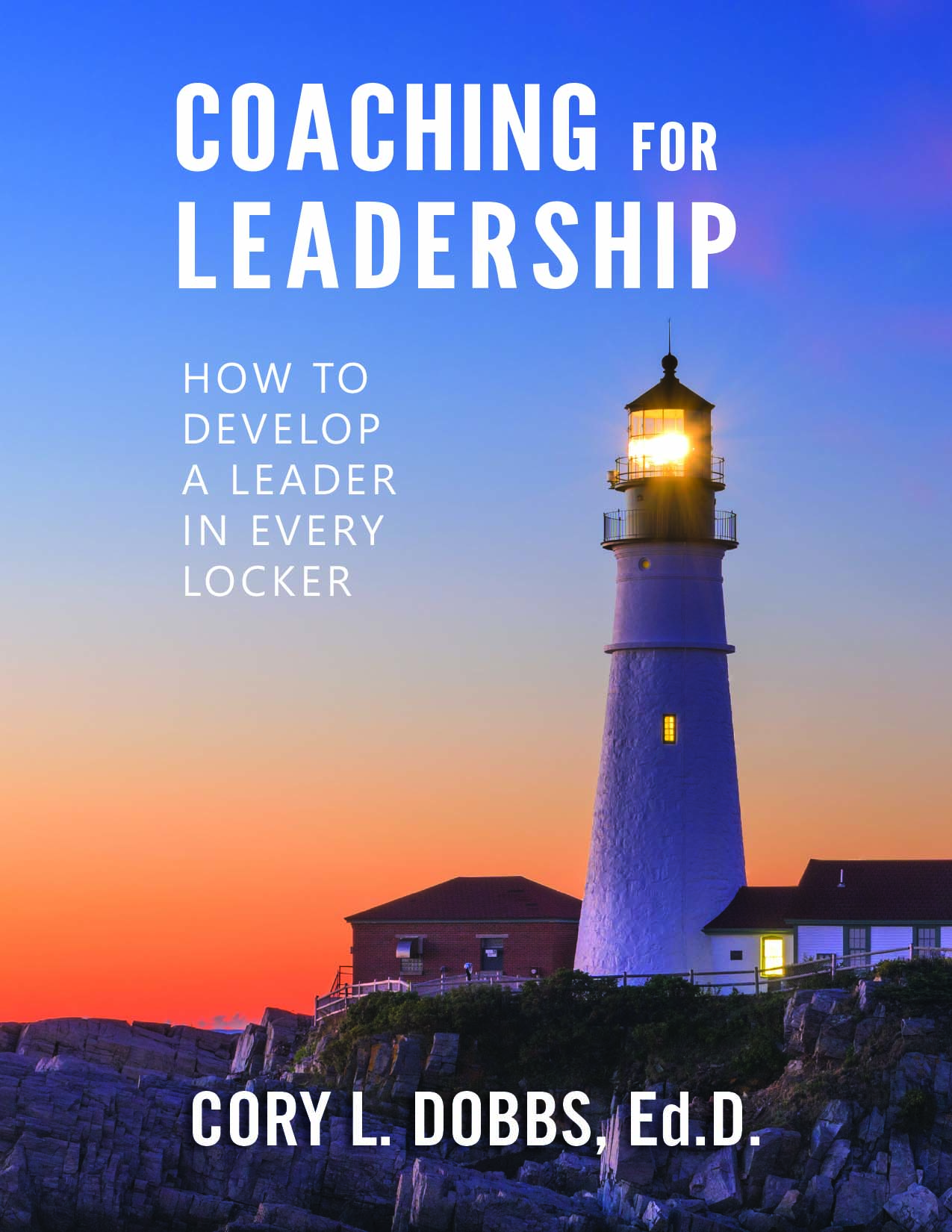
“Tell me and I’ll forget. Show me and I may remember. Involve me and I will care.” -Your Student-Athlete The world of coaching is changing. In Coaching for Leadership you’ll discover the foundations for designing, building, and sustaining a leadership focused culture for building a high-performance team. To find out more about and order Sport Leadership Books authored by Dr. Dobbs including Coaching for Leadership, click this link: The Academy for Sport Leadership Books

The Death of Loyalty

By Brian Williams on August 12, 2019

Nothing Sabotages Loyalty Like the Blame Game

Cory Dobbs, Ed.D.
The Academy for Sport Leadership

*Note: This article is to be shared with your student-athletes.  Hold a brief discussion after your players have read the article.

Loyalty is the heart and soul of any meaningful relationship. A sports team provides the perfect platform for loyalty. Giving of one’s self to others is the foundation of loyalty. Many of our greatest experiences in life can be found in our relationships. At its core, loyalty is about reliability. And in the team setting reliability is a necessary ingredient for success.

Loyalty is found in the physical, intellectual, emotional, and social support we provide others. It is the bond of loyalty players have to teammates that forges a coherent team. It is players willingly committing to each other and going out of their way to ensure someone else’s needs are met.

However, getting along with others doesn’t mean the obligation to endure wrongful actions.

The Blame Game
Nothing destroys a relationship faster than blame. When you shift fault to another you cast yourself as a victim. In the court of victimhood what you want is the other person to be wrong and you to be right. No doubt, you feel you have real justification in your specific situation.

When you wrongfully blame others, you lose the right to loyalty. You’ve sacrificed a relationship to “save face,” to “look good,” or to simply hide a weakness. This is not loyalty. It is betrayal.

Let me state it plainly: Playing the blame game is wrong. Blame fuels conflict. It feeds the fire of dissension. It divides people. It can—and will—destroy your team. The blame game makes a mockery of loyalty. Blame is an act of selfishness.

Funny thing, most people that blame others look for at least one other person to align with them, to be an accomplice in the blame game? When a team member complains about what someone else “did to me” (such as a coach not giving you enough playing time), do others look to eagerly rush in and agree with the victim? Should one “cover” another’s back in the name of false victim-hood? After all, “she’s my friend and that’s what friends do for one another.”

These are not real friends. A real friend would say, “Cut the blame game and quit complaining about what “they” did to you. What did you do? What can you do to fix it?” Now that’s a loyal friend. This kind of honesty is what a loyal friend would do.
[thrive_leads id=’36827′]
You need to be honest and direct, willing to confront teammates that violate team norms. Say what you need to say in a manner that shows your intent to solve the problem. Your objective is not to fight, but rather to make a positive impact toward a positive resolution. Your goal shouldn’t be to prove someone wrong, or to make you look good. Rather, your solution should be to cooperate and work toward a common purpose.

If you find yourself playing the blame game, understand that you are limiting your growth psychologically and relationally. Every time you choose to blame someone for a setback or for something negative that’s happened to you, you miss the opportunity to learn how to overcome adversity.

Confidence in one’s teammates is what makes for a tight-knit team. A team of loyal teammates offers a clear way to win. So when blame rears its ugly head, look instead for the courage to build up the moral muscles necessary for growing your commitment to others. Pledge to remain loyal and do the right thing.

And, a second short article from Dr. Dobbs

The Problem with Listening

In their classic Harvard Business Review article Listening to People, Ralph Nichols and Leonard Stevens get right to the point: “It can be stated, with practically no qualification, that people in general do not know how to listen.” Larry Barker and Kittie Watson in Listen Up declare, “Each of us has the power to decide how and when to listen.” Management expert Margaret Wheatley asserts, “I believe we can change the world if we start listening to one another again.” William Isaacs, MIT professor and senior lecturer in the MIT Leadership Center, reminds us that, “Listening requires we not only hear words, but also embrace, accept, and gradually let go of our own inner clamoring. As we explore it, we discover that listening is an expansive activity.”

Why do so few people listen to hear?
Think about it: The listener controls the conversation. Here’s a helpful exercise: Write down the many ways in which the listener controls a conversation. I think you’ll be surprised!

About the Academy for Sport Leadership
Our goal is to continuously create, modify and shape new programs based on research and practice. Our Coaching for Leadership and Teamwork Intelligence programs prepare top-notch coaches with the mindset and skill set to optimize student-athlete involvement, engagement, and performance.

About Cory Dobbs, Ed.D.

Cory Dobbs is the founder of The Academy for Sport Leadership and a nationally recognized thought leader in the areas of leadership and team building.  Cory is an accomplished researcher of human experience. Cory engages in naturalistic inquiry seeking in-depth understanding of social phenomena within their natural setting.

A college basketball coach, Cory’s coaching background includes experience at the NCAA DII, NJCAA, and high school levels of competition.  After a decade of research and development Cory unleashed the groundbreaking Teamwork Intelligence program for student-athletics. Teamwork Intelligence illuminates the process of designing an elite team by using the 20 principles and concepts along with the 8 roles of a team player he’s uncovered while performing research.

Cory has worked with professional athletes, collegiate athletic programs, and high schools teaching leadership and team building as a part of the sports experience and education process.  As a consultant and trainer Dr. Dobbs has worked with Fortune 500 organizations such as American Express, Honeywell, and Avnet, as well as medium and small businesses. Dr. Dobbs taught leadership and organizational change at Northern Arizona University, Ohio University, and Grand Canyon University.

“Tell me and I’ll forget. Show me and I may remember. Involve me and I will care.” -Your Student-Athlete The world of coaching is changing. In Coaching for Leadership you’ll discover the foundations for designing, building, and sustaining a leadership focused culture for building a high-performance team. To find out more about and order Sport Leadership Books authored by Dr. Dobbs including Coaching for Leadership, click this link: The Academy for Sport Leadership Books
John Beilein “Open” Press Inbound Play

By Brian Williams on August 12, 2019

John Beilein demonstrates a play he used while he was at Michigan to inbound the ball and then attack a full court press. He saved the play for late in a game and after a stoppage of the clock.

The video is hosted on YouTube.

You will need to be on a network that allows you to access YouTube.

Click the play arrow to view the video.

There is narration with the video, so please make sure that your sound is on.

Hope this is food for thought for something you can develop to run against a press.

You can find out more about the Championship Productions video that this clip is from at this link: All Access Offensive Practice with John Beilein

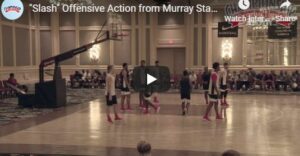
Slash Action Zone Attack

By Brian Williams on August 1, 2019

This zone continuity attack is presented by Murray State Head Coach Matt McMahon.

The video of this zone attack action is hosted on YouTube.

You will need to be on a network that allows you to access YouTube.

Click the play arrow to view the video.

There is narration with the video, so please make sure that your sound is on.

You can make adjustments to the way Murray State runs this set to fit your personnel and how you attack 2-3 zones.

You can find out more about the Championship Productions video that this clip is from at this link: Ball Screen Offense vs. 2-3 Zone

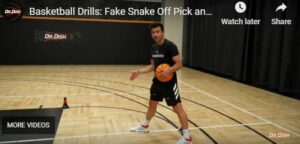
Fake Snake Pick and Roll Drill

By Brian Williams on July 22, 2019

This drill and concepts are provided by our partners at Dr. Dish Basketball.

This drill was originally published on their blog at this link: Fake Snake Pick and Roll Drill

Like all drills that you see, you can either modify it or take parts of the drill for your use and your needs.

Please make sure your sound is on to see the video.

Click the play arrow to see the drill.

These drills are YouTube videos, so you will need to be on a server that allows you to access YouTube to see the drill.

Here DJ is simulating the on ball defender going over the top of the ball screen while the screener’s defender showing a soft hedge. Typically to get to the open space in this situation is to “snake” the screen by crossing over. However, in this situation, DJ shows an in and out move to “fake snake” the screen and get to open space towards the wing area.

Practicing proper footwork is essential in this drill to cover maximum space and create an open shot. Make sure to practice this going both right and left.

Bob Hurley Sr. One More Passing Drill

By Brian Williams on July 10, 2019

This drill with legendary high school Coach Bob Hurley starts out as a drill to emphasize passing and then becomes a closeout and 3 on 3 defensive drill.

The video of this rebounding drill is hosted on You Tube.

You will need to be on a network that allows you to access You Tube.

Click the play arrow to view the video.

There is narration with the video, so please make sure that your sound is on.

You can make adjustments to the drill to fit your needs, the types of actions that you defend, and your defensive philosophy.

You can find out more about the Championship Productions video that this clip is from at this link:
(Bob Hurley Sr.) My All Time Favorite Practice Drills

  • « Go to Previous Page
  • Page 1
  • Interim pages omitted …
  • Page 49
  • Page 50
  • Page 51
  • Page 52
  • Page 53
  • Interim pages omitted …
  • Page 288
  • Go to Next Page »

Primary Sidebar

  • Twitter
  • Facebook
  • Linkedin
coachestoolbox
personaldevelopmenttoolbox
basketballplayerstoolbox
basketballtrainer
athleticperformancetoolbox
coachingbasketball

© Copyright 2026 Coaching Toolbox

Privacy Policy