• Skip to primary navigation
  • Skip to main content
  • Skip to primary sidebar

  • Basketball Plays
    • Ball Screen Sets
    • Horns Sets
    • Man to Man Post Up
    • Man to Man Isolations
    • Backdoor Plays
    • Man to Man 3 Point Shot Plays
    • 2-3 Zone Attack
    • Baseline Inbound Plays
    • Sideline Inbound Plays
    • Combination Defense Attack
  • Drills
    • Defensive Drills
    • Offensive Drills
    • Competitive Drills
    • Passing Drills
    • Rebounding Drills
    • Shooting and Scoring Drills
    • Toughness Drills
    • Transition & Conversion Drills
    • One on One Drills
  • Blueprint
  • Practice
  • Mental Toughness
  • Skill Development
  • Offense
  • Defense
  • Store

Concepts on Winning basketball

Concepts on Winning basketball

By Brian Williams on January 20, 2020

This article was written and submitted by retired High School Coach Dave Millhollin.

I have included more information about his coaching career at the end of the article.

Caoch Millhollin has contributed several insightful articles to the site. You can find links to more of them at the bottom of this post under the “Related Posts” tab.

If you would like to contact Coach Millhollin, email me and I will put you in touch with him.

The importance of shot selection, defensive strategies, and rebounding

Why are basketball games won or lost?  The answer to this question can be incredibly simple or quite complicated.  Coaches spend unbelievable amounts of time and energy on this topic, most of the time, they realize the obvious but fail to understand the simple.

This article is intended to delve into the simple answers of the question.

Basketball has been at the center of my life for as long as I can remember.  Growing up I played on the playground and played organized ball of one kind or another from the 3rd grade through college.  My dad was a high school and Jr high coach.  I have coached girls and boys from the second grade through high school throughout my adult life and I was a high school boys varsity coach for 27 years.  Through all of this I don’t think I fully understood the essence of Winning Basketball until about half way through my high school coaching career (around age 40).

All my experience and observation of the game of basketball has led me to what I believe to be the essential elements to Winning Basketball. It can be summed up like this:

“Teams that take better shots and get more rebounds have a tendency to win more games than teams that don’t.”

Most of us believe teams who take good shots are more likely to shoot a high % and because of that; improve their chances of winning.  Most of us also believe that teams who control the boards have a better chance of winning than teams who don’t. I think most of us are correct.

The effect of good shots on rebounding

Missed good shots result in more offensive rebounding opportunities for the shooting team.

If you want to get offensive rebounds; take good shots.

Missed good shots also result in fewer fast break opportunities form the opposition.

If you want to stop your opponents’ fast breaks; take good shots.

CRITICAL CONCEPT; Teach your team to take shots the other team can’t fast break on.

The effect of defense on rebounding

There are three questions every coach should ask himself regarding defense;

  1. Is our defense giving up good shots?
  2. Is our defense putting our opponents on the free throw line?
  3. Is our defense giving up offensive boards to our opponents?

For offensive transition oriented offensive teams there is a 4th question;

  1. Is our defense giving us fast break opportunities?

I asked Bo Ryan one summer about this topic and he said his defensive philosophy was to try to get his opponents to take bad two point shot attempts, then get the rebound.  His teams did it through defensive containment.

Here are some helpful defensive ideas that can produce opponent bad shots:

  • Don’t let them run their offense;
    • Take away their entry passes and entry drives
    • Don’t let them get the ball where they want it
  • Don’t let the high post or low post catch the ball
  • Play defense with hands up
  • Close out “head up” or PUSHING ELBOW
  • Collapse with help (early) on drives and recover to kick outs early
  • Deny the ball to their scorers in the spots they score from
  • Teach how to defend the “lanes”; passing lanes, driving lanes and cutting lanes
  • Teach “never let your man cross your face or back” for individual off ball defense
  • Shade shooting hand on close outs
  • Do not over deny off the ball; do not encourage back door cuts.
  • Double the ball early on isolation plays
  • Switch all “away screens”
  • Apply “smart” pressure that does not foul and does not give drives or backdoors
  • Finish all defensive drills with block out or “face out” (for 3s) execution
  • Defensive communication

Some of the things on the above list are not what most coaches are used to.  My teams quite were served very well from; not allowing the ball in to the low or high post.  Think about it; teams score from the low post either from post moves, free throws on drawing foul down there, offensive rebounds from missed low post shots or from kick out or kick > swing passes out of the low post.  It is amazing to me how many teams at every level allow the ball to be caught at the block!

As for the high post; when the ball goes there to an impact forward or post, that player normally scores, unless he is helped on.  When he is helped on he kicks it to a player who is open for a shot or drive.  We believe that getting the ball to the high or low post helps teams get good shots; therefore, keeping teams from getting the ball there can significantly reduce their chances of getting good shots.

The other two things on the above list most coaches are not used to, but served the teams we coached significantly well are; playing defense with hands up and closing out from the baseline side (pushing elbow), not “sideline, baseline”.  We wanted the drive to go to the elbow one dribble with immediate help, then recover quickly to the kick out pass.  This reduced baseline fouls and fouls on our bigs. This greatly reduced our team fouls and opponent free throw attempts, just as important, it lead to poor % two point attempts from our opponents.

This defensive approach greatly increased our defensive rebounding and almost eliminated opponent offensive rebounding opportunities.  Remember; offensive rebounding increases teams’ ability to score on put-backs, open kick out shots and fouls on the put-back.

Rebounding

Shot selection and defense are the two biggest keys to rebounding.  I believe that if coaches would spend as much time teaching and working on these keys as they do on heart, toughness and effort; their teams would get more rebounds.  I am not suggesting to stop teaching heart, toughness and effort.  What I am saying is that as far as priorities are concerned when it comes to rebounding they should be, in my opinion;

  1. Shot selection and Defense
  2. Rebounding concepts and techniques
  3. Heart, toughness and effort

In that order

Our teams were pretty tough and played hard with heart but, funny as it might sound; my teams routinely outrebounded teams that were tougher than us and beat teams that played harder than we did.

Execution by playing smart with proper technique brings about winning.

© Dave Millhollin 2020

About the author of this article, Coach Dave Millhollin In fourteen years at Ponderosa High School, Coach Dave’s teams won 260 games (.665). From 2000 through 2009 Ponderosa won 207 games over a ten year stretch which included four SVC Conference Championships and two CIF Section final four appearances. Over his 27 year Boys Varsity Coaching career, Coach Dave posted 391 wins, produced 20 college basketball players and was named SVC Coach of the Year four times. At Ponderosa, Coach Dave’s teams were #1 in California in team defense five times and in 2008 Ponderosa was the top defensive team in the Nation among shot clock states. Over Coach Millhollin’s last five seasons (2005-6 through 2009-2010; 136 games) Ponderosa averaged a composite 50% total field goal percentage, 58% two point field goal percentage and 32% three point field goal percentage. Since retiring from High School coaching in 2010, Coach Dave has been actively involved in coaching Jr High level School and AAU teams as well as and running instructional basketball clinics from the primary grades through the College level.
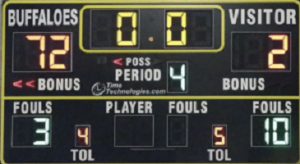
Reasonable Defensive Expectations – because there are no shutouts in basketball

By Brian Williams on January 17, 2020

This article is republished with permission. The original article was written by Don Siko and appears at Reasonable Defensive Expectations – because there are no shutouts in basketball.

Finishing up some current thinking on charting individual player defensive accountability, we’d like to share one more thought on how coaches can use postgame defensive charting to zero in fixable issues:

In the sample defensive accountability spreadsheet we’ve used twice before, the team in question gave up 68 points and we assigned accountability to each point two different ways-by player and by the type of score (missed containments, closeouts, blockouts etc.).

  • Every coach out there implicitly understands that of the 68 points scored by the opponent, only a certain number of points were especially avoidable.  While coaches would like to think that all or most scores against us can be prevented, history tells us otherwise.
  • Most good coaches practice honesty with their players when it comes to this issue.  When coaches preach a defensive philosophy or technique and the player executes it perfectly and a score still is the result, most coaches don’t then blame that player for the result.  There are many examples but a couple illustrations follow:
    • A perfect blockout and the ball bounces long to the opponent.
    • A perfect closeout and the opponent buries the trey in spite of little or no space.
  • So, let’s agree that only a certain number of points given up in a game are “truly” accountable.
  • If that it is the case, there is obviously a baseline number, or if you will, a benchmark by which the 68 points can be evaluated.  For sake of argument. Let’s choose the Virginia Cavaliers as the benchmark team. If we agreed that if Virginia played in that same game, they would likely have given up roughly 52.7 points (their current nation-leading points against total).  Granted, Virginia’s slow pace of play contributes to this low total but we also shouldn’t forget that Virginia is also 3rd in the nation in defensive FG%, 5th in defensive 3pt FG%, 6th in TO margin and 5th in fewest fouls.As long as I’m talking Virginia, I also have to ask why the Cavaliers’ defense, aside from pace, isn’t more widely and routinely copied by others.  Ironically, I’m quite sure that as the Virginia staff self-evaluates, among the 52.7 ppg they surrender are points that they believe are avoidable according to THEIR baseline or benchmark standards.
  • So, the purpose of this exercise is that now that we have a baseline of 53 points (maybe 58 adjusted to pace), we’re really focusing in on the 10-15 “worst” points we surrendered, no matter which player was accountable or which type of score we gave up.  Sometimes these points given up are one-offs; sometimes not.  But, if we especially emphasize these 10-15 points to our players, it’s another way of zeroing in on a teaching tool and how we can get our players to adjust and improve defensively from game to game.  “Shrinking” the defensive game results down into some sort of synopsis is good for players.  What method one uses can vary from coach to coach.

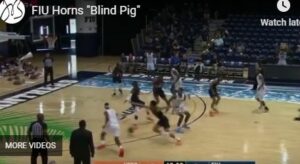
Horns Blind Pig and Swipe Thor

By Brian Williams on January 14, 2020

These plays are from Coach Justin Brandt

The other resources he has to share can be found at CoachJB.Weebly.com or you can follow his Instagram at @CoachJustinBrandt for daily posts.

You will need to be on a network that allows you to access You Tube to view the videos.

Click the play arrow to view the video.

There is narration with the video, so please make sure that your sound is on.

Take the ideas from the play and modify them to fit what your players do best.

Horns FIU Blind Pig

Horns Swipe Thor</3>

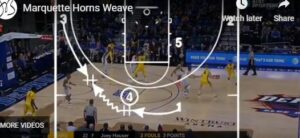
Marquette Horns Weave

By Brian Williams on January 9, 2020

This play was sent to me by Coach Justin Brandt

The other resources he has to share can be found at CoachJB.Weebly.com or you can follow his Instagram at @CoachJustinBrandt for daily posts.

You will need to be on a network that allows you to access YouTube to view the video.

Click the play arrow to view the video.

There is narration with the video, so please make sure that your sound is on.

Take the ideas from the play and modify them to fit what your players do best.

Charting Your Players’ “Good Pass” Percentage: A Teaching Tool

By Brian Williams on January 9, 2020

This article was written by Don Sicko and republished with permission. The original article appears at Charting Your Players’ “Good Pass” Percentage: A Teaching Tool.

When I scout, I’m always drawn to players who make many good passes in a game.  Obviously, I appreciate a great pass as much as anyone else but given a choice over the course of game, I’d probably prefer a player to make twenty good passes than 2 or 3 great passes and a few good passes.  But more on that later.

All of us know a good pass when we see one but if we’re going to “talk” good passes with our players, we might need to have a working definition of a good pass.  While each of us might define a good pass a little differently, we would likely be in agreement on a few general principles:

  • Low or no risk of a turnover. (Passing away from defender).
  • Hits the open man, keeping or putting the defense at a disadvantage.
  • Hits the receiver in the hands so he doesn’t have to waste valuable time gathering the ball.
  • Avoids passing to a player who can’t quite handle the ball for various reasons (Examples: Certain big men in transition or any player who is put in a precarious position with little time and space to function.)
  • Chooses the better of two options-one option being just OK.

Keep in mind that if a pass isn’t “good”, it isn’t necessarily bad.  Most passes that aren’t “good” would generally be called “fair” or “poor”.  We know that “fair” and “poor” don’t lead to winning.  High percentages of good passes lead to winning,

The list of good pass characteristics can be modified as one wishes to suit individual philosophy and terminology.  The important thing is that the coach and players are on the same general page.  As always, when there are subjective evaluations, there is going to be “gray”.

Having gotten this far, what’s next?  Perhaps the easiest way to wade into charting good passes is to videotape a segment of practice-maybe a half-hour of any 5 on 5 play-half or full court and afterwards chart good passes by all your players.  You’ll have some “good passes percentage” numbers for your players but until you have a video session and explain how you arrived at your figures, the numbers will just be raw data.  After your players understand your thinking, the raw data doesn’t necessarily have to be explained every single time.

Getting back to “great” passes, if a player makes some and also has a high “good pass” percentage and a good assist/turnover ratio, the great passes are meaningful.  If a player has a low good pass percentage and a poor assist/turnover ratio, his great passes can be totally empty and meaningless when it comes to winning.

Obviously, keeping track of good passes can be very labor intensive but one doesn’t have to have every game charted.  Once you’ve established it as a teaching tool, it will become a part of your team vernacular and your players will accept it as such.  You can decide how often you’d like to chart good passes.  Perhaps, you would only chart when you saw slippage in your team’s passing effectiveness.

Using 360-Degree Feedback to Enhance Your Coaching

By Brian Williams on January 8, 2020

This article is republished with permission. The original article appears at Using 360-Degree Feedback to Enhance Your Coaching.

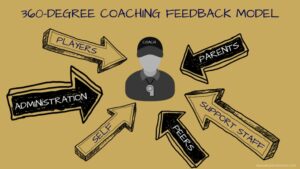
Coaches can use 360-degree feedback to enhance their coaching. In this blog sport psychology researcher Matt Hoffmann highlights how 360-degree feedback can be a useful process to help coaches and their teams be more effective.

Matt’s suggestions are based on his review of coaching and 360-degree feedback research from sport and business, as well as conversations he had with several head coaches of Canadian intercollegiate sport teams (Full research article is available at the end of the blog).

Most basketball coaches, like all coaches, are constantly trying to improve at their craft. One way to improve as a coach is to gather feedback about your coaching. You might already be doing this to some extent, either formally with end-of-season surveys or informally by talking with others. 360-degree feedback is a more comprehensive way of obtaining feedback and is something that most coaches do not take full advantage of.

With 360-degree feedback, a coach gathers anonymous feedback from multiple people. These people can include but are not limited to players, assistant coaches, athletic directors or sport administrators, other coaches, or mentors. Parents could even be included at the youth sport level. The goal is to collect feedback from people who can provide different perspectives on your strengths and weaknesses as a coach.

Another key aspect of this feedback system is that coaches can evaluate themselves and compare it to others’ anonymous assessments of them. This really has the potential to boost your self-awareness as a coach.

What are some potential benefits of using 360-degree feedback?

  1. The people providing feedback, especially players, might feel empowered because they will be given the opportunity to voice their opinions, which might make them feel more valued. When players feel like they are part of the process and that their thoughts matter to others, they tend to feel in control of their own behaviours and actions and are more committed to the team’s goals and values.
  2. Because 360-degree feedback is gathered anonymously, you should receive more honest feedback from the people rating you. Players and even assistant coaches are often reluctant to criticize a head coach out of fear for possible repercussion. This is especially true when feedback is provided face-to-face. Obtaining feedback anonymously removes the “threat” associated with giving potentially negative feedback, which should provide you with more useful information that you can use for self-improvement.
  3. Gathering information from multiple people might improve the accuracy of the feedback. Coaches sometimes receive feedback in a “top-down” manner, often from one superior only (e.g., athletic director or sport administrator), which calls into question the trustworthiness of that single evaluation. However, by gathering insights and opinions from multiple people, you should receive feedback that more accurately reflects your “true” behaviours and actions as a coach.

What are some potential challenges of using 360-degree feedback?

Challenge: Using 360-degree feedback can result in some logistical challenges. In particular, collecting and summarizing 360-degree feedback can be time-consuming and potentially costly. Many coaches have limited spare time and/or funds.

Suggestion: Using online survey platforms can be a huge help, and people (especially younger generations) usually like using technology. Players will probably feel more comfortable completing surveys on their tablets or cell phones. Of course, setting up an online survey will still require some planning and organizing on your part.

Challenge: There are no set guidelines on when and how often during the season to collect 360-degree feedback. There just isn’t enough research on this yet.

Suggestion: Aim to gather feedback at regular intervals—maybe 2 to 4 times during the season (depending on the length of the season). The goal is to collect feedback throughout the season—not only once it is over.

Challenge: There are no set guidelines in terms of which people should be included in the feedback process.

Suggestion: Of course, there are obvious people (players, assistant coaches) that you should include. However, you also need to determine who else can provide you with relevant feedback on your coaching. Maybe there are coaches from other teams who have watched you regularly and might be able to provide you with useful feedback? Maybe you have some mentors who could watch you at practice and provide feedback? Explore all your options.

Six Suggestions for Getting More Useful (And Less Negative) Feedback

Because 360-degree feedback is provided anonymously, you risk receiving large amounts of negative feedback. Similarly, because surveys with numerical rating scales (e.g., “On a scale from 1-5, rate how effective [name of head coach] is in organizing team practice”) are typically used to collect the feedback, you might be provided with information that lacks detail and depth.

  1. As a coach, you should ensure that people understand the purpose of 360-degree feedback. Hold a meeting with the people you want feedback from near the beginning of the season to discuss why you are implementing this feedback system and how you believe it will help you and your team succeed.
  2. Remind the people giving you feedback that they need to reflect carefully prior to answering each survey question. We have a general tendency to unconsciously rate people very similarly across different criteria. In other words, our general view of someone affects our ability to recognize their unique strengths and weaknesses. Therefore, to avoid having people unconsciously give you the same rating on every question, remind them regularly that they need to take their time when completing the survey and pay attention to what each question is asking.
  3. To avoid getting valueless feedback, use surveys that ask people to rate you on specific coaching behaviours (e.g., “Coach communicates effectively with team members”). Questions that focus on specific behaviours provide much more practical information than questions that are too general (e.g., “Coach is effective this season”).
  4. To ensure that the survey is relevant, ask a few senior people (e.g., veteran leaders) to comment on its appropriateness. Do they think the questions tap into relevant coaching behaviours? What would they add to the survey? This process might also help people “buy in” to the feedback system.
  5. In addition to numerical ratings, get feedback from people in the form of written comments. However, instead of asking for general feedback at the end of the survey (common procedure), request written feedback after key questions. For instance, a key question for you might be, “Coach is motivating before games.” People might rate this on a 5-point scale ranging from 1 (never) to 5 (always). Then, you could include a follow-up question like, “Explain why you gave this rating” or “How could coach be more motivating before games?”
  6. Complete the survey yourself. The major benefit of using 360-degree feedback is that it allows you to compare your own self-assessment to that of others’ assessments of you. For example, you might give yourself a score of 4 out of 5 on the question, “Coach creates good rapport with team members.” The players’ scores on this question might average 3.6 out of 5. The assistant coaches’ scores might average 4.2 out of 5. The athletic director might give you a score of 3 out of 5. All of these scores provide you with valuable information from different perspectives. Although the goal is for people providing the feedback to remain anonymous, this will not be possible when there is only one person in a particular role (e.g., the athletic director).

Final Thoughts

Obtaining 360-degree feedback throughout the season has its challenges and might not be feasible for all coaches (some organizations have their own coach feedback systems in place). Further, some 360-degree appraisals can lead to negative outcomes (e.g., feeling discouraged when receiving negative feedback). However, if you can incorporate some of the evidence-based ideas outlined here into your “coaching toolkit” and gather some additional feedback that you are not currently obtaining, then you might become more self-aware of your coaching behaviours and how you can improve as a coach.

Rather than viewing 360-degree feedback as a performance evaluation, I encourage you to think of it as a developmental opportunity to enhance your coaching. At the very least, I hope this post gives you some ideas to reflect on moving forward.

If you are looking for coach feedback questionnaires, consider the book, Coaching Better Every Season: A Year-Round System for Athlete Development and Program Success, by coaching expert Dr. Wade Gilbert. This book provides a nice overview of surveys that you might consider using for coach evaluation purposes (including 360-degree feedback).

You can view or download the full article in the International Sport Coaching Journal 360-Degree Feedback for Sport Coaches: A Follow-Up to O’Boyle (2014)

Matt Hoffmann has a PhD in Sport Psychology from the University of Windsor. His research mainly explores the benefits of peer mentoring among athletes. He is also interested in coaching, athlete leadership, and other group dynamics topics. For updates on sport psychology research and other sport-related topics, follow Matt on twitter @Hoff_MD

  • « Go to Previous Page
  • Page 1
  • Interim pages omitted …
  • Page 40
  • Page 41
  • Page 42
  • Page 43
  • Page 44
  • Interim pages omitted …
  • Page 288
  • Go to Next Page »

Primary Sidebar

  • Twitter
  • Facebook
  • Linkedin
coachestoolbox
personaldevelopmenttoolbox
basketballplayerstoolbox
basketballtrainer
athleticperformancetoolbox
coachingbasketball

© Copyright 2026 Coaching Toolbox

Privacy Policy