• Skip to primary navigation
  • Skip to main content
  • Skip to primary sidebar

  • Basketball Plays
    • Ball Screen Sets
    • Horns Sets
    • Man to Man Post Up
    • Man to Man Isolations
    • Backdoor Plays
    • Man to Man 3 Point Shot Plays
    • 2-3 Zone Attack
    • Baseline Inbound Plays
    • Sideline Inbound Plays
    • Combination Defense Attack
  • Drills
    • Defensive Drills
    • Offensive Drills
    • Competitive Drills
    • Passing Drills
    • Rebounding Drills
    • Shooting and Scoring Drills
    • Toughness Drills
    • Transition & Conversion Drills
    • One on One Drills
  • Blueprint
  • Practice
  • Mental Toughness
  • Skill Development
  • Offense
  • Defense
  • Store

Out of Season Advice for Players

Out of Season Advice for Players

By Brian Williams on March 8, 2012

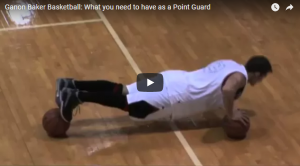
The video below contains advice for point guards from Ganon Baker applies to many positions on your team.

As you begin thinking about what to do to improve your team, showing this video to your players is a good way for them to hear another voice as to what they need to work on to be able to do by next year.

The video is only about 90 seconds long, but has some very concrete things that point guards and players in general need to be able to do for their teams to succeed.

Please make sure that your sound is on.

The video is a You Tube video, so you will need to be on a network that allows you access to You Tube

Click the play arrow to view the video.
 

Basketball Plays Push

By Brian Williams on March 2, 2012

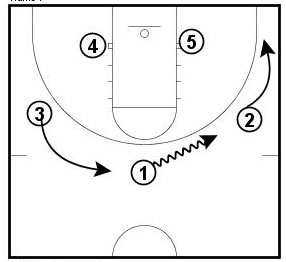
This play is from an older version of the the Arizona Basketball Coaching Newsletter.

This play is designed to be a one or two times a game quick hitter to run against a 2-3 zone defense.

If you are interested in subscribing to their newsletter, email me and I will ask them to add you to their list.

Please include your name, school or team, and coaching position.

The newsletter is a monthly one.


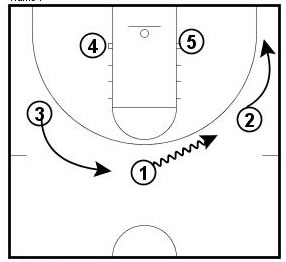
#1 Dribbles at #2 and pushes #2 to the corner.

#3 replaces #1


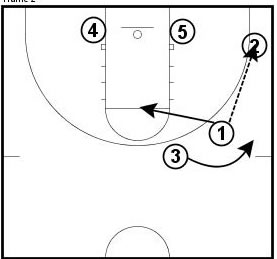
#1 passes to #2

#3 and #1 interchange positions.


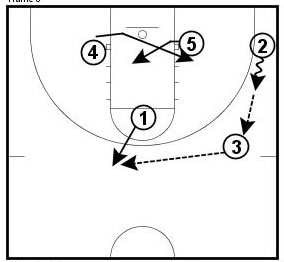
#2 dribbles up and passes to #3

#5 and #4 “x”

#3 quickly passes to #1


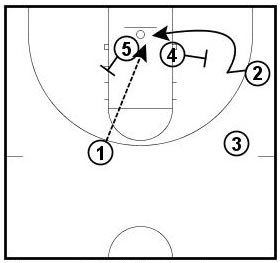
#4 screens the backside forward

#5 screens the ballside forward

#2 cuts for the lob

#1 throws the lob pass to #2 (DOES NOT HAVE TO BE A DUNK)

Alan Stein on Getting Over the Hump In Basketball

By Brian Williams on February 17, 2012

This post was written by Alan Stein from Pure Sweat Basketball

With February upon us, this time of year can be grueling for basketball players and coaches. At DeMatha, every night is a dog fight in conference play as teams are fighting for their playoff seed.  Players are in a constant state of fatigue and exhaustion, since most have been going non-stop since late August.  Nagging injuries, minor sickness, and the daily grind begin to add up.  These factors get magnified through adversity – whether on or off court.

While the end of the tunnel is near, it becomes harder to stay motivated for every practice, every team meeting, every film session, and even for every game. This time of year is known as the hump.  Average players, teams, and coaches will crumble and fall back down the hill, while the exceptional ones will continue to climb over the hump and chase the lofty goals they set during the pre-season.

No team or program is impervious to this hump.

After winning our first 17 games of the season and being ranked in the top 5 in the country, we’ve hit a couple of speed bumps. We’ve lost 3 of our last 6 games, one of which was on national TV and the other two were each by 2 points in the final seconds of the game (both of which caused our opponents and their fans to rush the court and celebrate like they just won the Superbowl). In addition, we’ve had two members of our team recently transfer (although they left on amicable terms).

So what do we do to keep things fresh? What do we do to get over the hump?

We mix things up. We have fun.

This past Monday, instead of taking our team through our normal in-season strength workout, I decided to change things up and do a 20 minute Yoga session.  Yes, Yoga.

We followed the 20 minute routine on Kent Katich’s Yoga Hoops DVD (which I highly recommend): http://www.twitpic.com/8dq5mf

Our guys loved it!

This Yoga session was great for their bodies and great for their minds.  Per a team vote, we’ve decided do this Yoga workout every Monday for the rest of the season (and will continue with our normal strength workouts on Wednesdays).

Coach Jones took it a step further and made the brilliant move to cancel yesterday’s practice and take the team bowling instead!

His approach was awesome. He went into study hall and told the guys that there would be a change for practice. He then assigned four captains and told them to pick teams.  He didn’t tell them what they were picking teams for… but just to choose guys they would want on their team regardless of what the competition was.  This included having a student manager on each team.

Once the teams were selected, he told them we were going bowling! The players were excited to do something different… in all honesty… to not practice.

To ensure our afternoon of fun would remain competitive, Coach Jones offered a pair of the new Nike KD IV’s to the highest individual score as well as additional prizes for the highest team score.

The guys had a great time.  It was a way to bond as a team and to have a little fun.

I am confident this will help get our players (and coaches) over the hump and reignite the spark of achieving our post season goal of winning our conference tournament championship and winning the DC City Title.

I’m certainly not suggesting you turn the end of your season into a free for all, as practice and preparation still needs to be a focal point.  However, when looking at the big picture, I truly believe that team unity and having fun is just as important as X’s & O’s and running sprints.

As a coach, if you sense your players have lost motivation or aren’t having fun… you need to find ways to fix that. It will result in improved morale which always results in improved performance on the court.

Instead of a normal practice, why not have a spontaneous game of whiffle ball?

Instead of a film session, why not buy a few pizzas and watch Hoosiers?

What about ending practice an hour early and having a team H-O-R-S-E competition?

Use your imagination and find your inner child!

Human beings, at every age and in every walk of life, are always more successful doing things they enjoy. They are always more productive when they are having fun.  Your players are no different.

One of the reasons I’ve been able to attain a certain level of success in the strength & conditioning industry is because I put time, effort, and thought into making my workouts as fun as possible. I know that if the workouts are fun, the players will give a better effort.  If the players give a better effort, they will get better results.

The same is true for basketball and for getting over the hump and finishing the season strong!

The Coaching Toolbox has hundreds of resources for coaching basketball including basketball practice, basketball plays, basketball drills, basketball quotes, basketball workouts, basketball poems, and more!

Basketball Poems The Road Ahead

By Brian Williams on February 14, 2012

From our basketball poems file… We have more basketball poems, prose, basketball quotes, and inspirational articles in our FILING CABINET.

According to Coach John Wooden, this poem was written by George Moriarty, a former major baseball umpire.

Sometimes I think the fates must grin as we denounce them and insist,
The only reason we can’t win is the fates themselves have missed.
Yet, there lives on the ancient claim – we win or lose within ourselves,
The shining trophies on our shelves can never win tomorrow’s game.

So you and I know deeper down there is a chance to win the crown,
But when we fail to give our best, we simply haven’t met the test
Of giving all and saving none until the game is really won.
Of showing what is meant by grit, of fighting on when others quit,

 
Of playing through not letting up, it’s bearing down that wins the cup.
Of taking it and taking more until we gain the winning score,
Of dreaming there’s a goal ahead, of hoping when our dreams are dead,
Of praying when our hopes have fled. Yet, losing, not afraid to fall,

If bravely we have given all, for who can ask more of a man
than giving all, it seems to me, is not so far from – Victory.
And so the fates are seldom wrong, no matter how they twist and wind,

It’s you and I who make our fates, we open up or close the gates,
On the Road Ahead or the Road Behind.

Check out some of our other basketball prose and basketball poems!

Press Offense

By Brian Williams on February 8, 2012

Regardless of what pattern or scheme you use to break a full court zone press, here are some concepts to consider applying to what you do to make it more effective. I hope that it gives you some inspiration to put your beliefs about press offense in writing to bring improved clarity to what you believe and what you want to accomplish.

I like to call it Press Offense rather than Press Break because I want the objective to be to score against the press.

There are links to more articles about press attack listed at the bottom of this post.

1. Have a designated inbounder. If you can’t inbound the ball against a press, then there is no need for a press breaker. Inbounding the ball is too important to leave to the chance of whichever of your players is closest to the ball after it goes through the basket or is close by when the official is ready to put the ball in play.

We like to have the same player inbound the ball every time because that player has practiced and has experience inbounding the ball in tough situations.

A consistent inbounder will develop a good feel for the five second count. Just like any other position, you need a “depth chart” so that you know who will inbound the ball if your primary inbounder is out of the game. Everyone on the team should know the game rules and our rules for inbounding the ball such as when it is a spot and when he can run, never inbound the ball underneath the backboard, don’t inbound the ball to a player in a trap zone, and whatever rules you have for inbounding the ball, but the designated inbounder must be able to apply them under pressure.

2. We like to have four players (including the inbounder) in the backcourt to bring the ball up. We like this for two reasons. One, it allows us to have a finisher to be able to score at the basket when we beat the press. Two, since we do have someone at the basket, it forces the opponent to put a player back to cover that and we can play four on four in the backcourt for better spacing than five on five in the backcourt.

3. We make sure that all three players who are inbounds are available as direct receivers of the inbounds pas. We want to get the ball to the first open receiver who is not in a trap zone. We teach our inbounds receivers to go no deeper in the corner than the corner of the volleyball court to keep them out of trap zones.

4. We position the finisher at our basket and above the opposite block from where the ball is at all times. That will require him to change sides of the floor as the ball changes sides. The finisher must have good hands to catch a bounce pass in traffic, must be able to score with contact for a three point play, and must be a good free throw shooter. We work on all of those skills with the finisher every day in individual development.

5. We like to get our best perimeter player in the middle of the press to work to get the ball to him and then let him make a play off the dribble or the pass to beat the press. If that player is also our inbounder, we find a way to get him to the middle as quickly as possible after the ball is inbounded.

6. We believe that you must have an option to throw long and over the first wave of the defense if they are denying the inbounds pass to all three of your inbounds receivers. We send two players long (one on each side of the court) if they do not get the ball by the time they get to the corner of the volleyball court and keep one player for a short pass if his man leaves to play like a football safety on the long pass.

7. Once the ball is inbounded we want to establish three receivers available to the ball and with 15 foot spacing from each other and from the ball. Since we have an offensive player positioned at the block at our basket, a player with the ball occupying two defenders who are trapping him, then they only have two defenders left to cover our three available receivers. If they are spaced at 15 feet apart, that makes the job of those two defenders a very difficult one.

8. We use pass fakes against a press with two purposes in mind, one being to put the trappers’ hands where want them to be able to pass by them. The second is to move the two defenders who are guarding our three available receivers in order to open up one of those receivers. We feel it is important to sell our players on these two faking concepts (against all defenses, not just a press) because players usually think that they must fake to one of their teammates. It is often helpful to fake to air with one of these two purposes in mind. The defenders don’t know if there is or isn’t a receive where the ball is being faked to, so they are going to react to the fake.

9. A cardinal rule of our press offense is that we do not pass the ball across our basket in the backcourt. When we want to reverse the ball from the right side of the floor to the left side, we put the reversal man on the ball side of the basket. We certainly don’t want to turn the ball over but if we do turn the ball over on the reversal pass, then we have a player between their defender who stole the ball and our basket to be able to keep them from getting an immediate layup off the steal. When the ball is reversed to this player who is behind the ball and on the ball side of the basket, we have them take one dribble toward the other side of the court when they catch the ball in order to shorten the reversal pass and make sure that it is not thrown across the basket. As we are working on reversing the ball, we have a rule of a maximum of two reversals and then we take the ball across the line in order to avoid a ten second violation.

10. We have a couple of special plays to inbound the ball late in the game if there is a time out or a dead ball on the baseline and we are anticipating being pressed. We adjust the plays each year to our personnel. We often use special plays to get the ball in bounds when we have to inbound against a press from odd spots on the floor such as the corner or the sideline and feel that we must practice getting the ball in from those odd spots so that we are prepared when it happens to us in games.

11. We teach to pass the ball across the ten second line when possible rather than dribbling it so that the player who has the ball across the line has a live dribble. If we dribble the ball across the ten second line and then are forced to pick it up, then we are playing into the hands of the press and giving them one more opportunity to trap us. If we have beaten the press, such as when we throw the ball over it, and are in a transition situation, then we will turn our break into a two on one or three on two scenario.

12. We coach the mindset in the players to attack the press to score not just to break the press to set up our offense. That is why we call our system “Press Offense” rather than a “Press Breaker.” That does not mean that we want to take bad shots or make risky decisions with the basketball. A bad shot is a bad shot regardless of what defense the opponent is in, just like there is no such thing as a good turnover no matter what the defense is doing. But, we feel that being both aggressive and smart to score off the press and/or get fouled, will get them to call off the press, or will increase our score.

35 Essential Skills to Being an Outstanding Basketball Coach

By Brian Williams on February 2, 2012

These 35 Essential Skills to Being An Outstanding Basketball Coach came from Coach Eric Musselman.  I received them in Creighton Burns’ latest newsletter.

1) Be a GREAT teacher

a) fundamentals

b) break down all of your drills

c) ball handling drills

d) teach them something “NEW”

2) Sell your system!

a) sell you coaching staff

b) sell your approach – system!

3) Motivation

a) challenge your players

4) Organization

a) organize your staff

b) give them an outline of duties for each coach

5) Create a system

a) find (create) an identity. “image?

i) what does a referee think, students, opposing coach/players think?

ii) your team will work to take its identity to another level

iii) “DOMINATE” at your identity!

6) Be POSITIVE!!!!

a) use negative comments during a winning streak

b) use positive comments during a losing streak

c) use positive reinforcement to bounce back from a loss

7) High Energy

a) if you coach with high energy, your team/players will have high energy

b) energy for players

8.) Be in good physical condition

a) being out of shape can limit your teaching ability

b) your physical condition is an example to the players

9) Intensity

a) your team will take on your personality

10) Your will to win!

a) how high is your will to win?

b) if a coach does not take losing lightly, players won’t take losing lightly!

c) if your coach takes losing lightly, so will the team

11) Communication/Relationships

a) treat referees with respect

b) officials respond to communication not embarrassment

12) Work Ethic

a) outwork the competition!

b) grade yourself!

i) where do you rate?

‐1‐ within your conference, within your league/district, within you entire sport

‐2‐ how do you rate with other sports?

13) Talent Evaluator/Evaluation

a) How do you mesh your team together?

b) Your won/loss record is a direct reflection of your talent evaluation

14) Ego management

a) player ego

b) Coach, staff ego – assistant coach ego

15) Respect factor

a) how do you show respect?

b) how do you gain respect?

16) Find a mentor!

a) a mentor is someone you can learn and seek advice from – does not necessarily have to be in your field

17) The Media

a) don’t lie to the media

b) treat the media with respect

c) remember the media has a job to do

18) Consistency

a) be consistent

19) Master the X’s and O’s

a) surround yourself with the best “X’s and O’s” people

b) hire experts whose strength are the areas you are weak in

20) Brainstorm

a) find ways to change your system and make it better

21) The Staff

a) the trainer – key hire and very important

b) Where do players complain?

i) the locker room

ii) the training room

iii) the weight room

c) make sure the staff is all on the same page

22) Preparation

a) be prepared for problems before they occur

23) Late game preparations

a) work on special situations

24) Handling a loss – talk to your team about how they should conduct themselves after a loss

a) no laughing, easy, laize faire attitude

b) a post game loss should include a time for reflection – a hurtful place

c) loss after game on team bus – should be subdued

25) Create a WINNING ENVIRONMENT

a) make people feel good about where they are playing

26) Be Creative!

a) always be on the cutting edge of creative coaching

b) the more creative you are, the more attention you grab from your players

27) Clearly define roles

a) Staff – clearly define roles for your staff

i) offensive, defensive coordinator

ii) in charge of the video room

iii) post game reporting of stats

iv) scouting

b) Players

i) discuss the roles in training camp

ii) don’t lead the player on

28) Creating TEAM Chemistry

a) use events off the floor to improve your team chemistry

b) you must have chemistry between the lines in order to win

29) Ability to communicate

a) are you improving your public speaking?

b) masters of public speaking can take control of their locker room

30) Goal Setting

a) set goals that are obtainable

b) do something everyday that is goal oriented

31) Dedication

a) all individuals who achieve greatness are dedicated

b) good coaches are dedicated

32) Idea Generator

a) who is your idea generator?

b) don’t become complacent in idea generation

c) change with the times

33) Problem solving

a) you have to turn a loss into a solution

b) always have a solution

34) Opportunity

a) they need you when there is a loss. Be a problem solver!

35) Leadership

a) above all, a successful coach must be a great leader

b) be honest to yourself about your situation

i) be the most improved team in your conference, etc.

The Coaching Toolbox has hundreds of resources for coaching basketball including basketball practice, basketball plays, basketball drills, basketball quotes, basketball workouts, basketball poems, and more!

  • « Go to Previous Page
  • Page 1
  • Interim pages omitted …
  • Page 260
  • Page 261
  • Page 262
  • Page 263
  • Page 264
  • Interim pages omitted …
  • Page 288
  • Go to Next Page »

Primary Sidebar

  • Twitter
  • Facebook
  • Linkedin
coachestoolbox
personaldevelopmenttoolbox
basketballplayerstoolbox
basketballtrainer
athleticperformancetoolbox
coachingbasketball

© Copyright 2026 Coaching Toolbox

Privacy Policy