• Skip to primary navigation
  • Skip to main content
  • Skip to primary sidebar

  • Basketball Plays
    • Ball Screen Sets
    • Horns Sets
    • Man to Man Post Up
    • Man to Man Isolations
    • Backdoor Plays
    • Man to Man 3 Point Shot Plays
    • 2-3 Zone Attack
    • Baseline Inbound Plays
    • Sideline Inbound Plays
    • Combination Defense Attack
  • Drills
    • Defensive Drills
    • Offensive Drills
    • Competitive Drills
    • Passing Drills
    • Rebounding Drills
    • Shooting and Scoring Drills
    • Toughness Drills
    • Transition & Conversion Drills
    • One on One Drills
  • Blueprint
  • Practice
  • Mental Toughness
  • Skill Development
  • Offense
  • Defense
  • Store

Basketball Plays Brush Flare Side Out

Basketball Plays Brush Flare Side Out

By Brian Williams on October 31, 2012

This play is from the Arizona Basketball Newsletter.

It is designed to run against a man to man defense.

If you would like to be added to their monthly basketball coaching newsletter, please email me your name, coaching position, and school and I will forward it on to their Director of Basketball Operations.


Diagrams created with FastDraw
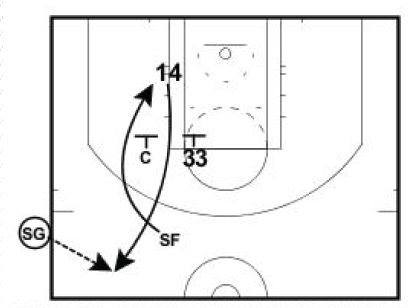
 

The best shooter between the shooting guard and the small forward takes the ball out of bounds
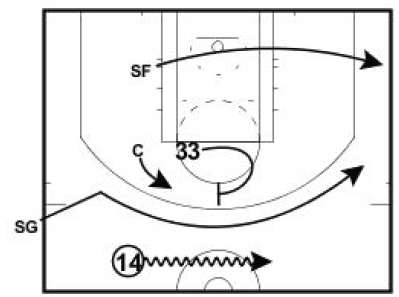


After Inbounding the ball, the inbounder comes off a screen from #33 and the small forward empties to the corner.
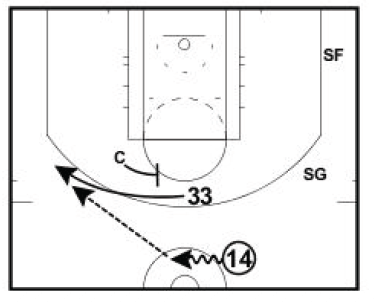


The final action is a screen the screener flare action for a catch, sweep, and drive opportunity.


The Five Most Important Statistical Factors in Winning Basketball Games

By Brian Williams on October 29, 2012

Coaching Basketball

I learned from my basketball coaching mentor, Coach Mike Sorrell, that the five most important TEAM statistical categories are:

1)  Field Goal Percentage
2)  Free Throw Percentage
3)  Rebounds
4)  Turnovers
5)  Fouls

We never ranked them in order of importance, but Coach Sorrell always geared each season’s overall plan and then game planned for each opponent to be able to win at least three of the five categories as I did when I left his program to become a head coach.

I have found in the 100s of high school basketball games that I have been involved in that it is nearly impossible to win three of the five categories and lose the game. The times that it is possible are when one team dominates the three point shooting or is able to get more possessions by getting the last shot of each quarter.

I have also learned that is is very difficult to win all five categories. The few times the teams I coached have been able to win all five categories, the results have been lopsided victories.

Tom Crean conducted a study using Statistics from 2005 Big Ten, ACC, SEC, Big 12, and CUSA Season games that shows that there actually is an order of importance to those statistics.

I found the results of Coach Crean’s study in the newsletter distributed by Coach Creighton Burns:

  1. The team that recorded the high field goal percentage was the winner in 75 percent of the basketball games.
  2. The team that scored the most free throws was the eventual winner in 70 percent of the games.
  3. The team that recovered the higher number of rebounds was the winner 65 percent of the time.
  4. The team that committed the higher number of personal fouls was the eventual winner in oniy 25 percent of the games.
  5. The team that held the point advantage at halftime was the winner 74 percent of the time.

After seeing the study, I am even more convinced as to the value of keeping the ball out of the lane on defense, taking care of the ball to get high percentage shots on offense, and playing very hard on defense, but without fouling as the staple ingredients for our system of play year in and year out.

The Coaching Toolbox has hundreds of resources for coaching basketball including basketball practice, basketball plays, basketball drills, basketball quotes, basketball workouts, basketball poems, and more!

Basketball Drills Post Play

By Brian Williams on October 26, 2012

These basketball drills for post players are from a clinic given by Coach Kevin Eastman.

Coach Eastman was an assistant with the Boston Celtics and LA Clippers specializing in player development.

He became the Clippers VP of Basketball Operations and has since retired from the NBA.

He now is a professional speaker for coaches, teams, as well as business organizations.

He is one of my favorite coaches to learn from.


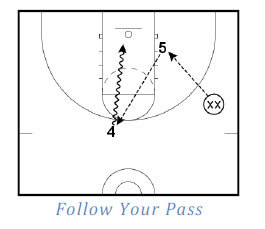
Follow Your Pass

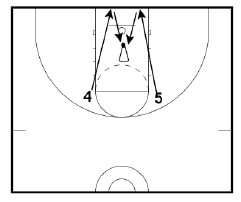
Coach feeds the post
Post catches with one hand and
throws a one hand push pass to 4
# 4 catches and rips thru to a left hand lay up
Rotation is follow your pass
 

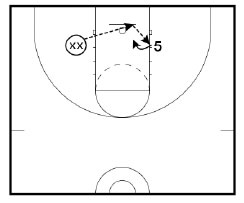
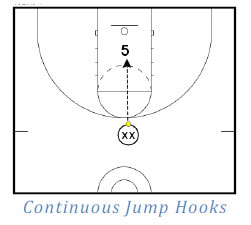
Continuous Jump Hooks

Alternate right and left hand
Can also call in the air “right” or “left”, and that must be the direction that he turns


Circle One on One- Slide in circle, when coach passes, second guy is on defense (no diagram)


Shoot for Fouls- Don’t let the defender into your shooting hand


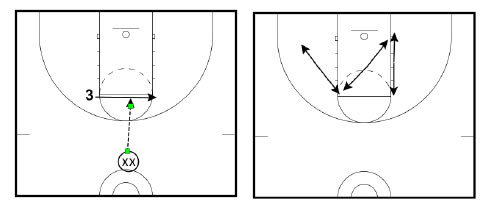
Clifford Ray Drill- Offensive players slides elbow to elbow. When the coach passes to the player, he will execute various post moves.
 

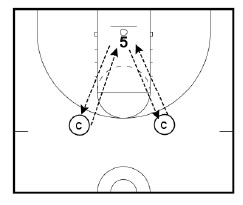
2 Ball Rapid Fire Passing- Catch with one hand, and pass back with that hand.


1 on 1 Baseline Touch- Whoever gets there first picks the ball up and you play 1 on 1. You get open
on the baseline, and work your way back to the ball.


Pack Line Defense

By Brian Williams on October 22, 2012

These notes were taken from the Universtiy of Washington women’s Packline Defensive Philosophy.

It was posted in on of the Xavier Men’s program’s newsletters.

I have pulled notes from their philosophy that you can apply to any man to man defense and some philosophy that can apply to any program.

I have provided a download link for the entire pdf of the UW packline defense at the end of this post if you are interested.

Program Standards

The Husky PACK LINE is a proven winner for us. It meets all the standards we have for anything that we do within our program philosophy wise.

1. Can it put you position to BEAT the BEST teams on your schedule?
2. Can it win on the Road?
3. Do you improve as the season progresses?
4. Can you advance in post-season tournaments?

GUARD YOUR YARD

This gives our players the confidence to apply ball pressure and the individual accountability that we are only asking them to be really effective in containing the dribble three feet in either direction. With the other 4 players properly positioned, the ability to GUARD YOUR YARD is a non-negotiable skill in our attack.

Move on the Air Time of the Pass: the instant the ball leaves the fingertips of the passer it is a non-negotiable factor that all five of our players are on the move to their next responsibility on the court.

Defending on Ball Screens

(For more details about their system, download the entire pdf from the link at the end of ths post)

We can call any combination of the mentioned actions to create a variety of options as to how we will defend the PNR action. Communication of the call is key and must be executed properly by both of the defenders involved in the action. The decision of how to defend the PNR will depend on the strength and weaknesses of the personnel involved in the offensive action. That comes through scouting as well as in game adjustments.

Armed with these varieties and an easy manner in which to communicate them, we have had success over the years making calls on the spur of the moment when we get a “call” on a set play or see an action being set up in a last second situation.

To recap actions of defender guarding the ball:

A. Second— over the screen
B. Third- under the screen
C. Fourth- under the screen and teammate jamming the screen
D. TRAP- again we have a call that varies throughout the year for this

To recap actions of the defender guarding the screener:

A. Hedge- force ball handler two dribbles toward half court before recovering
B. Plug- force the ball handler side-line to side-line
C. 4th- jam the screener as not to allow her to move screen down and stay connected to her
D. TRAP- stay with ball handler and trap with teammate until stolen or ball passed out.

Obviously incorporating the other three defenders is a huge key, you must first master the two
player defending of the various offensive actions.

We will work two or three days incorporating
ball actions with non-ball actions in our 4 around 0 Shell Drill before introducing the three remaining defenders.

We are relentless in our teaching the precise LANGUAGE and the manner in which the teammates communicate them to each other as well as the manner we communicate them to players.

Not talking on defense is a non-negotiable for us and is not tolerated from DAY ONE

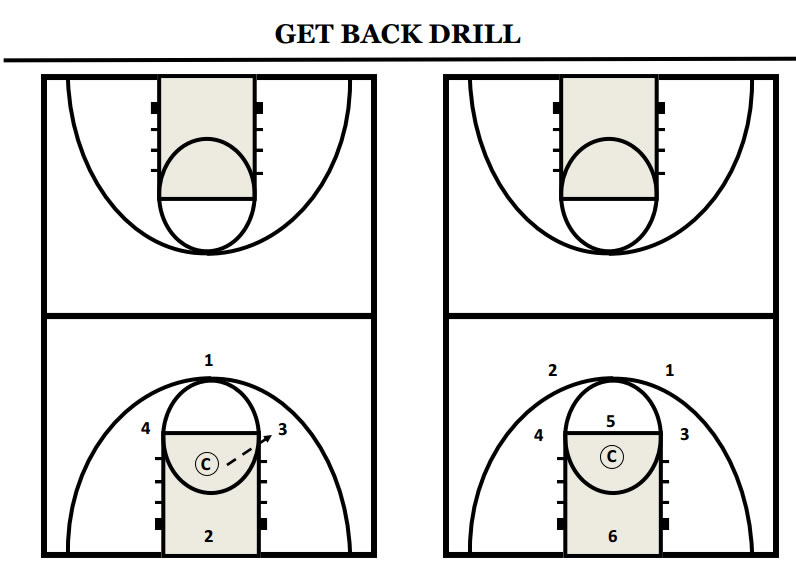
Players 1 and 2 are on offense and will convert to defense. Players 3 and 4 are defenders. Coach has the ball. Tosses the ball to 3 or 4. 1 turns and SPRINTS back as the FULLBACK. 2 then must SPRINT back to get AHEAD of the BALL and try to slow the attack.

In diagram 2, we have added player 5 on offense and player 6 on defense to simulate 3-on-3 play.

We will slowly begin to add players and manipulate the number of defenders to get the advantage/ disadvantage situations in which we drill.

To add to fun of the drill, after the coach passes the ball to the offense we will turn and using a blocking pad try to impede the progress of the last defender.

Great drill for teaching transition offense and defense simultaneously. Also stresses importance of making FT’s, taking advantage of “numbers” situations.

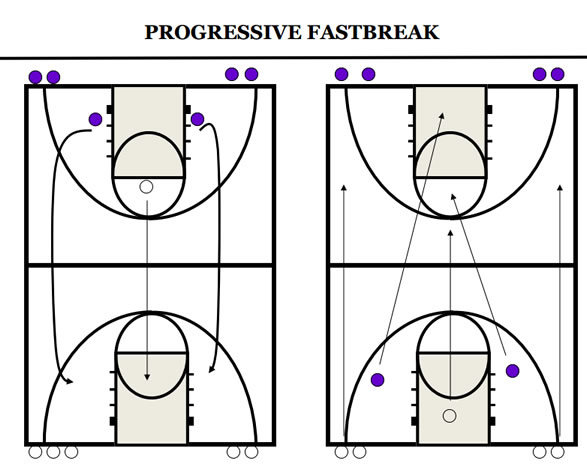
Divide team into two colors. Try to get even number of guards and forwards if possible but not critical. We score the drill as a normal game with 1s, 2s, and 3s.

White team player attempts a FT. Two Blue defenders play the make/miss. The white player who attempted FT retreats into a 2 on 1 defensive situation against the two blue players.

They play the possession until a basket is scored or the defensive player comes up with the stop.

Once the possession is complete without stopping the action, two additional white team players come from the baseline to join the original white team player as they attack the two blue team players who are retreating into a 3-on-2 advantage/disadvantage situation.

Complete this possession then without stopping add TWO blue team players and they attack in a 4-on-3 situation… this continues until you have built it into a 5-on-5 situation. At the completion of the 5-on-5, start again with BLUE team player attempting a FT.

We like to play until each player on each team has attempted a FT or to a certain number of total points. The main thing is that each team has equally number of opportunities to score.

To download the entire University of Washington pdf: click here

Basketball By Bob Knight

By Brian Williams on October 18, 2012

by Coach Bob Knight

Basketball is the All-American and the All-Pro:

It’s a rag-tag kid shooting a worn-out ball through a broken rim;

it’s the guy who plays forty minutes and the guy who just hopes to get in the game.

Basketball is pep bands, cheerleaders, pom-pom girls, and vast arenas packed with howling fans.

It’s long hours of practice before empty stands.

It’s adulation and recognition; it’s a coach hollering at your every mistake.

It’s joy, ecstasy and triumph, but it can also be blood and toil, sweat and tears,

Basketball banquets and half time expectations and its memories are endless.

Basketball is America, it’s hot dogs, popcorn, and the Star Spangled Banner.

It’s old folks listening to their favorite team on the radio; it’s youngsters imitating every move of their favorite players.

It’s national championships and three-on-three in the school yard.

It’s rich people and poor people; it’s black people and white people; it’s big people and small people.
Basketball is all of this and a whole lot more! Most important of all is that you and I have a chance to be a part of it.

Check out some of our other basketball prose and basketball poems!

A Basketball Player

By Brian Williams on October 18, 2012

This is not something I wrote, but have used it for players’ notebooks. It was written from the boy’s/men’s game perspective, but can be modified for girl’s/women’s teams.

A Basketball Player

A basketball player can come in any size, shape, or color. There is no common denominator except a love for the game and a desire to get the most out of his abilities. He is not only proud of his strengths, but understands his weaknesses. He is concerned first with the good of his team and knows that individual recognition will come through team excellence.

A basketball player has the enthusiasm of an evangelist, the discipline of a monk; the heart of a warrior; and never loses the honesty and character of a small boy.

He appreciates the support of thousands of fans, but he is much more aware of the example he is setting for some small boy watching from the sideline. He is happy when he scores a basket but never forgets that a teammate threw him the ball. While he never lets up at either end of the floor, the other team is not his real opponent; it is the full extent of his own potential that he is always playing against. He lets the referees, with occasional assistance from his coach, do the officiating.

A basketball player is made and not born. He is constantly striving to reach his potential knowing that he will bypass other players who cannot withstand the strain of this quest for excellence. He realizes that the challenges and competition of today’s game will better prepare him for tomorrow’s world. He knows that the true measure of his performance is not recorded in wins and losses but in how much of himself he has given to the game.

A basketball player never realizes when the odds are stacked against him. He can only be defeated by a clock that happens to run out of time. He is what a small boy wants to become and what an old man can remember with great pride that he once was.

  • « Go to Previous Page
  • Page 1
  • Interim pages omitted …
  • Page 248
  • Page 249
  • Page 250
  • Page 251
  • Page 252
  • Interim pages omitted …
  • Page 288
  • Go to Next Page »

Primary Sidebar

  • Twitter
  • Facebook
  • Linkedin
coachestoolbox
personaldevelopmenttoolbox
basketballplayerstoolbox
basketballtrainer
athleticperformancetoolbox
coachingbasketball

© Copyright 2026 Coaching Toolbox

Privacy Policy