• Skip to primary navigation
  • Skip to main content
  • Skip to primary sidebar

  • Basketball Plays
    • Ball Screen Sets
    • Horns Sets
    • Man to Man Post Up
    • Man to Man Isolations
    • Backdoor Plays
    • Man to Man 3 Point Shot Plays
    • 2-3 Zone Attack
    • Baseline Inbound Plays
    • Sideline Inbound Plays
    • Combination Defense Attack
  • Drills
    • Defensive Drills
    • Offensive Drills
    • Competitive Drills
    • Passing Drills
    • Rebounding Drills
    • Shooting and Scoring Drills
    • Toughness Drills
    • Transition & Conversion Drills
    • One on One Drills
  • Blueprint
  • Practice
  • Mental Toughness
  • Skill Development
  • Offense
  • Defense
  • Store

Basketball Drills 1 on 1 Jump to the Ball

Basketball Drills 1 on 1 Jump to the Ball

By Brian Williams on September 19, 2014

This defensive drill is from Mike Neighbors.

His newsletter goes out once a week and is one of the best out there for basketball coaches.

If you are interested in being added to his list, let me know and I will pass your email address along to him.

One of my goals is to provide resources every day that basketball coaches can use.

But my main goal is to provide an opportunity to stimulate your thinking with the posts that I send out.

I hope that you find the majority of them useful, but even if you don’t like or disagree with a post, if it kindles your thinking about ways to improve what you are doing or how you could improve upon what I have presented, then that is even better!

I like this drill, but you could certainly add other actions that you must defend against the teams that you play.
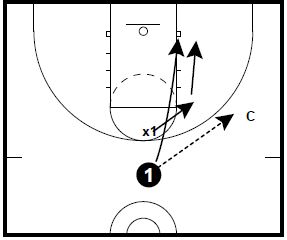
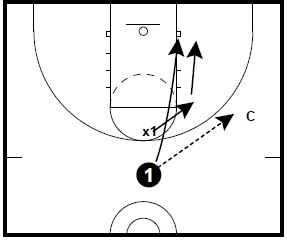
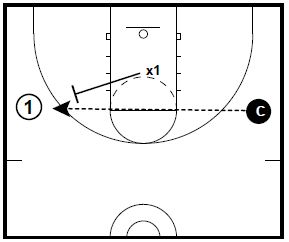
basketball-drills-jump1


Defensive player (x1) must jump to ball and get in position to not allow cutter to go across his face.
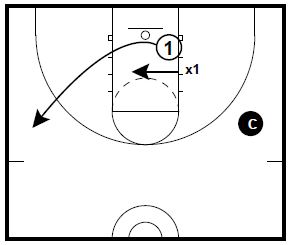


basketball-drills-jump2


Offensive player clears to the help side of the floor and defender establishes help side position.


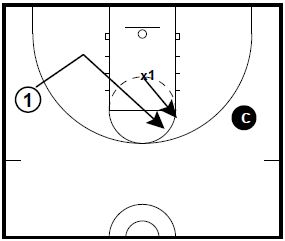
basketball-drills-jump3


Coach skips ball to offensive player. Defensive player must closeout and keep the ball out of the middle.


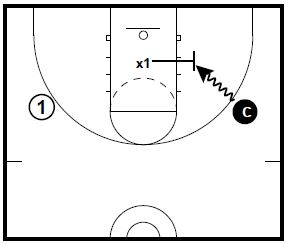
basketball-drills-jump4


Ball is skipped back to the coach and the defender must deny the flash cut.


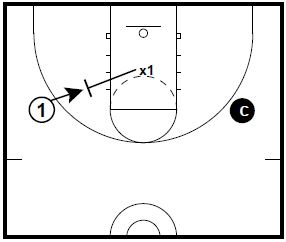
basketball-drills-jump5


Offensive player returns to help side and coach makes a baseline drive. X1 must get outside the lane and take a charge.


basketball-drills-jump6


Coach back dribbles to wing and shoots. Defender must box out outside the lane.


You can do the same drill with the offense starting on the wing and the coach at the top slot. The third version of the drill is starting the offense in the baseline corner and the coach on the wing.
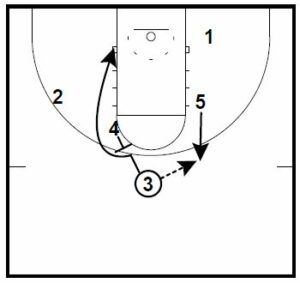
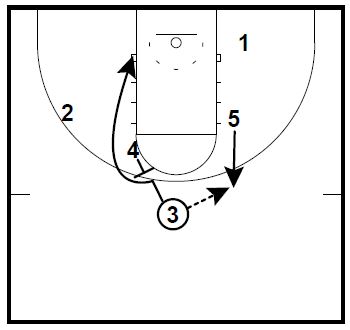
Basketball Plays Louisville Man to Man Set

By Brian Williams on September 18, 2014

This play comes from Scott Peterman’s Louisville Cardinal playbook.

Diagrams created with FastDraw

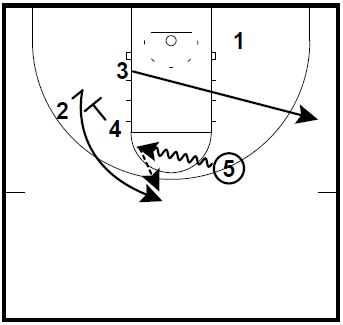
Louisville Dribble Handoff 1

basketball-plays-louisville-dho1


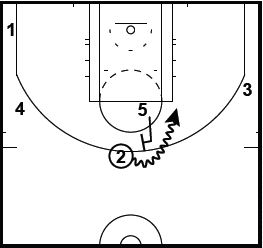
3 passes to 5 as 5 steps to meet the pass

4 sets a back screen for 3.


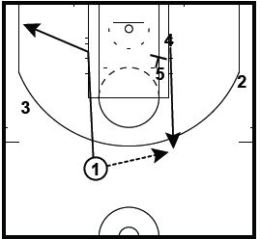
basketball-plays-louisville-dho2


4 sets a down screen for 2.

2 cuts to the top of the key.

5 dribbles toward 2 for a dribble hand off.

3 cuts to the right wing.


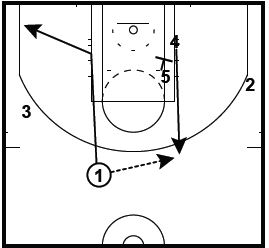
basketball-plays-louisville-dho3

2 runs a dribble handoff with 3.

3 attacks the middle.

5 sets a ballscreen on 3.

4 sets a downscreen on 1.

1 pops out to the left wing.

3 attacks the basket.


This play comes from Scott Peterman’s Louisville Cardinal playbook.


Basketball Toughness Drills: Kevin Eastman

By Brian Williams on September 17, 2014

These three drills are from Coach Kevin Eastman.

Coach Eastman was a long-time college assistant and head coach. He also served as an Assistant Coach for the Celtics and the Clippers.

He ended his basketball career as the Vice President of Basketball Operations for the Clippers before retiring.

The drills are designed to improve/measure toughness and give you some ways to condition with the basketball and in game-like movements and clock situations.

Basketball Coaching and Leadership

By Brian Williams on September 16, 2014

These two articles were sent to me by Dennis Hutter Coach Hutter is the Head Women’s Coach at Mayville State University. Dennis also has a coaching website. The URL is http://www.coachhutter.com/

I hope that you are able to find some parts of the articles that you can use in your program.

Here are some thoughts on Coaching and Leadership, along with a handout on 10 ways to Lead by Example. These notes were taken from a book entitled “The Legacy Builder” by Rod Olson. I encourage all coaches to read this book as it is a great source for leadership and maximizing performance out of your players. The handout was something that our Comet Coaching Staff put together and handed out to our players this summer.

One thing I have learned from the past two years, is how “winning” and “losing” pretty much take care of themselves. “Winning” is just a by-product of doing things and treating people the “right way”.

As coaches and leaders we have a chance EVERYDAY to inspire young people and help them achieve levels of success that they never dreamed possible. Good luck with everything.

LEADERSHIP NOTES

True leadership is about inspiration and encouragement, as well as coaching……… and balance

-Balance goes hand in hand with maturity, it crosses all aspects of your life – mental, physical, spiritual and emotional

Things that are built to last, are not built fast

Simplicity – trying to be a simple person in a complex world can be difficult at times

Great leaders have to remain F.A.T,

F = Faithful – people must fully trust the organization understanding that we have their best interests at heart ALL the time

A = Available – people must be willing to make time to be the BEST they can be for the team. As well as for their families and community.

T = Teachable – to achieve the other two, people need to have a “teachable spirit”, or they have NO SHOT at all!!!!! They can not come in thinking they know it all!!!

Leaders are great at “controlling the controllables”.

-Great leaders understand what they can control, and they control them. They also know what they cannot control and stay away from

trying to control those aspects.

A coach’s or leader’s job is to help an individual or a team get to a level they cannot achieve by themselves. When that happens the “winning” pretty much takes care of itself.

Focus on the two things you really can control: Your effort and your attitude.

You cannot give away what you do not possess yourself. Strive to be a simple man in a complex world. Control your effort and your attitude.

If you want your players and workers to trust you and be loyal to you, you have to capture their hearts and earn their trust.

-Trust – Character + Competence. Your character is who you are, and your competence is how you do your job or what you do

-Consistence within your behavior will bring about trust, and that trust will lead to loyalty

The time of blind obedience has passed. People do not trust without reason and motivation anymore.

Mental Toughness = The ability to be comfortable with being uncomfortable.

With adversity people have been taught to handle it one of two ways – “flight or fight”.

If you want to motivate your team members, you need to develop a relationship with them.

-You develop a relationship with your players and workers by letting them know you care.

If you can capture their hearts, you will have no trouble with motivation and performance execution.

Remind your players that they have greatness within them, and it is our job as coaches to help them discover it.

When giving feedback to players and workers, focus on the process and not on the results: Process over Product.

As coaches and leaders we need to T.H.I.N.K before we speak:

T = True – Is what I am about to say True

H = Helpful – Is what I am about to say going to be Help ul

I = Inspire – Is what I am about to say going to Inspire them to get to the “next level”

N = Necessary – Is what I am about to say Necessary, or am I only speaking to hear myself speak???

K = Kind – Is what I am about to say going to be received as Kind

MAYVILLE STATE UNIVERSITY

Women’s Basketball

10 Ways to Lead with Your Example

Your example when it comes to influencing others is not the main thing, it is the only thing.

Don Meyer – Northern State University

  1. How You Talk

-Let your words reflect your actions and your actions reflect your words

-Let your words be driven by your heart

-Be quick to listen and slow to speak – Wisdom.

  1. How You Treat People

-Kindness

-Kindness is the language that the blind can see and deaf can hear – Mark Twain

-Do something for someone who can’t do anything for you

-Treat people with great respect – handle conflict respectfully as well

  1. Keep Your Word & Promises

-Sometimes this may mean promising less, so you can deliver more

-All we have is our word, without that we are nothing

-Keep your word, and you will garner great respect in your daily relationships

-Trust is earned in a relationship when a promise is kept –Build Trusting

Relationships

  1. Work Ethic

-Be the hardest working person on your team or in your department

-Stay educated and knowledgeable to give your team a chance to succeed

-NEVER GIVE UP/ ALWAYS FIND A WAY TO WIN TO HELP YOUR ORGANIZATION

-Do more/Say less

  1. Your Attitude & Effort

–You can control two things in your life: Your Effort and your Attitude

–It is easy to work hard and have a great attitude when things are going well,

what is your attitude and work ethic like, when things are not going well???

-Attitude and Effort are great measures of a person’s character.

-No discipline seems pleasant at the time……………………….. – Hebrews 12:11

  1. Say “Please”, “Thank You” and “You’re Welcome”

-These are lost words in our society today

-These words can have a long lasting impact on your daily relationships

-These words are a great way to show respect to others

-Saying these words will make people in your relationships want to help you again when the time comes.

  1. Be on Time/Stay Late

-Be the first one in the office, and the last one to leave

-Have your staff see you when they enter the office in the morning, and have

them see you when they leave the office for the day

-Great work ethic throughout the office or team starts at the top – show them

how to work hard with your example.

  1. Write Personal Notes & Thank You Notes

-You will never know the power of a thank you note, until you receive one

-A great way to show appreciation in your daily relationships, is to take the time to sit down and write a personal or thank you note to someone.

-Personal notes of praise are a great way to build confidence and let players/staff know they are doing a great job.

  1. Delegate Responsibility

-Delegating responsibility builds leaders within your staff or department

-Delegating also builds trust within the relationships in your department or staff

-Delegating allows you to stay sharp and fresh

-Delegating allows you time to focus on the vision or strategic plan for your department, staff or team.

-YOU CAN’T BUILD LEADERS, IF YOU NEVER GIVE THEM A CHANCE TO LEAD

  1. Live a Life of Servant Leadership

-Use the Bible as a model and a guide – Jesus was the best servant leader EVER during his time on earth

-Servant leadership shows that you care about others more than you care about yourself – SELFLESS

-Servant leadership is the best feeling – it is almost addicting

-THE SINGLE BEST WAY TO LEAD BY EXAMPLE IS TO SERVANT LEAD!!!!!!!!!!!!!!!!

Basketball Plays Arizona DHO PNR

By Brian Williams on September 15, 2014

This play is from the August Arizona Basketball Coaching Newsletter. It was diagrammed by Coach Marc Skelton from a play run by Maccabi Tel Aviv.

This action uses 2 dribble hand offs to get the defense moving before setting the middle ball screen.

If you are interested in being added to their mailing list, email me your:

1) Name
2) email address
3) School or Team
4) Coaching Position

and I will pass it on to the Arizona staff.


basketball-plays-fd1


1 passes to 4 and then cuts to the hoop and fills the corner.

(option) pg and 4 can execute a give and go


basketball-plays-fd2


4 runs a dribble hand off with 3

(option) 3 can fake dho and cut backdoor


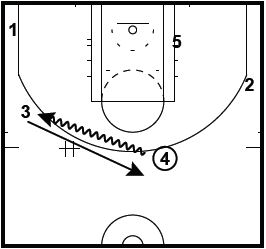
basketball-plays-fd3


3 runs the second dribble hand off with 2.

5 moves up to screen as soon as 2 has the ball


basketball-plays-fd4

2 attacks the hoop with 5 rolling

Coaching point- when 2 comes off screen, try to hostage dribble the defender and draw 5’s defender


Coaching Basketball Developing a Positive Team Culture

By Brian Williams on September 15, 2014

by Brian Williams, Coaching Toolbox Staff.

Teams that have negative cultures surrounding them sap the energy out of everyone involved–most importantly, the players. Teams that have positive cultures add energy to everyone’s tank Being an “energy giver” is a conscious decision that coaches, players, and parents can make that will make the experience of being a part of the team more enjoyable for everyone.

In this article, I will focus on some ways that coaches, players, and parents can promote a positive culture for school and youth basketball teams.

A positive culture doesn’t just happen on its own, it is a cooperative effort between coaches, players, and parents. A good way to set the tone is to have a parent meeting for coaches to clearly communicate their expectations for both players and parents. Coaches and parents will not always agree, but in the most positive team cultures there will be a mutual respect between coaches and parents for the difficult job that each group has.

Put it in writing. For coaches, put your expectations on paper and make sure that each player and each player’s parents have a copy of what those are. It also makes a big difference when players are involved in creating the expectations that they will be held accountable for. Make a list together of no more than a dozen expectations (for youth teams three to five is a good number) that your players agree to be held accountable for. This is not a goals list, it is a written vision for what the players are like in a team with a positive culture.

Examples are: Only positive body language, no excuses, only positive comments to teammates, and 100% effort expected at all times. Those are just a few positive behaviors to get you and your players started on creating your team’s list.

Players on a positive culture team enthusiastically support and follow the expectations that have been established. There are times when players must put what is best for the team ahead of their own desires. That is one of the great lessons taught by basketball!

The number one goal for our coaching staff is to develop a life long relationship with each participant that can never be broken. That motto is the first thing our coaches see when they open their staff notebooks. We operate with that thought in mind during all of our interactions with our players. Our coaches are the leaders for our program, but we can still treat our players as adults and with respect. It also means that we take the time to get to know our players as individuals and not just basketball players. I take a couple of minutes as they are warming up to make sure that I acknowledge each player every day and ask how their days have been so far.

You can be demanding without being demeaning. Developing a positive team culture does not mean that you ignore mistakes, or that you do not coach and correct your players. It means that you make corrections in a way that allows the player to keep his dignity. It has been my experience that players want you to be demanding in order to bring out the best in them. It can be done in a way that doesn’t create animosity.

As an example, one year our players and coaches developed as a part of our expectations that we would practice with the intensity of a state championship team. Certainly a demanding goal. Rather than yelling at our team when our intensity was down, I would simply ask, is that the Winamac (the school I was coaching at) Way that we agreed upon? Then it isn’t personal. It isn’t me picking on them. It is the coach holding the team to the standard that they set for themselves. I encourage you to find similar ways that you can be demanding in positive way with your team.

Teach the Improvement Process. There are really only three ways to improve: Develop a new skill, perform a previously acquired skill more quickly, or perform a skill with better technique. To achieve any of those performance goals, players must push out of their current ability level and comfort zone. When they do that, they will make mistakes. If you as a coach criticize or chastise your players for the mistakes they make that are a part of the improvement process, you are not going to see much improvement.

Coaches must set the tone in practice where your players understand why mistakes are an accepted and expected process of getting better. Mistakes will be viewed as stepping stones toward growth, or sources of frustration depending on how you frame them to your team. If your culture sees mistakes , you will see marked improvement in your players.

I believe that young people thrive in an environment where they feel comfortable. I also believe that they can both feel comfortable and be held accountable at the same time. The bottom line for school and youth teams is for the participants to have a rewarding experience. I would define rewarding as an opportunity to grow as a person and provide the fun that goes with participating in a team sport that enjoy playing. The more positive you can make the team culture, the more rewarding it will be for the players.

  • « Go to Previous Page
  • Page 1
  • Interim pages omitted …
  • Page 178
  • Page 179
  • Page 180
  • Page 181
  • Page 182
  • Interim pages omitted …
  • Page 288
  • Go to Next Page »

Primary Sidebar

  • Twitter
  • Facebook
  • Linkedin
coachestoolbox
personaldevelopmenttoolbox
basketballplayerstoolbox
basketballtrainer
athleticperformancetoolbox
coachingbasketball

© Copyright 2026 Coaching Toolbox

Privacy Policy