• Skip to primary navigation
  • Skip to main content
  • Skip to primary sidebar

  • Basketball Plays
    • Ball Screen Sets
    • Horns Sets
    • Man to Man Post Up
    • Man to Man Isolations
    • Backdoor Plays
    • Man to Man 3 Point Shot Plays
    • 2-3 Zone Attack
    • Baseline Inbound Plays
    • Sideline Inbound Plays
    • Combination Defense Attack
  • Drills
    • Defensive Drills
    • Offensive Drills
    • Competitive Drills
    • Passing Drills
    • Rebounding Drills
    • Shooting and Scoring Drills
    • Toughness Drills
    • Transition & Conversion Drills
    • One on One Drills
  • Blueprint
  • Practice
  • Mental Toughness
  • Skill Development
  • Offense
  • Defense
  • Store

Basketball Plays: 3 Post Offense

Basketball Plays: 3 Post Offense

By Brian Williams on June 8, 2015

A continuity you can use if you have three post players from Nate Hill.

Coach Hill is the Assistant Boys Coach at Colonel Crawford High School in North Robinson, Ohio.

He started a Coaching Newsletter this past Fall. Here is a link to the archives if you are interested.

Next Level Basketball 419

In case you have any questions or comments for Coach Hill, or would like to subscribe to his newsletter, here is his email address:

[email protected]

Diagrams created with FastDraw

Overview

Series of plays to utilize post players off down screens and cross screens.

Need to properly teach reading screens, getting open, catch and face, and feeding the posts
basketball-plys-3-post-offense

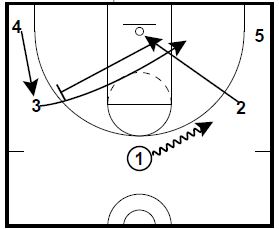
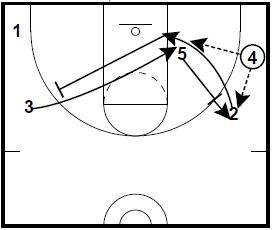
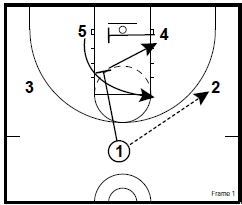
The cross screen, down screen is the main action of the offense.

2’s reads: 5 on cross screen, 4 at elbow, 1 on backside block sealing.

By going away from your best post player, they stay block to block.
basketball-plys-3-post-offense2

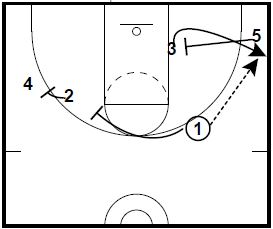
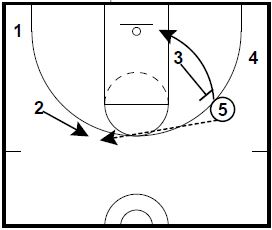
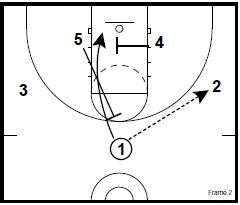
On catch, 4 looks at 5 on the high low. 3 downscreens for 1.

4 reverses to 1 for shot, or looks at 3 on the slip and post up.


basketball-plys-3-post-offense3JPG

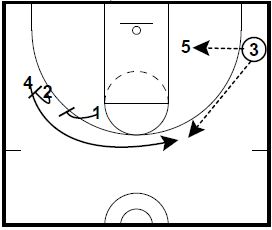
The action continues.

If defenses switches everything, 4 can slip and 5 goes to elbow as a counter.


Counters vs. Switches
basketball-plys-3-post-offense4

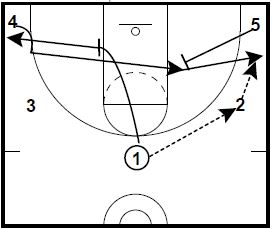
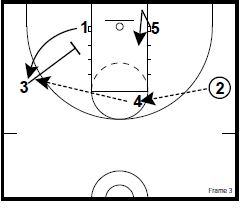
Counter 1: Slip the down screen.

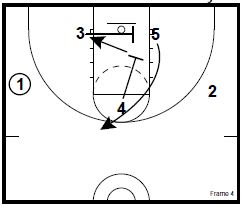
Players hear switch, and 5 cuts to elbow, down screener (1) goes to block, 4 looks to pin on backside


basketball-plys-3-post-offense5

Counter 2: post (5) sets back screen to get guard in post.
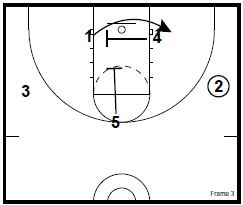


basketball-plys-3-post-offense6

1 now goes block to block


Teaching Points

Point to Wing/Downward pass = cross screen and down screen. Start with these basic rules. Work on feeding post, and sealing backside block.

Downward pass = cross screen and down screen. Also can work on SLIP COUNTER here

Pass to top / reversal pass / upward pass = down screen. Work on feeding post from elbow / free throw line. High low pass, and reading the down screen.

Post entry action: choose which action you like then work here –
Scissor cut, Split, Skip/Hammer

Click here to download the entire 9 page pdf
Combo Shooting Series

By Brian Williams on June 5, 2015

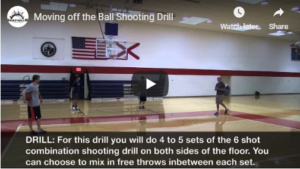
These videos are two of the great resources available from basketballhq. They have several more videos as well as basketball coaching resource articles.

I hope these videos give you some ways to add variety to your summer shooting drills to keep what you do fresh for your players.

You can use the idea and incorporate the cuts that you use in your offensive system into a similar drill. You can time it. They didn’t show the other side of the floor in the video, but shooters should make the same cuts on the left side of the floor to complete the series.

Matthew Graves is currently an Assistant at Xavier. He was an Assistant to Brad Stevens and a player at Butler.

Please make sure your sound is on to see the video.

Click the play arrow so see the drill. The drill is a You Tube video, so you will need to be able to access You Tube to see the drill.

Combo Series Shooting Drill

M Shooting Drill

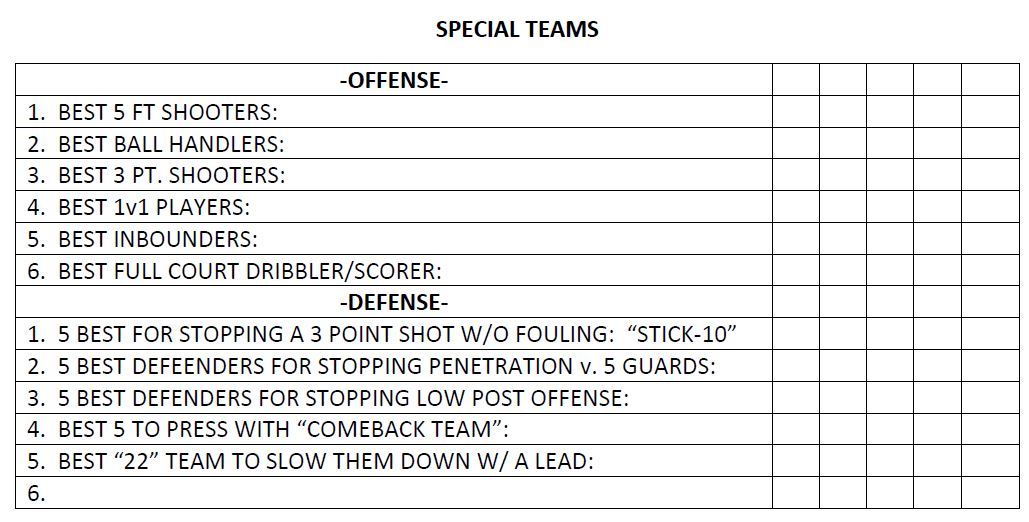
Coaching Basketball Special Situations Checklist

By Brian Williams on June 2, 2015

This Special Situations Checklist was put together by Delta High School (Ohio) Boys Coach Derek Sheridan.

I have a link posted at the bottom of the post to the entire pdf that he put together.

I hope you get some ideas that will help you be more prepared for the special situations that you face during games.

DELTA BOYS’ BASKETBALL SPECIAL SITUATION CHECKLIST

LATE GAME CHECKLIST: Assistant Coach

OUR TOP 3 FT SHOOTERS
1. ____________________
2. ____________________
3. ____________________

1. KNOW THE SCORE AND THE TIME LEFT ON THE CLOCK.

2. KNOW THE TIME OUT SITUATION FOR BOTH TEAMS.

3. TELL PLAYERS:

  • DO WE HAVE FOULS TO GIVE? HOW MANY?
  • ARE WE IN THE BONUS/DOUBLE BONUS?
  • ARE THEY IN THE BONUS/DOUBLE BONUS?

4. WE DO NOT CALL TIMEOUTS TO SAVE POSSESSION UNTIL THE LAST 2 MINUTES OF THE 4TH QUARTER, OR LAST 2 MIN. OF OVERTIME. BALL HANDLER CALLS TIMEOUT POSSESSION IS IN DOUBT.

5. NEVER SAVE THE BALL UNDER THEIR BASKET OR TIP A LOOSE BALL TOWARDS THEIR BASKET.

6. CANNOT GRAB AN O’ REBOUND (FT OR FG) = TIP TO HALF COURT. TOP PLAYER GETTING BACK ON D’ CAN GET IT.

7. STOP THEIR FASTBREAK AFTER MADE F.T. = HAVE A SUB READY AT THE SCORER’S TABLE.

8. IF WE NEED TO SET UP A PRESS AFTER THEY MAKE A FT = HAVE A SUB READY AT THE SCORER’S TABLE.

9. 5 PLAYERS RUN TO REFS; CALLING TIMEOUT AFTER WE SCORE TO STOP THE CLOCK.

10. COMEBACK OR CATCH-UP MODE:

Round time up to the next minute
Double the number of minutes & turn minutes into points
Add one point.
Add 1 point = 5 pts

For example:
1:22 left in game
Rounds-up to: 2:00 min.
Doubled = 4:00 & change to pts = 4pts

11. If we’re up in the last 2:00 of the game & we’re being pressed. Tell the official that we’ll call timeout at the 8 count.

12. Have in-bounder ask the ref to count his 5 count out-loud & tell him that we’ll call timeout on the 4 count.

13. Tell players to let the other team score if we’re up by more than 3 points, inside of 5 seconds.

  • Do not take the ball out if there are 4 seconds or less on the clock, especially if they’re out of timeouts.

14. Down 2, we are shooting 2 Free Throws with 3 or less seconds left: (No one w/ 4 fouls is in a rebounding spot)

    • Scenario #1:

o We make both FTs to tie the game.
o Have a sub ready to go to table, AFTER THE OFFICIAL HAS GIVEN THE BALL TO OUR SHOOTER.
o Players get matched-up in “Prevent 40” & defend for remaining seconds.

    • Scenario #2:

o We make the first & miss the second
o Players foul by going over-the-back on the rebound off the miss to save as much time as possible.

    • Scenario #3:

o Misses the first & now we have to miss the second intentionally & run “Vannett-2”

15. Down 2 points, going the length of the court inbounds, 3- seconds on the clock, clock stopped with 1+ timeout(s).

  • Run “Royal” & throw to half court & call timeout. TELL OFFICIALS WHAT WE’RE DOING BEFOREHAND.
  • We’ll run “Denver-2” from the sideline out-of-bounds.

16. Down 2 points, going the length of the court inbounds, 3- seconds on the clock, clock stopped, NO TIMEOUTS.

  • Run “Royal-Back.”

17. Up 1-3 points, 30 seconds or less left. Inbounding full court:

  • Run “Dunbar” with two best FT shooters in the 1 & 2 positions.
  • If we have timeouts left – In-bounder & coaches tell ref’s that we’ll call TO on the count of 4.

18. Up 1-3 points inside of 5 seconds – full court inbounds: run “GO”

specialteams

OPPOSITION: ____________________________________ LATE GAME INFO

1. PLAYERS TO FOUL:

#
#
#
#
#

2. PLAYERS NOT TO FOUL:

#
#
#
#
#

3. WHO ARE THEIR WORST FOUL SHOOTERS THAT ARE NOT IN THE GAME IN CASE OF AN INJURY SITUATION, AND WE CAN CHOOSE THE NEW FT SHOOTER?

#
#
#
#

4. LIST THEIR “21s”:

#
#
#
#

5. LIST THEIR BEST O’ REBOUNDERS:

#
#
#
#

6. TELL THE PLAYERS HOW TO GUARD BALL SCREENS:

  • HARD HEDGE
  • FLAT HEDGE
  • TRAP
  • JAM
  • SWITCH

Click here to download the entire checklist

Conversion Catch Up Drills

By Brian Williams on June 1, 2015

This drill was posted on the FastModel Sports Basketball Plays and Drills Library.

You can also find out more about FastModel Play Diagramming software by clicking this link: FastDraw

Diagrams created with FastDraw

The site has thousands of drills and plays that have been submitted by basketball coaches from around the world.

Transition Track Down Drill

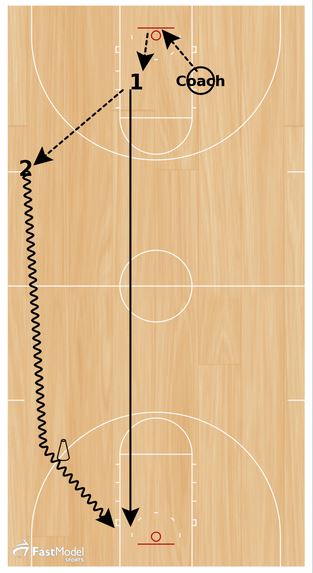
Place a cone at the feet throw line extended at the opposite end of the court. The offense can’t cut in towards the basket until after they reach that cone, which allows the defense a bit more time to catch up and avoids collisions at mid court.

basketball-drills-transition-trackdown

The defensive player works to track down the offensive player and make a play on the ball. It is important that players do not get out of control during this drill, and that they never hit one of their teammates while in the air…we don’t want anyone getting injured.

Instead, the defender needs to work on doing one of the following: sprinting in front of the offensive player; knocking the ball out from behind; blocking the shot from behind; or catching up completely and working to stop further penetration.

(Note: while this is primarily a defensive drill, it is also a great way for your players to learn to finish with pressure and/or small contact on the offensive side of the ball.)

The Coach tosses the ball off the backboard and Player 1 grabs the rebound. Player 1 outlets the ball to Player 2. Players 2 attacks the far basket as hard as they can and Player 1 sprints to catch up. Player 2 must wait until they reach the cone on the far end before cutting in towards the basket.

Never Too Late Drill

basketball-drills-never-too-late

Contributed by Fabian Mckenzie Cape Breton University Women’s Basketball.

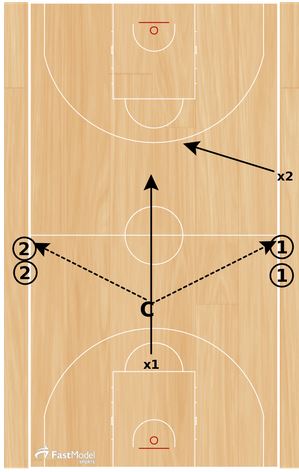
Offensive Players line up at half court line.

X2 lines up whereever the coach wishes to create different angles and timing.

X1 lines up at opposite free throw line.

Coach throws the ball to one of the offensive lines.

X2 comes in to stop ball, X1 comes in as trailer to become help defense.

1 for a score. – 2 for a stop or Turnover.

Too much time on offense = TO (Coach decides what is too much time).

play for 2-3 min each.

Could also make this a live 2 on 2 in opposite direction after score or stop.

13 Ways to be More Coachable

By Brian Williams on May 30, 2015

This article was written by Lindsey Wilson. Lindsey is the Co-Founder of Positive Performance Mental Training Zone. Lindsey played basketball at Iowa State and then played professionally overseas. She has been teaching, writing and speaking about mental training for the last 6 years.

I hope you can find a few points that you can share with your players that will have a positive impact on your team.

lindseywilson

Presented by:

Lindsey Wilson from Positive Performance Mental Training. As a former collegiate and professional basketball player, Lindsey now takes her passion for mental training to thousands of young athletes and to universities in the Pac12, SEC, ACC, and beyond.

13 Ways to be More Coachable

By Lindsey Wilson

Sports are filled with mental challenges, many of which we athletes bring upon ourselves. The coach-player dynamic is only one of the multitude of difficulties we face, but at the same time it is often the most difficult to navigate. And it’s not surprising why: receiving criticism in any area of life is tough – from teachers in the classroom, from the boss on the job, or from family or friends in our personal lives – but being able to graciously receive advice and mentorship is a necessary part of growth.

Today, I want to talk about being coachable. But, first, let’s define it. Being coachable is:

  • Being grateful that someone cares enough about you to push you to improve beyond where you would get on your own.
  • Being vulnerable enough to know you’re not perfect.
  • Being open to honest feedback (even if it hurts).
  • Working to actively change bad habits.

Uncoachable athletes show certain key behaviors. It doesn’t take long for a coach to spot an uncoachable player, and very rarely can a coach make a player coachable.

How does one coach an athlete who fights back? It’s a daunting task.

No question: We athletes can be sensitive people. Though we may look tough on the outside, we can be delicate underneath. In talking with a number of coaches, trying to sort out those characteristics of coachable versus uncoachable players, this is what we discovered about athletes in general:

  • We tend to roll our eyes or take things personally that we shouldn’t.
  • We can seem ungrateful even to those who help us most.
  • We read into things more deeply than we should.
  • We often believe everything is about us, even someone else’s bad day.

As a former collegiate athlete, I’m guilty of all of the above. While I tried my best to be coachable and to not take things personally, my attitude was (and sometimes still is) something that needed constant attention and required constant mental work.

(Becoming more coachable isn’t something that can be achieved with more drills, more reps, or multiple coach-player conferences. Those are external methods of repair that a coach can implement, but a player’s coachability is a mentality that requires diligence and attention from the athlete. In other words: coachability is up to the athlete, not the coach. The worst of it is that, most of the time, athletes don’t even KNOW they’re uncoachable! It can be a shock to find out that it isn’t the coach, it isn’t the team, it isn’t the sport, isn’t the equipment… it’s actually themselves who are making life so hard.)

But, before an athlete can start on the road to becoming more coachable, they first need to understand the benefits of having a coachable mentality. Top 5 potential benefits of being more coachable:

  • More playing time (and less drill or bench time).
  • Greater cohesion with team and/or coaches.
  • Accelerated learning.
  • Deeper and more fulfilling relationships with your coaches.
  • Greater internal calm: accepting criticism for what it is (INFORMATION) instead of what it isn’t (AN ATTACK) requires a solid internal foundation.

13 ways to be more coachable

Now that we’ve established why being coachable is critical to your development as an athlete, let’s go through the steps: 13 Ways to Become MORE Coachable:

  1. Listen to what your coaches say, not how they say it. Easier said than done but, like any skill, the more you do it, the easier it becomes. Practice “mean no offense, take no offense” when both speaking AND listening to your teammates and coaches.
  1. Trust me: It’s NOT about you. If your coach is having an ‘off’ day, don’t take it personally. You don’t know what happened to them that day. Did they get reprimanded by the athletic director? Did they lose a big recruit? Did they have a fight with their spouse? Is their son failing math? Your coach’s bad day could be a result of any of the other 99% of what is happening in their life. So, odds are, it’s not you.
  1. Remember ‘coach’ is only one hat they wear. Many coaches have spouses, children, families, friends, and lives outside of making sure your catered dinner is ready on the road trip. While you are important to them, remember they have lives outside of you. Respect that.
  1. They really (REALLY) want you to be your best even if it sometimes comes out sideways. They are there to help you be successful. Trust them.
  1. Your coaches are more stressed than you can probably imagine. Give them a break if they aren’t perfect or if their tone isn’t right in line with what you’d prefer.
  1. Always say ‘thank you’. In fact, say it more often than you think you need to. Thank your coaches for taking you on a road trip. Thank them for making you watch film (and for editing the film so it’s not as long as it could be!). Thank them for scouting your opponent late into the night. Thank them for totally committing themselves to your improvement. Thank them for holding you to a high standard. And especially thank them during those moments when you don’t feel thankful… those are times when they’re helping you most.
  1. Always look your coaches in the eye. Don’t hold your head down. Don’t look away. You want to be treated like an adult, so BE an adult; have confidence and class and look your coach in the eye. Doing so isn’t even for them: it’s for YOU. (Yes – this time it IS about you.)
  1. Shocker: Your coach is human, too. They aren’t perfect (and – surprise! – neither are you). Their stresses and emotions get misplaced just like yours do. They get hurt by things you do, say, and they feel pain when you disregard them or don’t appreciate them. (See #6.)
  1. Don’t roll your eyes. It’s immature and says more about you than the person you’re offending. (See #7.)
  1. If you really have something to say, SAY IT. I’m big on communication. Huge on it, in fact. So, if all else fails and you just don’t get what you need from your coach, be an adult and communicate that in a mature way. Whining about something constantly, or tuning out and not committing yourself to your team, is NOT a solution. In fact, it’s the exact opposite: absolutely detrimental to you, your team, and your coach’s ability to effectively train you.
  1. Directly ask for feedback. Your coaches have a whole roster of players to look after and might not always get around to you as quickly as you’d like. Every coach would love to have one-on-one conversations or meetings every day with every player, but that’s simply not a realistic goal. Therefore, if they don’t get to you right away, go to them and ask for their thoughts and feedback.
  1. Be prepared. Take five minutes before every practice to release from your mind the rest of your day’s activities. Remember your goals and remember why you’re practicing. Remember that your coach has put in uncountable hours to prepare drills, runs, plays, and practices for you. So, have some respect: when you’re at practice, really, truly BE at practice. Click here for our pre-practice mental routine-the BRAVR technique.
  1. Set up a weekly check-in with your coach in a place where both of you can chat informally about your strengths and skills that need working on. This doesn’t have to take long. Just a few minutes after practice can be a huge help in keeping you on track to your goals.

So, that’s my list. And, because transforming yourself into a more coachable athlete is mental training, there are many, many more ways other than these simple 13 that you can use to improve.

Now, huddle.

Athletes, I encourage you to get together with one or more of your teammates and see what their thoughts are on this list. What would you add to it? What can you expand upon? What are some times you’ve found it REALLY hard to keep to this list? If you are a more senior athlete, have you felt frustration while mentoring a less experienced player? How did the uncoachability of that player make you feel?

And, if you’re willing, please tell me about your experiences with coachability by sharing in the comments section below.

Here’s to self-improvement through mental training!

P.S. Too many rules to remember offhand? Download and print this How to Be More Coachable out as a consistent reminder on keeping yourself coachable. Tape it in your locker, post it in the locker room, toss it in your gym bag, share it with others… whatever you need to do to grow and maintain your coachability and to steadily improve your mental skills as an athlete.

Basketball Plays: 2 5 Out Quick Hitters

By Brian Williams on May 28, 2015

2 quick hitters to run from a 5 out setting

The plays are from Kyle Pertuset’s Spread and Go Motion Offense.

The 5 Out Spread and Go Motion Offense Playbook and the and the Spread and Go Motion Offense Drills Playbook is combined with Scott Peterman’s Ultimate Matchup Zone Playbook as this week’s eBook bundle.

Here is the link to find out more about the bundle: Spread and Go Offense Plus Drills, & Ultimate Matchup Zone Playbooks.

If you have any questions about the Playbooks, please feel free to email me or call or text me at (317) 721-1527.

Diagrams created with FastDraw

Denver

basketball-plays-denver1

1 dribbles at 2 which initiates 2s backdoor cut action.

2 than makes a chin cut and sets a back screen for 3 who comes off of back cut to ball side block.

4 slides up.


basketball-plays-denver2

After setting the back screen for 3, 2 goes on to set a curl screen for 4.

5 sets a pin down screen for 3 at the block.

1 gives the ball to 3.

1 sets stagger screen for 4.

4 comes off of curl and stagger(double stagger screens) looking for the 3 point shot.

basketball-plays-denver3

3 looks to feed 5 in post or 4 for the 3 point shot.


Wisconsin

basketball-plays-wisconsin1

1 passes to the 2 and executes a “J Cut” into a swing/flex screen for 4.

1 clears out to the corner spot.

If 4 does not get the basketball for a layup, 5 sets a screen for 4. 2 gives the ball to 3.
 

basketball-plays-wisconsin2

If 5 goes not get the ball in a timely manner(1-2 seconds) 5 then goes and sets a back screen for 2.

If 2 does not recieve the ball, he executs a chin cut and goes on to set a back screen for 3.

If 4 does not get the ball to 3, 4 gives the ball to the 5 on the pop up.

basketball-plays-wisconsin3

5 reveres the ball to 2.

3 sets a back sreen for 5.

The plays are from Kyle Pertuset’s Spread and Go Motion Offense.

The 5 Out Spread and Go Motion Offense Playbook and the and the Spread and Go Motion Offense Drills Playbook is combined with Scott Peterman’s Ultimate Matchup Zone Playbook as this week’s eBook bundle. Here is the link to find out more about the bundle: Spread and Go Offense Plus Drills, & Ultimate Matchup Zone Playbooks.

If you have any questions about the Playbooks, please feel free to email me or call or text me at (317) 721-1527.

  • « Go to Previous Page
  • Page 1
  • Interim pages omitted …
  • Page 152
  • Page 153
  • Page 154
  • Page 155
  • Page 156
  • Interim pages omitted …
  • Page 288
  • Go to Next Page »

Primary Sidebar

  • Twitter
  • Facebook
  • Linkedin
coachestoolbox
personaldevelopmenttoolbox
basketballplayerstoolbox
basketballtrainer
athleticperformancetoolbox
coachingbasketball

© Copyright 2026 Coaching Toolbox

Privacy Policy