• Skip to primary navigation
  • Skip to main content
  • Skip to primary sidebar

  • Basketball Plays
    • Ball Screen Sets
    • Horns Sets
    • Man to Man Post Up
    • Man to Man Isolations
    • Backdoor Plays
    • Man to Man 3 Point Shot Plays
    • 2-3 Zone Attack
    • Baseline Inbound Plays
    • Sideline Inbound Plays
    • Combination Defense Attack
  • Drills
    • Defensive Drills
    • Offensive Drills
    • Competitive Drills
    • Passing Drills
    • Rebounding Drills
    • Shooting and Scoring Drills
    • Toughness Drills
    • Transition & Conversion Drills
    • One on One Drills
  • Blueprint
  • Practice
  • Mental Toughness
  • Skill Development
  • Offense
  • Defense
  • Store

Filing Cabinet

Basketball Coaching and Leadership

By Brian Williams on September 16, 2014

These two articles were sent to me by Dennis Hutter Coach Hutter is the Head Women’s Coach at Mayville State University. Dennis also has a coaching website. The URL is http://www.coachhutter.com/

I hope that you are able to find some parts of the articles that you can use in your program.

Here are some thoughts on Coaching and Leadership, along with a handout on 10 ways to Lead by Example. These notes were taken from a book entitled “The Legacy Builder” by Rod Olson. I encourage all coaches to read this book as it is a great source for leadership and maximizing performance out of your players. The handout was something that our Comet Coaching Staff put together and handed out to our players this summer.

One thing I have learned from the past two years, is how “winning” and “losing” pretty much take care of themselves. “Winning” is just a by-product of doing things and treating people the “right way”.

As coaches and leaders we have a chance EVERYDAY to inspire young people and help them achieve levels of success that they never dreamed possible. Good luck with everything.

LEADERSHIP NOTES

True leadership is about inspiration and encouragement, as well as coaching……… and balance

-Balance goes hand in hand with maturity, it crosses all aspects of your life – mental, physical, spiritual and emotional

Things that are built to last, are not built fast

Simplicity – trying to be a simple person in a complex world can be difficult at times

Great leaders have to remain F.A.T,

F = Faithful – people must fully trust the organization understanding that we have their best interests at heart ALL the time

A = Available – people must be willing to make time to be the BEST they can be for the team. As well as for their families and community.

T = Teachable – to achieve the other two, people need to have a “teachable spirit”, or they have NO SHOT at all!!!!! They can not come in thinking they know it all!!!

Leaders are great at “controlling the controllables”.

-Great leaders understand what they can control, and they control them. They also know what they cannot control and stay away from

trying to control those aspects.

A coach’s or leader’s job is to help an individual or a team get to a level they cannot achieve by themselves. When that happens the “winning” pretty much takes care of itself.

Focus on the two things you really can control: Your effort and your attitude.

You cannot give away what you do not possess yourself. Strive to be a simple man in a complex world. Control your effort and your attitude.

If you want your players and workers to trust you and be loyal to you, you have to capture their hearts and earn their trust.

-Trust – Character + Competence. Your character is who you are, and your competence is how you do your job or what you do

-Consistence within your behavior will bring about trust, and that trust will lead to loyalty

The time of blind obedience has passed. People do not trust without reason and motivation anymore.

Mental Toughness = The ability to be comfortable with being uncomfortable.

With adversity people have been taught to handle it one of two ways – “flight or fight”.

If you want to motivate your team members, you need to develop a relationship with them.

-You develop a relationship with your players and workers by letting them know you care.

If you can capture their hearts, you will have no trouble with motivation and performance execution.

Remind your players that they have greatness within them, and it is our job as coaches to help them discover it.

When giving feedback to players and workers, focus on the process and not on the results: Process over Product.

As coaches and leaders we need to T.H.I.N.K before we speak:

T = True – Is what I am about to say True

H = Helpful – Is what I am about to say going to be Help ul

I = Inspire – Is what I am about to say going to Inspire them to get to the “next level”

N = Necessary – Is what I am about to say Necessary, or am I only speaking to hear myself speak???

K = Kind – Is what I am about to say going to be received as Kind

MAYVILLE STATE UNIVERSITY

Women’s Basketball

10 Ways to Lead with Your Example

Your example when it comes to influencing others is not the main thing, it is the only thing.

Don Meyer – Northern State University

  1. How You Talk

-Let your words reflect your actions and your actions reflect your words

-Let your words be driven by your heart

-Be quick to listen and slow to speak – Wisdom.

  1. How You Treat People

-Kindness

-Kindness is the language that the blind can see and deaf can hear – Mark Twain

-Do something for someone who can’t do anything for you

-Treat people with great respect – handle conflict respectfully as well

  1. Keep Your Word & Promises

-Sometimes this may mean promising less, so you can deliver more

-All we have is our word, without that we are nothing

-Keep your word, and you will garner great respect in your daily relationships

-Trust is earned in a relationship when a promise is kept –Build Trusting

Relationships

  1. Work Ethic

-Be the hardest working person on your team or in your department

-Stay educated and knowledgeable to give your team a chance to succeed

-NEVER GIVE UP/ ALWAYS FIND A WAY TO WIN TO HELP YOUR ORGANIZATION

-Do more/Say less

  1. Your Attitude & Effort

–You can control two things in your life: Your Effort and your Attitude

–It is easy to work hard and have a great attitude when things are going well,

what is your attitude and work ethic like, when things are not going well???

-Attitude and Effort are great measures of a person’s character.

-No discipline seems pleasant at the time……………………….. – Hebrews 12:11

  1. Say “Please”, “Thank You” and “You’re Welcome”

-These are lost words in our society today

-These words can have a long lasting impact on your daily relationships

-These words are a great way to show respect to others

-Saying these words will make people in your relationships want to help you again when the time comes.

  1. Be on Time/Stay Late

-Be the first one in the office, and the last one to leave

-Have your staff see you when they enter the office in the morning, and have

them see you when they leave the office for the day

-Great work ethic throughout the office or team starts at the top – show them

how to work hard with your example.

  1. Write Personal Notes & Thank You Notes

-You will never know the power of a thank you note, until you receive one

-A great way to show appreciation in your daily relationships, is to take the time to sit down and write a personal or thank you note to someone.

-Personal notes of praise are a great way to build confidence and let players/staff know they are doing a great job.

  1. Delegate Responsibility

-Delegating responsibility builds leaders within your staff or department

-Delegating also builds trust within the relationships in your department or staff

-Delegating allows you to stay sharp and fresh

-Delegating allows you time to focus on the vision or strategic plan for your department, staff or team.

-YOU CAN’T BUILD LEADERS, IF YOU NEVER GIVE THEM A CHANCE TO LEAD

  1. Live a Life of Servant Leadership

-Use the Bible as a model and a guide – Jesus was the best servant leader EVER during his time on earth

-Servant leadership shows that you care about others more than you care about yourself – SELFLESS

-Servant leadership is the best feeling – it is almost addicting

-THE SINGLE BEST WAY TO LEAD BY EXAMPLE IS TO SERVANT LEAD!!!!!!!!!!!!!!!!
Coaching Basketball Developing a Positive Team Culture

By Brian Williams on September 15, 2014

by Brian Williams, Coaching Toolbox Staff.

Teams that have negative cultures surrounding them sap the energy out of everyone involved–most importantly, the players. Teams that have positive cultures add energy to everyone’s tank Being an “energy giver” is a conscious decision that coaches, players, and parents can make that will make the experience of being a part of the team more enjoyable for everyone.

In this article, I will focus on some ways that coaches, players, and parents can promote a positive culture for school and youth basketball teams.

A positive culture doesn’t just happen on its own, it is a cooperative effort between coaches, players, and parents. A good way to set the tone is to have a parent meeting for coaches to clearly communicate their expectations for both players and parents. Coaches and parents will not always agree, but in the most positive team cultures there will be a mutual respect between coaches and parents for the difficult job that each group has.

Put it in writing. For coaches, put your expectations on paper and make sure that each player and each player’s parents have a copy of what those are. It also makes a big difference when players are involved in creating the expectations that they will be held accountable for. Make a list together of no more than a dozen expectations (for youth teams three to five is a good number) that your players agree to be held accountable for. This is not a goals list, it is a written vision for what the players are like in a team with a positive culture.

Examples are: Only positive body language, no excuses, only positive comments to teammates, and 100% effort expected at all times. Those are just a few positive behaviors to get you and your players started on creating your team’s list.

Players on a positive culture team enthusiastically support and follow the expectations that have been established. There are times when players must put what is best for the team ahead of their own desires. That is one of the great lessons taught by basketball!

The number one goal for our coaching staff is to develop a life long relationship with each participant that can never be broken. That motto is the first thing our coaches see when they open their staff notebooks. We operate with that thought in mind during all of our interactions with our players. Our coaches are the leaders for our program, but we can still treat our players as adults and with respect. It also means that we take the time to get to know our players as individuals and not just basketball players. I take a couple of minutes as they are warming up to make sure that I acknowledge each player every day and ask how their days have been so far.

You can be demanding without being demeaning. Developing a positive team culture does not mean that you ignore mistakes, or that you do not coach and correct your players. It means that you make corrections in a way that allows the player to keep his dignity. It has been my experience that players want you to be demanding in order to bring out the best in them. It can be done in a way that doesn’t create animosity.

As an example, one year our players and coaches developed as a part of our expectations that we would practice with the intensity of a state championship team. Certainly a demanding goal. Rather than yelling at our team when our intensity was down, I would simply ask, is that the Winamac (the school I was coaching at) Way that we agreed upon? Then it isn’t personal. It isn’t me picking on them. It is the coach holding the team to the standard that they set for themselves. I encourage you to find similar ways that you can be demanding in positive way with your team.

Teach the Improvement Process. There are really only three ways to improve: Develop a new skill, perform a previously acquired skill more quickly, or perform a skill with better technique. To achieve any of those performance goals, players must push out of their current ability level and comfort zone. When they do that, they will make mistakes. If you as a coach criticize or chastise your players for the mistakes they make that are a part of the improvement process, you are not going to see much improvement.

Coaches must set the tone in practice where your players understand why mistakes are an accepted and expected process of getting better. Mistakes will be viewed as stepping stones toward growth, or sources of frustration depending on how you frame them to your team. If your culture sees mistakes , you will see marked improvement in your players.

I believe that young people thrive in an environment where they feel comfortable. I also believe that they can both feel comfortable and be held accountable at the same time. The bottom line for school and youth teams is for the participants to have a rewarding experience. I would define rewarding as an opportunity to grow as a person and provide the fun that goes with participating in a team sport that enjoy playing. The more positive you can make the team culture, the more rewarding it will be for the players.

Thoughts on Leadership for Basketball Coaches

By Brian Williams on September 5, 2014

These 10 points were assembled by Eric Musselman, USC Men’s Head Coach, and former NBA and D-League Head Coach.  

The second part of this post are some notes from Tony Dungy on Leadership as well as a link to a post I made last fall with more notes from Coach Dungy on Leadership.

In my opinion, it is helpful to continually think about and review our beliefs on leadership for ourselves as we will be getting busier and busier with school and pre-season upon us.  I believe that the more thought we put into our beliefs on leadership, the more we improve our behavior as leaders.   I also hope that you might find some ideas to share with new coaching staff members and some of your players who will be leaders for the upcoming season.

At a time when the world is thinking a lot about leadership I believe it’s a great opportunity for each one of us to think about what leadership means to us. Below are thoughts on leadership from the book Soup. Whether we are a leader of the Los Angeles D-Fenders, leading a business, team, hospital. sports team, classroom, church or home, as a coaching staff, think about what principles and ideas guide as a leader. You can read a sample from the book by clicking on the image at the left.

  1. People follow the leader first and the leader’s vision second – It doesn’t matter if the leader shares a powerful vision, if the leader is not someone who people will follow the vision will never be realized. As a leader, who you are makes a difference. The most important message you can share is yourself.
  1. Trust is the force that connects people to the leader and his/her vision – Without trust there is a huge gap between the leader and the vision. Without trust people will stay off the bus. However if people trust the leader they will hop on the bus with the leader and help move the bus forward towards the vision.
  1. Leadership Is not just about what you do but what you can Inspire, encourage and empower others to do.
  1. A leader brings out the best within others by sharing the best within themselves.
  1. Just because you’re driving the bus doesn’t mean you have the right to run people over -Abraham Lincoln said Most anyone can stand adversity, but to test a person’s character give them power. The more power you are granted the more it is your responsibility to serve, develop and empower others. When you help them grow they’ll help you grow.
  1. Rules without Relationship Leads to Rebellion -Andy Stanley said this and it’s one of my favorite quotes. As a leader you can have all the rules you want but if you dont invest in your people and develop a relationship with them they will rebel. This applies amazingly to children as wel. It’s al about relationships.
  1. Lead with optimism, enthusiasm and positive energy, guard against pessimism and weed out negativity.
  1. Great Leaders know they don’t have all the answers – Rather they build a team of people who either know the answers or will find them.
  1. Leaders inspire and teach their people to focus on solutions, not complaints. (The No Complaining Rule)
  1. Great leaders know that success Is a process not a destination – One of my heroes John Wooden, the legendary UCLA basketball coach, never focused on winning. He knew that winning was the byproduct of great leadership, teamwork, focus, commitment and execution of the fundamentals. As a leader, focus on your people and process, not the outcome.

The remaining leadership takeaways are from Tony Dungy’s “The Mentor Leader” If you are interested in finding out more about the book or reading a sample, you can do so on the Amazon web site by clicking on the book cover on the left.

I posted some other notes from Coach Dungy. You can see them at this link: Mentor Leaders

When everyone else understands that his or her role is also to lift, encourage, and equip – and that all members of the organization are dependent on one another – it becomes clear that nurturing relationships is necessary to the organization’s health.

If you start making excuses to cut out the things that are important because of urgent circumstances it will become a habit.

We may say that something is important to us, but in the end our actions will determines what we mean. And the people we are trying to influence and guide—our family, friends, team members, employees, and others—will measure our influence by the consistency of our actions and words.

Research conducted by the Leadership Research Institute has shown that in times of crisis, people gravitate toward the person of highest character, not necessarily the person who is ‘in charge’ or even the person they believe to be the most competent. Rather, people will tend to build a relationship with and follow the person they view as the most trustworthy, who cares the most, and who is willing to always do the right thing.

If the people in your organization can’t rely on you—whether on the big things or the little things—how are they going to follow you?

Most of the time, we are only judged on the outcome, whereas the only thing we can control is the process. Make your process the right one and stay true to it.

In any event, leaders who are accountable earn the respect of those they lead. Without that respect, they cannot lead for long.

Intangibles for Basketball Players

By Brian Williams on August 20, 2014

Scroll below for today’s post of 3 Videos from PGC Basketball on:

1) The Power of Eyes
2) Precision
3) A Habit of Great Floor Leaders.

I hope you find some examples that you can use next time you talk to your players about the intangibles of being successful or that you can just show them the videos to give them another voice.

These are You Tube videos, so please make sure that you are on a server that allows You Tube access.

Make sure your speakers are on and click the play arrow to see the videos.


A Habit of Floor Leaders

The Power of Eyes

Precision–A Key to Greatness

Coaching Basketball Trust Talent Time

By Brian Williams on August 13, 2014

University of Arkansas Head Women’s Coach Mike Neighbors was a long-time and very productive D1 assistant coach after being a successful high school coach.

He has seen from many vantage points what it takes for an assistant to contribute to a program. Scroll below to read some of his thoughts:

This is the first part of the article. I have a link to part 2 of this piece at the bottom of the article.

TRUST, TALENT, TIME

To be a good assistant coach, I believe your Head Coach needs three things from you: TRUST, TALENT, TIME

Each of these have many facets. Each of them can be accomplished in many different ways. Each of them may carry slightly more importance to certain head coaches. Each of them may carry particular emphasis based on your job duties… but in my experience, all 3 are necessary if you want to be the best for your head coach.

We will begin with TRUST for two reasons. One, it is normally the first thing head coaches mention when they talk about the loyalty factor. Two, because to me as an assistant, TRUST is what keeps us from having to be perfect on a daily basis.

For each of these labels, I am simply going to list the various notes that I categorized under each. They are in
no particular order of importance and some of the elements overlap.

TRUST

Loyalty is a common word when you begin picking brains of head coaches. I feel TRUST is the highest form of loyalty so I choose it as one of the three benchmarks. In today’s times, TRUST is hard earned and valuable. When a head coach feels TRUST, you can make mistakes. You can have errors in a scouting report. You can miss evaluated a potential recruit. Because they TRUST in your intentions rather than your actions. So, let’s list some ways you can earn TRUST.

REMEMBER IT IS NOT YOUR TEAM… The team belongs to your head coach. They are the ones who are responsible for every aspect of the program. While your investment is certainly valuable, it is NOT your team. In all your actions, you are valuable but never irreplaceable. You are important but not necessary. There are 100’s if not 1000’s of people who would love a shot at the job you have. Keeping this in mind in all your actions and decisions go a long way to earning TRUST.

MAKE YOUR POINT BUT NEVER ARGUE IT… The very best assistants understand it is their job to make suggestions and the head coaches job to make decisions. State your case, back it up with evidence, and then let head coach make the decision on it. And then move on. Don’t allow your pride to be hurt if the idea isn’t implemented. Don’t sulk. Don’t debate it with other assistants on your staff or friends on other staffs. MOVE ON. A great scene from the West Wing has a presidential candidate say to an “assistant coach”… “I will give you all the time you need to try to talk me out of doing something. But once we open that door and walk out, I’ll expect your full support”. That is pyramid messaging. And that is something every great assistant coach must master.

PYRAMID MESSAGING… From the simplest thing like calling a spot on the floor the same thing as your head coach to more in depth concepts such as enforcing the culture of the program, the message from the head coach must be Echoed from the head assistant to the head manager. Each link must stay on message.

ENFORCE THE CULTURE OF THE PROGRAM… Once the Head Coach has established the culture of the program, it is the job of every assistant below to accept nothing less. We all know through experience, that we will get from our players what we tolerate from our players. So, you must never tolerate anything that is inconsistent with the culture of the program. We must get players off the fence and on point.

DON’T BE A “YES” PERSON OR A “NO” PERSON… If you have a different idea, express it. A former head coach once said to me “If we all have the same ideas, someone is obsolete.” Have the confidence and the evidence to support your opinion. But you also don’t want to take this to the extreme and all the sudden become that person that NEVER agrees and is always in the devils advocate position. While it is certainly wise to look at an issue from all angles, you will lose your effectiveness and the TRUST of your head coach if you are always on one extreme or the other.

TAKE A BULLET… Step up and admit a mistake that you make that could reflect poorly on your head coach. Maybe you miss handle an academic situation with a tutor. Before that tutor can contact their supervisor and tell them what an ass you are, reach out and take the bullet. Sometimes it might not even be your fault.

NEVER LET YOUR HEAD COACH BE SURPRISED… This one goes hand in hand with WEED THE GARDEN. While you want to keep some things from making it down the hall to the head coaches office, there should never be an instance when you head coach is made aware of a serious situation in one of your areas. Keeping them in the loop is easy with the technology we function with in 2012. Shoot them a text and let them in on things. The last thing you want as an assistant in charge of academics is for your head coach to learn of an eligibility issue. Way easier to deal with the situation as it is occurring rather than after the fact.

BE THERE FOR YOUR PLAYERS… when all else fails around you, be there for the players. Be there when they need you most. They don’t need you when they hit the game winner, they need you when they miss it. Be there when the head coach rips them a new one in film. Be there when they failed a test. Be there when they have a flat tire. Be there when they bounce their first check. But be there for them. Don’t be the first person off the court after practice in a race to get back to something in your office.

IT’S OKAY IF YOU DON’T KNOW AN ANSWER… While you always want to have the correct answer in every situation, that simply isn’t reality. If you don’t know something admit it. I followed that advice someone had given me in a Sweet 16 against Vanderbilt in 2010. Coming into a timeout with 26.7 seconds to play and the ball on the side in a tie game, I was asked what defense the Commodores would be in. Based on 12 game films and the previous 39 minutes, the answer was simple… I HAD NO IDEA!! They had given us five different looks and routinely throughout the year changed defenses in these situations. So the head coach drew up a play that would work against a man or zone. Long story short. The play worked. We advanced to the Elite 8 as a result and I had earned a level of TRUST.

NEVER USE THE PHRASE “I UNDERSTAND YOUR FRUSTRATION”… When you are meeting with a player, never let any words come from your mouth that would under cut the head coach. The second you do this in an effort to be-friend a player for some reason, you have lost TRUST. This speaks toward the staying on message with your head coach but is a specific situation that I see so many young coaches make as they are learning to separate themselves from the players. While you can say you see they are frustrated or share with them methods to cope, you can never let them for one second feel that the head coach is NOT making the best decisions for the team. Unfortunately, we all probably know coaches who have advanced in this game as a result of not doing this, I can assure you they won’t last in the long run.

TWO EARS ONE MOUTH… God gave us one two ears and one mouth for a reason… to listen twice as much as we talk. Loose lips sink ships is a saying for a reason. You have to keep your team business within the team. So many young coaches get caught up in the gossip game. Those coaches rarely survive the long run. Once you have earned the TRUST of your head coach, you are a big step toward having a great working relationship that is mutually beneficial. When you have this situation, only something out of that head coaches control will jeopardize your role as an ASSISTANT COACH… an alcohol related issue, violation of NCAA or school policy, or inappropriate relationship.

TALENT

TRUST alone is not enough. We all have friends we trust with our biggest secrets that don’t possess the necessary talents to help us succeed. TALENT becomes our second point every ASSISTANT COACH needs.

LEARN YOUR CRAFT… When you are given an area of responsibility, learn everything there is to know on the area. Read books, attend seminars, seek out experts in the field, and then make them your own. If you are in charge of recruiting and don’t have computer skills, you are behind. In today’s world of technology, if you can’t create a FACEBOOK page or a TWITTER account you are behind. If you can’t organize a database you can’t function. If you aren’t comfortable on the phone with people you may not know, you are behind. If you are assigned PLAYER DEVELOPMENT and you don’t understand the psyche of the players you are working with, you are behind. If you are in charge of film breakdown and can not operate your editing system without the I.T. department by your side, you are behind. You MUST learn your craft. The best of the best are on the cutting edge of everything and are never in catch up mode. The best of the best are setting the trends that others are following. In today’s world of technology there is no excuse for ignorance
.
BE WILLING TO DO ANYTHING HEAD COACH NEEDS DONE… Too many young assistants rank the importance of duties in their own mind and are influenced as a result of their own perspective. If it is assigned, it is important. Being willing to things no one else is willing to do is a talent just like being able to do something no other assistant can do. This makes you valuable. The more indispensable you are to a head coach, the better your team will function and in turn the better your career will advance. No job is too small to be important to you. There is NO job outside of your “job description” as an assistant.

ANTICIPATE THE NEEDS OF HEAD COACH… this is a talent that requires some experience and trial/error. Each year as things happen in our program, I make a note in a calendar so that when the next year rolls around I have a blueprint of when things happen. For instance, each year when a season is beginning, every player on the team has aspirations of playing time. Before you have played a game, every player is hopefully of a certain number of minutes they might player or maybe that they will be named a starter. As a result, as that first scrimmage arises, every team goes through a period where some players hopes are not realized. For us that time is in late October. Therefore, we have a team building session each pre-season that helps us address this and better prepare our players for the situation. This can also be related to daily basis situations. I once worked for a head coach who always forgot their socks on road trips, so I learned to pack two. I also worked for a head coach who always forgot to bring a whistle to practice so we made sure managers sit one out daily. Most of the time, these are simple things you learn by just paying attention!!

ADD VALUE… Give your head coach/team something that adds value. Spend the off-season on a project that adds value to your program. Develop on overseas contact. Meet with academic support staff and implement a plan to check classes. Spend time with experts learning how to better use ipads within your team. Have lunch with admissions department people who can make or break your life at the college level. Vacation near a coach you respect and spend a couple of days shadowing their every move. Work with marketing department on ways to increase attendance. Read books. Add value.

HAVE POSITIVE BODY LANGUAGE… This one was a personal challenge. As a young coach, I was so invested into the wrong things that sometimes my body language wasn’t positive and quite frankly was distracting at times. I became so engrossed in games/practices at times that my body language didn’t reflect well upon me as an assistant and hindered our team from progressing. This goes to Kevin Eastman’s point of “evaluation vs emotion”… as an assistant we should be in constant evaluation mode. This is not to say there isn’t a time and place of a well timed “explosion” but it certainly loses it effectiveness if it the rule rather than the exception. The negatives of poor body language far exceed anything positive…

BE AN ENERGY GIVER NOT A TAKER… this is very similar to what we just previously discussed about body language. This is overall energy though. If your head coach is constantly spending time pumping you up, that is wasted time and energy that could have been spent on a current player, a recruit, or some other area of your program that needs attention. DON’T BE NEEDY!!!

WORK WITH THE RESOURCES YOU HAVE… ask for what you need, but realize you’re never going to have everything you want. Work with the resources you are provided and make the most of them. Your head coach will work to provide everything in their budgetary ability. But those coaches who are always talking about what others have don’t last long in this game. If you really need something the budget doesn’t allow, buy it with your own money. When ipads were first introduced, it fell during a time that we had utilized our budget for that year. Rather than wait until the next fiscal year, I bought one with my own money. It hurt the discretionary budget personally but the value it added to our team was worth more than anything I could have used it on personally. If it’s THAT important, make it happen. If you can’t, at least don’t complain about it.

BE A CONNECTOR… cultivate the ability to connect with players, recruits, administration, parents, etc. Your head coach has so many “other duties as assigned” that your ability to connect with people key to your program can be extremely valuable. If you can build a relationship with a core group of people around your program you are improving the quality of your head coach’s day as well as improving your own worth. The ability to serve as a buffer is valuable to every head coach. Many times this goes from being a “buffer” to being a “leader” when dealing with certain aspects around your team. Some people might call this brownnosing or schmoozing… it’s not, it’s a necessary component of every successful program.

This is the first part of the article. Here is the link to part 2

Alan Stein on Reducing ACL Issues

By Brian Williams on August 8, 2014

What You Knee’d To Know

This article was written by Basketball Strength and Conditioning Coach Alan Stein and published on his Stronger Team Blog

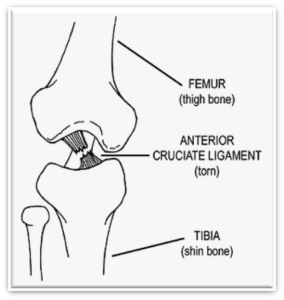
Although statistically female athletes are 5-8 times more likely to suffer and ACL injury, as we’ve seen from the likes of NBA superstars Derrick Rose, Ricky Rubio and Rajon Rondo, these injuries unfortunately can and will happen to even the most elite male athletes on the planet.ACL-284x300

To help raise awareness of ways to ‘bullet proof’ the knees and reduce the occurrence of ACL issues, I have declared this entire month #ACLAugust (follow me on Twitter and/or search this hash tag). I will post a 4-part video series this month on the Stronger Team YouTube channel that features exercises taught in ACL Injury Reduction 101.

Quick Facts:

  • Nearly 70% of all ACL injuries are non-contact and are the result of an improper landing or from a quick change of direction.
  • The ACL is located inside the knee and stabilizes the joint by preventing the shinbone (tibia) from sliding forward beneath the thighbone (femur). A hard twist or excessive pressure on the ACL can tear it
  • The cause of most ACL tears is a sudden, abrupt change in force to the knee. This can occur during a quick change of direction or when landing from a jump.
  • Female athletes are at a higher risk because of a wider pelvis and larger “Q” angle, greater incidence of knee valgus and foot pronation. NOTE: these are structural and genetic issues and can’t be addressed through training.
  • Additional factors that contribute to ACL injuries include a smaller hamstring to quadriceps strength ratio, poor recruitment of the hamstrings during landing, inappropriate jumping/landing mechanics and weak hip abductors.
  • Every basketball player on the planet over the age of 10 should participate in an ACL injury reduction program. Notice the word reduction. It isn’t possible to prevent ACL injuries (or any injury for that matter). But proper, consistent training can absolutely reduce the occurrence.

Here are 4 key pillars to a sound ACL injury reduction program:

  1. Improve ankle and hip mobility. The knee joint is designed to be stable. The ankle and hip joints were designed to be mobile. Allowing both the ankle and hip joints to go through a full range of motion during movement reduces stress on the knee. If the ankle (in particular), has a limited range of motion when landing from a jump, because it is either immobile or locked in a rigid ankle brace, the vast majority of the impact is redirected and absorbed by the knee. Barefoot exercises can be an excellent tool in strengthening the feet and improving the mobility in the ankles.
  2. Increase strength in the posterior side of the lower body (hamstrings & glutes). Running and jumping are fairly quad (thighs) dominant, so it is vital to target both the hamstrings and glutes (butt) when strength training. Both the hamstrings and glutes play a major role in protecting the ACL when landing from a jump and when planting and cutting. Some tips when strength training include using iso-lateral exercises when possible (one leg at a time), controlling the eccentric (negative, lowering) part of the exercise and always maintaining proper body alignment and form.
  3. Use proper footwork when decelerating, planting and cutting. Basketball is not a speed game. It is a starting & stopping game, a reaction game and a change of direction game. Incorporating acceleration and deceleration drills into the yearly training program is essential in preparing the body for the rigors of the game. A ‘T-Step’ or ‘Hockey Stop’ is an ideal way to safely and efficiently “put on the brakes” to plant and cut. Prior to planting and cutting, you want to quickly turn your hips and plant your outside foot perpendicular (90 degrees) to the direction you were going. For example, if running a sprint from the baseline to mid-court and back to the baseline, you would want to plant with your foot parallel to the mid-court line (thus perpendicular to the direction you will be running). This foot position will provide a strong braking mechanism for the knee as well as be the best position for a strong transition into the desired direction. It is important to keep your center of gravity low during each transition and in training, make sure you get an equal number of reps for each foot.
  4. Use sound landing mechanics. It is very rare a player injures their knee when jumping. It’s the landing that causes the problems! Players need to learn to land with their weight distributed along the power pads of their feet. They should not land on their toes or on their heels. They should allow the impact to be absorbed in their ankles, knees and hips (let it dissipate over 3 joints). An easy way to teach this is to practice landing barefoot on a soft surface. Use a verbal cue of a quiet landing or a soft landing. The key is conditioning a player to subconsciously land softly, quietly and on balance every time. Players should avoid a knocked knee’d position in both jumping and landing.

I am a huge advocate of going through a comprehensive, movement-based warm-up before all workouts, practices and games. I strongly encourage you to incorporate these 4 pillars in to each and every warm-up. That way you are working on ACL injury reduction techniques every day!

Alan Stein
http://www.About.me/AlanStein

  • « Go to Previous Page
  • Page 1
  • Interim pages omitted …
  • Page 7
  • Page 8
  • Page 9
  • Page 10
  • Page 11
  • Interim pages omitted …
  • Page 25
  • Go to Next Page »

Primary Sidebar

  • Twitter
  • Facebook
  • Linkedin
coachestoolbox
personaldevelopmenttoolbox
basketballplayerstoolbox
basketballtrainer
athleticperformancetoolbox
coachingbasketball

© Copyright 2026 Coaching Toolbox

Privacy Policy