By Stephen Shea, Ph.D. (@SteveShea33)
Editor’s Note The purpose of this post is to offer some ideas about applying these analytics to what you currently do and improve how you evaluate your offensive execution. You probably won’t be able to apply all of this, but hopefully you can use parts of it to help your players understand and measure how you want your team to play on offense.
I have included the tables as a way to add context to the points that Dr. Shea makes.
NBA offenses are evolving. The increased reliance on 3-point shooting gets the most fanfare, but there is more to it than that. Teams are restructuring lineups and redesigning plays in hopes of improving all facets of shot selection, counterattacking with speed, and moving the ball faster.
When analytics assess offenses, it’s always a question of efficiency. Efficiency is the ultimate goal, but it relies on both good strategy and proper execution. And execution requires talent.
Dr. Shea has coauthored two books on the subject of utilizing analtyical data in basketball. You can find out more about both books by clicking on the links or images of the book covers below.
Basketball Analytics: Objective and Efficient Strategies for Understanding How Teams Win

Basketball Analytics: Spatial Tracking

How does one evaluate scheme independent of efficiency? Doing so would be a means to better understand if recent Brooklyn or Philadelphia squads were adapting to the modern game even when their efficiencies were below average. In other words, it would be a way to see if these teams that were thin on talent were “playing the right way.”
At the other end, there are almost certainly talented teams that aren’t keeping pace with recent trends among NBA offenses. It’s the best teams that have the least incentive to change. Said another way, desperation tends to precede innovation.
But talent can override a suboptimal offensive design, and so, efficiency metrics blur systems’ flaws.
We look back at the last three NBA seasons, and with a heavy reliance on spatial-tracking data, offer ways to assess shot selection, ball movement and counterattacking. In the end, we aggregate these markers to see which offenses have been the most progressive.
Shot Selection
Shots at the hoop, from behind the arc and at the free-throw line are the game’s most efficient. The analytics are clear that teams should be building rosters and offenses with the intent of shifting a greater percentage of their shots to these attempts (where shots include trips to the free-throw line). To measure shot selection, we can look at just that—the percentage of a team’s shots that come from at the hoop, behind the arc or at the free throw line. (Again, a trip the free-throw line for two or three is considered a “shot.”)
Note that we’re looking at FGA and not FGM. This is a measure of shot choice and not efficiency.
Not surprisingly, Daryl Morey’s Rockets have had the three highest seasons in the last three years in regards to this metric. (All seasons are listed in the table below.) The highest such percentage was the 2017 Rockets at 84%.
Teams are trending towards better shot selection. After the Rockets, the next five highest seasons in this metric came from 2017. Six of the bottom seven came from 2015.
The league average has risen from 63% in 2015 to 65% in 2016 to 67% in 2017.
Ball Movement
The NBA’s abolishment of the illegal defense rule allowed NBA teams to help off the ball. Help defense limited the efficiency of isolation-driven offenses. The three-point line together with stricter whistles on physical play on and off the ball have provided an offensive counter-strategy. Teams that space with 3-point threats and quickly swing the ball force defenses into rotations that will free up a cutter to the hoop or a catch-and-shoot opportunity on the perimeter.
Shot selection metrics helps in the understanding of offensive spacing, but don’t directly get at ball movement. Two modern metrics constructed on spatial-tracking data do.
Seconds per touch is the average amount of time a player holds the ball before passing, shooting, drawing a foul, or turning the ball over. Quick ball movement leads to a lower average seconds per touch for the team.
In this metric Golden State is king. They’ve had three of the four best scores over the last three seasons.
The worst team in 2017 was Toronto. DeMar DeRozan doesn’t do much for the Raptors’ shot selection or ball movement.
Ball movement is good, but it’s often the specific action of stringing two swift passes together that generates great opportunities.
Secondary assists occur when a team makes two quick passes to a made shot. They are the so-called “hockey assists,” and an indicator of smart and rapid ball movement on offense.
Secondary assists per game are presented with seconds per touch in the table below. Golden State had the three best seasons. Beyond Golden State, this is an area where San Antonio, Atlanta and Boston scored well.
(Secondary assists are linked to efficiency. It would be better to use secondary assist opportunities—two quick passes to a FGA—but this is not publicly available.)
Counterattack
It’s easier to score when the defense isn’t ready. Teams that can get out in transition will be rewarded with better opportunities.
Leicester City shocked the English Premier League with a counterattacking style in 2016. While not quite as shocking, Golden State has been the NBA’s equivalent in terms of scheme.
When Golden State gets possession, they counter fast. In 2014-15, 36% of their offense came between 2 and 9 seconds on the shot clock. That led the league, where the average was 26%. In total, the Warriors outscored their opponents by 1062 points (or 13 points per game) in that stretch of the shot clock. In the rest of the time, they were outscored by 229 points.
When teams attack fast, it also means that they usually get a shot up before all their players get down the floor on offense. This has the added benefit of providing good position for preventing opponents’ transition. The offensive and defensive strategies complement each other, and the teams that execute it well will get out and score quickly while forcing long and difficult halfcourt possessions on their opponents.
A good measure of the extent to which a team attempts to counterattack is how fast they move on offense relative to defense. The table below displays the average speed of a player for the given team divided by the average speed of a player on defense only for each team.
Modern Offensive Strategy Score
The four statistics detailed in the previous three sections are not independent. Rather, the ideal modern offense will get out in transition with quick passing, and in doing so, create open looks from favorable locations.
We standardized the four statistics and then summed them. The result, which we call Modern Offensive Strategy Score (MOSS), is displayed below.
| Rank | Year | Team | GoodShot % |
Sec per Touch |
2ndAst per Game |
RelO Speed |
MOSS |
|---|---|---|---|---|---|---|---|
| 1 | 2016 | Warriors | 0.72 | 2.39 | 9.68 | 1.13 | 10.27 |
| 2 | 2017 | Warriors | 0.72 | 2.43 | 9.65 | 1.12 | 9.19 |
| 3 | 2015 | Warriors | 0.66 | 2.41 | 7.91 | 1.13 | 7.32 |
| 4 | 2017 | 76ers | 0.72 | 2.42 | 5.46 | 1.12 | 5.60 |
| 5 | 2016 | Hawks | 0.72 | 2.49 | 7.29 | 1.09 | 4.65 |
| 6 | 2015 | Spurs | 0.62 | 2.52 | 7.51 | 1.11 | 4.18 |
| 7 | 2017 | Celtics | 0.74 | 2.56 | 6.84 | 1.08 | 3.76 |
| 8 | 2017 | Nuggets | 0.73 | 2.74 | 6.00 | 1.11 | 3.65 |
| 9 | 2017 | Nets | 0.75 | 2.55 | 4.95 | 1.10 | 3.60 |
| 10 | 2016 | Celtics | 0.67 | 2.46 | 6.06 | 1.10 | 3.40 |
With all of the talent in Golden State, the intelligence in their offensive design is often overlooked. They have been playing a progressive style of basketball for several seasons, and they’ve blown out the field in MOSS.
The Lakers under head coach Byron Scott appeared oblivious to how the game was evolving, but new coach Luke Walton, hired from Golden State’s staff, has caught the team up in a hurry.
Tom Thibodeau hasn’t had the same impact in Minnesota.
MOSS is constructed with a focus on scheme over execution, and so, it should not correlate with offensive efficiency. In fact, as discussed above, it’s often the least talented teams that are the most innovative.
To understand if this modern playing style is effective (to teams other than Golden State), we have to compare teams to themselves.
NBA offensive rating is trending up in recent years. Across the league, it has risen from 105.6 to 106.4 to 108.8 in the last three seasons. MOSS has been trending with it. Average MOSS has gone from -0.50 to 0.10 to 0.40.
Among the 30 NBA teams, 25 saw an improvement in ORtg from 2016 and 2017. There were 17 teams that saw an improvement in MOSS, and all of those saw an improvement in ORtg. This means that among the 13 teams that saw their MOSS decline, 5 saw their ORtg follow.
Among the 17 teams that saw an improvement in MOSS, the average change in ORtg was +3.1 points per 100 possessions. Among the 13 that regressed in MOSS, the average change in ORtg was +1.3.
Final Thoughts
As the game evolves, it can be helpful to have means to assess the extent to which organizations are keeping pace.
MOSS indicates that Golden State, Philadelphia, Boston, Denver, Brooklyn, and Houston employ progressive offenses, even if some of those teams don’t yet have the talent to capitalize.
About the Author, Stephen Shea
Stephen Shea is an associate professor of mathematics at Saint Anselm College in Manchester, NH. He earned a Ph.D. in mathematics from Wesleyan University in Middletown, CT, and a B.A. in mathematics from The College of the Holy Cross in Worcester, MA. His mathematical expertise and publication record is in the areas of probability, statistics, dynamical systems, and combinatorics. For years, he has been applying his abilities in these areas to study professional and amateur sports.
Stephen is a managing partner of Advanced Metrics, LLC, a consulting company that provides analytics solutions to basketball and hockey organizations. At Saint Anselm College, he runs a course on sports analytics. His sport writing has been featured in the Journal of Quantitative Analysis in Sports, Psych Journal, the Expert Series at WinthropIntelligence.com, and the Stat Geek Idol Competition for TeamRankings.com.
Stephen has coauthored two books on the subject of utilizing analtyical data in basketball. You can find out more about both books by clicking on the links or images of the book covers below.
Basketball Analytics: Objective and Efficient Strategies for Understanding How Teams Win
Basketball Analytics: Spatial Tracking
The Ultimate Win
Written and Submitted by Adam Bradley
Founder & President, Lead ‘Em Up
Coaches want to win and in many cases, coaches ‘need’ to win.
The pressure, desires and urgency are all there and because of that, coaches make decisions that’ll impact today. Tomorrow isn’t guaranteed. We need to win now.
Unfortunately with leadership training, the process is cumulative. You see growth over time, little by little and the “time” will vary from player to player.
Coaches pour into their players despite the possibilities of never seeing and personally experiencing the fruit of their labor. Sometimes the light doesn’t go off for the player until a year after they’ve left their program. Perhaps longer. That’s not always the case but in many cases it is.
If you implement a full-court press, you’ll be able to see some form of resemblance to the press by the end of practice. On the flipside if you’re coaching your player to lead and live a certain way, that message may take longer to be received. But should we not still teach it?
The ultimate win is not on the scoreboard; it’s in the lives you impact. It’s in creating tomorrow’s leaders. Our job as coaches is to help produce champions on and off the court. It’s not always easy to do because of the pressure to win on the scoreboard, but it’s well worth the time and effort.
Here are 3-tips to help allow you achieve the ultimate win:
1 – Recognize small things as big things
We often overlook many of our successes in leadership development because they don’t present themselves in large ways. We find ourselves looking for that Hollywood scene where the team is in trouble and our quiet, reserved player breaks out of their shell, rally’s the team and becomes the heroic leader that saves the day. When we fail to see that, we think we’re not making progress. That’s not how it works.
Your player’s growth in leadership occurs in small ways. Remember, it’s cumulative, it’ll start small and it’ll be a series of small things that when put together show a major change and establish momentum.
For example, this past Spring I spent the season as the leadership coach on a local Varsity baseball team. One exercise we do in Lead ‘Em Up is an exercise called “Head Down, Look Up – Race to Erase.” It’s an exercise designed for our players to help each other’s confidence and better rebound from their mistakes.
The situation was this: it was the bottom of the 5th inning and we were up 8. In Maryland high school baseball if you’re up 8 after 5 you win. We put our star pitcher in to close it down. Unfortunately we allowed 3 unearned runs that inning after the centerfielder misplayed a fly ball. At the end of the inning, the pitcher started making his way to the dugout when right before he got to the first base line, he stopped and turnaround to greet the centerfielder and give him a fist pump and tap on the helmet simply telling him “it’s all good, we’ve got this, lets keep going.” The pitcher exemplified exactly what we had discussed a few days priors about “racing to erase” any frustrations, negative emotions in our teammates when they make a mistake.
[adinserter name=”Basketball in article display ad 2 rebecca”]
I can promise you, NO ONE in the entire park that day saw what I saw, despite the magnitude of the situation. Here was a player who had many challenges throughout the year, take a moment to turn their focus off of them, recall something he was taught and serve his teammate in a major way. He showed control over the moment, not allowing the moment to have control over him. He didn’t possess this ability early in the season.
This behavior was praised and repeated by the pitcher in future games. This behavior was also repeated by the teammate who received the embrace from his pitcher.
This small thing… was actually a BIG thing. When you’re coaching your players in more than just the X’s and O’s, you’re winning; you just have to look harder for the wins.
2 – Hold onto the sentiments from alumni
Most youth and high school players have a difficult time communicating their feelings which means they don’t communicate their appreciation for what you’re doing, enough. I see time and time again alumni come back to the program a few years removed with a much greater sense of maturity and communicate their appreciation.
Your players come back and remarkably remember small details of things you said or did in practice and games. They begin to show their gratitude for what you did for them and the impact and experience you provided. Every coach I know loves receiving this feedback and almost always comments that they “wish they knew the player cared this much back then.”
Don’t glance over this. This is important. Your players felt what you were doing, at the time you were doing it, despite not having the maturity to communicate it. You pouring into them is filling them up. In a young players world, there are a small number of individuals who have the ability to influence over them, you’re one of them. Don’t take that responsibility lightly.
3 – Remember your journey
I am so thankful so many coaches in my life were willing to make that sacrifice and intentionally try to develop me in more ways than just the game. Think back to your journey; did coaches pour into you and did it take some time before you truly “got it?” I’d imagine so.
I wish I could’ve been the person I am today back then so they wouldn’t have felt like they were spinning their wheels to get me going. I’m just thankful they kept spinning.

Coaches – teaching the game and X’s & O’s is critical and essential to your success. You teaching them life, leadership & character is essential to their success. Let’s be thankful we “get” the opportunity to be one of the influencers in our players’ lives.
Have fun and Lead ‘Em Up!
You can find out more about the program and Sign-up to receive a free preview of a weekly session you can use with your team today at this link:
Lead ‘Em Up
Eight Principles for Sound Offense
By Alan Peel
Assistant Varsity/Junior Varsity Boys’ Basketball Coach, Bishop Miege High School
Owner/Operator, www.coachpeelbasketball.com
A major part of success in offensive basketball is having sound offensive principles that allow your team to maximize the efficiency of their possessions. Legendary coach Dean Smith said, “The objective of any basketball offense is to score as often as possible on each possession.”
Much has been said about analytics and its use in basketball. When analytics are applied to team play in basketball, especially offense, there are eight principles for sound offense that are proven to be effective.
In presenting these eight principles for sound offense, I will ask questions. The reason being is to get you to think about your team’s own offense. I have also provided some additional thoughts of my own to help you think about each question.
I should note that each of these eight principles for sound offense came from legendary coach Tex Winter, the inventor of the famed Triangle Offense. While your team might not run the Triangle Offense, the principles are sound and can be applied to just about any offense.
- Penetration: Does the offense penetrate the defense?
The most important thing that your offense can do is to attack the free throw lane. It has been statistically proven that teams that have an offensive possession with the ball getting into the lane see increases in field goal percentage, trips to the free throw line, fewer turnovers, and better overall offensive efficiency.
Whether you are using the dribble or the pass to penetrate the lane, the ball should enter the paint at least once every offensive possession. Defenses always collapse on lane penetration. Teams that react slowly give up easy shots at the rim. Defenses that react quickly to penetration are ripe for shots from behind the three-point line.
- Spacing: Does your offense have good spacing?
A well-spaced offense has the ability to make quick passes from player to player while also being able to keep from being trapped by the defense. A spaced-out defense becomes less effective than a defense that is able to stay close with help close to the ball.
If a pass has to be made with extra air under it, you are too far apart. If two or more defensive players can easily guard one player, chances are you are too close together.
The ideal spacing for any offense is 15 to 18 feet.
- Offensive flow: How seamlessly do you flow from defense to offense?
When your team’s defensive possession ends, how easily do you go from defense to offense? Teams that utilize the fast break have the best opportunity to score more points, shoot a higher percentage, get to the free throw line more often, and are much more efficient than teams that don’t run.
An ideal offense flows from defense to offense instantly and is able to get up the floor quickly. A team with a well-organized break is able to score quickly and get high-percentage shots.
- Ball and player movement: Does the ball and do your players move with purpose?
The two worst kinds of movement are no movement and movement for the sake of movement. The first one is obvious while the second one accomplishes nothing.
Players who don’t move are easier to guard. A ball that does not move gives the defense a break and allows them to get properly set or stay set.
Players who move without purpose do nothing to help the offense score. Passes, dribbles, and cuts merely for the sake of aimless movement accomplish nothing.
Teams that have players who move with a purpose create opportunities for themselves and their teammates to score. Teams that are able to move the ball with the pass or dribble with a purpose are the ones that score more points and break down defenses more easily.
Effective passing is accomplished with good spacing and movement. Teams that change sides of the floor at least twice in a possession have dramatically better offensive numbers than teams that don’t. Teams that pass the ball into the post are better offensive teams than those that do not.
Dribbling is becoming a more-utilized offensive weapon thanks to the growing popularity of the dribble-drive motion offense. However, players still tend to dribble in the same spot as soon as they catch the basketball. This bad habit must be broken early in the season and ball toughness must be developed.
Generally speaking, the dribble should only be used under the following circumstances: to attack the basket, to improve a passing angle, or to avoid a closely-guarded five second count. It should NEVER be used to dribble in the same spot repeatedly while waiting for pass or scoring options to develop.
- Multiple options: Does any player with the ball have multiple options?
As someone who has a background in scouting, a player who has only one option on a play is part of an offense that can be easily scouted. Players who are able to use more than one option make their offense more difficult to scout.
Every offense should have three main options for it to be effective: shot, post feed, ball reversal.
- Offensive rebounding and defensive balance: Do you have the ability rebound AND get back on defense to stop transition baskets?
When the shot goes up, there should be players ready to rebound the basketball and players ready to get back on defense to stop a potential fast break. Offensive rebounds provide an opportunity for greater scoring chances. On second and third shots, scoring efficiency and shooting percentages improve.
Likewise, good transition defense takes away scoring chances from opponents. Teams that are forced to play half-court offense are not as efficient in scoring as teams that have the opportunity to fast break.
To accomplish this, you need to determine which of your players should crash the offensive glass while also determining who needs to get back on defense to prevent a transition basket. Against teams that like to run, you might find yourself sending two to the boards and dropping back three. Against teams that are not inclined to run a fast break, sending three to the boards and dropping two might be more ideal.
- Versatility for players: Does your offense give your players the opportunity to play more than one position?
In today’s era, positionless basketball is becoming more and more prevalent. Teams are trying to find ways to position post players facing the basket out on the perimeter while also looking to post up guards. This kind of versatility is something that puts defenses in a bind.
If an offense has players that can interchange positions, you have the ability to get a defensive mismatch. Typically, guards do not guard players in the post while bigs do not tend to guard on the perimeter. Offensive inversion of this kind creates headaches for players and opposing coaches alike.
- Talent utilization: Does your offense utilize the talents of individual players?
Not every team has an offensive player the likes of Michael Jordan, Magic Johnson, Larry Bird, LeBron James, James Harden, Russell Westbrook, Kevin Durant, or Stephen Curry. However, what if you had an outstanding player on your team? How would you utilize this player?
The offense must fit your personnel and your personnel must fit your offense. With individual players who have unique skill sets, you have to find a way to maximize their abilities within your offense or find an offense that works better for them.
Likewise, players who do not have the skill set or the talent to play in your offense must also have adjustments made for them. They might not be the best scorers, rebounders, or passers, but they can find something to do that can help your team on offense.
To make this work best, start by figuring out what they do best first. Once you establish that, get them to do that in your team’s offense before trying to find ways to expand their game to do more.
Conclusion
For those coaches who answer “yes” to all eight of these questions, you have something special with your offense. If there is something missing, you might want to address it and see if you can add it into your offense without sacrificing the other eight principles for sound offense.
Dana Altman Spread Elbow Hand Off
Today’s post contains two quick hitting plays that you can run against man to man defense out of a spread alignment.
Adjust these sets to fit your players and philosophy and/or take bits and pieces to combine with what you already run.
The plays are from The Encyclopedia of the Spread Offense Playbook assembled by Chris Filios.
It is combined with the Best of Special Situations as this week’s featured playbook bundle. The playbook contains 210 basketball plays from 40 different NCAA teams.
You can find out more about the playbooks at this link: Best of Special Teams & Encyclopedia of the Spread Offense
You can make adjustments to the fakes, the hand offs, or have 5 keep the ball and drive him or herself.
Diagrams created with FastDraw
Dana Altman Spread Elbow Hand Off
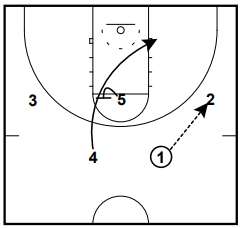
Spread set.
1-4 are interchangeable pieces.
1 passes to 2.
5 back screens for 4 to ball side block.
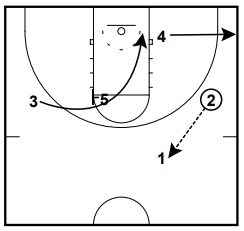
4 fills out to corner.
5 sets shuffle screen for 3.
3 curls screen to ball side block.
2 passes to 1.
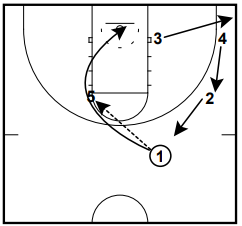
1 passes to 5.
1 cuts off 5.
5 fakes hand off. (If 1 is open, you can make the hand off instead of fake)
3 fills out to corner.
2 and 4 fill up.
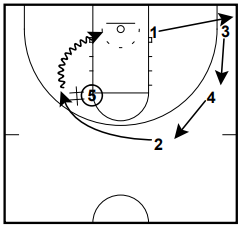
2 cuts off 5 for hand off.
If it is not open.
1 fills out to corner.
4 and 3 fill up.
Brad Underwood Spread Stagger Curl
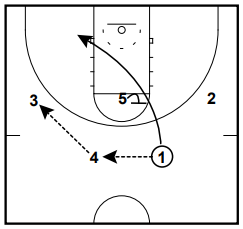
1 reverses ball to 4.
4 swings to 3.
5 back screens 1 to ball side block.
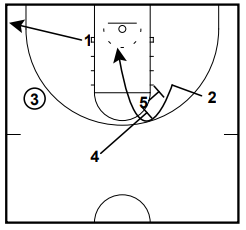
4 and 5 stagger away for 2.
2 curls screen to rim.
1 fills out to corner.
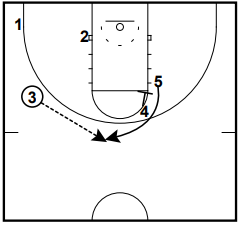
After 2 curls off screen, 4 pins down for 5 to top for jumper.
The plays are from The Encyclopedia of the Spread Offense Playbook assembled by Chris Filios.
It is combined with the Best of Special Situations as this week’s featured playbook bundle. The playbook contains 210 basketball plays from 40 different NCAA teams.
You can find out more about the playbooks at this link: Best of Special Teams & Encyclopedia of the Spread Offense
Sean Miller Defensive Notes
This post came from Army Men’s Assistant Zak Boisvert’s PickandPop.net site.
The site has a lot of quality coaching ideas and information. Definitely worth a look!
Sean Miller – University of Arizona (Nike Clinic, Phoenix, Arizona). Sent to Zak by Ash Arnott
DEFENSIVE PHILOSOPHIES
o Times are always changing.
o IMPORTANT when developing your defensive philosophies: “How you teach it, how you build it”.
o Question to ask yourself: Are you playing the way you have “built it”.
o The way we track success at University of Arizona is:
• Points per possession;
• FG% Defense;
• 3FG% Defense (Good teams are vulnerable) & attempts;
• Defensive Rebound %;
• Fouls – We don’t want to foul.
o 80-20 Rule – We use the same defensive principles 80% of the time, we leave 20% for adjustments.
o For Example: We don’t switch ball screens, we may need to make the adjustment during the game and start switching ball screens.
o DO WHAT WE DO!
CLOSE OUTS
Start every practice with close outs:
o Big step, we want to cover ground – Chop your feet, while chopping feet your butt goes down and your hands go up.
o Hands ! Elbows bent (makes it easier to get hands to passes, dribble and shot).
o One hand challenges shot.
o The distance the defender should be from the shooter = Reach out & touch him.
The defenders hand should not go past his opponent’s body; this is how defense fouls (too close to offensive player). Every player will have different distances due to his or her arm length.
o If CONTACT is made = Hands UP & OUT
ON FAKES:
o Back foot leads the way – JUMP BACK.
o Fake = Chop back, when ball is brought back to shooting position = Chop forward. Arms
are active at all times.
o We don’t get beat to the outside of our defense (baseline drive in this case)
= CARDINAL SIN.
Diagrams created with FastDraw
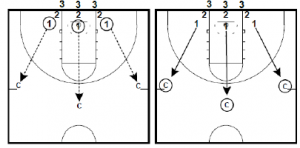
DRILL
Vegas Closeouts
• Lines start on the baseline. (Can have managers, coaches, other players at three spots around the three point line)
• First in line step out – Pass to the coach.
• Close out – Using our closeout rules.
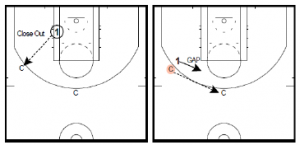
Progression:
• Bring it back to one line.
• Have player on wing – Coach at the point.
• Defender works from “GAP” position to Closeout.
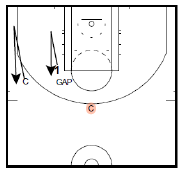
Progression:
• Can have Wing player cut up and down the sideline – Making the defender have to move.
• Defender needs to continue to see MAN & BALL, and adjust his/her defense when the ball is in the air.
BALLSCREENS
o We believe in keeping it simple with the way we defend our ballscreens.
o It can become confusing for a player trying to remember how to defend ball screens. An athlete can get lost trying to remember how to defend middle, wing, step up screens and remembering what defense is needed with each player; over, under, double or switch.
o We DO NOT go UNDER the ball screen unless it’s a STEP UP SCREEN. (Remember good teams are vulnerable to good teams shooting high 3FG %).
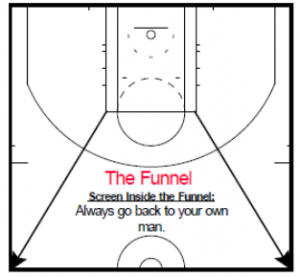
o THE FUNNEL.
If a screen is inside the funnel – Go back to your own man.
Keys
1. We want to be tough on the ball. Most important when defending the ballscreen.
2. We don’t need to bully through the ballscreen – It never ends well (FOULS). Don’t get hit & chase the ball handler.
3. Screener Defender – LOUD, EARLY & CONTINOUS.
The athlete needs to call the screen loudly, needs to be called early, and needs to continuously communicate that the screen is coming.
4. All 5 guys on the court help defend the ballscreen ! You see a ballscreen, sprint to it.
“JUMP”
o Vs. Pick & Pop
o We jump side ballscreens or a middle screen by a shooter.
o It allows us get back to a shooter quicker.
SCREENER’S DEFENDER
o Is loud, early & continuous. Call “JUMP, JUMP, JUMP”
o Match screener’s feet (VERY IMPORTANT).
The wrong angle of defenders feet can result in offensive player splitting the screen, or penetrating right past defender to the basket.
o “JUMP” = Take a big step out (Remember we are matching the screener’s feet) and then slide with high hands (No direct penetrations to the basket).
o Mindset – I am not fouling.
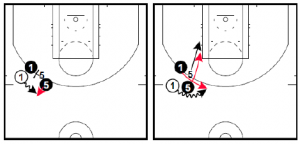
ON BALL DEFENDER:
o Tough on the ball
o No baseline drives.
o Go over the screen and under your teammate. (Very important)
IF SCREENER IS A SHOOTER:
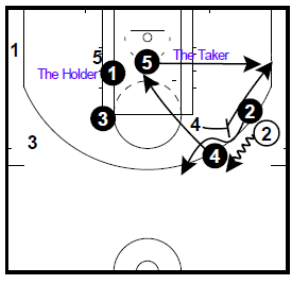
o “X” Action.
o When guarding a ball screen the low man (in this case the 5) and the screener’s defender (in this case the 4) switch the men they are guarding. The bottom defender must be verbal and tell the man guarding the ballscreen where to go.
o The player X-ing out is the “The Taker”.
o The GUARD helping the posts by staying in front
of the opposite post is “The Holder”.
o The Screeners defender needs to sprint back as quickly as possible and defend the post (Defend the post by your ‘rules – ¾ front, full front etc.).
“PLUG”
o Vs. Roller
o We plug screens that are set in the middle of the floor
Ash Arnott
o It allows the defender to get back to the roller quicker.
SCREENER’S DEFENDER
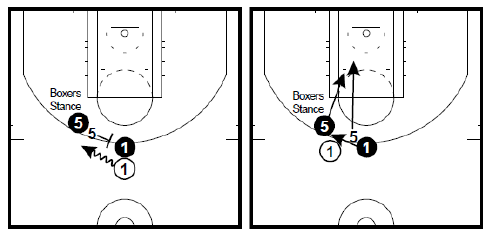
o The defender who “PLUGS” is in a boxer’s stance – Outside foot and hand up – Active.
o Doesn’t let the roller get below him. (Kaleb Tarczewski did a great job for us).
o Match the screener’s feet.
o Stop the ball – Your job is to contain and wait till the guard can get back to man, then you worry about your man.
You can read the rest of the post and download the notes and diagrams at this link: Sean Miller Arizona Defense
The Relational Leader
Coquese Washington: The Relational Leader
By Dr. Cory Dobbs
COQUESE WASHINGTON
HEAD BASKETBALL COACH PENN STATE, 2007 – 2019
Currently assistant at Oklahoma
In his best-selling book, First things First, organizational expert Stephen Covey opens with an essential leadership question: “If you were to pause and think seriously about the ‘first things’ in your life—the three or four things that matter most—what would they be?”
Coquese Washington, assistant women’s basketball coach at Oklahoma, has thoughtfully answered this demanding question. As a coach of a major college women’s basketball program, a former professional player and collegiate student-athlete, Washington has pulled resources from her vast experience to bring together a set of principles that, while not necessarily complex, are very practical. Stressing a family approach to team building and a leadership focus on excellence, Washington is clear on her “first things.”
For Washington, relationship building is exalted as one of the most important factors in driving performance and ultimately the success of the team. In the interest of putting first things first, Washington establishes the relationship building process at the very beginning—recruiting the right people to join her program.
“Relationship building starts right away. For us relationship building begins in the recruiting process. We put a lot of effort into identifying what kind of players we can coach well. There’s a certain type of player I can coach well, given their temperament, personality, and such things as what’s important to them. We try to do a great job identifying players that can come into the Penn State culture and thrive in the larger community—and in our women’s basketball community. It’s imperative that we bring in players that are a good fit for the culture here.”
These days the demands on leaders can be crushing. To survive, many leaders simply look to fill positions with people qualified to perform the work, not necessarily a fit with the organization’s culture.
The problem with hiring only for skills and ability rather than for fit with culture is illuminated in the dynamics of the team building process. When personalities clash, rather than click, and the culture of your team won’t inspire cooperation and collaboration, you’re likely to end up with a dysfunctional team.
“We have a humorous way of looking at recruiting to our culture. We say we don’t like to manage drama, so we don’t recruit drama.”
Ultimately, team dynamics will determine the environment in which work happens, and to a large extent, the quality of a team’s results. For success to be experienced everyday interactions must meet a test: Is the way we communicate together helping or hindering the team’s ability to make progress?
“For us, relationship building—developing relationships—is every bit as important as the game.”
It’s evident, that for Washington, it is the quality of relationships woven into the fabric of teamwork that makes all the difference. The inherent tension that exists as individuals work to become a team is accounted for and used to develop positive and enduring relationships.
“For me communication is about connecting and building strong relationships. To connect with my staff and my players I try to communicate in a manner that is respectful and honors who they are. It’s important to be respectful and honorable even when I disagree or we have different viewpoints.”
Washington’s family approach reduces the complications of bringing together unique personalities and skill sets. At Penn State, it is the unity that multiplies the strength of the individual. The team lives together, works together, and wins together. One thing is clear, unity matters.
A DEEPER LEVEL OF LEADERSHIP
There are basically two ways to execute one’s leadership practice. One way is that of an order-giver order-taker exchange. In this relationship the employee serves the interests of the boss. The other way to execute the practice of leadership is for the leader to serve her followers. Either way of leading requires aligning actions and values. The difference lies in the values the leader is aligning.
“Being a leader to me means helping others achieve their goals. It means being a resource—providing resources or knowledge to help others reach their goals and dreams. Sometimes it’s setting a vision for the person, and other times it might be serving as an example.” “You can serve as a model, demonstrating how to do things. I learned a great deal from Muffet McGraw (women’s basketball coach at Notre Dame). She provided me an example of how to be a working mom in this business. We didn’t sit down and have meetings on how to be a mom. I watched how she lived it. She provided an example for me to model.”
Relational principles of leadership do not depend on what sector you work in. In today’s world of work, people want to matter. They want leaders to improve the team’s performance while raising the quality of life inside the team. Sport psychologist and leadership writer Jerry Lynch says, “To be a good coach, mentor, and teacher you must be a good student and learn what needs to be known from the student (the athlete) in order to teach them what they must learn.” Lynch also says that “the way to be a success is not just to win games but to win relationships.
[thrive_leads id=’36827′]
“I can coach and mentor better when I know the person—know who they are. I want to get to know them. I’m spending a lot of time with them because I want to know what’s important to them. What makes them laugh and cry, and what drives them.”
To anyone who cares to lead, whether as coach or a corporate manager, it should be obvious that building positive relationships is one of the foundations for building high-performing teams. Too often we ignore our common sense when it comes to leading people. If you want high performance, high commitment, and high involvement, put people first. By developing deeper levels of relationship with those around us, we create an encouraging environment that shapes our future in a healthy and positive way.
“So when we get into a rut in practice or a game, I’m going to get on them. I’ll be very demanding—but never demeaning. I will express displeasure at the lack of effort or focus or communication on the court. Because we have a strong relationship they trust me, and I trust that they’ll take my coaching as a way to correct problems and get better. Again, I’m demanding, not demeaning.”
Washington’s commitment to relationship building is highlighted by her willingness to time to get to know her followers and, likewise, them getting to know her.
“We invest a lot of time in one-on-one meetings. We do this so the players have an opportunity to give me their feedback in a safe environment. I try to be very mindful of providing them an opportunity to give their opinion without any judgment. Relationship building is something I’m always looking to do.”
LIVE TOGETHER
Management consultant and organizational expert Margaret Wheatley advises, “Relationships are all there is.” She says, “We humans want to be together. We only isolate ourselves when we’re hurt by others, but alone is not our natural state.”
In Western societies, the urge to set one’s self apart from other, to be different, is a compelling force. However, this sets up a familiar contradiction of human nature. That is we want both to belong and to stand out from the crowd.
To say that living together is a challenging endeavor does not undermine the desire to live together. People will act in their self-interest until they see that cooperation with others is beneficial. Teaming together, then, demands cooperation. And the nature of cooperation is built on trust. Washington knows the way to build a high-performing team is through trust.
“Trust for us is a big word. We talk about it frequently. I ask my team all the time, “Do you trust me?” It goes back to the relationship we built before they ever stepped foot on the campus. They know they can trust me, and because they trust me they allow me to coach them.”
Trust starts when you extend it and communicate openly with your team.
“I frequently tell our team, you can count on me to be honest with you all the time and tell you the truth. Because they know me and trust me, they can make the appropriate and necessary decisions and changes.”
“We have some really honest conversations. Players tell us what they want, together we locate where they are and then discuss what we have to do to bridge the gap to get them where they ultimately want to go.”
You also need to make sure your employees are able to build trust with one another. You do this by establishing a social climate of respect.
“I try to be respectful in my communications at all times. I’m working on becoming a better listener. I think it’s important to understand what others are saying, but just as importantly what they mean. And what they mean by what they’re not saying.”
“I tell our players that how you talk to each other matters. The words you choose to use in conversations with each other really do matter.”
“Words have a huge impact—Huge! Trust for us is a big word. We talk about it frequently. I ask my team all the time, “Do you trust me?” It goes back to the relationship we built before they ever stepped foot on the campus. They know they can trust me, and because they trust me they allow me to coach them.”
Trust starts when you extend it and communicate openly with your team.
“I frequently tell our team, you can count on me to be honest with you all the time and tell you the truth. Because they know me and trust me, they can make the appropriate and necessary decisions and changes.”
“We have some really honest conversations. Players tell us what they want, together we locate where they are and then discuss what we have to do to bridge the gap to get them where they ultimately want to go.”
You also need to make sure your employees are able to build trust with one another. You do this by establishing a social climate of respect.
“I try to be respectful in my communications at all times. I’m working on becoming a better listener. I think it’s important to understand what others are saying, but just as importantly what they mean. And what they mean by what they’re not saying.”
“I tell our players that how you talk to each other matters. The words you choose to use in conversations with each other really do matter.”
“Words have a huge impact—Huge power. So why don’t we use words to uplift, empower, and encourage one another. And not use words to belittle, demean, or tear people down. We have that choice every time we speak.”
“So if we choose our words wisely when communicating with the one’s we love, care about, and spend time with—we’re going to build a heck of a team.”
Rarely can you get the results you want without trust. Yet, it takes a while to build trust. Trust is about how people relate to each other. But it’s also about the outcomes of relationships.
“These young women have to be nurtured, taught how to become adults. We show them how to become championship students, players, and championship women. We want them to become leaders who can go into their communities—no matter where it is—and make a difference.”
WORK TOGETHER
It happens all the time. Teams with members deeply committed to each other out perform teams with superior talent. For these teams, the whole greatly exceeds the sum of the parts
What brings these teams victory is that team members are selfless—focused on doing what’s best for the team. They work together to win, submerging ego, statistics, and other personal gain for the opportunity to win as a team. The coach is at the center of this; getting everyone and everything into alignment, ensuring that the team and its members get the support they need.
“To compete for championships we don’t need someone secretly harboring resentment toward a teammate. We don’t want a player privately thinking ‘I hope she gets hurt’ or ‘I hope she has a bad game so I can play.’ We want to take that out of the mix.”
“With my staff I want companionship and camaraderie. A cooperative group that doesn’t care who gets the credit. We’re not into titles. We all roll up our sleeves and get the job done.”
Shared values build trust and link team members together. They establish a team’s identity and support its mission. Shared values provide guiding principles that everyone on a team can aspire to put into practice every day. When team members are truly in alignment with one another they create a culture where everyone can go home at night knowing the team is healthy and in good shape.
“We want harmony and camaraderie in the locker room. We don’t want players feeling like they have to compete with someone else. When that happens we don’t develop the chemistry we need to develop a competitive team.”
What do leaders have to do differently to build and lead effective teams today? It’s the smart coach that takes advantage of the individual strengths of her players to develop a strong team. A wise leader takes stock of what she has and develops and adjusts her plans accordingly.
“We really put a heavy emphasis on the fact that players are not competing with one another. We want them competing against their best effort and what they’re capable of doing.”
“We recruit complementary pieces. Everybody has a role. Players are recruited for a specific purpose. They are never in competition with anyone on the team. They’re always competing against themselves, regardless of the position they’re playing. They don’t compete against each other; instead they complete each other.”
WIN TOGETHER
The success of today’s best business leaders depends not only on inspiring and engaging employees, but finding ways to guide team members into powerful and productive relationships; the kind of relationships where one plus one equals three.
Rather than simply issuing commands and asserting power, outstanding leaders utilize influence to gain commitment and agreement. Further, leaders like coaches, figure out how to build the next level of capability. They do this by connecting team member aspirations to opportunities for development. They know how to enable and support individual and team growth—and they make both enjoyable.
Today, you have to unmask yourself to your people in ways leaders never had to before. People want leaders that demonstrate real- life vulnerabilities while relating in an authentic manner. In the past leaders were formal and distant, removed from their people by a hierarchical-based facade.
That’s changed: your employees expect to relate to you in a more informal, egalitarian way—kind of like a family.
“A core value for us is excellence. We strive for excellence in everything we do. Another core value is family. I don’t have a Penn State basketball family and a personal family. We’re all one big family. My children come to practice and travel with the team—as do my mom and my husband. Family is really important to me. We operate as a family. We care about each other as family.”
A recent study conducted by the Center for Creative Leadership sought to identify what distinguishes an effective leader from an ineffective leader. After carefully sifting through mountains of data the CCL found one primary difference: effective leaders truly care about their people. The most effective leaders are adept at showing they care by listening, publicly expressing positive emotions along with a deeper understanding and acknowledgement of how others are feeling.
“They know what to expect from me. They know that what happens on the court does not impact how I feel about them and care about them off the court. There’s nothing they can do on the basketball court that can cause me to love them less.”
Washington, like the effective leaders in the CCL study, understands that caring is best done one-on-one. This means knowing what each member of your team needs to make her feel valued, appreciated, and unique. Caring is a highly personal thing. It’s different for each individual.
“I challenge the players all the time. I can do this because I know they’re goals and dreams. They allow me to challenge them.”
“We tell our players that the responsibility of earning playing time is on them. Tell me what you want—where you want to go—and we will help you map out the road to get you there. Then you need to put in the time and effort. You’ve got to decide if you’re willing to put in the work to get where you want to go.”
People want to work for leaders they admire. At the root of this admiration is showing people you care about their insights, their thoughts, their opinions, and appreciate all their sacrifices for the team.
“It’s important that we give the players opportunities to give their opinions and share their thoughts. We ask frequently, if not daily, what they think of things.”
“In our team meetings we ask what they think. I try to validate and honor their perspectives, even if I disagree.”
“I get feedback when I make decisions for the team, for the program. Some might be minor decisions—others major. I give them the opportunity to find their voice. Not only to speak up, but to listen and negotiate and compromise. These skills are critical to the development of a championship team.”
Effective leaders create strong cultures by putting people first. They realize that the path to success boils down to deep, close, and trusting relationships creating competitive advantage through people and relationships. This is the key to winning in basketball and in business. And this is Coquese Washington’s playbook for victory.
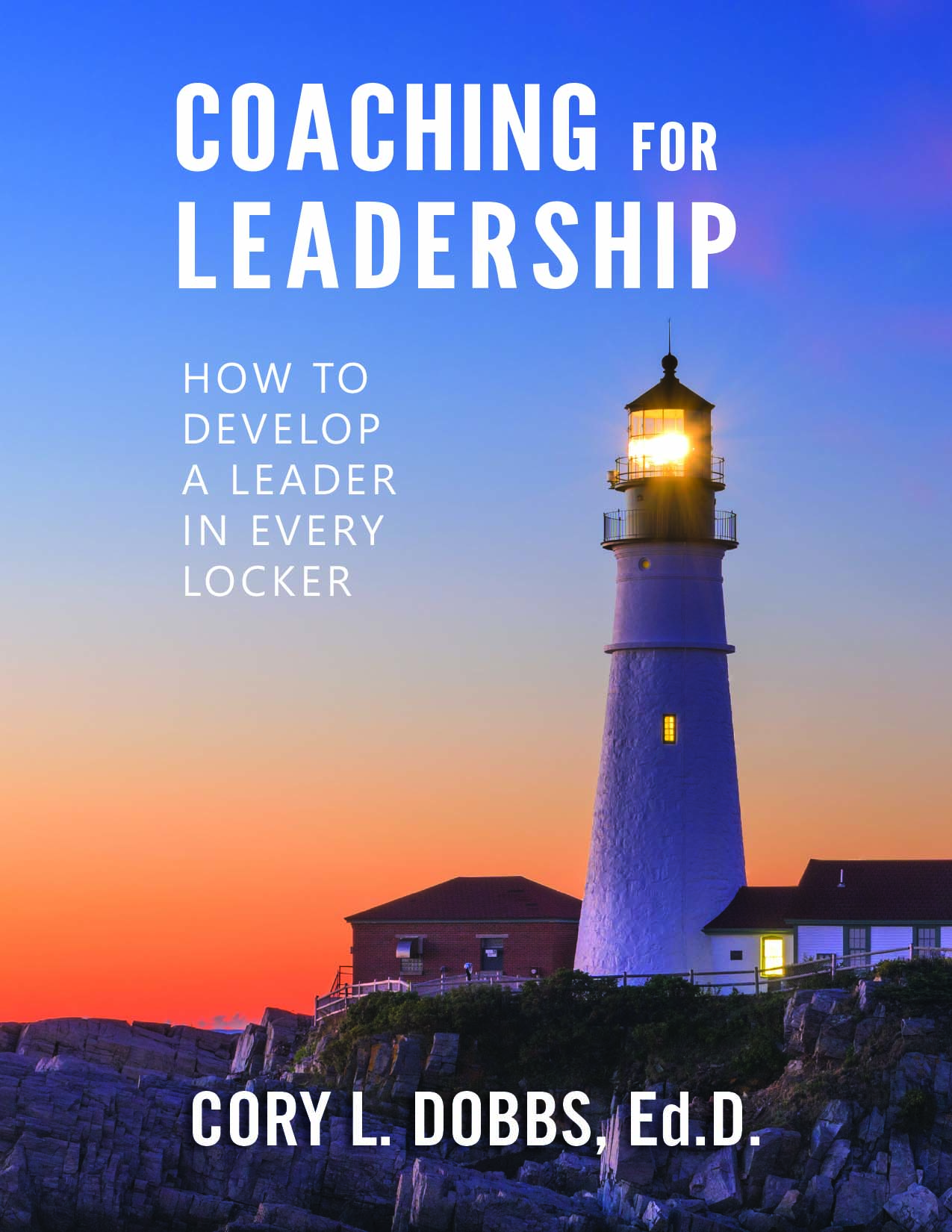
“Tell me and I’ll forget. Show me and I may remember. Involve me and I will care.” -Your Student-Athlete The world of coaching is changing. In Coaching for Leadership you’ll discover the foundations for designing, building, and sustaining a leadership focused culture for building a high-performance team. To find out more about and order Sport Leadership Books authored by Dr. Dobbs including Coaching for Leadership, click this link: The Academy for Sport Leadership Books
This article was written by Cory Dobbs, Ed.D., President of The Academy for Sport Leadership. The Academy for Sport Leadership is a leading educational leadership training firm that uses sound educational principles, research, and learning theories to create leadership resources. The academy has developed a coherent leadership development framework and programs covering the cognitive, psycho-motor, emotional and social dimensions of learning, thus addressing the dimensions necessary for healthy development and growth of student-athletes.
About the Author
Cory Dobbs is the founder and president of The Academy for Sport Leadership, a national leader in research‐based curriculum for coaches and student‐athletes. Dr. Dobbs is a college educator, a coach to successful coaches (helping coaches attain a higher level of success), and an accomplished human performance specialist whose expertise is in the field of leadership, team building, and creating a high‐performance culture in the arena of team sports. Cory blends social‐personality, psychology, and applied social psychology, which means he studies how people’s thoughts, behaviors, and preferences are influenced by both who they are and the situations they’re in. He uses Teamwork IntelligenceTM to help teams explore how the mix of perspectives brought by their individual members influences their work together.
The Academy for Sport Leadership’s underlying convictions are as follows: 1) the most important lessons of leadership are learned in real-life situations, 2) team leaders develop best through active practice, structured reflection, and feedback, 3) learning to lead is an on-going process in which guidance from a mentor coach helps facilitate learning and growth, and 4) leadership lessons learned in sport should transcend the game and assist student-athletes in developing the capacity to lead in today’s changing environment.