• Skip to primary navigation
  • Skip to main content
  • Skip to primary sidebar

  • Basketball Plays
    • Ball Screen Sets
    • Horns Sets
    • Man to Man Post Up
    • Man to Man Isolations
    • Backdoor Plays
    • Man to Man 3 Point Shot Plays
    • 2-3 Zone Attack
    • Baseline Inbound Plays
    • Sideline Inbound Plays
    • Combination Defense Attack
  • Drills
    • Defensive Drills
    • Offensive Drills
    • Competitive Drills
    • Passing Drills
    • Rebounding Drills
    • Shooting and Scoring Drills
    • Toughness Drills
    • Transition & Conversion Drills
    • One on One Drills
  • Blueprint
  • Practice
  • Mental Toughness
  • Skill Development
  • Offense
  • Defense
  • Store

Defensive Floor Balance

Defensive Floor Balance

By Brian Williams on November 30, 2017

The Coach in the video is PGC Basketball Director Sam Allen.

This video was filmed at a PGC/Glazier Basketball Coaching Clinic.

You might not agree with this exact system, but I hope that it helps you think about ways to improve the way you teach and communicate your defensive conversion.

One concept I like is calling moving from defense to offense “transition” and from offense to defense conversion to be able to communicate more clearly to players

Click the play arrow to begin the video. Also, please make sure that your sound is on.
Arkansas Pressing Principles

By Brian Williams on November 28, 2017

This post contains some pressing principles employed by the Arkansas mens program.

Adjust these to fit your players and philosophy and/or take bits and pieces to combine with what you already run.

The diagrams and notes are from the “Full Court Pressing Defenses Playbook” assembled by Chris Filios.

It is paired with the Houston Rockets Playbook (also written by Coach Filios) as this week’s 2 eBook special.

You can find out more about what is included in the bundle at this link:

Houston Rockets Playbook and Full Court Pressing Defenses

You can also get any two of our eBooks for $25 at this link: 2 eBooks for $25

If you have any questions about the eBoooks, feel free to call/text me at ‪317-721-1527 or email me at [email protected]

Diagram created with FastDraw

Principles

1. Don’t gamble- be fundamental and disciplined. Let the opponent make the mistake. Making a play on the ball with a small chance of success will put you/defense out of position and give advantage to the offense.

2. Eliminate the forward pass to the middle of the floor- the middle of the floor should always be covered. Defenders should never leave unless a teammate has rotated to cover.

3. Be active! Be pro-active and anticipate. Don’t be reactive. Jump and rotate hard to the ball. Communicate loud and often. Give high effort.

4. Eliminate bad fouls- when trapping, don’t reach! It is not your job to get a steal while on the ball. Establish good positing with feet and hands with great activity.

Responsibilities after the ball is entered

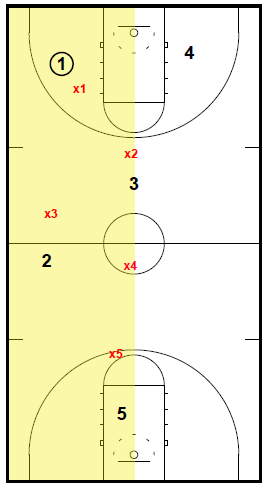
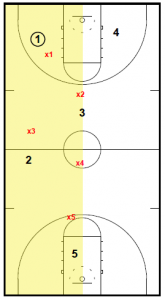
x1-the player defending the ball (x1) forces the ball handler down the sideline alley. He must not get beat to the middle of the floor.

x2-the guard opposite the ball defends the pass to the middle of the floor.

x3-the ball side forward is in a ball-you-man position, ready to trap near half court when the ball is advanced in the sideline alley.

x4- moves to the middle of the floor. Helps pinch with guard on any offensive player in middle. Also prepared to rotate to basket.

x5- basket protector. Will rotate out to sideline if there is a trap.

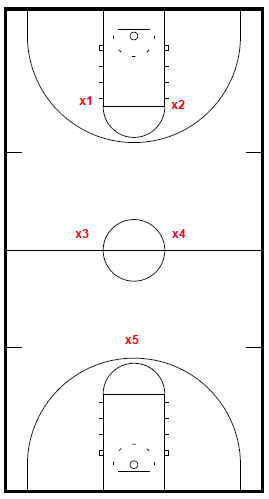
All 5 players are in the “box” (same side of the floor).

The diagrams and notes are from the “Full Court Pressing Defenses Playbook” assembled by Chris Filios.

It is paired with the Houston Rockets Playbook (also written by Coach Filios) as this week’s 2 eBook special.

You can find out more about what is included in the bundle at this link:

Houston Rockets Playbook and Full Court Pressing Defenses

You can also get any two of our eBooks for $25 at this link: 2 eBooks for $25

If you have any questions about the eBoooks, feel free to call/text me at ‪317-721-1527 or email me at [email protected]

Marvin Menzies 3-2-1 Shooting Drill

By Brian Williams on November 27, 2017

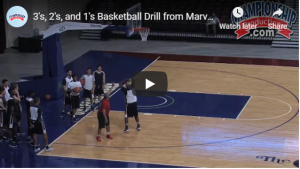
This shooting drill is coached by former UNLV Men’s Coach Marvin Menzies.

There is sound with the video, so please make sure that your sound is on.
The video is hosted on You Tube, so you will need to be on a network that allows you to access that site.

The video is from the Championship Productions You Tube Channel

The possible point total for the drill is 42. One thing to consider would be to shoot 8 free throws either at the end of the circuit, or you could insert 4 groups of 2 shots between some of the spots.

Another few thoughts on ways to modify the drill:

1) Time the drill to make the pace more game like. After collecting a few times from your players doing it, you could determine what is a good time for your players to complete the drill.

2) Coach Suggests having managers pass. You could use players as passers to work on throwing the pass to the shooting pocket of the shooter.

For Division I men’s players 33 is a good score.

If you are interested in learning more about the Championship Productions Basketball Coaching Video (available in both DVD and Instant Video Format) that this drill came from, you can click the following link: Marvin Menzies: Practice Drills to Improve Your Team

Making Something Out of Nothing

By Brian Williams on November 26, 2017

Noticing a Mighty Oak in the Tiny Acorn

Cory Dobbs, Ed.D., The Academy for Sport Leadership

One thing I know is true: everyone I meet has more learning and doing capacity than I am aware of, just like the mighty oak hidden in every tiny acorn.  My work with The Academy for Sport Leadership has led me to conclude that a shared leadership system is far more productive than the hierarchical model embodied in the traditional team captain model.  I call the participative model, which rests on the practice of mutual learning, the Team Leadership Model.

The Team Leadership Model promotes the processes of team leadership and team building as growth opportunities.  It advances the assumption that all members have the ability to inspire others, to reflect on their actions, to increase self-awareness and to leverage their relational capabilities and build positive, impactful relationships.   

At the heart of the leader in every locker framework is the core belief that every student-athlete has the ability to learn and develop leadership skills.  The transformational coach encourages every student-athlete to reach into their reservoir of beliefs about what is possible for them to accomplish when engaging in learning how to lead and team build.  When the student-athlete does this they come to believe that more is always possible.

The coach with the ability to see more than a small capped nut will always be rewarded.  More importantly, his players will grow in ways that can only happen in the right environment.

Teams that I’ve worked with that have utilized the team leadership framework—a leader in every locker—have enhanced interpersonal activity and collective effectiveness in the four domains of team sport—the physical, intellectual, emotional, and social domains.   The essence of the leader in every locker model is that student-athletes learn to teach and learn in an interactive way so everyone grows individually while expanding the technical and the relational capacity of the team.

The Team Leadership model creates an environment in which members are accountable not just to the coach, but to the team as a whole.  This sounds good to coaches, but very few actually practice the Team Leadership concepts.  The reasons coaches balk at the idea of Team Leadership—leadership from every locker—is that, in general, they are either hooked on control or of the firm belief that leaders are simply born which leads to the conclusion that leaders are in short supply.

Some coaches will admit this, many won’t. The old way of thinking is comfortable and less time consuming.  But, let me say again, my research strongly suggests the traditional captain mode is very limited.  The team captain model as practiced by most coaches is a sink or swim proposition.

When you choose to make leadership and team building skills and abilities for all players a priority, not only do you increase responsibility and reliance on one another, you change how your student-athletes interact as leaders and followers.
[thrive_leads id=’36827′]
Okay, lift the hood.  Kick the tires. Compare the assumptions that undergird the two models.

The Two Major Leadership Frameworks Traditional Team Captain Model (Rank-Based) VS. Team Leadership Model (Peer-Based)

Traditional Team Captain Model (Rank-Based)

1. Starts from a position that leadership is exclusive; leaders possess the “right stuff”
2. Fixed mindset; leadership can be learned to some extent, but mostly a unique genetic endowment
3. Scarcity mindset
4. Grounded in leadership as a “power” position
5. Hierarchical command and control over others
6. Performance oriented
7. Leader accountable to coaching staff; invested in pleasing coaches
8. Leadership learning “passed” down to future leaders
9. Followers are recipients of an act of leadership
10. Leader-centric (focus on person)

Team Leadership Model (Peer-Based)

1. Starts from a position of leadership as inclusive; everyone is invited to lead self, others, and with others to create individual and team well-being
2. Growth mindset; basic and advanced qualities and skills can be cultivated.
3. Abundance mindset
4. Grounded in leadership as an “influence” position
5. Peer-based influence as a source of strength
6. Participant- oriented
7. Leader acts from deep sense of responsibility and accountability to others
8. Individualized leadership development
9. Followers are central to any act of leadership
10. Leadership-Centric (focus on process and context)

About the Author

Dr. Cory Dobbs is a national expert on sport leadership and team building and is the founder of The Academy for Sport Leadership.  A teacher, speaker, consultant, and writer, Dr. Dobbs has worked with professional, collegiate, and high school athletes and coaches teaching leadership as a part of the sports experience.  He facilitates workshops, seminars, and consults with a wide-range of professional organizations and teams.  Dr. Dobbs previously taught in the graduate colleges of business and education at Northern Arizona University, Sport Management and Leadership at Ohio University, and the Jerry Colangelo College of Sports Business at Grand Canyon University.

Dr. Dobbs recently joined Jamy Bechler on the “Success is a Choice” Podcast – hear his thoughts on team leadership and developing a leader in every locker here.

NEW RESOURCE

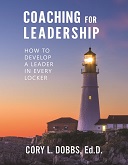
Coaching for Leadership: How to Develop a Leader in Every Locker. ($24.99)


The Academy for Sport Leadership

The Academy for Sport Leadership’s underlying convictions are as follows: 1) the most important lessons of leadership are learned in real-life situations, 2) team leaders develop best through active practice, structured reflection, and informative feedback, 3) learning to lead is an on-going process in which guidance from a mentor, coach, or colleague helps facilitate learning and growth, and 4) leadership lessons learned in sport should transcend the game and assist student-athletes in developing the capacity to lead in today’s changing environment.

Box 1 Zone BLOB

By Brian Williams on November 25, 2017

This baseline inbound play to run against a 2-3 zone defense was contributed by Justin Scanson to the FastModel Sports Basketball Plays and Drills Library.

You can also find out more about FastModel Play Diagramming software by clicking this link: FastDraw

This is what Coach Scanson said about the play:

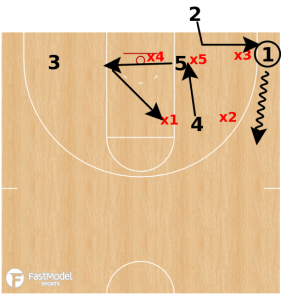
This Zone BLOB starts in an overload on the strong side shifting the defense from the start.

From this overload, players screen the zone and work to take advantage as the defense reacts.


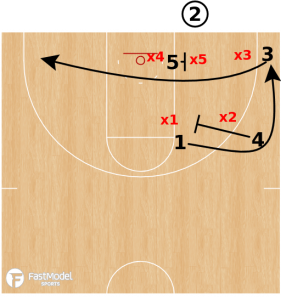
5 seals x5 as 3 cuts to opposite corner.

4 screens for 1 and 1 wheels to the corner.


If x4 chases 3 and 5 seals x5… layup for 5.

If x5 gets position on 5, 4 is open cutting to the ball.

If x4 stays home, 3 is open on weak side.


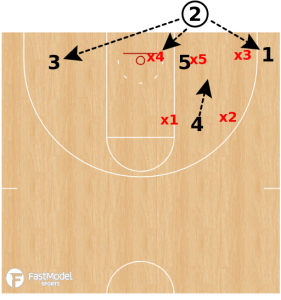
Safety outlet is 1 in the corner.

1 dribble drags x3 as far as possible and brings ball back to 2 in the corner.

2 has 4 on the block or 5 flashing to high post.

3 Around 1 Guarded Post Defensive Drill

By Brian Williams on November 21, 2017

This post player defensive drill is from the Xavier Men’s Program Basketball Coaching Newsletter.

You can see the archives of their basketball coaching newsletter at this link: Xavier Newsletter

The second drill is a defensive drill for perimeter players to work on helping or crowding the low post.

Diagram created with FastDraw


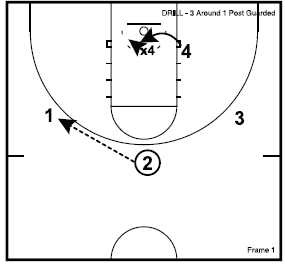
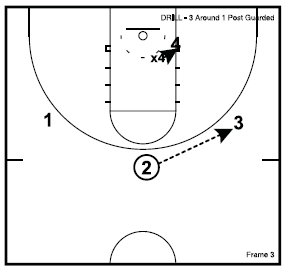
3 Around 1 Post Guarded


4 tries to get to the opposite block.

X4 hits him to prevent him from getting there.

For the drill, 4 returns to ball side block.


X4 is no on the line, up the line ready in case 4 attempts to duck in.

X4 hits 4 preventing the duck in.

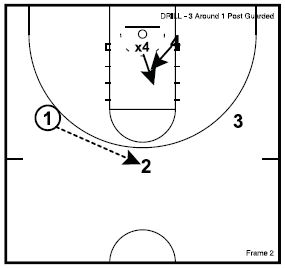
4 returns to the block


Ball goes to 3, X4 is now 3/4 front in the post.

When the ball goes into 4, x4 pops behind 4 and shows his hands.

Drill is live from this point.


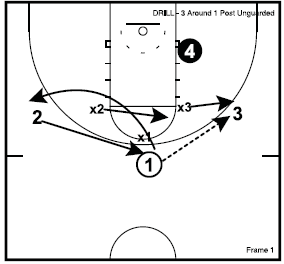
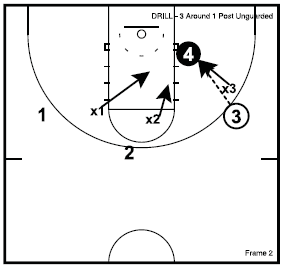
3 Around 1 Post Unguarded


Defenders explode to gap and are active on movement by the offense and on all passes.


When the basketball is entered into the post, defenders crowd the post.

Drill ends when post player throws out of the post if defenders have great closeouts back to their man or gap.

  • « Go to Previous Page
  • Page 1
  • Interim pages omitted …
  • Page 78
  • Page 79
  • Page 80
  • Page 81
  • Page 82
  • Interim pages omitted …
  • Page 288
  • Go to Next Page »

Primary Sidebar

  • Twitter
  • Facebook
  • Linkedin
coachestoolbox
personaldevelopmenttoolbox
basketballplayerstoolbox
basketballtrainer
athleticperformancetoolbox
coachingbasketball

© Copyright 2026 Coaching Toolbox

Privacy Policy