• Skip to primary navigation
  • Skip to main content
  • Skip to primary sidebar

  • Basketball Plays
    • Ball Screen Sets
    • Horns Sets
    • Man to Man Post Up
    • Man to Man Isolations
    • Backdoor Plays
    • Man to Man 3 Point Shot Plays
    • 2-3 Zone Attack
    • Baseline Inbound Plays
    • Sideline Inbound Plays
    • Combination Defense Attack
  • Drills
    • Defensive Drills
    • Offensive Drills
    • Competitive Drills
    • Passing Drills
    • Rebounding Drills
    • Shooting and Scoring Drills
    • Toughness Drills
    • Transition & Conversion Drills
    • One on One Drills
  • Blueprint
  • Practice
  • Mental Toughness
  • Skill Development
  • Offense
  • Defense
  • Store

Plays from FIBA U20 European Championship

Plays from FIBA U20 European Championship

By Brian Williams on August 7, 2018

Two Man to man plays from FIBA U20 European Championship 2018.

My hope for you is that you can take actions and movements from these plays to fit into your system and the abilities of your players.

The plays were contributed by Sergey Tkachenko from Perm, Russia and currently a scouting coach for BC Parma Youth Under 21 team. to the FastModel Sports Basketball Plays and Drills Library.


You can also find out more about FastModel Play Diagramming software by clicking this link: FastDraw


Croatia U20 – Iverson DHO STS
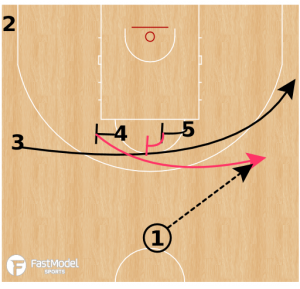
 

Play starts with double Iverson cuts by 3 and 4.

4 catches pass from 1 on wing.
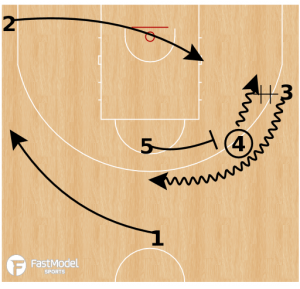


Pistol action (4 DHO with 3 and then PNR with 5) as 1 and 2 space.
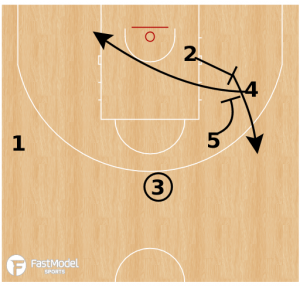


STS action with 2 as primary option, 4 in post as secondary option.


Turkey U20 – DHO Scissor
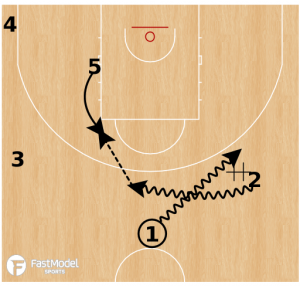
 

1-2 DHO to initiate play.

5 flashes to elbow and receives pass from 2.
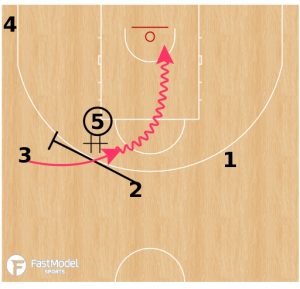


2 screens for 3, who takes hand off from 5 and penetrates strong to basket.


Great Teaching Concepts from Kevin Eastman

By Brian Williams on August 7, 2018

Originally posted on Great Teaching Concepts from Kevin Eastman

Coach Eastman’s 8 Video Coach Development 8 Course Series set which includes High Intensity Skill Development, NBA Drills for All Levels, Stimulate Your Offensive Thinking, Defensive Strategies and Teaching Points, Strategies and Philosophy for Coaching Success, Stimulate Your Defensive Thinking, Defending the Pick and Roll the NBA Way, A Champion’s DNA is on sale as our Black Friday special. Normally, it is $112, but it is on special for $75 through Monday November 30 at midnight Eastern Time. After that time, the price will return to normal.

You can find out more about this special price at this link: Coach Development 8 Course Series

You can’t be tired and you can’t be bored. It’s not easy getting better. It takes work and discipline. We have a choice of pain of discipline or pain of regret.

Workout discipline:
•Maximum intensity on every repetition.

  • Machine like mechanics
  • Focus on every repetition – we’re going to take one shot 500 times.

Philosophy:

  • Becoming a good shooter is lots of reps.
  • Becoming a great shooter is lots of reps at game speed from game spots at a game angle.

Theory of two:
•It takes two minutes to show any skill.

  • It takes two weeks doing it every single day to get comfortable with the skill.
  • It takes two months working on a skill everyday to get good enough to execute in a game.

Shooting form:
•Be ready on the catch.

  • Ten toes to the rim (if you have ten toes to the rim you will be square to the basket).
  • Only change his form if the shot doesn’t go in. Make him the best worst form shooter.
  • Two second rule: As soon as it’s 1 cm into our players fingers I’m counting one two. Players don’t have a great understanding of game speed when working out.
  • The better the shooter you are, the better your shot fake needs to be. Definition of a shot fake is a real shot that you don’t shoot.

Free-throws:

  • Shoot free-throws until you miss, and count how many in a row.
  • Players tend to fall forward rather than backward.

Give your players statistical feedback:

  • When you chart your players’ shots give them percentages for free-throws, lay-ups, jump shots and three-point shots.
  • Break it down so they know what to work on.
  • Players can be receptive to stats.

Make time to practice shooting:
•You will be surprised how little your guys shoot during practice when you exclude shooting drills.

  • We recorded how many shots our players took in a 2.5 hour practice:
  • Paul Pierce – 16.
  • Ricky Davis – 13.
  • Al Jefferson – 7.
  • During an hour pickup we shoot on average 12.8 shots per player.
  • Average number of shots taken in a game is 16 per player.

My goal right now is to get everything you can teach in the game down to three bullet points. It makes it easier for players to take in:

For shooting:

  • Perfect feet.
  • Ready for catch.
  • Perfect follow through.

Coaches must maintain their intensity everyday:

  • A coach can never get bored.
  • The intensity that a coach brings to the floor helps the player have a more intense workout.
  • Coaches have body language too. Be careful of your body language, and how it could be interpreted by your players.

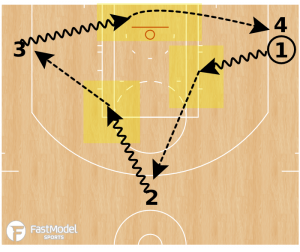
Kill Spot Passing Drill

By Brian Williams on August 2, 2018

This passing drill was contributed by Mike Shaughnessy to the FastModel Sports Basketball Plays and Drills Library.

Mike is a Player Development Coach for Dr1ven Training LLC.

This is what Coach Shaughnessy had to say about the drill:

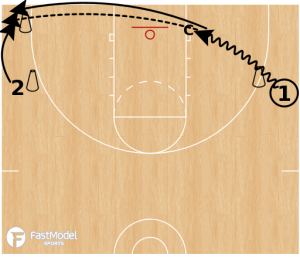
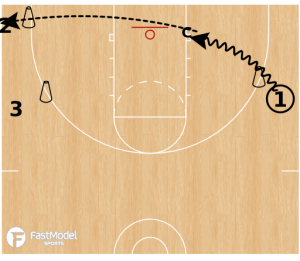
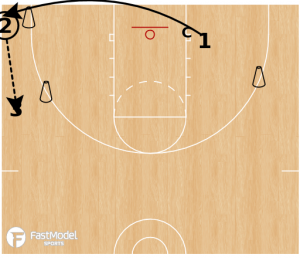
Attack kill spots on the floor (highlighted) that breakdown defenses, opening up drive and kick opportunities.

Pass and rotate to the next spot.

Coaches can emphasize various passes:

– Jump stop and kick out (outside hand chest pass)

– Nash pass kick outs (outside hand pass)

Go for a certain amount of (perfect) passes (and catches) before going the other way.

Hold players accountable for communication and having hands ready to receive the pass.


Back to School Coaching Notes

By Brian Williams on July 31, 2018

Some notes and links for your back to school reading list.

These basketball coaching thoughts came from Army Men’s Assistant Zak Boisvert’s PickandPop.net site.

The site has a lot of quality coaching ideas and information.  Definitely worth a look!

Click this link to see his entire 34 page June coaching notebook.

Notes from From The Art of the Cut (The Athletic)
-When the Sixers call a play that involves J.J. Redick running off a screen, he doesn’t view it as his turn to shoot. Instead, he phrases it as “a time to move bodies and potentially move the ball.” From there, it’s up to the Sixers to figure out what the defense is giving them.

Notes from Brad Stevens and the Celtics have a special brand of toughness (ESPN.com)
-Brett Brown, the Philadelphia 76ers head coach, is fond of saying, “The pass is king.” Celtics staffers have their own version: “Toughness is king.” The definition of toughness Stevens found recently in a book (he can’t recall which one; he reads a lot): “Toughness is being able to physically and emotionally perform your task through any condition.” -“If things are going really well in a home game, do you get caught up in that, or do you keep playing the right way?” “If things are going like they were in the second quarter last night [when the Sixers went on a run], do you say, ‘I have a job to do and I’m going to do it, and I don’t care that everyone is going nuts over this Embiid dunk?’ That is toughness. It sounds cliché, but the hardest thing to do is stay in the moment and do your job.”

-Gather enough tough players and it can have an exponential effect on a team’s collective toughness. They inspire each other to more intense fury. They hold everyone accountable; even brief moments of lethargy and weakness are unacceptable.

-In Boston’s seventh game of the season, Shane Larkin failed to pursue a loose ball along the left sideline. Stevens removed Larkin at the next stoppage. He didn’t play again until garbage time. “I learned right away,” Larkin said. “If you don’t get a 50-50 ball, you are coming out.” Stevens didn’t upbraid Larkin. He approached him calmly and told Larkin why he had been taken out.

-In evaluating players, both during games and in film sessions, Stevens is careful with language. He focuses on actions: We didn’t get this rebound. You should have made this rotation earlier. The criticism is never about the player’s character. No one is labeled lazy or stupid or selfish. Stevens simply describes what did or did not happen, and what should happen next time. That has gone a long way in securing buy-in, players say. They feel Stevens is with them, even as he holds them — and himself — to almost impossible standards. That is a hard balance to strike.

-Stevens’ placidity is intentional. Frantic, screaming, gesticulating coaches can raise panic in players who might be prone to it. Some players tune out everything. Some follow the lead of authority figures. They look at Stevens and see assurance. They see, “Next play.” “Some players have a tendency to get frazzled or emotional,” Ainge said. “Brad helps with that.”

Notes from Jayson Tatum is at the door. ‘He has a passion to be great’ (Boston Globe)
-Jayson doesn’t practice things until he gets them right. He practices until he can’t get them wrong.”

Notes from:Michael Lombardi on Decision Making (Farnam Street)
-Bill Walsh to a 24-year-old Lombardi: “You have to think differently; a lot of people in the NFL are not the best and brightest. You’ve got to work outside your comfort zone. You’ve got to read people like Tom Peters. Read people like Bob Waterman. Learn from Warren Bennis. Learn from Peter Drucker.”
-Einstein’s five levels of intelligence: Smart, Intelligent, Brilliant, Genius and Simple.
-Belichick: Takes complicated problems and makes them really simple.
-Belichick stays in Quadrant 1 all the time. He works with nothing but Urgent-and-Important.
-Belichick’s ego is never involved in the decision. He does what’s best for the team.

-Belichick goes to work every single day with the same appetite and the same desire to improve and the same curiosity.
-False duality: We all think it’s A or B. The Belichick’s of the world see the C, D, E and F.
-Part of decision making really comes partly from preparation. You don’t know when you’re going to use it. You have no idea when you’re going to use that knowledge you just gained.
-They’ve never dedicated a monument to a committee. You can’t answer to everybody. You can’t have a bunch of people try to determine what you need to make the decision for.
-Lucy theory: The path of least resistance is the path of the loser. We all make decisions. We can make the easy decisions or we can make the hard ones.

-Parcells’ nickname for Belichick was “Doom” because he never believed things were going to work out. He was always preparing for the worst. He doesn’t tell that to the team but that’s his perspective.
-Jeff Oss: “The biggest mistake is that you have a losing strategy when you think you have a winning one.” That’s what Belichick does – he pokes holes in his strategy to make sure it’s not a losing one.
-The wise man doesn’t give the right answers; he asks the right questions. (8)
-In New England, after every single game, win or lose, the offensive coordinator and the defensive coordinator, the special teams coach, have to fill out a sheet: what we did well and what we did bad. How we handled the situations. Did we prepare properly? Did we not? There’s an autopsy on every game. The scoreboard doesn’t matter. What matters is learning from the game.
-Whenever you make a decision and it happens to go your way or it goes the other way and you ignore it and you don’t go back and do an autopsy on it, you’re just going to make other mistakes. That’s why I think he wins more than anybody.

-The key to being successful is to gure out what you did. Don’t look at just the score. Look at what happened. That’s the most important thing. That’s where Belichick gains all of his advantage. That’s where great leaders gain all of their advantage. They look at the result. It’s not result based; it’s how you went through the process.
-Experience doesn’t help us. Experience teaches us.
-Decision making to me, what I’ve learned from all of those guys, (Belichick, Walsh, Al Davis) was if you take ego out of it, you’re going to make a lot of good decisions.
-Walsh: If we’re all thinking alike, no one is thinking.

For Spurs, defending without fouling a way of life (San Antonio Express News)
-Coach Mike Budenholzer, a Spurs assistant for 20 years before joining the Hawks. “They talk about it regularly. They drill it. They show film on it. Everybody knows how important it is to them being so good defensively that they defend without fouling. It’s been that way from the beginning, really.”
-Popovich paints the Spurs’ emphasis on defending without fouling as a matter of brains over brawn. “You’ve got to teach it,” Popovich said. “It’s all between the ears. You’ve got to take the macho out of it, put more of the brain power into it. It’s a major emphasis of ours.”

Other

-When there is a void in communication, negativity will fill it – Jon Gordon quote

-“Lower the bar and you lose the winners. Raise the bar and you’ll lose the losers.” (Phil Beckner – twitter)
-How do we create MOMENTS for our players?
-“Greatness Is 3% Of What Everyone Sees Under The Bright Lights & 97% Of Your Hustle In The Dark.” – Josh Medcalf
-Richie Riley, South Alabama: Your program’s culture is defined by what you accept. It’s not about words or signs in a locker room. It’s about everyday actions and accountability.

SGP Shooting Series

By Brian Williams on July 30, 2018

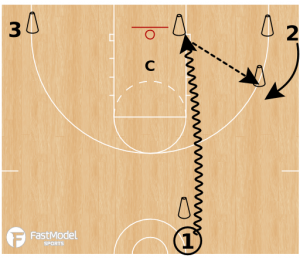
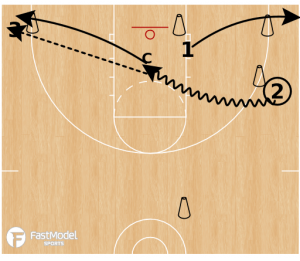
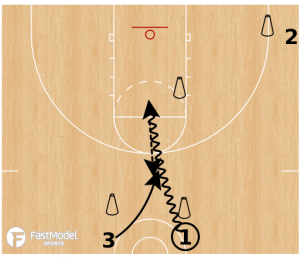
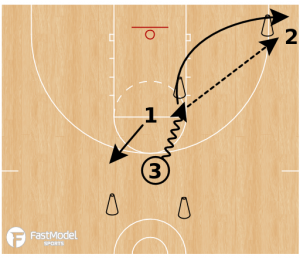
This drill to work on live ball dribble moves was contributed by Coach Zach Weir to the FastModel Sports Basketball Plays and Drills Library.

Zach is the assistant boys coach at South Grand Prairie High School in Texas.

This is what Coach Weir had to say about the drill:

SGP Shooting Series is a drill that we run daily. It is a great drill for building not only shooting, passing, and dribbling skills – but also chemistry between players. This drill is used as a drill to work on reads versus defense and passing accuracy as well. We really stress pace of play in our offense and this drill is great for getting the players to feel the speed and pace they need to work at.

Rules for the drill:

  • Our goal is 10 shots per 1 min. With our better shooters we will go 12 per 1 min.
  • We will go 12 minutes ideally, but on days that we fit this series into our individual drills we will go at the very least 8 minutes.
  • You must thank the passer when you make a shot.
  • You must call out the action that you are performing – i.e, curl, fade, etc.
  • Alternate in air passes and bounce passes.

Progression

  • Coach as a defender
  • Add secondary defender to read if players are ready
  • Can also have the ball handler make a move off the dribble instead of triple threat


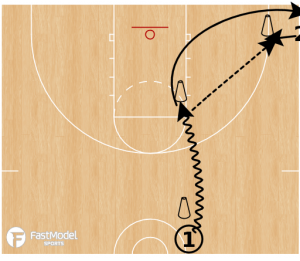
Guard makes a move out of triple threat and attacks elbow area.

Get both feet in the paint and jump stop/quick stop/staggered stop.

Guard in the corner steps into the pass and shoots a corner three.

Passer will sprint underneath the cone and replace the shooter in line.


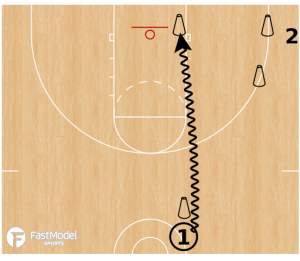
Guard makes a move out of triple threat and attacks the rim/ block area.

Get both feet in the paint and jumpstop/ quickstop/ staggered stop.


Guard in the corner loops into the pass and shoots a wing three.

Passer will sprint underneath the cone and replace the shooter in line.


Guard makes a move out of triple threat and attacks elbow area.

Get both feet in the paint and jumpstop/ quickstop/ staggered stop.

Guard in the corner loops into the pass and catches shows shot.


The guard will attack the middle of the paint.

A coach stands in the middle acting like the secondary defender and tries to get a deflection.

Get both feet in the paint and jumpstop/ quickstop/ staggered stop.

Guard in the corner steps into the pass and shoots a corner three.

Passer will sprint underneath the cone and replace the shooter in line.


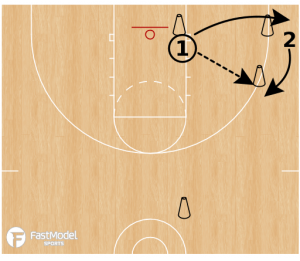
Guard attacks the nail and gets to feet in the paint.

Reverse pivot and pitches the ball to the guard in the opposite slot.


First guard replaces using correct footwork and opens like getting a shot.

Guard that got the pitch attacks elbow area.

Get both feet in the paint and jumpstop/ quickstop/ staggered stop.

Guard in the corner steps into the pass and shoots a corner three.

Passer will sprint underneath the cone and replace the shooter in line.

Guard on the wing attacks the coach standing on the baseline.

Passer will slide out of bounds, jump out of bounds, or jump stop after making the pass.

The player will make a right hand pass to the opposite corner.

Alternate in the air pass and bounce pass.

Guard on the opposite wing slides down to the corner, catches and shoots a corner three.

Passer will sprint to the opposite corner and then get in shooting line.


Guard on the wing attacks the coach standing on the baseline.

Passer will slide out of bounds, jump out of bounds, or jump stop after making the pass.

The player will make a right hand pass to the opposite corner.

Alternate in the air pass and bounce pass.


Guard in the corner steps into the pass.

Extra Pass is made to the player on the wing who will step into the pass and shoot a three.

Passer replaces the extra passer.

Extra Passer replaces shooter.

Shooter rebounds and replaces the first passer.

Mattering and Marginality

By Brian Williams on July 27, 2018

A Pre-Season Note to the Student-Athlete

Dr. Cory Dobbs, The Academy for Sport Leadership.

People want to matter.  Every member of your team has a yearning to matter.  Unfortunately it’s almost guaranteed that a teammate or two, on your team right now, feels like they don’t matter.

Mattering is a motive.  When we feel that others depend on us, we know we matter and respond accordingly.  When others are interested in us, we feel like we matter and enjoy the benefits of their attention.  And when others are concerned with our future, we feel like we matter and appreciate their guidance.

Mattering matters.  Mattering is a powerful influence on our actions.

Do you promote mattering or do you keep people on the periphery?  Draw a series of three concentric circles, expanding from small to large (you know, like waves moving outward), on a piece of paper.  Place your name in the middle circle.  In the next circle outward place the names of those on your team that you spend more time with.  Then on the outermost circle place the names of those you spend little time with.  This outer circle is the margin.  These are teammates that might matter less to you.  Do the same for playing time: Starters in the inner circle, bench players in the outer circle—on the margins.  Often the patterns (of status?) reveal an in-group and an out-group, with those in the out-group excluded from close interpersonal relationships with those in the in-group.

Marginality matters too.  It’s just that living life on the margin sucks.  When we marginalize others they’re likely to feel like they don’t matter.  In fact, they’ll probably tell you they know they don’t matter.  Those on the margins usually have ample evidence that informs them that they don’t matter.  They come to see the world from a perspective that they have little to contribute.  And this is very dangerous.

Like mattering, marginality too is a powerful influence on our actions.

When I speak to college teams I always ask the group of student-athletes if there was someone on their high school team (their senior season in high school) that did not play in games.  Or if they did play, it was the “marginal” minutes when the outcome of the game was already determined thereby the playing time didn’t really “matter.”  I’ve yet to find a group of collegiate student-athletes that isn’t curious as to why the last player on the bench was glad to be there.  It’s common to hear, “Ya, I’m not sure why they stuck around.”

Chances are, college or high school, you’ve got players on your team that are of lesser talent, perhaps “marginal” talent at best to qualify to be on the squad.  It’s easy for the star player to see that he or she matters. They know that others depend on them, are interested in helping them, and are concerned with their future.  Their contributions to the success of the team are quite visible.  They matter.  And of course they should.

We get that.

However, why is it others don’t matter?  Do you really want to marginalize people?
[thrive_leads id=’36827′]
Sports participation involves many diverse interpersonal relationships.  Whether you are a top player or a role player, you come into contact with many people.  Developing quality interpersonal relationships with all of your teammates is a valuable team goal.  When you relate to others in a positive way, they’ll feel like they matter.  And mattering does matters.

So, here’s the big question you need to answer.  Ask yourself “what in my world am I willing to notice?

So often, those that are marginalized go unnoticed—that’s why they’re on the margins.
If you want to accomplish something worthwhile this year, make sure no one on your team goes unnoticed.  Set the standard.  Let others know they matter.

New to the Second Edition of Coaching for Leadership!

We are pleased to announce a new chapter to the second edition of the best-selling Coaching for Leadership. The chapter, The Big Shift: Unlock Your Team’s Potential by Creating Player-Led Teambuilding, connects the previous edition of this book to its origin, as well as to the future of team sports. The new chapter sets forth a practical and applicable agenda for change and improvement. The reader is introduced to seven vital elements of change; seven shifts of traditional mental models that lead to the new core principles necessary for creating a player-led team culture. Click here for more information about Coaching for Leadership

“Tell me and I’ll forget. Show me and I may remember. Involve me and I will care.” -Your Student-Athlete The world of coaching is changing. In Coaching for Leadership you’ll discover the foundations for designing, building, and sustaining a leadership focused culture for building a high-performance team. To find out more about and order any of the Sport Leadership Books authored by Dr. Dobbs including Coaching for Leadership, click this link: The Academy for Sport Leadership Books

About Cory Dobbs, Ed.D.

Cory Dobbs is the founder of The Academy for Sport Leadership and a nationally recognized thought leader in the areas of leadership and team building.  Cory is an accomplished researcher of human experience. Cory engages in naturalistic inquiry seeking in-depth understanding of social phenomena within their natural setting.

A college basketball coach, Cory’s coaching background includes experience at the NCAA DII, NJCAA, and high school levels of competition.  After a decade of research and development Cory unleashed the groundbreaking Teamwork Intelligence program for student-athletics. Teamwork Intelligence illuminates the process of designing an elite team by using the 20 principles and concepts along with the 8 roles of a team player he’s uncovered while performing research.

Cory has worked with professional athletes, collegiate athletic programs, and high schools teaching leadership and team building as a part of the sports experience and education process.  As a consultant and trainer Dr. Dobbs has worked with Fortune 500 organizations such as American Express, Honeywell, and Avnet, as well as medium and small businesses. Dr. Dobbs taught leadership and organizational change at Northern Arizona University, Ohio University, and Grand Canyon University.

  • « Go to Previous Page
  • Page 1
  • Interim pages omitted …
  • Page 61
  • Page 62
  • Page 63
  • Page 64
  • Page 65
  • Interim pages omitted …
  • Page 288
  • Go to Next Page »

Primary Sidebar

  • Twitter
  • Facebook
  • Linkedin
coachestoolbox
personaldevelopmenttoolbox
basketballplayerstoolbox
basketballtrainer
athleticperformancetoolbox
coachingbasketball

© Copyright 2026 Coaching Toolbox

Privacy Policy