• Skip to primary navigation
  • Skip to main content
  • Skip to primary sidebar

  • Basketball Plays
    • Ball Screen Sets
    • Horns Sets
    • Man to Man Post Up
    • Man to Man Isolations
    • Backdoor Plays
    • Man to Man 3 Point Shot Plays
    • 2-3 Zone Attack
    • Baseline Inbound Plays
    • Sideline Inbound Plays
    • Combination Defense Attack
  • Drills
    • Defensive Drills
    • Offensive Drills
    • Competitive Drills
    • Passing Drills
    • Rebounding Drills
    • Shooting and Scoring Drills
    • Toughness Drills
    • Transition & Conversion Drills
    • One on One Drills
  • Blueprint
  • Practice
  • Mental Toughness
  • Skill Development
  • Offense
  • Defense
  • Store

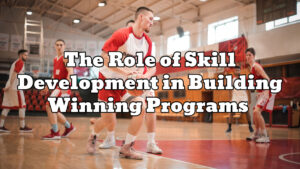
The Role of Skill Development in Building Winning Programs

The Role of Skill Development in Building Winning Programs

By Brian Williams on February 27, 2020

Written by Kyle Ohman, co-founder of BasketballHQ.com

As a basketball coach, there is always the challenge of finding the right balance between player skill development and what the team needs to work on as a whole. In a perfect world, you would be able to work on both areas as much as you would like, but unfortunately, that is not the case. There are only so many hours on the court and time that you can spend working with your players.

So, what is the correct role of skill development with a team? How should a coach balance skill development with all the other areas that need to be worked on? Every situation is different, but there are some general rules and principles that will help with determining this for your team. So below are some keys that you can focus on with your team and making sure that you are developing your players and building a winning program. 

Player Homework

As a coach, you only have so many hours with your team on the floor, that doesn’t mean though that you can’t give your players stuff that they can do on their own. Most of the time players want to work on their game and get better, they just need direction. So take a portion of your practice or workouts and go over basketball drills that you want your players to be doing throughout the week. Have an emphasis for each week and then hold your players accountable. Let them know that if they want more minutes or a bigger role, these are the areas that they should be focusing on. 

It is important that you are also detailed with your instructions. If you want your players to get stronger, give them a specific workout or exercises to do. If you want them to become better shooters, ball handlers, etc., give them the resources that they need. And, if you are unsure of the different drills or workouts to pass down to your players, do some research. There are plenty of excellent online basketball resources for coaches. So spend some time learning and growing as a coach, and then pass all of this information down to your players. 
Game-Specific Skills

When you are working on drills in your practices, focus on being able to really lock in on skills and actions that are going to directly translate to a game. This will make sure that your skill development time is fully maximized. It will also help with making sure that your players understand what types of shots, finishes, etc. will be available to them in a game. It is also important that you take the time to explain why, when, and where each type of move should be used. This is one of the biggest points of emphasis that we focus on at Tampa Basketball Training. We want to develop players that not only know how to execute different skills, but that also know how to best use them. So make sure that you are teaching your players how to think and understand the game when you teach them different skills. 

Drills Based on Your System

This is similar to the last point but a little bit more in-depth. With this key, you are going to breakdown parts of your offense or defense and then drill them. It could be a screening action, closeouts on defense, drive and kick, or whatever your system focuses on. This will help with building the puzzle and will make it much easier when you finally put together all of the pieces. It will also help to highlight the players that are good at each of these different situations and will expose those who still need some work. For example, if you want your players to work well off of the ball using and reading different down screens, you could use a drill like the one listed below. 

Ray Allen Curl Cut Basketball Shooting Drill

Drills Used for Condition

Another great way to maximize your gym time is to use basketball drills that also work on conditioning. So rather than spending time on strictly running, you could do a high-intensity ball handling, finishing, or shooting drill. This will allow your players to be able to work on different basketball skills, but will also make sure that they are getting in shape as they do. These types of drills are also an excellent way to work on mental toughness as well. As you are going through the drill, add in different variations and see which players are able to adjust and think as they become fatigued. This will allow you to better determine who you can trust at the end of a close game. 

Competition-Based Drills

Competition may not be a skill that you can measure as easily as how many shots a player makes, but it is a skill that is an absolute must for any team that wants to be successful. A great way to work on developing your team’s competitiveness is through competition-based drills. It may be a rebounding drill, shell drill, one on one drill, or whatever you want to work on. The key though is to make sure that players are getting after it and challenging each other to compete and improve. Here is a great example of a rebounding drill that you could use as a competition drill.

Bulldog Basketball Rebounding Drill

The Role of Skill Development in Building Winning Programs Conclusion

You most likely have heard the phrase “It is not about the X’s and O’s but the John’s and Joe’s” and this applies to several different areas of the game. One of them though is this area of skill development. As a coach, you can draw up the best play possible or come up with a “lockdown defense,” but if you don’t have players that are skilled enough to execute them, it really isn’t going to matter. That is why it is so important to budget out time to making sure your player’s talent levels are maximized.

When it comes to the topic of skill development within your program, it is all going to come down to finding the right balance. Dedicate a set amount of time every day to working on skill development in one or two of the ways discussed above, and then if you need to adjust one way or the other, feel free to do so. Just make sure that skill development is a priority with your team if you want to develop a winning program. 
Ball Screen Shooting Drill

By Brian Williams on February 26, 2020

This ball screen shooting drill came from the following pages of the FastModel Sports Plays and Drills Library:

Euro Ball Screen Shooting – FastModel Sports.

You can also find out more about FastModel Play Diagramming software by clicking this link: FastDraw

The drill was contributed by Zachary Weir, South Grand Prairie HS in TX. You can follow him on Twitter @WEIRbasketball.

Here is what Coach Weir said about the drill:

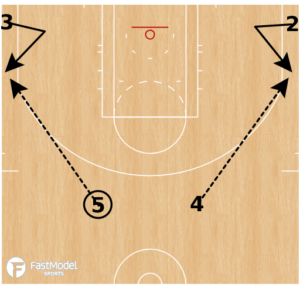
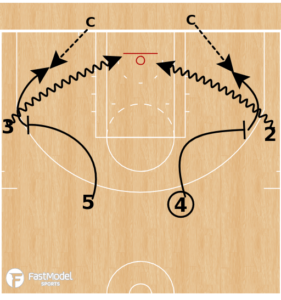
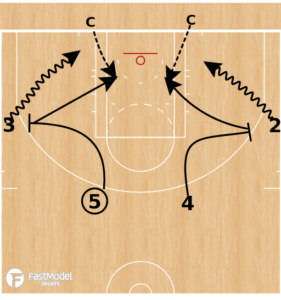
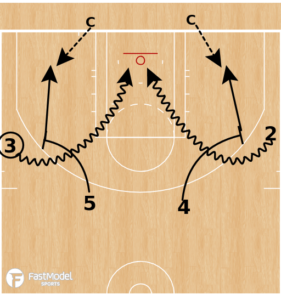
Ball Screen Shooting drill to get shooting, and passing reps using the actions in a euro ball screen continuity offense or side ball screens. Several different actions and progressions can be implemented into the drill. This is a great drill to set a time and have teams compete as well as get some conditioning.


Two lines with basketballs in the slot position.

Guards will be in each corner no basketballs.


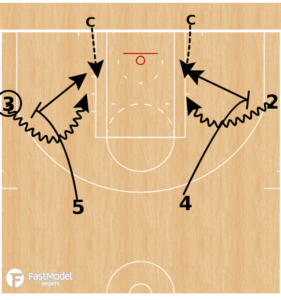
Slot positions will pass to the guards and chase to a ball screen similar to euro ball screen actions.

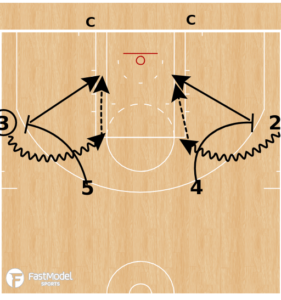
Progressions: guard jumper, rim runner, guard layup, reject jumper, reject layup, reject reverse pivot big jumper, slip, split, pick and pop, trap drag dribble pop, etc.


Guards will receive a pass from a coach

Kill Zone jumper


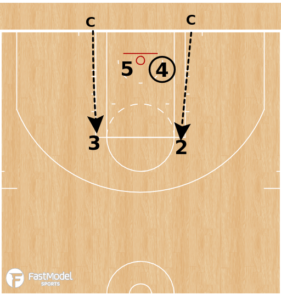
Guard rejects and shoots jumper.

Big dives to rim.


The Butterfly Effect for Coaches

By Brian Williams on February 26, 2020

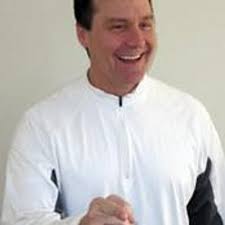
Dr. Cory Dobbs
The Academy for Sport Leadership

THE BUTTERFLY EFFECT

Years ago The Butterfly Effect was popularized to help explain the complexity of systems. For centuries, people viewed the universe as a large machine in which causes matched effects–big causes had big effects, and small causes had small effects.  According to the scientific notion of a Newtonian world-view, the world could be reduced—one cause has one effect.  This perspective lasted until the early Twentieth-Century when the mechanistic view was slowly displaced by systems thinking.

More recently scientific researchers have discovered that, “if a butterfly flaps its wings (small cause) in China it can contribute to the cause of a tornado (big effect) in Kansas.”  The butterfly effect explains how small changes in initial conditions produce enormous effects, though often distant in time and place.   The new understanding is that small causes trigger a chain of events.  According to the new paradigm of systems thinking, it’s possible to propose that today’s problems come from previous solutions.  For example, a sole focus on short-term events (such as running as a form of punishment) invariably will cause problems, though not predictable, in the long-term.

Through systems thinking we are able to see that small changes—whether a flow of energy (positive or negative) by a single player or a variation in coaching processes—occur all the time and alter the course of effects in unseen ways.  The trick to learning a new paradigm is to set aside your current one while you’re learning. The new knowledge you are wrestling with won’t fit into your existing model, your existing ways of looking at things, of understanding the world.
[thrive_leads id=’36827′]
The point is to understand that you have the potential, good and bad, to set in motion unknown results that will always emerge downstream.  Like the butterfly effect, by engaging the hearts and minds of each of your student-athletes, you can unleash unknowable possibilities.  Small changes in input produce huge changes in output—little causes can have big effects.  A small comment can turn a bad attitude into a joyous celebration.  Change a locker assignment and you change who players talk to before and after practice.  A shift in the way a player talks to a teammate impacts the relationship.  Imagine all the possible ways the peer effect will energizes, orients, and engages the talents of every student-athlete.


New to the Second Edition of Coaching for Leadership!

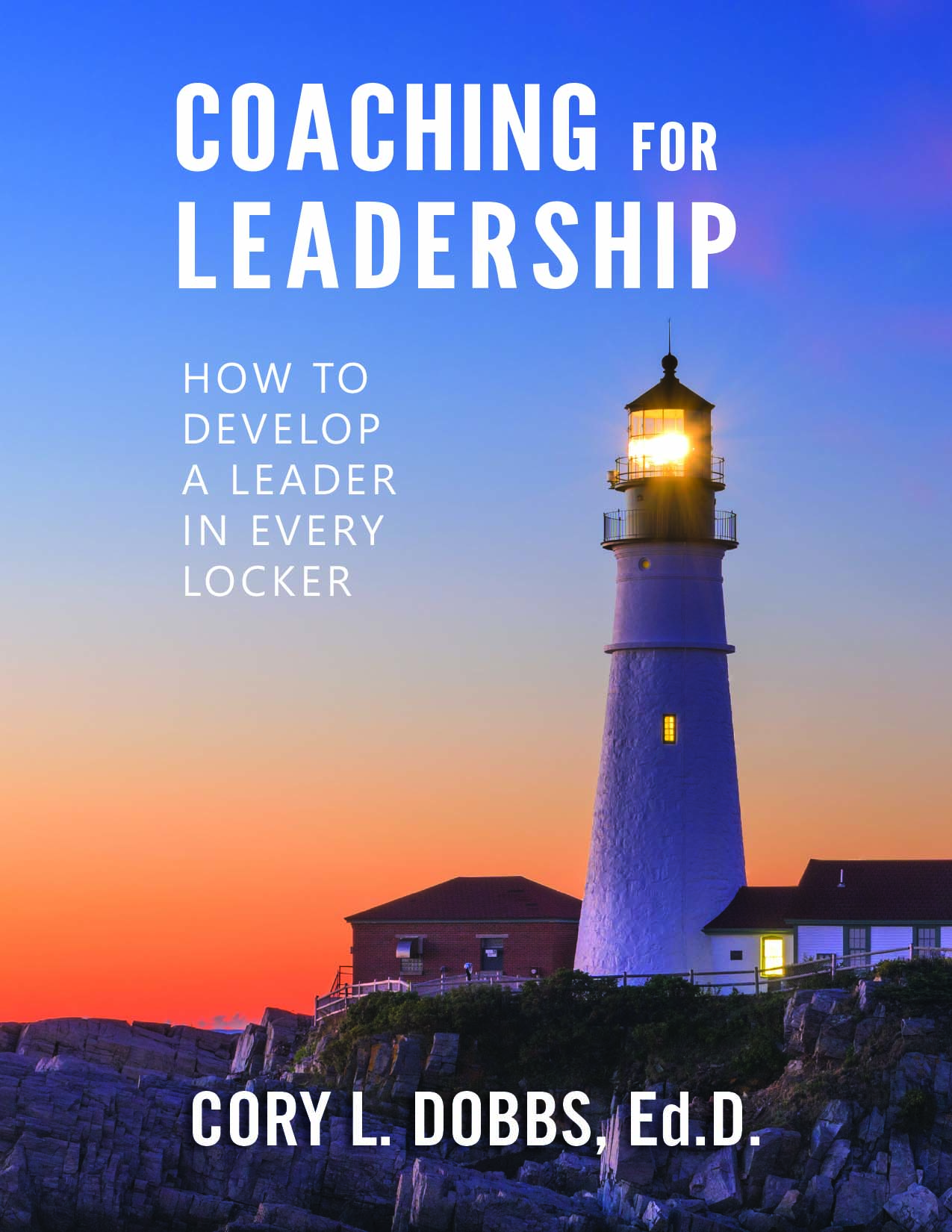
We are pleased to announce a new chapter to the second edition of the best-selling Coaching for Leadership. The chapter, The Big Shift: Unlock Your Team’s Potential by Creating Player-Led Teambuilding, connects the previous edition of this book to its origin, as well as to the future of team sports. The new chapter sets forth a practical and applicable agenda for change and improvement. The reader is introduced to seven vital elements of change; seven shifts of traditional mental models that lead to the new core principles necessary for creating a player-led team culture. Click here for more information about Coaching for Leadership

“Tell me and I’ll forget. Show me and I may remember. Involve me and I will care.” -Your Student-Athlete The world of coaching is changing. In Coaching for Leadership you’ll discover the foundations for designing, building, and sustaining a leadership focused culture for building a high-performance team. To find out more about and order any of the Sport Leadership Books authored by Dr. Dobbs including Coaching for Leadership, click this link: The Academy for Sport Leadership Books

About Cory Dobbs, Ed.D.

Cory Dobbs is the founder of The Academy for Sport Leadership and a nationally recognized thought leader in the areas of leadership and team building.  Cory is an accomplished researcher of human experience. Cory engages in naturalistic inquiry seeking in-depth understanding of social phenomena within their natural setting.

A college basketball coach, Cory’s coaching background includes experience at the NCAA DII, NJCAA, and high school levels of competition.  After a decade of research and development Cory unleashed the groundbreaking Teamwork Intelligence program for student-athletics. Teamwork Intelligence illuminates the process of designing an elite team by using the 20 principles and concepts along with the 8 roles of a team player he’s uncovered while performing research.

Cory has worked with professional athletes, collegiate athletic programs, and high schools teaching leadership and team building as a part of the sports experience and education process.  As a consultant and trainer Dr. Dobbs has worked with Fortune 500 organizations such as American Express, Honeywell, and Avnet, as well as medium and small businesses. Dr. Dobbs taught leadership and organizational change at Northern Arizona University, Ohio University, and Grand Canyon University.

Film Your Timeouts and Get Instant Results

By Brian Williams on February 26, 2020

This article was written by Don Sicko and republished with permission.

The original article appears at Film Your Timeouts and Get Instant Results.

I was watching a film of a recent game the other day and it dawned on me after I fast forwarded through a couple of timeouts that the videographer was purposely taping his team’s timeouts.

You should see the behavior. All players, assistants, managers and medical personnel go to exactly the same spot in every timeout, whether seated or standing and the attention to the head coach is total. There is absolute total eye-contact with the coach and no one is engaged in side conversations. Occasionally, an assistant is seen handling a side issue but even there, it’s all business. Big Brother is watching but with worthwhile intent. It also helped that the videographer had really good equipment and that he was considerably higher than the bench to get a good angle.

This coach has obviously trained his players exactly where to be and how to act. Maybe he told them he was doing it the first time; maybe he didn’t. In either case, his players now know the deal and know they’re being monitored just like they are in action and that they’re accountable in both situations.

I’m certain now that other coaches likely do this but it never hit my radar until now and thought it worth a short post.

3 on 3 Gauntlet Gap Defensive Positioning Drill

By Brian Williams on February 21, 2020

This video is with Matt Lewis, Men’s Coach at University of Wisconsin-Oshkosh, 2019 NCAA Division III National Champions and 2019 NABC Division III Coach of the Year.

Take the drill and make it fit your needs.

You will need to be on a network that allows you to access You Tube to view the video.

Click the play arrow to view the video.

There is narration with the video, so please make sure that your sound is on.

You can find out more about the Championship Productions video that this clip is from at this link: Personnel Pack Line

The video with Coach is available in both DVD and online format.

The Fundamental Guide to Basketball Offensive Concepts and Structure

By Brian Williams on February 19, 2020

This article is republished with permission. The original article appears at The Fundamental Guide to Basketball Offensive Concepts and Structure.

The fundamental concepts that make up a good offensive team are floor spacing and ball movement along with fundamental basketball skills such as passing and dribbling. Being able to perform these actions with confidence and flawless execution takes hard work and discipline, but it also requires proper teaching and accountability from your coaches and teammates.

To get better at fundamental concepts and skills, you have to put yourself into the right game situations. What are realistic scenarios you find yourself in during a game that you can recreate in practice?

In this article, NBA Assistant Coach for the Philadelphia 76ers, Billy Lange (At the time the article was written, this was up to date. Coach Lange is currently the Head Men’s Coach at Saint Joseph’s University), is going to share many different drills to use with the focus on improving floor spacing and ball movement they utilize to succeed in the NBA!

Spacing Drill

The focus of this drill is on spacing the floor. Your offense is going to start a foot and a half behind the three-point line. This amount of spacing will give your offense enough space so they can maximize their actions. You want your offense to always be higher, wider, and lower than the defense. Great offense must create space.

Starting Spots

Basketball Spacing Drill

Four players start on the perimeter: 2 players in each wing spot (W) with a basketball and 2 players in each top spot (T)

Actions of the Drill

Offensive Basketball Fundamentals

Wing (W) passes to the Top (T) who catches aggressively, loaded and ready to shoot then attacks the rim for a score. As they attack, the Wing (W) is replacing them at the top. Top (T) rebounds their own ball and fills the open spot on the wing. After one side attacks, the other side of the court will perform the same actions. Essentially, you will go back-and-forth attacking on both sides.

Video Demo

Body Movement Drills

The focus of this drill is on body movement. A lot of players tend to stand on offense if they’re not getting a shot. You need to break this bad habit. In these drills, every pass will be following by some form of movement which forces your players to pass and move. Every player in the drills will rotate within the positions which means every player is practicing body movement.

Drill #1

Starting Spots

Offensive Concepts for Basketball

Three players start on the perimeter: 1 player in each wing spot (2 and 3) and 1 player (1) in the top spot with a basketball

Actions of the Drill

Pass and Cut in Basketball

Player 1 passes to Player 2 on the wing then basket cuts down the middle of the lane. As that happens, Player 3 fills the top spot and 1 will relocate and fill the open spot on the wing.

Offense Structure Concepts

Player 2 reverses the ball back to Player 3 at the top who quickly reverses to Player 1 on the opposite wing. After reversing the ball, Player 3 will basket cut down the middle of the lane. As that happens, Player 2 fills the top spot and 3 will relocate and fill the open spot on the wing. From here, you continue with this passing, cutting, and filling pattern.

Video Demo


Drill #2

Starting Spots

Pass and Interchange

Four players start on the perimeter: 1 player in each corner (3 and 4) along with 1 player in each top spot (1 and 2) with Player 2 starting with the basketball.

Actions of the Drill

Basketball Offensive Concepts

Player 2 reverses the ball to Player 1 in the opposite top spot. After passing, Player 2 and Player 3 interchange spots which means 2 goes to the corner and 3comes up to fill the top. When 3 gets to the top spot, Player 1 will reverse the ball back. After reversing the ball, Player 1 and Player 4 will then interchange spots. The drill continues to reverse the ball back and forth between the top spots while the players interchange after each reversal pass.

Video Demo

Starting Spots

Fundamental Concepts for Offense

Four players start on the perimeter: 1 player in each corner (3 and 4) along with 1 player in each top spot (1 and 2) with Player 2 starting with the basketball.

Actions of the Drill

Offense Structure in Basketball

Player 2 reverses the ball to Player 1 in the opposite top spot. After passing, Player 2 cuts to the basket and Player 3 fills the top spot. After cutting, 2 fills the open spot the corner. When 3 gets to the top spot, Player 1 will reverse the ball back. After reversing the ball, Player 1 will cut to the basket and Player 4 fills the top spot. After cutting, 1 fills the open spot in the corner. The drill continues to reverse the ball back and forth between the top spots while the players basket cut and fill after each reversal pass.

Video Demo

Drill #4

Starting Spots

Fundamental Offense Concepts

Two players start on the perimeter: 1 player in the top spot (1) with the basketball and 1 Player in the opposite corner (2)

Actions of the Drill

Attack and Cut Offense Drill

Player 1 attacks the middle of the lane forcing the Dummy Defense to help. As the Defense helps and recovers, Player 2 cuts to the basket for a pass from 1.

Drill Demo

Penetration Drill

The focus of this drill is on dribble penetration and reading the help defense. It’s not always on the first attack at the basket that you get a good look, but on the second. A good offense attacks the middle on every possession and more than once.

Starting Spots

Fundamental Offense in Basketball

Two players start on the perimeter: 1 player in the top spot (1) and 1 Player in the opposite corner (2) with the basketball

Actions of the Drill

Fundamental Concept of Offense

Player 2 attacks the middle of the lane and kicks out to Player 1 who has slide over a few steps to create an open passing lane. After passing to 1, 2 sprints out to the perimeter around the top area.

Offensive Concepts in Basketball

As 2 gets out to the perimeter, 1 attacks the middle of the lane and passes out to 2 for a shot.

Drill Demo


Putting It All Together

  • « Go to Previous Page
  • Page 1
  • Interim pages omitted …
  • Page 36
  • Page 37
  • Page 38
  • Page 39
  • Page 40
  • Interim pages omitted …
  • Page 288
  • Go to Next Page »

Primary Sidebar

  • Twitter
  • Facebook
  • Linkedin
coachestoolbox
personaldevelopmenttoolbox
basketballplayerstoolbox
basketballtrainer
athleticperformancetoolbox
coachingbasketball

© Copyright 2026 Coaching Toolbox

Privacy Policy