• Skip to primary navigation
  • Skip to main content
  • Skip to primary sidebar

  • Basketball Plays
    • Ball Screen Sets
    • Horns Sets
    • Man to Man Post Up
    • Man to Man Isolations
    • Backdoor Plays
    • Man to Man 3 Point Shot Plays
    • 2-3 Zone Attack
    • Baseline Inbound Plays
    • Sideline Inbound Plays
    • Combination Defense Attack
  • Drills
    • Defensive Drills
    • Offensive Drills
    • Competitive Drills
    • Passing Drills
    • Rebounding Drills
    • Shooting and Scoring Drills
    • Toughness Drills
    • Transition & Conversion Drills
    • One on One Drills
  • Blueprint
  • Practice
  • Mental Toughness
  • Skill Development
  • Offense
  • Defense
  • Store

1 on 1 Basketball drills

1 on 1 Basketball drills

By Brian Williams on March 12, 2010

These drills came from the Arizona Basketball Coaching Newsletter.

If you are interested in downloading the newsletter, here is a link to do so:  Arizona March Newsletter

Manager 1 on 1:

2 Managers/coaches (or chairs) stand 35 feet out from the baseline with one about 7 feet away from the sideline and the other 8 feet inside of that.

On coaches “Go”. the defensive player sprints to run around the chair/manager closest to the middle of the court while the offensive player runs dribbling the ball around the outside chair (closest to the sideline).

Once around the chair, the offensive player attacks the rim and the two play 1 on 1.

Inside the Three 1 on 1:

Two players begin underneath the hoop. The defensive player begins with the ball and he dribbles to any spot inside the three point arc to place the ball down. Once the ball is placed down, the offense runs to pick it up and the two play 1 on 1 live.

You can control where you want this drill to happen if you make the defense put the ball only in the paint.

Turn and Run 1 on 1:

Drill starts like a zigzag ball handling defensive slide drill but the defense allows the offensive player to beat him off the dribble up the sideline. The defensive player works on his speed and recovery to get back in front and square up the offense. Once the defensive player gets in front of the offense, the ball handler throws the ball to a manager/coach at the top of the key. The defensive player jumps to the ball in Help side and  when the offensive player catches it again, the two play 1 on 1 live.

Baseball:

This is a 1 on 1 drill that uses two teams playing 1 on 1 vs members of the opposing team counting the score like a baseball game. Start from the top of the key with a member of team 1 guarding a member of team 2 – if the defense gets a stop. then that’s 1 Out. If the offense scores than they get 1 run and there are no outs. On the first foul, you re-check the ball.  On the second, the offense gets a point. When three outs are up. You switch offense defense. When each team has gone for 3 outs, then you have just played one inning. You can do this drill from any spot on the court and can facilitate post players by allowing coaches to feed them w the post instead of playing 1 on 1 from the perimeter.

The Coaching Toolbox has hundreds of resources for basketball coaching including basketball practice, basketball plays, basketball drills, basketball quotes, basketball workouts, basketball poems, and more!
Basketball Team, Players, Recruiting, and Shooting

By Brian Williams on March 10, 2010

This list is from 100 things I’ve learned from coaching at the college level

By: Phil Beckner, former Boise State Assistant Coach

This is the second  part of three parts of this project.

Here is the link to the Lessons 1-37 from this same article

Here is the link to the Lessons 67-100 from this same article

Team:

38) Toughness is one of the most underrated characteristics of good teams!  You need speed, talent, athleticism, and skill but toughness gets you through the year

39) Winning plays show true toughness of your team, and really do WIN GAMES

40) Teams that win on the road have a “Tough, Together, and Aggressive Mindset”

41) Make sure your best players are your hardest workers, best leaders. The other players follow their example.

42) Your team leader doesn’t have to be the most energetic, or out spoken person, but he has to be the most competitive, and constantly leading by his example.  Ex: Jason Kidd

43) Your two best players have to be “Buy In” guys.  Get them to buy in and believe in what you and your program is all about…toughness, togetherness, sharing the basketball, competitiveness.  All the other players will follow if they do!

44) Your team can only play one game at a time and win one game at a time…especially at the end of the year when standings are close, or in the playoffs/tournaments, only goal is “Win your next game”

Players:

45) It’s more important to have your players mind right than their legs on back to back nights

46) Players like powerades/waters/granola bars/fruit…try to keep them healthy

47) Players want to be pushed, they will take having their butt chewed when you’re telling them how good they can become

48) Players are around each other all the time (practice, class, road trips, roommates) they have to like each other and respect each other

49) Players love hearing about the “next level”. Study, and research what the great players do and have info, articles, examples for them.  This helps get your point across.

50) Players look at the other team’s stats, standings, and schedules more than you think.  Keep them focused on their standings, their schedule, and their performance …“There is not enough time to worry about what you can’t control!”

Recruiting:

51) Do not trust anybody…everyone wants players!

52) Recruit high character kids…bad kids will be bad kids

53) Don’t take a player you can’t coach, or isn’t about what your team is about just because he is more talented than the next guy, you will hate coaching him all year

54) Have your assistants use “we” instead of “me” in recruiting

55) Know the recruiting rules…if you’re not sure about something you better ask!

56) Always have kids on the list to recruit in case you get caught in desperation mode when looking for a player.  This is when you take a guy that doesn’t fit or is a bad player because you were not prepared.

57) Don’t jump to conclusions on recruits, make sure you have the right evaluation, and take the time to do exactly that…EVALUATE!

58) If you recruit junior college players: be prepared to give them TIME to adjust to your level, learn your system, and gain confidence.  Don’t lose hope…be patient

Shooting:

59) Recruit shooters and shot makers…it’s hard to win w/guys that can’t shoot

60) It doesn’t matter what you run if you can’t shoot

61) You can never have enough shooters, teams are hard to guard when 4 out of 5 guys on the floor can shoot it

62) Shooters have to shoot! (Extra shots, extra reps) the great players shoot everyday

63) Extra freethrows will help player’s rhythm/stroke during the season and will save their legs. Great place to get eyes on the basket, and regain focus.

64) Have shooting games/competitions before and after practice to help motivate to get extra reps in (Celtic 50, around the world, 7-Up, etc)

65) During shooting workouts w/players emphasize WHERE they should be shooting from. Game shots, from game spots, at game speed…especially shots they get in your offense.

66) NEVER over coach shooting!  Keep it simple! Kevin Eastman only coaches “perfect feet, perfect follow through”.  Find out what’s most important for your shooters and leave it at 1 or 2 things.

Here is the link to the Lessons 1-37 from this same article

Here is the link to the Lessons 67-100 from this same article

The Coaching Toolbox has hundreds of resources for basketball coaching including basketball practice, basketball plays, basketball drills, basketball quotes, basketball workouts, basketball poems, and more!
The Quiz

By Brian Williams on March 10, 2010

1. Name the five wealthiest people in the world.
2. Name the last five Heisman trophy winners.
3. Name the last five winners of the Miss America contest.
4. Name ten people who have won the Nobel or Pulitzer prize.
5. Name the last half dozen Academy Award winners for Best Actor and Actress.
Name the last decade’s worth of World Series Winners.

How did you do?

The point is, none of us remembers the headliners of yesterday. These are no second-rate achievers. They’re the best in their fields. But the applause dies. Awards tarnish. Achievements are forgotten. Accolades and certificates are buried with their owners.

Now here’s another quiz. See how you do on this one:

1. List a few teachers or coaches who aided your journey through school.
2. Name three friends who have helped you through a difficult time.
3. Name five people who have taught you something worth while.
4. Think of a few people who have made you feel appreciated and special.
5. Think of five people you enjoy spending time with.
6. Name a half dozen heroes whose stories have inspired you.

Easier? The lesson? The people who make a difference in your life aren’t the ones with the most credentials, the most money, or the most awards. They’re the ones who care.

100 Things I’ve Learned from Coaching at the College Level Part 1

By Brian Williams on February 26, 2010

By: Phil Beckner, former D1 and G League coach.

This is the first part of three parts of this project.

Here is the link to Lessons 38-66 from this same article

Here is the link to the Lessons 67-100 from this same article

Coaching:

1) NEVER-EVER forget who has been a positive influence on you, and helped you get to where you are today…continue to thank them, and then DO THE SAME FOR SOMEONE ELSE!

2) BE DETAILED!…with everything!

3) “Don’t coach for the name on your business card”-Larry Shyatt, coach for your team, players, and head coach

4) Great question to ask yourself everyday “What does my team need right now?”-Herb Sendek

5) Have an Edge, even when you win a few in a row

6) Treat wins like losses and losses like wins

7) It’s hard to be a young assistant, you have to earn players respect, be careful about putting yourself on their level

8. Keep practices short 2nd semester, make them want more, keep them hungry

9) One bad apple can spoil the bunch, chemistry is vital

10) It’s not a good feeling to have a quiet team, need energy and enthusiasm

11) “Never lose a chemistry guy” –Doc Rivers

12) Care about the players that aren’t playing a lot, it’s hard for them to stay motivated late in the year


13) Be careful what you tell your head coach-“don’t make somethin out of nothing”

14) Keep your players together, they can be mad at the staff, but they have to stay together

15) Tell players something positive or good job more than u already do

16) “If you wanna win the race, you gotta feed the horses”…feed them well and get them what they want on the road

17) Sometimes it is best to “flush” a game after a bad night and start new the next day, you can’t make a habit of it though, maybe 1 a year

18) Rebounding wins games, always have one assistant watching/coaching rebounding.

19) If you stat it, chart it, or emphasize it, it will be important to your team (deflections, charges, turnovers)

20) Keep scouting reports specific and simple, players don’t remember half of it anyway

21) Make time to exercise, it keeps you sane

22) There are plenty of great coaches out there willing to help you if you just ask

23) Most people want to coach college because they want to do the big things (be on TV, recruit on the road, have input on game day) but the ones who are willing to do the little things(sweep the floor, check classes, open the gym late) are the ones who keep a job and move up

24) “Entitlement vs. Investment”-Kevin Eastman…be ready when you get the call! Prepare for your next position, you have to be ready to produce

25) “Let mad go” -Chuck Daly… it doesn’t bother the players as much as you

26) It is vital that you double check everything (especially for travel and video)

27) Good assistants take care of the minor stuff so the Head Coach does not have to worry about it (players on time, ankle braces, gear etc.) Allow him to worry about coaching the team and that’s it!

28) Find at least 20min a day to spend on yourself: personal development, phone calls to friends/family, networking, favorite reading websites

29) Don’t trust players when you ask them about academics, you will never get the whole truth

30) “Thoroughly study the game!”-Kevin Eastman…you will earn players respect by knowing the game and knowing your system, worst feeling in practice is when a player asks you something and you have to reply- “I don’t know”

31) Assistants do a better job when they are involved more, give them specific responsibilities.

32) Let assistants or strength coaches take care of “in-season” weight training.  Coaches need to be away from the players, and players need to be away from the coaches.

33) It’s better to make friends than enemies, everyone remembers the guys who screw them over, the guys who don’t return a call, or the guys who won’t help out…TRY TO HELP EVERYONE!

34) If you have extra game tickets to give away…GIVE THEM AWAY!  People love college athletics and players love fans at their games.

35) Find time to read during the season.  It’s a great way to find messages/stories/examples to give to your team…it keeps you thinking!

36) Appreciate your job and the opportunity you have.  Your head coach probably gets over 100 emails a year asking for an opportunity to be on his staff.  You are lucky to be called “coach”

37) “If you really like something another coach/team does—Steal It!…but give credit”-Tom Izzo  “If you  steal something, make sure you can TEACH it”-Hubie Brown

Here is the link to Lessons 38-66 from this same article

Here is the link to the Lessons 67-100 from this same article

The Coaching Toolbox has hundreds of resources for basketball coaching including basketball practice, basketball plays, basketball drills, basketball quotes, basketball workouts, basketball poems, and more!
Basketball Plays 3 Rover

By Brian Williams on February 25, 2010

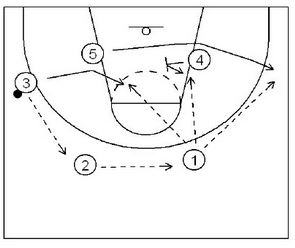
This play is run against a 2-3 zone defense.

I found this on one of Creighton Burns’ newsletters.

If you are interested in receiving his newsletter, contact us and I will put you in touch with Coach Burns.


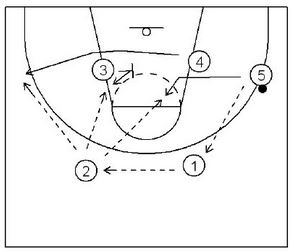
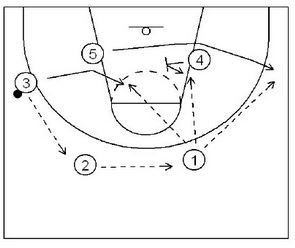
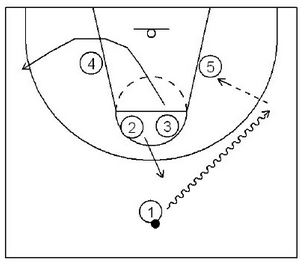
#1 Dribble enters to the wing.

#3 rolls away and fills the backside wing.

#2 steps out and fills the point.


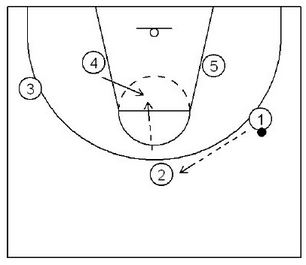
On the pass back to #2, #4 will flash into the middle, cutting against the grain.

If #4 is open on the cut,#2 should get him the ball for a shot.

if #4 does not have a shot, he should look down to #5and then to number one on the wing.

If #4 is not open, #2should move the ball down to #3.

On the pass to #3, #5 will slide across the laneto work to free himself.

#3 may have a shot attempt, or a feed to #5.

Note: when #2 makes the pass to #3, #2 and #1 should relocate toward the ball, and to get into a to guard front.

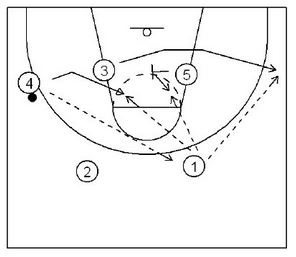
If nothing is open, #3 will start another ball reversal by passing to #2.

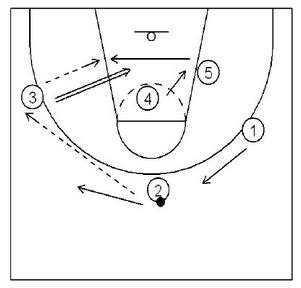
On the pass from #2 over to #1, #5 will screen the outside baseline defender and #4 will use the screen to cut to the wing.

#3 will flash into the middle from behind the zone.

#1 can feed #3 in the middle, #4 in the corner, or if #5 slips the screen, #1 may be able to get a ball to him.

This diagram illustrates another ball reversal, with #3 screening for #4, and #5 flashing into the middle from behind the defense.

#2 can feed #5, #4 cutting outside, or to #3 slipping the screen.

He may be able to pass fake and throw back to #1 for a shot opportunity

This diagram illustrates still another ball reversal with the three inside players roving into and out of the post area.

Note: if the skip pass is made, it is the same as if #2 made the pass to #1. #5 will screen and #3 will cut on the baseline.

Basketball Rebounding Drills

By Brian Williams on February 24, 2010

These Rebounding Drills came from the Arizona Men’s February Basketball Newsletter.  If you are interested in subscribing to their newsletter, please give me your:

1) name
2) email address
3) school or team
4) coaching position

War Drill (8 minute drill)

(1 basketball. 6. 8 or 10 players. Full Court)

Defense is in the paint and matches up. On the shot by the coach. their goal is to go meet the offense outside of the paint and keep them out of it.

The offensive players are set up behind the three point line and except for the point guard, (who gets back on defense), are going hard to the rim.  The defender on the point guard should look to help on boxing someone else out.

This is a highly competitive drill with a winner and loser. If the offense gets the rebound they get a point and can try to score a 2 or 3 pointer.  If they score we set the drill back up. If the defense gets the rebound or forces a turnover, there is no point scored but they push the basketball down court (transition offense) and try to score on the other end. On a score or turnover by them, play stops and we set the drill back up.

The ball will only go from one end to the other end one time and then the drill would be reset. If we don’t reset the drill it becomes a transition drill and not a contact drill.

There are no points on a made shot by the coach but it is still played like a rebound.

Knicks Drill

(1 or 2 basketballs. 6 or more players)

On the shot by the number 3 (could be a coach),  Xl and X4 come out and box out (they start with one foot on the baseline). Offensive players 1 and 5 are going hard to the rim. Numbers 2 and 4 are there for the outlet pass. If the defense gets the rebound they are going to pivot to the outside and outlet the ball. If it’s a made shot. they run out of bounds to outlet the basketball. The offense players try to stop the outlet pass. You could have one player deny the inbounder and the other denying the player receiving the pass.

If the offense gets the rebound they go 2 on 2 and try to score or the drill can be reset (coach’s option).

Offensive players switch between being offense or outlet players. The defense remains defense until you switch them out.

Try to match up the lines with perimeter players in one line and post players in the other.

This could be a competition drill with sprints for the losers. A defensive rebound is one point. a successful outlet pass is one point, an offensive rebound is two points and a made basket is one point.

The Defenders can cross and block out opposite line to vary the drill.

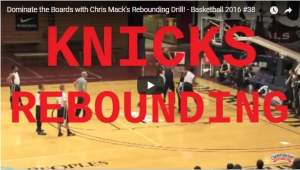
Here is a similar version run by Xavier’s Chris Mack. Coach Mack was an assistant on Sean Miller’s staff when Coach Miller was at Xavier.

You can find out more about the DVD that this video came from by following this link: Chris Mack: Smorgasbord of Basketball Drills

Get to the Basket Drill

(1 basketball, 3 or more players)

Place two defenders side by side facing the offense (if you have football pads, use them).  On the shot, the offense has to bust through to the basket.  This teaches them to never surrender going to the basket and being aggressive.

Only drill this from the wings.  If we have an offensive player at the top, we would normally want him to get back on defense.

Without the pads, the defense gives a little pressure, just enough to make them push through.

The Coaching Toolbox has hundreds of resources for basketball coaching including basketball practice, basketball plays, basketball drills, basketball quotes, basketball workouts, basketball poems, and more!
  • « Go to Previous Page
  • Page 1
  • Interim pages omitted …
  • Page 275
  • Page 276
  • Page 277
  • Page 278
  • Page 279
  • Interim pages omitted …
  • Page 288
  • Go to Next Page »

Primary Sidebar

  • Twitter
  • Facebook
  • Linkedin
coachestoolbox
personaldevelopmenttoolbox
basketballplayerstoolbox
basketballtrainer
athleticperformancetoolbox
coachingbasketball

© Copyright 2026 Coaching Toolbox

Privacy Policy