• Skip to primary navigation
  • Skip to main content
  • Skip to primary sidebar

  • Basketball Plays
    • Ball Screen Sets
    • Horns Sets
    • Man to Man Post Up
    • Man to Man Isolations
    • Backdoor Plays
    • Man to Man 3 Point Shot Plays
    • 2-3 Zone Attack
    • Baseline Inbound Plays
    • Sideline Inbound Plays
    • Combination Defense Attack
  • Drills
    • Defensive Drills
    • Offensive Drills
    • Competitive Drills
    • Passing Drills
    • Rebounding Drills
    • Shooting and Scoring Drills
    • Toughness Drills
    • Transition & Conversion Drills
    • One on One Drills
  • Blueprint
  • Practice
  • Mental Toughness
  • Skill Development
  • Offense
  • Defense
  • Store

Basketball Plays Box Triple

Basketball Plays Box Triple

By Brian Williams on October 2, 2012

Coach Vonn Read has submitted several plays from his playbook series The Basketball Encyclopedia of Plays to the Coaching Toolbox.

He has also served as an assistant coach in the WNBA with the Phoenix Mercury, Orlando Miracle, and San Antonio Silver Stars. He was an advanced scout for the Orlando Magic as well as The Charlotte Sting.

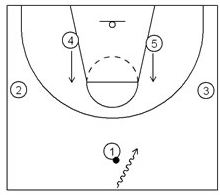
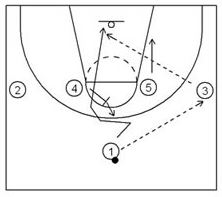
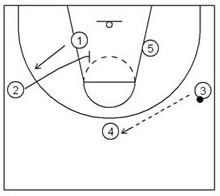
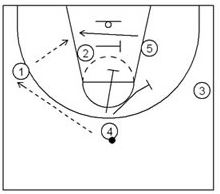
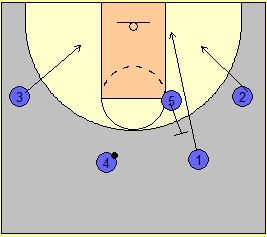
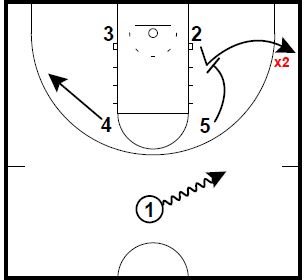
This play is a way to get a quick three point shot for your best shooter.


Basketball Plays


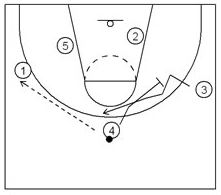
1 dribbles wide, looking to make a pass to 2 coming off the screen from 5

This is a decoy action, looking to get X2 to deny the pass to the corner.
 

Basketball Plays


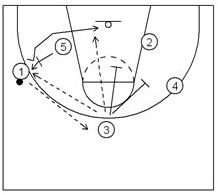
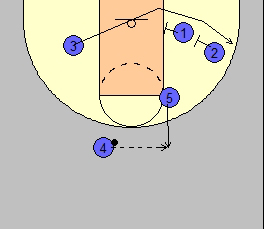
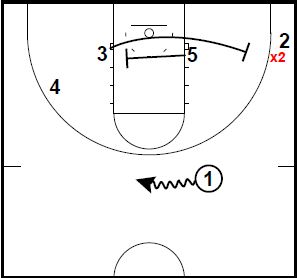
5 sets the screen for 3 coming hard off the screen. 3 sets the screen on 2.


Basketball Plays


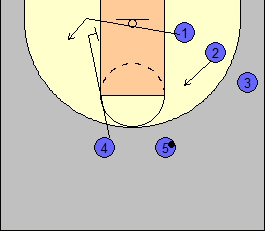
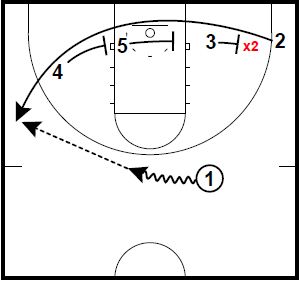
3, 5, and 4 sets the triple screen low for 2 coming off for the shot.

 

Coach Read has also put together The Basketball Encyclopedia of plays. You can check them out here: The Basketball Encyclopedia of Plays or read more about the books:

Any coach looking for the latest and innovative plays from the Professional, College, or High School levels can stop looking. With a compilation of over 7,700 different plays, you will never need to purchase another basketball playbook again. These playbooks can be used as a great reference tool for years to come. This 2 Volume Book includes plays from 19 different play categories, and they are the most extensive playbooks on the market.

The Basketball Encyclopedia of Plays (Platinum Series) contains over 7,700 Plays (Both Volumes combined) from the NBA, WNBA, USBL, and College levels from someone who has worked as an Advanced Scout or Coach on each level!!! This book has been intensely compiled over the last 21 years, with plays taken from a lot of NBA Coaches (past and present), WNBA coaches, and College coaches (Men’s and Women’s) from around the country.

Any coach that is serious about improving their knowledge of the game from an X and O standpoint will benefit tremendously from these books. These Books can be used to discover New Quick hitters, add a New Package to your playbook, or develop an entire Offensive System. There are a lot of new ideas and concepts in these books to study, and the Basketball Encyclopedia of Plays can be a great resource for coaches on all levels!!! This book is definitely for those X and O junkies who are always looking to improve as a Coach.

“THE GAME IS ALWAYS CHANGING? ARE YOU?” Vonn Read

Here is the link: The Basketball Encyclopedia of Plays
Basketball Poems One Possession

By Brian Williams on September 26, 2012

This poem was written by Jeff Smith when he was an assistant at the University of Dayton. He is currently the Head Coach at Madison High School in Middletown, Ohio.

Here is what he had to say about getting the importance of one possession across to your players.

It was only one possession,
Why must my coach scream,
My poor defense permitted the basket
But what can one hoop mean?
As the pass comes my direction,
And I fumble it into the stands,
The coaches voice rings loud and clear,
“Catch with your eyes and hands!”
C’mon coach, it’s a single possession,
Our team will be ok.
It’s just the first two minutes,
My gosh we’ve got all day.

At the 10 minute mark I remember,
That center is strong and stout
A putback for two, quite simple due
To my failure to turn and blockout.
But it was only one possession,
I didn’t commit a crime,
My team is ahead and I’m playing well,
And there’s still plenty of time!

 
As the halftime buzzer is sounding,
And I watch the ball bank in,
I know I will hear from my loving coach
Of my questionable effort to defend.
But it was only one possession
Coach-don’t have a heart attack!
We’re down by one, but we’re having fun,
I know we’ll get the lead back!
The second half mirrors the first,

But it’s early, it’s not a big deal,
That my failure to use a pass fake,
Results in an unlikely steal.
But quickly I sink a jumper,
I’m greeted by high fives and slaps,
But the next possession I give up a layup.
I guess I had a mental relapse.
But it’s only one possession,
C’mon Coach, “Chill Out.”
It’s crazy to see you disgusted
As you slap the assistant and shout.
“Victory favors the team making the fewest mistakes.
Single possessions are the key.
So treat them like gold and do as your told,
And play with intensity.”

I step to the line for one and one,
But I’m having a concentration lapse.
The ball soars through the air, I’ve shot it too hard,
I’m afraid the support will collapse.
In post game I sit at my locker,
Pondering what more could I do.
I realize the value of a single possession,
What a shame that we lost by two.

55 Defense

By Brian Williams on September 25, 2012

These notes were sent to me by Steve Smiley. The notes were taken by Jim Ponchak.

Our Defense Never Rests!

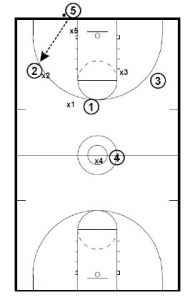
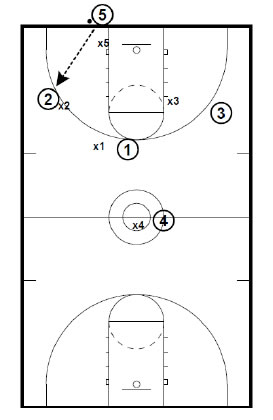
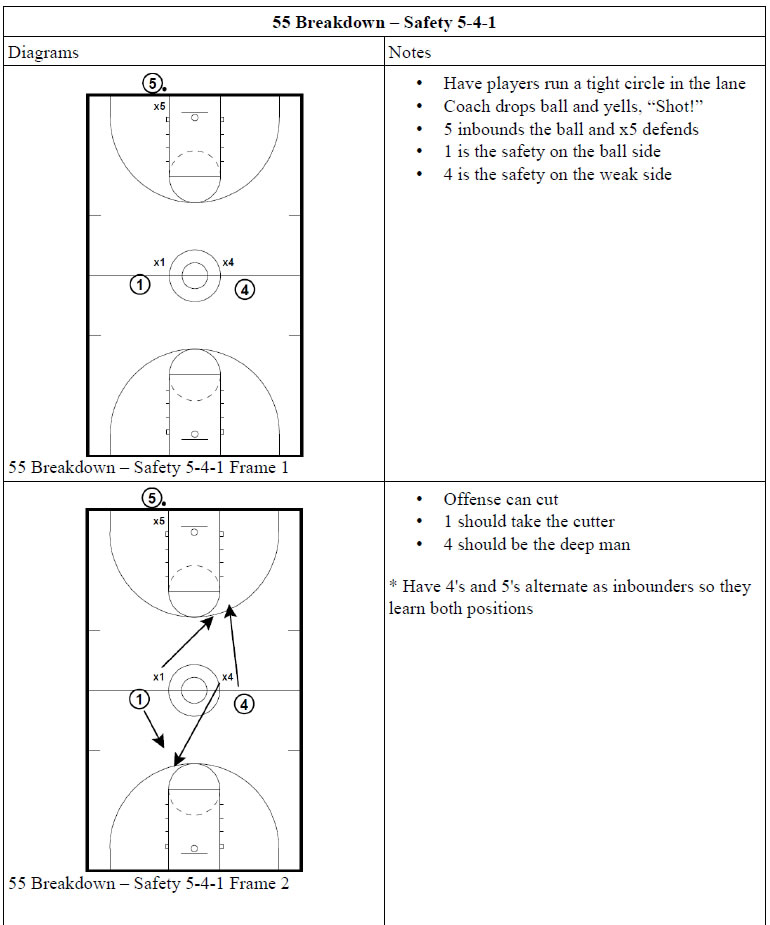
55 Defense is a full-court half zone, half man press

• On ball side it is man with a hard denial
• On weak side it is a zone
• All traps are on the sideline
• You never trap in the middle


Skills

◦ Influence the ball from side to side
◦ Trap – need 45 degree angles
◦ High level of conditioning – players can usually only handle playing 5 to 6 minutes at a time

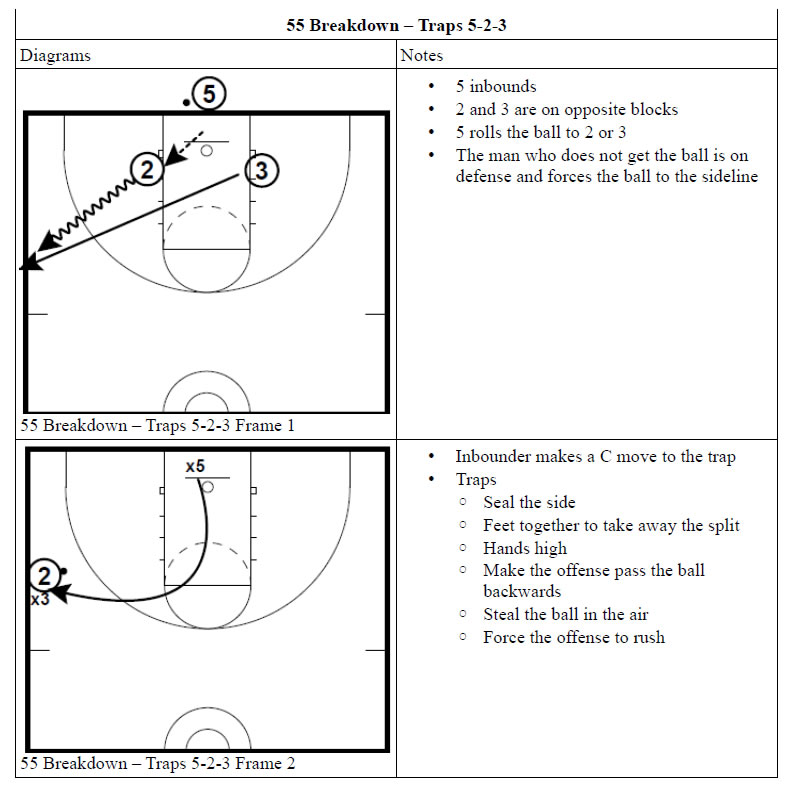
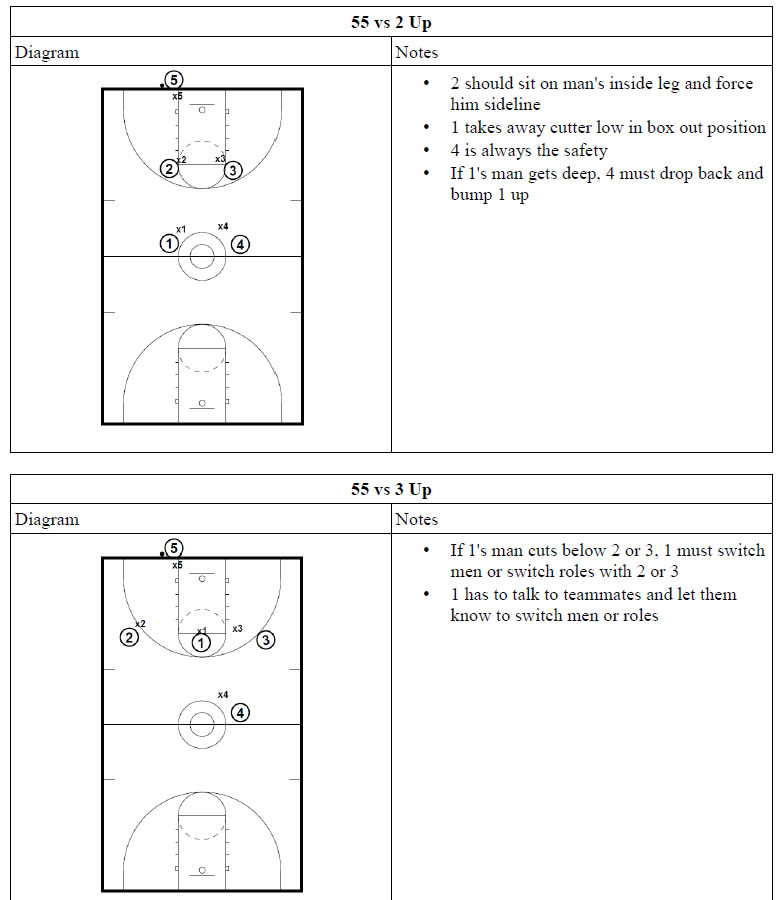
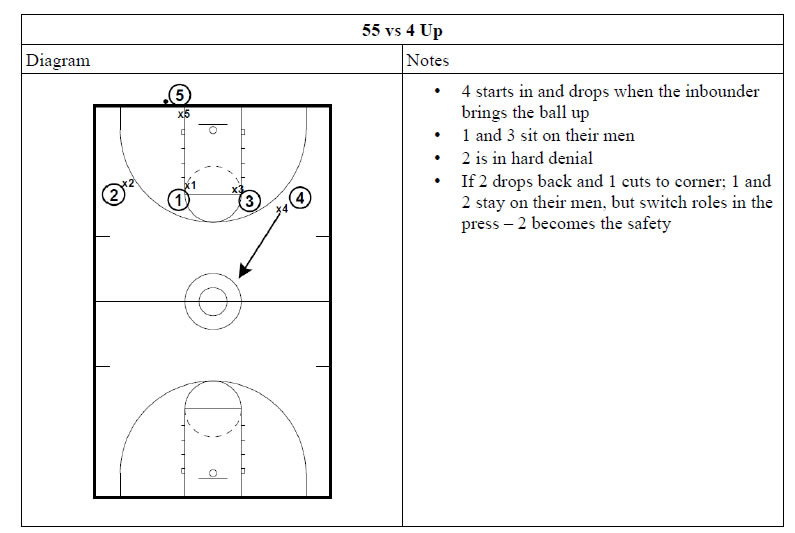
• The 2 and the 3 are assigned a side of the court that they stay on
• If their men switch sides of the court, the 2 and 3 release them to the other side and stay on their side
• Running 55 forces the other team to prepare for you

• Not concerned with lateral passes

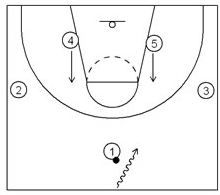
• The 1 can never trap. 1 is a safety, great anticipator, the thief, always in the ball lane, 1 never gets in front of 2 or 3

• 4 relieves the 1, watch ball as you get back

• 5 is the hardest worker, traps all over the floor, willing to run, hands are up touching on top as he covers the inbounder, wants the ball to be lobbed, bounce passed, or deflected


• 2 is on the man side of the zone (ball side), picks up the 1st pass to the left of the 5, responsible for trapping and tracking in his lane

• If the 2 winds up on the weak side, he is in the middle behind the trap

• 3 is the same as 2 on the other side of the floor except he starts out in zone on the weak side, responsible for the 1st pass to the right of 5

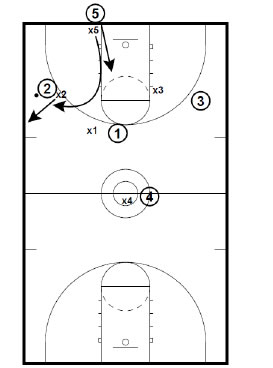
• 5 makes a C move to trap the inbounds pass

• Players in the middle read eyes and feet of the man with the ball

• Don’t trap in the middle

• Traps are always on the side

• If the 2 gets beat up the sideline, he c moves to track down the player in his lane
• “House on fire!” – ball beats the defense

◦ 5 picks up the post player on the weak side of the floor

◦ 4 picks up the post player on the ball side of the floor
◦ 1 runs to the top of the key
◦ 2 and 3 run to the ball if it is in their lane or the top of the key if it is on the weak side
◦ 1 should call for a switch if he sees that 2 or 3 is beat
◦ Players chasing the ball down from behind should slap up at it with their inside hand

Drills

◦ 5-on-5 Full-Court
▪ Have all 10 players run in a tight circle in the lane
▪ Coach drops the ball and yells, “Shot!”
▪ The offense picks the ball up and inbounds it, it is now live 5-on-5
▪ The 2 must create contact on the ball side
• Hit the cutter with an arm bar
• See the ball, feel the man
▪ Check 3’s positioning to make sure he can’t get beat deep
▪ 3 gets closer to his man as his man gets closer to the ball
▪ If 1’s man cuts to the ball, 1 yells cutter and passes man off to 3
▪ If the inbounder runs the baseline, 3 denies in man and 2 becomes the zone defender as the ball side and weak side get switched
▪ 5 C moves to the 1st pass and uses short choppy steps to slow down as approaches for the trap
▪ If 4’s man cuts, he calls cutter and passes him off to 1
▪ 1 lets 4 know he has made the switch
▪ 4 drops back on deep man
▪ Emphasize talk and contact with arm bar
▪ Defense needs to get their arm over the offense’s arm so the offense cannot bring their arms together

Diagrams of Drills

Basketball Plays Lobo

By Brian Williams on September 24, 2012

This play is run against a man to man defense.

From Coach Creighton Burns’ newsletters.


Basketball Plays

#1 dribbles the ball into the attack zone and #4 and #5 flash up to the elbows.


Basketball Plays

#1 enters the ball to #3 and runs a “lobo” cut to the basket off a back screen set by #4.

On the pass from #1 to #3 , #5 slides down to position in the mid post area.

#3 can make a pass to #5 in the post , or throw over the top to #1 if he is wide open.

Basketball Plays

If #5 or #1 are not open , #3 will pass out to #4 at the swing pass.

On this pass to #4 , #2 will down screen for #1.


Basketball Plays

On the pass from #4 to #1 , #2 will “cross screen” for #5

If #5 is open on his flash to the ball , #1 should give it to him.

After passing , #4 can screen down for #2 , or screen away for #3.

Basketball Plays

In this diagram , #4 screened away for #3.

#3 waits and cuts hard to fill the point.


Basketball Plays

#1 makes the pass to the swing man he receives a back screen from #5.

If #1 is open on his cut , #3 should get him the ball.

If , #3 makes a pass to #5 who has stepped out after screening , he has the choice of down screening for #2 or screening away for #4.

Fighting the 5 Feedback Traps

By Brian Williams on September 19, 2012

Guest Post from Brian McCormick, CSCS, PES: Performance Director.

Feedback is an essential component of basketball coaching and teaching. Experienced basketball players must engage in deliberate practice to improve, and one element of deliberate practice is feedback. However, giving feedback to a player is an art, as a coach must balance his or her player’s different needs.

According to Dr. Cheryl Coker of New Mexico State University, there are five “feedback traps:”

  1. More is not better.
  2. Offering feedback too quickly.
  3. Giving too much information.
  4. Interfering with automatic processing.
  5. Misdirecting attentional focus.

When I coach, I use three types of drills: Teaching, Training and Competition. One way these drills differ is the amount and type of feedback. Players’ needs differ at various points in the learning and developmental process. In Teaching drills, I use a lot of instruction and correct players often. In Training drills, I use cue words to remind players of previous instructions and intersperse these cues into the drill without stopping the drill. In Competitive basketball drills, I limit the instructions until after the conclusion of the drill and then address the performance.

A few years ago, I worked out two players. Damon was a college student deciding between starting his coaching career and trying out for a junior college basketball team. Chase was a high school sophomore learning the game and growing into his body. I had worked with Damon while he was in high school, and I knew he had trained with a couple other guys who I respected. After the workout, I asked his opinion.

He said he liked everything, but he said that I had missed stuff. I had not corrected every one of Chase’s mistakes. I listened. I explained that I saw the mistakes, but chose to ignore some. He said he preferred another trainer because he critiqued every mistake.

First, I explained that I ignored some mistakes because my focus was elsewhere. Mainly, we were working on Chase’s shooting. When he traveled on his first step a couple times, I ignored the mistake. I did not want to change his focus. I wanted to limit Chase’s thinking, not give him additional information to process. If I stopped a repetition and focused on the traveling, his focus would shift from shooting to his first step. At that moment, I was teaching him to shoot, so I focused on shooting.

Next, I ignored some mistakes on his shot. Part of developing a shooter is building confidence. When a young player hears a negative critique after every shot, he loses confidence. He questions his shot after every repetition. Plus, the more I talk, the less the player shoots.

I choose my feedback carefully and balance the necessary explanations with the need for repetitions. If I explain every mistake, but he only shoots 15 times in an hour, there is little learning, as he remembers only words (maybe) and not the feel of the correct execution.

I also know that as an individual trainer, I will not be at his games and practices. Part of my job is to teach a player to provide his own feedback. If I speak immediately after every repetition, I take away his responsibility and he relies on me. I know that I am instructing too much when a player misses a shot and looks at me for an explanation or instruction. On the flip side, I know that I am teaching effectively when the player notices the mistake before I have a chance to say anything.

Finally, I ignored some mistakes because I want him to process the information. Teaching is not giving a player a grocery list of things to change on the next shot. Instead, I focus on the big issues and work to the smaller issues. Oftentimes, when the player fixes a big mistake, the small mistakes sort themselves out.

For instance, I once trained a young player who could not make a free throw even though he was otherwise a very good player. His mother had been to several other trainers and one suggested the player see an eye doctor! I watched the kid shoot and he was off-balance, even on a free throw. He did not know how to bend properly. He missed short on his shots, and his coaches yelled at him to bend his knees. However, he bent his knees to a great degree; the problem was that he bent his knees so far forward that he was completely off-balance. Telling him to bend his knees exacerbated the problem rather than fixing it.

Rather than focus on his shooting form, I focused entirely on the way he bent his knees. Basically, I taught him how to squat. For over a month, we worked on his shooting and I never addressed his upper body form. Until he could bend his knees and maintain balance, the rest of his shot was irrelevant. I wanted him focusing on bending properly; I did not want to divert his attention to his elbow on one shot, his wrist on another, and his eyes on another. By limiting the information to process, he could focus more on the biggest task (bending properly) and improve his shot gradually once the biggest problem was fixed.

As he improved his balance, his shot improved. Suddenly, he did not miss short because his balance affords the opportunity to shoot the ball high, rather than pushing the ball at the basket. His shot mechanics were not picture perfect, but they were not that bad, either. Once he established balance, we worked on finding a consistent set position and release point. By fixing the major problem, we were able to move forward and attack the smaller problems with a greater degree of success.

Coaching is not demonstrating one’s knowledge or mastery of a subject. Effective coaching requires eliciting a performance from another person. While feedback is essential for a player, the timing, accuracy and amount of feedback determines its effectiveness. To ensure feedback effectiveness, avoid the five feedback traps.

McCormick is the Performance Director for TrainforHoops.com. His books, including Blitz Basketball, are available through www.lulu.com/brianmccormick. He has an excellent basketball forum at www.thecrossovermovement.com

Basketball Plays LA Special

By Brian Williams on September 17, 2012

The diagrammed play below is run against a man to man defense.

I like to use the 1-4 high to start our sets for two reason:

1) It helps our players know that we are running a set
2) It makes it difficult to pressure the entry pass since there are 4 options


1 dribbles away from 4 as 4 pops to the deep elbow. 1 passes to 4


After passing to 4, 1 cuts off the backscreen from #5.

2 and 3 move toward the lane.

if 1 is open, 4 will pass to him/her, but that will not be open very often


4 passes to 5 as 1 and 2 are setting a staggered screen for 3. If 3 is open, 5 will make the pass


After passing to 5, 4 cuts to the block to screen for #1.

If 3 is not open, 2 will make the second cut off of the scrreen set for 3.

#1 cuts off the screen set by #4


  • « Go to Previous Page
  • Page 1
  • Interim pages omitted …
  • Page 250
  • Page 251
  • Page 252
  • Page 253
  • Page 254
  • Interim pages omitted …
  • Page 288
  • Go to Next Page »

Primary Sidebar

  • Twitter
  • Facebook
  • Linkedin
coachestoolbox
personaldevelopmenttoolbox
basketballplayerstoolbox
basketballtrainer
athleticperformancetoolbox
coachingbasketball

© Copyright 2026 Coaching Toolbox

Privacy Policy