• Skip to primary navigation
  • Skip to main content
  • Skip to primary sidebar

  • Basketball Plays
    • Ball Screen Sets
    • Horns Sets
    • Man to Man Post Up
    • Man to Man Isolations
    • Backdoor Plays
    • Man to Man 3 Point Shot Plays
    • 2-3 Zone Attack
    • Baseline Inbound Plays
    • Sideline Inbound Plays
    • Combination Defense Attack
  • Drills
    • Defensive Drills
    • Offensive Drills
    • Competitive Drills
    • Passing Drills
    • Rebounding Drills
    • Shooting and Scoring Drills
    • Toughness Drills
    • Transition & Conversion Drills
    • One on One Drills
  • Blueprint
  • Practice
  • Mental Toughness
  • Skill Development
  • Offense
  • Defense
  • Store

Basketball Perimeter Individual Skill Drills

Basketball Perimeter Individual Skill Drills

By Brian Williams on January 17, 2013

From an old Creighton Burns’ newsletter…

The skills of passing and catching on the move remain a significant area of deficiency and are areas that can be difficult to teach and drill.

The ability of guards and perimeter players to penetrate with their head up and make intelligent scoring or passing decisions is such an integral part of the game, yet often under-taught and rarely drilled.

This series of simple drills, involving 2 players and coach, provides some ideas for improving this area and expanding the skill package of perimeter players.

My hope is that you can take something away from this post to break down your offensive system into drills that will help your players.

Diagrams created with FastDraw

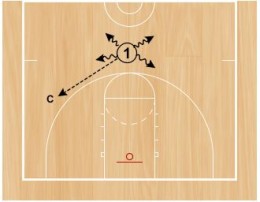
Parker Speed Pass Drill
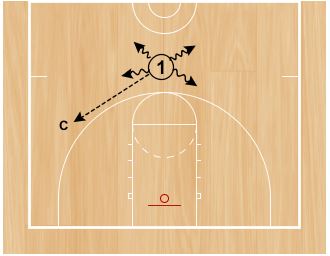
basketball-drills1

Player has the ball in the middle of the floor, coach on the wing

The player begins the drill by doing stationary crossovers dribbles. Player can move one step forward, back, or sideways but should stay in the area of the top of the key.

On the command of the coach, the athlete must make a firm, flat pass as quickly as possible to the coach.

Build up to making a one hand pass straight from the dribble to the pass, drill right and left hand. You can also vary the dribble move and use between the leg, behind the back, and other moves in place of a crossover.

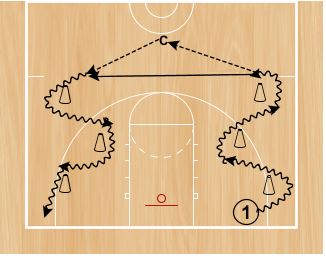
Circuit to Pass Drill
basketball-drills2

Player starts at the base-line and dribbles full speed through the circuit, executing crossovers at each cone

As the player gets to the last cone, make a firm, flat pace to the coach and sprint past to get the ball back

Dribble through the second circuit (full speed again) Emphasis on being quick from the dribble to the pass.

Time the drill to push the player to dribble full speed and also to measure improvement.

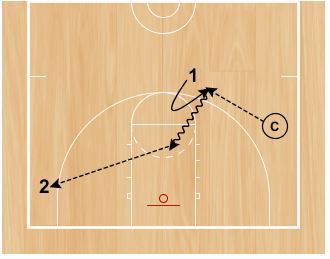
Middle Penetration Drive and Kick Drill
basketball-drills3

Guard receives the ball from the coach and rips the dribble through to the middle

As the handler reaches the middle of the lane, make the pass quickly from the dribble to a stationary player in the corner

Drill with handler making firm, flat chest pass. Depending on your philosophy, you can build to one hand pass straight from the dribble

Once the handler can consistently find the stationary target with a flat pass, have the receiver now making a cut

Emphasis on having eyes on the rim on penetration, staying low and being quick from the dribble to the pass

Put the shooter on both sides.

Again, timing the drill to get 10 reps with no turnovers provides motivation and is helps to measure improvement.

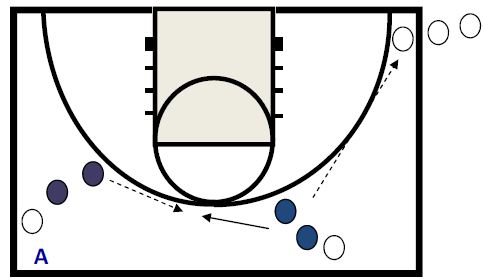
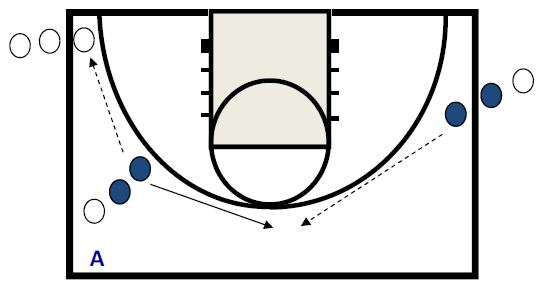
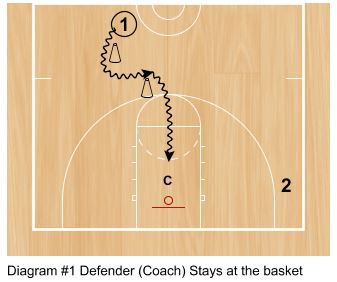
Turn the Corner Command Drill
basketball-drills3

basketball-drills5

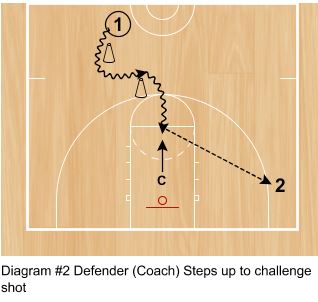
Guard beats the first cone, then turns the corner around the second cone

If the coach stays under the basket (Diagram #1), the guard pulls up for a shot or shoots a floater.

If the coach moves forward (Diagram #2), the guard kicks out for the shooter

With younger players, the coach can simply yell a “command” for the guard to react to

Works on penetrating with the eyes up and assists with decision making

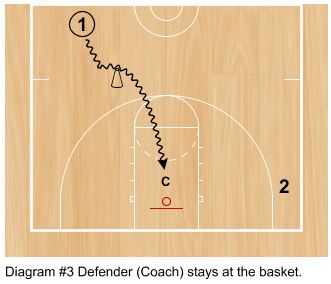
Middle Flow Command Drill
basketball-drills6

basketball-drills7

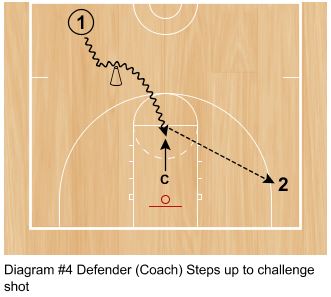
Similar to above, with the guard now beating the cone to the middle after a hesitation move off the “live” dribble

Again, the coach makes a movement to force the guard into a shot or pass decision OR the coach can yell a command

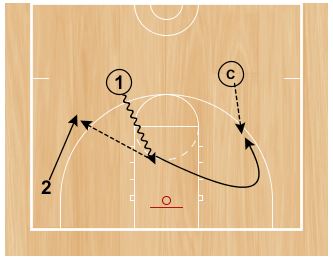
Drive, Kick, and Cut Drill
basketball-drills9

Guard penetrates middle and passes to shooter filling behind

After the pass, guard cuts to an open area to receive 2nd ball from coach for the catch and shoot

Drills moving after penetration

Emphasis on “what’s next?” – second efforts and continual movement
Post Play Basics

By Brian Williams on January 16, 2013

These notes about post play are from the Xavier Basketball Coaching Newsletter. To subscribe to their newsletter and to see the archives of their past newsletters, click here:

Xavier Newsletter

Get Position

Before you can make a move on the low post, you have to be able to get the ball first. You want to post-up, or receive the ball, along the free throw lane, at the mid-post. You do not want to post up in the lane, or you may get the three second call. You may have to fight hard to get into position to receive a safe pass. Get strong, feet wide apart, butt out, and back straight.

Seal the defender off. If he is over-playing you from one side, keep that arm and elbow firm to ward him off, while extending the opposite arm and hand to make a good target for the passer. When the pass comes, move toward it, to meet it. After receiving the ball, keep it up at chin level with elbows out, to protect it. Do not actually throw an elbow; just keep them out to ward off the defender. When receiving the pass, it is advantageous to meet the ball with a jump stop. When you jump stop, you have the option of either foot becoming your pivot foot, so you can make a move either way, to the lane or to the baseline.

Two things to try if you can’t get open

    1. Move away off the low post a few steps, then quickly come right back.
    2. If the defender stays in front of you, move him up to the high post at the elbow. Then give the passer a hand signal, and quickly cut back-door for the lob pass to the hoop. These are some basic moves the inside player should learn.

A. Low post moves

1. Drop step to baseline.

a. After receiving the ball, feel where the defender is.
b. If he is on the lane, or high side, give a fake toward the lane.
c. Then extend your inside (baseline) foot backward, pivot quickly to the baseline and toward the hoop, and make a one-bounce power-dribble to the hoop.
d. Keep your body between the defender and the ball, and extend your arms forward toward the hoop.

2. Drop step to lane (jump hook).

a. After receiving the ball, feel where the defender is.
b. If he is on your baseline side, fake to the baseline, and drop your lane-side foot backward.
c. Pivot quickly on that foot, and jump hook and shoot with the hand opposite the defender.

3. Turn and face defender and jab step.

a. After receiving the ball, feel where the defender is.
b. If he is directly behind you, that is, not toward either the lane or the baseline, but right behind you, do this.
c. Pivot and face the defender, while protecting the ball.
d. Give a quick jab step fak, and see what his reaction is.
e. If he drops back, just shoot up the baby jumper, often off the glass.
f. If he does not back off the jab step, quickly drive around him.
g. This is a good high-percentage shot.

4. Up and under move

a. After pivoting and facing the defender, fake a shot to get him to leave his feet.
b. Once he has straightened up, or jumped, you can beat him.
c. Quickly duck under him on a straight line to the hoop.

B. Playing the High Post

When the high-post player has the ball, they are in excellent position to make a pass down to the low post or to the backside wing (reverse the ball) or to a back-door cutter. Also, they can find a teammate spotted up for a three-pointer on the wing or in the corner. So being a good passer and finding the open teammate is important here.

The high post player should look to score also. At the foul line and elbows, have them pivot and face the hoop, looking to take the open shot, or looking for the pass to a baseline cutter. If their defender is up close in their face, have them fake the shot and use their quickness to explode around them and take it to the hoop. So you see that even a big man must have the ability to shoot the shot from the free-throw line, or fake and drive, just like a perimeter player. A post player is so much more effective and versatile if they can shoot the shot from the free-throw line area consistently.

Butler Basketball Notes

By Brian Williams on January 15, 2013

These notes about the Butler basketball program came from The University of Washington Newsletter. The notes were taken by Coach Brad Bestor.

I have some links to other resources from the Butler program below.

If you are interested in receiving the University of Washington newsletter, contact me and I will put you in touch with Coach Neighbors.

1. Open Gym ‒ short games (continue games to 7 by 1’s and 2’s)

a. Make the guy who hits game point make a F.T. to “seal”/”validate” the win
2. Defense – Continuous Screening Drill ‒ Diamond Look (4×4) ‒top, wings and under basket

a. pick for the picker action ‒ must be defended
b. the offense can make any read they want
c. focus on the Defense
d. play to a score with consequences

3. Great team defense (scouting) starts with determining how you will handle ball screens

a. You must start the season teaching hard hedge ‒ you can go any direction if guys can do that ‒ can’t go from soft hedge to hard hedge ‒ guys won’t buy in or get it.
b. Hard Hedge, Soft Hedge, Containment (make him pick it up)

4. Challenge guys with statistics ‒ asked Coach Stevens for their best examples

O.E.R. = Offensive Efficiency Rating (points per possession)

**Goal should always be over 1.0 ppp
*Next level ‒ chart efficiency on possessions by # of ball reversals
Zero reversals = .63 ppp
One reversal = .83 ppp
Two reversals = 1.1 ppp

5. Label opponents shot chart in categories:

A=layups, B=lane, C=14-19 footers, D=3’s
a. Don’t give up A’s or D’s ‒ chase them off the 3 pt. Line ‒ force them to hit Bs and Cs

6. Defensive Rotation Drill ‒ 4 x 4

a. On coaches call, Defensive player named by coach sprints to half court and back ‒ meanwhile his teammates are rotating in 3 x 4
b. Priority Defensively = stop basket, ball, most dangerous (Note-brutal 3 pt. Shooter open from 3 does not need to be chased, not “dangerous”

7. Terminology: Boxer’s Feet: always moving, shifty, ready to bounce

8. Strength and Conditioning: players should be able to stay in a stance for 35 seconds…practice, earn -Weight room goals(individual and team) for progress (testing various lifts for reps)

9. Role of Assistant coaches: Have 1 coach responsible for small group of guys (workouts, skill sessions, etc.)

10.Practice-Use of assistant coaches: Give Assistant coaches 10 minutes with a group and give guidelines for what they should be able to do when the time is up.

11.With great players ‒ Stat rebounds per minute and compare that with great players in your league.

a. Where would Chad see himself ranked? 7th of 7 “3-men” in rebounds per minute??

12.Make Seniors feel like family!! ‒ they need to know when they leave how much they mean to the program

13.Include alumni in 1st practice video clips of what certain things should look like…”Matt Howard will be on every clip for the next 20 years diving into the bleachers for loose balls or hitting the deck”

14.Question from Coach Brad Stevens: “How good can we be when our best player might not be the best teammate?”

15.“Great teams have great teammates”

16.Read the book: “Question Behind the Question”

17. Stevens says that everything they do is centered around these four areas:

1) Being great defensively
2) Not turning the basketball over
3) Taking great shots
4) Winning the hustle plays

You can get a copy of Brad Steven’s Butler Playbook along with Shaka Smart’s VCU Playbook by clicking here: Butler and VCU Playbooks Bundle

If you have any questions about the Playbooks, please feel free to email me.

Basketball Plays Elbow Special

By Brian Williams on January 14, 2013

Coach Vonn Read has submitted several plays from his playbook series The Basketball Encyclopedia of Plays to the Coaching Toolbox.

Vonn is currently serving as an assistant for the Women’s Team at the University of Houston.

He has also served as an assistant coach in the WNBA with the Phoenix Mercury, Orlando Miracle, and San Antonio Silver Stars.

He was an advanced scout for the Orlando Magic as well as The Charlotte Sting.

The play below can be used as an entry into your regular offense, to end another set you run, or as a set by itself.


Basketball Plays

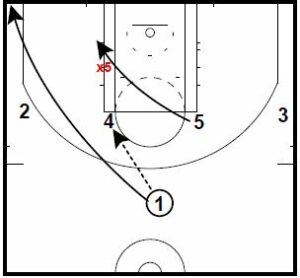
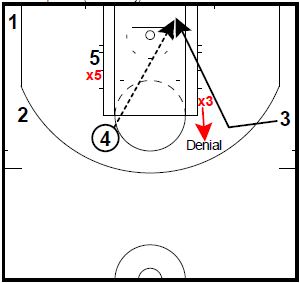
1 Passes to 4 and cuts hard to the corner.

5 dives hard to the strong side block, looking for the post up. X5 must play high side to deny the pass into the post.

This is a decoy action to set up the backdoor.


Basketball Plays

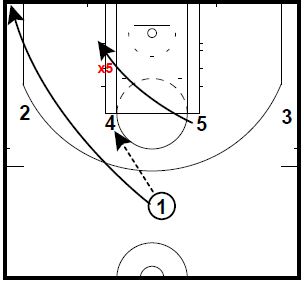
4 will turn and face and look at 3, signaling the 3 player to come and meet the pass.

This is a decoy move to set up the backdoor.

The 3 player will call the name of the passer and cut hard to the ball.

When X3 bites up to deny the pass, 3 will cut back-door for the layup.

Good End of Game Play!!!

Coach Read has also put together The Basketball Encyclopedia of plays. You can check them out here: The Basketball Encyclopedia of Plays or read more about the books:

Any coach looking for the latest and innovative plays from the Professional, College, or High School levels can stop looking. With a compilation of over 7,700 different plays, you will never need to purchase another basketball playbook again. These playbooks can be used as a great reference tool for years to come. This 2 Volume Book includes plays from 19 different play categories, and they are the most extensive playbooks on the market.

The Basketball Encyclopedia of Plays (Platinum Series) contains over 7,700 Plays (Both Volumes combined) from the NBA, WNBA, USBL, and College levels from someone who has worked as an Advanced Scout or Coach on each level!!! This book has been intensely compiled over the last 21 years, with plays taken from a lot of NBA Coaches (past and present), WNBA coaches, and College coaches (Men’s and Women’s) from around the country.

Any coach that is serious about improving their knowledge of the game from an X and O standpoint will benefit tremendously from these books. These Books can be used to discover New Quick hitters, add a New Package to your playbook, or develop an entire Offensive System. There are a lot of new ideas and concepts in these books to study, and the Basketball Encyclopedia of Plays can be a great resource for coaches on all levels!!! This book is definitely for those X and O junkies who are always looking to improve as a Coach.

“THE GAME IS ALWAYS CHANGING? ARE YOU?” Vonn Read

Here is the link: The Basketball Encyclopedia of Plays

Del Harris Five Levels of Communication

By Brian Williams on January 10, 2013

This post was written by NBA Coaching Legend Del Harris and posted with his permission.

This was written for Coach Harris’ book, On Point–Four Steps to Better Life Teams.

Thoughts on communicating in mentorship

Five levels of communication. When speaking to groups about relating to others more effectively from a leadership position such as coaching, I often specify five levels in communicating with team members. Each succeeding level requires a bit more volume and urgency in order to be effective.

a. Conversational. In the conversational level you are getting to know your people or are conducting normal verbal exchanges with acquaintances, good friends or loved ones. This is necessary learning what makes each individual tick, as well as in forming and maintaining relationships. Some of the conversation will be about the work involved, but much will be of other items that affect daily life—family things, current events and the like. It is important to set a good environment for learning (getting better at whatever the endeavor happens to be on a life team), but it is equally important to get to know each individual’s “personal context.” Each of us is different and part of being able to show real concern for another is to learn what things are unique to the person you are mentoring. Once you understand a little better one’s personality and background, it is easier to help that person on both the good and bad days that he will go through as you work together. Good listening technique is required, whereas many coaches/teachers tend to dominate the conversational levels with the second level that is noted next. Never underestimate the power of listening, and it takes a measure of humility to do that.

b. Informational. At the informational level, you are speaking more authoritatively and more firmly because you are teaching or expressing an opinion you think is of value. Teachers, preachers, coaches, and similar type leaders will raise their tone and expand their body language when instructing in order to emphasize the subject matter. This results from the passion that one should have for his subject material and the desire to help the listener to become a better performer. Or, it may simply be the way a person speaks when he “has the floor” in a group. His voice will be elevated above the conversational level, but controlled, compared to the level of a sales pitch or election rally. It is amazing that some overlook this difference when in a restaurant, seemingly wanting to get the attention of everyone in the restaurant.

c. Encouragement. Expressions of encouragement must be real, appropriate and given with feeling. It is important to express genuine excitement for improvements and successful achievements. The level of emotion should be commensurate to the value of the act. Overplaying a simple achievement, or underplaying a real accomplishment, can undermine the speaker’s credibility. In the NBA for example, some feats deserve a nod, some a fist bump, while others merit a chest bump, perhaps. Extreme jubilation should probably be reserved for winning a championship. In the NBA, when an individual player or an entire team celebrates with over-the–top animation too soon, most experienced onlookers will say, “Hey, act like you have made a shot before, or act like you actually won a game in the past!” However, while chest bumps may be out of place in the office, good performances do demand a commensurate level of acknowledgement. Faked or forced encouragement cheapens real achievements and does little to uplift the person, who probably assumes he is about to hear the next sentence with “But,” and then be followed with a suggestion or criticism.

d. Correctional. Mistakes should not be overlooked; they must be identified and corrected. Again, there should be an increase in the emotion or urgency in the voice, similar to the encouragement mode. The third and fourth levels, encouragement and correction, must be balanced against one another, but carry more emotion and urgency than the previous levels to be effective. It is great to be positive in one’s approach to problems, but everything isn’t “OK”, particularly repeated, similar violations. While a good argument can be made that the process of any endeavor is more important than the result, real life dictates that we are judged primarily on results. It is obvious that eliminating errors is important to achieving good results. This is especially true when done in an orderly, disciplined manner. To emphasize, people may shortcut or cheat to get a good result in the short run. But that is not a legitimate method on which to base a program or system. Correction that facilitates proper execution will provide better long-term results than will ill-advised shortcuts. In sports the best teams do not beat themselves by ignoring errors or committing the same mistakes repeatedly.

e. The fifth degree, or “going crazy” level.” As for the fifth degree, there are simply times when the person who leads or takes the point in a situation has to assert a strong authoritative approach. Occasionally, the followers must learn that the leader has a limit, an edge, that they really don’t want to challenge often. Does overturning the tables in the temple ring a bell, or how about calling the Pharisees a generation of vipers face to face in front of a large audience? However, this is an area that can be overdone to the leader’s and the entire operation’s detriment. I have embraced the following plan for over 30 years: Think of it like having one of the six-shooters in the old Western movies—or maybe a nine-shot clip for the younger folks. When the season or campaign or yearly audit is over, it is good to have a bullet or two left in the chambers. Use them up too soon, and you will be like a villain in those Westerns—you will pull the trigger and all that will be heard is a click—you are out of bullets! You may as well throw in your black hat—you are done! If you think you can use an automatic weapon approach when criticizing, you will wear down your people quickly and they will shut you out. That method of teaching/coaching just doesn’t wear well in the post 1970’s society. Whether that is a good or bad thing is dependent on one’s opinion, but it is the reality in team building in the post-Vietnam era.

Think of it this way: better putting will improve all golf scores. Don’t be so quick to pull out the driver (sorry, no mulligans); use your power wisely. Scale back to the correctional level and then move on down to the instructional level, as soon as it seems appropriate to do so. Once you have made your point, move away from an emotional response to a more controlled one. A lot of times we forget that we can only make our main point once. After that, it is making the same point over and over; that tends to become argumentative and/or destructive.

As a coach, focusing on the important aspects of leadership, improvement, and teaching the game can be overshadowed at times by urgent matters such as getting time-sensitive information out to your team. There are basketball team management apps that allow you to have immediate access to player and parent contact information on your desktop workstation, tablet, or phone. However, there are other ways to make the job of managing the team easier as well. Team management tools, like TeamSnap, automate a lot of these processes for you. In addition to letting you create, update and store a team roster, tools like TeamSnap let you see players’ availability for games and practices, assign responsibilities such as post game food or snacks, and keep track of who has paid their equipment fees, and completed their paperwork.

Basketball Drills Maryland Shooting

By Brian Williams on January 9, 2013

This shooting drill came from the University of Washington Women’s Newsletter.

If you would like to subscribe, email me and I will forward your interest on to their staff.

This is what Assistant Coach Mike Neighbors said about the drill:

“Team shooting drill we did a number of times during the break and our team really likes it. Rare shooting drill that also forces them to pass, rebound, and communicate effectively. See if you can beat our records.”

Competitive Team Shooting Drill that takes about 8 minutes to complete.


Maryland Shooting

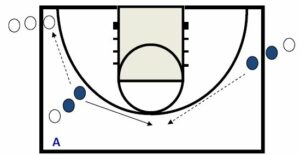
Begin drill with 4 balls. 2 balls in each of the lines shown above and one line without balls.

The middle line passes to the corner. The player in the corner attempts a 2 or a 3.

After making the pass the player cuts to the top of the key where they receive a pass from the third line. The player at the top of the key attempts a 2 or 3…

The pattern continues to repeat itself for 1:00.

Quick rebounding and communication on rotations is key to keep the drill flowing and insure maximum possible attempts in the 1:00.

Tell your players that when they shoot it, they always rebound their own make/miss. They must then rotate to the proper line. Let them figure it out on their own.

This is part of the drill. Hopefully in time they will learn to follow the person that starts in front of them and the more you do the drill the more ways they will figure out to get more shots.

There will be some frustrating moments for you as the coach and for them too. But resist the urge to “tell them” how to rotate.

Them communicating and experimenting is part of the battle.

2 point makes are worth 2 points and 3 point makes are worth 3 points. On average we score 40-50 points per 1:00.

Basketball Drills

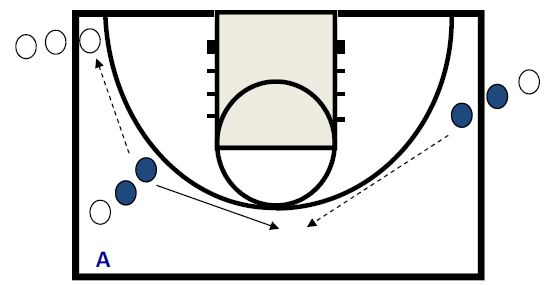
For the next 1:00 we simply move the lines to new spots so that we can shoot the two wing shots.

Scoring is the same. Rotations are the same.

Don’t be surprised though when simply moving the lines cause rotation issues. I can’t explain it, but it happens to every team we use it with.

Basketball Drills

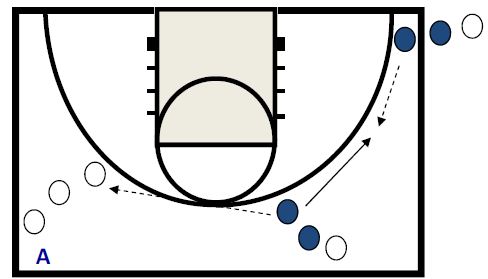
For the third minute, you only need to move balls from the corner to the wing. Now you get shots in the corner and the back at the top again.

Once again scoring is the same.

Basketball Drills

For minute 4, 5, and 6 all we do is switch ends of the court. Too many teams only utilize one end of the court so this gets us equally number of shots on both ends.

For scoring purposes, we chart individual spot scores while also calculating an overall 6:00 total score. We use this score to measure ourselves and challenge ourselves to reach new goals as the season progresses.

If you have a large team it is possible to do it simultaneously on both ends with the switch after 3:00 minutes of shooting.

Our all time record is 368 points. Our average score per spot is 45.9 this year. Our all time high spot is 89.

We keep a board with our Top 10 scores on them and bring to practice on the days we use this drill. Players love to compete against themselves and your former teams.

This year we have been challenging other teams. I have shared the drill with some coaching buddies and they use it with their team. Tell you team some “other” team got a certain score and just watch them compete to beat it!!!

The more you do the drill, cut down the time in between spot and end rotations.

  • « Go to Previous Page
  • Page 1
  • Interim pages omitted …
  • Page 242
  • Page 243
  • Page 244
  • Page 245
  • Page 246
  • Interim pages omitted …
  • Page 288
  • Go to Next Page »

Primary Sidebar

  • Twitter
  • Facebook
  • Linkedin
coachestoolbox
personaldevelopmenttoolbox
basketballplayerstoolbox
basketballtrainer
athleticperformancetoolbox
coachingbasketball

© Copyright 2026 Coaching Toolbox

Privacy Policy