• Skip to primary navigation
  • Skip to main content
  • Skip to primary sidebar

  • Basketball Plays
    • Ball Screen Sets
    • Horns Sets
    • Man to Man Post Up
    • Man to Man Isolations
    • Backdoor Plays
    • Man to Man 3 Point Shot Plays
    • 2-3 Zone Attack
    • Baseline Inbound Plays
    • Sideline Inbound Plays
    • Combination Defense Attack
  • Drills
    • Defensive Drills
    • Offensive Drills
    • Competitive Drills
    • Passing Drills
    • Rebounding Drills
    • Shooting and Scoring Drills
    • Toughness Drills
    • Transition & Conversion Drills
    • One on One Drills
  • Blueprint
  • Practice
  • Mental Toughness
  • Skill Development
  • Offense
  • Defense
  • Store

Basketball Plays Slice Double

Basketball Plays Slice Double

By Brian Williams on July 29, 2013

This man to man set is from the Xavier Men’s Basketball Program coaching newsletter

If you are interested in seeing their archives or possibly registering to receive their newsletter, you can do so at this link:

Xavier Basketball Newsletter

Please like or tweet this post with the buttons on the right!


Basketball Plays

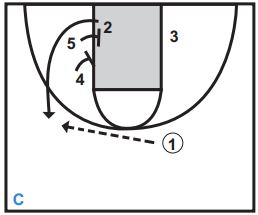
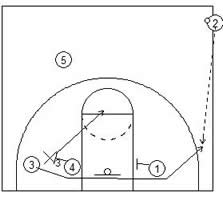
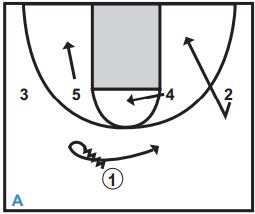
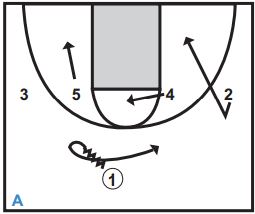
1 spin-dribbles and sends 2 back door.


Basketball Drills

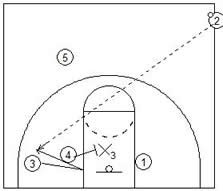
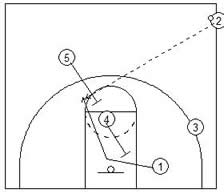
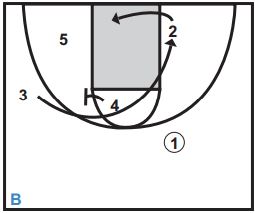
3 slice cuts off of 4 to the post.


Basktball Plays

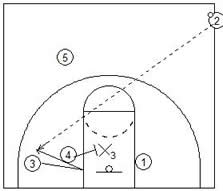
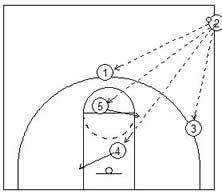
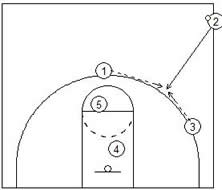
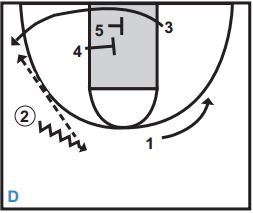
2 begins to dribble middle and passes to 3 off of the 5, 4 stagger / double.


Basketball Plays

2 begins to dribble middle and passes to 3 off of the 5, 4 stagger / double


Basketball Coaching Keys to Increased Winning

By Brian Williams on July 26, 2013

This article was written by Coach Randy Brown. He is a former D1 Assistant Coach at Iowas State and Arizona. His 18 years in college basketball highlights a successful 23-year career. Mentored by Basketball Hall of Fame coach Lute Olson at Arizona.

He has passion for the game of basketball and works as a basketball consultant and mentor for coaches.

Randy’s coaching resume includes positions at Arizona, Iowa State, Marquette, Drake, and Miami of Ohio, 5 Conference Championships and 5 NCAA appearances. His efforts have helped develop 12 NBA players including Steve Kerr, Sean Elliott, and Jaamal Tinsley. To contact Randy, email him at [email protected]

6 Keys to Increased Winning

During my career, I have hosted several coaching clinics. Although most coaches want to learn about offenses and defensive systems, my clinic presentations deal with coaching philosophy and though proving topics. In this article I presents six important issues that dictate the level of success for all basketball coaches.

1. Your TOP 3

This is a philosophical exercise to help establish your TOP 3 values as a coach. This is the ANCHOR of your coaching success and consistency. These three items are the foundation of your program and are your non-negotiables. Everything your coaching represents comes directly from the emphasis you put on your TOP 3.

The TOP 3 is your road map as a coach and guarantees that your coaching will be focused daily on the items you feel leads most to winning.

2. A Plan for self-improvement – Addressing weaknesses and increasing knowledge of the game.

Many coaches attend one or more clinics during the year to increase their coaching knowledge and strategy.

Self improvement as a coach does not come from clinics but rather from focused work and research on your weaknesses and new learning. It comes from being open to the advice, feedback and critique of others. Elements of this include; coaching round tables, research on areas of weakness and working with a mentor.

3. Finding and working with a Mentor.

Having a coaching mentor will help improve your coaching more than anything else you can do. A mentor can help you look at yourself in an entirely different way and help you identify areas to focus on to improve. Mentors are not a threat to your coaching but an ally that is available to you at any time.

Working with a coach mentor can help expedite your improvement due to learning about the mistakes and victories your mentor has previously experienced.

4. Organize your System.

Organization of materials, notes, video tapes, statistics and X & O’s are a move toward to efficiency. Your coaching notes, coaching tools, practice plans are useless unless they can be accessed through organization. The more you simplify and organize they more valuable your system of coaching will become.

5. Vision Exam – How players and assistant coaches see you and the game

A great coaching attribute is looking at the game as your players and assistant coaches do. Tunnel vision is a common downfall of many coaches. Not until you begin to see how your limited vision of the game can hurt your coaching, will you see that you can change. Concepts include “what it takes to get in the game

6. Tools and resources for enhanced coaching

Taking advantage of technology can not only make coaching easier but more effective. Practice planning, drills, video editing and program planning can all be simplified with available coaching tools and resources. Feature includes: Yearly practice and drill collection and yearly notebook.

Basketball Drills Finishing in the Lane

By Brian Williams on July 24, 2013

One problem many young players face and something the pro’s have perfected, is the ability to create space by setting up your defender for a move.

In this drill I taught our players to jab at the rim to get the defender off and then jab in another direction to get the defense to recover to a side.

These basketball drills were posted by FastModel’s plays and drills library.

The library has hundreds of plays and drills from coaches all over the world and from various levels of coaching. You can check it out here: Fast Model Plays and Drills Library

The drills were posted in the library by Kyle Gilreath

Once you get the defense to a side you can then make a move and attack.

Utilizing coaches/managers with pads in areas where the player will experience contact enhances this drill to the fullest.

The coach/manager on the ball try to slap at the arms/ball to teach your players to be strong with the ball when jabbing and ripping through for a move.

Creating Space Rim Finishes

Basketball Drills

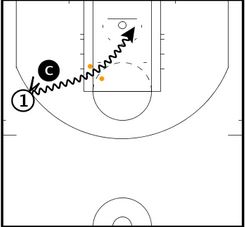
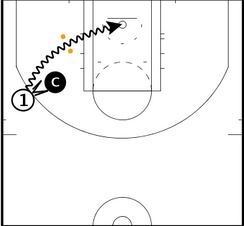
Start the players on the wing and place a coach/manager in front of him with a pad/arm pads. Player 1st jabs at the rim to get the defender to back up, the jabs baseline to get the defender on the bottom side. Player then takes 1-2 hard dribbles and attacks the rim (between two cones).

Finishes (Make 3 with each finish):

-Finish right hand on opposite side of rim using backboard

-Finish left hand (reverse) on opposite side of rim using backboard

Basketball Drills

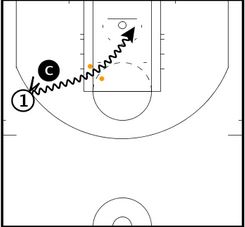
Same drill but finishing on the left side of the rim.

Finishing (Make 3 with each finish):

-Left hand on left side of rim using backboard

-Right hand on left side of rim using backboard


Basketball Drills

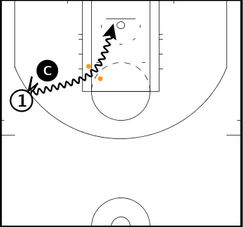
Start the players on the wing and place a coach/manager in front of him with a pad/arm pads. Player 1st jabs at the rim to get the defender to back up, the jabs towards the top to get the defender on the top side. Player then takes 1-2 hard dribbles and attacks the rim (between two cones).

Finishes (Make 3 with each finish):

-Left hand lay-up
-Left hand floater
-Left hand reverse lay-up on opposite side of rim
-Right hand reverse lay-up on opposite side of rim

Basketball Drills Celtic Shooting

By Brian Williams on July 23, 2013

This drill allows you to work on shooting technique while making the drill competitive. The drill also forces the shooter to battle some fatigue towards the end.

I have posted some links to some other skill development drills below the video. Some of the drills are team drills and others are individual workout drills.

This is a youtube video, so please make sure that you are on a server that allows youtube access. This drill came from basketballhq.com

Press the play arrow to see the video.

I hope this stimulates your thinking on how you can tweak this drill to fit the needs of your program and the skill level of your players.

Basketball Plays Demon

By Brian Williams on July 22, 2013

This play is a last second sideline inbounds play sent to me several years ago by Coach Ken Sartini who unfortunately passed away in January 2015. This is what he had to say about the play:

I designed this play at the end of one game… and we had a guard that was a soccer player so he could make that long over the head skip pass with some power to it. The first time we ran it we got the point guard #1 off the double staggered screen for a three.. he was fouled in the act and hit 3 free throws for the W!

This play is run with limited time on the clock when the pass receiver must catch and immediately shoot with no time for a dribble or pass.

If you are looking for a 3 point shot, 3 and 1 are the players that you are looking for. If all you need is a 2 point shot, then 5 and 4 are also good options.


basketball plays

3 must read the defender.

If 3’s defender (X3) is playing down in the paint, 4 screens X3 and 3 cuts to the paint and then step back for the skip pass from 2 for an immediate shot.


basketball plays

If X3 is playing out on 3 then 3 cuts baseline off double staggered screens by 4 and 1, to the ball-side corner.

After screening for 3, 4 moves to the high-post.


basketball plays

4 then drops down and sets a screen for 1, while 5 moves to the high post and also screens for 1 and makes it another double staggered screen. 1 cuts around the double staggered screen to the point, looking for the pass from 2 and a shot.


basketball plays

After the staggered double screen, 5 slides to the ball-side elbow and 4 moves to the opposite-side low block. The pass from 2 could go to 3, 5, 1, or 4.


basketball plays

If 2’s defender is sagging way off, 2 could get the return pass and shoot if there is enough time on the clock.


Well Coached Basketball Teams Part 2

By Brian Williams on July 19, 2013

This article was written by Coach Mike Neighbors.

This post is the second part of what I have posted. Here is a link to part 1

Well Coached Teams Part 1

Coach Neighbors has a weekly newsletter that is outstanding. If you would like to subscribe, email me and I will forward your interest on to him.

Well Coached teams players have positive body language: No poor reactions coming of the court after a substitution, no back talking a coach/teammate/official, no slumping of shoulders on the bench, no looking in stands during a time out, no throwing water bottles/towels/warm-ups at managers… With well coached teams it’s difficult to tell whether they are winning or losing games without looking at scoreboard.

Well Coached teams have a distinct “language” that they speak: Terminology is consistent from player to player and coach to coach. Areas of the floor are called the same thing. Screening actions have a vocabulary. Offensive actions are consistent. Consistent use of terminology breeds confidence and as a result performance levels are impacted.

Well Coached teams follow the game in general and respect it’s past, present, and future: We can all spot a basketball junkie a mile away by the way they speak about the game. Well Coached players know their opponents by name and/or number, they know the historical significance of their former teams, and they know the history of the game they love to play.

Well Coached teams have players who take care of academics equal to athletics: This isn’t saying that every player is straight A, Deans List student. Just that they manage their books as well as their ball.

Well Coached teams make adjustments to what other teams are doing against them: We’ve all faced those teams who come out of a timeout or halftime with a slight change in their tactics that completely change the momentum of the game and sometime the overall outcome.

Well coached teams display qualities of passion, discipline, selflessness, respect, perspective, courage, leadership, responsibility, resilience, imagination: These qualities come from Bill Bradley’s book on Values of the Game. They are all true and each comes with many different definitions and application.

Well coached teams have a consistent player rotation that always seems to place each player in a position to contribute effectively: This thought illustrates another favorite quote of “don’t take ducks to eagle school”… well coached teams have coaches who have their players in the right spot at the right time more than most. They don’t ask a non-shooter to hit a three to win the game. They don’t have a non-rebounder in the game on defense to win. They don’t have their EAGLES sitting beside them at crunch time Well coached teams don’t foul when the ball is away from scoring area: Although this is not a NEVER instance, well coached teams don’t repeatedly do this putting teams in bonus earlier in half than necessary and creating foul troubles later on in game.

To me the hardest thing about coming up with a philosophy or a definition is that there are so many factors to consider and rarely can you point to one thing being an ABSOLUTE. Maybe it is the scientific thinking background I was born with or my love for court room movie drama’s, but I have always been a “prove it to me” type coach. Show me some evidence. Present a case with the evidence.

So, I began taking the examples of WELL COACHED one by one to find a well coached team. Teams that DID NOT have that particular quality but was still WELL COACHED. For example, our current team has four seniors who have won 4 consecutive A10 titles and I am almost embarrassed sometimes at the lack of intensity it seems we have in pre-game warm-ups. Yet they bring it every single night come tip-off.

The UCONN Huskies who recently just ended a record 90 game winning streak that included back-to-back NCAA Championships and are obviously WELL COACHED, came out of a timeout in a recent game with a short shot clock and didn’t recognize in time to get a shot off.

Watching an SEC men’s game last night with a coaching screaming to foul on the floor with a three point lead before a player could shoot, I see the team NOT do what he was yelling and the opposing player hits a three to send into overtime at the buzzer. They end up losing by double digits in double OT.

I believe you can find examples of teams everyone would agree are WELL COACHED that rarely, if ever, exhibit certain qualities that we all would agree are indicators of actually being WELL COACHED. So is this a question that has no answer???

Maybe so. Maybe the answer is like Coach Wooden says… A lot of answers.

Who knows, but I can tell you that through the years of thinking about this and observing it, I have been
able to find two characteristics that all WELL COACHED teams do have. They may be displayed in different ways. They may be held accountable in different ways. They may be perceived in different ways. But in my eyes all WELL COACHED teams have these two.

1) WELL COACHED teams have players who have surrendered to the culture of their program.

2) WELL COACHED teams have identifiable standards of excellence on the court.

To me most the things we have already mentioned can be reworded to fit into one of these two categories in some shape form or fashion… but these two things sum it all up the best in my mind.

Players who have surrendered to their culture have let go of the things that make them uncoachable. They have surrendered their personal feelings to put their trust in their teams and their coaches. They have surrendered their defense mechanisms for the betterment of the team. They have surrendered their fear of being uncool in teammates eyes for being cool in their coaches eyes. They have surrendered their inadequacies to be part of team that has each other’s back. They have surrendered the personal time for team time. They have surrendered distracting relationships for healthy relationships. They have surrendered negative thoughts for positive outlooks. They have surrendered the input of family/friends for constructive criticism of coaches/teammates.

Teams who have an immediate identifiable standard of play… it may be toughness, execution, enthusiasm, speed, power, athleticism, tenacity. Teams you know are going to either guard you from the time you get off the bus or have a hand in your face every time you shoot. Teams that are going to share the ball so well that you can’t key on one player. Teams who have players that are listening to their coach even if their eyes or body language might suggest they aren’t. Teams with players who are consistent in their “swagger”. Teams that are going to get the ball into their star’s hands so often you can’t defend them. Teams who are going to be so prepared that they are calling out actions in your offense the second a coach signals a play call. Teams who can be summed up in a few words on a scouting report but be impossible to defeat come game time. Teams who’s standard of play is synonymous with the name on the front of their jersey regardless of who’s name is on the back of their jersey. Teams who are who they are every single night.

Those players are WELL COACHED. Those teams are WELL COACHED.

  • « Go to Previous Page
  • Page 1
  • Interim pages omitted …
  • Page 222
  • Page 223
  • Page 224
  • Page 225
  • Page 226
  • Interim pages omitted …
  • Page 288
  • Go to Next Page »

Primary Sidebar

  • Twitter
  • Facebook
  • Linkedin
coachestoolbox
personaldevelopmenttoolbox
basketballplayerstoolbox
basketballtrainer
athleticperformancetoolbox
coachingbasketball

© Copyright 2026 Coaching Toolbox

Privacy Policy