• Skip to primary navigation
  • Skip to main content
  • Skip to primary sidebar

  • Basketball Plays
    • Ball Screen Sets
    • Horns Sets
    • Man to Man Post Up
    • Man to Man Isolations
    • Backdoor Plays
    • Man to Man 3 Point Shot Plays
    • 2-3 Zone Attack
    • Baseline Inbound Plays
    • Sideline Inbound Plays
    • Combination Defense Attack
  • Drills
    • Defensive Drills
    • Offensive Drills
    • Competitive Drills
    • Passing Drills
    • Rebounding Drills
    • Shooting and Scoring Drills
    • Toughness Drills
    • Transition & Conversion Drills
    • One on One Drills
  • Blueprint
  • Practice
  • Mental Toughness
  • Skill Development
  • Offense
  • Defense
  • Store

Basketball Drills 3 on 1 Defensive Rotations

Basketball Drills 3 on 1 Defensive Rotations

By Brian Williams on May 29, 2014

I found this drill on the Jes-Basketball.com There are several other plays and drills on that site.

The drill was submitted by Ryan Shaw

Adapt this drill to your defensive rules, principles, and the types of actions that you have to defend against.
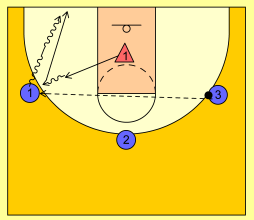


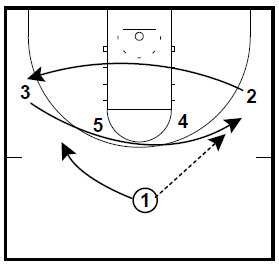
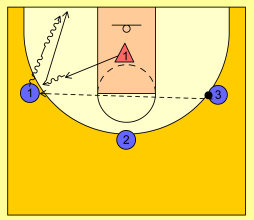
basketball-drills-3-on-1


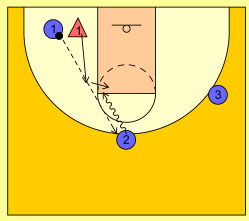
3 gives a skip pass to 1.

D1 closes out and defends 1 by cutting off the baseline drive.
 

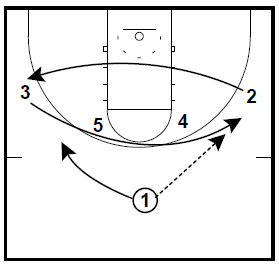
basketball-drills-3-on-1-2


1 passes up top to 2 who tries to penetrate toward the middle and D1 shows help and makes 2 pick up the ball.


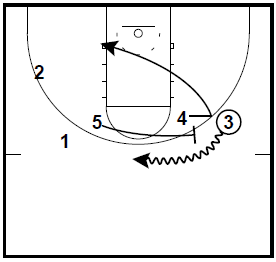
basketball-drills-3-on-1-3


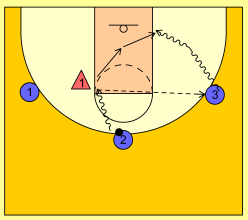
2 kicks to 3 and D1 jumps to position away from the ball.

3 penetrates baseline and D1 stops him outside the lane.
 

Basketball Drills Three Player Shooting with Conditions

By Brian Williams on May 28, 2014

This basketball shooting drill is from former Arizona and Iowa State assistant coach Randy Brown.

Coach Brown is the author of coachrb.com. You can join his newsletter at this link: Coach RB Newsletter

The drill in the video is a way to apply principles from the cutthroat drill to a shooting drill where the real emphasis is making a high volume of game-like shots.

The drill forces the players to concentrate rather than just simply go through the motions of the drill.

Some ways to make the drill fit your program:

Make your conditions fit your offensive system, add another player and require an extra pass or a ball screen, add a time condition for each group, or keep an overall score to make the drill competitive.

I hope the drill in the video gives you some ideas for conditions that will be considered turnovers in your shooting drills to improve your player’s execution.

Randy uses the first 90 seconds to set up the drill and then gives a demonstration for the remainder of the four-and-a-half-minute video.

Coaching Basketball Skill Development

By Brian Williams on May 27, 2014

This post on skill development is from Arkansas women’s Coach Mike Neighbors. He has a great newsletter that he sends it out each week. If you are interested in being added to his list, please email me and I will pass it along to him. It was written when he was an Assistant Coach.

Random Thoughts on Skill Development

  • We try to be 5% better at 10 things rather than being THE BEST at one thing. choose wisely and focus. You will get what you tolerate.
  • Spend 80% of our time on the most important 20%. Pete Carril “Be good at things you have to do a lot”
  • Activity is often mistaken for productivity. An hour practicing something that doesn’t help meet objective is an hour wasted
  • Drill for mastery. Fill time in a workout is a cardinal sin of coaching
  • HARD WORK is the most over evaluated attribute in skill development. As coaches we tend to give too much credit to a hard worker who doesn’t produce and give too much scrutiny to players who make things look easy. Hard worker can be disguised as poor practice habits if you examine closely
  • A talented player is often mistaken for a player with good practice habits.
  • Have a 5 to 1 Practice to Play ratio
  • 7 Laws of Learning all mention a “willing participant as a LAW” There are 100’s of different LAWS but this one is common to almost every one you find
  • If you are a feeder program or have control of yours: don’t let players shoot on a 8 ft goal until they can shoot with proper form on a 7 foot goal, use the smallest ball available until hands are big enough to handle it, don’t keep score (at least traditional ways) until they can pass, dribble, AND shoot, cover up the three point line until half the league can shoot with proper form, make sure you and your players are visible.

1. Always Be CREDIBLE

“PLAN LIKE A GARDENER BUT WORK LIKE A CARPENTER”- PAPA NEIGHBORS

Research tells us that your player decides in the first two minutes of their very first workout if they trust you or if they think you are “like every other coach” that they have had. If you are “like every other coach they have had” then you are in for a long 4 years (or more).

Too many coaches expect players to be in awe of them because of prior success. Too many coaches expect to be respected because they have the title COACH. Too many coaches assume their players look up to them. Might have been the case in 1982, but not today.

They don’t care and quite frankly don’t want to hear about what you did with someone else. They care about themselves and that’s okay when it comes to skill development.

Your first workout with a player must always be a 1-on-1 workout
– this allows you to make it personal to their objective
– allows them to make mistakes without peer pressure
– players are more open to critique
– 100% of the attention is on them
– begins to demonstrate you care about them

Open the gym
– if you want them to get better you have to give them the opportunity
– there are courts all over your town but they want you to know they are working

Name things after players they know
– the players we coach have never heard of MIKAN of SIKMA, have never seen Jordan or Olajuwon live, but follow Dwight Howard and Chris Paul on twitter. Respect who they are watching. You can always give them history lessons after they have become a good player.

Speak in images
-Attack the pits, butt to gut, clip the hip, Hit/Peel, our numbering screen system

Work on their strengths
– Too many coaches think skill development is teaching skill the players are deficient in. That is only part of the formula, but staying good at what they are already good at is too. Research has shown our greatest capacity for improvement comes in areas we already possess a high level of skill in.

It’s a medical fact the brain slows in function as fatigue sets in
– plan your workouts to coincide with fatigue. Don’t introduce new ideas when fatigued.

Early in the process make out your workout and then cut it in half. Late in the pro-cess make out your workout then double it
– more attention to detail early, more attention on mastery late

Consistent language
– don’t call it the short corner one workout then the soft spot the next then off the block…

Defensive improvement is just as important as offensive
– and will certain players situations it may be a faster path to more playing time

Reality World
– don’t give unwarranted praise or unearned criticism. Shout praise, whisper criticism

Don’t confuse being in control with having their respect/trust
– vice versa is true as well…

2. Always Be CHALLENGING

“THERE IS NO FINISH LINE”— plaque I once saw on Phil Knight’s desk at Nike

The first encounter your player has with you on the court must be challenging. The entire atmosphere must be on a higher level than anything they have experienced prior. Your initial workout with each player must SCREAM to them that you have a plan for them. That it is NOT going to be the same old things they have been working on in the past. They must feel BIG TIME.
That does not mean simply being more physically demanding or yelling more/harder at them. The player has to sense that you are different and can take them to places no other coach ever has.

Create desirable difficulty
-You can do this with intensity of the work. You can do this by placing a time/score on the work. You can do this by using props or other distractors. You can do this with mainly by illustrating on a daily basis that you have a plan for them that is about them!!

Do things correctly twice for every time it’s done incorrectly
– The brain does not have the capability of separating sequence in which skills are performed. So if a player does something incorrectly, most coaches make them do it again… and again… and again… then when they get it correctly praise them and let them go to the front of the line. The brain actually remembers that it did something wrong 4 times but only correctly once even though they did it correctly the last time. So much for “end on a make”!!

So, when you have players in a line… if they do it incorrectly they go to front of the line. Do it correctly, they go the back of the line…
– a good practice habit to get the most of your time and the most of each player. Don’t you want your players who need the most work getting the most work?

As players succeed add complexity… as they struggle reduce it
-resist the urge to keep pushing and pushing and pushing and pushing

Players need to feel worked out after a work out
– your plan and your tactics have to leave them pushed when they are walking off the court. We all want to feel like our time is/was valuable. If your players don’t leave a workout tired but wanting more then your plan isn’t good enough.

Feedback must be Speedy
-One of our greatest tools as a skill developer is feedback. The words we choose and the tone with which we deliver them are important. But research has show that to be ultimately effective it must be almost immediate. BUY A FLIP CAMERA and use it!! If you wait two days to edit some video and then bring them into your office to show it to the player you have reduced your effectiveness.

Give feedback in solution sentences and pictures/images
– Don’t provide feedback with instructions that begin with “don’t”. It would have been better to say, provide feedback with instructions that give visualization to the solutions. So, don’t say… Don’t close out like that Moe… say instead. You need both hands high on the close out to take away the shot AND the quick post entry pass. Don’t say… Don’t stop moving your feet Tashia… say instead… keep your feet active then wall-up after she terminates her dribble.

Feedback during a game is different than feedback during skill development
– First I would say, we try to coach during games and teach during practice. But IF you are going to provide feedback during games it needs to be short and quick. In practice you can expand that explanation to teach.

3. Always Be CONFIDENT

“YOU CAN’T SELL WHAT ISN’T YOURS”- PAPA NEIGHBORS

You must ooze confidence when you are working on skill development. From your appearance to your words to your plan to your execution, you must be 100% convinced that what you doing for this player will help them. If you are 95% sure, you will get about 50% improvement. If you are 90% sure, you will get about 0% improvement. Your players will sense it in a heartbeat if you aren’t prepared the second you step between the lines of the court and for every % point you aren’t sure you will lose 10% of your effectiveness.

To be confident you must be convicted in your plan, your methods, and your execution. Like with simplicity, that is very hard to have. You can’t just pull out a workout from a file you did with a player two years ago or last week. You can’t come to a clinic like this and copy drill for drill something I say.

You have to make it YOURS to sell it.

(This “always” is very similar to Credible so the points could overlap)

Basketball Development requires two types of skills:
PRECISION SKILLS: these are skills of technique, form, and repetition Shooting, passing, catching, dribbling, etc, We want zero errors, we want no variation, we give lots of correction

DECISION SKILLS: reading, recognizing, reacting Shot selection, pass/shoot decisions, reading screens/defenses.  We expect errors and learn from them, we want as many variations as possible, we provide little correction but lots of coaching

If you try to teach these different skills in the same manner, you will fail. You will lose your confidence and in turn players will lose their confidence in you. If a player doesn’t trust the moves you are teaching them to score because they aren’t effective come game time, why do expect them to trust you when you tell them conditioning is an important part of the game.

Confidence takes weeks, months, years to develop and one second to lose.

What percentage of the game do you believe is “Mental”?
___ 70% or higher ___ 50-70% ____ 30-50% _____ 30% or lower

Regardless of which answer you choose, do you allot that much time in your skill development for mental things? If you don’t, I wouldn’t trust you either.

Failure is NOT a lack of skill
– Wayne Gretsky always said if he didn’t fall in practice every once in a while, then he wasn’t skating fast enough. The guy we nicknamed the GREATEST said that. Looking stupid at times is a must to develop a skill. As mentioned earlier it’s why we often introduce new things in 1-on-1 situations or at the very least in small groups. Celebrate them even!!

Curse of Knowledge
-This is a biggie. I could do 2 hours on this one point alone. Read the book MADE TO STICK by Chip and Dan Heath for more on this topic. The very, very short version goes like this… Some of the very best doers of all time are the absolute worst teachers of all time. Sure you can readily think of examples without me putting people on blast. The reason is the CURSE of KNOWLEDGE. Once you learn something you can’t un-learn it. And when you have this knowledge it’s challenging to teach it without frustration setting in and remembering what it was like to NOT know something.

Use the least invasive form of correction as possible
Another book every coach/teacher needs on their desk. Sorry to all the Bobby Knight emulators, but you can’t develop skill through fear and intimidation with the IY Generation. It’s a proven fact. You can still COACH that way with levels of success but you can’t develop skill.

4. Always Be CREATIVE

“GOOD ARTISTS BORROW. GREAT ARTISTS STEAL”– Pablo Picaso

Creative doesn’t mean you have to come up with new things on your own… it’s a bonus if you can and do… but using a drill that your players haven’t seen before is the same thing as making it up. You don’t have to tell them where it came from. Always give credit where credit is due among peers, but it’s okay to let your players believe you are a genius!!

Vary the drill not the skill
– if I could have one skill as a development coach it would be this. If you can continually find ways to work on the same skills in different ways you will be able to instill deep muscle memory on precision skills and long lasting instincts on decision skills. It can simply be changing the way you time or score a drill. Can be moving to a different spot on the court. Can be introducing obstacles or disrupters (chairs, blocking dummies, use a dribble limit)

GAMES
– we all like games. Make your drills into games. Beat the Pro. Hubies. Celtic Shooting. Games create a competitive environment for your workouts. They make a player want to “beat the drill” and as we will discuss (in CHARTING next) later, games will get them in the gym!

Bring on the Beats
– your players love music. They might like different music than you but that’s probably a good thing. Music during certain parts of our workouts enhance the atmosphere. We use it to determine start and stop times in some shooting drills. Anything where we are working on rhythm or repetition. It can be used as a reward too. As long as they are focused there are beats. If focus drops, music stops!! (hey I just wrote a rap)

The more people enjoy practice, the more they will do it
– as an adult what do you practice?

Shrink the space
– play drills in the paint when working with posts. Play games on one side of court with your perimeters. Play on shortened courts to exaggerate transition defense.

What is your favorite Rocky Movie?

– my bet is it was 3 or 4… why? Because in both of those had moments when Rocky was living high on life and had to go back to his roots to refocus. We wouldn’t have the “Eye of the Tiger” without Rocky getting too big for his own self so it’s not all bad. Point here is that when you hit a rut or your players are stumped, don’t be afraid to take it to the playground!!

Take them to watch someone they idolize
– if you are close enough to take them to see them in person do it. If you have to make a video of them do it. If you have to use YouTube clips do it. Modeling is one of the greatest tools we have at our disposal as skill developers. The days of me being able to demonstrate are long, long gone. Was great when I had it, but gotta know when to hang ‘em up.

Have you ever coached a set of siblings? Bet the youngest or next youngest was the best!?!

It’s a common phenomenon but the reason makes perfect sense. They have had great models to watch as they grew up. They learn from the triumphs and their defeats. They are pushed and they are coached every step of the way.

5. Always Be CHARTING

“YOU ARE WHAT YOU COUNT”

So you better be careful what you count.

I love going to high school practices and watching teams chart deflections in practice and then have the coach totally lose their mind on a kid who is out of position for a help rotation or gets beat on a back door cut. I mean YOU are emphasizing and rewarding an aggressive play, YOU can’t then yell at a kid for doing exactly what you are asking for!!

Once you determine what is important, CHART it every way possible. Charting over time is one way you can determine developmental success. Of course the best way is when the skills are beneficial when the stakes are the highest, but charting is a close second.

From charting you can see progress/regress. Patterns will develop. Highs, lows, and plateaus. Consistency and one-hit wonders will separate themselves. But if you aren’t charting it, all you are doing is giving them an opinion. May be good enough for some, but the best will be continually motivated when they have something measureable to examine and study.

Games!! As mentioned in the Always be Creative section. Games are addicting and fun. We chart all our games on Record Boards

The SKILL ZONE
-when you are charting, you must make sure everyone has equal opportunity if you are com paring players from separate workouts. You must also keep in mind the purpose of the drill when you are setting goals for success. The following chart might be helpful:

Skill Zone                               Heart Rate                                                  Success Rate
Comfort zone                           Player is working but not struggling            80-100%
Sweet Spot                             Player is struggling but achieving                50-80%
Survival Mode                         Player is struggling but surviving                  0-50%

Basketball Plays San Antonio Spurs

By Brian Williams on May 26, 2014

Maine Men’s Assistant Coach Zak Boisvert has assembled some of his favorite offensive sets from the 2014 NCAA tournament.

His You Tube channel has 58 videos with various types of man to man plays, zone sets, and inbounds plays. You can subscribe to receive an update when he posts a new vid Zak Boisvert You Tube Channel

He also is also very active on Twitter: @ZakBoisvert


If you are interested, I also have information about the Spurs Playbook from Coach Scott Peterman of the Basketball HoopScoop site. Combined with the Heat playbook, they contain 116 set plays (including several pick and roll sets) 18 secondary break actions, zone sets, and out of bounds plays. You can see more information at this link: Spurs and Heat Playbooks Information

If you are interested in adding to your Coaching Toolbox take look at what I believe is our best offer.

CLICK HERE to select from a list of more than 70 eBooks.


Basketball Plays Florida Ball Screen

By Brian Williams on May 23, 2014

This ball screen play diagram is from the Coach Scott Peterman’s Basketball Hoopscoop Florida Gator Playbook
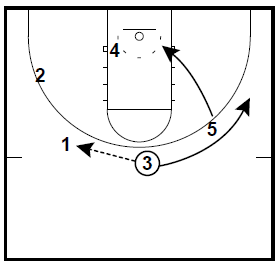
basketball-plays-florida-ball-screen1


2 cuts to the left wing.

3 cuts over the top of 5 and 4 to the right side.

1 passes to 3 and slides over to the top left guard spot.


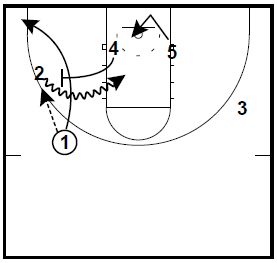
basketball-plays-florida-ball-screen2


4 acts like he will set a ballscreen and then slips to the left low block.

5 sets a ballscreen for 3.

3 attacks the top of the key.


basketball-plays-florida-ball-screen3


3 passes the ball to 1 and cuts to the right wing.

5 dives to the right low block.


basketball-plays-florida-ball-screen4


1 passes to 2 and cuts to the left corner.

4 sets a ballscreen for 2.

2 attacks the basket.

5 ducks into the post.


If you are interested in adding to your Coaching Toolbox take look at what I believe is our best offer.

CLICK HERE to select from a list of more than 70 eBooks.


Basketball Drills Get Open Drill

By Brian Williams on May 22, 2014

This drill came from Drew Hanlen. He is an NBA Strategic Skills Coach & Consultant that has helped over 25 NBA and NBA pre-draft players.

Drew is the Head Skills Coach for Pure Sweat Basketball.

He has run his internationally renowned Elite Skills Clinics in over 30 states and 4 countries over the past four years.

The drill was posted on Fast Model Sports Library. FastModel Sports Basketball Plays and Drills Library The site has thousands of drills and plays that have been submitted by basketball coaches from around the world.

You can also find out more about FastModel Play Diagramming software by clicking this link: FastDraw

Get open Drill

This is a great drill to work on screening, using screens, passing and catching!

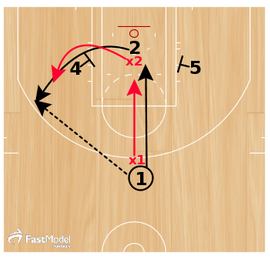
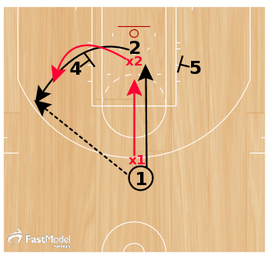
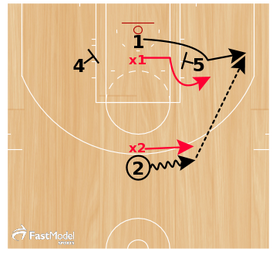
Ball handler will start with the ball at the top of the key and will be pressured by an on-ball defender, while another offensive player will start under the rim with a defender in full denial. Two all-time screeners will start just outside each second hash mark.

basketball-drills-get-open1


Offensive player under the rim will try to free themselves from their defender by using the screeners in any way that they want (curl, pop, fade, wiggle, etc), while their defender will try to deny them from receiving a pass from the ball handler.


basketball-drills-get-open2


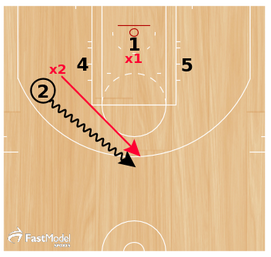
If the offensive player frees themselves from their defender, the ball handler will complete a pass to them.


basketball-drills-get-open3


After passing the ball, the original ball handler will make a basket cut to the rim, while the offensive player that received the ball will dribble the ball to the top of the key.


The offensive team will try to complete eight catches in a row, while the defenders try to get a steal or force a turnover. Ball handler can be called for a five-second violation.

If the offensive players successfully complete eight catches in a row, they will become the next screeners, the defenders will stay on defense and the screeners will move to offense. If the defenders get a steal or force a turnover, they will become the next screeners, the offensive players will move to defense and the screeners will move to offense.

  • « Go to Previous Page
  • Page 1
  • Interim pages omitted …
  • Page 189
  • Page 190
  • Page 191
  • Page 192
  • Page 193
  • Interim pages omitted …
  • Page 288
  • Go to Next Page »

Primary Sidebar

  • Twitter
  • Facebook
  • Linkedin
coachestoolbox
personaldevelopmenttoolbox
basketballplayerstoolbox
basketballtrainer
athleticperformancetoolbox
coachingbasketball

© Copyright 2026 Coaching Toolbox

Privacy Policy