• Skip to primary navigation
  • Skip to main content
  • Skip to primary sidebar

  • Basketball Plays
    • Ball Screen Sets
    • Horns Sets
    • Man to Man Post Up
    • Man to Man Isolations
    • Backdoor Plays
    • Man to Man 3 Point Shot Plays
    • 2-3 Zone Attack
    • Baseline Inbound Plays
    • Sideline Inbound Plays
    • Combination Defense Attack
  • Drills
    • Defensive Drills
    • Offensive Drills
    • Competitive Drills
    • Passing Drills
    • Rebounding Drills
    • Shooting and Scoring Drills
    • Toughness Drills
    • Transition & Conversion Drills
    • One on One Drills
  • Blueprint
  • Practice
  • Mental Toughness
  • Skill Development
  • Offense
  • Defense
  • Store

Basketball Drills Front and Back of the Line

Basketball Drills Front and Back of the Line

By Brian Williams on September 9, 2014

This post is from Coach Mike Neighbors. He has one of the best basketball coaching newsletters out there. If you are interested in getting on his list, please email me and let me know.

FRONT OF THE LINE OR BACK OF THE LINE

I have referred many times to the book PRACTICE PERFECT: 42 Ways for Getting Better at At Getting Better as a valuable resource for all teachers/coaches/leaders.

This concept was one of the 42 Rules that I found we were able to apply to our basketball practices. Coupled with the concept of teaching PRECISION skills differently than you teach DECISION SKILLS, we implemented a FRONT OF THE LINE vs. BACK OF THE LINE philosophy in all of our PRECISION SKILL situations. A precision skill is one that we want to be done a certain way, every rep, every time, with no variation, and extreme attention to detail. For example, closing out to a great shooter. We have specific technique and language that we use every single time. We tolerate nothing outside of our acceptable standard of performance. We accept nothing short of perfect when working on this skill.

When doing VEGAS closeouts. A basic one player going 5 in a line behind drill working on the techniques that we teach. If the first player properly executes the closeout to a great shooter, she goes to the back of the line. The next player comes out and we proceed. Let’s say this player doesn’t have “high hands”… she goes to the front of the line and next player comes into the drill. While that player is going, a coach tells (or shows using a cell phone camera or flip video) that player what they did incorrectly. This player waits for the teammate on the court to finish and then she goes again. We keep repeating this front of the line vs. back of the line pattern until we complete the time allotted or desired reps.

Let that sink in visually for a second.

You probably have an initial thought. What about the kid who initially went to the back of the line? She might never go again. Correct… and answer… DO YOU CARE? I don’t. She got it right. Chances are she got more than one rep anyway but the point is, you get more reps with those that really need it.

We quickly saw marked improvement in all our PRECISION SKILLS employing this method. It also evolves quickly into a peer situation of players being the critics and pointing their teammates to the front or the back. They are actually tougher on each other than most coaches!!

As with everything we share, experiment with it and make it your own. Then share with the group the things you tweak or change.

For more information and background on the research behind it, check out the book by Lemov, Woolway, and Yezzi. You can see a sample from the book at Amazon by clicking the icon at the left.
Basketball Plays Cutback Double Special

By Brian Williams on September 8, 2014

This backdoor play is from Houston Women’s Assistant Coach Vonn Read.

Coach Vonn Read has submitted several plays from his playbook series The Basketball Encyclopedia of Plays to the Coaching Toolbox.

Coach Read has also served as an assistant coach in the WNBA with the Phoenix Mercury, Orlando Miracle, and San Antonio Silver Stars.

He was an advanced scout for the Orlando Magic as well as The Charlotte Sting.

This is a good backdoor set run out of a high ball screen set.

Diagrams created with FastDraw


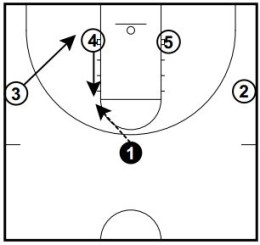
basketball-plays-cutback-double-special1


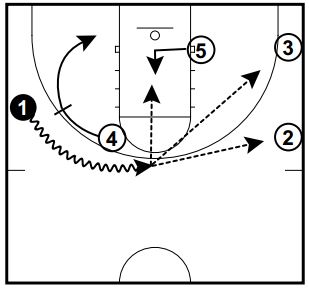
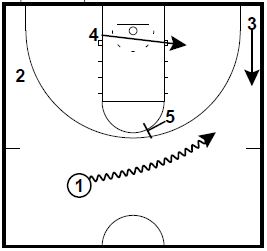
The 5 player will set the ball screen for the 1 player and hold their position.

The 4 player will relocate to the block and the 3 player will lift out of the corner to the mid wing area.


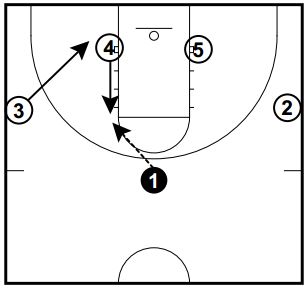
basketball-plays-cutback-double-special2

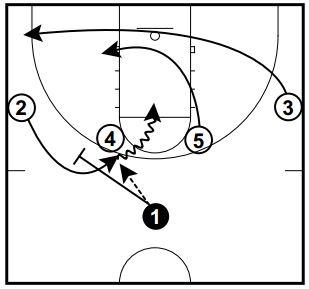
The 1 player will use a cutback dribble and drive it at the 2 player.

The 2 player will come to the ball selling the catch, and then cut backdoor for the layup.

The 4 and 5 players will set hard screens (decoy) for the 3 player.

These fake screens occupy the help defenders and take them away from the action.

Coach Read has also put together The Basketball Encyclopedia of plays. You can check them out here: The Basketball Encyclopedia of Plays or read more about the books:

Any coach looking for the latest and innovative plays from the Professional, College, or High School levels can stop looking. With a compilation of over 7,700 different plays, you will never need to purchase another basketball playbook again. These playbooks can be used as a great reference tool for years to come. This 2 Volume Book includes plays from 19 different play categories, and they are the most extensive playbooks on the market.

The Basketball Encyclopedia of Plays (Platinum Series) contains over 7,700 Plays (Both Volumes combined) from the NBA, WNBA, USBL, and College levels from someone who has worked as an Advanced Scout or Coach on each level!!! This book has been intensely compiled over the last 21 years, with plays taken from a lot of NBA Coaches (past and present), WNBA coaches, and College coaches (Men’s and Women’s) from around the country.

Any coach that is serious about improving their knowledge of the game from an X and O standpoint will benefit tremendously from these books. These Books can be used to discover New Quick hitters, add a New Package to your playbook, or develop an entire Offensive System. There are a lot of new ideas and concepts in these books to study, and the Basketball Encyclopedia of Plays can be a great resource for coaches on all levels!!! This book is definitely for those X and O junkies who are always looking to improve as a Coach.

“THE GAME IS ALWAYS CHANGING? ARE YOU?” Vonn Read

Here is the link: The Basketball Encyclopedia of Plays

Thoughts on Leadership for Basketball Coaches

By Brian Williams on September 5, 2014

These 10 points were assembled by Eric Musselman, USC Men’s Head Coach, and former NBA and D-League Head Coach.  

The second part of this post are some notes from Tony Dungy on Leadership as well as a link to a post I made last fall with more notes from Coach Dungy on Leadership.

In my opinion, it is helpful to continually think about and review our beliefs on leadership for ourselves as we will be getting busier and busier with school and pre-season upon us.  I believe that the more thought we put into our beliefs on leadership, the more we improve our behavior as leaders.   I also hope that you might find some ideas to share with new coaching staff members and some of your players who will be leaders for the upcoming season.

At a time when the world is thinking a lot about leadership I believe it’s a great opportunity for each one of us to think about what leadership means to us. Below are thoughts on leadership from the book Soup. Whether we are a leader of the Los Angeles D-Fenders, leading a business, team, hospital. sports team, classroom, church or home, as a coaching staff, think about what principles and ideas guide as a leader. You can read a sample from the book by clicking on the image at the left.

  1. People follow the leader first and the leader’s vision second – It doesn’t matter if the leader shares a powerful vision, if the leader is not someone who people will follow the vision will never be realized. As a leader, who you are makes a difference. The most important message you can share is yourself.
  1. Trust is the force that connects people to the leader and his/her vision – Without trust there is a huge gap between the leader and the vision. Without trust people will stay off the bus. However if people trust the leader they will hop on the bus with the leader and help move the bus forward towards the vision.
  1. Leadership Is not just about what you do but what you can Inspire, encourage and empower others to do.
  1. A leader brings out the best within others by sharing the best within themselves.
  1. Just because you’re driving the bus doesn’t mean you have the right to run people over -Abraham Lincoln said Most anyone can stand adversity, but to test a person’s character give them power. The more power you are granted the more it is your responsibility to serve, develop and empower others. When you help them grow they’ll help you grow.
  1. Rules without Relationship Leads to Rebellion -Andy Stanley said this and it’s one of my favorite quotes. As a leader you can have all the rules you want but if you dont invest in your people and develop a relationship with them they will rebel. This applies amazingly to children as wel. It’s al about relationships.
  1. Lead with optimism, enthusiasm and positive energy, guard against pessimism and weed out negativity.
  1. Great Leaders know they don’t have all the answers – Rather they build a team of people who either know the answers or will find them.
  1. Leaders inspire and teach their people to focus on solutions, not complaints. (The No Complaining Rule)
  1. Great leaders know that success Is a process not a destination – One of my heroes John Wooden, the legendary UCLA basketball coach, never focused on winning. He knew that winning was the byproduct of great leadership, teamwork, focus, commitment and execution of the fundamentals. As a leader, focus on your people and process, not the outcome.

The remaining leadership takeaways are from Tony Dungy’s “The Mentor Leader” If you are interested in finding out more about the book or reading a sample, you can do so on the Amazon web site by clicking on the book cover on the left.

I posted some other notes from Coach Dungy. You can see them at this link: Mentor Leaders

When everyone else understands that his or her role is also to lift, encourage, and equip – and that all members of the organization are dependent on one another – it becomes clear that nurturing relationships is necessary to the organization’s health.

If you start making excuses to cut out the things that are important because of urgent circumstances it will become a habit.

We may say that something is important to us, but in the end our actions will determines what we mean. And the people we are trying to influence and guide—our family, friends, team members, employees, and others—will measure our influence by the consistency of our actions and words.

Research conducted by the Leadership Research Institute has shown that in times of crisis, people gravitate toward the person of highest character, not necessarily the person who is ‘in charge’ or even the person they believe to be the most competent. Rather, people will tend to build a relationship with and follow the person they view as the most trustworthy, who cares the most, and who is willing to always do the right thing.

If the people in your organization can’t rely on you—whether on the big things or the little things—how are they going to follow you?

Most of the time, we are only judged on the outcome, whereas the only thing we can control is the process. Make your process the right one and stay true to it.

In any event, leaders who are accountable earn the respect of those they lead. Without that respect, they cannot lead for long.

Basketball Plays San Antonio Spurs Quick Hits

By Brian Williams on September 4, 2014

These two man to man sets from the San Antonio Spurs are drawn from Coach Scott Peterman’s Spurs and Heat Playbook compilations.

Click the link below for more information about the Playbooks.

They contain 116 set plays (including several pick and roll sets) 18 secondary break actions, zone sets, and out of bounds plays from the Spurs and the Heat

Spurs and Heat Playbooks Information

Diagrams created with FastDraw


Fist Up Pop

basketball-plays-fist-up-pop1

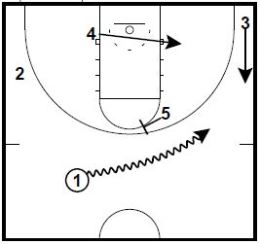
4 sprints up to the elbow.

1 passes to 4.

3 back cuts to the left side low block.

4 can hit 3 if he is open


basketball-plays-fist-up-pop2

1 slides over 4 to the left wing.

3 cuts to the right side corner.

4 passes to 1.

1 drives hard to the left side low block to score.

1 has several opportunities to hit players for perimeter shots.

basketball-plays-fist-up-pop3

If 1 doesn’t drive baseline then 4 sets a ball screen for 1 and rolls baseline.

1 comes hard off the ball screen to the middle.

5 post ups strong in the middle.

1 can pass to 5, 3, or 2.


Floppy Out

basketball-plays-floppy-out1

1 passes to 4 and sets a down screen for 2.

5 relocates to the left side low block.

3 clears out to the left side corner.

2 curls the down screen and receives a hand off pass from 4.


These two man to man sets from the Spurs and two secondary break options from the Heat are draw from Coach Scott Peterman’s Spurs and Heat Playbook compilations.

Click the link below for more information about the Playbooks.

They contain 116 set plays (including several pick and roll sets) 18 secondary break actions, zone sets, and out of bounds plays.

Spurs and Heat Playbooks Information

If you are interested in adding to your Coaching Toolbox take look at what I believe is our best offer.

CLICK HERE to select from a list of more than 70 eBooks.


Coaching Basketball Kevin Eastman Keys to Skill Development

By Brian Williams on September 3, 2014

As I have said many times, Kevin Eastman is one of my favorite coaches to study for both skill development for players and for professional development for coaches.

I was fortunate enough to meet him when he was here in Indianapolis at his Coaching U Live Clinic.

Kevin was a long time college assistant and head coach.

He was an Assistant Coach for the Celtics from 2004 to 2013.

At that time he made the move to Los Angeles with Doc Rivers and was on the coaching staff last year.

He served as the Vice President of Basketball Operations for the Clippers before retiring in 2016.

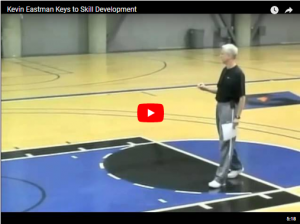
This video is a segment from his NBA Drills for all levels course. It is a part of his 8 Video Coach Development 8 Course Series set which includes High Intensity Skill Development, NBA Drills for All Levels, Stimulate Your Offensive Thinking, Defensive Strategies and Teaching Points, Strategies and Philosophy for Coaching Success, Stimulate Your Defensive Thinking, Defending the Pick and Roll the NBA Way, A Champion’s DNA.

Coach Eastman’s 8 video course bundle is on sale as our Black Friday special. Normally, it is $112, but it is on special for $49 through Wednesday at midnight Eastern Time. After that time, the price will return to normal.

You can find out more about this special price at this link: Coach Development 8 Course Series

Coaching Basketball: Preparing for Pre-Season

By Brian Williams on September 1, 2014

This article was written by Basketball Strength and Conditioning Coach Alan Stein and published on his Stronger Team Blog

In case you missed these articles, here are a couple of other articles for your preseason planning:

Reducing ACL Issues
Preseason Conditioning Drills

Prepare for a Purposeful Pre-Season

Your pre-season training program lays the foundation and sets the tone, both physically and mentally, for your up-coming season. And while you can’t win a championship in the pre-season, you sure as hell can lose one.

While it is vital to train with true purpose all year long, it becomes even more critical during the 6 to 8 weeks leading up to your first official practice. Your pre-season workouts need to prepare players for the actual demands of the game! As obvious as that may sound, many pre-season training programs lack this essential quality.

There are 3 primary purposes for pre-season training:

Bullet proof the body against injury
Improve performance on the court
Have fun and build team chemistry

If any exercise, drill or concept you use this pre-season doesn’t meet at least one of these three… then it is consider ‘fluff’ or a major time waster. If you use your creativity and imagination… you can often meet all 3 criteria with the same drill!

In an analysis presented at the 2010 Boston Sports Medicine Performance Group conference, researches broke down a basketball game and observed the following:

Average player’s heart rate: 165-170 beats per minute during the action
High-intensity sprints occur every 20-30 seconds
100-plus high intensity sprints per game
40-50 maximal jumps per game
Change in movement every 2-3 seconds
30% of time is spent defensive sliding
15% of time is in high intensity

In addition, there are 6 primary movement patterns used in basketball:

Sprinting
Backpedaling
Defensive sliding
Jumping (and landing)
Pivoting
Lunging

As you can see, basketball is game of quick, explosive bursts of multi-directional movements and varying movement patterns interspersed with short bouts of rest.

In order for your pre-season workouts to be truly purposeful, efficient and effective… they need to prepare players for these very specific demands.

Train hard. Train smart. Get better.

Alan Stein
Hardwood Hustle Blog
http://www.About.me/AlanStein

  • « Go to Previous Page
  • Page 1
  • Interim pages omitted …
  • Page 179
  • Page 180
  • Page 181
  • Page 182
  • Page 183
  • Interim pages omitted …
  • Page 288
  • Go to Next Page »

Primary Sidebar

  • Twitter
  • Facebook
  • Linkedin
coachestoolbox
personaldevelopmenttoolbox
basketballplayerstoolbox
basketballtrainer
athleticperformancetoolbox
coachingbasketball

© Copyright 2026 Coaching Toolbox

Privacy Policy