• Skip to primary navigation
  • Skip to main content
  • Skip to primary sidebar

  • Basketball Plays
    • Ball Screen Sets
    • Horns Sets
    • Man to Man Post Up
    • Man to Man Isolations
    • Backdoor Plays
    • Man to Man 3 Point Shot Plays
    • 2-3 Zone Attack
    • Baseline Inbound Plays
    • Sideline Inbound Plays
    • Combination Defense Attack
  • Drills
    • Defensive Drills
    • Offensive Drills
    • Competitive Drills
    • Passing Drills
    • Rebounding Drills
    • Shooting and Scoring Drills
    • Toughness Drills
    • Transition & Conversion Drills
    • One on One Drills
  • Blueprint
  • Practice
  • Mental Toughness
  • Skill Development
  • Offense
  • Defense
  • Store

Basketball Drills: One on One

Basketball Drills: One on One

By Brian Williams on June 17, 2015

I like to have players play a lot of one on one and define using the dribble within a team concept to attack the basket and create scoring opportunities for all 5 players. I am always looking for ways to make it more productive, challenging, and game like.

I found these four versions of one on one on Zak Boisvert’s site pickandpop.net.

Zak is an assistant men’s coach at Maine and has been putting out useful You Tube videos and lots of good stuff on Twitter for a while.

The site has a lot of really useful content.

These are 4 of his favorite one on one drills.

Diagrams created with FastDraw


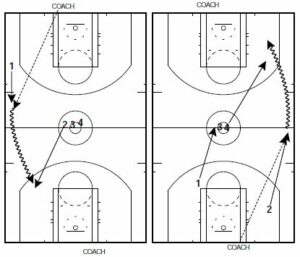
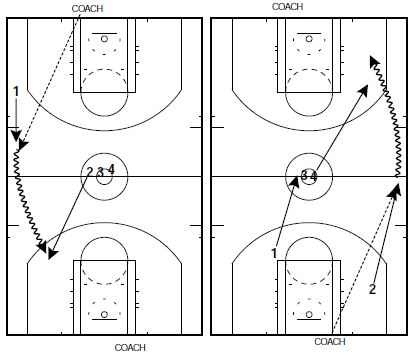
Iona 1 on 1
basketball-drills-iona-1-on-1

Coach throws ahead to 1

As 1 crosses half, 2 sprints out of the circle to defend him.

Whoever wins the possession (offense scores, is fouled or gets O rebound; defense gets a defensive rebound), keeps going the other way.


Louisville 1 on 1
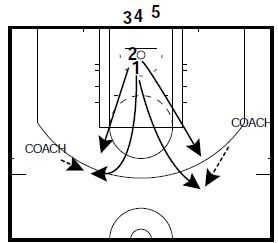
basketball-drills-iona-1-on-1-2

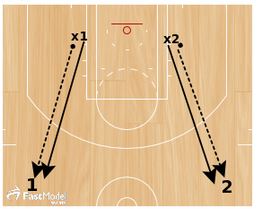
Coach on each wing with a basketball.

Offensive player (1) can loop to catch at either slot.

2 trails him out and defends him on his catch.

1 has three dribbles, but has the ability to pass it back to either coach at any time.

Winner of possession (offense scores, gets an O rebound or is fouled; defense gets a stop), throws ball back to coach and sprints to one of the two spots as the next player up on the baseline sprints on to defend him.

Hostage 1 on 1
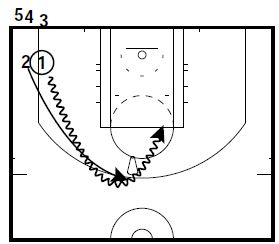
basketball-drills-iona-1-on-1-3

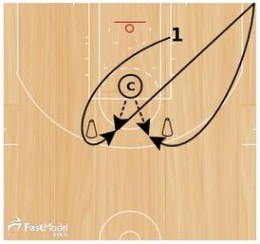
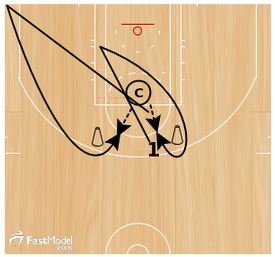
On coach’s call, 1 and 2 sprint around the cone to play 1-on-1.


Paint One on One
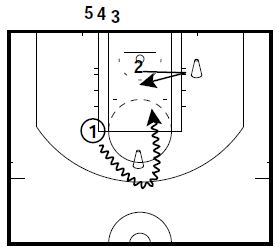
basketball-drills-iona-1-on-1-4

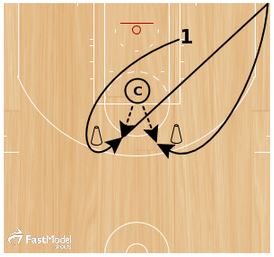
On coach’s call, 1 rounds the cone and attacks the rim and 2 slides/sprints t o touch his cone.

Winner of possession goes to O. Loser goes to back of line, new player steps on for D.


Coaching Basketball Kevin Eastman on Program Building

By Brian Williams on June 16, 2015

One of my favorite coaches to study is Kevin Eastman. Coach Eastman is retired and is a former D1 Head Coach, Nike Skills Trainer, long-time assistant coach for Doc Rivers in both Boston and Los Angeles.

Here are some bullet point notes that I have taken from him over the past several years. Included in this compilation are some notes that I took during on of his Coaching U Live Sessions in Indianapolis last year.

Many of these notes came from my time last July at Coaching U Live.

Coach Eastman’s 8 video course bundle is on sale as our Black Friday special. Normally, it is $112, but it is on special for $49 through Wednesday at midnight Eastern Time. After that time, the price will return to normal.

You can find out more about this special price at this link: Coach Development 8 Course Series

As you think about ways to improve your program, I hope that you can apply at least a few of these to improving both your coaching staff and your players.

Success lies in the simplicity. Confusion lies in the sophistication.
Encourages players to have big eyes, big ears, and a small mouth.
Asks as many purposeful questions anytime he has an opportunity to learn from anyone. “I already know what I know. I don’t know enough. I need to know what you know.”
Don’t shoot 1000 shots. Take 1 perfect form shot 1000 times.

Be there before you get there. When Coach Eastman and Ray Allen were together with the Celtics, Allen did a drill where he would start out laying on the floor, get up as fast as possible, and back peddle to the 3 point arc, catch a pass from Eastman, and get the shot off as quickly as he could. When he hit the shot to send game 6 of the 2013 NBA finals to overtime, he had already “been there” (through hundreds of repetitions in his workouts.)

Be on a mission every day to seek and find new information that will make you a better coach and leader. Then take the time to think deeply about how you can immediately apply your new knowledge to your job.

Be so prepared as a coach that you have the answers before your players ask.

7 things he does daily

1) Read for 2 hours on basketball and leadership
2) Spend time in sustained thought
3) Plan/Organize how to apply those thoughts
4) Work out
5) Do his job
6) Daily family time
7) Get adequate sleep

Become a learn it all, not a know it all
Be a great question asker
Become a meticulous note taker and organize them to help you be better
Working hard should be a given for everyone. It is the price of admission
To get ahead, do the unrequired work that makes a difference.

No job is too big, no job is too small.
Figure out what you don’t know, then figure out a way to learn it and apply it.

Never pass up a basketball opportunity. As a small college coach, He got a call the night before a clinic to be a last minute replacement speaker at the clinic. He drove 12 hours to speak. There was a Nike rep at the clinic who heard him and helped him become a Nike skills trainer. One year he worked with Austin Rivers when Austin was a younger player. Doc Rivers liked what he did with Austin and hired him for the Celtics. That is how he got into the NBA.

Make a total commitment to undistracted thinking time every day.

Seek wisdom from those who came before you.

Have an improvement stamina, a development discipline that can stand the test of the greatness grind every day…

Mad, Sad, Hard–get over all of those!

The best organizations don’t just see teamwork as an internal necessity; they understand customers/vendors/fans, etc are vital teammates too!

We have all heard “seeing is believing”: so much application to leadership. To get your team to believe they have to see that you believe!

Letting your people know not only that you value them but also letting them know what you value in them gives everyone more confidence/enthusiasm!

A team is a variety of talents, attitudes, and commitments. The leader has to be able to reach them all and get the best out of them!

Best way to get your job done well: 1) Define your job. 2) Do your job. 3) Finish your job. 4) Evaluate your job. Lastly: make adjustments & repeat!

Leadership question. Do you raise the level of your team or maintain it? Constantly evaluate & improve!

Reminder to us all: the circles we travel in have tremendous bearing on how we think; how we view things; and how we make choices. Be careful!

Think about changing your mindset by changing your words. For me “problems” have become “challenges” & “competitions” to see if I can solve them!

Two groups you must pay 100% attention to: 1) the group of people (your circle) you travel in; 2) the group of thoughts you allow into your mind!

“Getting there” requires you first to “get in”. Get in the fight. Get in the hours. Get in the work. Get in the study. Get in the mindset!

What you put on paper is most powerful when you put it in front of you on a daily basis. Seeing it makes it become a part of you every day.

What matters most must be taken care of the most. This certainly goes for family but should also apply to it life & career. Self audit this!

Leadership comes with just as many difficult situations as it does with fulfilling moments. You must sign up for both!

Summer Coaching Notes

By Brian Williams on June 15, 2015

Mike Neighbors University Washington Women’s Head Coach. These are just some random notes that I have taken at various clinics, coaching conversations, and other random talks with colleagues.

These are from Bob Wilson at the Vanguard University Coaches Summit:

Intentional teaching: everything you do should be intentional. Not reactionary. Teaching should have a purpose and a plan.

When you go to clinics:

1) Adopt it– hear something you like
2) Adapt it- make it your own and fit your program
3) Adept at it- get good at it

Sidewalks to Sideline to Significance: Teaching goes from their playing days, to their careers, to passing it on to others

Does your program reflect character? Does it perpetuate character?

“locked in” is the highest form of “buy-in” “credibility” is usually the missing ingredient when teams don’t have buy-in or locked-in with their coaches… What are you doing to insure credibility? If you don’t have it, why? If you can’t figure it out, just ask team, they won’t hold back!!!!

Recommended reading “Fall to Grace” … Dave Bliss story

4 Good Questions Every Coach Must have an answer for;
1) Why do I coach?
2) Why do I coach the way I do?
3) What does it feel like to be coached by me?
4) How do we define success?

“It’s only important when it’s important” best teams don’t focus on things ONLY when they are important (urgent) The important things are ALWAYS important.

W=What’s
I= Important
N= Now

“If a player shows up with a flaw that’s on them, if they leave with one, that’s on you!!”

Russ Davis-Vanguard University Head Coach

“I can teach you or train you… The methods are very different depending on your ability to motivate yourself.” Cori Close– UCLA Head Coach

“When playing a zone, you are responsible for guarding a player and a half. You have to constantly know who your one player is and who your half player is.”

Good general defensive rule… don’t let the passer become the next catcher… GOOD VISUAL THOUGHT

Force offense to make as many decisions as possible.

Jim Jabir-Dayton Head Coach

Using ball screens:
1) keep dribble

2) attack the big
When you have shooters on court, flat screens are the hardest to defend.

Russ Davis- Vanguard University Head Coach

Cinderella Season… 1998 Tennessee Lady Vol season has helped with his past teams

Bonnie Hendrickson- Santa Barbara Head Coach

Coached Rayna at Virginia Tech. Anytime you have a player feeling entitled or taking the game for granted. http://www.raynadubose.org/

Book recommendation… How Winning Works by Robyn Benincasa

Miles Simon on Coach Lute Olson: Although was in-your-face leader, he had the heart of every single player.
Did that by finding each players “heartbeat” Best at role identification and implementation he has ever seen

On skill:
Pound dribbles build momentum into moves
In dribble hand offs, present the ball “on a platter” to keep fake and go threat alive

*** The highest level players don’t want gimmicks. They don’t want raps. They don’t want you throwing tennis balls at them or using gloves, etc. Okay for some, but not the highest level of your ballers.

He worked out Travis and David Wear while speaking to group. He was relentless in their execution of what he wanted. Great players want to be pushed. Easiest way to tell if a player is coachable.

Paul Westhead- NBA Champion Coach, WNBA Champion Coach Missed FT’s are the same as turnovers. You get no points and the other team gets the ball back. Never thought about it in this way. Would practice FT’s with eyes closed one day a week with his teams… Magic Johnson thought he was crazy initially but it worked!!!

Mark Fox- University of Georgia Head Coach: Use players as passers in as many drills as possible. Eliminate coaches passing. Great and easy technique to improve passing. Also eliminates ‘practice time’ having to do passing drills. ALL drills are passing drills!!!

Doug Bruno- DePaul University Head Coach

Passing
1) On target, on time, every time
2) Precision and touch
3) Don’t make a teammate “rescue” your pass

Debbie Ryan- NCAA Hall of Famer

Now works in medical philanthropy. Says unequivocally that most of men’s health issues, especially coaches, can be prevented with routine check ups and early detections. Men only go to see a doctor when a woman they love makes them or when it hurts so bad they can’t function.

BLOB

Diagrams created with FastDraw

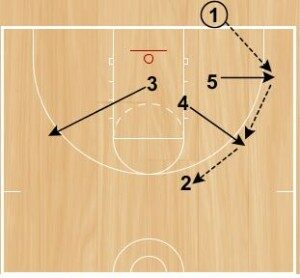
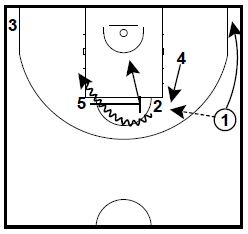
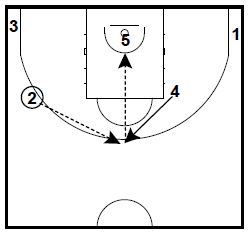
Good set for inbounder getting a 3 by screening the unsuspecting zone.
1 needs to be your best shooter.
2 best ball handler
3 helps if she can shoot it some too of is at least a threat to score if she catches it.
4 and 5 can be interchangeable.

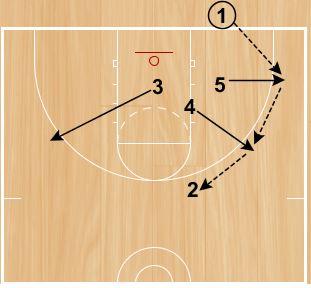
basketball-plas1

5 to corner hard

4 to the arc

3 to draw weak side attention

Ball is inbounded to 5

Then on to 4 and 2
 

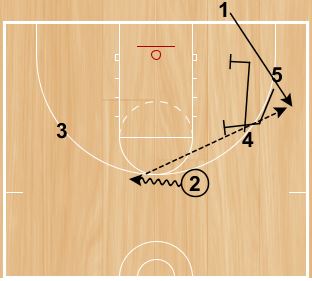
basketball-plays2

2 dribbles away from the action

4 screens the bottom of the zone

5 screens the top of the zone.

1 comes off the screens for a shot.


Basketball Plays from David Blatt and Steve Kerr

By Brian Williams on June 11, 2015

These 2 man to man set plays below are from David Blatt’s playbook that was compiled by Coach Scott Peterman and Steve Kerr’s 2014-15 Golden State Warriors Playbook that was compiled by Wes Kosel

You can find out more information about purchasing the 2 eBooks together for $25 at this link:

Steve Kerr and David Blatt Playbooks


If these sets do not fit your players, I hope you can at least get an idea from them that might fit your needs.

Diagrams created with FastDraw

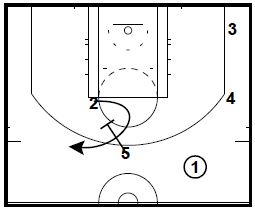
Warriors Top Stagger Overload

basketball-plays-1

2 loops around a screen from 5 looking for a quick 3-point shot.


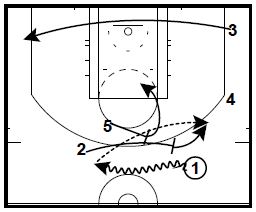
basketball-plays-2

If the shot isn’t there, 2 sprints over to set a ball-screen for 1 with 5.

1 drives left as 3 clears to the opposite corner, 5 rolls, and 2 pops.

1 looks to pass to 2 for a shot.
 

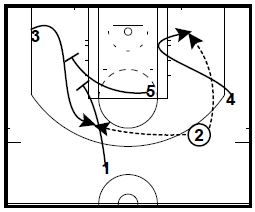
basketball-plays-3

Once 2 has the ball, 1 and 5 set a staggered down-screen for 3 in the corner.

4 moves in from the wing to the block and posts up.

2 looks to pass to 3 for a shot or to 4 inside.


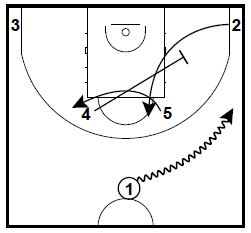
Maccabi Tel AVi Zipper 1

basketball-plays-6

1 dribbles to the right wing. 5 cuts to the left elbow.

4 sets a down screen on 2. 2 cuts to the right elbow.


basketball-plays-7

1 passes to 2 and cuts to the right corner.

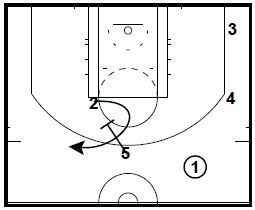
5 sets a ball screen on 2 and rolls down the middle of the lane.

2 attacks the left side of the lane.

4 slides up to the right elbow arriving as the role is taking place.

basketball-plays-8

If 2 doesn’t pass to 5 on the pick and roll, then 4 cuts to the top of the key.

2 passes to 4.

5 ducks in the post deep. Depending on the timing, he might need to clear the lane.

4 passes to 5.

You can find out more information about purchasing the 2 eBooks together for $25 at this link:

Steve Kerr and David Blatt Playbooks

3 Basketball Shooting Drills

By Brian Williams on June 10, 2015

These three shooting drills were posted in the FastModel Sports Basketball Plays and Drills Library

The site has thousands of drills and plays that have been submitted by basketball coaches from around the world.

You can also find out more about FastModel Play Diagramming software by clicking this link: FastDraw.

The first two drills were submitted by Kyle Gilreath, Assistant Basketball Coach at Fort Myers (Florida) High School. Kyle previously served for five seasons as an undergraduate manager and graduate assistant for Billy Donovan at Florida.

The third drill was posted by Tim Springer, Girls Varsity Basketball Coach at Castle Hills First Baptist School.

Big 8 Shooting Drill

basketball-shooting-drills1

Player starts at block and sprints around opposite cone of catch & shoot jumper.

After shooting the player then sprints to the corner and curls back around the other cone for another catch & shoot jumper.


basketball-shooting-drills2

After shooting player sprints and touches the other block and repeats the drill from the other direction.

Do drill for time or number of makes (10).


Back and Forth Shooting Drill

basketball-shooting-drills3

This drill was used by Billy Donovan at Florida.

Player stands in the middle of the floor at the top of the key with a coach flanking him on the right wing and the left wing. The player will attempt to take and make as many shots as they can in 1 minute.

The player starts by going to their right 1st for a catch and shoot and then turns back to their left (all catches will be made at the slot/elbow extended).

You can use other players, managers, or coaches to rebound.

Attack Closeouts Change of Direction Shooting

basketball-shooting-drills4

Drill to teach players how to take ground from a defender, make a move based on speed and direction of the defense, and pull up into a jump shot.

Defenders pass to offense lined up at volleyball line and then close out.
 

basketball-shooting-drills5

Offense immediately puts the ball on the floor and trys to take ground from the defender. They hit a change of direction when they meet the defender and separate into a jump shot.

Players can attack middle or baseline.

Considerations in Formulating Your Defensive System

By Brian Williams on June 9, 2015

This post is an older blog post  on Hoop Thoughts  The blog is written by Texas A & M Women’s Assistant Bob Starkey .

This past July, I spent as much time as possible picking the minds of coaches on the road in regard to defensive play. We are always looking to refine what we do — find ways to improve. One of the things I was asked a couple of times from some younger coaches are what considerations do you make in forming your defensive philosophy?

And it’s a great question.

First let me say that I think it is important that you do have a system of play defensively.  You need to have a philosophy that says “this is how we are going to defend.”  It needs to be surrounded by rules, principles and teaching but you must have a system as a centerpiece.

Let me state that I firmly believe that are a lot of different ways to play the game successfully — especially on the defensive side. If you look at the men’s game, you can look at three of the best teams in the nation and see three different systems of play.

Syracuse – great zone team

Duke – primary man to man team

Florida – excellent pressing team

During my younger days, two of the best teams in the country were Indiana and North Carolina. It was Bob Knight who played exclusively man to man defense, and Dean Smith who utilized a multiple defensive system. Coach Knight would say that it was “simplicity and execution” vs. “surprise and change,” though I believe execution is a big part of both.

So while it is important to know that the game can be played in a variety of ways, there are still some considerations I think coaches should give thought to.

Here are a few things that I think any good defensive systems would have:

  1. A good defensive system needs a consistent set of guidelines and principles that govern it and certainly some set rules. I believe that defense is more “rule” oriented than offense.
  1. A good defensive system needs to fit the players you have available. If you are on the high school level, you inherit the players that play for you. If you are on the collegiate level, you sometimes have a certainly type of player that you can recruit. Does your defensive system fit those players?  Too often, coaches see a particular coach be successful and want to adapt his/her system of play and this can often time be a mistake.  Do you have the make-up of a team that can play the way you want to play?  If not, you must adjust your system.  On the collegiate level you can attempted to adjust your recruiting.

  1. A good defensive systems needs to be flexible. I believe this even if you primarily play one set defense. The programs I have been involved with have been man-to-man defensive teams. Yet I think it is imperative that you can defend ball screens more than one way. I think it makes a major difference if you can defend the low post more than one way. I really believe that good defenses have a Plan A and a Plan B.
  1. A good defensive system needs allow you to beat/compete with the best teams in your league. I see teams that play a certain way (offensively and defensively) and they are successful to an extend but are unable to beat the best in their league or advance in the post-season. Give thought to what it takes to compete with those elite schools in your conference and make sure you defense gives you a chance to do just that.
  1. A good defensive system needs to have a means in which it can allow a team to comeback from a deficit. All teams fall behind and must play catch-up at some point and it is even more critical in the post-season. What can your system of play do to get you back in a game?
  1. A good defensive system should have a transition defense philosophy. Again, it doesn’t matter if you are man-to-man, zone or multiple, what are the guidelines for your team getting back and being ready to defend?
  1. A good defensive system is backed up by good, formulated practice plans on a daily basis. Regardless of what defense you play, it is the teaching that allows it to be successful.
  1. A good defensive system is given the amount of importance and relevance from the coaching staff that helps a team understand why it is necessary for success. As Don Meyer would say, “It’s not what you teach, it’s what you emphasize.”

  1. A good defensive system should have a system of communication. Regardless of the type of defense you play, all good defenses communicate. Coach Krzyzewski has three phases of basketball: offense, defense, and communication. It much more than just “talking.” You communicate with your voice, your ears, your eyes, and your body.

A couple of quick thoughts in regard to a good defensive system of play, especially as it relates to man to man defense in the half-court is that I think in today’s game you have to have a plan that:

…has a strategy to defend the low post

…has a strategy to defend dribble penetration

…has a strategy to defend ball screens

Now certainly there are other things involved in good defense, but these three areas to me seem like where offensive teams are scoring from the most.

Within our defense, we have our “daily to-do list” of areas we want to cover in some form — whether it be in a part-method drill or through the emphasis of a whole-method drill. For us, things that our important daily include:

  1. Transition Defense
  1. Defending the Dribble
  1. Post Defense
  1. Closeouts
  1. Contesting Shots
  1. Help and Recover
  1. Blockout

I could include communication in this list but it is a part of each one. But the point is, communication is taught and stressed each day.

Again, regardless of your style or system of play, you should have a list of daily things to cover in order to build or grow your defense. They don’t have to be the things I listed above but there should be a list of your systems defensive priorities.

  • « Go to Previous Page
  • Page 1
  • Interim pages omitted …
  • Page 151
  • Page 152
  • Page 153
  • Page 154
  • Page 155
  • Interim pages omitted …
  • Page 288
  • Go to Next Page »

Primary Sidebar

  • Twitter
  • Facebook
  • Linkedin
coachestoolbox
personaldevelopmenttoolbox
basketballplayerstoolbox
basketballtrainer
athleticperformancetoolbox
coachingbasketball

© Copyright 2026 Coaching Toolbox

Privacy Policy