• Skip to primary navigation
  • Skip to main content
  • Skip to primary sidebar

  • Basketball Plays
    • Ball Screen Sets
    • Horns Sets
    • Man to Man Post Up
    • Man to Man Isolations
    • Backdoor Plays
    • Man to Man 3 Point Shot Plays
    • 2-3 Zone Attack
    • Baseline Inbound Plays
    • Sideline Inbound Plays
    • Combination Defense Attack
  • Drills
    • Defensive Drills
    • Offensive Drills
    • Competitive Drills
    • Passing Drills
    • Rebounding Drills
    • Shooting and Scoring Drills
    • Toughness Drills
    • Transition & Conversion Drills
    • One on One Drills
  • Blueprint
  • Practice
  • Mental Toughness
  • Skill Development
  • Offense
  • Defense
  • Store

Coaching Basketball: Win the Game with CPR

Coaching Basketball: Win the Game with CPR

By Brian Williams on August 21, 2015

Submitted  by Coach John Kimble
CoachJohnKimble.com

Retired high school and college coach

Follow him on Twitter @CoachJohnKimble

This article was originally written for Winning Hoops

CPR: Complete Practice with Repetitions

How many basketball games have you observed where the outcome of a close game is determined by just a matter of a couple plays? In your observation, it may have appeared that both basketball teams have similar talent-levels and that the critical reason for one team having a better chance to win might be just a matter of one or two key possessions of the basketball.

Does one of these teams have a decided edge in preparation of unique scenarios that can easily happen during the game? It is even possible that one of the teams could possibly even have been out-prepared, out-hustled, and simply out-played by the other team, but because of just one or two plays, that is the team that can come out the victor of the game. But unless this team is prepared and can achieve an edge in these situations that can easily take place in a game, all of the hard work and effort put forth by both players and coaches (both during the actual game and in practices) will have gone for naught.

If various offensive and defensive scenarios have not been carefully thought out, analyzed and then practiced many different times, a basketball team must to win this type of close game by relying solely by executing a play they have just had diagrammed to them for the first time in a frenzied timeout. If winning a game is so important, are you as a coach going to go with an offensive play that you draw up during the excitement of a last second timeout—a play that you and your players are not necessarily familiar or are you going to run a play that has been carefully thought out, discussed, taught, and practiced repeatedly during the season?

I have often thought that if a coaching staff and a basketball team that has spent hours and hours on the fundamentals and skills of the game and also countless hours on plays, offenses, and defenses; shouldn’t “one-play scenarios” that may be the actual deciding factor in determining the winner/loser of the game be practiced for a few minutes frequently? Instead of a coach drawing up a play that his team has never seen or practiced, why not have the plays already drawn up, seen and understood by his team and also specifically practiced.

This would give that team an opportunity to be as prepared for these last second situations as they are for everything else that takes place in the games’ first 31 minutes.

From all of my coaching experiences throughout the years; I have tried to devise a philosophy and specific plan to meet these various types of ultimate game-deciding situations.

There are many different ways to “skin the cat.” And there doesn’t have to be a “right or a wrong” method, as long as the method has been thought out, agreed upon (by the coaching staff), and then taught and sold to the players. Instead of giving a coaching staff specific answers to all the many scenarios that exist, I would like to challenge each reader to be prepared for those situations by simply asking them if they have a sound idea and philosophy to the many different offensive and defensive situations that could easily come up in games.

Before late-game decisions that could determine the outcome of the game are made, there are other ideas and philosophies that must to be developed. Does a defensive team use a particular type of defense when defending “baseline out-of-bounds plays?” Does an offensive team have “baseline out-of-bounds plays” that will be successful against man-to-man defenses and/or against zone defenses? Does a defensive team change its defense late in the first half or at the end of the first, second, or third quarters when the opposition is holding the ball for the last shot in the period?

When your team is going for the last shot of the time period, do you have a predetermined defense that your team should use (even if it is a defensive change) when the opposition gains possession of the ball (after your score or turnover in the last few seconds of the time period)? For example, do you have your team change to a token full court pressure defense (to burn time off of the clock) and a man-to-man defense (to prevent an uncontested three-point shot at the buzzer)?

Does the coaching staff have a philosophy on whether they want players early in the game to call a timeout to protect the possession of the ball as they are about to fall out of bounds or about to get tied up after a loose ball on the floor? Or does the coaching staff want to save those timeouts for late game situations? If the coaching staff does not have a set philosophy and has not taught their players, those decisions will then be left up to the players.

One of the most important decisions a coaching staff should decide on and then convey to all players is what they should do in the last seconds of a game after the opposition scores to tie the game or put the opposition into the lead. The amount of the lead should also affect the coaching staff’s philosophy. Do players have a grasp on how many seconds it actually takes to dribble full court for a driving lay-up for either themselves or the opposition. Does each player know who realistically are the three-point shooters that should take that last second shot? Has the team practiced those “buzzer beater” shots?

Does the coaching staff have a philosophy and have they taught a type of man-to-man defense that could be used in late game situations where your primary objective is to defend the opposition from shooting “3’s” and you would sacrifice giving up an inside shot for “2?” If the coaching staff has taught that to his/her players, do the players know when to use that defense and when not to use it?

Does the coaching staff have a philosophy for late game situations where the thought of deliberately fouling an opponent to prevent them for shooting (and making a “3” to ultimately tie the score)? If so, has the staff thoroughly taught the players the proper techniques and methods to be successful? Do the players know when and when not to use that technique?

Does your staff have a philosophy (and a plan and a play) to react to the opposition’s last second score that puts you behind by four points with more than 10 seconds left and less than 10 seconds? Or what do you want to do if you now trail by three points with more than or less than 10 seconds? What does your team do if you trail by two points with more than 10 seconds or less than 10 seconds, or trailing by one point, or when the score is tied (with more than 10 seconds or less than 10 seconds remaining? A coaching staff might not have practiced all of the various scenarios that could actually play out in a game, but he/she at least should have a mental plan on what he/she wants to do in that situation.

After the opposition scores late in the game, does the coaching staff want his/her team to automatically call a timeout and set up a play? Many coaches adhere to that practice because they feel they then can organize their team for a planned (and hopefully practiced) play? This is sound reasoning, but the timeout also gives the opposition an opportunity to organize and possibly substitute better defensive players into the game, set up a full court press, or change half-court defenses. Without a timeout, the opposition would be able to make none of these adjustments. Who will benefit more from the timeout, your offense or the opposition’s defense? Does the coaching staff have a sound philosophy for their decision?

A philosophy opposite of automatically calling a timeout after the opposition scores is for the offensive team to push the ball quickly down the court and already have a plan and a play (that has been practiced repeatedly) to execute. The defensive team obviously could not substitute better defenders in the game, could not probably set up full court pressure and probably not effectively set up a different half court defense. In fact, not calling a timeout sometimes could catch the opposition off balance and allow for better offensive match-ups and give the offensive team a high percentage shot. The question that must be asked is “Is your offensive team prepared enough to execute a last second play in a pressure packed situation? Does your team fully understand what type of shot and who the coaching staff wants to take the last shot?”

Does your team know your philosophy if you are the team that just scored to either tie the score or put your team up (by one or two or three points)? Does every player know what defense you expect them to be in? Do they know whether they are supposed to be in a full court press and what specific half court defense they are to be in to protect the lead and ultimately the game? Do you have a set philosophy to teach your players so that they will be successful?

The next situation a team must recognize is the actual score and what type of shot do they need to take and what types of shots should not be taken. Coaches should not expect his/her players to read the coaching staff’s mind and know exactly what kind of shot the staff wants. One line of thought is that if the score is tied or your team is down by as much as two, a high percentage shot or a shot that could draw a foul should be taken and not a “3” (in the lane). Other coaches believe in taking the “3” immediately.

Obviously, if your team is down by three points, your team needs the best possible three-point shooter to take as good of a three-point shot as he can get and the play should be designed to allow that. If your team is down by four points, the coaching staff must determine whether they want a three point shot or a two point shot to be taken followed by a press (and ultimately a foul). A definite philosophy should be agreed upon by the coaching staff in the preseason and then thoroughly taught to all players in the program, so that there is no doubt or hesitation in anyone’s mind as to what to do during that intense situation.

When your team calls a timeout and your offensive team must travel the length of the court, there are two important factors that can change the philosophy. One is that the offensive team may be or possibly not allowed to run the baseline.   Not being able to run the baseline takes away very important options that an offensive team can incorporate into their “Last Second Shot” philosophy. The second scenario is determining whether the offensive team has any remaining timeouts left to use. If timeouts still exist, any offensive pass receiver that catches the ball in the frontcourt could possibly call an immediate timeout. This would allow the offensive team to reorganize and run a “Sideline Out-of-Bounds” play that starts much closer to the basket.

A coaching staff must know which scenario exists and not only know beforehand how he is going to handle these critical decisions, but convincingly sell his philosophy to every player and then have his players repetitively practice that play in game-realistic situations. The coaching staff must devise a play that could also handle the surprise defensive change by the opposition. Each play should have a primary and a secondary shooter in case the primary shooter is taken out of the play defensively.

Defensively, all of the same questions must be asked with the same scenarios. What do you want your team to do when your team has just scored to put your team up by the designated number of points with more than or less than 10 seconds?

Does the coaching staff have a philosophy and a plan and a play for offensive “Sideline Out-of-Bounds” situations and also “Underneath Baseline Out-of-Bounds” situations when your team needs a “quick” shot, a “3-pointer,” and a “quick 3-pointer?” Conversely do you have a philosophy and a defensive plan to guard against the opposition’s shots when they are in the same type of situation?

Does the coaching staff have a definite plan and philosophy on defending the opposition in (most likely) their last possession of the game and your defensive team is ahead by one point? By two points? By three points or more? Do you play “normal defense” or do you deliberately foul the opposition?

Does the coaching staff have a philosophy and a special play to fit the needs of your free-throw shooting team late in a game where the score is tied, or you are up (or down) by 1 point, 2 points, 3 points or more. Does the coaching staff have any special “rebounding stunts” and intentionally miss specific free throws to get the offensive rebound? Does the staff know how to slow the opposition down from in-bounding the ball after your team has made the last free throw, so a full court press can be set up?

Does the staff have an organized plan of action when the opposition is the team that is shooting the free throws? Does the coaching staff have a plan in “icing” the opposition’s free throw shooter late in a close game? If so, how do you do so?

Does the staff have a philosophy and a value for how important “last shots” at the end of a time period really are? If your team succeeds before the buzzer, do you have a “Buzzer Prevent Defense”

Does the coaching staff have a defensive philosophy dependent upon the time and score of when to start fouling the opposition to make the last possessions a “free throw shooting contest?”

Does the coaching staff have a plan of action when they want their offensive team to simply “milk” the clock and not be fully committed to “letting the air out?” Does the staff have an offensive philosophy dependent upon the time and score of when to make the full commitment to “stall?” Does the staff have an offense (or two) designed to achieve that purpose? Does the staff have a complementary defense that corresponds to the offense that they are implementing in that particular situation?

All of these situations and scenarios can and often do take place in games. Several of these could actually take place in the same game. Winning and losing that game sometimes is just the difference of one decision or of one (correctly or incorrectly executed technique). Winning just two games that could have been losses can drastically turn the outcome of an entire season around, especially if those close games were tournament games. A team that ends up with a 16-10 record seemingly has a totally different season when they could have had a 18-8 record. A team that ended up 19-7 that could have changed three close game losses into wins would have then had a 22-4 record.

Preparation for all of these scenarios takes a great deal of time and effort, but it can be much more productive and effective when it is done in the off-season and not in the “heat of battle,” during an actual game. During the season, the appropriate techniques can then be explained, taught, sold, and practiced with the players. This makes everyone more confident and prepared. Remember the saying that Coach John Wooden used, “Failing to prepare is preparing to fail.”

About the Author

Coach Kimble was the Head Basketball Coaching position at Deland-Weldon (IL) High School for five years (91-43) that included 2 Regional Championships, 2 Regional Runner-Ups and 1 Sectional Tournament Runner-up. He then moved to Dunlap (IL) High School (90-45) with 2 Regional Runners-up, 1 Regional, 1 Sectional and 1 Super-Sectional Championship and a final 2nd Place Finish in the Illinois Class A State Tournament. He was an Assistant Basketball Coach at Central Florida Community College in Ocala, FL for 1 year before becoming Offensive Coordinator and then Associate Head Coach for 3 additional years He then was the Head Basketball Coach at Crestview (FL) High School for 10 years, averaging over 16 wins per season.

He has had articles published in the following publications such as: The Basketball Bulletin of the National Association of Basketball Coaches, the Scholastic Coach and Athletic Journal, Winning Hoops, Basketball Sense, and American Basketball Quarterly. He has also written and has had five books published along with over 25 different DVDs by Coaches Choice and Fever River Sports Production.

See him on Twitter @CoachJohnKimble and his Web Page “www.CoachJohnKimble.com”
Coaching Basketball: Improving Your Half Court Offense

By Brian Williams on August 19, 2015

This post contains some of my takeaways from Bob Starkey’s series “Thoughts on Half Court Offense.” He posts almost every day on his Hoop Thoughts Blog. Sometimes it is just a short quote or thought and sometimes it is a detailed series like this one. Whatever it is, it is always worth taking a look at.

You can read his entire series on half court offense at this link: Thoughts on Half Court Offense

Do you have a method of flowing into half-court offense out of your fast break? Out of your press offense? Out of your special situations? Do you practice flowing? We are big believers in that all half-court offense in the whole method should be concluded with at least one conversion. This allows the work you need to execute how you will flow as well as work on your transition defense.

Do you chart your half-court offense? Or do you just chart your offense overall? Of course you can look at the stat sheet after a game and see that you shot 46% from the floor, shot 18 free throws and turned it over 14 times. But what was your stat line in just half-court offense? If you eliminated transition, press offense and special situations then what did your team shoot from the floor? How many free throws? How many turnovers?

Be careful not to fall into a lull by just reading overall stats. You might play a team that is poor in transition so your stats get padded by your fast break but your half-court offense was not efficient.

Certainly there are coaches out there with the philosophy that “we are fast break team” and they well may be excellent in transition. But here are some numbers to think about that come from a book by Bob Liguori titled “Building A Championship Offense.” I’ll preface these numbers by letting you know the book is more than a decade old so the numbers he gives could be outdated — but I’ll follow that up with my thoughts afterwards. In Bob’s book he found the following:

Regardless of your desire to run, remember 3 keys:

1. Seventy-five percent of all field goals come in half-court situations

2. The better your opponent, the lesser number of transition opportunities.

3. Transition baskets decrease on the road.

I think those numbers hold close today. I also strongly believe that those numbers hold true in post-season basketball. Players may be a little more hesitent to run — at least early in a play-off game — not wanting to make mistakes. As you advance in the playoffs, you will obviously play better teams and part of them being better will most always include good transition defense. Even coaches tend to get a little more conservative in the post-season.

As you go through the season, and you are scouting or just watching a game on television, pay attention to some of these trends. After reading Bob’s book, I’ve found that in the majority of most “big games” (games played by two excellent teams), scoring is almost always down. Of course part of this is because of good defensive play…but that again goes to the need to execute in the half-court against good defensive teams.

If you want to be consistently effective in offense…if you want to advance in post-season play…work daily to become a good half-court offensive team.

Today we are going to talk about components of good half-court offense and hopefully give you some things to consider when your are putting together your offensive system of play. The components, or characteristics of good half-court offense are certainly debatable based on your philosophy but ever successful half-court offense will have their own particular elements in which they will base their play around.

I have always believe in the importance of getting to the free throw line. Again, this is my philosophy and that does not make it right or wrong. If getting to the free throw line is part of what you want your offense to be, than that will guide you to answer a few other questions along the way. Earlier this year I blogged about getting to the free throw line — it’s importance and considerations for getting there. You can read that post at:

http://goo.gl/DBB7T

Components of Good Half Court Offense

1. Spacing
Chuck Daly said it best, “Spacing of offense and offense is spacing.” Regardless of whether you run motion, continuity, patterns or quick hitters you should include elements of spacing. Obviously in regard to quick hitters you may not have good spacing in the beginning but it should be part of the flow of your offense. So much good stuff comes about because of spacing including the ability to feed the post, drive to the basket, and open up penetrating cuts. It helps neutralize the help of the defense as well as spread the defense to put more pressure on them.

2. Initial Alignment
Regardless of what you are doing offensively, how you initially begin in your set should be of importance. The placement of the players can first distort the defense as well as help you maximize your entry options. Just because you run Triple Post doesn’t mean if you have to start in the basic set that most teams do. Take a look at your personal and take advantage of your own team with the alignment.

3. Entry Options
All offenses need the ability to have the ball entered. Obviously on of the more common entry passes is the guard-to-wing. Give thought to how you are going to enter the ball to get your offense started — no matter why type of offense you run. And of course, you should have Entry Option #1, Entry Option #2 and Entry Option #3. Regardless of how important your initial entry option is, you must be prepared for it to not being open. I once read where pilots have to file a flight plan and that than they are to create a back up plan. Do the same with your entries.

4. Counters
This is especially important if you are running patterned or continuity offenses. As someone who enjoys the defensive side of the game, I take great pride in “disrupting” an opponent’s offense. Teams that run patterns and continuity all have a specific pass and particular receiver to keep the offense going. From the defensive standpoint, we would work hard to take the particular pass or reciever away fromt he offense. If the team has a counter for when that is denied, than they can continue to attack offensively. It is always easy to spot a team that may not rely on counters. You can see their need to hit the high post player at the top of the key to reverse the ball and when it is denied, she will step a step higher…and then a step higher — working hard to get open just to keep the offensive alive.

5. Flow
If you are running a patterned or quick hitting offense, what are you going to “flow” into when it is over? If you have a shot clock to work with, you must be very effective at flowing into something to be successful in your half-court offense. Certainly some teams can and do pull the back out and yell “set it up” or call another play. If I could again refer back to my defensive philosophy, the offense setting up means our defense gets to reset as well. We tell our defense that anytime the offense pulls the ball back and yells “set-up” that we should take that as a sign that we have succeeded defensively. If you are going to flow into motion or a continuity, make sure you work on it in practice. And if you are going to pull it back out and call another play, you should work on that as well.

6. Paint Presence
This is certainly open to debate but I strongly believe that successful half-court teams are great at getting paint touches. Now please understand that this doesn’t necessarily have to be all low post feeds. But good offense knows how to score inside — even if they are primarily a 3-point shooting team. Maybe you don’t have a big team or an effective scorer at your post position. Ever tried posting up a guard? It is a very difficult thing for a defense to handle. Paint touches can also come from dribble penetration or flashes into the post. Very few things put more pressure on a defense than a team that can get the ball to the paint. I listened to Mike Krzyzewski a few back at a clinic talk about how Duke has worked hard to incorporate a 3-point shooter attack — and if you’ve watched them play you can certainly you can see the effect of the 3-point shot. Last year Duke was 34th in the nation with over 20 3-pointers a game. Yet they also managed to average 22 free throw attempts a game. It because they like to utilize dribble penetration or post feeds to set up their 3’s. At LSU, we refered to these as “Paint Touch 3’s” — you get the 3 (usually a little more open do to defensive collapse to the paint) while also pressuring the defense with the paint touch.

7. Shot Selection
This is again open to interpretation and philosophy but what I do think is important that you have it definded for your players individually and for your team as a unit. The whole goal of good offense is simply stated: get a good shot each time down the court. It is up to you to define what constitutes a good shot for your team. Do not leave it open to the imagination of your players. Be specific and make sure you are constantly reviewing with your team the type of shot you are expecting.

8. Valuing the Ball
All good offense is also about possession. Good offensive teams take care of the ball. A big part of this will be your ability to emphasize that to your team on a daily basis through practice, skill development and video. But you can also aid it by the structure of your offense. While at LSU, dribble usage was a big part of our offensive philsophy and here is how we viewed it: http://bit.ly/nTkmn4. Again, this does not have to be your set of principles, but make sure you team understands what you expect. The same holds true in passing. By having some design thoughts on when, where, how and who to pass it, you can help your offense to better maintain possession of the basketball.

9. Floor Balance
This is a simple concept that some coaches don’t give a great deal of thought to — but it can great effect your team. There are two major thoughts in having good floor balance. The first if making sure that you have good board coverage. This obviously can be enhanced by having a set philosophy on shot selection — it is easier to rebound when you have a good idea of who is going to shoot and when and where they will shoot it. But having good floor balance can put your best offensive rebounders at the best spots on the floor to attack the glass. The other component of floor balance is defensive. Good floor balance certainly benefits your transition defense.

10. Ball Reversal
This is another one that could be question by a few coaches with various philosophies but I think a good half-court offense must be able to effectively reverse the basketball. The better the defense, the more difficult it will be to score on a first-side entry pass. Good defensive teams simply won’t allow it. So you have to work on options to reverse the basketball and how you will attack from that — especially with the thought that some defenses will work hard to prevent the ball reversal action.

In his book “Building A Championship Offense,” Bob Ligouri studied offense in great detail and came to this conclusion: “The most effective 1 on 1 situations came as a result of an off-the-ball screen and cut. One on one moves were much more efficient after 3 to 4 passes and 1 to 2 court reversals.”

I very much believe this to be true. In fact, one of my offensive mantras is that “everything is more effective off ball reversal.” I think you could take any offensive action and then work it into ball reversal and it will be more difficult for the defense because they must handle that action after a closeout. It will also often give better opportunities because of the ballside action being slow to get to help or not getting to help at all.

11. Patience
This could coincide with Ball Reversal and again philosophically some coaches might not agree with it making the list of elements necessary for a good half court offense. But again, we need to look at our half-court offense being effective against the best that we will play against and good defensive teams will make sure you don’t score early in a possession. The art with being effective while being patient is maintaining aggressiveness. Patient is not complacent. Patient is now slow. We talk to our teams along the lines of being “aggressively patient.”

I don’t think a coach has to demand that his offense is always patient but she/he needs to coach them so that they understand what patience means to her/his philosophy and be able to execute that when necessary.

Roy Williams thinks patience in offense is important because the longer you aggressively run your offense the more likely the defense will have a breakdown. In fact, good offensive patience could be defined as running your offense aggressively until you can take advantage of a defense breakdown.

Do you have a way to communicate patience? At LSU, we would hold up five fingers to indicate that we must have at least five passes before shooting a jump shot. We would also hold up a fist to indicate that the ball must touch the paint once before a jump shot. To maintain aggressiveness, we would always let our team that they could take a lay-up at any time. Regardless of what we called, if we have a drive to the rim or a cutter to the rim, the restriction is off.

Practice Player Evaluation System

By Brian Williams on August 18, 2015

I am a firm believer that what gets measured gets emphasized, and that what gets emphasized will improve.

It is also my belief that a simple box score and traditional practices statistics do not provide information that truly allows you to evaluate your team’s or individuals performance, nor do they server as a useful tool to measure progress and improvement.

The purpose of this post is to stimulate some discussion for your coaching staff and find a way to identify and implement one improved piece of numerical data to track and emphasize in practice and one piece of data to track and emphasize in games.

I believe that there are no perfect statistics and that they should be used in conjunction with the judgement of the coaching staff. The value of what you measure will be determined in large part by what you feel your team needs to be good at and be better at.

Your statistics and analytics must fit the follow criteria:

1. Meaningful to your system of play. If you play a packing style of defense, then tracking steals is not that helpful. It is good to post the stats you keep, but the ones that will truly make an impact are the ones you address and illustrated how they impact your play.

2. Can be tracked using your available resources. As Coach Meyer taught, “You can do anything you want, but you can’t do everything you want.” Prioritize what will have the biggest impact on your squad and find a way to make it happen with your available staff.

I am a firm believer that what gets measured improves.

3. Be able to be understood, digested and acted upon by your players and staff. To avoid information overload, I recommend not giving players all of the stats that you keep–just the ones they want to know and the ones that you want them to know.

4. Consider measuring process statistics as well as product statistics. AS an example, If you emphasize rebounding, chart block out percentage and times your rebounders go to the offensive glass along with total rebounds. Or, in addition to assists, chart “set-ups” where a player gave a teammate a pass that would have been an assist had the shot been made or had the player not been fouled.

For practice:

I am not suggesting you you can do all of this, but I am going to give you a system that the Xavier Men’s team uses to measure practice performance and provide motivation.

You might not have the resources to do all of this, but hopefully it sparks an idea for something you can do to improve your practices. Develop your own scoring system will add to the value for your group.

One idea would be go award points for hustle plays–being the first to the floor on a loose ball, talking on defense, or any other play that you deem to be what you are looking for when it comes to playing hard.

If you want to implement something like this, you can always start small on a trial basis and expand as you go.

During the week of practice, their players accumulate points based on the following scoring system:

Points are awarded in all live action whether it is a drill involving offense and defense or a scrimmage situation.

Two Point Field Goals (+2 for a make, -1 for a miss)

Three Point Field Goals (+3 for a make, -1 for a miss)

(+1 Point) for each Defensive Rebound, Block, Foul Drawn, Team Win, Team Free Throw Win, Deflection, Coaches Choice–for an outstanding play not mentioned or just something that needs to be emphasized.

(+2 Points) for each Offensive Rebound, Assist, Charge Drawn

(Negative 2 Points) Turnovers, Fouls

IMO, Poor body language should also count as negative points, but I realize you can’t do it all.

At the end of the week, the player with the most points is awarded a gold colored practice jersey at that week’s “Practice Player of the Week” for the next week’s practice.

Basketball Drills: Defensive Conversion

By Brian Williams on August 17, 2015

In my opinion, regardless of what type of half court defense you play, you can’t be a great defensive team without being a great defensive conversion team so that you don’t allow easy baskets in transition.

Here are a couple of conversion drills that you might consider adding to your defensive portion of your team’s drills book.

These drills came from Army Men’s Assistant Zak Boisvert’s PickandPop.net site.

I have a link at the bottom of this post to the pdf that these two drills came from that show his 10 favorite defensive conversion drills.

I have always called going from offense to defense “conversion” and going from defense to offense “transition” just to make our communication and teaching clear for our players.

Diagrams created with FastDraw

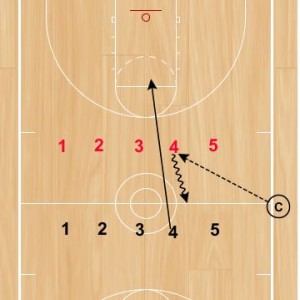
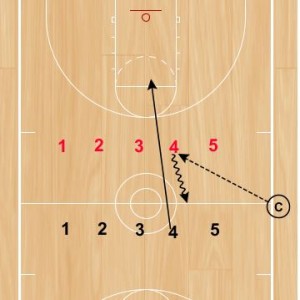
55 Line Conversion Defensive Drill

basketball-drills-defensive-conversion

Two teams of 5 players line up 10 feet off the half court line facing each other. Coach is at mid court with the basketball.

Coach can throw to either team.

When a player catches the ball, his team attacks the defense.

The player opposite the player who caught the ball must go touch the lane (giving the offense a 5 on 4 advantage, then convert back to defense.

basketball-drills-defensive-conversion2

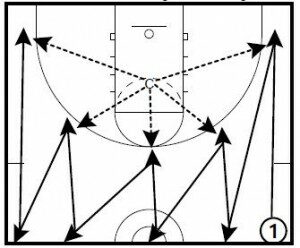
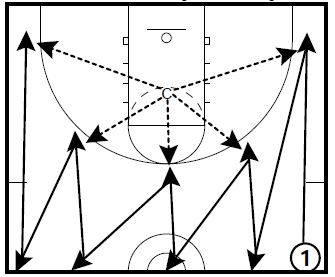
Rim Runner Conversion Defensive Drill

Red on Offense, Black on Defense.

Defense has a 6th player at the opposite end under their offensive basket, simulating a rim runner.

When black gets possession of the ball, they can throw the long pass to force red to sprint back to defense.

You can put x6 on the wings if you are preparing for a team that throws ahead to the wing.

You can also start off with only 4 black defenders and the 5th as the rim runner under the opposite basket.

If you would like to see all 10 of Zak’s favorite defensive conversion drills, click this link: Defensive Conversion Drills

Basketball Drills: Shooting with Conditioning

By Brian Williams on August 14, 2015

Some shooting drills with some conditioning that hopefully you might be able to use in your pre-season program if you are allowed to work with players, or to file and use in your early season practices.

These drills are from Coach Justin Remington’s Moreno Valley High School Out of season (aka improvement season) Shooting Program.

He is also a basket instructor for PGC (Point Guard College)

His Twitter feed is @Coach_JRem

I posted some other shooting drills last month at this link: 3 Competitive Shooting Drills

Diagrams created with FastDraw


Transition 3s

basketball-drills-competitive-3s

PLAYER MUST MAKE TOTAL OF 10 SHOTS 2 FROM EACH OF THE 5 SPOTS AROUND THE PERIMETER:

Player starts half court

Player sprints to corner and receives pass from coach, if it is missed they must sprint
back to half court and back to the same spot again until it is made…

When shot is made they sprint to the half court line and move on to the next shot in the progression…

the wing shot, then TOK, then other wing, and then corner…

PLAYER MUST MAKE THE SHOT AT THE SPOT THEY ARE AT BEFORE MOVING ONTO THE NEXT SHOT

GO AROUND THE ARC AND MAKE YOUR WAY BACK TO END THE DRILL

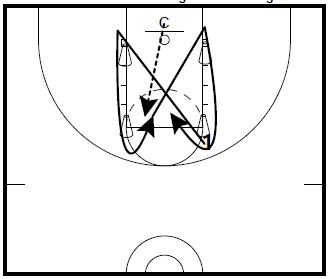
Agility Shooting

basketball-drills-agility-shooting

Player starts at the top of the right elbow sprints diagonally to left block, turns and curls the corner and runs up to left elbow, curls and receives pass from coach for a shot,

then runs to the bottom right block and curls that cone and curls the top right elbow cone for another pass and
jumper…

Make 5

The possibilities here and patterns are endless, use your creativity to incorporate agility into shooting…

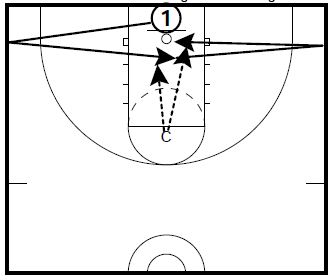
Opposite Rim Finishes

basketball-drills-opposite-rim-finishes

Player starts under the basket and sprints to the sideline, touches, and sprints back receives pass from the coach and finishes
(can be a regular finish or a reverse layup, or any style of layup finish you feel needs to be worked on)…

Player will go to the other sideline, touch, and come back t o the rim again for another pass from the coach.

Select a number of makes you want. Put a time and number of makes you would like to see to make it more competitive.

Basketball Plays: 3 San Antonio Spurs Sets

By Brian Williams on August 13, 2015

These 3 San Antonio Spurs quick hitters are from the Basketball HoopsSoop San Antonio Spurs Playbook.

I hope you can integrate at least something from these three actions to help your system.

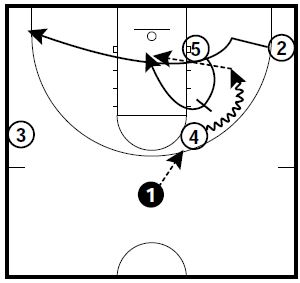
This 4 out 1 in set play is from the 2014 San Antonio Spurs Playbook that was compiled by Wes Kosel

The Spurs Playbook and the 2014-15 Golden State Warriors Playbook make up this weekend’s featured eBook bundle. You can find out more about them at this link:

Spurs and Warriors Playbooks

If you have any questions about the Playbooks, please feel free to email me or call/text me at (317) 721-1527.

If these sets do not fit your players, I hope you can at least get an idea from them that you might be able to incorporate into what you currently do.

Diagrams created with FastDraw

Spurs 1 Tap Head X

basketball-plays-spurs-tap-x

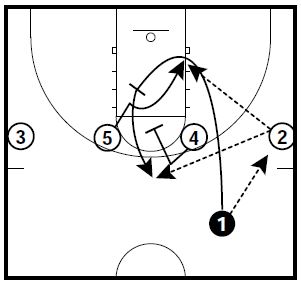
1 passes to 4.

2 rubs off 5 to the left side corner.

5 sets a ballscreen for 4 and rolls to the basket.

4 comes off the ballscreen looking to score or to 5.


Spurs 240

basketball-plays-spurs-240

1 passes to 2 and UCLA cuts off 4 to the right low block

1 then backscreens for 5.

5 cuts to the right low block.

4 sets a downscreen for 1.

2 can pass to 1 or 5.

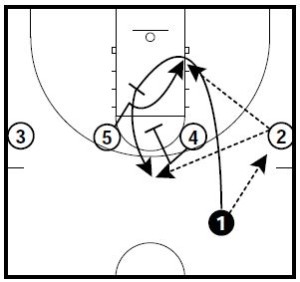
Floppy Out

basketball-plays-floppy-out1

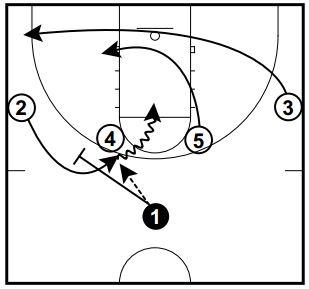
1 passes to 4 and sets a down screen for 2.

5 relocates to the left side low block.

3 clears out to the left side corner.

2 curls the down screen and receives a hand off pass from 4.


These 3 San Antonio Spurs quick hitters are from the Basketball HoopsSoop San Antonio Spurs Playbook.

I hope you can integrate at least something from these three actions to help your system.

This 4 out 1 in set play is from the 2014 San Antonio Spurs Playbook that was compiled by Wes Kosel

The Spurs Playbook and the 2014-15 Golden State Warriors Playbook make up this weekend’s featured eBook bundle. You can find out more about them at this link:

Spurs and Warriors Playbooks

If you have any questions about the Playbooks, please feel free to email me or call/text me at (317) 721-1527.

  • « Go to Previous Page
  • Page 1
  • Interim pages omitted …
  • Page 145
  • Page 146
  • Page 147
  • Page 148
  • Page 149
  • Interim pages omitted …
  • Page 288
  • Go to Next Page »

Primary Sidebar

  • Twitter
  • Facebook
  • Linkedin
coachestoolbox
personaldevelopmenttoolbox
basketballplayerstoolbox
basketballtrainer
athleticperformancetoolbox
coachingbasketball

© Copyright 2026 Coaching Toolbox

Privacy Policy