• Skip to primary navigation
  • Skip to main content
  • Skip to primary sidebar

  • Basketball Plays
    • Ball Screen Sets
    • Horns Sets
    • Man to Man Post Up
    • Man to Man Isolations
    • Backdoor Plays
    • Man to Man 3 Point Shot Plays
    • 2-3 Zone Attack
    • Baseline Inbound Plays
    • Sideline Inbound Plays
    • Combination Defense Attack
  • Drills
    • Defensive Drills
    • Offensive Drills
    • Competitive Drills
    • Passing Drills
    • Rebounding Drills
    • Shooting and Scoring Drills
    • Toughness Drills
    • Transition & Conversion Drills
    • One on One Drills
  • Blueprint
  • Practice
  • Mental Toughness
  • Skill Development
  • Offense
  • Defense
  • Store

Coaching Basketball: Recommit Daily

Coaching Basketball: Recommit Daily

By Brian Williams on December 17, 2015

Today’s video on recommitting daily to your core values is from PGC Basketball. I also posted a video from them last week that you can view by clicking on the link: Building a Strong Coaching Staff.

The videos are from their free program they started to serve coaches, and it’s called The Coaches Circle Journey.

Every week, coaches who are part of the circle get a new email with a new video. The video typically includes 2-3 minutes of coach talk about culture, lifestyle, and it’s incredible.

After the culture, lifestyle chat, there’s always a free drill video offered.

TJ Rosene, the coach who produced the videos, is one of the PGC directors, and he’s a championship-level college coach.

If you are interested in joining the Coaches Circle Journey, you can click this link for more information: The Coaches Circle Journey from PGC Basketball

Enjoy!

Recommit Daily

After Coach Rosene talks about recommitting daily and how you respond as a coach when frustrated, there is a great competitive shooting drill that forces players to move and shoot at a game pace called “Catch Up.” Players compete in two against another pair.

Again, if you would like to be a part of the Coaches Circle Journey, you can join for free at this link: The Coaches Circle Journey from PGC Basketball
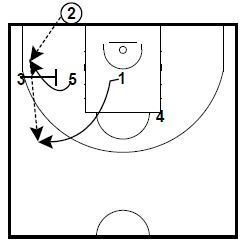
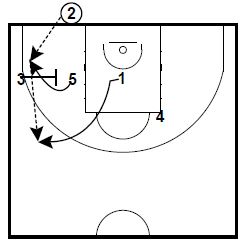
2 Short Seconds BLOBs

By Brian Williams on December 16, 2015

Today’s post are two ideas for short shot clock, quarter, half, or game baseline out of bounds plays against man to man defense.

There might be a part of one of these two plays that you can add in a a wrinkle or a counter to something that you already use.

The numbers are used to distinguish the players on offense and do not have to be viewed as the traditional 1-5 positions.

Place your players in the spots where they can be most effective for the team.

It is also something to have the second group run as you work on defending under out plays that are different from yours in practice.

However you can use them, I hope you find them of value. Regardless of what you run, having the ball under your opponent’s basket is a great place to attack the defense from.

I have several playbooks available in bundles of 4 for $35. You can make your selections here: eBook bundle pricing

Diagrams created with FastDraw

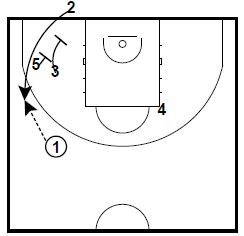
Iran Stagger

blob1


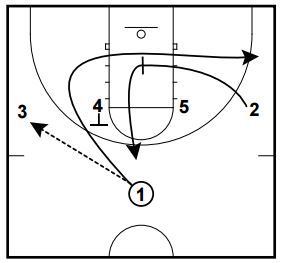
3 screens in for 5.

2 passes to 5 who passes to 1.


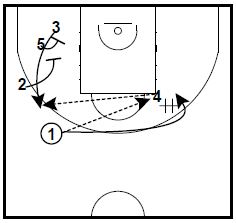
blob2


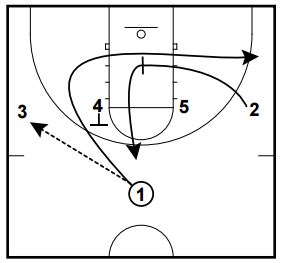
5 and 3 set a staggered screen for 2.

1 passes to 2 for a shot.


blob3

If 2 isn’t open, he moves back down to set a staggered screen with 5 for 3.

After seeing that 2 isn’t open, 1 looks to pass to 4 at the pinch post and loops around looking for the hand-off.

4 can give 1 the ball back on a hand-off or pass to 3 for a shot.

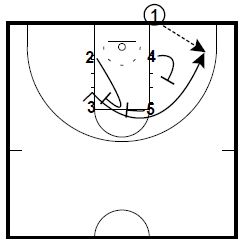
Baylor Tripple Stagger

blob4

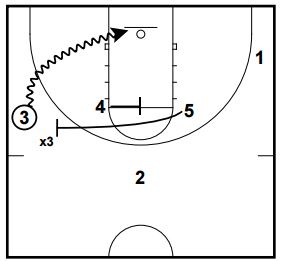
2 moves first and runs toward 5 as if he is going to cut off of him but instead makes a turn and sets a screen for 3.

3 jabs and cuts around the triple staggered screen from 2, 5, and 4.

1 looks for 3 in the corner for the shot.
 

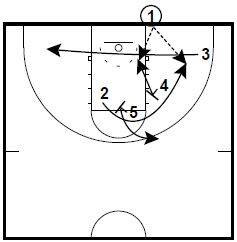
blob5

If 3 isn’t open, he cuts through to the opposite corner.

2 then cuts off of the staggered screen from 5 and 4.

4 rolls to the basket.

5 steps out to the top of the key for a shot or an outlet pass.

The plays are taken from the Men’s Basketball HoopScoop Olympic Playbook.

I have several playbooks available in bundles of 4 for $35. You can make your selections here: eBook bundle pricing

4 on 4 Shell Breakdown Drill

By Brian Williams on December 14, 2015

Submitted by Coach John Kimble
CoachJohnKimble.com

Retired high school and college coach

Follow him on Twitter @CoachJohnKimble

This post was originally a part of the article “Techniques Used in the Top Individual & Team Defensive Breakdown Drills” that was originally written for Winning Hoops

Editor’s note from Brian Williams: You might have different defensive rules and philosophies, but my hope is that you can use this to more clearly define what you do with your shell defensive drill and what you want your players to get out of it.

You obviously won’t do all of these phases every time you do shell drill, and some of them you might not ever use. But you can use this to start with a structure that you can change and tweak to eventually come up with a written outline for what you must defend that saves you planning time throughout the season.

4 on 4 SHELL

(TEAM DEFENSIVE BREAKDOWN) DRILL”

A. Vs. Positioning (without Post Players)

  1. Proper Stance, especially off of the ball.
  2. Determining one or more passes off of the ball
  3. Determining whether the ball is above or below the FT line extended to straddle the proper “line.”
  4. Setting up in the “ball-you-man” flat triangle.
  5. “Jump to the ball” as quickly as possible (to form new triangles).

A. Vs. Positioning with one to four post players (LP and/or HP Post)

  1. Proper Stance, especially off of the ball.
  2. Determining one or more passes off of the ball
  3. Determining whether the ball is above or below the FT line extended to straddle the proper “line.”
  4. Setting up in the “ball-you-man” flat triangle.
  5. Low post defenders should be on the low side in a ¾ front IF the ball is in the deep corner.
  6. Low post defenders should be on the high side in a “3/4 front IF the ball is above the mid-post “height.”
  7. Do not change from “low to high” or “high to low” from behind.
  8. Create a “parenthesis” and swing around in front going “belly to belly” to get into the correct position.“
  9. Jump to the ball” as quickly as possible (to form new triangles).

B. Vs. Give-n-Go Cuts

  1. Jump to the ball to get in the denial stance and form the “ball-you-man” flat triangle.
  2. Yell “Help !! Help!!” Snap the head and the new “long arm” to deny the quick return pass.
  3. Adjust positioning and stance after the initial cut to play support helpside defense.

C. Vs. Backdoor Cuts

  1. Don’t “bite” on the first step of the backdoor cut.
  2. Snap the head and the new “long arm” to deny the backdoor cut pass, before then moving the feet.
  3. Yell “Help !! Help!!”
  4. Snap the head and face the cutter. The defender should “match hands and belly-buttons.”
  5. Look down the new “long arm” to deny the pass.
  6. Adjust positioning and stance after the initial cut play support helpside defense.

D. Vs. Clear-outs

  1. Snap the head and the new “long arm” to treat the clear-out as the backdoor cut pass, before then moving the feet.
  2. Yell “Help !! Help!!” Snap the head and the new “long arm” to deny the pass.
  3. All off-the-ball defenders should yell “Clear-out.”
  4. Adjust positioning and stance after the initial cut play support helpside defense.

E. Vs. Skip Passes

  1. Every defender should jump to the ball to create the new “ball-you-man” flat triangles.
  2. Every defender should always be able to see both the ball and their man.
  3. Do not follow the flight of the ball. Anticipate where the ball will land.
  4. Sprint the first half of the distance and then close out under control by chopping down the steps.
  5. Run towards the inside shoulder of the pass receiver with the defender’s hand up opposite of the pass receiver’s shooting hand.


F. Vs. Killed Dribblers


  1. Step up on the killed dribblers and aggressively pressure he/she Ball-handler.
  2. Trace the ball with both hands.
  3. If the defender steps away from the pressure, the defender should never relinquish the ground that was surrendered by the Ball-handler.
  4. Bump the Ball-handler with the chest but don’t reach in to pick up a “cheap foul.”

G. Vs. On the Ball Screens

  1. The ball-defender should hear, feel and anticipate the coming ball-screen.
  2. He/she should go ballside of the screen by first getting a foot over the top of the screen.
  3. He/she then should “skinny” a leg over the top of the screen, then the hips and then the body.
  4. The ball-screener should warn the ball defender and then step out as if he/she would trap or switch the screen.
  5. The ball screener’s feet and the two feet of the screener’s defender should form a straight line with the inside foot of the defender being on the inside of the screener’s outside foot. (This will prevent the screener from rolling to the basket.
  6. The defender is also there to make the Ball-handler either kill his/her dribble, commit a turnover or at least bow out away from the screener.

H. Vs. Down and Cross Screens

  1. All off-the-ball defenders should “jump to the ball” and instantly form the new “ball-you-man flat triangles.”
  2. Every defender should be able to see both the ball and their particular man.
  3. The defender guarding the cutter that is receiving the screen should remain active and turn sideways to become a more difficult target for the screener.
  4. He/she should go with his/her belly into the cutter with his/her long arm and look down the long arm.
  5. He/she should go “ballside” of the screen.
  6. The defender on the screener should form his/her “flat triangle” and then “single-space” so that his/her teammate is can slide between the screener and himself. He/she should even help his/her teammate by pulling him/her through.
  7. He/she then must be aware of the screener “slipping the screen” and stepping towards the basket or flashing to the ball.

I. Vs. Back Screens

  1. All defenders should again “jump to the ball” when the pass is made and every defender should be able to see both the ball and their particular man.
  2. When the cutter makes a cut to the basket , the defender should treat the cutter similar to a backdoor cutter.
  3. Snap the head and face the cutter. The defender should “match hands and belly-buttons.”
  4. Look down the new “long arm” to deny the pass.
  5. Because of the back-screen, the defender on the cutter should go ballside of the screen and then treat the pass as a form of a backdoor cutter.
  6. All defenders should then adjust positioning and stance after the initial screen and the cut to play the new off the ball defense.

J. Vs. Flex Back Screens

  1. All defenders should again “jump to the ball” when the pass is made and every defender should be able to see both the ball and their particular man.
  2. If the defense is anticipating the “Flex” type of back-screen, he/she should drop back towards the original ballside low post on the original “up-pass.” He/she should line up on the high side of the post screen back-screener. This takes away the high cut off of the back-screen and forcing the cutter to cut off of the back-screen only on the low side.
  3. The defender on the back-screener should hedge and help take the high cut off of the screen away from the offense. He/she should still anticipate the screener setting the screen and then ducking in towards the ball to become the potential pass receiving threat.
  4. When the ball is reversed, and the cutter makes a cut to the basket , the defender should treat the cutter similar to a backdoor cutter.
  5. He/she should snap the head and face the cutter and force the cutter to go low. In this case, he/she is not going on the ballside of the back-screen.
  6. The defender should “match hands and belly-buttons” and then look down the new “long arm” to deny the pass.
  7. Because of the back-screen, the defender on the cutter should then treat the pass as a form of a backdoor cutter.
  8. All players should then adjust positioning and stance after the initial screen and the cut to play the new off the ball defense.

K. Vs. “Shuffle-Cut” Screens

  1. All defenders should again “jump to the ball” when the pass is made and every defender should be able to see both the ball and their particular man.
  2. When the cutter makes a cut to the basket , the defender should treat the cutter similar to a backdoor cutter.
  3. Snap the head and face the cutter. The defender should “match hands and belly-buttons.”
  4. Look down the new “long arm” to deny the pass.
  5. Because of the back-screen, the defender on the cutter should go ballside of the screen and then treat the pass as a form of a backdoor cutter.
  6. The defender on the back-screener should hedge and help take the high cut off of the screen away from the offense. He/she should still anticipate the screener setting the shuffle-screen and then cutting to the ball to become the potential pass receiving threat.
  7. All players should adjust positioning and stance after the initial screen and the cut to play the new off the ball defense.

L. Vs. “Wheel Cut” Screens

  1. All defenders should again “jump to the ball” when the pass is made and every defender should be able to see both the ball and their particular man.
  2. If the defense is anticipating the “Wheel-Cut” type of back-screen, he/she should drop back towards the original ballside low post on the original “up-pass.” He/she should line up on the high side of the post screen back-screener. This takes away the high cut off of the back-screen and forcing the cutter to cut off of the back-screen only on the low side.
  3. The defender on the back-screener should hedge and help take the high cut off of the screen away from the offense. He/she should still anticipate the screener setting the shuffle-screen and then cutting to the ball to become the potential pass receiving threat.
  4. When the ball is reversed, and the cutter makes a cut to the basket , the defender should treat the cutter similar to a backdoor cutter.
  5. He/she should snap the head and face the cutter and force the cutter to go low. In this case, he/she is not going on the ballside of the back-screen.
  6. The defender should “match hands and belly-buttons” and then look down the new “long arm” to deny the pass.
  7. Because of the back-screen, the defender on the cutter should then treat the pass as a form of a backdoor cutter.
  8. All players should adjust the positioning and stance after the initial screen and the cut to play the new off the ball defense.

M. Vs. “Scissor Cut” Action Off Of the Post

  1. All defenders should again “jump to the ball” when the pass is made and every defender should be able to see both the ball and their particular man.
  2. When the cutter makes a cut to the basket , the defender should treat the cutter similar to a backdoor cutter.
  3. Snap the head and face the cutter. The defender should “match hands and belly-buttons.”
  4. Look down the new “long arm” to deny the pass.
  5. Because of the cut off of the post player with the ball,, all defenders on the cutter should go over the top on the same side of the ball that the cutter goes. The defenders should then treat the pass as a form of a backdoor cutter.
  6. The post defender should play directly behind the post player with the ball and soften up his/her pressure so that he/she could take either cutter that is given the ball.
  7. All defenders should then just re-position themselves and get into the new proper stance after the screen and the cut.

N. Vs. UCLA Rub-off Screens

  1. All defenders should again “jump to the ball” when the pass is made and every defender should be able to see both the ball and their particular man.
  2. When the cutter makes a cut to the basket , the defender should treat the cutter similar to a backdoor cutter. Snap the head and face the cutter. The defender should “match hands and belly-buttons.”
  3. Look down the new “long arm” to deny the pass.
  4. Because of the cut off of the high-post player, the defender on the cutter should go ballside of the screen. The defenders should then treat the pass as a form of a backdoor cutter. The high-post defender should play directly behind the post player with the ball and soften up his/her pressure so that he/she could fake a switch on the cut.
  5. He/she should then “single-space” and pull his/her defender through (on the ballside of the high-post” screen.
  6. If the cutter goes on the opposite side of the high-post screen, he/she should then go ballside of the screen and then “single-space” with the screener’s defender before then cutting diagonally to intercept the cut of the offensive player. All defenders should then just re-position themselves and get into the new proper stance after the screen and the cut.


O. Vs. Flare Screens

  1. All defenders should again “jump to the ball” when the pass is made and every defender should be able to see both the ball and their particular man.
  2. When the cutter does not make a cut to the basket but instead cuts away from the ball and remains on the perimeter; the defender should anticipate the flare screen.
  3. The defender on the cutter should go ballside of the flare screen and then treat the pass as a form of a skip pass. He/she therefore should go ballside of the screen and close out in the same manner as he/she would with a skip pass.

P. Vs. Pin Screens

  1. All defenders should again “jump to the ball” when the pass is made and every defender should be able to see both the ball and their particular man.
  2. When the cutter makes a cut away from the basket , the defender should initially treat the cutter similar to a backdoor cutter.
  3. That is, he/she should snap the head and face the cutter. The defender should “match hands and belly-buttons.”
  4. Look down the new “long arm” to deny the pass.
  5. Because the cutter is running away from the basket, the defender can “puppy-dog” immediately on the heels of the cutter which will allow him/her to avoid the screen. He/she will trailing directly behind the cutter, but if he/she hustles, he/she will be in the pass receiver’s face by the time the cutter catches the ball and then squares up to then face the basket.
  6. The defender on the pin-screener should position himself/herself so that he/she can deny the pin-screener the ball from any passer.
  7. All defenders should then just re-position themselves and get into the new proper stance after the screen and the cut.


Q. Vs. Stagger Screens

  1. All off-the-ball defenders should “jump to the ball” and instantly form the new “ball-you-man flat triangles” and able to see both the ball AND their particular man.
  2. The defender guarding the cutter that is receiving the screen should remain active and turn sideways to become a more difficult target for the screener.
  3. He/she should go with his/her belly into the cutter with his/her long arm and look down the long arm.
  4. He/she should go “ballside” of the screen.
  5. The defender on the screener nearest the ball should form his/her “flat triangle” and then “single-space” so that his/her teammate is can slide between the screener and himself. He/she should even help his/her teammate by pulling him/her through.
  6. The defender on the screener that is furthest the ball also forms his/her “flat triangle” and is ready to be able to help the defender’s cutter. He/she should be position himself so that he/she could be able to defend the screener.
  7. He/she then must be aware of the screener “slipping the screen” and stepping towards the basket or flashing to the ball.

R. Vs. Interior Lane Exchange Cross Screens

  1. All off-the-ball defenders should “jump to the ball” and instantly form the new “ball-you-man flat triangles” and able to see both the ball AND their particular man.
  2. The defender guarding the cutter that is receiving the screen should remain active and turn sideways to become a more difficult target for the screener.
  3. That defender should take away the low side cut and force him to go “high.”
  4. He/she should go with his/her belly into the cutter with his/her long arm and look down the long arm.
  5. He/she should go over the top of the screen.
  6. The defender on the screener should form his/her “flat triangle” and initially position himself to take away the high cut and then “single-space” so that his/her teammate is can slide between the screener and himself. He/she should even help his/her teammate by pulling him/her through.
  7. The defender on the screener should then be aware of the screener coming back to the ball, most likely to the low side. He/she then must be aware of the screener “slipping the screen” and stepping towards the basket or flashing to the ball.

S. Vs. Flash Post Action

  1. All off-the-ball defenders should “jump to the ball” and instantly form the new “ball-you-man flat triangles” and able to see both the ball AND their particular man.
  2. Every post defender should anticipate that his man will flash either high or low to the ball to post up.
  3. Those defenders should use the back of the hand in the chest of their man to “see” their man and to keep their man from “getting into the feet and body” of the defender.

T. Help-n-Recover (G to G)

  1. The defender is one pass away and should be in denial stance. He should always be in a “ball-you-man flat triangle” and able to see both the ball and his man.
  2. When the dribbler penetrates, that defender should jump in to the gap. As soon as he lands, he is ready to jump back to his own man. Physically he is helping on the ball, but mentally he is already going back to his own man. He is looking also for that penetration kick-out pass. From there, he will “fan the ball” towards the sideline.


U. Help-n-Recover (G to F)

  1. The defender is one pass away and should be in denial stance. He should always be in a “ball-you- man flat triangle.”
  2. When the dribbler penetrates, that defender should jump into the gap where the dribbler is heading. As soon as he lands, he is ready to jump back to his own man. Physically he is helping on the ball, but mentally he is already going back to his own man. He is looking also for that penetration kick-out pass. From there, he will “fan the ball” towards the baseline.

V. Help-n-Recover (G to C)

  1. When the pass is made inside to the post player, the original ball defender should jump inside quickly and momentarily.
  2. As soon as he lands, he is ready to jump back to his own man. Physically he is helping on the ball, but mentally he is already going back to his own man. He is looking also for that kick-out pass. From there, he will “fan the ball” towards the sideline or
  3. He should never completely turn his back on his man, but instead turn sideways so that he can see both men.
  4. He should reach in with a fist and swing at the ball from the bottom up (to prevent a slap down foul on the post player.)

W. Vs. Baseline Drives

  1. All off-the-ball defenders should “be in the proper “ball-you-man flat triangles” and able to see both the ball AND their particular man.
  2. The defender on the ball should be overplaying the dribbler in the prescribed defensive strategy.
  3. If the Ball-handler drives the baseline, the ball defender should yell “help!” and be running alongside the dribbler.
  4. The helpside forward should rotate from the proper “ballside line” and across the lane to attack the dribbler along the baseline.
  5. These two defenders should trap the ball with a “no lines, no splits” technique and “trace the ball.”
  6. The helpside guard quickly rotates down to take the original helpside forward’s man.
  7. The original ballside wing denies any pass out of the trap.
  8. If the ball is passed out of the trap, the original helpside forward rotates out of the trap to his original


X. Vs. Pipe Cuts or Zipper Cuts

  1. All off-the-ball defenders should “be in the proper “ball-you-man flat triangles” and able to see both the ball AND their particular man.
  2. The defender on the ball should be overplaying the dribbler in the prescribed defensive strategy.
  3. The defender on the cutter should stay between the cutter and the ball in a one pass away denial stance.
  4. All off-the-ball defenders should “jump to the ball” and instantly form the new “ball-you-man flat triangles.”
  5. Every defender should be able to see both the ball and their particular man.
  6. He/she should go with his/her belly into the cutter with his/her long arm and look down the long arm.

Y. Box-Outs on the Shooter

  1. Defender on the “dummy” shooter sticks a hand up to alter the shot but not block the shot.
  2. That defender does not leave the ground until the shooter leaves the ground.
  3. When the shooter starts to follow his shot, the defender should make a front pivot directly into the path of the offensive rebounder.
  4. The defender should make contact “butt to gut” and hands up. His elbows are there to “hold” the opposition. The hands should be up to grab the ball and to keep from holding the rebounder. The head should be kept up to find the ball.
  5. Ball defenders should make short choppy steps to stay between the ball and the opposition.
  6. When the ball is secured, the original defender should “chin” the ball and front pivot away from the opposition before making a 2-hand outlet pass.

Z. Box-outs on the “Ballside”

  1. If the defender is guarding an offensive player that is one pass away, that defender should anticipate that his man will go after the offensive rebound in the direction opposite of his denial stance. Therefore, he should reverse pivot off of his back foot. That defender does not leave the ground until the shooter leaves the ground.
  2. All defenders should make contact “butt to gut” and hands up. His elbows are there to “hold” the opposition. The hands should be up to grab the ball and to keep from holding the rebounder. The head should be kept up to find the ball.
  3. There should be short choppy steps to stay between the ball and the opposition.
  4. When the ball is secured, the original defender should “chin” the ball and front pivot away from the opposition before making a 2-hand outlet pass.


AA. Box-outs on the “Helpside”

  1. Defender on the “dummy” offensive player that is on the opposite side of the court should first be in the proper “ball-you-man flat triangle” and always see both the ball and the man.
  2. When the defender sees the ball being shot, he then crosses the lane (under control) and runs at the opponent’s inside shoulder—the shoulder opposite of the baseline. He should make contact outside of the free throw lane.
  3. Running at the opponent in this overplay method allows that defender to anticipate that his man will go after the offensive rebound along the baseline. Therefore, he should reverse pivot off of his top foot-the foot opposite of the baseline foot.
  4. All defenders should make contact “butt to gut” and hands up. His elbows are there to “hold” the opposition. The hands should be up to grab the ball and to keep from holding the rebounder. The head should be kept up to find the ball.
  5. There should be short choppy steps to stay between the ball and the opposition.
  6. When the ball is secured, the original defender should “chin” the ball and front pivot away from the opposition before making a 2-hand outlet pass.

BB. Transition from Defense to Secondary Fastbreak from Defensive Rebounds

  1. All five defenders should first wait until the ball is secured before then sprinting into their assigned offensive fastbreak lanes.
  2. Look to move the ball ahead to any teammate that is ahead of the ball.
  3. Look to attack the opposition’s defense on the interior first.
  4. Look for all options of the Primary Fastbreak before then having a transition into the Secondary Fastbreak.
  5. Look for all option of the Secondary Break before then flowing into the designated continuity offense.


CC. Transition from Defense to Secondary Fastbreak from Turnovers

  1. All five defenders should first wait until the ball is secured before then sprinting into their assigned offensive fastbreak lanes.
  2. Look to move the ball ahead to any teammate that is ahead of the ball.
  3. Look to attack the opposition’s defense on the interior first.
  4. Look for all options of the Primary Fastbreak before then having a transition into the Secondary Fastbreak.
  5. Look for all option of the Secondary Break before then flowing into the designated continuity offense.


DD. Transition from Defense to Secondary Fastbreak from Made Shots

  1. All five defenders should first wait until the ball is “in the net” before then sprinting into their assigned offensive fastbreak lanes.
  2. The designated “Trigger” should quickly take the ball out of bounds and look to throw to anyone open.
  3. Look to move the ball ahead to any teammate that is ahead of the ball.
  4. Look to attack the opposition’s defense on the interior first.
  5. Look for all options of the Primary Fastbreak before then having a transition into the Secondary Fastbreak.
  6. Look for all option of the Secondary Break before then flowing into the designated continuity offense.


About the Author

Coach Kimble was the Head Basketball Coaching position at Deland-Weldon (IL) High School for five years (91-43) that included 2 Regional Championships, 2 Regional Runner-Ups and 1 Sectional Tournament Runner-up. He then moved to Dunlap (IL) High School (90-45) with 2 Regional Runners-up, 1 Regional, 1 Sectional and 1 Super-Sectional Championship and a final 2nd Place Finish in the Illinois Class A State Tournament. He was an Assistant Basketball Coach at Central Florida Community College in Ocala, FL for 1 year before becoming Offensive Coordinator and then Associate Head Coach for 3 additional years He then was the Head Basketball Coach at Crestview (FL) High School for 10 years, averaging over 16 wins per season.

He has had articles published in the following publications such as: The Basketball Bulletin of the National Association of Basketball Coaches, the Scholastic Coach and Athletic Journal, Winning Hoops, Basketball Sense, and American Basketball Quarterly. He has also written and has had five books published along with over 25 different DVDs by Coaches Choice and Fever River Sports Production.

See him on Twitter @CoachJohnKimble and his Web Page “www.CoachJohnKimble.com”

San Antonio Spurs Pinch Post

By Brian Williams on December 13, 2015

This play run by the San Antonio Spurs was submitted by Wes Kosel, Men’s Assistant Basketball Coach at Colorado College to the FastModel Sports Basketball Plays and Drills Library.

You can also find out more about FastModel Play Diagramming software by clicking this link: FastDraw


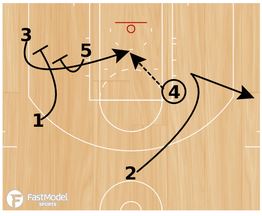
basketball-plays-spurs-pinch=post1


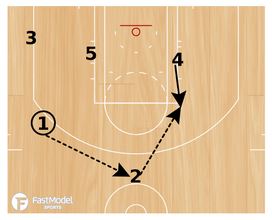
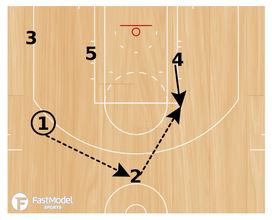
1 starts on the wing and passes to 2 at the top.

2 passes to 4 at the weak-side elbow (pinch post).


basketball-plays-spurs-pinch=post2


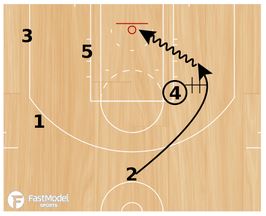
Once 4 has the ball, 2 loops around 4 looking for the hand-off.


basketball-plays-spurs-pinch=post3


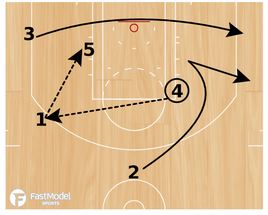
In option 2, the hand-off isn’t there so 2 pops out to the wing.

3 runs the baseline to the opposite corner.

4 passes to 1 on the wing.

1 looks inside to 5 posting up.


basketball-plays-spurs-pinch=post4


In option 3, 2 cuts to the wing after the hand-off isn’t there.

1 and 5 move towards the corner to set a staggered screen for 3.

3 cuts into the lane looking for the pass from 4.


2 Michigan State 1-4 High Sets

By Brian Williams on December 9, 2015

These 2 man to man sets are from Coach Scott Peterman’s Michigan State Playbook.

My hope is that you can take a piece of two from these sets and apply them to plays that fit your personnel.

This playbook is among the 4 for $35 playbook selection we are offering.

You can purchase any four of our digital playbooks for $35 (62 titles in all–Virginia, Texas Tech, Duke, Kentucky, Brad Stevens, and many others included!) 20 new titles added in July 2020!

Click this link for all choices! 4 digital playbooks for $35

These actions do not have to be run as is. Take these movements and am to them or implement parts of them in what you already run. Or, use them as a place to start your thinking about ways to enhance what you will be running next season.

Diagrams created with FastDraw

Play #1

msu14high

1 passes to 3. 4 sets a backscreen on 1.

1 cuts off the UCLA cut to the middle of the lane.

2 sets a cross screen for 1.

2 pops up to the top of the key.


msu14high2

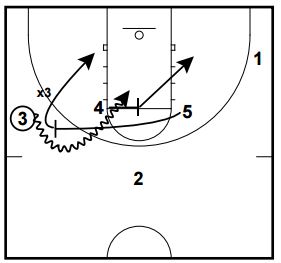
If X3 cheats the play:

3 can penetrate baseline to the basket.


msu14high3

If the X3 plays it straight then:

4 sets a cross screen for 5 and then cuts to the right low block.

5 sets a ballscreen for 3 and then rolls to the basket.

3 attacks the middle of the lane.


Play #2

msu14high4

1 passes to 5 and sets a downscreen on 4.

4 curls the downscreen hard to the basket.

2 sets a cross screen for 3.

3 goes to the right corner.

5 passes to 4 on the curl.

You can purchase any four of our digital playbooks for $35 (62 titles in all–Virginia, Texas Tech, Duke, Kentucky, Brad Stevens, and many others included!) 20 new titles added in July 2020!

Click this link for all choices! 4 digital playbooks for $35

These actions do not have to be run as is. Take these movements and am to them or implement parts of them in what you already run. Or, use them as a place to start your thinking about ways to enhance what you will be running next season.

Basketball Drills: Fast Break Shooting Drills

By Brian Williams on December 8, 2015

Another outstanding contribution from Nate Hill. Coach Hill is the Assistant Boys Coach at Colonel Crawford High School in North Robinson, Ohio. I appreciate all the ideas you send out for the coaching community!

In case you have any questions or comments for Coach Hill, here is his email address: [email protected]

You can also find him on Twitter @coachnatehill

We get conditioning – 6 – 12 trips up and down the floor

We get game shots – rim runs, transition layups or pullups, post entry, and pick and roll work

We can use side baskets if we have lots of players.

Diagrams created with FastDraw

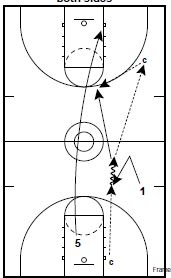
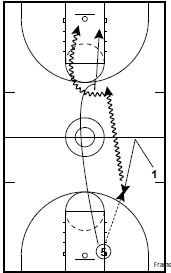
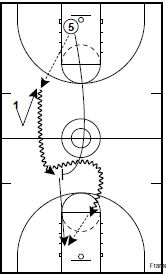
DO ALL DRILLS ON BOTH SIDES OF THE COURT

fast-break-shooting1

Kevin Love Outlet:

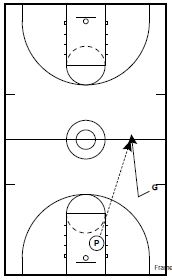
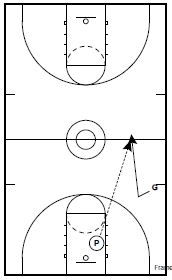
Post rebounds and throws Kevin Love outlet to guard for layup


fast-break-shooting2

Rim Run:

Coach inbounds to guard

Post rim runs

1 hits post for layup


fast-break-shooting3

Throw Ahead

Coach inbounds to guard,

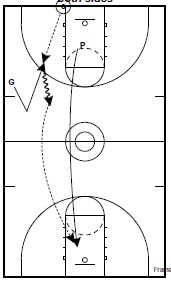
Guard passes ahead to coach

Post rim runs.

Coach hits guard for 3.


fast-break-shooting4

Throw ahead, post scores

Coach inbounds to guard

Guard throws ahead to coach

Coach enters to post


fast-break-shooting5

Drag Screen Guard Scores

Post outlets to 1

Post sets a DRAG screen for Guard.

Guard can shoot it or drive it.


fast-break-shooting6

Drag screen post scores

Post inbounds to Guard,

Sets DRAG screen,

Guard hits post on the roll


  • « Go to Previous Page
  • Page 1
  • Interim pages omitted …
  • Page 135
  • Page 136
  • Page 137
  • Page 138
  • Page 139
  • Interim pages omitted …
  • Page 288
  • Go to Next Page »

Primary Sidebar

  • Twitter
  • Facebook
  • Linkedin
coachestoolbox
personaldevelopmenttoolbox
basketballplayerstoolbox
basketballtrainer
athleticperformancetoolbox
coachingbasketball

© Copyright 2026 Coaching Toolbox

Privacy Policy