• Skip to primary navigation
  • Skip to main content
  • Skip to primary sidebar

  • Basketball Plays
    • Ball Screen Sets
    • Horns Sets
    • Man to Man Post Up
    • Man to Man Isolations
    • Backdoor Plays
    • Man to Man 3 Point Shot Plays
    • 2-3 Zone Attack
    • Baseline Inbound Plays
    • Sideline Inbound Plays
    • Combination Defense Attack
  • Drills
    • Defensive Drills
    • Offensive Drills
    • Competitive Drills
    • Passing Drills
    • Rebounding Drills
    • Shooting and Scoring Drills
    • Toughness Drills
    • Transition & Conversion Drills
    • One on One Drills
  • Blueprint
  • Practice
  • Mental Toughness
  • Skill Development
  • Offense
  • Defense
  • Store

Shot Fake and Finish Rebounding Drill

Shot Fake and Finish Rebounding Drill

By Brian Williams on March 31, 2016

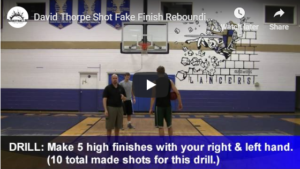
This offensive rebounding drill is among the thousands of resources for both coaches and player available from basketballhq. They have several more videos as well as basketball coaching resource articles.

The drill is with Coach Ryan Panone

You might not want to do the drill exactly as it is laid out in the video, but the idea behind the posts I make is to get you thinking about creating drills that will allow for your players to make maximum improvement.

The key is to make it fit what your players need to be able to do within your system.

Please make sure your sound is on to see the video.

Click the play arrow to see the drill.

The drill is a YouTube video, so you will need to be able to access YouTube to see the drill.

Multiple Effort Skill Drill

You will want to come up with your own teaching points that fit your purpose, but the teaching points for the video are:

1) Changing the pace of the time after the shot fake to finish
2) Keep the ball up high after the shot fake
3) Finish with both left and right hands
4) Rebound the ball at its peak with arms extended
5) Finish through contact
Do You Understand?

By Brian Williams on March 28, 2016

by Scott Rosberg

This post is the second of a few that come from some ideas I wrote in my first two booklets A Head Coach’s Guide for Working with Assistants and The Assistant Coach’s Guide to Coaching. While those booklets were born out of some specific head coach/assistant coach issues I was facing with some members of a coaching staff for whom I was an athletic director, many of the ideas in them form the basis for good coaching principles in general. Today, I want to talk about the three messages that occur anytime we communicate with people.

As an English teacher for 18 years, I tried to teach my students many facets of good communication. Interestingly, most of the lessons on communication that I taught played a huge role not only in the classroom, but also in the athletic arena and elsewhere in life. One important lesson is that whenever we communicate with others, we need to be aware of three types of messages – Intended, Actual, and Received/Perceived Messages.

Intended Message

Every time we speak to someone, we start with a certain premise in mind that we are trying to advance. This goes for everything that we state to someone. Each time we speak we have what I call an “Intended Message.” Our intended message is what we are trying to get across to the listener. While we speak in conversations, every single utterance of ours has some intention that we are hoping to get across.

However, what we intend to communicate and what we “actually” communicate are not always the same thing. I may have a certain idea I am trying to get across to someone, but I may struggle to put into words exactly how to get that message across. Or the receiver of the message may miss out on some key element that is really important to fully understanding the message. Something may have interrupted the smooth flow of my intention and what was actually communicated.

Actual Message

This leads to the second type of message, the “Actual Message.” The actual message is what was actually stated. It is the words, phrases, and sentences that come out of the speaker’s mouth to try to communicate a given message to an audience. While this is a fairly simple concept to explain and understand, the problems in communication usually end up happening somewhere from this point forward into the next type of message.

Received/Perceived Message

The final type of message in communication is the “Received/Perceived Message.” This is the message that the audience takes in and then interprets. The Received/Perceived message is in some ways the most important message, for it is what determines whether or not the audience understands the speaker. It is in the Received/Perceived Message where we find out if our intended message actually hit home. Unfortunately, the speaker doesn’t always receive the feedback as to whether or not it did. This is often where problems occur in relationships – when an intended message does not actually end up being the received message. But how does this happen, and how can we work to avoid it? Also, what does this have to do with athletics?

Let me start with the last question first. This has a lot to do with athletics, for athletics is a relationship and communication endeavor. There is constant communication that is happening in the athletic world. Teams rely on clear communication to succeed. If people on a team do not understand each other, no progress can be made. So it helps to have a basic understanding of how communication works in order to achieve success.

So where does communication break down between the intended and the received message? Well, it can occur in a variety of places. It can occur in the intended message if the speaker is not completely certain of the message s/he is trying to get across, or if s/he isn’t sure of the best way to get that message across to the audience. For example, if I am an assistant coach, and the head coach wants me to communicate something to a player or players, I may not fully understand all of his/her intentions  with regards to the message, so I may struggle getting the message the head coach wants to be received properly by the players.

The next place the message can break down is in the actual message stage. One would think this would not be an area where a breakdown could occur. If you just say what needs to be said, there should be no problem here. However, just “saying what needs to be said” and actually saying it that way can be two different things.

For example, if my intention is to confront a player’s behavior that is unacceptable in our program, but I struggle with confrontation, I may mess up my intention by not clearly stating what the problem is. What I “actually” say and what I “intended” to say may have been different. I may have needed to be very direct, strong, and to the point, but because I do not like confronting in this manner, I may have softened my message to a point where the player did not realize the exact message and that what s/he was being told was a very big thing. What was actually said did not convey the severity and seriousness that the intention of my message demanded. This can lead to confusion and misunderstanding on the part of the player.

Finally, the message can break down in the “receive/perceive” stage. I may have had the right intention and said exactly what needed to be said, but the receiver may have been distracted or may have had a preconceived notion about me or about my message, and so s/he did not clearly understand the message. S/He is not a blank piece of paper onto which a message is written. S/He is a human being with her/his own thoughts, feelings, emotions, and ideas, and those all impact the messages s/he receives. S/he is reading my body language, tone of voice, inflection, past history with me, and any other number of things that affect how s/he processes the message. S/He may even “receive” the actual message, but s/he may “perceive” it differently due to some of those types of factors.

What Can We Do?

So what can we do to maximize the chances that our intended message ends up being our audience’s received/perceived message? The first thing is to recognize this dynamic of the difference between these three types of messages. Then as a speaker, make sure you consider exactly what you are trying to get across and then speak that message as clearly as possible.

Brevity and conciseness are important parts of communicating in athletics. We don’t always have time to go into much detail due to time and space constraints in an athletic arena, so this can often lead to breakdowns in communication. Coming up with a “common language and vocabulary” to use when coaching so all people understand the message better is an important step in keeping communications clear.

While brevity and conciseness are important in communicating in athletics, there are some times and situations where you may need to explain things in more detail to make sure that they “get it.” This just happened with this post that you are reading – my goal is to be in the 800-1,000 word range for these posts. However, this post demanded a bit more detail to explain it, so it is about 1,500 words.

Also, consider what type of message you are sending with your body language, tone of voice, and inflection as you speak. Are your actions backing up the exact words you are stating and how you want them to come across? Is the person to whom you are speaking picking up on these non-verbals? Are your non-verbals communicating what you want them to communicate?

When you are the receiver of a message, pay as close attention as you can to what you are being told. Consider body language, tone and inflection, but also make sure you focus on the words being spoken to you. Also, consider your own state of mind and biases as you are processing what you are hearing. Try to be as objective as possible as you process, so that you don’t perceive something that isn’t really there. Finally, ask clarifying questions to help you figure out if you are receiving the right message. Make sure to truly listen to the answers you get.

Coaching/teaching is communicating. The more you know about communication skills and how to use them, the better your chances of success as a coach/teacher occurring. If you have any stories of times when your intended message somehow got sidetracked by the time it got to be the received/perceived message of your audience, I would love hear them. Please leave your comment below this post on our website or on our Facebook page.

About the Author of this Article

Scott Rosberg has been a coach (basketball, soccer, & football) at the high school level for 30 years, an English teacher for 18 years, and an athletic director for 12 years. He has published seven booklets on coaching and youth/school athletics, two books of inspirational messages and quotes for graduates, and a newsletter for athletic directors and coaches. He also speaks to schools, teams, and businesses on a variety of team-building, leadership, and coaching topics. Scott has a blog and a variety of other materials about coaching and athletic topics on his website – www.coachwithcharacter.com. He can be reached by email at [email protected].

Scott is also a member of the Proactive Coaching speaking team. Proactive Coaching is dedicated to helping organizations create character and education-based team cultures, while providing a blueprint for team leadership. They help develop confident, tough-minded, fearless competitors and train coaches and leaders for excellence and significance. Proactive Coaching can be found on the web at www.proactivecoaching.info. Also, you can join the 200,000+ people who have “Liked” Proactive Coaching’s Facebook page at www.facebook.com/proactivecoach. Scott can also be reached through Proactive Coaching at [email protected].

Basketball Coaching Mistakes Part 3

By Brian Williams on March 24, 2016

This post is the third part of an article that Arkansas women’s coach working on to detail his move from assistant coach to head coach. The article is entitled “418 Mistakes Later” and he is still adding to it.

I know that he is much harder on himself than he should be, but the points he makes are lessons to consider for all coaches, not just head coaches.

Here are links to the first parts of the article:

Coaching Mistakes We All Make Part 1

Coaching Mistakes We All Make Part 2

I GOT OUT OF ALIGNMENT BETWEEN PROCESS AND RESULTS

When you get your opportunity to be a head coach after years of being an assistant coach, you have a mountain of ideas on who you think you want to be. You have been watching your mentors for years making mental notes of ways you want to be like them and ways that you don’t want to be like them. You have been attending clinics hearing speakers filing away bullet points of this you are going to do some day. You have observed, studied, researched, and compiled. You have most likely put together some form of portfolio for a hiring committee that details everything you have been thinking about. Probably took it to Kinko’s and had it bound even. It’s yours, but is it YOU?

I am not saying any of the above is a bad idea. But, I am saying, be careful of who you say YOU ARE, before you know who you are.

My biggest mistake in this area was talking about Process, process, process but in many causes becoming reactionary to Results. When that happens it alienates the people you are trying to lead.

You can’t preach process then turn around and speak about results. The very second you do this, the process loses its punch.

It’s okay to be results driven. It’s okay to be process driven. It’s not okay to teeter back and forth between the two.

If I had to do it all over again, I would have been a little more patient in announcing to the world who we were and what our identity was going to be. My mental image that had been conjured up over the years simply wasn’t doable in the timeframe that I had all worked out in my mind.

I didn’t understand how time consuming things can be. I didn’t understand how long it takes to assemble a staff. I didn’t understand budgetary issues. I didn’t understand many aspects of the position of being a Head Coach. As a result my alignment between process and results was often a blurred line. Creating confusion and uncertainty among the people I was trying to lead.

Don’t give you team three goals that they need to achieve to win a game, then lose your mind in the locker room afterward only to realize later that night they had met all three. Don’t set standards that are met yet don’t produce results. Don’t celebrate good results that were not reflective of the process. All these things are easy to do because of human nature. And are very easy to do as a young head coach.

Be patient in deciding who you are and who you want your program to be. But when you decide, stick to it and don’t get out of alignment with your team, your staff, your administration, and your loved ones.

I HAD NO IDEA HOW TO MANAGE A STAFF OR HOW TO “MANGAGE UP”

Going from “being on a staff” to “having a staff” overnight is one of the greatest challenges I faced. It’s also an area that now, almost two years in, I continue to struggle with. It’s hard. My situation was particularly challenging because five of my staff members were co-workers, equals, and colleagues the day before my hiring was announced.

One day you are 100% focused on doing everything in your power to make your boss look good, do their job better, do their job easier, and being ready to do whatever is asked. Your world is focused on doing What You Do. The next day, you ARE the boss and your actions and decisions effect the lives and lives of families for other people.

As an assistant my actions reflected only on me.

As an assistant my decisions only had repercussions on me.

As an assistant my accountability was to one person.

As a head coach your actions reflect on numerous people… the people who hired you, the people who work for you, they people who you lead.

As a head coach your decisions impacts a pyramid of people that cascades down and down and down.

As a head coach you are accountable to more than one person. You have many people ‘UP’ the ladder now that you are accountable to.

The learning curve for making this adjustment is expected. Most people will give you some free passes as you learn to navigate the waters for the first time. But it’s NOT LONG ENOUGH… trust me.

You can read all the leadership books you want to. You can seek advice from mentors. You can have a plan. All that helps for sure, but nothing can actually prepare you for the daily dealings that you have signed up for until you live them.

So, with that said, I say, read everything. Have a plan. Talk to your mentors… AND then expect to get it wrong some. Don’t expect it to work perfectly. Be adaptable earlier than I was. Don’t be rigid. It’s NOT a my way or highway situation. It can’t be. There is a great book called YOU CAN’T FIRE EVERYBODY that I wish I had read before I made the move.

You have to surround yourself with people that you trust and trust you. This way there is an understanding that you are both working through the process of figuring it out. While there will be mistakes made on both sides, you can survive it all and in time will begin to thrive. It will become very obvious who believes in and who is faking it. You will learn valuable lessons along the way that will shape your identity and the culture that surrounds your program.

You need to know what inspires each member of your staff. From your “chief of staff” to your volunteer, you must have full understanding what inspires them to be a coach and drives them to excel in a profession that we all know can grind you down. Just like your players, each of them will be unique. You can’t treat them all the same. For some it’s good old money… incentives. Others it’s future jobs and responsibilities. Others it’s the being a part of the here and now. Other’s will be inspired by the intrinsic rewards being a part of team provides. Some day I am going to write up a FIVE LANGUAGES OF COACHING in reference to the great book by Gary Chapman THE FIVE LANGUAGES OF LOVE (which is a must read for anyone in any kind of relationship.) Until then, just be aware that what inspires you, doesn’t inspire everyone.

Sure you can get a staff of people that are inspired by the same things you are, but that is dangerous. Then you have YES people who may not tell you when you are wrong and when you are making these 418 mistakes!!!

Managing UP is a term I picked up from some reading. It’s how you communicate with the people who hired you and the people who hired them!!!

These are the people who believed in you most. They wouldn’t have hired you if they didn’t. It’s imperative you keep them in the loop. It’s imperative you tell them things FIRST before they hear it from someone or somewhere else. People UP the ladder hate surprises. Don’t YOU hate surprises from your players? Well, you are one of their players!!

It’s okay to show them vulnerability. My direct supervisor told me from Day 1 it’s okay to be a little scared…. It’s a big deal to be a head coach and if it doesn’t cause you a little anxiety, then you aren’t really the person for the job and don’t have a full understanding of what is at stake!! That message drove me. And while I didn’t make many mistakes in this area, I put it on here so that you don’t either.

I fully believe that this is what allowed us to survive my 418 Mistakes and actually find a way to win 20 games, keep our players off the front page and on the sports page, and raise our team GPA to unprecedented success.

While this wraps up the 12 categories I mentioned in the beginning, it segues nicely into the fact that WE DID ACTUALLY DO SOME THINGS RIGHT!!!

That may become an off season project.

Until then, I hope this piece will help a variety of people. I hope it will help long time head coaches as well as young assistant coaches who may simply file this piece way for “their day”.

And yes, I do have a list of Mistakes I am making in year 2. For those of you scoring at home that lists stands at 57. Yes, I have made a few twice but only a few.

Some of the new ones of have been BIGGER while others are smaller.

Needless to say, making mistakes is part of the profession we are in. We are the ones who choose a profession where we invite people to (in fact beg them at times) to come into our workplace and watch us work. Can you imagine 250 or 2,500 or 25,000 coming into an insurance man’s office and watching him settle a claim. Or a surgeon preforming open heart procedure in front of that many people AND being broadcast on the Pac 12 Network!!!

We choose this profession. We have to accept the scrutiny that comes with it. In fact, you must embrace it!
You’re not going to be perfect. You can try to be, but you’re not going to be.

While you certainly don’t have to keep a running list of your mistakes, I do think every coach can benefit from recognizing their faults. Moving on from their failures and rebounding from them improved.

One Mistake That Could Cost You Your Job

By Brian Williams on March 24, 2016

Editor’s Note from Brian:  Not all of these ideas will apply to non-college level coaches, but there is a lot of good food for thought for coaches of all levels.

By Stephanie Zonars

If she doesn’t get outside help, she won’t last.

That was my friend’s closing thought about working with her head coach. She’s in a support role for a division I team and was lamenting the challenges of working with a coach who is unaware how her attitudes and behaviors impact the team and even athletic department.

The truth is, we all need help.

When I first started my business back in 2009 I hired a business coach to help me. It was one of my smartest moves.

I remember one time he called me while I was in the middle of something.

My tone was pretty flat when I answered.

He asked for permission to give me feedback. When I consented, he told me that potential clients want to work with people who are positive and enthusiastic, and added that I didn’t sound positive and enthusiastic when I answered the phone.

I’ve never forgotten that conversation. It helped me realize how much more I need to project enthusiasm in order for it to really show. I’m a work in progress, but getting better.

Projecting enthusiasm is a blind spot for me. Something other people see about me that I don’t see.

I know I have other blind spots (one reason why I just re-hired my business coach!).

You have them too.

The off-season is the best time to gain insight about blind spots. Here are three steps to get you started:

Acknowledge your need.

In the book Thanks for the Feedback, authors Stone and Heen denote the three types of feedback:

Appreciation: to see, acknowledge, connect, motivate, thank
Coaching: to help receiver expand knowledge, sharpen skill, improve capability
Evaluation: to rate or rank against a set of standards, to align expectations, to inform decision-making

One of the biggest mistakes coaches (particularly first-time head coaches) make is not realizing their need for coaching and evaluation soon enough.

Most coaches don’t get fired for a lack of strategic knowledge, but rather for leadership deficiencies. [Tweet That!]

Those gaps lead to culture issues, which result in fewer wins.

Washington women’s basketball coach, Mike Neighbors wrote a terrific article about the 418 mistakes he made in his first year as a head coach. In hindsight he realized, “I needed a better plan. I needed support. I needed help.”

Acknowledging your need and opening your heart and mind to feedback is the first hurdle.

Feedback is scary, humbling and sometimes it just plain hurts!

But when you remember that everyone on the planet has blind spots and that this one step alone can catapult your leadership, you realize it’s worth the discomfort.

Ask for feedback.

People avoid feedback conversations because they are uncomfortable.

Your boss may not bring issues up in an annual review, and your direct reports may hesitate to be honest with you for fear of damaging the relationship or even losing their job.

So even when you know you need and want it, it’s tough to get honest, helpful feedback in the form you desire.

That’s why you need to ask for the specific kind of feedback you want.

Penn State women’s basketball coach Coquese Washington uses a series of forms to gather that type of feedback for both her staff and herself. Staff evaluate themselves and one another, and assistant coaches also receive evaluations from position players.

Exclusive Download: Coquese shared her evaluation forms at the Penn State Striving for Excellence coaches workshops, and allowed me to make them available to you. Click Here to download the head coach, assistant coach and staff evaluation forms.

Hands down, the most effective feedback tool I’ve used is a 360° review, which gives a leader input from all directions (superiors, peers, direct reports) as opposed to just her boss.

If you’re a head coach, you may not work closely on a daily basis with the AD to whom you report.

So while the annual review is helpful, feedback from people in the trenches with you every day is even more valuable. And, the anonymous process of the 360° lends itself to more honest input.

If you don’t already have a system in place to receive feedback, ask your HR representative or direct superior for tools available on your campus. Or find a consultant with those resources. Which brings me to my last point…

Find a consultant.

Willingly opening yourself for evaluation can leave you feeling vulnerable, with a natural inclination to become defensive about any less-than-favorable feedback.

Walking through the feedback process with an objective consultant will lead to even better outcomes.

A consultant will assist you in assimilating the feedback, looking for themes and implementing action steps.

After all, there’s no point in going through the process unless you are willing to hear what others observe and make some adjustments!

Acknowledging your need for feedback, asking for it and finding someone to walk with you through the process of interpreting it is paramount in your personal and professional development.

And the benefits you reap just might save you from the heartache of losing your job.

One Mistake That Could Cost You Your Job appeared first on Life Beyond Sport.

Stephen F. Austin Scissor DHO

By Brian Williams on March 23, 2016

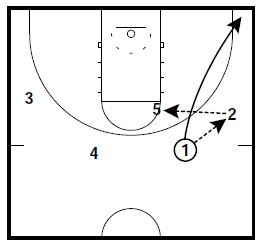
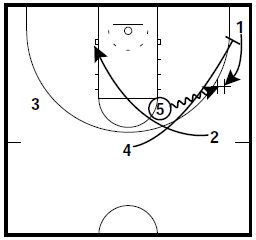
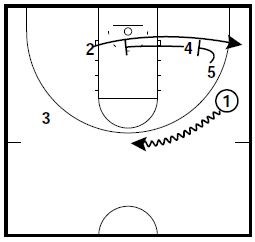
This play is from Brad Underwood’s Stephen F. Austin (now at Illinois) playbook put together by John Zall.

The numbers are simply to differentiate the different players and do not represent the traditional point guard, power forward, etc…

You might be able to take a piece or two from this set and use them to put your players in spots where they have an opportunity to use their abilities.

The diagrams are from the Stephen F. Austin playbook.

Diagrams created with FastDraw

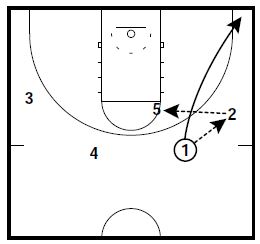
SFA Scissor DHO

safsdho

1 passes t o 2 and cuts through t o strong side corner

2 passes t o 5 at elbow


safsdho2

2 and 4 scissor cut off o f 5

4 cuts into wide pin down for 1

5 enters into DHO with 1


safsdho3

4 and 5 turn and set a stagger screen for 2 t o corner

Note: You could also use 2 as a screener and run 3 off of 2 and then off the staggered double screen


Hey Coach, I Want to Become a Leader!

By Brian Williams on March 22, 2016

Submitted by by Cory Dobbs, Ed.D

You’ve likely heard the proverb that reads, “Give a man a fish, and you feed him for a day. Teach a man to fish, and you feed him for a lifetime.”  From this lesson it follows that teaching a player to lead will feed her leadership growth for a lifetime.  However, teaching leadership is far more complex than teaching someone to fish.  So what do you do when there are no seven habits of this, or no five rules for that?

The truth is, the teaching and learning of leadership in a student-athletic environment is a messy pursuit.  Peer-to-peer leadership is a demanding venture.  For young emerging leaders tackling tough problems, even when the student-athlete is willing and able, is fraught with risk.  When attempting to lead, student-athletes are likely to encounter a range of emotions that include, fear, uncertainty, and doubt. How you help them learn through these emotions will, in part, determine their effectiveness and success as a team leader.

Do you consider your responsibilities as a coach to include the role of a leadership educator?  I hope you do.  You have the perfect leadership laboratory for developing leaders.  So what gives?  Why do many programs fail to produce highly qualified leaders—for the immediate moment as well as life beyond sport?

It’s been my experience as an observer of many teams over the years that often what’s lacking for the budding leader is simply opportunity.  Most coaches appoint team captains or assign the role based on some type of criteria (such as seniority).  And likewise, a great many coach will in the final analysis suggest that they either had effective or ineffective internal (player) leadership.

Deep down, it’s one thing to say you value leadership from your players.  It’s another thing to give them extensive opportunities to lead by creating developmental culture.  If you had to choose, which would it be?  Would you want a very successful season in terms of wins with a player or two along the way learning how to lead at a very elementary level, or a season where every player experiences deep leadership growth and development while winning half your games?  Thankfully this doesn’t have to be an either or question, but it does require you to reflect deeply on what you’re doing as a coach.  Hence the dilemma: how does a coach modify his or her coaching orientation to affect the leadership experience of their student-athletes?

Let me take a moment to separate leader from leadership.  A leader is a person, and leadership is a process.  Now, let me go out on a limb: leaders need leadership opportunities (processes) from which to learn and grow.  So, if you find yourself saying at the conclusion of a season that you didn’t have any leaders, don’t focus solely on your players.  Take a hard look at the process—the real opportunities your environment provided for your leaders to grow.
[thrive_leads id=’36827′]
To develop effective team leaders a simple way of looking at performance will help. Leadership performance is a function of the interaction of ability and willingness; that is Leadership Performance = f(A,W). If either is inadequate leader performance will be underwhelming.

However, to maximize a leader’s growth and development you need to add opportunity to practice and perform to the equation.  The revised leader development formula becomes Leader Development = f(A, W,O). Even though a student-athlete may be willing and able, they need opportunities to connect with the purpose of leadership in your team setting.

Anyone wanting to lead or become a team captain will gain a solid foundation through the various (variety and quantity) leadership activities available to them.  So give your young athletes lots of opportunities to gain the experience of leadership.

“Tell me and I’ll forget. Show me and I may remember. Involve me and I will care.” -Your Student-Athlete The world of coaching is changing. In Coaching for Leadership you’ll discover the foundations for designing, building, and sustaining a leadership focused culture for building a high-performance team. To find out more about and order Sport Leadership Books authored by Dr. Dobbs including Coaching for Leadership, click this link: The Academy for Sport Leadership Books

About the Author

A former basketball coach, Cory’s coaching background includes experience at the NCAA DII, NJCAA, and high school levels of competition. While coaching, he researched and developed the transformative Becoming a Team Leader program for student-athletes. Cory has worked with professional athletes, collegiate athletic programs and high schools teaching leadership as a part of the sports experience and education process. Cory cut his teeth as a corporate leader with Fortune 500 member, The Dial Corp. As a consultant and trainer Dr. Dobbs has worked with such organizations as American Express, Honeywell, and Avnet.

Cory has taught a variety of courses on leadership and change for the following universities:

Northern Arizona University (Graduate Schools of Business and Education)

Ohio University (Graduate School of Education / Management and Leadership in Sport)

Grand Canyon University (Sports Marketing and Sports Management in the Colangelo School of Sports Business)

  • « Go to Previous Page
  • Page 1
  • Interim pages omitted …
  • Page 125
  • Page 126
  • Page 127
  • Page 128
  • Page 129
  • Interim pages omitted …
  • Page 288
  • Go to Next Page »

Primary Sidebar

  • Twitter
  • Facebook
  • Linkedin
coachestoolbox
personaldevelopmenttoolbox
basketballplayerstoolbox
basketballtrainer
athleticperformancetoolbox
coachingbasketball

© Copyright 2026 Coaching Toolbox

Privacy Policy