• Skip to primary navigation
  • Skip to main content
  • Skip to primary sidebar

  • Basketball Plays
    • Ball Screen Sets
    • Horns Sets
    • Man to Man Post Up
    • Man to Man Isolations
    • Backdoor Plays
    • Man to Man 3 Point Shot Plays
    • 2-3 Zone Attack
    • Baseline Inbound Plays
    • Sideline Inbound Plays
    • Combination Defense Attack
  • Drills
    • Defensive Drills
    • Offensive Drills
    • Competitive Drills
    • Passing Drills
    • Rebounding Drills
    • Shooting and Scoring Drills
    • Toughness Drills
    • Transition & Conversion Drills
    • One on One Drills
  • Blueprint
  • Practice
  • Mental Toughness
  • Skill Development
  • Offense
  • Defense
  • Store

Unique Team Shooting Drill

Unique Team Shooting Drill

By Brian Williams on April 21, 2016

This shooting drill is from Arkanas Women’s Coach Mike Neighbors Newsletter.

Might give you some thoughts on some ways to offer some variety in your practices.

This post was created when Coach Neighbors was at Washington.

Softball Plus One Shooting Drill

This series is more about the application than the actions. You need to make the actions fit your offense.

I will give you one example that we use in each round, but the magic is in making them breakdown your offensive actions and simulate your games.

Diagrams created with FastDraw
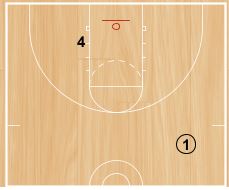
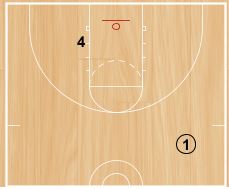
softball2

The first round is called SINGLES…. Thus the softball/baseball reference…

SINGLES refers to single made shot. We will set the number at how many players we have. So, everybody makes ONE shot in this round before we move to the next INNING.

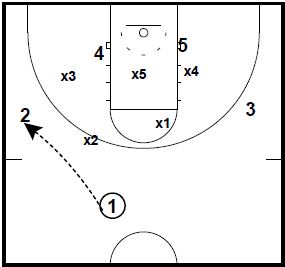
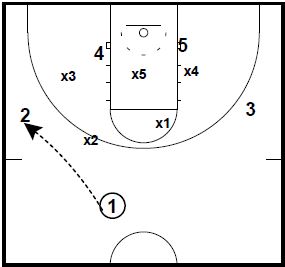
In the above example, we break down our Dribble Drive Motion.

Our 1 player will ‘rack it lane’ for a game speed, game finish basket. After our 1’s get their SINGLE. The 1 will ‘drop 4’ to our post players for a game speed/game finish basket for their single. When all 11 players have a SINGLE, we move to the next inning.

Over the course of the year, we will change the actions to simulate the game we have ahead of us, work on areas we have been deficient in, or even introduce new concepts to our of-fense. We do inbounds actions, sidleline actions, and other special situations as well.

softball2

The second inning progresses to DOUBLES… now we introduce a second shot. The players must each make a game speed/game finish shot to complete the DOUBLE.

You can vary the number of DOUBLES needed to advance to the next inning as you see fit but we usually do 5-10.

This round brings in the element of timing and spacing and passing so that the two shots don’t interfere with each other around the rim.

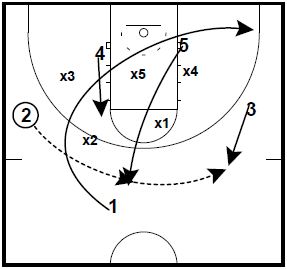
Keeping with our Dribble Drive stuff, we would have the 1 rack it and finish and the 4 player fill behind to “make 2” get the rebound of a made shot to simulate an offensive rebound.

We would also have the 1 “drop 4” for the first make, then the 1 would fill to arc for a kick out pass and a 3 point shot to complete the double. We could easily run drags or open windows as well to simulate other dribble drive actions. Can also use this in a guard forward breakdown and just do actions for each position.

We will also had a penalty in this round. Any action that ends with ZERO makes is a Strikeout and takes one away from our total toward our goal. So, if our goal is 10 doubles and we have 5 at this point. The group goes and misses both shots, we are back to 4.

We also progress as the year goes on to have the players pass rather than the coaches so we can work on that skill as well.

softball3

We move to the third inning… now we need TRIPLES!!

Obviously adding shot attempts make it more difficult so you can vary the number necessary to advance as you see fit for your team and your situation…

This is also where you can begin to use your players to make the “extra” passes so that they can work on passing as well as understanding the timing so that balls aren’t all hitting basket at once. Learned this one from experience… they will understand timing/spacing better if you let them “figure it out” and “fix it”.

In our Dribble Drive example above. 1 would “rack it” and drop 4… 4 finishes. 3 rises to open window and receives pass from extra passer for 2nd shot. 1 continues to her fill spot and gets third shot from a pass from 4 player who has rebounded her own make.

Just like in softball/baseball TRIPLES are a little harder.

At this stage you begin to add a little bit of pressure on that last make. We always like this shot to be a three pointer or a hard drive pull up jumper. Keep mixing it up on people. I begin charting this in my head too. You’d be surprised how many years your teams BEST shooter isn’t your most CLUTCH shooter!!!
softball4

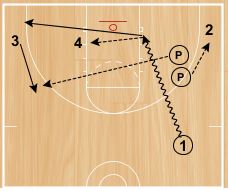
It gets real in the fourth inning… now you need HOMERUNs aka… Four makes in the breakdown sequence. The last shot adds some pressure and you can also begin to point out after the last person makes a few when earlier shots have missed, that ALL the shots are big and you NEVER no which one is the game winner… Shot value same in first quarter as it is in the 4th quarter…

Dribble Drive is easy to continue adding actions and is main reason I love this offense so much. It’s able to be broken down into simple actions that repeat and are hard to guard.

All the actions above are the same but we add the 2 player “locked” in the corner. We might also have the 3 player one dribble drive for a floater or mid range J rather than catch and shoot a three. You could also make your layup in the sequence be a Drop 2 back door cut and have the 1 player FILL to that corner for her shot.

The options really are boundless.

We usually try to get 5-7 Home Runs before getting to final stage!!!
softball5

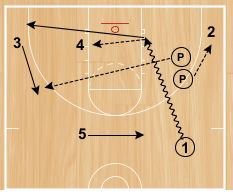
This Plus One is the BALLGAME stage… since basketball uses five players on the court, we had to abandon our softball/baseball analogy… the PLUS ONE shot is the BALLGAME.

You will find your players yelling Dubs, Trips, HOMERUN after the earlier stages are completed… after this one they yell BALLGAME.

The last shot on this one truly will have GAME WINNER feel.

Five shots…five makes!!!
We usually only do ONE of these…

In above diagram, we simply add the 5 “drag(on)” screen for a 3.

You can also do this drill for a timed period. Sometimes we will put 10:00 on the clock and see how many innings we can complete. This puts some focus on operating under time but staying within yourself.

If you come up with ways to tweak this other than simply changing the shot sequence, let me know. We are always looking for ways to improve it.
Basketball Plays Butler and Iowa State

By Brian Williams on April 20, 2016

These 2 plays are from Coach Wes Kosel’s 2015-16 NCAA Midwest Region Playbook.

Diagrams created with FastDraw

It is a part of a collection of plays from past teams from the NCAA tournament. 7 eBooks are available for $33. You can find out more about the collection at this link:

NCAA Basketball Collection


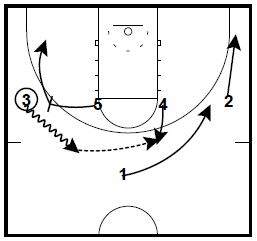
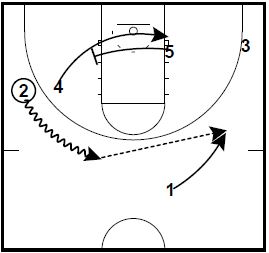
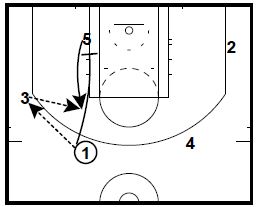
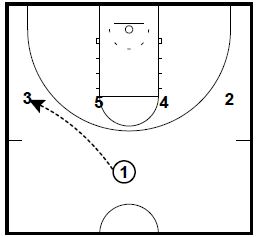
Butler 1-4 High Down DHO

basketball-plays-butler1


1 passes to 3 on the wing.


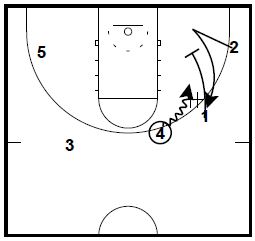
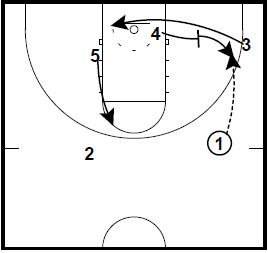
basketball-plays-butler2


5 steps out to set a ball-screen for 3.

As 3 drives right, 4 steps out to get the pass from 3.


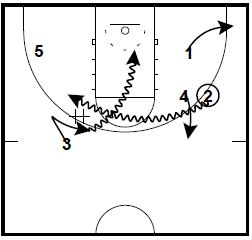
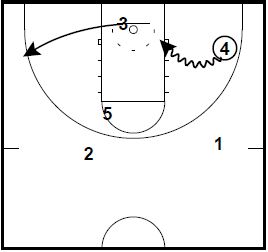
basketball-plays-butler3


4 dribbles towards the corner as 2 cuts off of a down-screen from 1 to get the hand-off from 4.


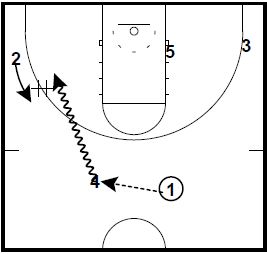
basketball-plays-butler4


2 drives middle looking to score.

If he can’t score, 2 gives 3 the ball on a dribble hand-off.


Iowa State Niang Iso

basketball-plays-isu1


1 passes to 4.

4 dribbles over to give 2 the ball with a dribble hand off.


basketball-plays-isu2


2 dribbles middle and passes to 1 while 5 sets a cross-screen for 4.


basketball-plays-isu3


4 screens for 3 in the corner then steps out to get the ball.


basketball-plays-isu4


4 has a 1 on 1 opportunity.


These 2 plays are from Coach Wes Kosel’s 2015-16 NCAA Midwest Region Playbook.


Coaching Basketball: Culture Trumps Everything

By Brian Williams on April 19, 2016

Culture Trumps Everything
The Power of the Setting

By Dr. Cory Dobbs

*This Following is An Excerpt from the workshop workbook: A Leader in Every Locker.

Authors Note: The workshop workbook for A Leader in Every Locker(excerpt below)  provides a very disruptive approach to team building.  The idea of a leader in every locker is borderline laughable according to most coaches.  I know, I’ve been presenting this idea and approach to coaches for some time.  Most find it difficult to conceive of, but that’s the point.  It wouldn’t be disruptive if it fit with everyone’s thinking and practice.  The notion of a leader in every locker sounds like chaos.  It’s quite the opposite.  It is an organized learning system that shapes a high-performing culture by shattering long-standing socially conditioned traditions of leadership.

Why do some team cultures inspire energy and commitment, instilling loyalty and persistence, while others create individualism, in-fighting, diminish participant effort and tarnish the value of teamwork?  Do some coaches have access to a magical elixir for creating a high-impact context, while others haven’t a clue?  I doubt it.  So what’s going on?

The conventional view of student-athlete leadership is that of a strong preference for appointing or electing team captains.  The Academy for Sport Leadership’s research on the selection of a team’s captains reveals that close to eighty-percent of all captains are viewed by their teammates as extraverts.  So team leadership starts with extraversion, but it’s also linked closely to playing ability.  Likewise, our research shows that well over eighty-percent of all team captains are starters.  The very idea of a team captain being a starting player is somewhat of a sacred cow.  Thanks to this mythos, we find that players near the end of the bench are least likely to provide substantial leadership.  Also, according to the players, team captains are expected to motivate and inspire teammates, with their doing so mostly by acting as a model of what to do.  In other words, the defining criteria for choosing a team captain has more to do with one’s disposition—internal characteristics that reside within the individual—than fit together with the external context and the needs of the situation.

The central premise of this workshop workbook is that many of the leadership practices of sports teams are in fact backfiring because of the errant assumptions about who can lead.  The scheme of a leader in every locker explores the complex ideas about dispositional (personal) versus situational determinants of behavior.

It turns out that social forces subtly and profoundly influence attitudes and behaviors; more so than most people are willing to acknowledge. Social effects hold immense power to shape who we are, both at a moment in time as well as over time. This principle leads to the social phenomenon that where you are shapes who you are; which flies in the face of accepted thinking that dispositions are the drivers.  What’s more, student‐athletes are highly sensitive to the social forces, both explicit and implicit, embedded within an event, a situation, a context, and the team’s culture. Yet, too often coaches underestimate the impact of situational aspects—the context, the culture, and the circumstances—that evoke and guide a player’s behavior.  After all, it’s much easier to attribute an individual’s behavior to his or her personality than explore the complex social situational determinants of one’s attitude and consequently his or her actions.

Furthermore, when we encounter a social situation most of us seamlessly adjust who we are to accommodate the social setting, to fit into the context. That is, we adapt to the environment.  Such transitions are, for the most part smooth and seldom explicitly reflected upon.  Not long ago I was admitted to a hospital for a surgical procedure.  From the moment I walked in the door to check in I unconsciously acted like a patient. I played the role of a patient when the nurse was prepping me, willingly taking orders from someone I only met minutes ago.  This is why leaders of great organizations declare that culture trumps all.  The constant dynamic interplay between players and coaches holds great sway over the performance capability of a team.  Culture influences are many micro-actions, giving the setting potency to control our behavior in the moment.

Social psychologists tell us that too often we inflate the importance of such things as one’s personality traits and dispositions as a convenient way to explain the behavior of others.  When we do this, we fail to recognize and account for the importance of situational factors (immediate and cultural).  The point I want to make here is that understanding the context—situationism rather than dispositionalism—provides insights into the potent forces eliciting or constraining a player’s behavior.  For instance, in my observational research I have found that the players on the practice field closest in proximity to the coach are more likely to “mimic” the coach than those off in the distance.  For example, if a coach is encouraging her team with positive words those players nearest to the coach will offer similar encouragement too.  And if the coach is reprimanding a player, those closest to the coach are more likely to express disapproval to the offending teammate than those furthest from the event.  All this is done outside the consciousness of those involved, but triggered by the situation.  As you can see, the subtle nuance of the situation serves as a compelling force for producing behavior.

Add to this the factor that many coaches I’ve studied limit the ways in which they “describe” reality.  Too often they don’t account for the multiple ways in which a situation can be viewed.  “We didn’t rebound well last night,” says the head coach reading the game stats sheet.  Her assistants all shake their head in agreement.  However, maybe the other team shot really well making rebounds a casualty on the stats sheet.  Certainly this is a simple situation, but coach’s, like historians, have the power of defining reality.  Moreover, coaches often discount how their interpretations are shaped by an already constructed mental schema of a player, usually focused on the traits or disposition of the athlete.  “He’s too passive, that’s why he won’t challenge his teammates,” comments the coach, attributing the player’s behavior to his personality rather than the broader context in which the behavior takes place.

Simple truths are often the hardest to come to. The simple truth here concerns the power and subtlety of situational influences on behavior.  In the case of the team sport environment in which players perform and take action, the culture impacts the hearts, minds, and behavior—for good or bad.  And when it comes to leadership, if you develop a leader in every locker you change the culture.  Today, the more forward thinking coaches are adopting the approach of a leader in every locker.

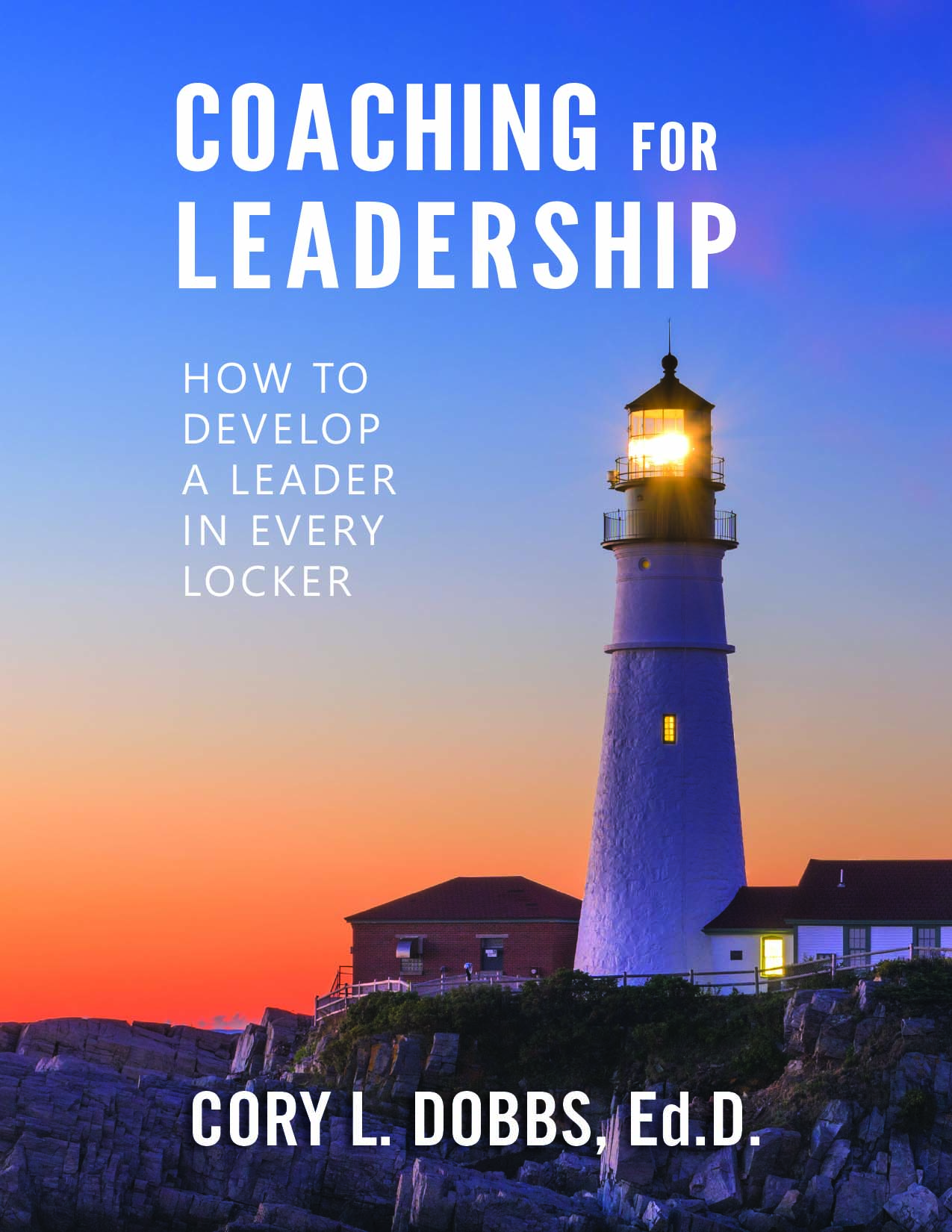
“Tell me and I’ll forget. Show me and I may remember. Involve me and I will care.” -Your Student-Athlete The world of coaching is changing. In Coaching for Leadership you’ll discover the foundations for designing, building, and sustaining a leadership focused culture for building a high-performance team. To find out more about and order Sport Leadership Books authored by Dr. Dobbs including Coaching for Leadership, click this link: The Academy for Sport Leadership Books

About the Author

A former basketball coach, Cory’s coaching background includes experience at the NCAA DII, NJCAA, and high school levels of competition. While coaching, he researched and developed the transformative Becoming a Team Leader program for student-athletes. Cory has worked with professional athletes, collegiate athletic programs and high schools teaching leadership as a part of the sports experience and education process. Cory cut his teeth as a corporate leader with Fortune 500 member, The Dial Corp. As a consultant and trainer Dr. Dobbs has worked with such organizations as American Express, Honeywell, and Avnet.

Cory has taught a variety of courses on leadership and change for the following universities:

Northern Arizona University (Graduate Schools of Business and Education)

Ohio University (Graduate School of Education / Management and Leadership in Sport)

Grand Canyon University (Sports Marketing and Sports Management in the Colangelo School of Sports Business)

Coaching Basketball: Earn the Right to Win

By Brian Williams on April 18, 2016

This post was written by Bert DeSalvo on his Basketball Coaching Blog, Expressions from the Hardwood

Earn the Right to Win

Tom Coughlin

Notes taken by Bert DeSalvo, @CoachDeSalvo

Introduction – Prepare to Win

“Achieving any goal begins with through preparation.” (p. 2)

“Having a structure to rely on means that when my teams have reached our goal, we can look back at the steps we took along the way to get there. And do it again.” (p. 3)

  • Can repeat the process!
  • Schedules, lists (lists of lists)
  • Systematic approach to success

“Preparation creates confidence.” (p. 6)

“Details count.” (p. 9)

“There is no discussion about methods. The team is my responsibility.” (p. 10)

  • Nobody is above the team – Follow the rules
  • Rules provide a framework

Chapter 1 – Build the Structure

A. Set a Goal

“My basic philosophy has always been simple and direct: Create an environment and provide the direction necessary to allow our players to perform to the best of their ability, which will lead directly to success.” (p. 17)

“Creating a structure in which winning is the expectation rather than the hope is a long-term proposition.” (p.17)

“The important thing is to make progress, recognize these needs that have to be addressed, and make a plan to do that.” (p. 17)

“Once you establish your goal you can’t take your focus off of your objective.” (p. 18)

  • Sends wrong message
  • Competition

B. Know What You Have to Work With

“The best place to begin your preparation is to honestly assess the existing situation: How deep in the mud are you? What is the current status of your organization?” (p. 21)

  • Starts with critical self-appraisal; Don’t blame others – “We can’t improve without realistic self-appraisal.” (p. 22)
  • What’s your situation?
    – RIT/Jax – Blank Slates
    – Boston College/NY Giants – Losing Teams
  • Coughlin saw NYG as a loss of pride
    – His goal was to restore pride “by being firm, fair, honest and demanding and by paying close attention to our preparation.” (p. 24)

C. Create a Structure

  • Establish priorities (Coaching, staff, roster, etc.)
  • “Create an overall culture that would govern everything.” (p. 24)
    – Philosophy ensures consistency of purpose and action  “Allows us to move forward together.” (p. 24)

Coughlin’s Philosophy:

“Structure and organized. A program in which everyone knows their responsibilities and that they will be held accountable for the job they were hired to do. It isn’t complicated; it’s pretty much black and white: This is how things are going to be done, and if you can’t do it this way, we’re going to find somebody who can.” (p. 26)

“Consistency, reliability, and determination guarantee progress.”

  • Need buy–Consistency provides this
  • Know expectations–Explain them clearly
  • Have confidence–Structure will not change

“The Structure is a statement: This is who we are, this is what we do, and this is the way we do it.” (p. 27)

“Once you’ve set up a system with clear goals you also have to make a commitment to consistency.” (p. 27)

  • Stick to it – Even under duress
  • To make it work you must stay the course (after setting a goal, assessing the situation and building a system)

D. Establish the Rules and Enforce Them

“The culture of an organization is defined by its rules.” (p. 32)

  • Must be sensible, realistic and timely
  • Clearly stated–No gray areas – “Everything needs to be spelled out, with no room for interpretation.” (p. 33)
  • Have other purposes too
    – “Designed to bring the team together, create a professional atmosphere/environment in which we can get all of our work done with a minimum of distraction, and help develop pride in the organization.” (p. 33)
  • Setting rules helps you find out who is committed to the program and who isn’t

Examples of Coughlin’s Rules:

  1. Be on time every time
  2. Know your assignments of the field
  3. Conduct yourself like a professional on and off the field
  4. Demonstrate pride in our organization
  5. Respect your teammates
  6. Pay complete attention in our meetings

“When I set the rules I always felt it was better to start out with a firm set, and then, if the situation warranted it, make the necessary adjustments.” (p. 34)

“As a leader, your credibility depends completely on the way you enforce the rules you’ve made. For them to have any value, they have to apply equally to everyone.” (p. 37)

“The day you don’t enforce your rules you might as well just do away with them.” (p. 38)

“When you don’t enforce the rules, people begin to lose respect for you.” (p. 38)

“If you are in a leadership position in any organization, in any job, and you compromise principles the first time you face adversity, you’ll lose all your credibility.” (p. 40)

“Once again, ‘earning the right to win’ means making a difficult or even unpopular decision and sticking to it.” (p. 40)

“The principles and values that form the cornerstone of our beliefs cannot be compromised.” (p. 40)

E. Be Resilient

“There will be times when we all have to overcome adversity – but we believe adversity makes us stronger.” (p. 41) (i.e. injuries = ‘next man up’)

“If you manage to overcome that many obstacles to your goal, you have earned the right to win.” (p. 45)

F. Build an Organization with Character

“The key to building a system that functions smoothly is to find people who share your vision, hire them, and allow them to do their job.” (p. 45)

  • Have to hire people who will carry out your vision/philosophy
  • The better your people, the better the organization will be

“The success of the program will rise or fall on the ability, initiative, imagination, and determination of the members of our staff.” (p. 46)
Coughlin looks for:

  1. Great All-American work ethic
    a. Know the demands of the job
    b. Go beyond this!
  2. Commitment (players move to Jax – Means all in!)
    3. Enthusiasm

“Character-based, valued centered philosophy has always been the backbone of my organization.” (p. 47)
“Character is essential.” (p. 50)

Coughlin conducts interviews w/free agents, coaches, draftees to get to know them as people

“You want to work with dedicated people you can depend on to be there when things get tough. The more of those good character people you have in key positions the better chance you have to succeed.” (p. 51)

“Character also accelerates the growth of talent.” (p. 51) [JPP]

“We find the complainers and the whiners, the people who aren’t willing to put in long hours, the people more interested in self-promotion than the success of the team and get rid of them as quickly as possible.” (p. 53)

“Sometimes you just need to get rid of a bad apple. Cutting those people really will cut your losses. Anyone who is serious about building a long-term program has had to do this.” (p. 54)

“No one is irreplaceable.” (p. 55)

G. Delegate Authority

“A successful coach or manager delegates responsibility and allows people he/she trusts to do their job.” (p. 56)

Ultimate responsibility is on the head coach though.

You can read inside the book by clicking on the image at the left.

You can read the rest of Coach DeSalvo’s notes at this link: Earn the Right to Win

Basketball Drills: 3 Point Extension Shooting

By Brian Williams on April 17, 2016

This drill is with North Florida Coach Men’s Coach Matthew Driscoll.

The drill is to work on side dribble 3 point shots.

You can run it with a group of shooters or an individual workout.

The shooters shoot from 5 spots.

If you miss 2 in a row, you have to start over.

There is sound with these videos, so please make sure that your sound is on.

The videos are YouTube videos, so you will need to be able to access that site.

Click the play arrow to play the video with the drill.

Coach Driscoll’s Teaching Points are:

1) Use a hard pound dribble to take you into the shot
2) Use 1-2 footwork rather than hop into the shot
3) Use 5 spots, but shooters can dribble either direction.

Give players solutions to the problems they encounter in games.

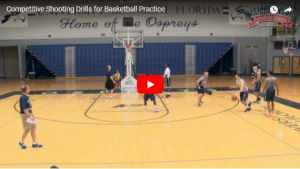
If you are interested in learning more about the Coaching DVD that this drill came from, you can click the following link: Competitive Shooting Drills for Basketball Practice

NCAA Zone Quick Hitters

By Brian Williams on April 13, 2016

A couple of ideas to look at for your zone attack for next season.

I believe that it is a good idea to start thinking about the types of sets that you are looking at running next season.

That way you can fit the types of shots that your players are taking in the spring and summer into those schemes.

These plays are from Wes Kosel’s Playbook “Best Zone Sets from the NCAA.”

It is paired with Coach Kosel’s NCAA Man to Man Sets Playbook as this week’s featured eBook Bundle. You can find out more here: Best NCAA Man to Man & Zone Sets Bundle

Diagrams created with FastDraw

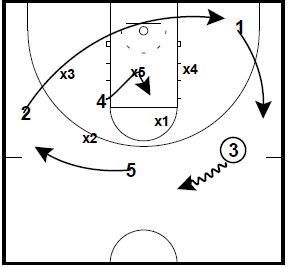
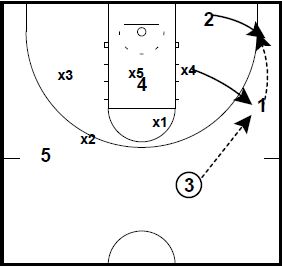
VCU Zone Drag Runner

zone-drag1

1 passes to 2 on the wing.


zone-drag2

1 runs to the right corner.

4 steps to the elbow and 5 drags out of the zone.

2 passes to 5 who passes to 3.


zone-drag3

3 dribbles left pushing 5 over and 2 to run the baseline.


zone-drag4

3 passes to 1 filling to the wing.

If the bottom zone defender has to closeout on the wing, the corner shot is open for 2.


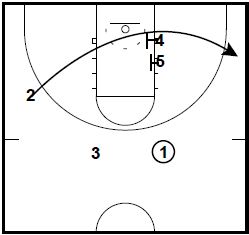
Kansas Zone Hook

zone-hook1

2 cuts across the floor off of a double-screen from 4 and 5.


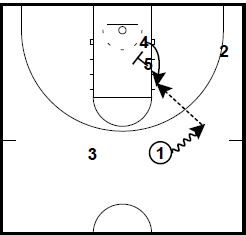
zone-hook2

Once 2 clears the screen (bringing the bottom zone defender out to the corner), 5 screens the middle zone defender as 4 flashes up the lane line for the ball.

1 passes to 4 for a shot.


These plays are from Wes Kosel’s Playbook “Best Zone Sets from the NCAA Season.” It is paired with Coach Kosel’s NCAA Man to Man Sets Playbook as this week’s featured eBook Bundle. You can find out more here: Best NCAA Man to Man & Zone Sets Bundle

  • « Go to Previous Page
  • Page 1
  • Interim pages omitted …
  • Page 123
  • Page 124
  • Page 125
  • Page 126
  • Page 127
  • Interim pages omitted …
  • Page 288
  • Go to Next Page »

Primary Sidebar

  • Twitter
  • Facebook
  • Linkedin
coachestoolbox
personaldevelopmenttoolbox
basketballplayerstoolbox
basketballtrainer
athleticperformancetoolbox
coachingbasketball

© Copyright 2026 Coaching Toolbox

Privacy Policy