• Skip to primary navigation
  • Skip to main content
  • Skip to primary sidebar

  • Basketball Plays
    • Ball Screen Sets
    • Horns Sets
    • Man to Man Post Up
    • Man to Man Isolations
    • Backdoor Plays
    • Man to Man 3 Point Shot Plays
    • 2-3 Zone Attack
    • Baseline Inbound Plays
    • Sideline Inbound Plays
    • Combination Defense Attack
  • Drills
    • Defensive Drills
    • Offensive Drills
    • Competitive Drills
    • Passing Drills
    • Rebounding Drills
    • Shooting and Scoring Drills
    • Toughness Drills
    • Transition & Conversion Drills
    • One on One Drills
  • Blueprint
  • Practice
  • Mental Toughness
  • Skill Development
  • Offense
  • Defense
  • Store

Texas Southern BLOB Diamond

Texas Southern BLOB Diamond

By Brian Williams on July 15, 2016

This underneath the basket inbounds play was run contributed by Andreas Barthel to the FastModel Sports Basketball Plays and Drills Library.

You can also find out more about FastModel Play Diagramming software by clicking this link: FastDraw

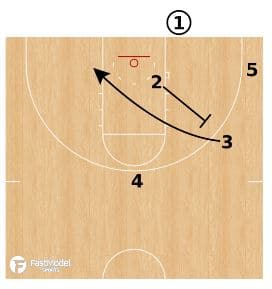
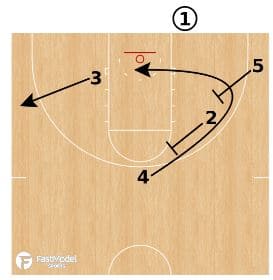
Coach Barthel Saw Texas Southern run this set. The best shooter on the team sets multiple screens before receiving one to get open behind the 3-point arc.


BLOB-Diamond1


2 sets a back screen for 3

3 cuts to the basket


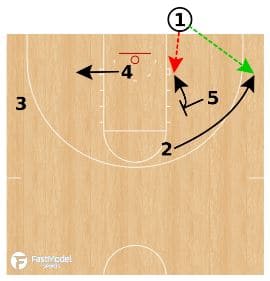
BLOB-Diamond2


2 & 5 set a staggered screen for 4

4 curls to the basket


BLOB-Diamond3


5 sets a screen for 2

2 cuts to the corner

5 slips to the basket


Coaching Basketball: That’s Outside My Boat

By Brian Williams on July 14, 2016

A Team Leadership Exercise

“That’s Outside My Boat”

Leaders Focus on Objectives, Not Obstacles

Cory Dobbs, Ed.D.

Years ago a young reporter assigned to the “minor” sports of the Olympic Games-rowing, canoeing, and kayaking—set out to uncover how the champions in these events mentally prepared for success. Considering these athletes participated in outdoor sports he began by asking what they would do in case of adverse conditions caused by rain, strong winds, or choppy waters—all obstacles certain to happen at some time during their events. To his surprise the response, was always the same: “That’s outside my boat.” After hearing this from athlete after athlete the reporter realized that a focused perspective was their guide to
inner excellence.

The Olympians’ intense internal focus served to eliminate distractions—those things that were out of their control—thereby allowing them to concentrate on those things they could control. These premier athletes chose an attitude of optimism over pessimism, of responsibility over irresponsibility, and of problem solver over victim of circumstances. They focused on results, not on obstacles.

Attitudes are important. Your outlook on life is the lens through which you see the world. When challenges and adversity hit you or your team, and they will, you have an opportunity to decide what to focus on. Your focus can and will influence your teammates. When your teammates are frustrated or uncertain about a course of action, they will look to you as a guide to their decisions and actions.

The Olympian rowers exemplify how focus on objectives, not on the obstacles, is the key to championship performance. The major point is that everyone has the ability to choose their attitudes and develop a positive state of mind. Players with poor attitudes are going to be unhappy and quick to blame their circumstance or other teammates for failure when confronted with trials and tribulations. Many choices of attitudes exist, and the one’s you and your teammates choose matter.

Obstacles are always a part of the competitive sports environment. Effective team leaders accept this fact and focus their attention on what they know they can do, regardless of the external context. Committed team members know and accept the vital role of problem-solver as a responsibility of team leadership. And being an effective problem solver requires leaders to know when a problem is outside the boat.
[thrive_leads id=’36827′]
The high-performing team leader recognizes the importance of helping his or er teammates to manage the journey. The first step toward focusing your teammates on the objectives is reinforcing team member commitment to the team’s objectives—its vision, mission, and goals. And when obstacles arise, become an active change agent helping teammates adjust their attitudes and refocus their energy. Whether in calm or troubled waters, champions overcome obstacles by focusing on objectives.

Case in Point

On January 15, 2009, one man’s focus saved the lives of one hundred and fifty-five passengers aboard a fallen airplane. Captain Chesley Sullenberger was the pilot in command of Flight 1549 departing from New York’s LaGuardia Airport. Upon takeoff the plane ran into a large flock of birds that disabled the plane’s engine. With urgency as the driving force, Captain Sullenberger quickly surveyed the landscape, looking beyond the obstacles of the moment to formulate a resolution to the pending tragedy he was facing. While everyone else focused on the obstacles, Captain Sullenberger had his eyes fixed on the objective. He did the unthinkable: he landed the monstrous Airbus A320 on the
Hudson River.

Sullenberger was concerned only with what he could control. He focused on what was happening inside his aircraft. His training, like the Olympians, equipped him to adapt and adjust his course of action to meet the objectives of the situation.

Team Discussion Questions

What are some reasons people focus on obstacles?

How does the physical environment influence teams and their dynamics?

What steps can be taken to prepare for obstacles?

Why is “perspective” important in competitive sports?

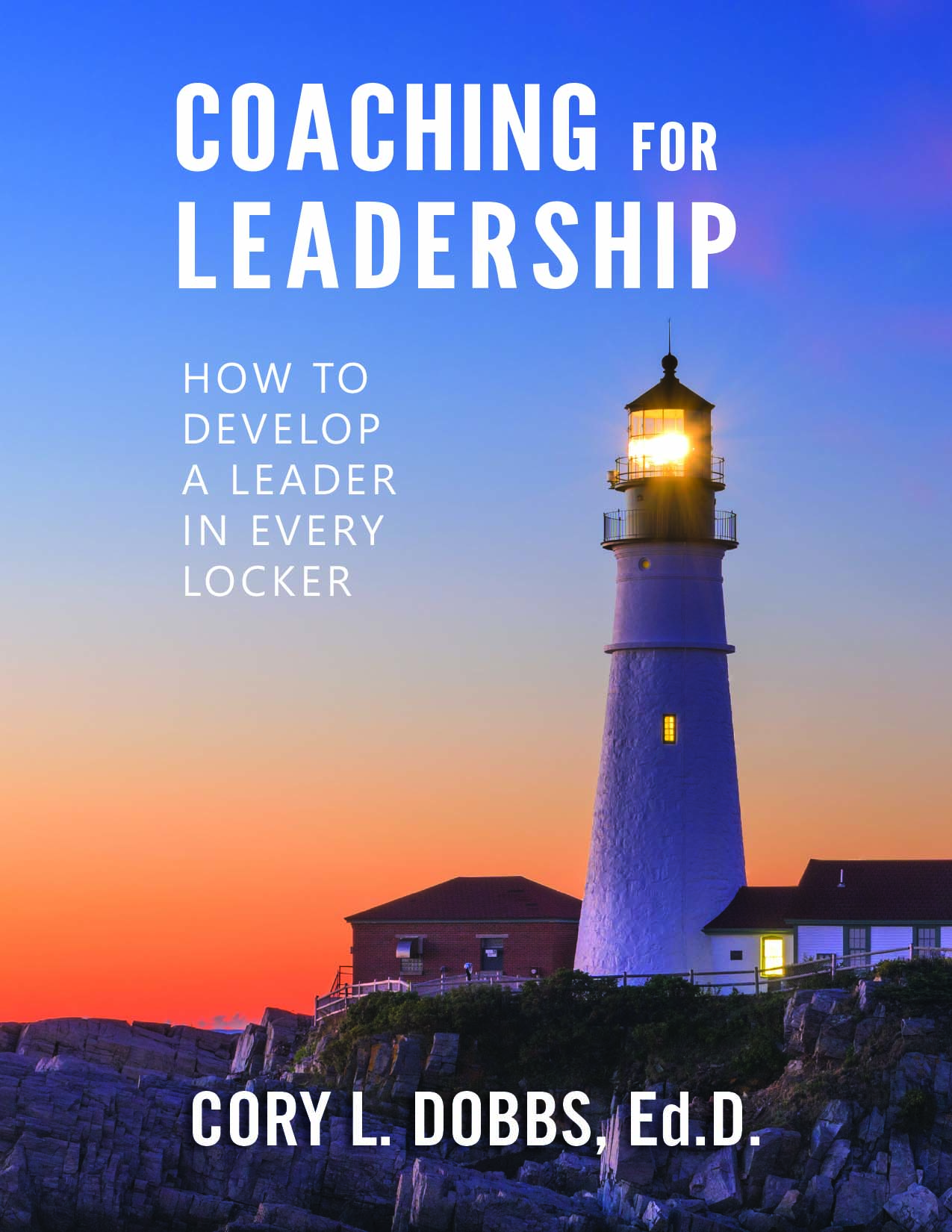
“Tell me and I’ll forget. Show me and I may remember. Involve me and I will care.” -Your Student-Athlete The world of coaching is changing. In Coaching for Leadership you’ll discover the foundations for designing, building, and sustaining a leadership focused culture for building a high-performance team. To find out more about and order Sport Leadership Books authored by Dr. Dobbs including Coaching for Leadership, click this link: The Academy for Sport Leadership Books

About the Author

A former basketball coach, Cory’s coaching background includes experience at the NCAA DII, NJCAA, and high school levels of competition. While coaching, he researched and developed the transformative Becoming a Team Leader program for student-athletes. Cory has worked with professional athletes, collegiate athletic programs and high schools teaching leadership as a part of the sports experience and education process. Cory cut his teeth as a corporate leader with Fortune 500 member, The Dial Corp. As a consultant and trainer Dr. Dobbs has worked with such organizations as American Express, Honeywell, and Avnet.

Cory has taught a variety of courses on leadership and change for the following universities:

Northern Arizona University (Graduate Schools of Business and Education)

Ohio University (Graduate School of Education / Management and Leadership in Sport)

Grand Canyon University (Sports Marketing and Sports Management in the Colangelo School of Sports Business)

Dr. Dobbs recently joined Jamy Bechler on the “Success is a Choice” Podcast – hear his thoughts on team leadership and developing a leader in every locker here.

Quit Being So Stinking Hard to Play For

By Brian Williams on July 11, 2016

This post was written by T.J. Rosene, Head Men’s Basketball Coach at Emmanuel College (Franklin Springs, Georgia), for PGC Basketball.

Do players like playing for you, or do they dread coming to practice every day?

Are you even aware of how they feel about you?

Are you pursuing a career where you will one day be a character in their athletic horror stories or the hero that changed their lives?

I am sure you have heard the quote from Billy Graham before, “One coach will impact more young people in a year than the average person does in a lifetime.” If we assume that this statement is even partially true then you, as a coach, have been empowered with one amazing task and one amazing burden.

One coach will impact more young people in a year than the average person does in a lifetime

CLICK TO TWEET

First, I am going to make an assumption. I am going to assume you are coaching because you are passionate about your sport and are even more passionate about changing the lives of young people.

Now, I will acknowledge that COACHING IS HARD. You deal with way too many situations that you should not have to deal with.

You should not have to deal with crazy parents that only see what is in the best interest of their child.

You should not have to deal with administrators that hold you accountable for circumstances that you have no control over.

You definitely should not have to battle other coaches that are instilling negative thoughts and habits into young people. Unfortunately, these issues are way too common.

Every summer at PGC we tell our athletes that. “Desiring fair treatment is the mindset of the mediocre.”Think on this, as I delve into the three main reasons why coaches become so stinking hard to play for.

Desiring fair treatment is the mindset of the mediocre

CLICK TO TWEET

YOU DON’T CHOOSE TO LOVE

At the beginning of each year, before there are any wins or losses, I believe most coaches focus on how to love, empower, teach, inspire, and bring young people together for one common goal. Then pre-season games start and the vicious cycle begins. Other people start keeping score and keeping records. This starts to shift our focus and our commitment to love our players and quickly turns into a lust for a victory.

Far too often, myself included, our identity becomes wrapped up into our record. Our focus quickly shifts from the goodness we intended to bring and instead toward the awareness of what everyone else will think. This immediately turns our communication with our players into high-pressure demands and slowly turns them off to us as coaches.

READ MORE: BALANCING FAMILY AND COACHING

YOU DON’T CHOOSE TO EMPOWER

We fall victim to the power-empower-power cycle. Somebody comes along and hires us as a coach. We are instantly given a position of power. In order to build young people into a cohesive team, we take our power and develop ways to give it away and empower the players to be leaders. Giving away our power is one of the greatest gifts we can give as a coach. Shortly after we give it away, the pressure comes back and we revert back to using our power instead of giving it away. Players now view us as the enemy rather than the ally.

Giving away our power is one of the greatest gifts we can give as a coach

CLICK TO TWEET

YOU DON’T CHOOSE TO GUIDE

Finally, when the pressure returns once again, we stop directing and begin demanding. The best coaches I’ve ever been around have the highest level of accountability. The ability to teach and inspire players to reach for that highest level of accountability is what separates the good coaches from the great ones.

If players can discover how to pursue greatness on their own, it will become a lifelong virtue. If they do it just because they have to, it will very likely only last for the season, if even that. Our ability to direct and guide often turns into demands when the pressure rises, and we once again become their boss rather than their hero.

READ MORE: ELIMINATE NEGATIVITY AND STOP COMPLAINING

In conclusion, it is important for us all to constantly take inventory on our approach to coaching. Does our “why” match up with our “what”? Is the coach we always dreamed of being actually coming to life, or has the pressure and identity crisis taken over?

The bad news is this may always be a struggle. The good news is, if we are aware, are willing to evaluate, and be humble enough to course-redirect, we can be in constant pursuit of being the coach that players will one day reflect on as a hero.

Be in constant pursuit of being the coach that players will one day reflect on as a hero

CLICK TO TWEET

About PGC Basketball

PGC Basketball provides an intense, no-nonsense basketball education for players and coaches. Our basketball camps are designed to teach players of all positions to how play smart basketball, how to be coaches on the court, and how to be leaders in practices, games and in everyday life. We combine our unique PGC culture with a variety of teaching methods and learning environments to maximize the learning potential of those that attend our camps. In addition to spending 6-7 hours on the court each day, lessons will be reinforced through classroom sessions and video analysis. Our goal at PGC is to empower you with the tools to fulfill your basketball dreams, while also assisting you in experiencing the joy of the journey.

To learn more about PGC Basketball, including additional training tips and videos, visit our YouTube Channel or find us on Facebook, Instagram, and Twitter.

About TJ Rosene
Although TJ Rosene, head men’s basketball coach at Emmanuel College (Franklin Springs, Georgia), is only 38 years of age, he is—remarkably—entering his fourteenth year as a head college coach.  He was hired at 23 years of age and was at the time the youngest college coach in the country.  He has already compiled almost 300 wins as a college coach, including 8 straight 20-win seasons.  His accolades also include playing in 4 national championship games, several conference championships, and multiple south regional championships. He has three times been named a National Coach of the Year, 5-timeRegional Coach of the Year, 4-time Conference Coach of the Year, and twice named the Georgia Coach of the Year.

You can connect with TJ on Twitter at @CoachTJRosene.

TJ first attended a PGC course in 2008, and now he currently serves as the Director for Coach Development for PGC and oversees all PGC/Glazier coaches’ clinics.  He has been a director with PGC for 5 years. He has been speaking at clinics for years including the “Read & React” clinics with Rick Torbett and has helped Better Basketball to create a Quick Hitters video for their “Read & React Offense” series.

Jack Clark on Building High Performing Teams

By Brian Williams on July 10, 2016

The first video is 12 minutes with 24 time National Champion Rugby Coach Jack Clark was posted by whatdriveswinning.com.

If you go to that site, you will be able to view other similar videos with other coaches who have built highly successful Division I programs in various sports.

Even though these coaches do not coach basketball, most of the principles that they apply to their jobs are applicable to coaching basketball.

This video is a You Tube video, so please make sure that you are on a server that allows you to access You Tube videos.

At the beginning of this video, Coach Clark discusses the “buckets” that make up the job of a coach.

Those buckets are operations, applied science, coaching, and culture. The majority of this presentation contains his thoughts on developing high performing teams.

Make sure that your sound is on, then click the play arrow to view the video.

Jack Clark on High Performing Teams

The mindset Coach Clark instills with his Cal Rugby teams is “Grateful for everything. Entitled to nothing.” Clark feels that if we are willing to work for everything that we have, that we become more resilient.

To create a value system, you must connect your beliefs together. The system allows the team to process everything that comes before them both on and off the field in a way that is based on values. The beliefs must be complimentary and can never be contradictory.

To establish your programs’ value system, you must spend a lot of time thinking about

The Cal value system is: Selflessness, Constant Performance Improvement (not necessarily improving results), Merit, Toughness, Leadership

Anson Dorrance

The second video is of 21 time NCAA Division I Women’s National Championship Coach Anson Dorrance of North Carolina Women’s Soccer. This video was also produced by whatdriveswinning.com

The exercise Coach Dorrance discusses at the beginning regarding letters the day of the national championship game could be used in other settings such as senior night, or even prior to the first game of the year.

He also discusses the core values of the North Carolina program. Here is a link to those: Core Values of a Championship Program

You Can’t Be Good at Everything…

By Brian Williams on July 6, 2016

This post is a system that Coach Jonathan Klein of Cedar Ridge (Arkansas) High School uses to identify what they need to emphasize and practice the most each year. These are Coach Klein’s rankings to use as a template to develop your own. For a system like this to work, each coach needs to come up with your own rankings that fit the needs of their teams. He redoes his list each year for the needs of that particular team.

The purpose of the post is not to decide if you agree or disagree with his rankings, but to get together with your coaching staff to develop your own to help you determine what you need to spend the most practice time on.

He also included a blank pdf of his template as well as a word document that you can modify for your own.

Click this link to download the blank pdf template.

Click this link to download the Word Document.

As always, you can download this post by clicking on the green “Print PDF” at the end of this article.

PHASES OF BASKETBALL
RANK OF IMPORTANCE
You Can’t Be Good At Everything… Choose What You Want to Be Great At and Make That Your Identity!

What I Want To Be Great At: (Max Of 3)
1) Half Court Zone Defense – The 1-3-1 is my primary defense and we will run it several different ways in the half court and 3/4 court situations. We will run this to the point of perfection.
2) Half Court Offense – In this phase of the game we want a non-stop controlled attack on the opponent. We will constantly attack the defense looking for a weakness to exploit while protecting the ball. We will not turn the ball over and will not shoot just for the sake of shooting. We will attack until we find the shot that we want, not the one the defense wants us to take.
3) Transition Defense – We will not give up easy baskets, especially lay-ups! Guards get back on the Release of the Shot!

What I Want To Be Good At: (3-5)
4) ELOB Offense – This is a controlled situation for us and I want to score on 90% of these possessions!
5) Defensive Rebounding – All 5 players will: 1) Clear Space, 2) Attack the Rebound, & 3) Flow Quickly into Offensive Transition
6) Half Court Man Defense – This will be a change-up defense for us. We will be a strong defensive team and do not want this as a weakness for us, however it is secondary to our 1-3-1
7) Full Court Press Defense – A good press defense thrown into the game at the right time can change the momentum of a game very quickly. We will utilize press defenses to capitalize on various weaknesses of our opponent and place ourselves to be in a position to win at the end of the game
8) Transition Offense – My transition offense fits into our Half Court Offensive Philosophy of letting our players use their skill, instinct, and talent to play basketball. We want to push the ball up the floor as cleanly and quickly as possible to keep the pressure on the defense and allow us to get 25% of our game points from our offensive transition.

What I Can Live With As A Weakness: (2-3)
9) ELOB Defense – ELOB points can change a game, however – Our focus here is to keep the opponent from scoring, make them settle for just getting it in.
10) Offensive Rebounding – My Offensive Philosophy is to be patient and take high quality / high percentage shots. Because of this I believe in getting the maximum amount of defenders back in transition as early as possible. On any offensive shot, all guards will sprint back and form an umbrella around the goal. The Post player(s) will attack the glass for an offensive put back and then sprint back on defense.

What I Can Live Without Practicing: (At least 1, something you squeeze in only if you have time)
11) Free Throws – This is simply a focused, form shot that relies on mental toughness. We will not spend a lot of practice time on this; instead we will leave it up to the players to work on this before or after practice on their own time

Coaching Basketball Defensive Notes

By Brian Williams on July 1, 2016

These notes are from Bob Starkey’s Basketball Coaching Blog, hoopthoughts.blogspot.com. He has been posting for several years and there are hundreds of posts with ideas to make your program better.

The following are notes from Jim Boone’s lecture on Pack Line Pressure Defense at the TABC Coaching Clinic in San Antonio.

Don Meyer: Write it all down
Get all the good ideas but know you can’t use them all
Fortune 500 Companies — note takers

Pete Newell: “Basketball is the most over-coached, under-taught game.”

3 anchors of your program
◄Sureness – take care of the ball
◄Shot Selection
◄Team Defense

Why Pack Line
1. Can you beat the best with your defense?
2. Does your defense allow you to win on the road?
Rick Majerus: “Winning on the road is about the paint.”
3. Does your defense improve as the season progresses
4. Does your defense progress in post season

Knight: “You get what your tolerate.”

“Know Your No’s” — non-negotiables
1) No Fast-break Lay-ups
2) No Baseline, Nothing to the Outside
3) No Paint (911)
4) No Direct Drives
5) No Rhythm Threes
6) No Second Shots
7) No Fouls

There must be Consequences if the Ball gets to Paint:
1) Take the Charge Foul – Take the Hit and protect the Basket
2) Block the Shot – Best shot block opportunities come from Help
3) Get a Deflection – Help the Helper – Force the Next Pass
4) Hard Foul, we do not want to foul but we are not giving up lay-ups

Rick Majerus: “Those to whom defense is not important will have the best seat in the game.”

The following are Part II of my notes from Jim Boone’s lecture on Pack Line Pressure Defense at last week’s TABC Coaching Clinic in San Antonio. Jim has been a life-long friend and a special member of my coaching circle. He is absolutely one of the best teachers around and an excellent clinician.

3 PACK LINE KEYS:

1. Pressure on the Basketball (based on ability/athleticism)

CLOSEOUTS
“Kobe” – (Driver/Shooter) — elbows bent…finger touch closeness
“Rondo” – (Driver) — “Sometimes not to guard is to guard.”
“Curry” – (Dead 3)

Closeouts are about seeking leverage

Doesn’t like to switch — wants to maintain the integrity of the match-up

JB: “We are an eye-to-eye” program.”

Utilize echo yells

2. Already in Help

Chuck Daly: “Defense can’t guard two things in a row.”

Guarding non-ball defender
◄2 feet in Pack
◄Closer to the ball than your man
◄See ‘em both
TP: Defend with near arm, near leg (no open stance)

2/2 Full Court — Seal the gap
TP: Get off and get ahead

Tates Locke “Rule of Two”
◄2 minutes to Teach a Drill
◄2 days to Learn the Skill
◄2 months to make it a Habit.

JB doesn’t use a whistle in practice…wants player to be able to lock into his voice.

3. Can’t keep them from getting shots but can influence where those shots come from.

Things we can control:
◄Conversion Defense
◄Defensive Rebounding
◄Low Post Defense

JB likes to “Red” the post — double big to big

All players are denied pass inside of 16’
JB: “We don’t get to the mid-line on help because we don’t deny.”

Don’t concede post feed.

Side Ball Screen (Outer Third)
“Body Up” – make ball use screen
“Body In”
Screen Defender: Hand on hip
2 Steps Thru

High Ball Screen—Level/Show

JB: “If I was a high school coach I’d have an alternate defense for playing from behind.”

Al McGuire: Greatest emotion is winning
2nd Greatest emotion is losing
Winning goes to the head
Losing goes to the heart
Must learn to move forward

  • « Go to Previous Page
  • Page 1
  • Interim pages omitted …
  • Page 115
  • Page 116
  • Page 117
  • Page 118
  • Page 119
  • Interim pages omitted …
  • Page 288
  • Go to Next Page »

Primary Sidebar

  • Twitter
  • Facebook
  • Linkedin
coachestoolbox
personaldevelopmenttoolbox
basketballplayerstoolbox
basketballtrainer
athleticperformancetoolbox
coachingbasketball

© Copyright 2026 Coaching Toolbox

Privacy Policy