• Skip to primary navigation
  • Skip to main content
  • Skip to primary sidebar

  • Basketball Plays
    • Ball Screen Sets
    • Horns Sets
    • Man to Man Post Up
    • Man to Man Isolations
    • Backdoor Plays
    • Man to Man 3 Point Shot Plays
    • 2-3 Zone Attack
    • Baseline Inbound Plays
    • Sideline Inbound Plays
    • Combination Defense Attack
  • Drills
    • Defensive Drills
    • Offensive Drills
    • Competitive Drills
    • Passing Drills
    • Rebounding Drills
    • Shooting and Scoring Drills
    • Toughness Drills
    • Transition & Conversion Drills
    • One on One Drills
  • Blueprint
  • Practice
  • Mental Toughness
  • Skill Development
  • Offense
  • Defense
  • Store

Program Building

The Parent-Coach Relationship: Let’s Bridge the Gap

By Brian Williams on February 22, 2023

While it may not have a direct impact on the score, a positive coach-parent dynamic is crucial for team health.

If you lose a game as a coach, it’s definitely your fault. When you win a game, the players get the credit and someone is probably grumbling that their kid didn’t play enough. 

We all want the game decided on the court or field, and the kids to be the chess pieces that make it happen. Studies on the brain have told us neurons must fire at the same time consistently—that’s how I see the parent-coach relationship. We all have to be on the same page.

The Possible Pitfalls

We live in a world of Twitter finger pointing and second guessing of coaches. Often times, some poor kid has to sit through their parent berating the one person who sees him or her more than their family. That man or woman who’s a mentor, who fuses sports and character decisions that to translate to life long, trajectory-changing outcomes. 

Who gains the least in this testy dynamic? I’ve witnessed parents walk their children out of practice (why were you even there?). I’ve seen parents try to fight coaches. I’ve observed parents threaten to pull their kid from the school. I’ve been present when parents blame the coach for their young scholar’s lack of academic performance.

See It From the Other Side

For parents to grasp the true genetic makeup of the coaching profession, they must understand that mentoring, accountability and third-party parenting is now a part of the job. Before buying into the team, parents need to buy into the coach. 

As a coach, you have to initiate a relationship based on communication transparency, not strategic transparency. The moment you start discussing in-game strategies with a parent, you’re inviting them into your coaches’ huddle. In the same way, parents shouldn’t feel assume a coach’s participation in any parental duties (even though many coaches do without question).

Coaches and parents are teammates—the same rules must apply. We must be respectful and act in the best interest of the scholar athlete. As teammates, we should communicate about development, academics and character, not about playing time, chores at home, other players or how the scholar athlete treats their little brother or sister. 

Sharing these types of opinions with parents could lead to team division or a breach of trust within the player-coach relationship. Just like it does when parents push strategies on a coach or berate them.

The Shared Goal

I don’t know one coach who chooses to lose. So never question their intentions around winning. If parents have an issue with delivery, language or environment, those concerns would be warranted. But concerns should be saved for the proper time, like a one-on-one meeting.

For any parents reading this entry, my main motivation is to help your child understand the three pillars necessary for success: effort, talent and competitiveness. 

Being a part of a team is a shared mindset. In sports, the team is fixated on success and a player’s individual growth is found within the team’s. So let’s all work together to help players focus on playing, coaches focus on coaching, and parents focus on being supportive.

(All this being said, if your player’s coach is embarrassing or humiliating your child, there’s no excuse. That coach obviously isn’t building character or self-esteem, so remove your athlete from the team.)

Let Me Translate

The messages and actions between coaches, players and parents often aren’t clear. From my experience, these translations could help address the elephant in the room.

Interpretations for athletes
  • You’re not getting played. → You don’t suck, it’s likely because you’re not working hard enough at practice. So go out there and WIN PRACTICE.
  • You’re not starting. → It’s okay to be disappointed, but don’t be upset. Use practice to convince me to play you.
  • You’re told you won’t go pro. → Prove them wrong. Earn it.
Interpretations for parents
  • If a coach subs out your scholar athlete. → It’s not because of one mistake or that they hate your child, they’ve probably seen that mistake a few too many times at practice.
  • The coach wants to talk. → Discuss competitiveness, growth and progress, not personal feelings.
  • Your child is the 12th, 13th or 14th on the team. → Help them understand their role on the team—they’re still a contributing player. And if they want to move up, encourage your kid to come in early, to put extra work in. 

The coach-parent relationship may not contribute to a team victory. But an ego-free partnership can help create a blueprint for student athletes to follow, leading to the life skills they need for the real world. Isn’t that what we all want?

Cory McCarthy spent more than a decade coach­ing bas­ket­ball. As Direc­tor of School Cul­ture and Cli­mate at New Mis­sion High School, he has helped lead the school to being named the 2012 EdVestors’ School on the Move, 2013 Nation­al Blue Rib­bon School for Improve­ment, and the 2017 Title One Dis­tin­guished School. McCarthy has rep­re­sent­ed Boston Pub­lic Schools at con­fer­ences such as ASUGSV Tech­nol­o­gy Sum­mit in San Diego and COSE­BOC in Boston, MA and New York, and has been a guest lec­tur­er at Emer­son Col­lege and UMASS Boston.


The Parent-Coach Relationship: Let’s Bridge the Gap

By Brian Williams on February 25, 2022

While it may not have a direct impact on the score, a positive coach-parent dynamic is crucial for team health.

If you lose a game as a coach, it’s definitely your fault. When you win a game, the players get the credit and someone is probably grumbling that their kid didn’t play enough.

We all want the game decided on the court or field, and the kids to be the chess pieces that make it happen. Studies on the brain have told us neurons must fire at the same time consistently—that’s how I see the parent-coach relationship. We all have to be on the same page.

The Possible Pitfalls

We live in a world of Twitter finger pointing and second guessing of coaches. Often times, some poor kid has to sit through their parent berating the one person who sees him or her more than their family. That man or woman who’s a mentor, who fuses sports and character decisions that to translate to life long, trajectory-changing outcomes.

Who gains the least in this testy dynamic? I’ve witnessed parents walk their children out of practice (why were you even there?). I’ve seen parents try to fight coaches. I’ve observed parents threaten to pull their kid from the school. I’ve been present when parents blame the coach for their young scholar’s lack of academic performance.

See It From the Other Side

For parents to grasp the true genetic makeup of the coaching profession, they must understand that mentoring, accountability and third-party parenting is now a part of the job. Before buying into the team, parents need to buy into the coach.

As a coach, you have to initiate a relationship based on communication transparency, not strategic transparency. The moment you start discussing in-game strategies with a parent, you’re inviting them into your coaches’ huddle. In the same way, parents shouldn’t feel assume a coach’s participation in any parental duties (even though many coaches do without question).

Coaches and parents are teammates—the same rules must apply. We must be respectful and act in the best interest of the scholar athlete. As teammates, we should communicate about development, academics and character, not about playing time, chores at home, other players or how the scholar athlete treats their little brother or sister.

Sharing these types of opinions with parents could lead to team division or a breach of trust within the player-coach relationship. Just like it does when parents push strategies on a coach or berate them.

The Shared Goal

I don’t know one coach who chooses to lose. So never question their intentions around winning. If parents have an issue with delivery, language or environment, those concerns would be warranted. But concerns should be saved for the proper time, like a one-on-one meeting.

For any parents reading this entry, my main motivation is to help your child understand the three pillars necessary for success: effort, talent and competitiveness.

Being a part of a team is a shared mindset. In sports, the team is fixated on success and a player’s individual growth is found within the team’s. So let’s all work together to help players focus on playing, coaches focus on coaching, and parents focus on being supportive.

(All this being said, if your player’s coach is embarrassing or humiliating your child, there’s no excuse. That coach obviously isn’t building character or self-esteem, so remove your athlete from the team.)

Let Me Translate

The messages and actions between coaches, players and parents often aren’t clear. From my experience, these translations could help address the elephant in the room.

Interpretations for athletes
  • You’re not getting played. → You don’t suck, it’s likely because you’re not working hard enough at practice. So go out there and WIN PRACTICE.
  • You’re not starting. → It’s okay to be disappointed, but don’t be upset. Use practice to convince me to play you.
  • You’re told you won’t go pro. → Prove them wrong. Earn it.
Interpretations for parents
  • If a coach subs out your scholar athlete. → It’s not because of one mistake or that they hate your child, they’ve probably seen that mistake a few too many times at practice.
  • The coach wants to talk. → Discuss competitiveness, growth and progress, not personal feelings.
  • Your child is the 12th, 13th or 14th on the team. → Help them understand their role on the team—they’re still a contributing player. And if they want to move up, encourage your kid to come in early, to put extra work in.

The coach-parent relationship may not contribute to a team victory. But an ego-free partnership can help create a blueprint for student athletes to follow, leading to the life skills they need for the real world. Isn’t that what we all want?

Cory McCarthy spent more than a decade coach­ing bas­ket­ball. As Direc­tor of School Cul­ture and Cli­mate at New Mis­sion High School, he has helped lead the school to being named the 2012 EdVestors’ School on the Move, 2013 Nation­al Blue Rib­bon School for Improve­ment, and the 2017 Title One Dis­tin­guished School. McCarthy has rep­re­sent­ed Boston Pub­lic Schools at con­fer­ences such as ASUGSV Tech­nol­o­gy Sum­mit in San Diego and COSE­BOC in Boston, MA and New York, and has been a guest lec­tur­er at Emer­son Col­lege and UMASS Boston.

A Flawed Reality: When it’s Time to Reflect

By Brian Williams on September 17, 2021

Two years after landing the head coaching position he so badly desired, Coach Jones (not his real name) was quietly fired. The administrative staff realized they’d made a mistake hiring Jones. They weren’t quite sure why he didn’t work out. They did their homework.

Well, enough to consider him a solution to their coaching needs. However, what they couldn’t see is what did him in. After spending a month analyzing Jones, here are the flaws I uncovered:

  • Is overly demanding
  • Doesn’t listen
  • Is intolerant of dissent
  • Takes the credit for success
  • Blames others for mistakes
  • Is untrustworthy—doesn’t do what he says he’ll do
  • Is aloof—seen as arrogant
  • Has a dictatorial style
  • Is abrasive

It’s fairly obvious, after the fact, that Coach Jones has some serious flaws related to interpersonal interactions (he is comfortable with a transactional style of conversation) and relationship building. Nowhere in his flaws will you find a glitch in his knowledge of the sport. He has a great command of the X’s and O’s. But he has some serious team building flaws.

The two primary blind spots that emerged are: 1) his need to be right in all situations, and 2) avoiding accountability to his players and staff. Coach Jones’ “I know” attitude produced such flaws as taking credit for success and his unwillingness to listen. The desire to avoid accountability (to the stakeholders) produced his blaming of others and his dictatorial leadership style and abrasive attitude toward relationship building created cool relationships between him and his staff and players.

The prognosis for Coach Jones is not good. If he fails to discover his fatal flaws his coaching career will never recover. As a prominent coach told me, “We’re pretty good at directing our players to change, but not so great at changing ourselves.”
[thrive_leads id=’36827′]

New to the Second Edition of Coaching for Leadership!

We are pleased to announce a new chapter to the second edition of the best-selling Coaching for Leadership. The chapter, The Big Shift: Unlock Your Team’s Potential by Creating Player-Led Teambuilding, connects the previous edition of this book to its origin, as well as to the future of team sports.

The new chapter sets forth a practical and applicable agenda for change and improvement. The reader is introduced to seven vital elements of change; seven shifts of traditional mental models that lead to the new core principles necessary for creating a player-led team culture. Click here for more information about Coaching for Leadership

About Cory Dobbs, Ed.D.

Cory Dobbs is the founder of The Academy for Sport Leadership and a nationally recognized thought leader in the areas of leadership and team building.  Cory is an accomplished researcher of human experience. Cory engages in naturalistic inquiry seeking in-depth understanding of social phenomena within their natural setting.

A college basketball coach, Cory’s coaching background includes experience at the NCAA DII, NJCAA, and high school levels of competition.  After a decade of research and development Cory unleashed the groundbreaking Teamwork Intelligence program for student-athletics. Teamwork Intelligence illuminates the process of designing an elite team by using the 20 principles and concepts along with the 8 roles of a team player he’s uncovered while performing research.

Cory has worked with professional athletes, collegiate athletic programs, and high schools teaching leadership and team building as a part of the sports experience and education process.  As a consultant and trainer Dr. Dobbs has worked with Fortune 500 organizations such as American Express, Honeywell, and Avnet, as well as medium and small businesses. Dr. Dobbs taught leadership and organizational change at Northern Arizona University, Ohio University, and Grand Canyon University.

The Two Most Destructive Attitudes: Resentment and Arrogance

By Brian Williams on March 12, 2021

The Two Most Destructive Attitudes: Resentment and Arrogance
Dr. Cory Dobbs, The Academy for Sport Leadership (03/05/21)

Parents, teachers, coaches, and managers, all invest a great deal of time trying to instill attitudes they consider appropriate. The central role of each of these leaders is to guide those they lead to adopt, modify, and deploy relevant ways of thinking—which includes forming attitudes that influence desired behavior. The opposite happens as well; a great deal of time and effort is spent to correct or punish the behaviors that result from inappropriate attitudes. To the extent that leaders are able to construct preferred attitudes will determine the health of the individuals, team, and organization.

Behavior and Attitudes
Creating an environment in which trust and respect are paramount, where healthy and inspirational relationships flourish, is vital to success in today’s environment. To create this culture requires an understanding of the nuances of attitudes. An attitude is the spontaneous interplay of preexisting emotions and integrated assumptions. Furthermore, attitudes result from the neural activity of the brain, such that the “cells that fire together wire together” creating a habit of mind. And assumptions are mental models that provide structure to the sense making process. Together they generate emotional and cognitive cues that impulsively (they can agitate a person to act faster than the speed of sound) lead to behavior. In a sense, then, an attitude has two distinct fibers weaving it together.

An attitude has an immediate and enduring influence on how we see, think, feel, and what we do. And the sobering reality is that an attitude (such as “I don’t care,” or “Why are you picking on me?”) can construct itself indiscriminately with little regard to whether it is helpful, useful, neutral, or harmful. If you stop and think about it, an attitude begins as an invisible entity—an emotion or assumption embedded in the brain—that progresses into a subjective experience in which one’s perception of a person, object, or event is greatly shaped, and greatly shapes the actions one takes.

And that’s true for both positive and negative attitudes. However, despite what most people think, we (yes, you and me) struggle to “grasp” our own predisposition for holding a certain attitude. As irrational actors, we are often unaware of how our attitudes impact those residing in our outside world. Often, transgressions are small and seemingly insignificant. But they aren’t. Collateral damage abounds with disagreement, disconnection, and disengagement. Over time, attitudes harden and the relational participants become antagonistic toward each other. The hidden costs are many.
[adinserter name=”Basketball In Article Ad 1 Rebecca”]
Attitudinal Mindset
Let me unveil the two most destructive attitudes. They are resentment (“I won’t forgive or forget,” and “apologizing is not for me”) and arrogance (“You’re not worthy” and “I want what I want”). Stop for a moment and think about these two pillars of negativity. Imagine a close friend revealing resentment toward her boss. Not difficult to do. Let’s say she is asked to work overtime—and everyone else is allowed to leave early. The thoughts and feelings produced by the immediate feedback that encompasses resentment quickly wires neural circuits ensuring the brain has recorded this incident.

Your friend has now created an attitude of resentment toward her boss (and likely the boss resents the attitude of the worker too). Whenever they are in the same room, the memory of the previous “injustice” has the potential to emerge giving energy and power to an internal state of resentment. If another incident happens, it will only amplify the initial event. What makes this especially unnerving is how automatically it happens. Moreover, both parties will ultimately find out that lingering resentment is emotionally damaging and that life at work will never be the same.

And arrogance, well ego-involvement is simply a part of athletics. We all have the need to feel worthy, but the person with an unhealthy sense of self—selfish and self-centered—usually has a tough time when it comes to emotional competencies. They are unaware of how others’ respond to their actions as they yearn to be the center of attention.

[thrive_leads id=’36827′]

The trouble is that arrogance makes the individual a pawn to their emotions. The challenge for the arrogant person is that they must protect and promote themselves at the same time. For example, if they have the need to be seen as confident in order to feel worthy, they will protect themselves (“save face”) from a threat to their competence, and feel compelled to put others down while building themselves up. The more arrogant the actor, the less room there is for others.

To the extent that the arrogant person is driven by impulses to protect and promote their self-concept, they will perceive others as less worthy than themselves—this self-serving bias is rooted in one’s upbringing. Yes, it is the job of the ego to give us a sense of who we are and where we belong—a social compass with which to define and affirm our individual and collective identity. But the attitude of superiority ultimately prevents the arrogant individual from fully developing a healthy ego and an accurate view of self. For the arrogant, life is a roller coaster ride.

Action Steps
Okay, time to take action. You have work to do. Write down on a sheet of paper (old school) these two attitudes. Describe in bullet points each concept as you have seen others deploy these attitudes. Seriously, take ten minutes to “study” resentment and arrogance in greater detail by reflecting on your experiences with others. Then invest another ten minutes assessing how you can improve yourself by challenging and changing these destructive attitudes realizing you are not immune to them.

Resentment Arrogance
Won’t forgive “You’re not worthy” (Self-centered))

Won’t forget “I want what I want” (Selfish)

External Team Communication

By Brian Williams on March 5, 2021

Pat Fox – Head Football Coach, Pontiac Notre Dame Prep (MI)
Coach Fox is a football coach. We believe that his message is applicable to all programs and all sports.
The following content is provided by Glazier Drive

Internal Team Communication

By Brian Williams on February 26, 2021

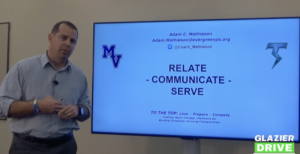
The following content is provided by Glazier Drive

Coach Adam Mathieson is a football coach and athletic director. We believe that his message is applicable to all programs and all sports.

  • Page 1
  • Page 2
  • Go to Next Page »

Primary Sidebar

  • Twitter
  • Facebook
  • Linkedin
coachestoolbox
personaldevelopmenttoolbox
basketballplayerstoolbox
basketballtrainer
athleticperformancetoolbox
coachingbasketball

© Copyright 2026 Coaching Toolbox

Privacy Policy