• Skip to primary navigation
  • Skip to main content
  • Skip to primary sidebar

  • Basketball Plays
    • Ball Screen Sets
    • Horns Sets
    • Man to Man Post Up
    • Man to Man Isolations
    • Backdoor Plays
    • Man to Man 3 Point Shot Plays
    • 2-3 Zone Attack
    • Baseline Inbound Plays
    • Sideline Inbound Plays
    • Combination Defense Attack
  • Drills
    • Defensive Drills
    • Offensive Drills
    • Competitive Drills
    • Passing Drills
    • Rebounding Drills
    • Shooting and Scoring Drills
    • Toughness Drills
    • Transition & Conversion Drills
    • One on One Drills
  • Blueprint
  • Practice
  • Mental Toughness
  • Skill Development
  • Offense
  • Defense
  • Store

Kansas 2-3 Zone Screen the Screener

Kansas 2-3 Zone Screen the Screener

By Brian Williams on October 23, 2019

These two plays were submitted by Nate Hill, Assistant Boys Coach at Colonel Crawford High School in North Robinson Ohio.

They are a part of his new playbook (eBook format) The Zone Offense Encyclopedia.

In all, Coach Hill has assembled four playbooks.

In addition to The Zone Offense Encyclopedia, Nate has The Complete Guide to the Dribble Drive Offense, The Zone Offense Sideline Out of Bounds Encyclopedia, and The Baseline Out of Bounds Encyclopedia.

You can find out more about each playbook by clicking here: Coach Nate Hill eBook Bundle
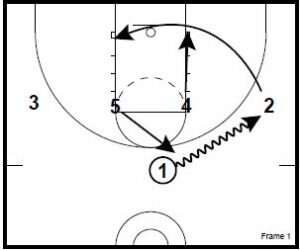
 

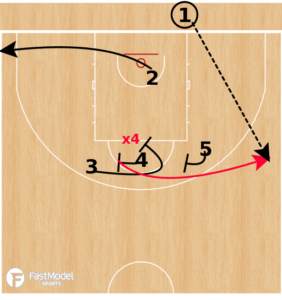
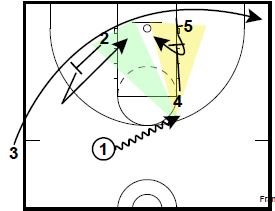
Use vs. a 2-3 zone, a continuity zone play.

The play starts with a dribble entry to either side.

The 2 goes to backside block and the 4 drops to the block.

We try and get a quick look into the 4 man here.
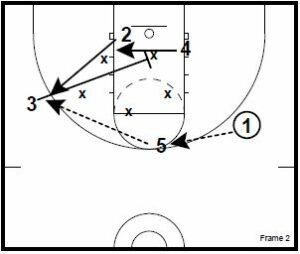
 

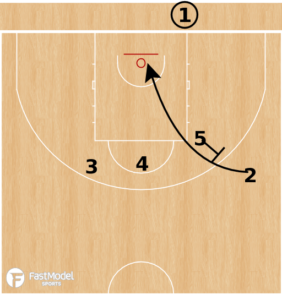
If the 4 man is not open, the 5 man flashes to the top of the key and receives pass from 1.

On the pass 2 things happen

1. 2 flashes to 3 point line to receive pass from 5

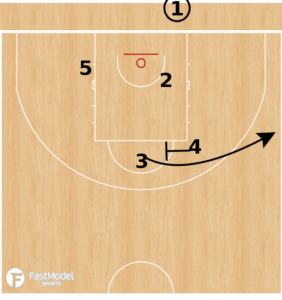
2. 3 sets screen for 4 on backside block.
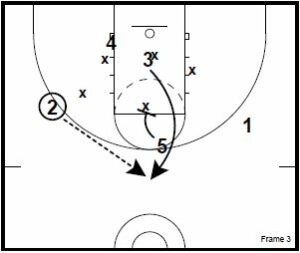
 

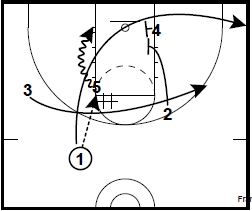
On the pass from 5 to 2, 2 looks for 4 off of 3’s screen.

This is a timing play and we can get layups if timing is done correctly.

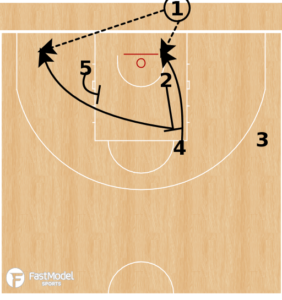
If 4 is not open, then 2 can look for 3 off of 5’s down screen at the top of the key.
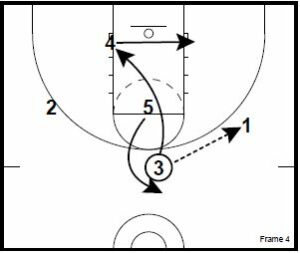
 

If no shot is open at the top, the action repeats itself.

1. If pass to wing 3 cuts to backside block.

2. If dribble to wing, 1 cuts to backside block.


Wall Pick & Roll Defense

By Brian Williams on October 16, 2019

Coach Zak Boisvert has assembled some clips of the Wall technique for defending pick and roll.

Zak has an outstanding site with posts on various coaching topics at www.pickandpop.net

His YouTube channel has several videos with various types of man to man plays, zone sets, and inbounds plays as well as clips on various defensive coverages.

You can subscribe to receive an update when he posts a new video Zak Boisvert You Tube Channel

You can follow him on Twitter at this link: @ZakBoisvert

Click play to see the video

This is a YouTube video, so you will need to be on a server that allows you YouTube access.

There is text that starts 15 seconds into the video.

International Baseline Inbound Plays

By Brian Williams on October 16, 2019

Two baseline inbound plays that came from the following pages of the FastModel Sports Plays and Drills Library:

Spain – Invert Stagger BLOB.

Russia – STS BLOB.

You can also find out more about FastModel Play Diagramming software by clicking this link: FastDraw

The plays were contributed by Sergey Tkachenko.

He is based in Perm, Russia and is currently a first assistant coach for BC Parma U18 team. He also played for U16 and U18 Russian National Teams.

Spain – Invert Stagger BLOB

Set from the 2019 FIBA World Cup. Spain won the gold medal.

The numbers are for identification purposes only.

Put your players in the spots that best suits them.


Russia – STS BLOB


Sideline Out of Bounds Plays

By Brian Williams on October 10, 2019

These two plays were submitted by Nate Hill, Assistant Boys Coach at Colonel Crawford High School in North Robinson Ohio.

They are a part of his new playbook (eBook format) Sideline Out of Bounds Plays Encyclopedia.

In all, Coach Hill has assembled four playbooks.

In addition to the Sideline Out of Bounds Encyclopedia, Nate has The Complete Guide to the Dribble Drive Offense, The Zone Offense Encyclopedia, and The Baseline Out of Bounds Encyclopedia.

You can find out more about each playbook by clicking here: Coach Nate Hill eBook Bundle
 

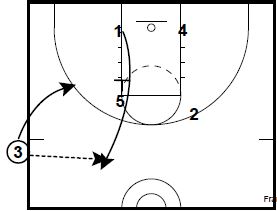
Box 5 Split

Box alignment and zipper cut

1 and 2 opposite block and elbow.

2 is the shooter.

1 makes zipper cut off 5s down screen

HIgh post split – 1 hits 5 at elbow.

1 cuts first off high post, then 3 goes second.

Option 1 – 5 hand offs to 3 and looks for 1 off double screen.

Option 2 – 5 fakes both hand offs, keeps it and attacks.

Box 3 Stack SLOB

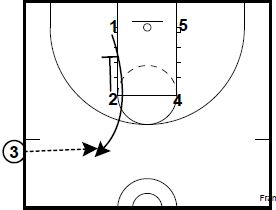
Box alignment.

Guards strong side.

posts weak side.

1 makes zipper cut off 2 down screen.

3 sprints to back side corner off 2’s back screen (this is false motion).

1 attacks backside elbow, pivots and ball fakes.

2 calls for ball on wing, then goes backdoor.

If no backdoor, 5 curls to rim off 4’s down screen.

Basketball Shot Selection and the Use of Questions

By Brian Williams on October 4, 2019

This article is republished with permission. The original article was written by Chris Oliver of Basketball Immersion and appears at Basketball Shot Selection and the Use of Questions.

Basketball shot selection is an individual players’ decision that is defined by the individual, coach or team. For an individual player shot selection is their ability to recognize what is going on in a possession, know the shot options available and choose the best possible shot from all the information they have gathered.

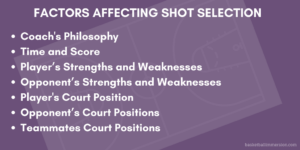
Knowing the proper and most effective shot to shoot in any given situation is a fundamental building block to a successful team and player. Shot selection is dependent on a number of factors, including:

Shot Selection

My players have to make countless decisions in a game. Unfortunately, a coach doesn’t have the advantage of time in the middle of a possession to help a player decide exactly which shot will be the best for the moment. I need to train players to think instinctively in order for their shot selection to be advantageous to them and the team. In the moment I influence very few of those decisions. I can’t, nor would I want to, tell my players what to do in each situation.

What I can, and do do, is help my players develop their independence in each of those decision-making situations. A key to shot selection is a player being able to carry out a particular tactic with minimum amount of thought and quick decision-making. Shot selection needs to become an automatic response based on the player’s recognition and reaction to cues from the court position, the opponent’s position and the characteristics of the incoming pass.

As a player’s skill level increases, so do the available shot selection choices, so there is not usually one specific shot that is right for a situation. There are individual differences as well. What may be proper shot selection for one player may not be the right shot for another player if given the exact same situation. For a coach there is a art to limiting the shots a player is allowed to shoot and limiting their ability to develop their game and confidence.

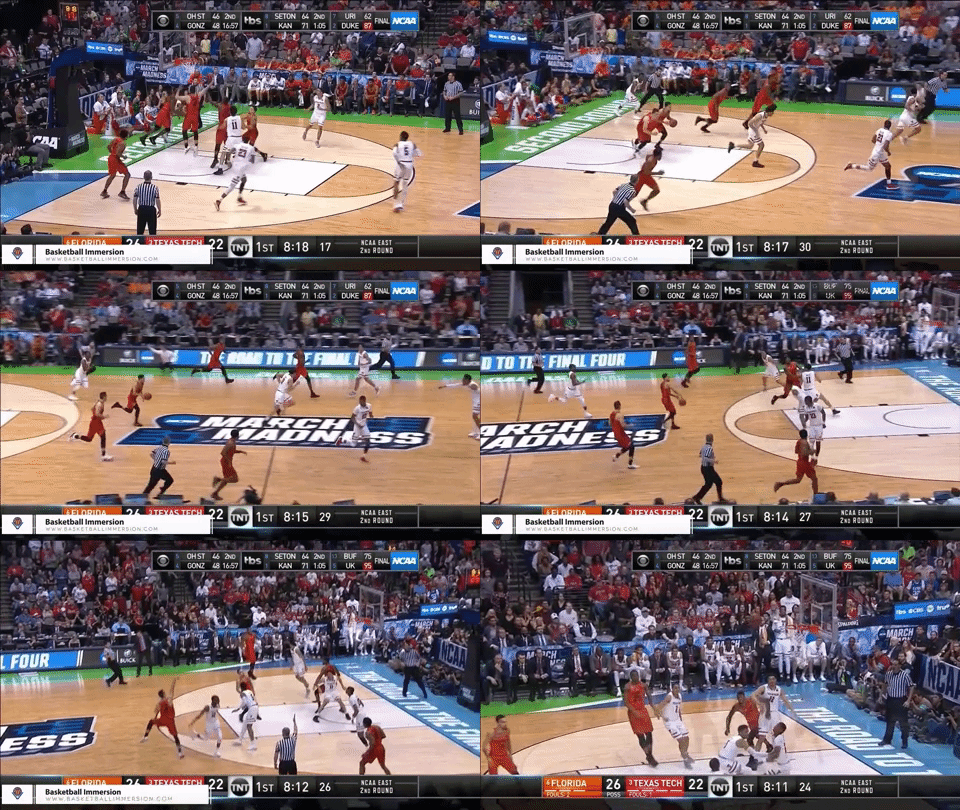
How would your players define this shot?

My Shot Selection Philosophy

Yes a shot that is open, in range, and in rhythm defines shot selection for our players, but our view of shot selection goes deeper than a mantra.

Beyond time and score situations, like the end of a quarter, half or game, my players have the freedom to shoot any shot at any time. My rationale, and experiences, have led me to understand that it is really difficult to get open shots. It is also valuable to get those open shots. So regardless of where, or when, that open shot becomes open we want a player to shoot it. Why? Because it is unlikely we will get a better shot in a possession than an open shot.

This is also part of my zero seconds philosophy. We believe that the most open an offensive player is going to get is when they first catch the ball. As such there are no pre-determined movements. We want technical aspects of offensive play executed quickly and decisively with no pause on the catch. This means that as soon as a player’s feet hit the ground they are immediately into their shot, pass, or drive. As a result we do not emphasize jabs or fakes but rather we want our players to make decisive decisions on the catch about whether to shoot, dribble or pass.

We also believe the goal of the offensive player who catches the ball is to score. Because of this they need to attack immediately on the catch with no hesitation to take advantage of a recovering defender or helpside defenders. If they cannot score it is because the defense prevented it. This creates secondary decisions.

The decision making progression on the catch is that we want all players to catch the ball prepared to shoot. Too many players catch the ball unprepared to shoot. We want to build a confident mindset. We also want to force a reaction from the defense on every catch. One of the ways to do this is to ensure that all players catch the basketball with the intent to shoot.

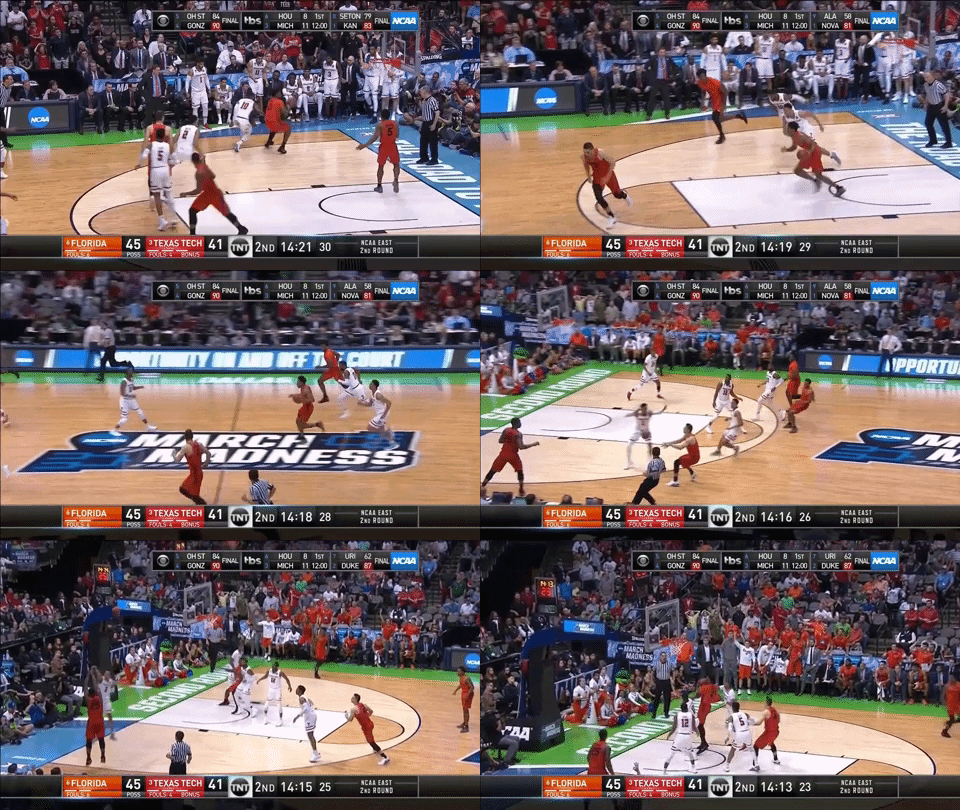
How would your players define this shot?

The Use of Questions

My zero seconds philosophy does not diminish the importance of shooting the right shot at the right time. Since any player can shoot any shot at any time we also need to train a player to shoot the right shot at the right time. In my philosophy, it is not what I tell my players about shot selection, but what they tell me. I do not define shot selection for my players. Not one time last season did I criticize a shot. If I define a player’s shot selection than I feel like I am limiting a player’s ability to play confident and free.

How then do I get players to understand what is, and what is not, an ideal shot for themselves and their team? I ask their teammates. If a player takes a shot I ask their teammates if it was a good shot or not. Was that shot a good shot?  I also ask the player who shot the ball what their thought process was. Why was that shot get taken?

Most of these efforts to develop my players shot selection decision-making process happen in practice, and through video analysis. As a coach my goal is to give my players a framework to operate within based on an understanding of percentage basketball. I create a system of play that is in the best interest of our team. The players are then responsible for holding each other accountable to the system of play, and to the best percentage shots that become available within that system of play.

Through our games approach to coaching basketball and the use of questions we can help create the player who shoots the right shot at the right time (Learn more about a Games Approach to Coaching Basketball).

I train my players to make better decisions during practice so that they are free in the games. It is important to give your players a chance to improve their shot selection away from the pressure of competition. It is also important to know that this is not a perfect process. My players still take what I would deem to be bad shots in games. Instead of being accountable to my opinion of what a bad shot it was, however they are now accountable to their teammates opinion that has been shaped in practice.

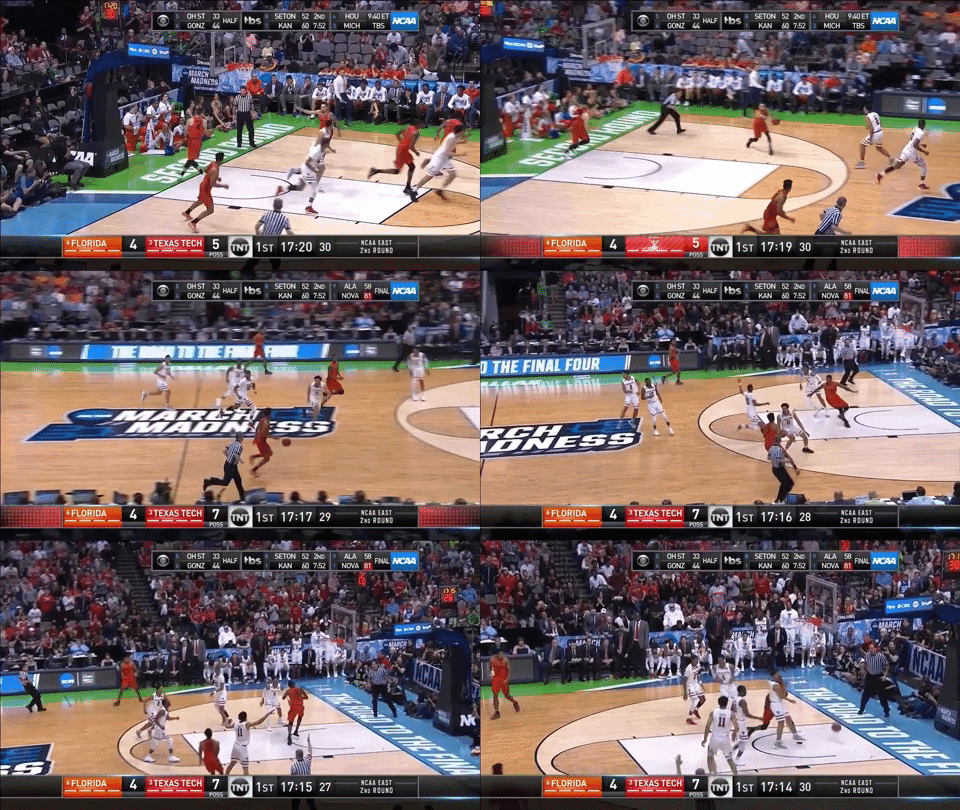
How would your players define this shot?

Shot Selection and Team Accountability

Accountability means being held answerable for accomplishing a goal. The goal in this case is to take good shots for our team to be successful. By using questions to probe players for what is the best shots for accomplishing our goal, we are increasing awareness around clear expectations.

A team works better when players are willing to help each other out, and players are more likely to help each other out when they’re knowledgeable enough to do so. Asking questions helps educate players about shot selection. Most importantly, one of the guiding principles of leadership I stand by is to “make it seem like their idea.” Even though I could dictate what shot selection is, the goal becomes more trusted and supported when it at least seems like it comes from the players.

The Challenge of Asking Questions

The challenge is to get players to be willing to keep each other accountable for shot selection without it becoming divisive or negative. Players should know that criticism of shot selection is beneficial to player and team development. Try to always connect the reason why shot selection is being critiqued. Criticism does not mean negative. When I ask players about shot selection, I don’t just ask when it is a bad shot. To provide a frame of reference for what is a good, and bad shot, I ask questions when both types of shots are taken. We also don’t ask questions about every shot. That would negatively impact the flow of practice.

There is an art to providing well-constructed and thoughtful criticism. Here are some guidelines to follow:

Shot Selection

The Good to Great Benefit

The use of questions to create team accountability has helped us build the good to great pass mentality. I am not sure who coined the phrase originally, but I heard it from Gregg Popovich in the context of the extra pass a player makes. Good to great means, even though a player may have a shot opportunity, the next pass leads to a great shot opportunity.

The real value of players understanding the good to great benefit is that it shapes the shot selection decision in a positive manner. Rather than a player who took a bad shot feeling like their teammates didn’t believe that they could make the shot, the accountability is shifted towards understanding that there was simply a better shot on the next pass. Check out these video examples to better understand the good to great concept:

Florida Skip Pass Closeouts Shooting Drill

By Brian Williams on October 1, 2019

This shooting drill is provided by Dr. Dish Basketball.

The drill is from Florida Men’s Coach Mike White’s drill book.

You could always add a defender closing out on the second ball to allow the player attacking the close out to make a read.

Please make sure your sound is on to see the video.

This drill is hosted on YouTube, so you will need to be on a server that allows you to access YouTube to see the drill.

Click the play arrow so see the drill.

  • « Go to Previous Page
  • Page 1
  • Interim pages omitted …
  • Page 45
  • Page 46
  • Page 47
  • Page 48
  • Page 49
  • Interim pages omitted …
  • Page 288
  • Go to Next Page »

Primary Sidebar

  • Twitter
  • Facebook
  • Linkedin
coachestoolbox
personaldevelopmenttoolbox
basketballplayerstoolbox
basketballtrainer
athleticperformancetoolbox
coachingbasketball

© Copyright 2026 Coaching Toolbox

Privacy Policy