• Skip to primary navigation
  • Skip to main content
  • Skip to primary sidebar

  • Basketball Plays
    • Ball Screen Sets
    • Horns Sets
    • Man to Man Post Up
    • Man to Man Isolations
    • Backdoor Plays
    • Man to Man 3 Point Shot Plays
    • 2-3 Zone Attack
    • Baseline Inbound Plays
    • Sideline Inbound Plays
    • Combination Defense Attack
  • Drills
    • Defensive Drills
    • Offensive Drills
    • Competitive Drills
    • Passing Drills
    • Rebounding Drills
    • Shooting and Scoring Drills
    • Toughness Drills
    • Transition & Conversion Drills
    • One on One Drills
  • Blueprint
  • Practice
  • Mental Toughness
  • Skill Development
  • Offense
  • Defense
  • Store

Pressure

Pressure

By Brian Williams on February 14, 2013

By Deron Sorrell

Pressure is not easily defined. Pressure takes many forms. It can be both created by circumstance or self–imposed. Pressure is not discriminatory, but often affects people differently.

Pressure is equally a deadly enemy and a best friend. Pressure is impossible to avoid while pursuing excellence.

An awareness with regard to pressure is essential in order to achieve championships. What does pressure mean to you?

Pressure could be a parent who wants you to score more points or take more shots. Pressure can be your own desire to earn more playing time. Pressure can be attempting a free throw in the closing seconds of a tight game. Pressure can be shooting your only shot of a season with a twenty point lead. Pressure can be never taking a shot. Pressure can be attempting to dribble while being guarded by somebody seemingly quicker than you. Pressure can be an inability to utilize your off hand. Pressure can be missing your first four shots. Pressure can be losing more games than you win.

Pressure can be a packed gym. Pressure can be an empty gym. Pressure can be meeting your own expectations. Pressure can be effectively surpassing the expectations of others. Pressure can be bad officiating. Pressure can be expecting to win. Pressure can be fearing defeat. Pressure can be a winning streak. Pressure can be a losing streak. Pressure can be anywhere at any time. Pressure can be everywhere at once.

Successful people do not learn to overcome pressure, but rather to utilize it. The only way to avoid pressure is to willingly sacrifice our desire to succeed. For example, a student who has no care or concern with regard to graduation would effectively avoid feeling any pressure upon taking an exam. Avoiding pressure does not generate success, but rather effectively guarantees failure. How can we utilize pressure?

The keys to performing within a pressure packed environment are preparation and toughness. Preparation involves developing both necessary skills and a thorough understanding as to what is expected. Toughness means being ready, willing, and able to muster a complete effort without being aware in advance of an outcome.

Toughness is putting forth our very best and accepting whatever the consequences. While pressure is capable of defeating most preparation and toughness, there are a very few exceptions. These exceptions are often referred to as champions. Are you prepared and tough enough, or has pressure conquered you?
Basketball Plays VCU Ball Screens

By Brian Williams on February 13, 2013

These notes are from a presentation by former Virginia Commonwealth Men’s Assistant Coach Donny Lind.

1. MAKE 2 GUARD 1 TO CREATE SCRAMBLE
2. EXPLOIT POOR DEFENDERS • GUARDS WHO “MELT” or • IMMOBILE BIGS
3. SET BALL SCREENS IN SITUATIONS WHERE IT IS VERY DIFFICULT TO GUARD PROPERLY
4. CREATE “COUNTER” OPPORTUNITIES
5. CREATE A ROLE FOR UNSKILLED BIGS

WAYS TO DEFEND BALLSCREENS: • HEDGE • TRAP • LEVEL • SWITCH • DOWN • UNDER


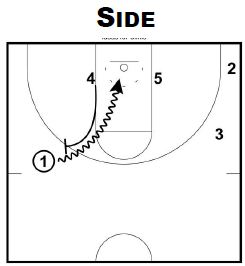
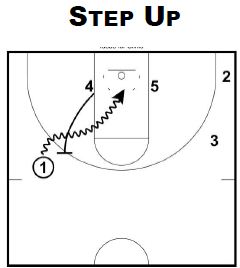
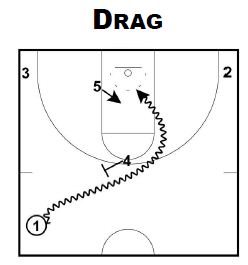
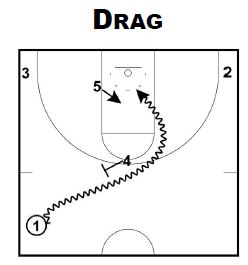
Types of on ball screens utilized by VCU

Diagrams created with FastDraw


AREAS OF EMPHASIS:

• SPACING
• TIMING
• SCREENING ANGLE (DOWN HILL)
• USE OF SCREEN
• SPRINTING TO SCREEN/ROLL/POP

TO MAKE BALLSCREENS TOUGHER TO DEFEND:

• CREATE MOVEMENT
• USE SCREENING ACTION FIRST

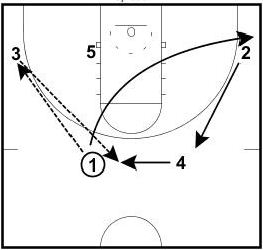
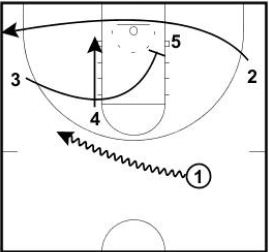
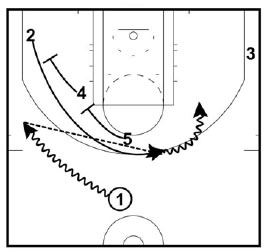
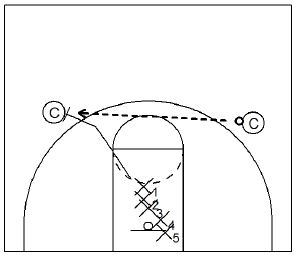
Spread (Frame 1)

1 passes to 3 and sprints to opposite coner.

3 passes back to 4.

2 cuts to lane line extended.


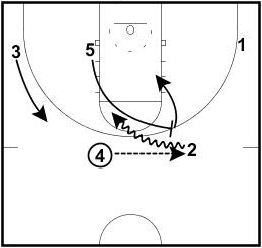
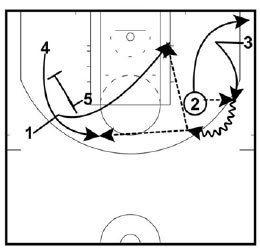
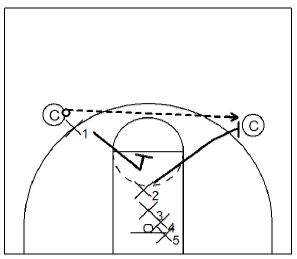
Spread (Frame 2)

4 passes to 2.

5 ball screens for 2, then rolls.

3 lifts up to wing.


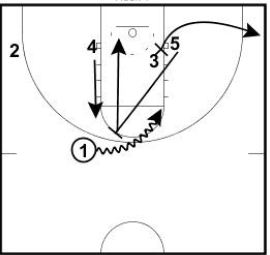
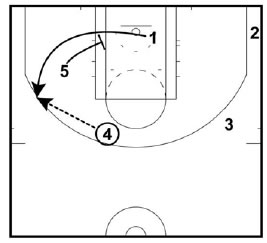
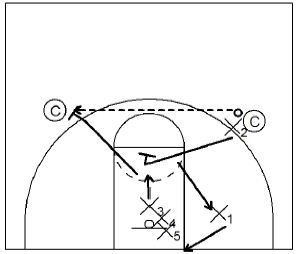
Hook (Frame 1)

4 cuts to the block.

3 cuts right off 1s butt and screens for 5.


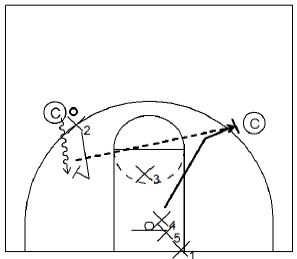
Hook (Frame 2)

5 cuts to ball screen for 1 then rolls.

4 zipper cuts up the lane.


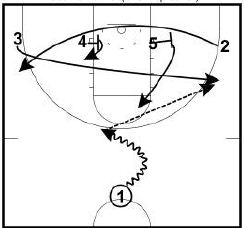
Baseline Runner Over (Frame 1)

1 points or yells name to determnine the runner.

2 is baseline runner off two screens.

3 goes over the top at the same time.

5 flashes to high post after 3 clears.

4 seals after screening.

1 hits 3 on wing.

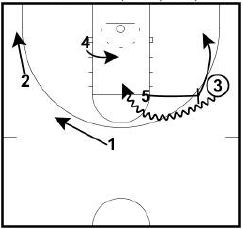
Baseline Runner Over (Frame 2)

5 sets wing ball screen for 3.

1 and 2 space on weak side.

3 penetrates to free throw line.

5 pops.

4 ducks in from weak side block.

Basketball Plays Oklahoma Lob

By Brian Williams on February 11, 2013

Coach Vonn Read has submitted several plays from his playbook series The Basketball Encyclopedia of Plays to the Coaching Toolbox. Vonn is currently serving as an assistant coach in the Women’s at Houston.

He has also served as an assistant coach in the WNBA with the Phoenix Mercury, Orlando Miracle, and San Antonio Silver Stars.

He was an advanced scout for the Orlando Magic as well as The Charlotte Sting.


Basketball Plays


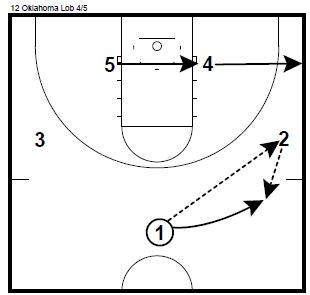
1 passes to 2 and gets a return pass from 2.

4 steps to the corner,

5 goes to the block.


Basketball Plays


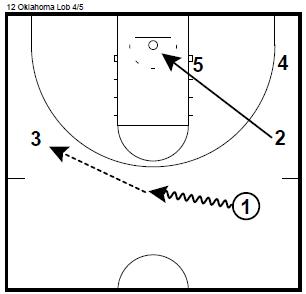
1 dribbles to make the pass to 3 on the wing.

2 cuts to the basket right below 5.


Basketball Plays


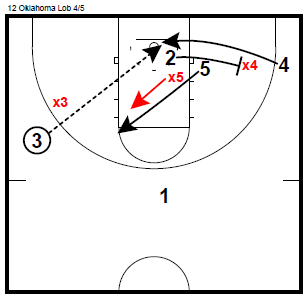
5 flashes hard to the elbow calling for the ball, forcing X5 to help.

2 sets the backscreen on X4.

4 cuts to the basket for the lob.


Coach Read has also put together The Basketball Encyclopedia of plays. You can check them out here: The Basketball Encyclopedia of Plays or read more about the books:

Any coach looking for the latest and innovative plays from the Professional, College, or High School levels can stop looking. With a compilation of over 7,700 different plays, you will never need to purchase another basketball playbook again. These playbooks can be used as a great reference tool for years to come. This 2 Volume Book includes plays from 19 different play categories, and they are the most extensive playbooks on the market.

The Basketball Encyclopedia of Plays (Platinum Series) contains over 7,700 Plays (Both Volumes combined) from the NBA, WNBA, USBL, and College levels from someone who has worked as an Advanced Scout or Coach on each level!!! This book has been intensely compiled over the last 21 years, with plays taken from a lot of NBA Coaches (past and present), WNBA coaches, and College coaches (Men’s and Women’s) from around the country.

Any coach that is serious about improving their knowledge of the game from an X and O standpoint will benefit tremendously from these books. These Books can be used to discover New Quick hitters, add a New Package to your playbook, or develop an entire Offensive System. There are a lot of new ideas and concepts in these books to study, and the Basketball Encyclopedia of Plays can be a great resource for coaches on all levels!!! This book is definitely for those X and O junkies who are always looking to improve as a Coach.

“THE GAME IS ALWAYS CHANGING? ARE YOU?” Vonn Read

Here is the link: The Basketball Encyclopedia of Plays

Basketball Plays Loop

By Brian Williams on February 7, 2013

This play was submitted by Seth Kravig.

At the time he submitted the play, Coach Kravig was the Assistant Men’s Basketball Coach at Trinidad State Junior College in Trinidad, Colorado.

Here is what Seth says about the play: “This play is an after the timeout (ATO) play that can be run with a number of options – it is a good counter to the loop action.

It can be an effective play when 4 is a good shooter and play maker and if 1 can be a post up threat.”


Basketball Plays

1 dribbles over to the left side of the floor as 2 loops off 4 and 5’s staggered screen for clear out to the top.

4 or 5 look to slip their screen if their man cheats to help 2’s man…


Basketball Plays

If 2 does not have an iso opportunity, he dribble handoffs to 3 on the wing and fills the strong side corner…

As this occurs, 1 slices off 5 to the block…5 then turns to pin down on 4 for jumper.


Basketball Plays

On 4’s catch, if he does not have a jump shot, 5 then turns to set a screen on 1 at the block.


Basketball Coaching Player Development

By Brian Williams on February 5, 2013

By Alan Stein, Stronger Team Blog (re-posted with permission)

Have you ever heard this quote, “Individuals get better in the off-season, teams get better during the season.”

While I appreciate the mindset behind this, that team development must be the #1 priority during the season, I feel this statement implies that individual player development isn’t important from November to March.

If that’s the case, I highly disagree. Individuals need to get better during the season as well. In fact, the most effective way to improve your team is to improve yourself!

Individual player development (which should include both athleticism & movement training as well as basketball skills & fundamentals) should be addressed and given priority at every practice. To what extent you should focus on these elements depends on the age & level of the player, the length of practice and the time during season (early pre-season vs. playoff time).

I know you can’t win if you don’t rebound. I realize that ‘defense wins championships.’ However, the name of the game is to put the ball in the bucket. So working on offensive moves and getting up quality reps of game shots from game spots at game speed is paramount to a team’s success.

Before he coached his first practice as the head coach of Butler, a colleague recommended Brad Stevens have a manager chart how many shots his best player took during the 2+ hour practice. Coach Stevens ran what he thought was an excellent practice – in depth teaching, sound team concepts, etc. After practice he found out his best player took less than 25 shots the entire practice, which Coach Stevens immediately recognized was unacceptable. From that day forward he has implemented quality shooting drills in every practice.

Former NFL coach Jon Gruden laughs when coaches say, “We need to get back to working on the fundamentals” after a tough loss. Get back to them? Why did you abandon them in the first place? That’s probably why you lost!

While the amount of time you spend will vary, I firmly believe every practice should have an individual player development component.

Here are 7 keys to effective player development:

  1. Build your game brick by brick. Every rep of every set of every practice is important. How you do anything is how you do everything. You build a house one brick at time. You build your game one drill at a time.
  2. Leave your comfort zone. Once a player has the movement, skill or footwork down, they need to push harder than game speed. The harder you practice, the easier things become during games.
  3. Be innovative. Casual spot shooting and stationary ball handling are more boring than yesterday’s newspaper. Plus one can argue how transferable those drills really are. Drills need to be innovative, yet purposeful. They need to be designed to improve game performance… not look cool for a YouTube video. Be innovative to improve effectiveness, not to look cool.
  4. Know the ‘why’. Every drill must have perceived relevance. That means the player clearly understands how this particular skill or drill will improve their game performance. Will dribbling 3 basketballs reduce turnovers when the lights come on and the cheerleaders start dancing on Friday nights? Doubtful. Therefore it has minimal perceived relevance.
  5. Use visualization. Great players like Kevin Durant and Chris Paul don’t just do a drill; they compete in that drill with the same focus and effort as if they were in the waning seconds of Game 7 of the NBA Finals. They imagine they are being guarded by an elite defender; not just ‘going around a cone.’
  6. Avoid fatigue and boredom. These are two of the biggest killers of player development. You can combat this by being in excellent basketball shape and using innovative, purposeful drills (#2 above). When your body gets tired, your mind quickly follows. No one can get better at a skill when his or her mind and body are exhausted.
  7. Do everything with precision. Details matter! Perfect form and footwork are imperative. If you want to build a beautiful brick house (#1), you have to lay every single brick with care and precision. Once you start sloppily laying bricks… the house suffers (both in appearance and structural integrity).

Also make sure you understand and remember that skill improvement is a process of 2’s:

It takes 2 minutes to learn a new move or new skill.

It takes 2 weeks to work on it daily until you develop confidence in it.

It takes 2 months of constant work to be competent enough to use it in a game.

I hope you find these suggestions helpful and I wish you the best the rest of this season.

Alan Stein

http://www.About.me/AlanStein

Basketball Drills Defensive Closeouts

By Brian Williams on February 4, 2013

This post shows a way to add some variety to practicing closeouts.

I received it as a part of the most recent University of Washington Women’s Basketball Coaching Newsletter written by Coach Mike Neighbors.

If you would like to receive Coach Neighbors’ newsletter, let me know and I will pass on your email address to him.


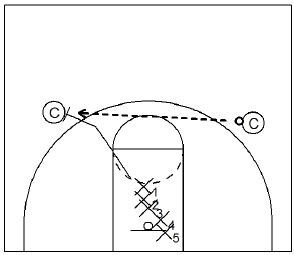
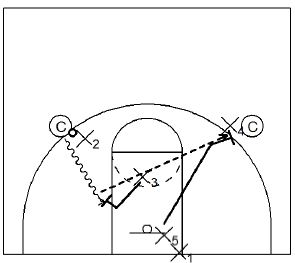
On the skip pass, the first defender in line will close out.


On the skip pass back to the original side, the next defender in line, X2, will close out.

On the skip, X1 will jump to help.


On the skip, the next defender in line, X3, will close out.

X1 steps off and to the end of the line.

X2 jumps to help.

The rotation continues from there.

After each player has gone a few times, add:
– drive and pull up for a dead call
– drive into the lane, helpside defender takes the charge


Coach drives the basketball with a defensive “dead” Call.


Drive to the lane, helpside defender takes the charge.

 
Coach skips the ball after the charge, next defender closes out.


  • « Go to Previous Page
  • Page 1
  • Interim pages omitted …
  • Page 240
  • Page 241
  • Page 242
  • Page 243
  • Page 244
  • Interim pages omitted …
  • Page 288
  • Go to Next Page »

Primary Sidebar

  • Twitter
  • Facebook
  • Linkedin
coachestoolbox
personaldevelopmenttoolbox
basketballplayerstoolbox
basketballtrainer
athleticperformancetoolbox
coachingbasketball

© Copyright 2026 Coaching Toolbox

Privacy Policy