• Skip to primary navigation
  • Skip to main content
  • Skip to primary sidebar

  • Basketball Plays
    • Ball Screen Sets
    • Horns Sets
    • Man to Man Post Up
    • Man to Man Isolations
    • Backdoor Plays
    • Man to Man 3 Point Shot Plays
    • 2-3 Zone Attack
    • Baseline Inbound Plays
    • Sideline Inbound Plays
    • Combination Defense Attack
  • Drills
    • Defensive Drills
    • Offensive Drills
    • Competitive Drills
    • Passing Drills
    • Rebounding Drills
    • Shooting and Scoring Drills
    • Toughness Drills
    • Transition & Conversion Drills
    • One on One Drills
  • Blueprint
  • Practice
  • Mental Toughness
  • Skill Development
  • Offense
  • Defense
  • Store

Basketball Coaching Combination Defenses

Basketball Coaching Combination Defenses

By Brian Williams on August 23, 2013

This article was written by Coach Will Rey

These are nice to have in your back pocket.

Why use one?

– Change tempo
– Dictates who takes the shots
– Uses zone principles
– Keeps the ball out of the hands of the opponent’s best player
– Offense often doesn’t know which offense to run

When to use?

– Can use the entire game or after timeouts
– To stop a run or to change momentum
– Use it until they score twice

Diamond and one
Advantages:

– Good when you are trying to take away one player
– Need to ask, “Do we want to take away their best player, shooter, or playmaker?”
– Most effective versus a perimeter player but will work versus a post player.

Defender is in total denial, he does not have to help. His only responsibility is to make sure his man has no catches.

He should force his man into the pack (the other 4 men are playing a zone) see the ball

Defender concepts

We have 4, they have 4. There should not be an open man.

X1 is at the top and covers everything from elbow to elbow
X4 and X3 are on the wings and cover from the elbow to the block
X5 stays on a straight line between the ball and the basket.

If the offense gets in a 1 guard front, line up your defense in a 1-3 with the 5 man staying in a straight line between the ball and the hoop.

If the offense is in a 2 guard front, the wing on that side will step up. Remember, we have 4 they have 4.

Pass coverage: On a pass to the wing and then a basket cut by the passer, X1 will take the cutter to the lane line and then X4 will absorb him.

If the pass goes from the wing to the corner, X5 can show but X4 should slide down to bump X5 back to his original position.

People in the diamond must know who the shooters are.

Remember we have 4 and they have 4. There should be no open cutters.

Diamond and one- Bump cutters

A counter often used for this defense is a lot of screening to free the man up for a shot.

To stop this, the guy covering the star player must stay right on the star’s butt so that they are almost 1 person.

The other 4 guys should bump the star player as he goes through.

Once the star gets under the basket, never give him a choice of direction. Don’t play on top, take away one of his options. Send him to a side where the wing defender can extend the defense a little more.

Bump cutter or extend on any screen. We want to force an outside shot.

A defender in this defense should not have to go from on the ball to on the ball.

Yell “shot” every time a shot goes up. We need to do this so we can find someone to block out.

Don’t want the zone to get stretched out too far so that offense can get it into the high post.

X1 should cover top of the key to the free throw line. Once the ball is passed to the wing,
X1 should drop to take away the high post.

Can’t let the pass be thrown behind X1 to the heart of the zone.

If a pass is thrown to the player we are trying to stop, force him into the pack. We can’t let the star get easy catches.

Triangle and Two– Good if a team has 2 good players and 3 average to below average players.

Advantages:

– Flexible because you can take 2 players out of the offense
– Forces non-scorers into scoring roles. We will play this against the 2 best scorers or versus the point guard and the scorer.
– Can upset the offense’s chemistry

We are completely denying 2 players
The other 3 defenders are in a triangle.

The 2 players being denied are not allowed to catch the ball. They are in full denial all over the floor.

If these 2 guys cross screen for each other, switch.

Scouting is essential to this. Make the other 3 beat you. Better still… no open looks. Remember, we have 3 and they have 3.

Put your most athletic person at the top of the triangle. He should also be crafty. He should never have 2 feet on the 3-point line. He covers elbow to elbow.

X2 and X3 have their respective wing areas.

If they bring someone else up such as O2 or O3, we’ll bring someone else up too.

Make them take a contested jump shot. In theory their guy is at best their 3rd best shooter so we are fine with this.

We can’t get beat off the dribble

Once the ball is passed, we jump to a help and support position

Talk, talk, talk. Tell each other where their help is.

No shots for 2 best players. No lay ups

If they overload this and put the 2 guarded guys away from the triangle, fine. Move the triangle to the side.

Don’t deny pass to the corner. We want them to shoot contested jump shots

No lay ups or any baskets close to the hoop. We are making them shoot contested jump shots

Post defense concepts– on a pass to the post X1 will trap down with one of the wing defenders to force the ball back out. If they want to go inside out and shoot the jumper, that is fine.

Trap from the top-down

Again, the guarded guys can’t catch the ball

If he does catch it in a scoring position, we must run and trap with the top of the triangle.

If he throws it out, we close out to force the jump shot.

If he isn’t in a scoring position, X1 should stay back in the triangle. We will never leave the basket unattended.

Ball screens

If an unguarded player screens for a guarded player, we trap it or string it out and let him fight over it.

If 2 guarded guys screen for each other, we switch it.

If they come into a scoring area, the point guy on the triangle helps or traps.

If a shot is taken they must yell “Shot!” Penalize players if they don’t do it in practice

Why is it so imperative to do this with the box and one or the triangle and 2? Because the guys in full denial may not see the shot going up.

We immediately go to 5 guys boxing out. It should be a good defense to rebound out of.
Why? Because we are always near shooters. The triangle guys never have 2 feet outside the 3-point line so we can have them close to the hoop.

The triangle men must constantly talk. They must appear bigger than they are. Hands up in the triangle, active hands.

2 guys must be in full denial and see the ball. If they cross screen or screen switch. Force them into the triangle. If we get lost, go to the rim and work your way out.

They may have a 3rd player who is a good shooter. We will have to keep track of him. Talk, talk, talk!

4 on 4 Diamond and 1 drill
4 offense guard 4 defense. Don’t let the defense get stretched out too far.

Stay big and talk. Only guard to the 3-point line. Don’t get stretched out too far.

When the ball is skipped to the other side of the floor, the closest man takes it.

We do not want any of our defenders in the diamond to have both feet outside the lane.

Once the shot goes up, the 4 have man to man responsibilities and must block out.

1 on 1 Diamond and one drill
Stop the offensive player from catching the ball. Can work in a shot to get them used to boxing out.

Force the offense back into the pack. We want to force back door passes and back door cuts.

3 on 3 Triangle and 2 Drill

Offense can do whatever they want. When ball goes into the post, the top of the triangle comes down and traps and then rotates out on the pass back out.

When the shot goes up, yell “Shot!” and box out.

If they screen on the ball, unguarded for unguarded, you switch and go on the inside.

2 on 2 Triangle and 2 Drill

Now work on the guarded players. Full denial

If they screen for each other, switch.

Then put someone with a blocking dummy. Do not go over the top, trail and closeout.

Then add a 2nd screener. Try to get 35 seconds without a touch. Only backdoor passes are o.k. Coach will just fake that pass and the drill will continue.

Will has more than 30 years of basketball coaching experience at college and high school level. He has produced 6 coaching DVDs and is a frequent clinic lecturer. He is currently the Head Coach at Northridge Prep in Chicago. Coach Rey has been a Division 1 Head Coach at Loyola and has served as an assistant at Evansville and Wright State. In 2005 he was inducted into the Five-star Basketball Hall of Fame for his work over 20 years as a resident coach, lecturer, and administrator at Five-Star camps.
Mental Toughness

By Brian Williams on August 22, 2013

A Video from PGC Basketball on Mental Toughness that apply to all players–not just guards.

I hope you find some examples that you can use next time you talk to your players about mental toughness or that you can just show them the videos to give them another voice.

This is a You Tube video, so please make sure that you are on a server that allows You Tube access.


Make sure your speakers are on and click the play arrow to see the videos.

Mental Toughness with Dena Evans

Coach Your Coaches

By Brian Williams on August 20, 2013

These notes came from the archives of the Xavier Men’s newsletter. They Came from Pete Carroll’s book “Win Forever.” If you are interested in seeing the archives or in subscrbing to their newsletter, click on this link:

Xavier Newsletter

Below are notes from Pete Carroll’s “Win Forever”. This book was one of six selected for our staff fall reading project. We cannot stress enough how amazing of a book this is from a coaching point of view.

As you prepare for your upcoming season, this book will provide some amazing ideas for every area of your program.

The following notes come from the “Coach Your Coaches” section.

• “All the principles we use with players apply to our coaches and other staff members as well.

• “Our success depends on ensuring that everyone is completely engaged, commited, and in a relentless persuit of a competitive edge. A big part of my job is creating an environment where this will happen.”

• “If I want (assistants) to coach to their full potential. I have to not only allow them to be authentically themselves, but insist upon it.”

• It hurts the whole organization when assistants are: “Coaching outside their personalities. It will weaken them in the long run.”

The Following notes came from the “Coach Your Coaches” section.

• Coaches need to: “Teach from inside themselves, because that was what would make them the most authentic and effective coach possible.

• Assistants need to: “Develop their own personal coaching style.”

• “A diversity of styles and approaches makes the whole team stronger.”

• When making a hire: “The first thing I look at is a person’s competiveness and work ethic.”

• “Hire young and promote from within

• Look for someone that is: “Open-minded and full of competitive fire, even if it comes at the expense of a certain amount of experience.”

• “The most powerful weapon in the Win Forever philosophy is the drive to contstanty be looking for ways to improve.’

• “When everyone gets to contribute his maximum effort it is transformative for the whole organization.”

• “You want to compete with people you can trust to lead.”

• “Our efforts to win are based on our ability to control every aspect of our team’s environment, from energy to focus to comaradery. When the team’s natural chemistry takes the form we want, that’s an added advantage we’re happy to have, but we cannot afford to hang our success on the hope that this will happen.”

• “A player, however talented, may have a bad day. Leadership the team can depend on must be constant and stable to be most effective. The only leadership I can rely on is that which comes from my coaching staff. I have chosen to rely on my staff first and foremost.”

• “We’re only going to Win Forever if we can build a staff of people who are constantly competing to reach their full potential.”

• “A Win Forever organization is a very tight community.”

NO WHINING, NO COMPLAINING, NO EXCUSES

• This rule surrounds team language, or as Carroll calls it, ‘self talk”.

You can read a sample from the book on Amazon by clicking on the image of the cover at the left.

• A negative mentality creates negative thoughts.

• A positive approach creates the power of possibilities.

• “If a player had a direct problem with me or how I was coaching, I not only wanted to hear about it, I felt I needed to.”

• if a player had a problem with playing time, I wanted him to talk to his coaches before he complained to his teammates.”

• By encouraging our players to communicate in such ways, we developed a positive mentality for the entire team.”

Basketball Plays Purdue Triple Stagger

By Brian Williams on August 19, 2013

This set is run by Purdue with 3-6 seconds on the clock.

The diagrams are from the August 2011 Weber State newsletter that is put out by assistant coach Phil Beckner.

I have assembled an book with 130 situations for coaches to prepare their team for.

Here is a link to the page with samples from the book.

Even if you are not interested in making a purchase, make sure to take a look at the samples.

Winning Special Situations


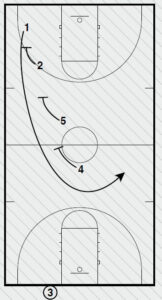
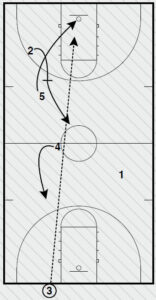
The triple stagger is set for #1.

After #1 curls, 2 backscreens for 5 in a screen the screener action and 5 goes straight to the rim.

I have assembled an book with 130 situations for coaches to prepare their team for.

Here is a link to the page with samples from the book.

Even if you are not interested in making a purchase, make sure to take a look at the samples.

Winning Special Situations

[adinserter name=”Basketball in article display ad 2 rebecca”]

Basketball Drills Navy Transition

By Brian Williams on August 16, 2013

In order to help clarify our terminology and communication, I refer to going from offense to defense as conversion and from defense to offense as transition.

I believe that every day as a part of your defensive work, it is essential to work on some type of conversion defense.

In my mind being good defensively starts with being very good at converting to defense in order to force your opponents to play against your half court 5 on 5 full strength defense.

A big part of being strong in the conversion aspect of defense starts with not turning the ball over and taking good shots. That allows you to apply your defensive conversion system.

This link is to a post where I have shared some ideas on defensive conversion: 12 phases of a possession
The video is a YouTube video, so please make sure that you are on a server that allows you to view YouTube videos.

You might already use something similar to this drill. I like three things about the way the drill is set up in the video.

1) Having a few players near half-court line to start the drill

2) Throwing a loose ball with the team that gets it to get possession

3) Coming back so that both teams get to convert each way.

Make sure your sound is on as you watch.

Click the arrow to play the video.

There is nothing to purchase to see the drill

If you are interested in seeing more information about this DVD, or any other DVD in the new and improved Coaching Toolbox shop, click here: Drills for Implementing Fast-Paced Transition Offense and Defense

Basketball Drills Second Defender Scoring

By Brian Williams on August 15, 2013

This drill was posted by Coach Randy Brown in Fast Model’s drills and play library.

Randy said this about the drill:

This drill is a turnover killer!

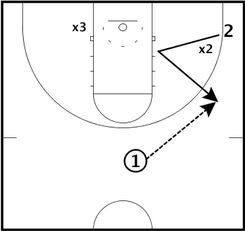
The drill presents a combination of

1. Getting open and catching.

2. facing the basket while ripping the ball through and jab stepping.

3. Driving around defender.

4. Making decision to shoot or drive by second defender, and finishing the play with a basket.

It also creates toughness and ball security.

You can also add a player at the basket with a pad to create contact on the finish.

Basketball Drills


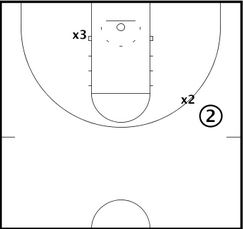
Drill starts with ball up top. Wing uses footwork to get open on wing.


Basketball Drills


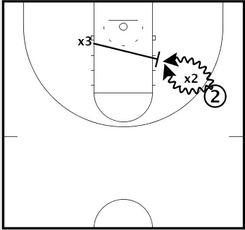
Rip ball to create space and use jab/crossover jab


Basketball Drills


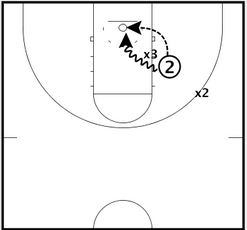
Drive ball right of left around defender directly at the basket.

Defender sprints from left block and meets ball handler outside right lane line.


Two options: drive by second defender or shoot shot over second defender to end drill


Randy Brown continues his passion for the game of basketball well beyond his 30+ year coaching career. An 18 year NCAA Division I head and assistant coach he knows the difficulties of coaching and assists coaches of all levels around the world to help improve our ability to teach the game of basketball the right way.

He also tweets a lot of his content. You can follow him here: @CoachRB

  • « Go to Previous Page
  • Page 1
  • Interim pages omitted …
  • Page 219
  • Page 220
  • Page 221
  • Page 222
  • Page 223
  • Interim pages omitted …
  • Page 288
  • Go to Next Page »

Primary Sidebar

  • Twitter
  • Facebook
  • Linkedin
coachestoolbox
personaldevelopmenttoolbox
basketballplayerstoolbox
basketballtrainer
athleticperformancetoolbox
coachingbasketball

© Copyright 2026 Coaching Toolbox

Privacy Policy