• Skip to primary navigation
  • Skip to main content
  • Skip to primary sidebar

  • Basketball Plays
    • Ball Screen Sets
    • Horns Sets
    • Man to Man Post Up
    • Man to Man Isolations
    • Backdoor Plays
    • Man to Man 3 Point Shot Plays
    • 2-3 Zone Attack
    • Baseline Inbound Plays
    • Sideline Inbound Plays
    • Combination Defense Attack
  • Drills
    • Defensive Drills
    • Offensive Drills
    • Competitive Drills
    • Passing Drills
    • Rebounding Drills
    • Shooting and Scoring Drills
    • Toughness Drills
    • Transition & Conversion Drills
    • One on One Drills
  • Blueprint
  • Practice
  • Mental Toughness
  • Skill Development
  • Offense
  • Defense
  • Store

Coaching Basketball Season Ending Disappointment

Coaching Basketball Season Ending Disappointment

By Brian Williams on March 11, 2014

This article was sent to me by Mano Watsa, PGC Basketball President along with his description of how it came about.

Below is a correspondence between PGC owner Dena Evans and a long-time PGC grad. I was so moved by Dena’s response to this player, which the player’s father shared with me, I decided to ask Dena, and this athlete, for permission to share this correspondence publicly. If you know the heart-ache and disappointment of not reaching your team or individual goals, this is a must-read.

Credit: Nick Krug | kusports.com

Dear Coach Dena,

I’m writing to share with you some feelings I’ve been having since my season came to an end. I am hoping that you will have some insights or thoughts to pass along to me.

First, let me just give you some facts about my season so you get a general overview. We finished 18-6 in the regular season. We won our first game and lost in the semi-finals to the team who won comfortably in the finals. Our game against them was a close game.

What I’m basically feeling is a strong sense of disappointment and sadness.

Last year, I was upset that we had lost (in the first round of the playoffs), but I was able to look back on the season and I was happy about it. But this year it’s a different story. I’ve been left with that feeling of wanting more, thinking about what could have happened, or how it could have been different had we won that game.

Perhaps part of it is knowing that I’ll never get the chance to play competitive basketball with some of my teammates ever again. Perhaps part of it is just missing spending time with the guys in the locker room, or out at team dinner. Either way, it’s been a tough pill to swallow for me. This year it just felt as if the dream and the goal of winning the State Championship had kind of slipped through our hands, and it was really just two games away…and the fact that I think this was our best shot, is maybe irrational, but something that makes it harder.

It’s tough to really get it all out there on the page, but that’s about the best I can do as far as explaining my thoughts for now. Any words would be greatly appreciated.

–Josh

Hey Josh,

First off, congrats on a GREAT season. I say “great” not because of your record or how far you got (or didn’t get) in the playoffs. The ‘congrats’ is because (based on your email and on what I know about who you are) you gave this basketball season, your team, your coaches, your school, and yourself the very best you had to give. I realize that may sound hollow to you in this moment, but one day, when your career is over, I promise you that this will be the one thing you will be most proud of, and it’s what will give you the most peace about your career, no matter how many championships you win or don’t win.

But for now, I can totally understand and relate to everything you have said. I’ve been there. More than once…

My senior year of high school, we lost in the game to go to “State” (a big deal in Texas because only 4 teams go). My goal since 6th grade was to win a state championship. I was devastated.

One of the main reasons I went to the University of Virginia was to win a national championship. My sophomore year of college, after being ranked #1 most of the season, we lost to Tennessee in overtime of the national championship game. Devastated again.

My junior year, again after being ranked #1 all season, we lost in DOUBLE OT of the national semi-finals to Stanford. Once again…devastated.

My senior year, after all the best players on our team had graduated and I had become the unquestioned team leader, we played as the underdog all year. We made it all the way to the Elite 8 and lost to Ohio State in the game to go back to the Final Four when my coach called time out just as I was releasing the game-winning 3-pointer. I hit nothing but net as the buzzer sounded, but it was waived off because the ref said my coach called the time out with .7 seconds on the clock. That was the way my college career ended. Devastated times a thousand.

Unless you’re the team that wins the last game of the season, I have never been able to figure out how to feel anything *but* sadness and disappointment at the end of a season, at least for a while.

I think you just need to allow yourself time to grieve. The word “grieve” may sound crazy because I know it’s not like anybody died or there was any great “tragedy.” But you *have* suffered a profound loss. Your season (which you cared deeply about) is over; you will never play on this particular team (which you gave so much of yourself to for so many months) again; and you will never be high school teammates with some of those guys again (and those kinds of bonds are rare and special and hard to replicate in the “real world”).

People who have never experienced those kinds of losses can never understand just how much all of that hurts. You gave yourself completely to something, and it didn’t turn out like you wanted. And to make it even worse, now it’s gone. Over. Done. That’s hard and it hurts.

But (and this is the part you probably don’t want to hear, but it’s true so I’ll say it anyway…) that’s how life works. Everything passes. You’ll eventually lose everything—your parents, your friends, your health, your pets, your youth, and, inevitably, your life. It’s all gonna pass away, just like this season, and this team.

Which, to me, is all the more reason to give those things you love and care about everything you’ve got. It all goes by so fast, and the ONLY thing you’re guaranteed is that it WILL, in fact, go by.

This can all be pretty depressing UNLESS you just accept it as reality (because it is), and THEN you can be freed up to focus all your energy and attention on giving every single moment of the rest of your career the very best you’ve got….which brings me back to my very first point in this email.

As the seasons go by, and as you experience the feelings of sadness and disappointment that you’re experiencing now, and as you begin to get a clearer and clearer sense of the finite-ness (not sure if that’s a word) of your career, your sense of urgency will grow exponentially. That’s why seniors often play with such care and passion. It’s why aging superstars are willing to take less money and less playing time to get on a team that has a chance to win a championship. You begin to realize what matters and what doesn’t, and you begin to sense how precious an opportunity it is to get to be an athlete who’s playing for something that matters with people who matter to you.

So my point is…everything you’re feeling right now is appropriate and even good. Don’t resist it. Be sad. Be disappointed…Until you’re not anymore (and it will go away, I promise). And then, you will do what every great athlete and every great hero does…you will pick yourself up, dust yourself off, dream your next dream, and you’ll go at it again…even though you know the risk and how much it will hurt when it’s over. But really, that’s the only way to fly in my opinion. Way more fun, exciting, meaningful, and fulfilling than living a life where you play small and never put your heart on the line for anything that matters to you.

And one last thing…while winning a championship *would* feel really sweet and could be incredibly rewarding, the truth is that even THAT feeling will pass after a few weeks or even days. And then you would STILL have to feel the sadness and disappointment of not playing with some of your teammates again and of not ever having this particular team together again. So don’t fall into the trap of believing that winning a championship will make you not have to feel the pain of the ending of something you love. Granted, it would make it a lot easier and is the preferable way to end a season. But what’s *more* important is always that you gave your best in every moment, regardless of whether or not you were fortunate enough to be on the team that won the last game of the season.

Those are my quick thoughts. I’m really glad you decided to write me. You’re doing big things, even though you may be feeling like you came up short this season. These are important conversations and important life moments, and it’s an honor to get to share them with you.

Stay in touch,

–Dena

PGC Basketball Camp locations and enrollment are now open for the summer of 2015.

IS PGC FOR YOUR PLAYERS?

PGC offers intense 5-day, 4-night courses for junior high, high school, and college players.

Not just for point guards, PGC courses teach players of all positions to play smart basketball, to be playmakers, and to be coaches on the court.

Click here for information on this year’s camps.

PGC IS FOR COACHES TOO…

Over 500 coaches of all levels attend PGC each summer, as each course serves as an unparalleled, information-packed coaches clinic.
Basketball Plays Hit and Turn

By Brian Williams on March 10, 2014

This play is from the March Arizona Basketball Coaching Newsletter.

If you are interested in being added to their mailing list, email me your:

1) Name
2) email address
3) School or Team
4) Coaching Position
and I will forward it to their coaches.


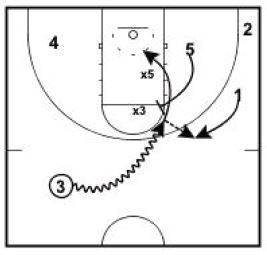
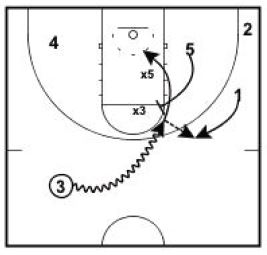
Basketball Plays Hit and Turn

basketball-plays-hit-and-turn1

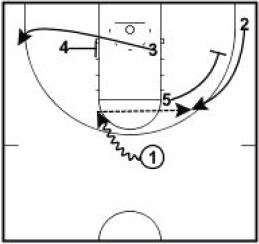
3 dribbles towards ball screen from 5.

Before using the ball screen 3 dribble hands off to 1

3 then continues off screen for 5


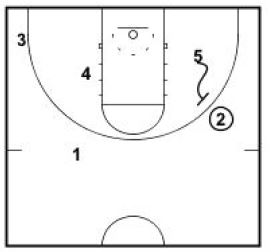
basketball-plays-hit-and-turn2

5 turns and screens for 2.

4 screens for 3.

1 passes to 2.


basketball-plays-hit-and-turn3


5 ballscreens for 2


Coaching Basketball Post-Season Evaluation

By Brian Williams on March 7, 2014

This article was written and submitted by retired High School Coach Dave Millhollin. Coach Millhollin is known throughout the Sacramento area for his Boys Varsity teams’ fundamental soundness, discipline, unselfishness, team defense and overachievement. Dave Coached for 27 seasons and compiled 391 wins. I have included more information about his coaching career at the end of the article.

If you would like to contact Coach Millhollin, email me and I will put you in touch with him.

I am always looking for good information to share. If you have an article that you would like to have posted on the Coaching Toolbox, feel free to contact me.

After Season Observations and Upcoming Season Objectives

At the completion of each season, successful coaches go through a brief period of decompression and relaxation. This is followed by very important time of reflection and evaluation of how the season went.

During the reflection and evaluation period they take a look at the things they accomplished and the areas where their teams fell short. This is a very important process and the really good coaches take a close look at what went into both their successes and failures.

Understanding what goes into failure and what goes into success is critical for future success. Knowing this, they make a list of things to continue doing and things to avoid doing in the future.

The next step successful coaches do is to identify the things they want to accomplish for the next upcoming season and add to the list things they need to start doing.

They end up with four lists:

1. What they want to accomplish for the next season (their goals)
2. What they need to stop doing
3. What they need to continue doing (with any necessary adjustments)
4. What they need to start doing that they have not done yet.

At this point in the process, the principle is quite simple; Prepare in such a manner as to avoid the things that go into failure and work hard on getting good at doing the things that bring about success.

Some coaches take this principle even further – to the point of making sure that they can defend each and every one of their activities and practices against the list of things they want to accomplish. They want everything they do to be predicated on achieving their goals in order for their team and program to become what they want it to be.

These principles can be applied to individual players, coaches and to the collective group (team) as well. They are life skills that people can employ in their personal, as well as professional lives in both individual and group contexts.

Copyright Dave Millhollin

I posted a similar article to this one about daily improvement written by University of Washington women’s coach Mike Neighbors. It is a really good read as well. Here is the link: Stoplight Theory of Improvement

About the author of this article, Coach Dave Millhollin In fourteen years at Ponderosa High School, Coach Dave’s teams won 260 games (.665). From 2000 through 2009 Ponderosa won 207 games over a ten year stretch which included four SVC Conference Championships and two CIF Section final four appearances. Over his 27 year Boys Varsity Coaching career, Coach Dave posted 391 wins, produced 13 college basketball players and was named SVC Coach of the Year four times. At Ponderosa, Coach Dave’s teams were #1 in California in team defense five times and in 2008 Ponderosa was the top defensive team in the Nation among shot clock states. Over Coach Millhollin’s last five seasons (2005-6 through 2009-2010; 136 games) Ponderosa averaged a composite 50% total field goal percentage, 58% two point field goal percentage and 32% three point field goal percentage. Since retiring from High School coaching in 2010, Coach Dave has been actively involved in coaching Jr High level School and AAU teams as well as and running instructional basketball clinics from the primary grades through the College level.

4 Stephen Curry Basketball Workout Drills

By Brian Williams on March 6, 2014

These 4 basketball skill development drills came from the Stephen Curry Skills Academy and are a part of Alan Stein’s 12 Volume Basketball Coaching Nuggets.

Here are two other links to previous posts of some workout drills from Stephen Curry:

5 Stephen Curry Workout Drills

Stephen Curry Basketball Shooting Drills


[thrive_leads id=’26169′]

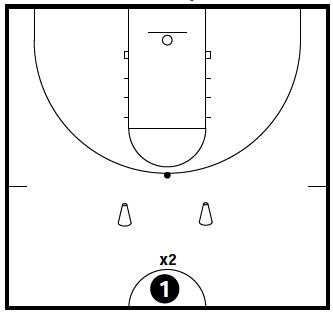
Separation 1 on 1 Drill

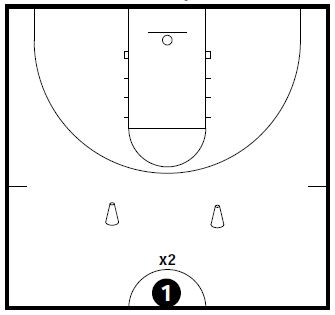
basketball-workouts-curry1

1 on 1 Live: Check the ball at half court. Player will have 3 to 4 dribbles to score.

Limited to one shot and you must stay within the cones.

Offense stays if they score.


Separation Progression Series

basketball-workouts-curry2

Two cones on each side of the basket.

Players will work on their last two steps, making sure they are long and low and that their finishes are in front of their body and underhand (pin and extend).

After every player finishes on each side, the coach will gradually move the cones back until we reach the NBA 3pt arc.
 

Power Dribble 1 on 1

basketball-workouts-curry3

Starting at midcourt, player 1 will take a power dribble stance with his toes pointing to the sideline.

Player 2 will provide intense defensive pressure with his forearm on the Player 1’s inside shoulder.

On “Go” Player 1 must create space and work his way to the bell at the top of the key without going outside the cones.

Once the bell is reached, it’s live 1 on 1 limited to one shot. If Player 1 goes outside the cones it’s a turnover.

Offensive player stays on if they score. Be aware of 5 second violation.

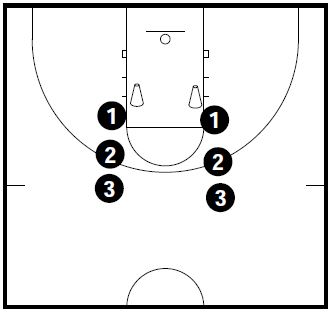
One Bounce Drill

basketball-workouts-curry4

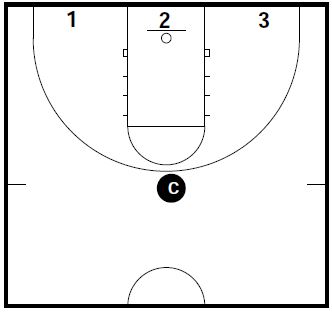
3 Players on the baseline going at same time. Coach at top of key.

If coach calls your name, then pass him the ball.

Coach then tosses the ball to a random location.

Player must catch on the first bounce, square/have “perfect feet” and shoot. Go for two minutes. Count makes! Compete!

Coaching Basketball Screening Your Own Defender

By Brian Williams on March 5, 2014

This article is from retired D1 Assistant Randy Brown.

Here are links to 2 other resources for playing against switching defenses. Both were written by D1 Assistant Coaches:

5 Strategies Against Switching Man to Man Defense

Practicing Against Switching Defenses

Diagrams created with FastDraw

Have switching defenses ever defeated you? The art of screening your own man to get a teammate open is rarely seen. But, it is a time tested strategy to counteract perimeter switching.

Take a look at this simple 3 on 3 drill that teaches the screener how to adjust the screening angle to actually screen his own man.

basketball-offense-screen-own-defender1

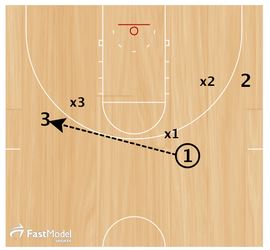
Starting Positions.

1 passes to 3 and screens for 2. Defense switches and X1now has 2 and X2 has 1.

The problem is that X1 and jump switch and deny the pass to 2, stalling the drill.


basketball-offense-screen-own-defender2


In the same starting positions, 1 will again pass to 3 and begin screening action towards 2 on the wing.


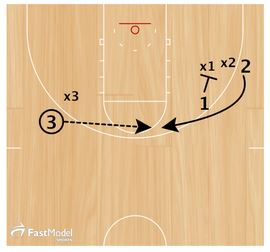
basketball-offense-screen-own-defender3

Just before 1 sets his down screen on X2, he stops and gets screening angle on his own man, X1.


basketball-offense-screen-own-defender4

2 cuts off 1’s screen (on X1) and cuts to the open spot on top of the floor.

2’s defender, X2, has no one to guard now. X1 and X2 are BOTH guarding 1.

This is a proven strategy against switch and junk defenses and is rarely defended properly by the defense

Basketball Plays 1-3-1 Zone Attack

By Brian Williams on March 3, 2014

These ideas for attacking a 1-3-1- zone are from an old Xavier Men’s Basketball Newsletter.

If you are interested in subscribing to their newsletter, you can do so at this link: Xavier Newsletter

10 Rules–Attacking the 1-3-1

  1. Push the basketball (take advantage — don’t let the zone set up)
  2. Take the ball up against the defense
  3. Ball reversal (get the zone to shift)
  4. Get the ball Inside
  5. – Every 3-4 passes. ball must get into the post
    – Inside out pass
    – In and away pass

  6. Attack the gaps
  7. Use skip passes-Use the whole court and make defense turn their head
  8. Get overloads
  9. Use screening offenses
  10. – Inside screening
    – Little on big

  11. Big guys • use short corners & post (spread the offense)
  12. 10. Use mis-direction passes

Diagrams created with FastDraw

1-3-1 Zone Attack

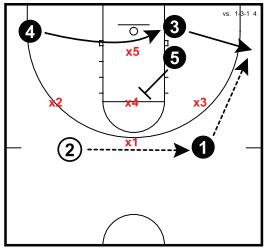
Option 1 (Look for lob) and Option 2

basketball-plays-1-3-11

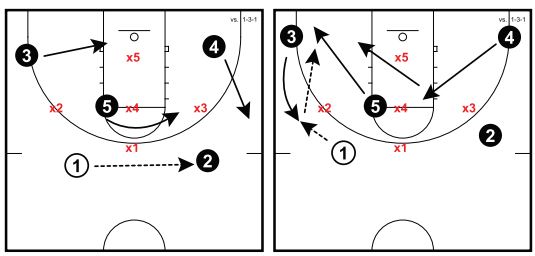
Option 3 and Option 4

basketball-plays-1-3-12

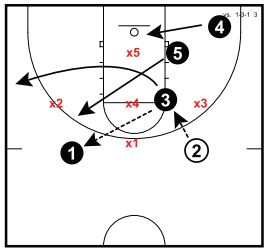
Option 5

basketball-plays-1-3-1-attack5


Quick Hitter

basketball-plays-1-3-1-attack6


  • « Go to Previous Page
  • Page 1
  • Interim pages omitted …
  • Page 198
  • Page 199
  • Page 200
  • Page 201
  • Page 202
  • Interim pages omitted …
  • Page 288
  • Go to Next Page »

Primary Sidebar

  • Twitter
  • Facebook
  • Linkedin
coachestoolbox
personaldevelopmenttoolbox
basketballplayerstoolbox
basketballtrainer
athleticperformancetoolbox
coachingbasketball

© Copyright 2026 Coaching Toolbox

Privacy Policy