• Skip to primary navigation
  • Skip to main content
  • Skip to primary sidebar

  • Basketball Plays
    • Ball Screen Sets
    • Horns Sets
    • Man to Man Post Up
    • Man to Man Isolations
    • Backdoor Plays
    • Man to Man 3 Point Shot Plays
    • 2-3 Zone Attack
    • Baseline Inbound Plays
    • Sideline Inbound Plays
    • Combination Defense Attack
  • Drills
    • Defensive Drills
    • Offensive Drills
    • Competitive Drills
    • Passing Drills
    • Rebounding Drills
    • Shooting and Scoring Drills
    • Toughness Drills
    • Transition & Conversion Drills
    • One on One Drills
  • Blueprint
  • Practice
  • Mental Toughness
  • Skill Development
  • Offense
  • Defense
  • Store

Basketball Plays EOG Triangle Under Out

Basketball Plays EOG Triangle Under Out

By Brian Williams on May 5, 2014

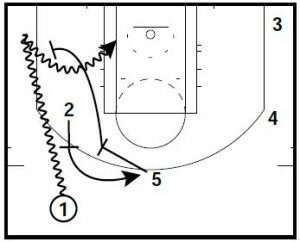
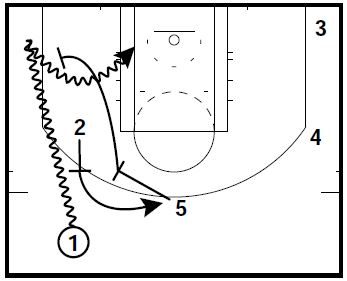
This play is a short seconds or end of game underneath inbounds play to run against man to man defense.

Syracuse Women’s Associate Head Coach Vonn Read has submitted several plays from his playbook series The Basketball Encyclopedia of Plays to the Coaching Toolbox.

Coach Read has also served as an assistant coach in the WNBA with the Phoenix Mercury, Orlando Miracle, and San Antonio Silver Stars. He was an advanced scout for the Orlando Magic as well as The Charlotte Sting.
 

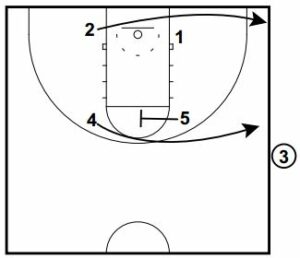
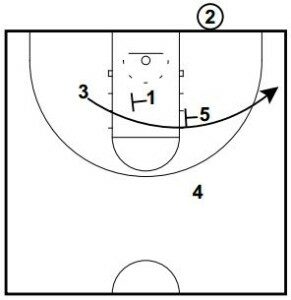
basketball-plays-triangle-under-out


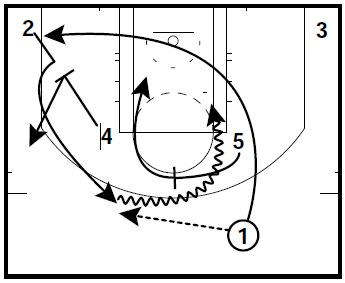
The 3 player will come off the stagger double screen set by the 1 player and the 5 player.


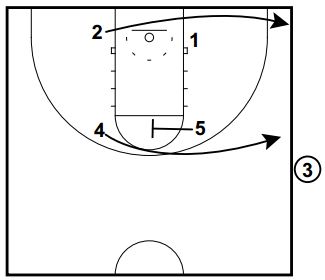
basketball-plays-triangle-under-out2


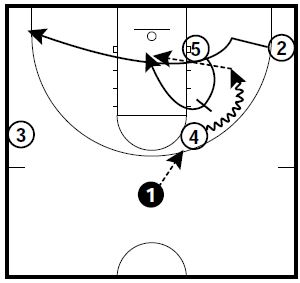
The 1 player will peel back to the ball to set a backscreen for the 5 player for the lob.

Coach Read has also put together The Basketball Encyclopedia of plays. You can check them out here: The Basketball Encyclopedia of Plays or read more about the books:

Any coach looking for the latest and innovative plays from the Professional, College, or High School levels can stop looking. With a compilation of over 7,700 different plays, you will never need to purchase another basketball playbook again. These playbooks can be used as a great reference tool for years to come. This 2 Volume Book includes plays from 19 different play categories, and they are the most extensive playbooks on the market.

The Basketball Encyclopedia of Plays (Platinum Series) contains over 7,700 Plays (Both Volumes combined) from the NBA, WNBA, USBL, and College levels from someone who has worked as an Advanced Scout or Coach on each level!!! This book has been intensely compiled over the last 21 years, with plays taken from a lot of NBA Coaches (past and present), WNBA coaches, and College coaches (Men’s and Women’s) from around the country.

Any coach that is serious about improving their knowledge of the game from an X and O standpoint will benefit tremendously from these books. These Books can be used to discover New Quick hitters, add a New Package to your playbook, or develop an entire Offensive System. There are a lot of new ideas and concepts in these books to study, and the Basketball Encyclopedia of Plays can be a great resource for coaches on all levels!!! This book is definitely for those X and O junkies who are always looking to improve as a Coach.

“THE GAME IS ALWAYS CHANGING? ARE YOU?” Vonn Read

Here is the link: The Basketball Encyclopedia of Plays
Basketball Plays from the Spurs and Heat

By Brian Williams on May 2, 2014

These two man to man sets from the Spurs and two secondary break options from the Heat are draw from Coach Scott Peterman’s Spurs and Heat Playbook compilations.

The plays are from the Basketball HoopScoop and Coaching Toolbox 3 eBook bundle which includes:

1) San Antonio Spurs Playbook
2) Miami Heat Plabook
3) Coaching Toolbox’s 130 Ways to Get a Lot More Accomplished in Practice

You can find out more about the eBook bundle at this link:

Heat & Spurs Playbooks with 130 Ways to Improve Your Practices

If you have any questions about the Playbooks, please feel free to email me or call/text me at (317) 721-1527.

Diagrams created with FastDraw

Heat Pistol 1 Secondary Break

basketball-plays-pistol-secondary-break

2 sets a flat screen for 1.

1 dribbles to the left corner.

5 sets a backscreen for 2.

2 flares to the top of the key.

5 sets a ballscreen on 1.

1 attacks the basket.

Heat Single Thumb Down Secondary Break

basketball-plays-single-thumb-down

4 sets a downscreen for 2 and then pops out to the left wing.

2 cuts to the top of the key.

1 passes to 2 and cuts to the left corner.

5 sets a ballscreen on 2 and rolls to the basket.

2 attacks the basket.

Spurs 1 Tap Head X

basketball-plays-spurs-tap-x

1 passes to 4.

2 rubs off 5 to the left side corner.

5 sets a ballscreen for 4 and rolls to the basket.

4 comes off the ballscreen looking to score or to 5.


Spurs 240

basketball-plays-spurs-240

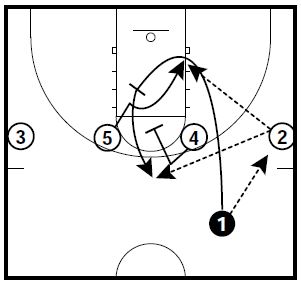
1 passes to 2 and UCLA cuts off 4 to the right low block

1 then backscreens for 5.

5 cuts to the right low block.

4 sets a downscreen for 1.

2 can pass to 1 or 5.

The plays are from the Basketball HoopScoop and Coaching Toolbox 3 eBook bundle which includes:

1) San Antonio Spurs Playbook
2) Miami Heat Plabook
3) Coaching Toolbox’s 130 Ways to Get a Lot More Accomplished in Practice

You can find out more about the eBook bundle at this link:

Heat & Spurs Playbooks with 130 Ways to Improve Your Practices

If you are interested in adding to your Coaching Toolbox take look at what I believe is our best offer.

CLICK HERE to select from a list of more than 70 eBooks.


If you have any questions about the Playbooks, please feel free to email me or call/text me at (317) 721-1527.

NBA Defensive Terminology

By Brian Williams on April 30, 2014

Some Defensive Terminology used by retired longtime Utah Jazz assistant Gordie Chiesa.

I hope you can find a couple of things to apply to your defensive terminology and system.

Back on the Raise — when the shooter raises on his shot and the ball is released, two opposite defenders are sprinting back to half court in defensive transition.

“Backside Help” — Helpside Defense

Ballside/Backside — Divide the court down the middle. The ballside is where the ball is and the backside is where it is not.

Basketline — A direct imaginary line that illustrates ballside and back side defense.

Beat to Point — When the dribbler gets his head and shoulder by his defender, the defender must pick an angle and sprint to re-establish good defensive position to get the dribbler under control.

Bump & Under — defending cross-screen action, “lock-in” to the cutter, take the cutter to the screen and “release” and go under the screen and meet the cutter

Buying Time — One defender playing two offensive players by “stunting until a teammate can recover to his man.

Circle the Post — the post defender constantly changing post position.

Close Out — A defensive technique of getting Control of your body to contain the dribbler or challenge the shot. This happens when the defender gives help and now is rotating to the open shooter.

Contain — Staying in front of the dribbler, getting the ball handler under control.

Contest — No easy passes or shots, hand up, always challenging.

Corral the Dribbler — Nearest defender in the middle of the floor is in position and directing the defender on the dribbler. He is in a containment mode.

Corral Stance — The defender on the ball’s body position is influencing the dribbler to above the elbow area.

Dig out in Post — Perimeter defender drops to help, then challenges the post player’s dribble in the lane.

Eight Defense — an attempt in the back-court to create an 8 second violation. If the ball is passed to the front court at the end of a game, automatic foul

“Empty” — An offensive player leaves the strong-side area.

Fire – early trap before the screen is set on pick and roll coverage.

Footfakes – Quick step fakes by offensive players. The defensive player takes these fakes by creating space with the back foot to allow proper reaction.

Force Down – Push the dribbler to baseline.

F.U.S.D. — Fake up, stay down, close-out technique.

Get Legal — Regardless of your defensive job you must be legal when you position yourself. “Gold” — Denying the low post.

“Gold 2” — denying the low post, second phase keep denying the post player as he steps out off the block.

“Gold Butt Front” — a denial of the low post in which the defender is driving his feet and using his back and butt to discourage the post entry

“Gold Clamp” — the backside defender rotates across “jams’ the receiver of a lob pass and forms a trap.

“Gold Face Front” — a denial of the low post in which the defender has his back to the ball to discourage the post pass.

“Gold Slip Front” — a denial of the low post in which the defender is shoulder to shoulder with one leg above the post player encouraging the pass to create a steal

“Gold Sandwich” — The 2nd defender is discouraging a post pass by playing behind.

Helps — When one defensive player moves to help another defensive player to stop penetration or challenge a shot.

Heipside — The opposite side of the floor that the ball is on.

Help the Helper — The secondary help defender gives support and “stunts upw to contain the offensive player of the primary help defender until he can recover back.

Hit — aggressive double team on the dribbler both in the front court and backcourt.

Inverted — Regardless of defensive position, keep “Bigs” guard basket area and ‘Smalls” out on the perimeter.

Jam Point — Forcing the outlet receiver to go back for the ball.

Jam Outlet — On rebounds the nearest player pressures outlet pass to delay break.

K.B.I.F. — Keep Ball In Front

“Knock Off” — A big defender bumping out a small defender to perimeter after a Big/Little Mismatch inside.

Late Peel Back — emergency switch where the beaten defender pursues back to a cutter

Level of Ball — In transition, all defensive players must get below the ball in order to be in the Corral Position”.

Line — Imaginary line drawn between the offensive player you are guarding and the ball.

“Load to the Ball” — All help defenders are in position on the strong side and forming a defensive wall.

Lock and Decide — “lock-in” to cutter’s body, stay connected and take the cutter to the screen and
decide to “ride” or “shoot the gap”

Lock and Ride — lock-in” to cutter’s body, stay connected and take the cutter to the screen and “ride
over the top”

Lock Screens — Put chest on the screener to force the screen to be set further up and away from the
basket.

Lock/Trail — Forcing the baseline cutter, and being ready to trail to go in only one direction.

Lock/Trail 2 — defending loop action the defender of the second screener is creating a double team
on the catch on the wing

Most Dangerous Man — In transition when determining who to guard we must get to the most dangerous offensive player first; not necessarily our own man.

Muck — the help defender drops into the lane before the ball is passed to “tag/clog” the paint area Nail — The help position in the middle of the floor across the foul line extended

Open & Through — ‘lock-in” to the cutter, take cutter to the screen and shoot the gap by sliding through between the screener and your teammate who opened up.

Pack It In – A concept in which the defensive players are in a “corral presence” at the elbows or at the pro lane line to shorten different driving gaps.

Plug — The defender at the “Nail position”.

Point of Pick-Up — The area of the court where the defense will pick-up and start defending.

Pre-Rotate — A designated help defender who rotates early to take on the cutter whether rolling or flaring. Protect— Protect the basket area, take away lay-ups.

“Red Dog” — Hard trap action defending screen/roll.

Release — When the big man rotates back to the basket, he releases the protector to recover back to his own man.

Ride to the Backside — “lock-in” to cutter and influence the cutter to the backside of the floor into “tags”

Rotation — A defensive player leaves his own offensive player to stop the ball or protect the basket.

Shade the Ball!Man — The defender slightly angles his body left or right to influence either the ball or man to cut or drive in a less dangerous direction.

Shift— Movement up or down an imaginary line in relation to the ball.

Silver — playing behind in the post.

Sink — help defender drops below the level of the ball to pick up a new offensive player

Split Defender — when doubling the post, this perimeter defender takes the first pass opposite.

Spy — in transition, the defensive point guard “jams” the inbound pass receiver in order to force him to come back and catch the outlet pass.

Step Up and Stick — the help defender stays “at home” on dribble penetration at the ball side corner.

Strong — nearest baseline big man rotates early above the strong side block vs. a wing isolation.

“Strong I” — Imaginary direct line that establishes baliside or is occupied by the backside defender.

Swarm — Intense body pressure with active hands going after the ball is picked up.

Swipe Hand movement attacking the ball usually in pick and roll defense or as a help defender in the post.

Switch and Fight — after emergency switching action, the mismatched defender has to fight off by dpeeling back” looking to steal or getting into a “Gold” (front) position

“Tag” — Help defender steps across chucking/swiping at the cutter usually entering the paint.

“Take On” — Ride/stay on the cutter’s body

Tandem — In transition the two defenders are back in recovery. The top defender stops the ball and the back defender takes the first pass out in a close-out position

Tandem — In transition the two defenders are back in recovery. The top defender stops the ball and the back defender takes the first pass out in a close-out position

Trail – Follow cutters off baseline screens then recover

Trapping — Sending a second defender to trap the ball out on perimeter.

“Turning’ — Making the dribbler change direction usually in the back court.

“Up” — Maximum pressure on the ball.

White — nearest defender corrals and slow traps the offensive threat on perimeter.

Wide — all help defender’s hands are spread out and active.

— Double team in the post.

“X Big” — a double team of the post by the top big defender

“X Cutter” — a double team of the post off the cutter

“X Nail” — a double team of the post from the nail position

“X Switch” — backside screener switches onto cutter

Zoning — The help defender is protecting against penetration by staying in a direct line between the dribbler and the basket.

Basketball Drills Schrempf Shooting

By Brian Williams on April 29, 2014

This drill was posted by Coach Dan Murphy in FastModel Sports Plays and Drills Library

You can also find out more about their Play Diagramming software by clicking this link: FastDraw

I have also posted a You Tube video of Detlef Schrempf putting some players through the drill.

This drill works on players footwork and scoring around the basket.

In this drill, players work on positioning their body and feet for a drop step, hook, and up and under to improve scoring at the basket. You can add whatever moves are your players go to moves.

After getting the footwork down without defense then dummy defense should be applied.

The defense should over play to allow the offense player to get a feel for the reads.

As an offensive players skill and comfort level increases with the dummy defense, then the defense should increase their intensity.

Schrempf Shooting

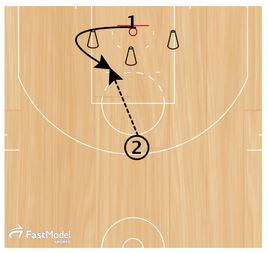
basketball-drills-schrempf

Player 1 curls around the cone and receives a pass from a coach.

Player 1 drop steps for the finish.


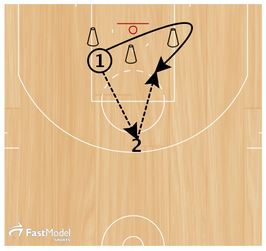
basketball-drills-schrempf2

After catching and drop stepping, player 1 continues curling around the cone on the opposite side for another drop step.

The next shot is a catch and shoot hook.

The third shot is and up and under.


The fourth shot is if a player is denied a pass in the post they spins away from the defense for the lob pass.

Below is a short You Tube video with Detlef Schrempf putting some players through the drill.

Basketball Plays Side Out Short Seconds

By Brian Williams on April 28, 2014

This play is a short seconds sideline inbounds play to run against man to man defense.

Syracuse Women’s Associate Head Coach Vonn Read has submitted several plays from his playbook series The Basketball Encyclopedia of Plays to the Coaching Toolbox.

Coach Read has also served as an assistant coach in the WNBA with the Phoenix Mercury, Orlando Miracle, and San Antonio Silver Stars. He was an advanced scout for the Orlando Magic as well as The Charlotte Sting.


Diagrams created with FastDraw


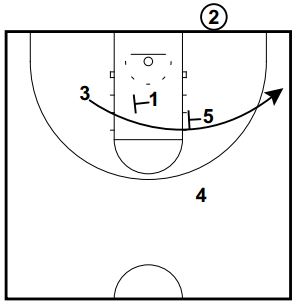
basketball-plays-short-seconds-side-out1


The 2 player will cut strong to the corner as a decoy.

The 5 player will screen for the 4 player cutting to the wing.

This action sets up the lob.


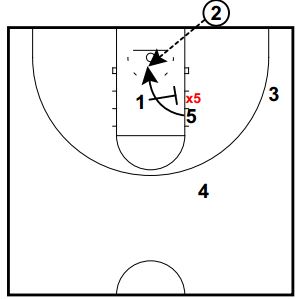
basketball-plays-short-seconds-side-out2


After the 5 player sets the screen for the 4 player, he/she will step high to the key begging for the ball.

This will set up the backscreen.

The 1 player will set the backscreen for the 5 player for the lob.

If there is a switch, hopefully the 5 player will have a size advantage on X1 for the lob pass.

Coach Read has also put together The Basketball Encyclopedia of plays. You can check them out here: The Basketball Encyclopedia of Plays or read more about the books:

Any coach looking for the latest and innovative plays from the Professional, College, or High School levels can stop looking. With a compilation of over 7,700 different plays, you will never need to purchase another basketball playbook again. These playbooks can be used as a great reference tool for years to come. This 2 Volume Book includes plays from 19 different play categories, and they are the most extensive playbooks on the market.

The Basketball Encyclopedia of Plays (Platinum Series) contains over 7,700 Plays (Both Volumes combined) from the NBA, WNBA, USBL, and College levels from someone who has worked as an Advanced Scout or Coach on each level!!! This book has been intensely compiled over the last 21 years, with plays taken from a lot of NBA Coaches (past and present), WNBA coaches, and College coaches (Men’s and Women’s) from around the country.

Any coach that is serious about improving their knowledge of the game from an X and O standpoint will benefit tremendously from these books. These Books can be used to discover New Quick hitters, add a New Package to your playbook, or develop an entire Offensive System. There are a lot of new ideas and concepts in these books to study, and the Basketball Encyclopedia of Plays can be a great resource for coaches on all levels!!! This book is definitely for those X and O junkies who are always looking to improve as a Coach.

“THE GAME IS ALWAYS CHANGING? ARE YOU?” Vonn Read

Here is the link: The Basketball Encyclopedia of Plays
Numbered Defensive Fast Break

By Brian Williams on April 25, 2014

These thoughts came from Coach Scott Peterman of the Men’s Basketball Hoopscoop Coaching site.

He has put together “The World’s Greatest Collection of Basketball Coaching Clinic Notes.”

You can get a copy of Volumes 6 and 7 along with my eBook with 130 Winning Special Situations at this link: The World’s Greatest Collection of Basketball Coaching Clinic Notes Volumes 6 and 7

If you have any questions about the notebooks, please feel free to email me.

The first requirement to being a great defensive team is to be a great defensive conversion team to 1) Take away easy baskets 2) Force the offense to play against your set half court defense 5 on 5.


by Mike Dunlap Current Coach at Loyola Marymount–former NBA Assistant and Head Coach

1. Fundamental to our success as a basketball team will be in direct relation to the number of easy baskets we allow. I believe defensive transition is paramount in our system.

2. In order to understand sound defensive transition, we first must analyze the fast break.

Made or missed, the fast break team is trying to:

a. Get a quick outlet pass as far up the court as possible.
b. Transfer the ball to a shooter at the other end of the court.
c. Get an uncontested three point shot or lay-up off after the second pass.
d. Immediate ball reversal to the opposite wing and /or trailer as it is very tough for the defense to go from ball side pressure to help side closeout.

3. Numbered Defensive Break

A. Concept

1) Players roles- each player will have a designated lane ( i.e the same lanes as our numbered fast break)
2) Emphasis – pressure the basketball while covering fundamental fast break lanes.

B. Rules

1) Stop the ball-Meet the outlet pass and get the guard to turn as many times as possible- slow the ball down, at least.
2) Sprint the lanes

a) The first three steps are the most important because that is when the break generally takes place.
b) Once players reach the half court line, vision on the ball and man should be a pint of emphasis.
c) The key is to get below the level of the ball.

3) Match Up/ Rotation

a) Match up to the offensive man in your lane.
b) However, if there is not a man in your lane, rotate to the nearest offensive player: at no time should the defensive player be solely responsible for his lane.

4) Help on Penetration

a) The ball and its penetration is the single most important thing to defend. Therefore, the emphasis should be keeping the ball in front of you. Since that does not always happen, immediate rotation to the ball cannot be stressed enough.
b) Two points should be mentioned – first, quick rotation will not occur unless there is proper defensive spacing (“ play up the line,” or to the ball): secondly, whenever a player is beaten by penetration you can double the ball with the chaser as a rule of thumb.

5) Contest all shots

a) Hands are essential in all phases of defense, especially when it comes to defending the shot.
b) It is imperative that all shots be pressured with the hands up on the closeout.

6) Rebounding – Completes All Defensive Series

C. Responsibilities

1. “1”- a free safety

a) Must get to the initial outlet immediately – made or missed (i.e. fast break teams want the ball inbounded / outletted quickly). If you condition your “1” man to jump to the ball instantly it will slow the break down.
b) In situations where the “1” man cannot get to the ball (definitely the exception) , he will fill the “2” or “3” lane, which ever is open

2. “2” – sprints the right sideline lane. In cases where “1” cannot get to the ball quickly enough “2” will assume his responsibilities.
3. “3” – sprints the left sideline lane. Occasionally, he will take the initial outlet pass.
4. “4” – sprints inside lane nearest the “3” man and is responsible for any trailer. Additionally, he we assist on middle penetration should his man be dragging up the court.
5. “5” – sprints to paint and will be responsible for the first cutter through the paint- he protests the paint.

These thoughts came from Coach Scott Peterman of the Men’s Basketball Hoopscoop Coaching site.

He has put together “The World’s Greatest Collection of Basketball Coaching Clinic Notes.”

You can get a copy of Volumes 6 and 7 along with my eBook with 130 Winning Special Situations at this link: The World’s Greatest Collection of Basketball Coaching Clinic Notes Volumes 6 and 7

If you are interested in adding to your Coaching Toolbox take look at what I believe is our best offer.

CLICK HERE to select from a list of more than 70 eBooks.


If you have any questions about the notebooks, please feel free to email me.

  • « Go to Previous Page
  • Page 1
  • Interim pages omitted …
  • Page 192
  • Page 193
  • Page 194
  • Page 195
  • Page 196
  • Interim pages omitted …
  • Page 288
  • Go to Next Page »

Primary Sidebar

  • Twitter
  • Facebook
  • Linkedin
coachestoolbox
personaldevelopmenttoolbox
basketballplayerstoolbox
basketballtrainer
athleticperformancetoolbox
coachingbasketball

© Copyright 2026 Coaching Toolbox

Privacy Policy