• Skip to primary navigation
  • Skip to main content
  • Skip to primary sidebar

  • Basketball Plays
    • Ball Screen Sets
    • Horns Sets
    • Man to Man Post Up
    • Man to Man Isolations
    • Backdoor Plays
    • Man to Man 3 Point Shot Plays
    • 2-3 Zone Attack
    • Baseline Inbound Plays
    • Sideline Inbound Plays
    • Combination Defense Attack
  • Drills
    • Defensive Drills
    • Offensive Drills
    • Competitive Drills
    • Passing Drills
    • Rebounding Drills
    • Shooting and Scoring Drills
    • Toughness Drills
    • Transition & Conversion Drills
    • One on One Drills
  • Blueprint
  • Practice
  • Mental Toughness
  • Skill Development
  • Offense
  • Defense
  • Store

Basketball Plays: 2 Duke Sets

Basketball Plays: 2 Duke Sets

By Brian Williams on December 4, 2014

These 2 man to man set plays below are from the the Duke playbook that was compiled by Coach Scott Peterman from the Men’s Basketball Hoopscoop

I have partnered with Coach Peterman to offer the Duke Playbook together with the VCU Playbook as this week’s eBook bundle special

For more information about the Duke-VCU bundle, click this link.


Diagrams created with FastDraw

Duke Half Court Set #1
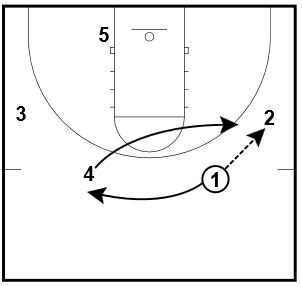
basketball-plays-duke-10-1

1 passes to 2 and cuts to the top left guard spot.

4 sprints toward 2.
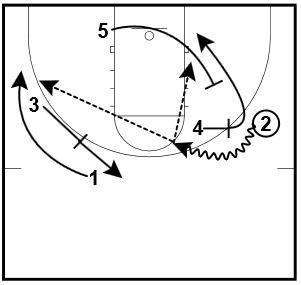


basketball-plays-duke-10-2

4 sets a ball screen for 2.

2 attacks the basket.

5 sets a back screen on 4s defender.

4 rolls to the basket.

3 sets a flare screen for 1.

1 flares to the left wing.

3 pops to the top left guard spot after setting the flare screen.

2 can pass to 4 off the backscreen, take a jumper in the lane, or pass to 1 for the three point shot.

Duke Half Court Set #2

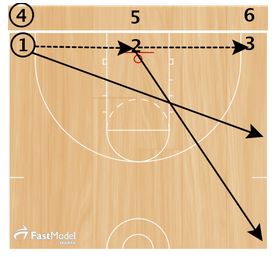
basketball-plays-duke-11-1

4 and 5 set cross screens for 2.

3 cuts to the left corner.

2 cuts to the left wing.
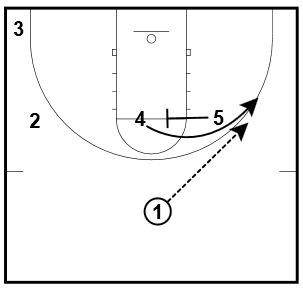


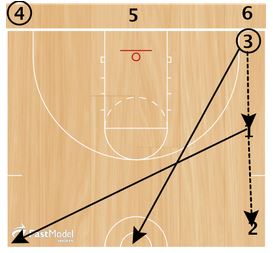
basketball-plays-duke-11-2


5 turns and sets a cross screen for 4.

4 cuts to the right wing.

1 passes to 4 on the right wing.
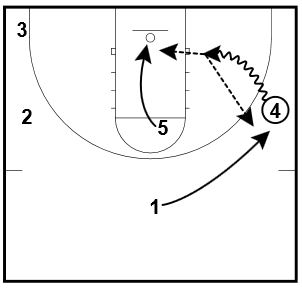


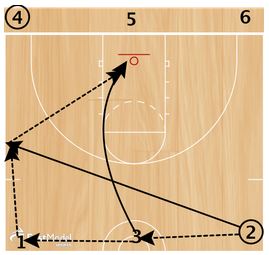
basketball-plays-duke-11-3

4 has 3 options.

Attack the basket to score.

Hit 5 rolling to the basket.

1 cuts to the right wing.

4 can drive the ball and throw behind to 1.


These 2 man to man set plays below are from the the Duke playbook that was compiled by Coach Scott Peterman from the Men’s Basketball Hoopscoop

I have partnered with Coach Peterman to offer the Duke Playbook together with the VCU Playbook as this week’s eBook bundle special

For more information about the Duke-VCU bundle, click this link.

If you are interested in adding to your Coaching Toolbox take look at what I believe is our best offer.

CLICK HERE to select from a list of more than 70 eBooks.
 

Coaching Basketball: 5 Signs of Toxic Leadership

By Brian Williams on December 3, 2014

This article was submitted by Quinn McDowell, founder of Arete Hoops. Quinn played basketball at Archbishop Moeller High School (Cincinnati, OH), 4 years at the College of William and Mary, 1 season in the NBA D-League, and 2 years as a professional in Australia.

Arete Hoops is dedicated to helping people of various ages, backgrounds, skill levels, and athletic goals pursue excellence in and through the game of Basketball.

You can read more of his articles at this link: AreteHoops

I hope you can use some of these thoughts as a different voice to share with your players.

5 Signs of Toxic Leadership

The well known author John Maxwell defines leadership as nothing more than one person influencing another. This definition gives us a singular focus when thinking about leadership in the context of a team dynamic. The idea that leadership is primarily influence, forces us to accept the notion that no one is exempt from the responsibilities that leadership requires.

Although certain players will exert more influence than others, every person on a team contributes to the culture of their program. If the entire team buys into a common vision of leadership that exerts a positive influence on those around them, the results can be amazing. On the other hand, if players decide to use their influence for selfish ends, the results can be toxic. Bad leadership spreads quickly and has devastating potential; but if you recognize the warning signs early enough, you can help save your team from self-destruction. Leadership is contagious whether positive or negative, so here are 5 signs that your team could be experiencing a turn for the worse…

1. Gossip

Gossip destroys trust and undermines team cohesiveness and togetherness. One of the most important strengths of great teams is their ability to insulate themselves against negativity. The only way teams shield themselves from outside influences is draw close and lean on each other during the inevitable ups and downs of a season. This “drawing close” process becomes difficult when players gossip about fellow teammates or coaching decisions. If a player has a problem with another player or is unsure of their role on the team, the mature way to handle these kind of doubts is to speak directly with the coach. Once the coach is involved, everyone can get on the same page and figure out a solution. Gossip is the cowardly way to handle tough situations and gossip destroys team chemistry.

2. Pouting

One of the signs of great leaders is their ability to celebrate team success despite how they perform individually. Of course it is easy to be happy about a victory when you score a lot of points, grab a bunch of rebounds, or dish out a number of assists. But the true test of great leadership is the ability to be genuinely excited about team accomplishments when you didn’t have your best game. Toxic leadership can start in the locker room after a big win when a player starts to pout because of a poor individual performance. This kind of pouting sends the message that MY
performance on the floor is what really matters and team success is secondary.

3. Poor Body Language

Your non-verbal communication as a leader is incredibly important. It communicates you’re feelings and shows the value of your priorities. For example, poor body language on the court after a teammate makes a mistake communicates a message of disgust and annoyance with that person. You are essentially telling that teammate, “I wish I had another player on the court with me who could play the right way”. This kind of communication coming from a prominent leader makes other teammates feel insecure and unsure of themselves on the court. Uncertainty leads to hesitancy which compounds mistakes and leads to poor team chemistry.

4. Negative Reaction to Adversity

There will come a point in every season when your team will have to respond to adversity. How these moments are handled by your leaders will set the tone for how the rest of the team responds in difficult circumstances. Your team might be losing to an inferior opponent and your leaders will have a choice to either blame the poor performance on someone (usually a coach or teammate), or take responsibility and figure out a way to improve the situation. Another example could be when the coach subs out a player during a tense moment in the game; how that player reacts to the coaches decision is important. The player can either sulk to the end of the bench consumed with selfish thoughts, or they can turn their frustration into positive energy and cheer their teammates on. Both reactions communicate specific messages to teammates and coaches. Toxic leaders tend to be consumed with their own predicaments are prone to have negative reactions to adversity.

5. Martyr Complex

The last sign of toxic leadership, is when players start believing (and telling anyone else who will listen) they are martyrs or victims. Whether it is coaching decisions, bad calls by the referees, unfair playing time, injuries, or incompetent teammates, leaders that adopt the martyr complex bring a dangerous presence to team dynamics. If players start to believe that someone else is the primary source of their problems, this creates a culture of entitlement and laziness. Rather than looking in the mirror and figuring out how to improve, martyrs look at their circumstances and blame others. Martyrs will never put up a fight in the heated battles of competition; but instead will take the path of least resistance.

You can read more articles by Quinn McDowell at this link: AreteHoops

Coaching Basketball Xavier Press Attack

By Brian Williams on December 2, 2014

These ideas on Press Attack are from the Xavier Men’s Basketball Coaching Newsletter.

You can see their archives at this link.

The initial part of the post are some ideas on developing your press offense philosophy. At the end are some diagrams with ideas for formations for your press offense.

Just like every other Attack in your playbook, your press offense philosophy must:

1) Fit your personality
2) Fit your team personnel
3) Work against the very best opponent you must beat to reach your goals

You have to believe in it so you’re players will trust it will work for them on their toughest nights.

Develop Your Philosophy

This is where you must evaluate what type of attack fits you the best and temper that with the personnel currently on your roster. Here are some questions that will help you…

Do you simply want to safely break the back-court pressure or score as a result?
Do you have a player that can beat double teams?
Do you need to break the pressure with the bounce or the pass?
Do you understand the intention of the defense that is attacking you?

Our philosophy has always been to use the fewest players possible in breaking a full court press. To us, the fewer
people you bring into the back court, the more players there will be to attack the basket. We have also witnessed over the years that the quickest way to keep a team from pressuring you is to get a couple of easy baskets.

It’s just human nature to retreat and whether the coach actually calls the press off, you will see players become
WAY less aggressive if they give up a basket. This has worked anytime we had a player (hopefully a point guard or a big player) who could invite double teams and safely get the ball out of the pressure.

If your personnel is such that you CANNOT attack to score, then you need to have a philosophy of getting the ball safely out of the pressure so that you can execute in your half court offense.

We believe you must also know WHAT the defense is trying to achieve so that you can best plan the attack. If it’s a
turnover based defense, simply NOT turning it over frustrates that team. If they are trying to increase TEMPO, then
you can counter that by methodically breaking with the pass.

Implement Strategy

Once you have decided what you are going to do, you must practice it.

We have always used our second team to go against first team when working presses. This gives our team confidence that the ATTACK will work. We also NEVER run our PRESS against our PRESS BREAK for the same reason. There is nothing worse than seeing your own PRESS DEFENSE broken for lay-ups.

5-on-7 situations work well to create priority on crisp ball movement, cuts, and meeting passes.

Execute Tactics

Make a team pay for pressing you. Awareness and preparation are the two biggest keys to keeping your team confident and calm in these situations.

Diagrams created with FastDraw

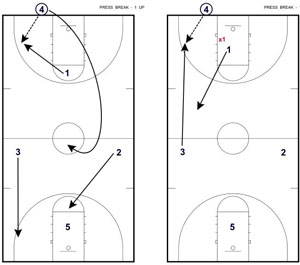
Press Attack 1 Up

press-attack1

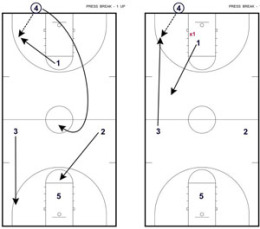
(Left Side Diagram) The most simplistic Press Break builds on the philosophy of only bringing as many players as you need into the back court.

This one works great if you have a point guard who cannot be denied 1-on-1 or even 1-on-2.

We clear out as much space as possible for the 1 to operate and space the other 3 players in the front court so that we can quickly attack the basket or flow into our half-court attack.

We also teach our 1 to “post-up” to receive the entry pass. Once inbounded 4 gets to the middle on a J Hookcut to be used as screen or release pass.

PRESSURE RELEASE: (Right Side Diagram Above)

We allow our 1 to work the first three seconds of the five count before we go to the pressure release.

Pressure release is to break the 3 up… this is a tough cut to defend… If the ball has not already been inbounded to the 1 it is because he is full fronted by his defender. We teach him to hold his defender off until 3 receives the inbounds pass.

On the catch 1 sprints to the diagonal and there is no way the X1 can catch up to him.

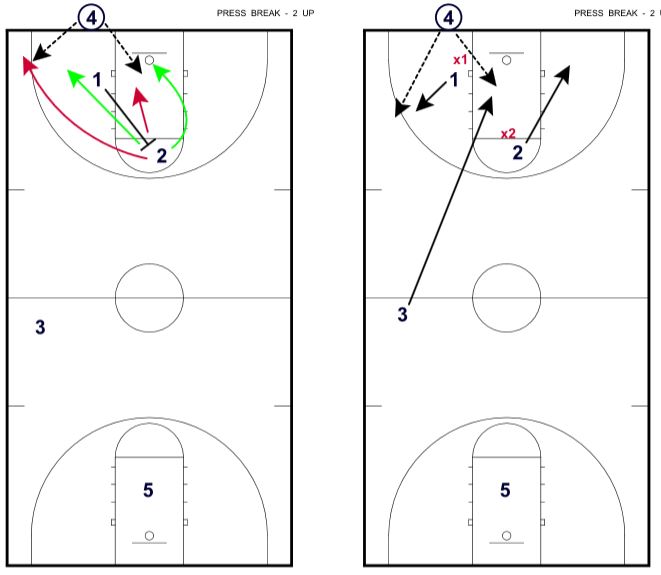
Press Attack 2 Up

press-attack2

Left Side Diagram. 1 sets screen for 2… 2 reads defense and breaks to corner or the basket. (Editor’s note: I would not have the player break as deep to the corner as the diagram shows.)

RED OPTION: If 2 goes to the corner, 1 rolls to basket.

GREEN OPTION: If 2 goes to basket, 1 simply goes along the exact same line back to the ball.

This works very well against switching defenses. We also use this anytime we need to inbound the ball safely to get fouled or run clock…

PRESSURE RELEASE: (Right Side Diagram Above)

Again, if the defense does get 1 and 2 fronted, we break 3 hard to the basketball. 1 and 2 hold of until the catch.

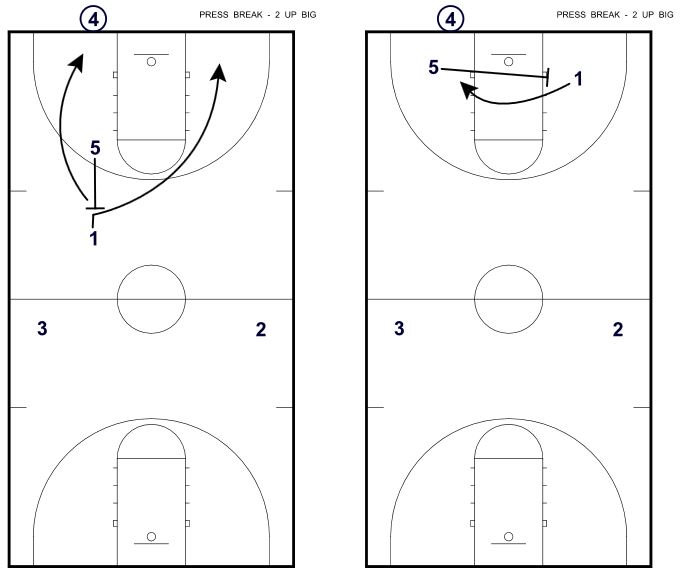
Press Attack 2 Up Big

press-attack3

(Left Side Diagram) Another 2-up look we have used brings our 5 player up to help break the pressure as a lot of teams are reluctant to bring THEIR big away from the basket.

1 cuts off the 5 screen. 5 then comes right back to ball and is usually wide open if X5 has helped at all on the cut.

1 can get open every time by running NOSE-TO-NOSE with the 5 player screening and making the proper read on defense.

PRESSURE RELEASE: (Right Side Diagram Above)

1 simple re-uses 5s screen… This is very difficult for a team to guard successfully two times in a row.

Basketball Shooting Drills Around the Horn & Baseball

By Brian Williams on November 26, 2014

Here are a couple of shooting drills that I hope will spark some thinking on improvements you can incorporate into your shooting drills. I like to have enough drills to offer a variety to hopefully keep players from getting to the point where they start going through the motions from running the same drills day after day. Maybe you could save one for the end of the season.

Take the things you like and leave out anything that you don’t if you want to run similar drills in your practices.

The videos are among the basketball training videos for all levels of coaches, players, and parents that is offered by BasketballHQ. You can access their entire library with a pro membership. They offer a free 7 day trial for the membership. If you are interested, you can see more at this link: Basketball HQ

Please make sure your sound is on to see the video.

Click the play arrow so see the drill.

Basketball Drills Around the Horn Shooting

This drill forces the player to remain ready to shoot the ball because they don’t know when it is coming to them. Even though there is only one shooter in the drill, I believe that you could make this a team drill with at least a couple of players shooting at a basket at a time.

It gives you an opportunity to teach footwork the way you want it taught and is a way to work on shooting when fatigued.

The shooter starts in the corner, and the passer/rebounder is stationed in the lane. When the drill starts the shooter moves around the arc until the passer throws them the ball. The pass can be made at any time.

After the shot is taken the shooter return to the corner where they started and go again.

Basketball Drills “Baseball” Shooting

You might not want to use this exact same scoring system, but hopefully it gives you an idea to find a way to structure a drill that scores in a slightly different way.

Set 9 spots around the 3 point arc for the nine “innings”. The shooter gets three outs (shots missed) per inning just like baseball. Once you have three outs, you move on to the next inning (spot).

If the shooter makes a shot, but hits the rim, they get a single. A swish is a homerun. The object is to score as many “runs” as possible using those rules. The video has an example and more details on scoring. Once the players shoots nine innings, the drill is over.

The videos are among the basketball training videos for all levels of coaches, players, and parents that is offered by BasketballHQ. You can access their entire library with a pro membership. They offer a free 7 day trial for the membership. If you are interested, you can see more at this link: Basketball HQ

33 Basketball Coaching Points from Bob Knight

By Brian Williams on November 25, 2014

These bullet points from Coach Bob Knight are a part of Alan Stein’s 12 pdf Basketball Coaching Nuggets Collection.

No matter what your opinion of Coach Knight or of these points, (Or any coach for that matter), there are still some good points you can adapt and make your own. Certainly there are some points that you don’t agree with, but hopefully some you can use!

Also included in the list is a short video of Coach Knight giving an explanation of one of his points on timeouts.

  1. “The single most important aspect of coaching is running effective practices.”
  2. “The goal is to make practice more difficult, physically and mentally, than anything your players will face during a game.”
  3. “I always designed my practice plans the night before and then made tweaks a few hours before
    practice began.”
  4. “I never let a player shoot by themselves; they had to have a rebounder. Shooting by yourself is not
    game specific.”
  5. “I hate casual shooting. EVERY shot must be preceded by working to get open and catch and shoot
    under game like conditions.”
  6. “Everything in my practices were designed for advantage vs. disadvantage. Putting players in a
    disadvantage forces them to communicate and concentrate.
  7. “I began every practice for 40 years with simple 4 corner passing drill that required absolute
    concentration.”
  8. Coach Knight to player, “Son, if you can’t listen and follow instructions then you can’t play.”
  9. “My practices were not set up to be easy or enjoyed.”
  10. “The shot fake is the least used skill on offense. Why would you ever shoot under pressure? An
    effective shot fake creates an offensive advantage.”
  11. “We did partner shot fake drills for a few minutes every practice.”
  12. “Offensively, stay away from the baseline. The baseline is the best defender in the game!”
  13. “What is the best thing you can do in a close game? DRIVE to the basket and put pressure on the defense! Not jack up jump shots.”
  14. “Driving to the basket creates easier shots, better passing angles, and puts the other team in foul trouble.”
  15. “90% of all defensive fouls are committed with the hands. We do several drills every practice with the
    players’ hands behind their backs.”
  16. “Defense should be played with your feet and your brain, not your hands.”
  17. “Every drill we do involves full court transition. Even if we are working on half court offense, the defense will go in transition after a rebound or made shot.”
  18. “Basketball is a full court game, so every drill must be done full court.”
  19. “At any point during practice, call a timeout. Huddle the players and give them 4 or 5 specific
    instructions. Then send them back on the court. Wait 15 seconds and then ask them to write down the
    4 or 5 things you asked them to do. It is scary how little they will recall.”
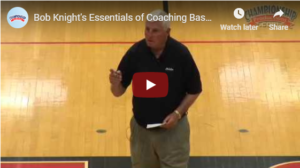
  20. Click the play arrow and make sure your sound is on to watch the video. If you are interested in learning more about the basketball coaching DVD that this sample came from, click this link: The Essentials of Coaching Basketball

  21. “Players must be able to carry out simple instructions from the bench to the court. If they can’t, then
    they can’t play.”
  22. Defense 101: “When the ball hits the floor, defensive help is mandatory.”
  23. “Shoot FT’s at scheduled intervals during practice, not before/after. Do it when they are tired. Add
    pressure to every FT (run sprints, etc.).”
  24. “First stat I look at after the game–did we make more FT’s than our opponent shot? If so, we usually
    won.”
  25. “Every halftime, find something the team needs to improve. Also acknowledge something they did well.”
  26. “From October to Christmas break, our practices were 2 hrs and 15 min. Every practice after that was 1 hr 15 or 1 hr and 30 min tops.”
  27. Offense 101: “Move the ball against the zone. Move players against man to man.”
  28. Offense 101: “Passing is your best weapon against man to man. Dribble penetration is your best weapon against zone.”
  29. “When playing vs. man to man, the defense decides who guards who. When playing against zone, the offense decides who guards who.”
  30. “Pass fakes make the zone move. Use them!”
  31. “Screening is the most underutilized, yet most effective weapon an offense has.
  32. “The toughest offense to guard is one that has 5 players constantly moving. 5 players that must be guarded.”
  33. “Don’t complicate winning.”
  34. “More games are lost my dumb than are won by smart.”

BD-04483-Geno-Auriemma-and-Bob-Knight-Learn-from-the-Legends-Series-653

You can see find more information about the Learn from the Legends Basketball Coaching Series featuring Bob Knight and Geno Auriemma DVDs by clicking this link: Learn from the Legends. The entire series consists of 6 DVDs and can be purchased at a special bundle price at this link” Learn from the Legends

Basketball Drills Celtic and Laker Passing Drills

By Brian Williams on November 21, 2014

These basketball passing drills were posted in the FastModel Sports Basketball Plays and Drills Library The site has thousands of drills and plays that have been submitted by coaches from all levels and from all over the world.

You can also find out more about their Play Diagramming software by clicking this link: FastDraw

The drills can be used as warmup drills at the start of practice or as conditioning with a ball drills at the end of practice.

You can time them and add a perfect passing and catching requirement to add an extra dimension of competition.


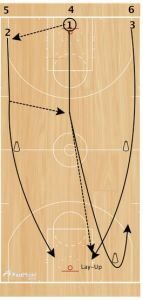
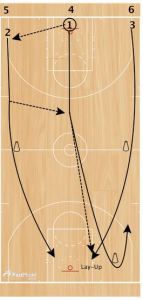
Laker Passing Drill

This drill was contributed by Kyle Gilreath.

basketball-drills-laker-passing1
 
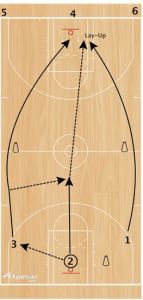
1 hits 2, 2 passes back and advances ball up to 3 for a lay-up.

2 rebounds the ball out of the net (Ball can NEVER hit floor),
1 sprints around the cone, and 3 sprints out to the opposite
wing after the lay-up.

(All chest passes and No dribbling).


basketball-drills-laker-passing2

2 hits 3, 3 passes back to 2 who advances the ball up to 1 who is sprinting for a lay-up.

Waiting 4 gets rebounds OUT OF NET and continues the drill until they make the 14 (# players on team).

Switch sides to make 28, any misses start all over.


Celtic Passing Drill

This drill was submitted by Greg White. Coach White has 14 years experience coaching basketball as a head coach from junior high, senior high and AAU teams in his home state of Arkansas.

basketball-drills-celtic-passing1
 

1 passes to 2 then sprints to sideline.

2 passes to 3 then sprints to the corner


basketball-drills-celtic-passing2
 
3 passes to 1 then sprints to mid court.

1 passes to 2 then sprints to corner.


basketball-drills-celtic-passing3

2 passes to 3 then sprints to sideline.

3 passes to 1 who passes to 2 then passes to 3 for the layup.

Next group starts
2 passes


  • « Go to Previous Page
  • Page 1
  • Interim pages omitted …
  • Page 170
  • Page 171
  • Page 172
  • Page 173
  • Page 174
  • Interim pages omitted …
  • Page 288
  • Go to Next Page »

Primary Sidebar

  • Twitter
  • Facebook
  • Linkedin
coachestoolbox
personaldevelopmenttoolbox
basketballplayerstoolbox
basketballtrainer
athleticperformancetoolbox
coachingbasketball

© Copyright 2026 Coaching Toolbox

Privacy Policy