• Skip to primary navigation
  • Skip to main content
  • Skip to primary sidebar

  • Basketball Plays
    • Ball Screen Sets
    • Horns Sets
    • Man to Man Post Up
    • Man to Man Isolations
    • Backdoor Plays
    • Man to Man 3 Point Shot Plays
    • 2-3 Zone Attack
    • Baseline Inbound Plays
    • Sideline Inbound Plays
    • Combination Defense Attack
  • Drills
    • Defensive Drills
    • Offensive Drills
    • Competitive Drills
    • Passing Drills
    • Rebounding Drills
    • Shooting and Scoring Drills
    • Toughness Drills
    • Transition & Conversion Drills
    • One on One Drills
  • Blueprint
  • Practice
  • Mental Toughness
  • Skill Development
  • Offense
  • Defense
  • Store

Basketball Plays from 2015 NCAA Tournament

Basketball Plays from 2015 NCAA Tournament

By Brian Williams on March 20, 2016

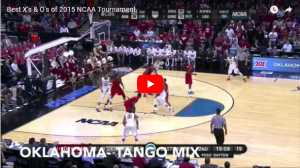
Army Men’s Assistant Zak Boisvert has assembled some of his favorite offensive sets from the 2015 NCAA tournament.

Coach Boisvert has posted several videos of some of the better schemes he has seen. His You Tube channel is: Zak Boisvert You Tube Channel

He also is also very active on Twitter: @ZakBoisvert

He has an outstanding resource site for coaches. You can access it here: PickandPop.net

Coach Boisvert has also diagrammed the plays from the video and has provided a download link to the pdf. You can download the pdf here.
 

How to Be a Great Assistant Coach

By Brian Williams on March 17, 2016

Clinic Notes from:

These are some of the notes presented by Dean Lockwood. Dean is currently the Associate Head Women’s Coach at Michigan State. He was an assistant in the Tennessee Women’s Program for 15 years. He was also an assistant in their men’s program for 5 years. In between those stints at Tennessee, he has been the men’s head coach at Saginaw Valley State, and Northwood University.

How to Be a Great Assistant Coach

Know and Understand Yourself

Take some time to think about and write out answers to these questions:

1) Why did I get into coaching?
2) What do I love about coaching?
3) What do I dislike about coaching?
4) What are my present and future goals?
5) Why am I in coaching now?

Know This Profession

1) Job security
2) Stress
3) Scrutiny/criticism
4) Time-consumption
5) Things beyond your control that impact success
6) Limited flexibility/autonomy (as an assistant)

Features

1) Teach life lessons and impact people
2) Working at what you love
3) Competition
4) Each season and team is a new journey
5) Keeps you “young at heart”
6) Help people/teams mature, develop, and win

Non-Negotiables

1) Loyalty
2) Integrity
3) Passion for work/commitment to excellence
4) Love for people/your team
5) Love for the game

Approach

1) Support Head Coach and team mission
2) Reinforce program values, principles, and standards
3) You are always representing your Head Coach and your program–realize the power of your own example
4) Take pride in and fulfill your role
5) Check your ego at the door–be careful of your pride, it’s not about you
6) Servanthood–pour into the lives of others
7) John Maxwell’s 3 things everyone asks of leaders/staff:
A. Do you care about me?
B. Can I trust you?
C. Can you help me?
8) An assistant’s overall tone should be positive
9) It’s all about TEAM
10) Make the “Big Time” where you are

Communicationan

1) Use we/us/ous instead of I/me/my
2) Must have honesty in all interactions
3) Treat ALL staff as colleagues/peers/equauls–Head Coach is your boss, others are co-workers
4) Never talk to anyone (other than the Head Coach) about another staff member unless it is positive
5) DO NOT talk whenever the Head Coach is talking
6) NEVER undermine the Head Coach (Disagree in private, support in public)
7) Find out what the Head Coach needs from you
8) Pick your times to discuss certain things with the Head Coach–be aware of “Mind Space”
9) Don’t just point out problems…present some solutions
10) Be a buffer without being a crutch
11) Do not allow players to play you against the Head Coach or other staff
12) Don’t “write checks you can’t cash” (don’t overextend your authority)
13) Look for legitimate ways to encourage and complement
14) Verbally and non-verbally convey to players: “We believe in you.”
15) Check for consistency
A. Are we doing what we are saying?
B. Are we reinforcing it?
16) Develop positive relationships with other staff, department members, administrators, and faculty

Execution

1) Be at ALL presentations by Head Coach to team
2) Pith in–help other coaches/staff members when you can. Share burdens, nothing is beneath you. Everyone has a role
3) Make the job of the Head Coach easier–take on tasks that help the Head Coach focus on the team and recruiting
4) Anticipate–what does the head coach and team need? (See the need and fill it)
5) Share material and resources
6) Share information: team issues should be out in the open
7) Bring these every day: Energy & Encouragement–be a battery charger–your passion and energy should inspire others.
8) Time management: invest time where it matters most. Recruit, teach, develop, graduate, help team win
9) Attention to detail: Little things matter
10) Continually develop, hone, and evolve teaching skills (Your position group, phases of the game, within systems)
11) Teach every day (be demanding without being demeaning) Coach Newell-“The game is over-coached and under taught” Coach Lombardi “Blocking and Tackling”
12) Laws of learning: instruction, demonstration, imitation, repetition, correction, repetition
13) 33 years has taught me: Simplicity of the game and execution of fundamentals
14) Learn and use your program’s terminology
15) Be available for extra work/shots/film with players
16) Watch video of your team (Self scout)
17) When watching scouting video look for ideas and concepts that you can steal for your team
18) Program organization: Play book, Drill book, Criticals (Special Situations), Team notebooks, game notes
19) Game Management
A) Bench demeanor 10% emotional–90% analytical
B) Bench comportment of team
C) Staff interaction (positive, analytical, team-oriented, never allow players to hear anything negative about team or player coming from you
D) How do you need to feed information to Head Coach (How does Head Coach process info?)
E) MUST know/be aware of fouls, timeouts, possession arrow
F) Leave officiating issues to the Head Coach
20) Post game breakdowns
A) Watch game tape
B) Take emotion out of it; analyze what happened and how and why it happened
C) Know what hurt your team; know what was effective for your team
D) Notes/charts/stats
E) Suggestions for next practice/game/moving forward (support with video clips often)

Growth

1) Pat Summitt: You never arrive in this game. You are always learning and improving
2) Don Meyer: Get all the good ideas, but you can’t use all the good ideas
3) Growth is intentional. Become a better teacher and communicator
4) Continue to increase your value: recruiting, teaching, scouting, etc…
5) Be a lifelong learner
A) You can’t give away what you don’t have
B) The same principle that applies to your players applies to you-KEEP GETTING BETTER
C) Read, observe, listen
6) Seek out mentors and people who can help you learn and grow
7) Success is “rented” and the rent comes due every day
8) Realize that the one certain thing is change and uncertainty… things will change often in this profession
9) Talk to Head Coach about you long-term goals and aspirations (But always do a great job where you are. When the team wins–everyone wins)
10) Appearance and presentation
11) Leave it in better shape because you were there: Make it better. James Naismith
12) Take time to “Sharpen Your Saw.”
13) Be thankful and appreciative. Enjoy the journey

Coaching Basketball: When Players Need You Most

By Brian Williams on March 15, 2016

This post was written by Coach Mike Neighbors while he was an assistant as Xavier.

There are lessons for coaches at all levels in this article.

Have you ever wondered if you were supposed to be a coach?

Sacramento, California… ARCO Arena… March 29th, 2010… NCAA Elite 8… Stanford (34-1) vs. Xavier (30-3) Winner advances to the Final Four… Stanford had won their first three tourney games by a combined 98 points… Xavier attempting to be first non-BCS school to advance to Final Four in 11 years…

20.6 seconds to play… 51-51 tie game… Xavier ball on the side coming out of a timeout… Shot clock is off… Ball inbounded safely… All-American Amber Harris cuts off a high cross screen and draws a double team from Stanford All–Americans, Nneka Ogwumike and Kayla Pedersen… Harris finds a wide open Dee Dee Jernigan behind the defense… Amber fires a bullet pass to block… Dee Dee can’t convert the wide open two footer… Harris alertly scrambles for the rebound which she secures… As she dribbles to get space, she finds Dee Dee again even more open and closer to bucket than the first time with 9.5 to play…she misses again… and this time Stanford’s Kayla Pedersen re-bounds…

This was the moment I knew I was supposed to be a coach.

If you don’t remember the play or have never seen it, check out this link to hear Stuart Scott’s ESPN call of the action and also what followed in the final 4.4 seconds before you read on.

http://www.youtube.com/watch?v=M5Je0ludNqA&feature=related

So much of our daily routine as a coach is spent doing things in an office. We are on the computer researching opponents or recruits. We are manning a remote control watching film in preparation for an upcoming game or one of our own games/practices. We are on our phone chatting with other coaches about the latest gossip or news of the day. We are filing out paper work for an upcoming road trip. On top of that high school coaches are grading papers, filling out absentee forms, doing lunch duty, or meeting with a parent about a student’s generally poor attitude in your math class.

While vital to execution of our jobs, it is NOT what our players really need from us. If you as a coach can’t perform the necessary duties of your job without tiring out or burning out, you will never be there when your players truly need you.

I learned this one the hard way over the years. I found myself so wrapped up in “doing my job” that most times I wasn’t there to do my real job. Sure, I had some highlights. I was there at times, but wow did I miss out on so many more.

Over the last two years since that Stanford game, I have been trying to collect all the times I was there when a player needed me as well as the times I wasn’t. With help from other Newsletter group members and coaching colleagues input, I hope we can share a piece that will help young coaches from having to learn these lessons the hard way.

I can assure that your boss will never be upset if “your TPS reports are late” if you are tending to the welfare of one of your players. (Office Space reference for you non-movie buff basketball heads)

As with some previous Newsletter pieces, these are in no particular order of importance… just ramblings…

When they miss the game winning shot… We have all seen videos of coaches reacting to game winning shots running wildly around the floor looking for someone to high five or jump on. Most of the times there is no one there. You know why? It’s because the players don’t need you then!! They are mobbing each other and many times the cheerleaders and fans too.

Your player needs you the most, when they miss the game winning free throw and other people are afraid to be around them. They need you when they dribble the ball off their foot when they are driving for the win-ning basket. They need you when they get back-door cut on defense for the winning basket even though you told them during the timeout it was coming.

When they don’t play well…this is similar to the first one but not the same. This can be after a win or a loss. But your players need you when they don’t have a career night. Sure it’s fun and necessary to high five those kids and congratulate them on their success, but every coach does that. If you want to be different than most, seek out that player that didn’t play well and make sure they go home that night just as important to your team as the Player of Game. It’s a pet peeve of mine to especially to see a player who played poorly sulking after a team win and hope it is one of yours too. It’s always tempting to call that person out in front of team but only in certain situations would I recommend it. Be there for that player before they put themselves in that situation in front of their teammates… “shout praise/whisper criticism method”

When they don’t play at all… Here I am speaking to that player who has played in all your pre-season scrimmages. They had a role in some early non-conference games. But invariably, there comes a game, that for whatever the circumstance, their number isn’t called. This player needs you after the game. There certainly probably wasn’t a plan to NOT play them. It just happened. There surely wasn’t time to explain it as it was happening. But your player needs to hear from you before they leave the locker room that night. Maybe even before they go into the locker room. Even your “best team player” will need you. Apart from their own questions, they know they are going to be explaining it to family, friends, and others. Give them a few minutes of your time and help them through this situation.

When they are in a shooting slump… the very best shooters in the world have these. Your shooter needs you when they are in one. My experience that just the slightest mention of something technical whether it is true or not helps snap them out of it. A reminder of their overall shooting % sometimes put a short slump in perspective too. One thing, I have rarely seen work is ignoring it. Sure we want our shooters to have A.D.D. when it comes to misses in a game, when that slump continues, they need you. You know your player better than anyone and you can sense the proper time to approach them. Your ability to take players “out of the moment” will separate you from coaches who don’t have relationships with their players.

When they foul out…this is a situational one. We all have that player that fouls out routinely. Those kids probably can be handled with a tap on the head or a high five. But when that player that “never fouls out” does, she needs you. Most likely she has seldom not been on the floor late in games. She doesn’t even know where to sit much less how to act. Grab them and sit them with you. Don’t let them sit on the end with their head draped in a towel covering their frustration (or tears if it’s a tourney game). The players who are used to being on the bench at that time of a game don’t want them there anyway. It changes the way they act too. So, keep them with you. You still need them. If the game is still in question, they can still be a positive. If you are there when they need you most, they will at least not be a distraction.

When they are thrust into a leadership role… This isn’t necessarily something that happens during a game although it could be at times. It could be the day a senior leader graduates. It could be the day after a star player/leader quits because you took the “fun” out of the game. Whenever the time comes, your player needs you to be there. It’s not easy to be a leader on a team. It causes you to lose people you thought were your friends due to jealousy. It invests you deeper than ever. It is NOT easy. Your player needs your help. They need resources to help them navigate in the locker room. They need your support when they are forced to be a leader on the back of the bus. They need your time to talk because they don’t have as many people to talk to as they did before they became a leader. Check out Jeff Janssen’s book THE TEAM CAPTAIN’S LEADERSHIP MANUAL if you want to put a resource in their hand. Good for every coach to have in the arsenal as well.

When they call/text to ask you to shoot with them… this was one I failed at many times in my years. I can’t tell you how many times I made up excuses to not open the gym. It was inconvenient and almost never failed the call came when I was in the middle of an urgent project. It wasn’t long before players stopped asking me…mission accomplished!! Wrong…mission failure. What I learned was that 99.9% of players who ask you to shoot with them are actually saying “hey coach, I just want to talk to you about something and I am using getting some shots up as a way to break the ice.” They can shoot with anyone. In fact, what they are really saying is they want you to REBOUND/PASS for them. Some do it to prove to you that they are working extra. Fine. DO IT!! Get off your butt and work later on your project. I never miss a chance to “shoot” with players now. This request could also be disguised as “watch film”, “work on Free throws”, “improve ballhandling”.

When they lose a loved one …if this list were in order, this one would/should be #1. No basketball related situation trumps being there for a player when they lose someone they love. Outside of their loved one they just lost, there is a solid chance that you spend more time with them than anyone. And if they just lost that person, they need YOU!!

When they have a relationship go bad… This one can be touchy. Depending on the relationship you might be the LAST person they want to talk to. You don’t need details. You don’t need to offer a bunch of unsolicited advice. But, you do need them to let you know you are there for them IF they need you. Simply recognizing the situation is enough with this situation in most instances.

When they screw up…This is a broad encompassing one. It covers miss class, fail a test, late for bus, bomb a project, forget their shoes, pack the wrong uniform, break a team rule, get in trouble with law for being in wrong place at wrong time…etc. Again, your role is not necessarily to fix their problem. We tell our players all the time there is NOTHING we can do if you break the law or school policy. It doesn’t mean that we can’t be there for them though.

When they are injured… if a player plays this game long enough they will miss some time from practice or some games. It could be a sprained ankle that they need a couple of days to recover or an ACL that sidelines them for a year. They need you. They need to hear that you have a plan for them to recover and still contribute to the team while they are out. They need a role. They need to hear success stories about injured players returning better than ever. They also need to hear the reality of what happens to some players upon return that don’t properly rehab. Be there if they have surgery. Be there when they do some rehab. Be there when they can’t practice or play.

When they rehab…this is a goes with above. But needs to be said. Injured players want a plan to win their rehab just like a healthy player wants a plan to win the game. You need to get them with a trusted physician and a trusted athletic trainer to develop that plan. Not only will this help their rehab, it will strengthen your connection to that player when they return to the court. Go with them to a scheduled re-hab appointment. That small effort will have a ripple effect on your relationship with that player that will spread throughout your entire team/program.

When they are sitting out in red-shirt … This one probably pertains more to college players but more and more states are also forcing players to sit if they transfer districts. These players need you. While they are practicing with you daily, they can’t dress out and play in the games. On game days, we work our red-shirts out before the game. They come in 30 minutes before rest of players report and we get after em on the game court. The opponents are usually making their way to the court. There they are busting it!! I’ve seen opposing players literally stop their routine and watch our kid being worked out. While the purpose really isn’t to intimidate or distract an opponent, it is kinda fun. After they workout, then they have time to clean up while rest of team is warming up and join them for the game if allowed by rules. They need you throughout the year to keep them posted as they have no real way to gauge their improvement. They don’t have the chance to compete nightly, so you need to give them that outlet to keep them motivated.

When they have car trouble… Even though I am from Arkansas, I know NOTHING about cars. NOTHING!! But you can make a huge impact on players when you are there for them when they break down. I always hope for a flat tire because I do know how to change those. I can usually pull off a dead battery jump too. But after that, just being there is about all I can do. I can get them calmed down and pointed in the right direction. I have more “thank you” cards in my file for this one than any other. Just showing up is 95%!!

When they graduate…So many coaches lose contact with players after they are “done with them”. Rationalizers will say they “have a new group of players to be there for”. Wrong. You just have more. You must continue to be there for your players after they are “gone”. They might not reach out to you as often, so you actually have to do more work. You have to initiate the contact. You have to reach out. They will need you for recommendation letters. They will want to use you as a reference. I always write in our players graduation cards that they had better keep me posted so I CAN write those for them. Yes, you will spend more money on baby showers, wedding gifts, and the such. But for all they sacrificed for you, it’s a small price.

When they have a rumor going around about them… This one WILL happen, so be ready. It could be from in-side the team or just a general rumor going around. It might also involve a facebook stalker!! Don’t laugh, with social media like it is these days you better be prepared for the “someone posted a pic of me on facebook” dilemma.

When they visit a new place… I just added this one today because a player just left my office. She came in and said “coach, I know you travel a lot. My family is going to ______” what should we do? If your player comes to for non-basketball stuff/regular human being stuff, take the time to share your experiences. They may or may not even hear your feedback but them talking to you about LIFE stuff is a big step for many young people.

This is certainly not an inclusive list. Just like on the court, try to be prepared for as many situations as you can so you can properly handle the ones you haven’t prepared for.

Ideally this list sparked memories of times you have been there for your players. But if all you do is pat your-self on the back for those times, you are only getting half the benefit. You should also try to think about the opportunities you have missed out on. This is where true growth will occur. I caught myself feeling sorry for some of the players I had coached in the past. If you do to, reach out to them now. Explain that you weren’t a very good coach back then. They may not respond but they will appreciate it.

We can’t be there every time. Circumstances just don’t allow it. But the goal is to minimize the times we can’t be and maximize the times we can be. You and your program will experience a compounding effect for every time you can be.

Hopefully you’ll never have to be there for a player who misses critical shots. If you are, make her a video of all the plays she made in the game that helped put your team in a position to be there. Make a video of the critical plays she made in the Sweet 16 game to get you to that game. Have her team mates list ways her play got them to that point. Talk to her. Don’t let her go through it alone. Let her absorb the situation. NOTHING will seem like it helps at that very moment. NOTHING. You will feel helpless. But it in time, it will help her. In time, she will see the team going 1-17 from the three point line when they normally shot 35% from the arc or missing 5 free throws in last two minutes was a bigger reason for the loss.

Controlling the “Controllables”

By Brian Williams on March 13, 2016

The following article was written by Juan Pablo Favero of San Diego State University.  It was originally published in The NSCAA Soccer Journal

The hope is that these ideas can be modified to the needs of your program, and shared with your athletes. I hope it stimulates thought and discussion among your coaching staff as to how you can create your own list of and examples of “Controllables” to help your athletes improve their performance.

Controlling the “Controllables”

Every sport has specific demands that must be mastered in order to successfully play and excel as an athlete.

Physical, Technical, Tactical, and Psychological attributes serve as building blocks for success. In soccer, physical qualities like strength, speed and agility ale critical. Technical skills such as passing, receiving and heading are important abilities that must be mastered. Tactical intelligence includes vision awareness and decision-making on and off the bail. Other sports have similarly important elements In each of these areas. Some of the key mental skills in all sports are focus, optimism, and self-confidence and all these skills can be developed and strengthened.

One of the Mental Toughness principles I teach our players is controlling the “controllables’. Athletes have limited physical and emotional energy so wasting time and energy on things you have no control over and can’t do anything about, not only can empty your energy tank but also lead to frustration and decreased performance. Examples of things you cannot control: are the weather, field conditions, the crowd, and the referee to name a few.

Instead, make, the conscious effort to focus on the things you can do something about and have control over. Here is the Top Ten list I have encouraged our Aztecs to focus on controlling.

1. ATTITUDE – Everything starts and ends with attitude and if you get it right, all else will fall in line with it. A positive, winning attitude helps you succeed and impact those around you. One of my favorite quotes on attitude is by Tony DiCicco, World Cup champion coach in 1999. “Attitude is a choice that can color any situation and it is contagious. You must act as the player you ware to become. Confident players focus on what they can do and don’t worry about what they can’t.”

2. EFFORT – How hard you work is up to you and no one else. If you give up that control, you are giving away one of the main things that sets you apart from the rest. Your effort must also be smart and reflected in your work rate in practice and games. Anson Dorrance who has won 21 National Championships puts it this way: “Winning is not something built in a day; it is constructed year-round. As always, it comes down to progressive, consistent effort, with a view toward a long-range goal.”
[adinserter name=”Basketball in article display ad 2 rebecca”]
3. FOCUS – I define focus as relaxed concentration; it becomes especially important in games where outside distractions can keep you from performing at your best. Your focus must be on the here and now, on each play, one at a time. NBA coach Phil Jackson says, “The key is seeing and doing. If you’re focusing on anything other than reading the court and doing what needs to be done, the moment will pass you by.”

4. FITNESS – The work you put into your physical conditioning will directly affect your ability to play while making a positive impact for your team. Two-time World Cup champion Michelle Akers gives the following advice: “Be committed to the one thing you can control – your fitness. Be smart and be aware that your decisions and actions on and off the field affect the team.”

5. PREPARATION – Bobby Knight says t all: The will to win is overrated in athletics, because everyone wants to win. It’s the will to prepare to win that makes the difference. A side benefit of proper preparation is that it also helps you feel more confident.

REST AND NUTRITION – Your performance is directly impacted by your food and hydration choices as well as the amount of rest and seep you get. Some research on your part will help you make better choices in this area.

COACHABILITY – This has to do with your ability to receive, accept, and apply the coaching points from your coach. The smartest players not only learn from the coach, but also from their teammates.

EMOTIONS – You must act your way into Feeling and not feeling a certain way before you act. Former University of North Carolina basketball coach, Dean Smith said: You can act yourself into a new way of thinking more easily than you can think yourself into a new way of acting.

COMMUNICATION – Positive, assertive, and clear communication is not only something you can control, hut will also give you and your team an edge. Megan Jurado a 2012 NSCAA All-American for us at San Diego State said, ‘The sports psychology exercises really help our communication and how we work together. I think it has brought us together as a team.’

BODY LANGUAGE – While this is a part of communication, it is actually the most visible and easiest thing you can change. If you walk out with confident body language and remain that way under pressure situations, it will send a clear and powerful message to your teammates, your coach, and your opponents.

So I encourage you to concentrate on the controllables. Start with attitude and pick one other quality at a time to work on with your players. You and your team will start to think more effectively and steadily perform at a higher level.

Using the Activity Triangle for Planning Practices

By Brian Williams on March 13, 2016

This post was written by John Carrier and originally posted on his Coaching Basketball Blog

I hope that you might be able to use these thoughts to put together a similar system to get the most out of your spring improvement season individual skill workouts.

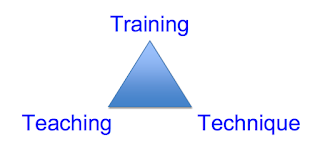
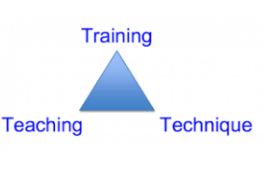
The diagram below is one I use on a daily basis when structuring practice.

It’s a great way to ensure the activities you are doing in practice meet the current needs of your team.

I’m not sure where I got it from, but I am confident I stole it from somewhere. Apologies to the person who didn’t get credit.

The triangle is used in two ways. First, I use it to analyze WHY I am doing a various practice activity.

I try to be very systematic about planning practice and using the right tool to teach a given aspect of the game.

To me, ANY team activity outside of warm ups fall into one of three categories:

  1. Teaching
    • When you are showing the players how to do something, you are in the teaching phase of practice.
    • This is usually categorized by instruction, demonstration, and players doing the action at a speed of 75% or less.
    • I know it’s time to move past the teaching stage when players can verbalize or explain the action you are teaching and can also show you how to do it correctly.

  2. Technique
    • Technique accounts for most traditional “drills”. Anything where players are performing a given aspect of the game and really focusing on technique.
    • This category is identified by it’s focus on performing a single action repeatedly between 75% and full speed. It’s also identified by it’s lack of game like environment and randomness.
    • I know it’s time to move past technique when players can correctly perform the action in a drill setting, at game speed, over and over again (85%-100% correct).
  3. Training
    • Training is any full (5 on 5) or small sided game in practice with rule modifications used to focus the game on the skill you are using. Also can be any small sided or full sided games in general that allows players to APPLY the skill in a realistic game setting.
    • This is the type of activity to use when players can perform a skill in drills, but seem to “forget” or not be able to perform it in a live game.
    • This is where you get the carry over from practice to games. 

The key here is to look at everything you do in practice and understand why you are doing it. If your players can’t tell you how to do something, then you need to teach (or re-teach) it. If they can correctly explain the skill, and preform it at game speed in a drill, then they need to spend time in training activities. At the same time you can’t jump into training activities before players can perform the movement correctly. It’s a important balance to strike in your practices, and is important to understand where your players are in regards to the skills you are trying to teach them. As a rule of thumb if they don’t know – I teach. If they know, but can’t do it – we drill technique. If they can do it correctly in a drill but not a game – we train.

I will use defensive slides as an example. At the beginning of the year I spend 5-8 minutes TEACHING the footwork. I demonstrate it (or have a player demonstrate it), then have everyone do it in slow motion. We might break into partners and do it in slow motion until everyone has a feel for it. I’ll even ask a few players how to perform the movement to see if they at least KNOW what they should be doing. After that we go through some traditional drills – mass stance, 1 on 1 dummy cut offs, etc. Once we see players doing it technically correct, we move into training. In training we play variations of 1 on 1 and 2 on 2 that force them to defend the ball constantly. As they play, I watch their form. If they start to develop poor technique, we move back to technique. We alternate between technique and training as needed, with the occasional “reteach” thrown in when warranted.

The other way I use the triangle is as visualization tool for how we utilize our practice time. When looking at various skills or tactics, I like to think about where the red dot would fall on the triangle from day to day, week to week, or even practice to practice. It’s a great way to monitor amount of time we are spending in a given area, and analyze if it’s meeting the needs of our players. Very early in the year the dot would be more toward the bottom middle of the triangle because we would be spending a lot of time teaching and drilling technique. By the end of the year we should be spending most of our time in training because we’ve learned the skill and gotten the technique down – hopefully.
Hopefully this is useful for you when it comes to practice planning. I’ve found it very beneficial and think it applies directly to making me a more efficient coach.

Multiple Effort Skill Drill

By Brian Williams on March 10, 2016

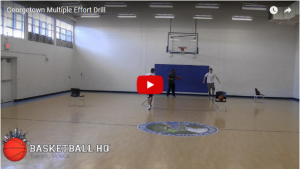
This drill is among the thousands of resources for both coaches and player available from basketballhq. They have several more videos as well as basketball coaching resource articles.

The drill is with Kevin Sutton, Assistant Mens Coach at Rhode Island. At the time the video was made, he was an assistant at Georgetown.

You might not want to do the drill exactly as it is laid out in the video, but the idea behind the posts I make is to get you thinking about creating a multiple effort drill that will benefit your players in the “Improvement Season” (April through September). For example, you could use pads on the layup to simulate finishing through contact or could specify a specific type of finishing move other than a straight layup.

The key is to make it fit what your players need to be able to do within your system.

Please make sure your sound is on to see the video.

Click the play arrow so see the drill.

The drill is a You Tube video, so you will need to be able to access You Tube to see the drill.

Multiple Effort Skill Drill

  • « Go to Previous Page
  • Page 1
  • Interim pages omitted …
  • Page 126
  • Page 127
  • Page 128
  • Page 129
  • Page 130
  • Interim pages omitted …
  • Page 288
  • Go to Next Page »

Primary Sidebar

  • Twitter
  • Facebook
  • Linkedin
coachestoolbox
personaldevelopmenttoolbox
basketballplayerstoolbox
basketballtrainer
athleticperformancetoolbox
coachingbasketball

© Copyright 2026 Coaching Toolbox

Privacy Policy