• Skip to primary navigation
  • Skip to main content
  • Skip to primary sidebar

  • Basketball Plays
    • Ball Screen Sets
    • Horns Sets
    • Man to Man Post Up
    • Man to Man Isolations
    • Backdoor Plays
    • Man to Man 3 Point Shot Plays
    • 2-3 Zone Attack
    • Baseline Inbound Plays
    • Sideline Inbound Plays
    • Combination Defense Attack
  • Drills
    • Defensive Drills
    • Offensive Drills
    • Competitive Drills
    • Passing Drills
    • Rebounding Drills
    • Shooting and Scoring Drills
    • Toughness Drills
    • Transition & Conversion Drills
    • One on One Drills
  • Blueprint
  • Practice
  • Mental Toughness
  • Skill Development
  • Offense
  • Defense
  • Store

Slide Away Basketball Finishing Drill

Slide Away Basketball Finishing Drill

By Brian Williams on May 30, 2016

This driving and finishing drill is among the thousands of resources for both coaches and player available from basketballhq. They have several more videos as well as basketball coaching resource articles.

Make sure that your speakers are on to hear the narration and that you can access YouTube to see the videos.

BasketballHQ has just released their Basketball Coaches Training Group. In the group you will get access to different workout plans that are going to be for the team as a whole, by position, by the number of players and more. This is an all inclusive training group that is going to allow you to walk onto the court with a full workout plan in hand for your players through our easy to use Iphone and Android App. Every drill comes with a video breaking down the details of the drill, and all of the videos are instructed by a Pro or College coach and demonstrated by a high level player. click here for More Information on the Basketball Coaches Training Group.

I have posted a sample from the Coaches Training Group below the first video.

The Coach in the video is Brian Baudinet, formerly an assistant coach with the NBA D-League Tulsa 66ers. Since the video was made, Coach Baudinet has taken a position with the Duquense University Men’s Staff and the Tulsa 66ers are now known as the Oklahoma City Blue.

The purpose of this post is to get you to think about adapting it to your needs and not just running the drill as is. The teaching points might fit your philosophy and if they don’t, at least it might stimulate your thinking to more clearly define and communicate to your players what you do want.

I like the idea of giving consideration to where your players will be spaced and where the help is likely to come from as you work on your straight line driving and finishing at the basket. You can also put your players in different spots on the floor and how you would teach your drives and finishes.

You will also want to work on the various finishes that your players use and not just the finishes in the drill.

Click the play arrow to begin the videos.

Slide Away Finishing Drill

Here is a 2:00 minute sample of the type of content that is available in the BasketballHQ Coaches Training Group.
Princeton Offense Twirl Set

By Brian Williams on May 29, 2016

This set is a part of Coach Lee DeForest’s Princeton Offense system, but could be run as a quick hitter to complement whatever you run.

This set is a part of Coach Lee DeForest’s Princeton Offense system, but could be run as a quick hitter to complement whatever you run.

This week’s featured eBook bundle is the Princeton Offense eBook along with the Comprehensive Ball Screen Playbook eBook.

You can see their descriptions at this Link: Princeton Offense and Ball Screen Playbooks


Diagrams created with FastDraw


twirl1

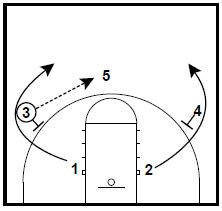
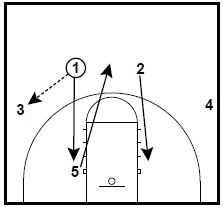
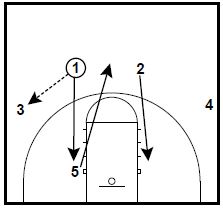
CIRCLE – GUARD TO WING ENTRY

In this option, the ball is passed from the guard position (1) into the wing position (3).

The 2 cuts backdoor for the pass from the 5 as well.

The 5 fills the top of the key as high as the guard position about 3 feet above the three point line.

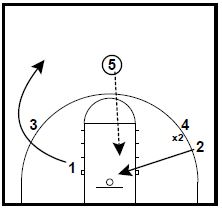
twirl2

After the pass is made to the forward (3), the forward passes to the 5 at the top.

The 1 and the 2, after cutting to the paint, cut off of the screens set by the wings (3 &4).

The guards circle and return to the guard position next to the 5.

KEY: The wings set the down screen no lower than the FT line extended.

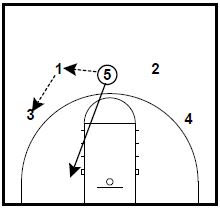
twirl3

CIRCLE: READ vs. OVERPLAY

After this play has been executed a few times, the defense will be tend to “cheat up” and overplay the guards returning high.

If this happens, the guard, in this case the 2, will backcut hard to the rim for the pass from the 5 and an easy scoring opportunity.

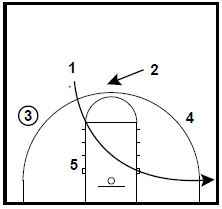
twirl4

TWIRL – LOW

After the cuts have been made by the guards and no backdoor cut is open, the 1 and 2 are high near the starting guard positions.

The 5 can pass to either guard.

The 5 will sprint to the block to post hard on the SAME SIDE the ball is passed.

In this case, the ball is passed to the 1 and the 5 fills the block on the side of the 1. The 1 passes to the wing and this keys LOW.

twirl5

3 has the ball and, after passing to the 3, the 1 cuts through the strongside elbow to the corner.

The other guard fills the top spot as the 4 remains on the wing.


twirl6

If the ball is passed into the post, we are in our LOW set and the options that follow based on the coach’s preference.


This set is a part of Coach Lee DeForest’s Princeton Offense system, but could be run as a quick hitter to complement whatever you run.

This week’s featured eBook bundle is the Princeton Offense eBook along with the Comprehensive Ball Screen Playbook eBook.

You can see their descriptions at this Link: Princeton Offense and Ball Screen Playbooks

“The Play” Princeton UCLA Backdoor

By Brian Williams on May 27, 2016

This set is a part of Coach Lee DeForest’s Princeton Offense system, but could be run as a quick hitter to complement whatever you run.

This week’s featured eBook bundle is the Princeton Offense eBook along with the Comprehensive Ball Screen Playbook eBook.

You can see their descriptions at this Link: Princeton Offense and Ball Screen Playbooks

There is also a short video at the bottom of the post with some other options from this play.

Diagrams created with FastDraw


“The Play” UCLA Backdoor

basketball-plays-princeton-ucla1

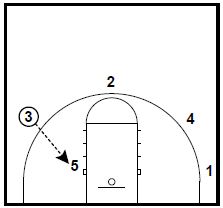
The Play. This beat defending NCAA champion UCLA 43-41 on a backdoor cut.


basketball-plays-princeton-ucla2

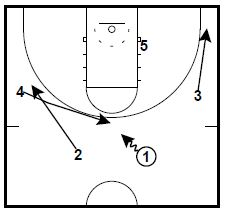
On a spin dribble by 1, the 5 fills the high post and catches as the 3 fills the corner.


basketball-plays-princeton-ucla3

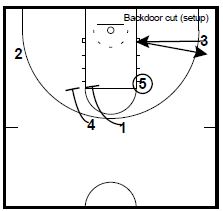
On the catch by 5, 3 cuts baseline about 50% speed to setup 3 for next cut.

1 and 4 set a double screen at the opposite elbow for 2.

This is a distraction.


basketball-plays-princeton-ucla4

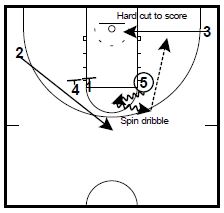
As 2 is cutting off the double screen pulling the weak side help away from the basket.

5 sells this action as dribbling to the top of the key then spin dribbles back to 3.

3 cuts violently to the rim for the backdoor layup.

This set is a part of Coach Lee DeForest’s Princeton Offense system, but could be run as a quick hitter to complement whatever you run.

This week’s featured eBook bundle is the Princeton Offense eBook along with the Comprehensive Ball Screen Playbook eBook. You can see their descriptions at this Link: Princeton Offense and Ball Screen Playbooks

Another 5 Team Themes to Help Develop Your Culture

By Brian Williams on May 26, 2016

This article was written and contributed by Scott Rosberg

Last week I wrote about 5 team themes that I have used with my teams through the years to help develop our program’s culture. If you missed that post click here to read it. Today, I am going to talk about five more of the themes I have used through the years. Also, if you are interested in more themes & quotes or more information on establishing team themes with your teams, I highly recommend you pick up a copy of Bruce Brown’s book 1001 Motivational Messages & Quotes at the Proactive Coaching website.

Perseverance

Perseverance is about staying the course when things get tough.  It is having the mental toughness to fight through difficult circumstances. It is having the ability to recover quickly enough from some mistake to get oneself back on the road to success. As you make your way through life, understand that there will be problems along the way.  Don’t let the problems stop you from moving to where you want to go.  Get back up quickly, dust yourself off, and attack your situation with the same determination that you had before your setback.  Not only will you be showing perseverance, but you will also be another step closer to the goal you are seeking.

“The man who wins may have been counted out several times, but didn’t hear the referee.”

H.E. Jackson

Winning & Losing

Too often young people and people involved in athletics focus way too much on the scoreboard as a determiner of success. While the scoreboard is there for a reason and winning the game is a goal of competition, there is so much more to success than just winning a game. With all the teams I have coached through the years, I tried to instill in them a focus on many more things that determine if we were successful: how hard we played, how smart we played, how well we played together, whether we achieved our potential.

People often compare themselves to others.  I tried to instill in my players the idea that they should compete against a vision of their best selves and that we should compete against a vision of what we could be as the best team we were capable of becoming.  Every day that you wake up and get out of bed, you will be moving one way or the other – toward success or failure.  The choice of which direction you go is one that you make every day.

“Success is peace of mind that is the direct result of self-satisfaction in knowing you did your best to become the best that you are capable of becoming.”  John Wooden

Adaptability

The ability to adapt to the various situations one finds oneself in is important in all aspects of life. In athletics, it is critical to team and individual success because athletic endeavors are fraught with adversity, and the adversity comes in many forms. On any given day, in any given situation, a person may have to deal with a myriad of problems and dilemmas that could affect his or her focus on the task at hand. The ability to adapt to problems is crucial to getting through those problems and growing from them.

Another important part of adaptability is the idea that people need to adapt to each other and to the teams or groups they are part of. When people are selfless and they give up a part of themselves for the good of others, they are showing their adaptability to something bigger than themselves. Everyone, including the leader, needs to have the flexibility to adapt for the good of all. When all members of a team, group, or family understand the importance of maximizing their strengths while giving of themselves selflessly, anything is possible.

“The art of life is a constant readjustment to our surroundings.”  K. Okakaura – Japanese Author

Courage

Courage is oftentimes a misunderstood word, and it is especially misunderstood by young people. So often, people believe that courage is something that is dramatic or newsworthy, like running into a burning building to save a baby. While that certainly is a courageous act, courage occurs in many other instances in life that are not anywhere near so dramatic, and yet can be almost as important for the people involved.

True courage is often seen in the everyday elements of life, the decisions that people make on a regular basis. These decisions can be those that are made alone or in groups and teams.  As we explore the concepts of courage, we start to see that courage is all around us, and there are many moments that provide opportunities for us to display courage. Choose to live courageously every day by making the right decisions that affect everyone in the best way possible.

“Courage doesn’t always roar.  Sometimes courage is the little voice at the end of the day that says I’ll try again tomorrow.”  Mary Anne Radmacher – Author

Leadership

A leader needs to learn to lead in a variety of ways.  Leadership is not about telling other people what to do. The best leaders realize they are there to serve those they lead.  Leadership is about helping others to realize the potential they have, and then helping them to rise up to that potential and achieve what they are capable of. But leadership does not have to come from one person in an organization. In fact, the best organizations have multiple leaders at multiple levels. In athletics, while the head coach is the ultimate leader, there are assistant coaches who lead as well. Then there are players who have natural leadership tendencies that allow them to lead their teammates. Finally, sometimes, certain players are bestowed the title of captain, giving them a responsibility to lead the members of the team.

However, any and all members of a team can be leaders, no matter the organization and no matter who the individuals are in that organization. It is critical for the ultimate leaders of the organization to recognize the importance of letting the natural leadership of various individuals within the organization come to the forefront.  It is also important for the leader to sometimes recognize that he or she has to cultivate that leadership to come forward.

“Leaders are chosen to serve; there is always trouble when a leader forgets this.”  Unknown

These two posts have been just a small sampling of the kinds of themes you can use with your teams and just a glimpse of some of the ideas you can talk about with your teams when discussing them. Each of the themes in these two posts is in my gift book for graduates, Inspiration for the Graduate. There are also many more quotes in support of each of the ten team themes covered in the book. Also, the first page is set up for you to write your own personal message to the graduate. The cost of the book is $7.95 plus shipping, or you can get a 10-Pack Bundle for just $70.00 plus shipping. To order Inspiration for the Graduate or to download a free PDF of the Introduction and First Chapter of the book, just click here.

About the Author of this Article

Scott Rosberg has been a coach (basketball, soccer, & football) at the high school level for 30 years, an English teacher for 18 years, and an athletic director for 12 years. He has published seven booklets on coaching and youth/school athletics, two books of inspirational messages and quotes for graduates, and a newsletter for athletic directors and coaches. He also speaks to schools, teams, and businesses on a variety of team-building, leadership, and coaching topics. Scott has a blog and a variety of other materials about coaching and athletic topics on his website – www.coachwithcharacter.com. He can be reached by email at [email protected].

Scott is also a member of the Proactive Coaching speaking team. Proactive Coaching is dedicated to helping organizations create character and education-based team cultures, while providing a blueprint for team leadership. They help develop confident, tough-minded, fearless competitors and train coaches and leaders for excellence and significance. Proactive Coaching can be found on the web at www.proactivecoaching.info. Also, you can join the 200,000+ people who have “Liked” Proactive Coaching’s Facebook page at www.facebook.com/proactivecoach. Scott can also be reached through Proactive Coaching at [email protected]

5 Team Themes to Help Develop Your Culture

By Brian Williams on May 26, 2016

This article was written and contributed by Scott Rosberg

For quite a few years now, I have established and taught team themes with my teams. Whether it be our team’s core covenants, John Wooden’s “Pyramid of Success,” or just random life lessons that I believe are important to discuss with our kids, we have had some kind of focus each week throughout the season. This week I am going to talk about five of the themes I have used, and next week I will pick five more to discuss. All ten of these themes make up ten sections of my gift book for graduating seniors called Inspiration for the Graduate. The book covers each theme in more detail, and there are many more quotes to support the themes.

Work Ethic

No matter where you go or what you do in life, you must have a strong work ethic. Whether you are continuing your education, you are going into the military, or you are joining the work force, the ability to work hard is going to be crucial to your success. Athletes are expected to give their best effort every day to help their team have its best chance at success.

Most often when we think of work ethic, we think of some physical labor. But along with the physical part of having a strong work ethic comes focus, initiative, and attention to detail. When you develop strong work habits, you can accomplish so much more in life, both individually and as a team.

The harder you work, the harder it is to surrender.”  Vince Lombardi – Professional Football Coach

Discipline

Discipline is having a focused attention and effort.  It is doing what needs to be done, doing it the proper way to accomplish the task at hand, and doing it that way every time one is working to accomplish that task.  Sometimes, though, there is no task – there is just living your life. When speaking of discipline in this situation, one has to have the discipline to live one’s life as she should in order to be all that she can be.

Discipline is a choice. One who has discipline has chosen to do all that is necessary to succeed, whatever that entails. The disciplined worker shows up at the job site on time, knows what needs to be done and does it without being told or reminded, and sees the job through until its completion.  Discipline carries people and it carries teams to heights unattainable without it.

 “Discipline helps you finish a job, and finishing is what separates excellent work from average work. Discipline yourself, so no one else has to.” Pat Summitt – Women’s College Basketball Coach

Poise

Most of us think of poise as controlling one’s emotions while maintaining a calm demeanor and a self-assured dignity.  The person with poise can maintain a sense of composure when things are not going well or not going as planned.

While this ability is extremely helpful for individuals to be able to achieve their goals, it is crucial for success in any team or group setting. When teammates see others reacting to stressful situations with poise, it gives the rest of the team the confidence it needs to deal with the situation.  Conversely, when teammates see one another displaying anger, temper, or frustration, it ratchets up everyone’s anxiety. Be a person who shows poise in the midst of chaos.  Be the face your team needs to see.

“Losing your head in a crisis is a good way to become the crisis.” C.J. Redwine – Author

Enthusiasm

Enthusiasm is a critical component of anyone involved in any worthwhile endeavor, and it is critical to success for someone to possess enthusiasm for whatever they are involved in.  From school to sports to work, those with enthusiasm bring more to the experience, both for themselves and for others. Enthusiasm is catching.  When people on a team or in any group see and hear others displaying enthusiasm, it spreads to all involved.

When people choose to be enthusiastic, they up their own output, and they help spread excitement to others in the organization.  Put your heart and soul into all you do and let it show to the world around you.  You, and the people who you touch in your life, will be glad you did.

“The successful man has enthusiasm. Good work is never done in cold blood; heat is needed to forge anything. Every great achievement is the story of a flaming heart.” Harry Truman – President of the United States

Confidence

Confidence comes from a few different sources. It takes preparation and success to have confidence become a part of one’s character. The truly confident person is prepared. He realizes that any future success is only going to occur by preparing properly for the chance to create the outcome he seeks. He realizes that, while hope and prayer have their merits, the only sure-fire way to create the best chance at success is to prepare for it. The truly confident person carries himself with a quiet, peaceful inner confidence that says, “I have prepared well for this, so I know that I can perform well.”

The other quality that breeds confidence is success.  Those who have experienced success before generally feel confident that they can achieve it again. Interestingly, these people’s confidence may carry over into other areas of their lives where they have not had success before, but because they understand the importance of preparation for success in one realm, they can see its value in all of the realms of their lives.  But again, it all comes back to preparation.  The prepared person is a confident person.

“Confidence comes from being prepared.” John Wooden – College Basketball Coach

This is just a small sampling of the kinds of themes you can use with your teams and just a glimpse of some of the ideas you can talk about with your teams when discussing these themes. The next post will cover another five themes that you may want to consider discussing with your teams.

Each of these themes is discussed in my gift book for graduates, Inspiration for the Graduate. There are also many more quotes in support of each of the ten team themes covered in the book. Also, the first page is set up for you to write your own personal message to the graduate. The cost of the book is $7.95 plus shipping, or you can get a 10-Pack Bundle for just $70.00 plus shipping. To order Inspiration for the Graduate or to download a free PDF of the Introduction and First Chapter of the book, just click here.

About the Author of this Article

Scott Rosberg has been a coach (basketball, soccer, & football) at the high school level for 30 years, an English teacher for 18 years, and an athletic director for 12 years. He has published seven booklets on coaching and youth/school athletics, two books of inspirational messages and quotes for graduates, and a newsletter for athletic directors and coaches. He also speaks to schools, teams, and businesses on a variety of team-building, leadership, and coaching topics. Scott has a blog and a variety of other materials about coaching and athletic topics on his website – www.coachwithcharacter.com. He can be reached by email at [email protected].

Scott is also a member of the Proactive Coaching speaking team. Proactive Coaching is dedicated to helping organizations create character and education-based team cultures, while providing a blueprint for team leadership. They help develop confident, tough-minded, fearless competitors and train coaches and leaders for excellence and significance. Proactive Coaching can be found on the web at www.proactivecoaching.info. Also, you can join the 200,000+ people who have “Liked” Proactive Coaching’s Facebook page at www.facebook.com/proactivecoach. Scott can also be reached through Proactive Coaching at [email protected]

Buzz Williams on Defending Pick and Roll

By Brian Williams on May 23, 2016

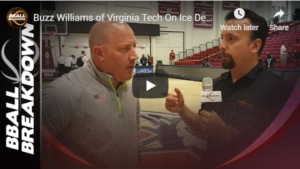
This video is an interview with Coach Nick from bballbreakdown.com Texas A&M (Formerly at Virginia Tech when this segment was filmed) Coach Buzz Williams on his thoughts on defending pick and roll.

The video is a You Tube video so make sure that you are on a server that allows You Tube access.

He believes in icing side pick and rolls so that they do not need to rotate a 3rd defender to the pick and roll.

Coach Williams believes in keeping his coverage simple as opposed to adjusting for personnel.

You do need to know and practice several type of coverage to go against in practice so that you are working against what other teams will throw at you.

Make sure your sound is on.

  • « Go to Previous Page
  • Page 1
  • Interim pages omitted …
  • Page 119
  • Page 120
  • Page 121
  • Page 122
  • Page 123
  • Interim pages omitted …
  • Page 288
  • Go to Next Page »

Primary Sidebar

  • Twitter
  • Facebook
  • Linkedin
coachestoolbox
personaldevelopmenttoolbox
basketballplayerstoolbox
basketballtrainer
athleticperformancetoolbox
coachingbasketball

© Copyright 2026 Coaching Toolbox

Privacy Policy