Myles Rasnick, Asst Men’s Basketball Coach, Maryville College
This video is a segment from one of the 120 Videos in Glazier Drive Basketball.
Explore coaching clinic replays, practice plans, skill development videos, and more. Click here to see all that’s included.
The full video that this clip came from is available on Glazier Drive: Ball Screen Offense: Reads, Counters & Teaching Progressions
OVERVIEW
This clip covers counters to the ball screen offense — ways to change how screens are set rather than adding entirely new plays. The presenter’s core philosophy: keep it simple by varying the style of the screen itself, and teach players to read the screen rather than memorizing a pile of new actions.
FLIP SCREENS
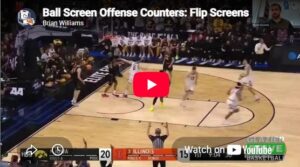
The main counter discussed. A flip screen quickly switches the screen to the opposite side, which disorients the screener’s defender — he’s set up to help/hedge on one side, then the ball handler attacks the other side, effectively removing that defender from the play.
- Vs. hard hedge: Flipping the screen pulls the hedging defender out of position, letting the guard attack his hip and get downhill for an open look.
- Vs. switching defenses: Defenders anticipating a switch get caught leaning the wrong way when the screen flips, taking two defenders out of the play at once — since the on-ball defender expects help that never comes on that side.
The presenter references an Iowa–Illinois game and their own matchup against Wisconsin–Oshkosh as examples where flip screens caused real defensive breakdowns, including confusion on switches and cut-out bigs leading to easy driving lanes/layups.
OTHER COUNTERS MENTIONED (BRIEFLY)
- Flat and high screens
- Go screens
- Grenades (also called “dribble ups” by other coaches)
These are named as additional counter categories but not broken down in detail in this excerpt.
COACHING TAKEAWAY
The emphasis throughout is that ball-screen counters don’t need to be complicated — teaching multiple ways to set the same screen (angle, timing, flip) is often more effective than installing new sets, especially against teams that hard-hedge or switch aggressively.